4 Easy Ways to Propagate Lavender Plants: A Step-By-Step Guide

Did you know you can grow new lavender plants from the one already in your garden? Free plants, identical to the parent, with very little effort.
In this guide, I’ll walk you through four ways to propagate lavender: rooting cuttings in water, rooting cuttings in soil, letting the plant layer itself, and hilling. Each method works a little differently, so you can pick the one that fits how you like to garden.
As an Amazon affiliate, I earn a commission from qualifying purchases at no additional cost to you. My blog also features other affiliate links for your convenience. Click here to read my privacy policy.
Why Lavender is a Favorite in the Garden
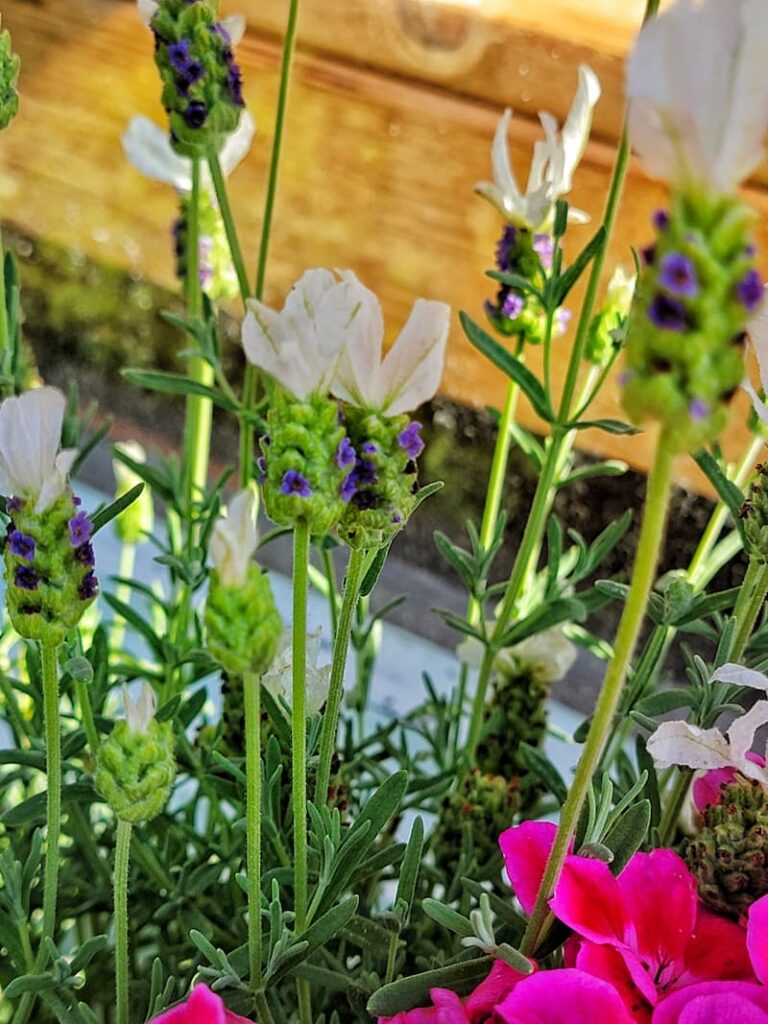
Lavender pulls more weight than almost anything else I grow. A few reasons it’s worth multiplying”
A Quick note about my garden
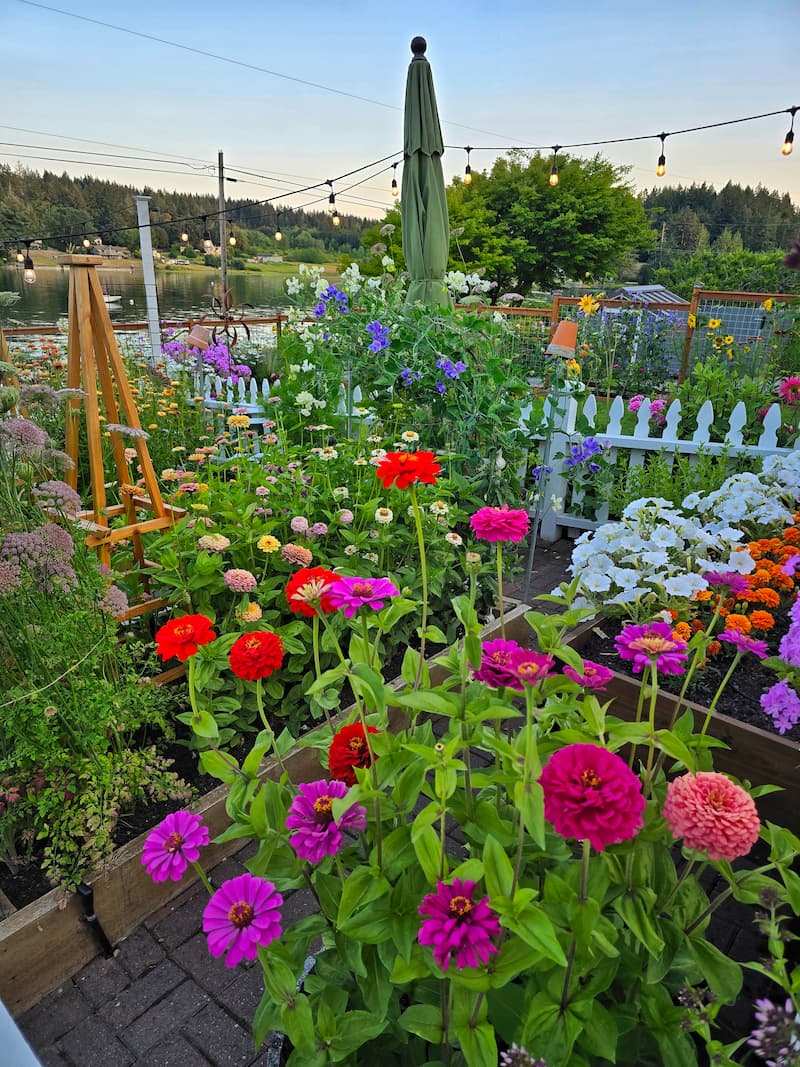
Most of the flowers I share here are grown from seed in our greenhouse and planted in raised beds and containers throughout our cottage garden.
Types of Lavender to Know Before You Propagate
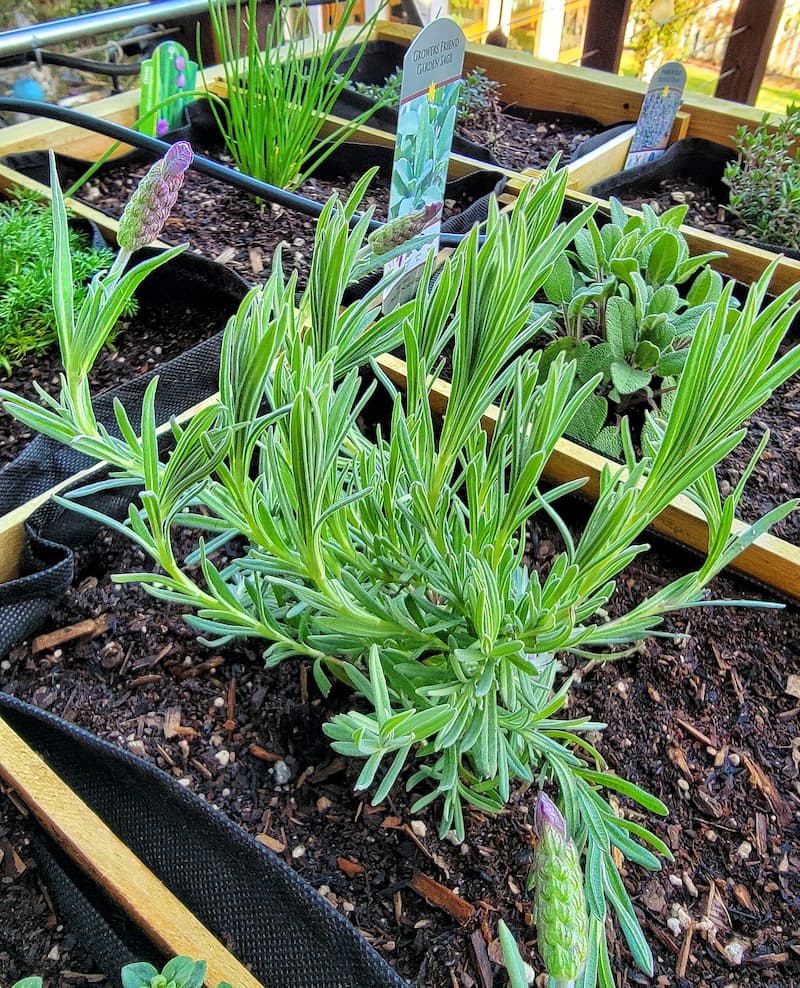
Whichever method you choose, your new plant will be a clone of the parent. So it helps to know what you’re starting with. These are the four types you’ll run into most often.
The Four Main Types of Lavender
| Type of Lavender | Description | Growing Conditions | Uses |
| English Lavender (Lavandula angustifolia) | Known for it’s sweet fragrance, commonly used in perfumes and sachets. | Full sun and well-draining soil. Hardy and handles colder climates. The best fit for our zone 8b winters. | Culinary use, crafting, and essential oils |
| French Lavender | The more delicate, mild fragrance, with toothed leaves and showy, tufted flower spikes. | Warm, sunny climates and well-draining soil. More tender and less cold-hardy. | Ornamental planting and potpourri |
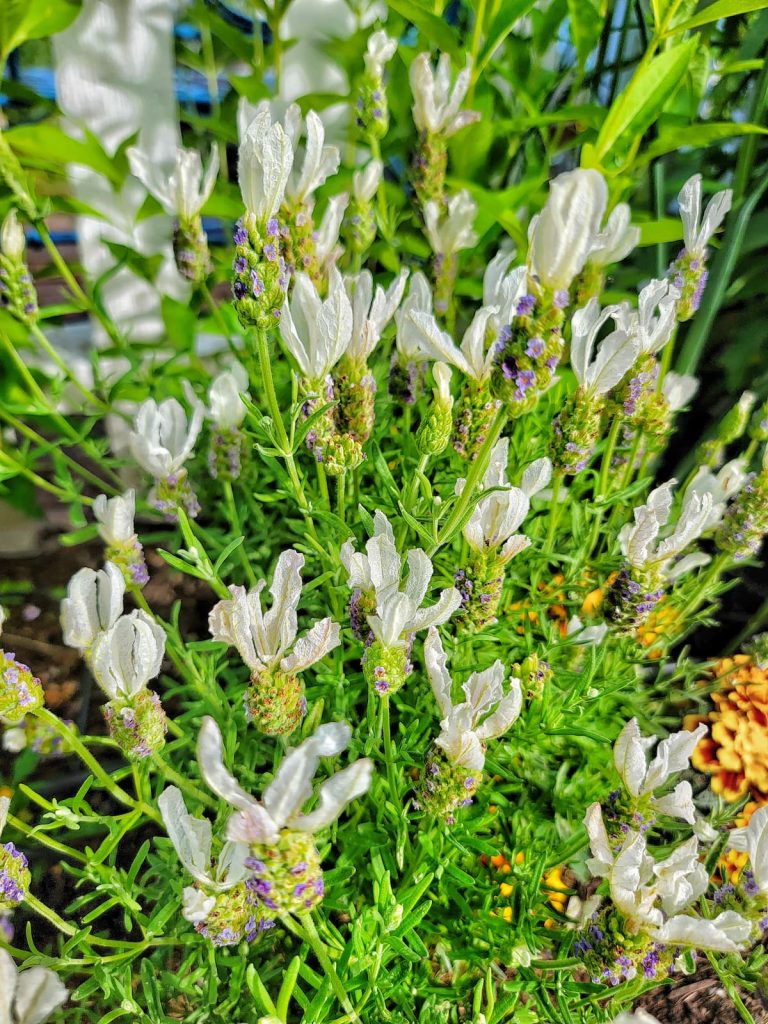
| Spanish Lavender | Distinctive ‘rabbit ear’ petals on top of the flower spikes, with a strong, pine-like scent. | Hot, dry conditions and well-draining soil. Less tolerant of cold and humidity. | Ornamental use in gardens and landscapes |
| Lavandin | A hybrid of English and Portuguese lavender. Larger plants and flower spikes with a strong, camphor-like fragrance. | Full sun and well-draining soil. Hardy across many climates. | Essential oil production and crafting |
Let’s Plan Your Dream Garden With Our
Gardening Planner
Unlock Your Garden’s Potential.
Our 35-page Ultimate Garden Planner is designed to help you organize, track, and flourish in your gardening endeavors.
Get yours for $4.99

How to Propagate Lavender: 4 Methods
1. Rooting Lavender Cuttings in Water
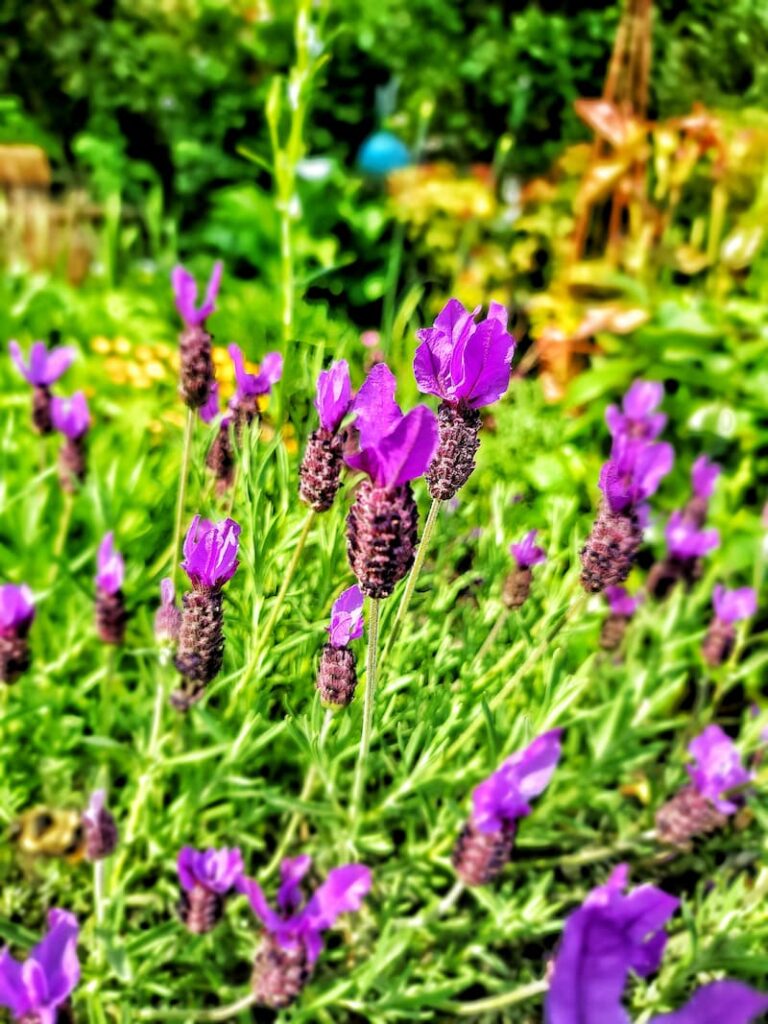
Cuttings are the most popular way to propagate lavender, and water rooting is the simplest place to start. You get to watch the roots form, which is fun for me.
Step 1: Using sharp pruners, take a 4 to 6-inch cutting from a healthy lavender plant. Softwood cuttings from the newer green growth root better than the older woody stems. Cut at a 45-degree angle to give the stem more surface area for rooting.
Step 2: Strip the leaves off the lower third of the stem.
Step 3: Place the cuttings in a glass jar of water on a bright windowsill.
Step 4: Change the water every 4 to 5 days. New roots will form at the bottom of the cutting within a few weeks.
Step 5: Once you have a healthy set of roots, plant the cutting and potting mix, or directly in the garden if outdoor temperatures are warm enough.
2. Rooting Lavender Cuttings in Soil
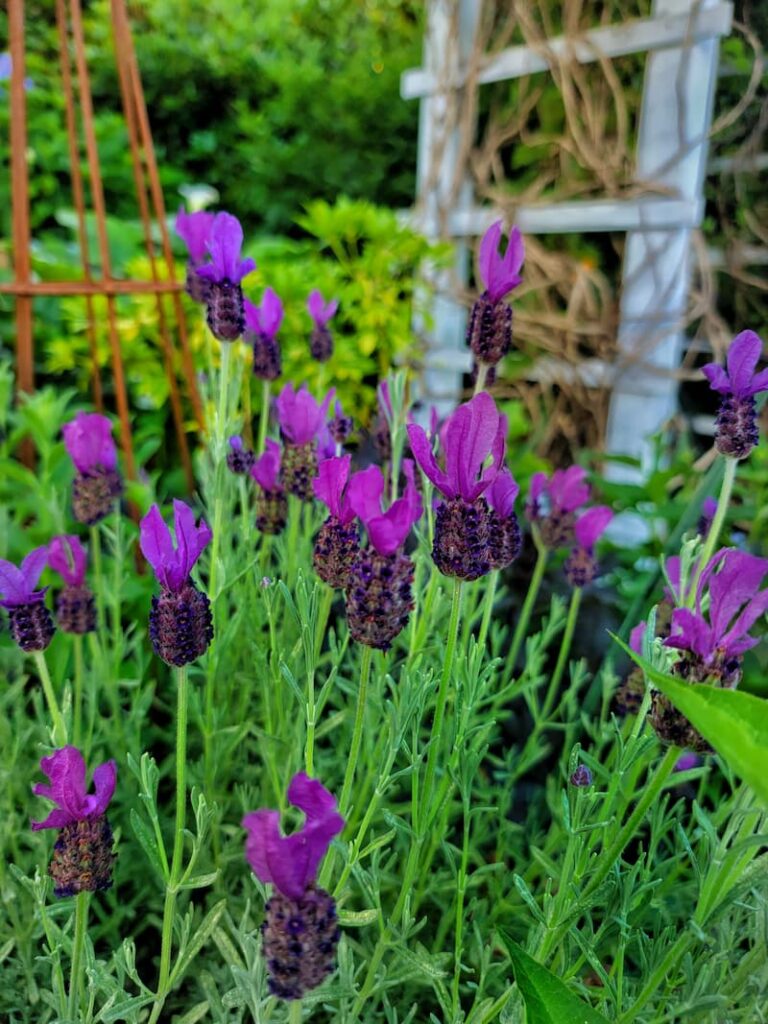
Soil rooting takes a few more steps, but the cuttings transition to the garden more easily because the roots develop in soil from day one.
Step 1: Take a 4 to 6-inch cutting from a healthy plant with sharp pruning shears. Softwood and hardwood cuttings both work here, but softwood roots faster. Cut at a 45-degree angle.
Step 2: Remove the leaves from the bottom third of the stem.
Step 3: With a sharp knife, gently scrape the skin off one side of the lower stem.
Step 4: Fill a small container with half vermiculite and perlite and half peat moss.
Step 5: Dip the scraped tip in rooting hormone powder.
Step 6: Stick the cutting about 2 inches into the mix, making sure it stands up straight.
Step 7: Cover the cuttings with plastic to create a greenhouse-like environment.
Step 8: Cuttings should root in 2 to 4 weeks. Test with a gentle tug. If you feel resistance, roots are holding it in place. Don’t tug often, though. Young roots are easy to damage.
Step 9: Move your new plants to a sunny spot in water when the soil is dry. Feed weekly with quarter-strength liquid fertilizer. Once it’s warm enough outside, plant them in a larger container or in a garden spot with full sun and well-draining soil.
3. Layering: Letting the Plant Propagate Itself

Lavender is a woody perennial that will root on its own wherever a branch touches the ground. Layering just gives it a nudge.
Step 1: Gently bend a low branch to the ground and pin it down at a leaf node.
Step 2: Wait. Rooting takes a month or two, and the mother plant does all the work.
Step 3: Once roots have developed, cut the branch free from the mother plant and transplant it into the garden.
4. Hilling
Hilling is the slowest method, but it’s nearly effortless and has a high success rate. I’d rather be patient now than sorry later.
Step1: In spring, mound soil over the old lavender plant so just the new buds show above the surface.
Step 2: By the following spring, each stem will have grown roots in the hilled-up soil. Dig up the whole subshrub, divide it, and plant each rooted stem as a new plant.
When to Propagate Lavender
Tips for Taking Lavender Cuttings
Garden Supplies and Tools
Check out my favorite garden supplies and tools for the growing season. Whether you’re looking for potting soil or deer repellent, you’ll find what I use in my own garden.
Lavender Propagation Questions
Can You Propagate Lavender in Water?
Yes. Place a 4 to 6-inch softwood cutting in a jar of water on a bright windowsill and change the water every 4 to 5 days. Roots form in a few weeks, and the cutting can then be potted up or planted out.
How Long Does It Take Lavender Cuttings to Root?
Cuttings rooted in soil take about 2 to 4 weeks, while water-rooted cuttings take a few weeks as well. Layered branches take longer, usually a month or two, since the mother plant roots them at its own pace.
When Is the Best Time to Take Lavender Cuttings?
Mid to late summer, while the plant is actively growing. Cuttings taken too late in the season rarely root because the plant is preparing for winter dormancy.
Why is Lavender So Hard to Divide?
Lavender is a subshrub with a single woody base rather than a spreading root clump, so it can’t be split the way most perennials can. That’s exactly why propagation by cuttings, layering, or hilling is the better route.
Final Thoughts
Any of these four methods will give you new lavender plants for free, and each one serves a different kind of gardener. Water rooting if you like to watch the progress. Soil rooting if you want sturdier transplants. Layering or hilling, if you’d rather let the plant do the work.
You can also read more about why subshrubs like lavender and rosemary are so hard to divide. And if cuttings are your favorite trick, geraniums from cuttings are just as easy.
If you have any questions or your own propagation tips, share them in the comments below. And feel free to pass this post along to anyone who’d like a few free lavender plants.
Until next time,
Happy Gardening!

I’m a self-taught hobby gardener. Everything I share on my blog is my opinion and what worked for me.
MORE POSTS
For You To Enjoy
Follow Me for More Inspiration