How to Support Garden Flowers So They Don’t Fall Over
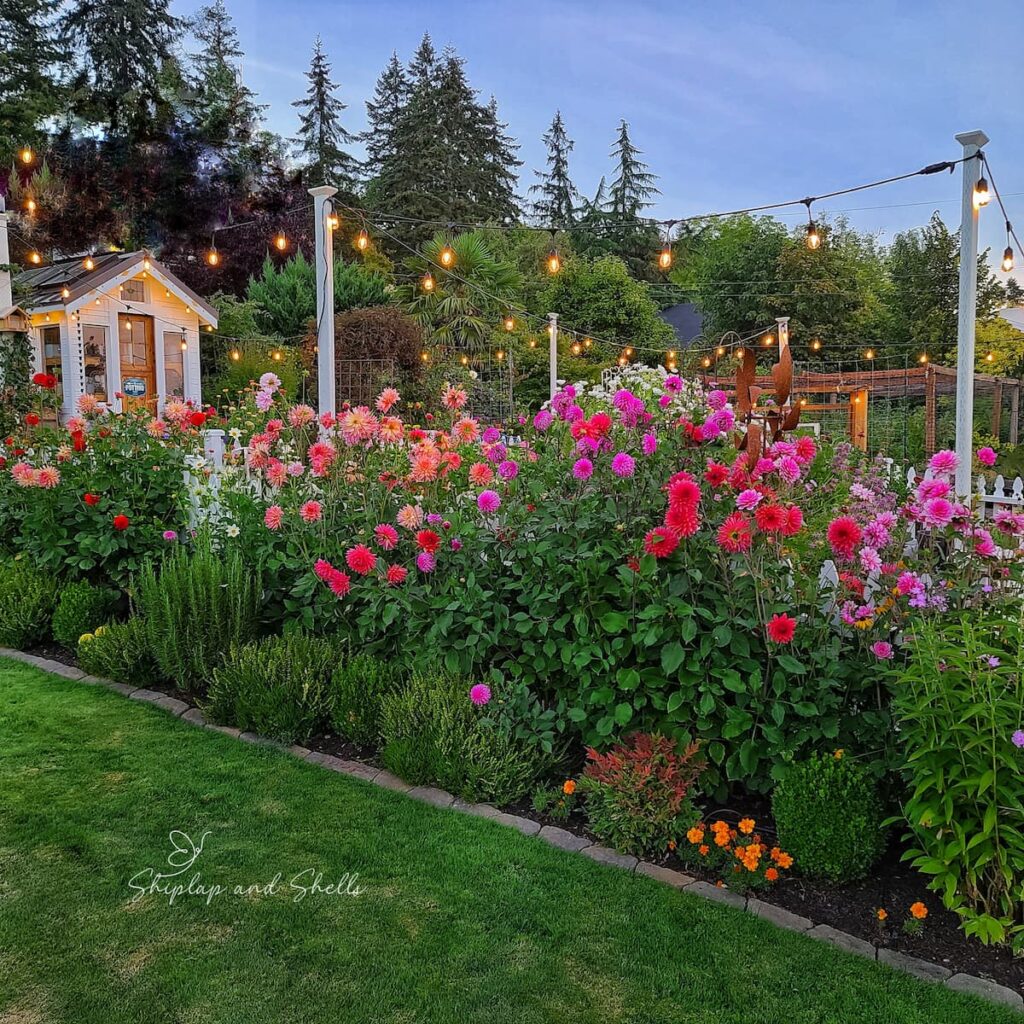
If you’ve ever walked out to your flower garden after a wind storm and found your dahlias face down in the dirt, you already know how quickly a beautiful season can go sideways. Supporting tall garden flowers is one of those things that seems optional until it isn’t.
The good news: setting up the solid support system takes very little time when you do it early, and it makes the rest of the growing season so much more manageable.
Here’s what I use in my own garden, and when and why each method works.
As an Amazon affiliate, I earn a commission from qualifying purchases at no additional cost to you. My blog also features other affiliate links for your convenience. Click here to read my privacy policy.
Why Supporting Tall Flowers Matters
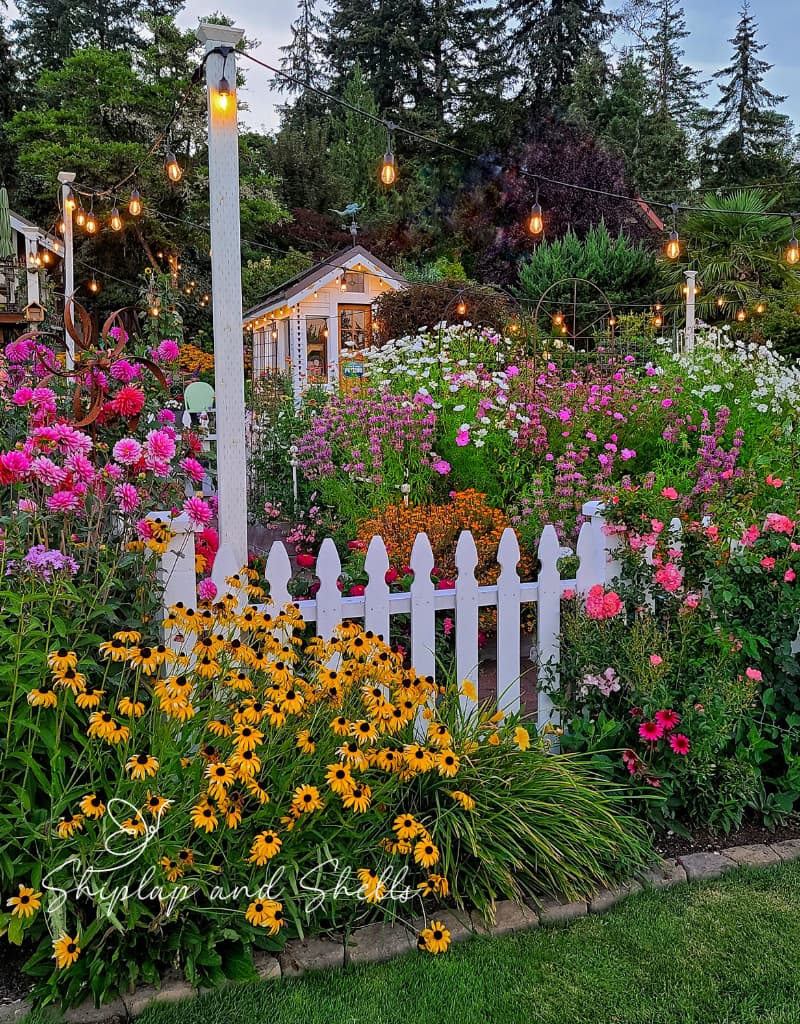
Tall, heavy-blooming flowers are vulnerable in two ways. They can flop under their own weight, and they can snap or bend in the wind or rain.
Staking, netting, and corralling protect the stems before damage happens. And beyond preventing heartbreak, properly supportive flowers tend to grow straighter, get better air circulation (which means fewer fungal problems), and are far easier to cut for bouquets.
The rule I keep coming back to: set up support before you think you need it.
A Quick note about my garden
Most of the flowers I share here are grown from seed in our greenhouse and planted in raised beds and containers throughout our cottage garden.
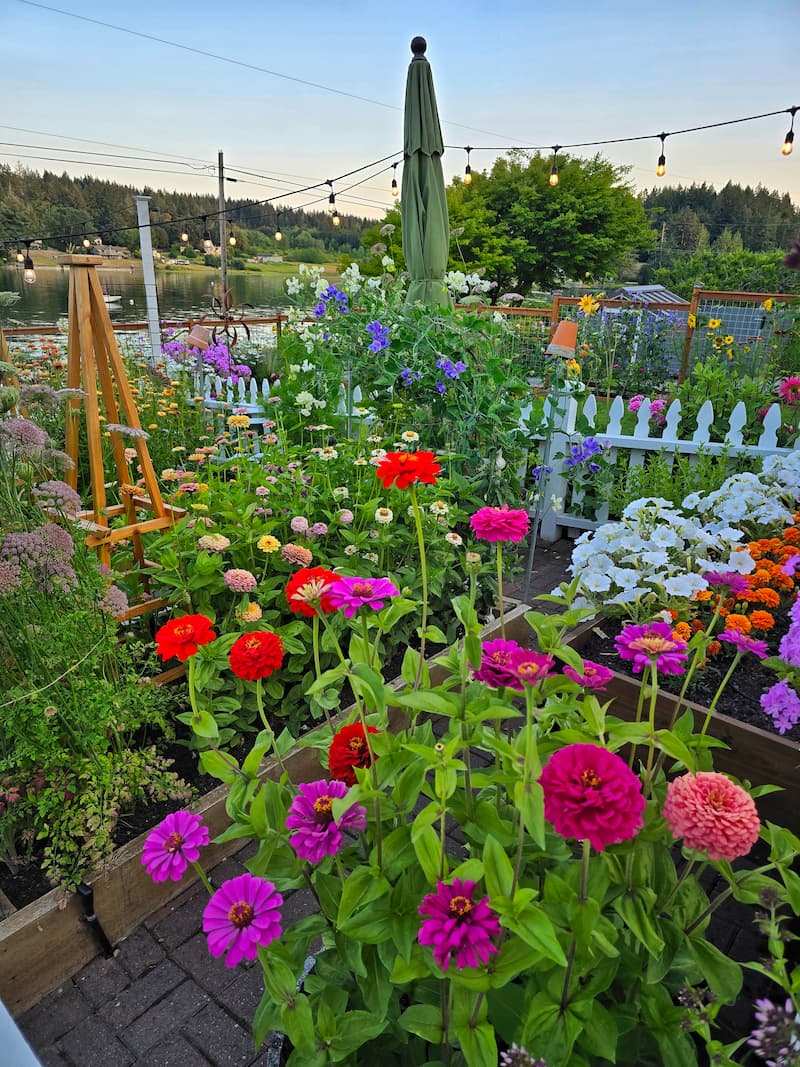
5 Methods to Keep Garden Flowers Upright
1. Staking
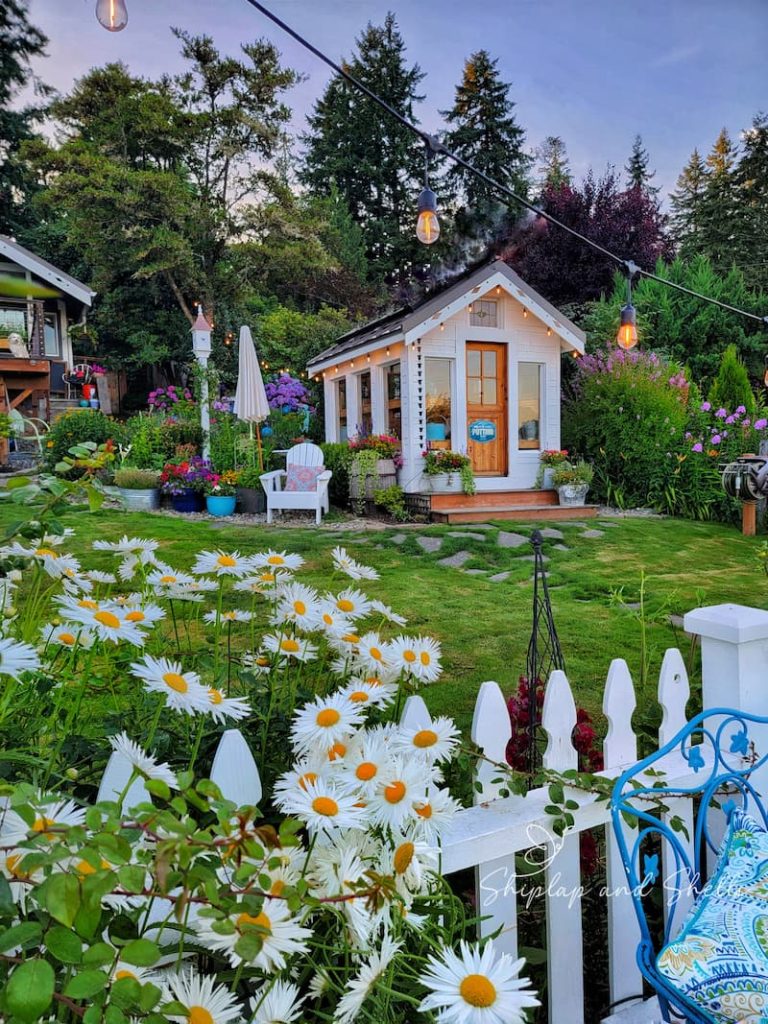
Best for: single-stem plants like gladiolus, hollyhocks, and tall rudbeckia.
Drive a wooden, bamboo, or metal stake 6 inches into the ground, a couple of inches from the plant’s base, once it reaches about a foot tall. Be careful around the root zone. Tie the stem loosely to the stake with garden twine or soft ties, every 6-8 inches as the plant grows.
This is the most common and most straightforward method. It works best for plants with one main stem rather than a wide, bushy habit.
2. Corralling
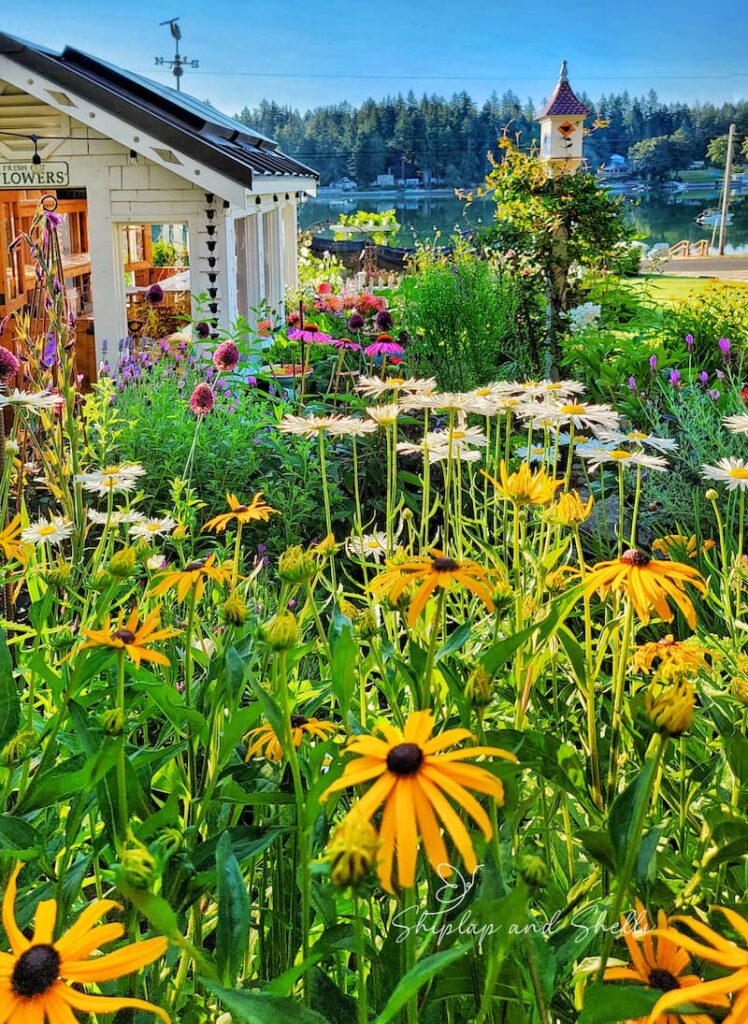
Best for: dahlias, cosmos, and any plant growing in a dense bed.
Pound stakes into each corner of the bed, plus additional stakes every 8-10 feet along the sides, with about 4-5 feet of stake above ground. Run twine around the perimeter about 3 feet up, pulled taut. For plants taller than 4 feet, add a second level of twine about a foot higher.
This is one of my favorite methods because it supports the entire bed at once without requiring individual staking. Dahlias especially respond well to corralling since their stems can be deceptively brittle under all that flower weight.
3. Netting
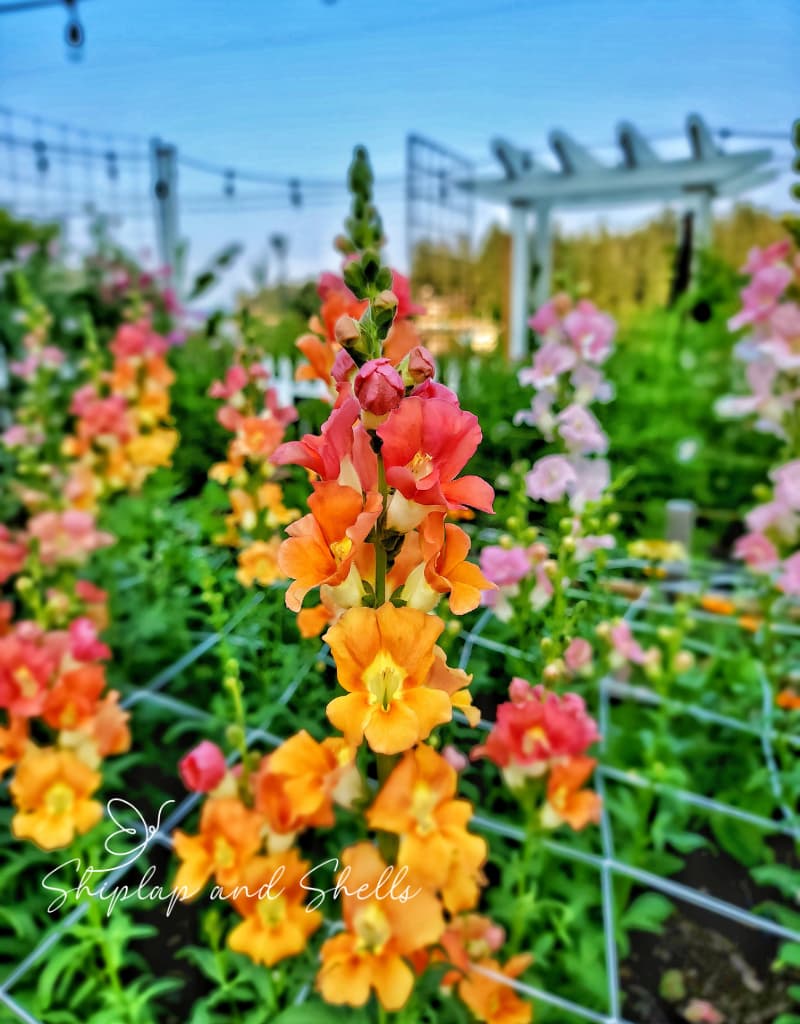
Best for: snapdragons, zinnias, and plants with many branching stems.
Install stakes around the perimeter of the bed, then suspend mesh netting with 6-inch squares about 18 inches above the ground. The netting holds the plant upright naturally as they grow through the grid.
The key here is timing. Get the netting in place before the plants hit a foot tall. Once they’re tangled and leaning, it’s much harder to work around them.
4. Trellising
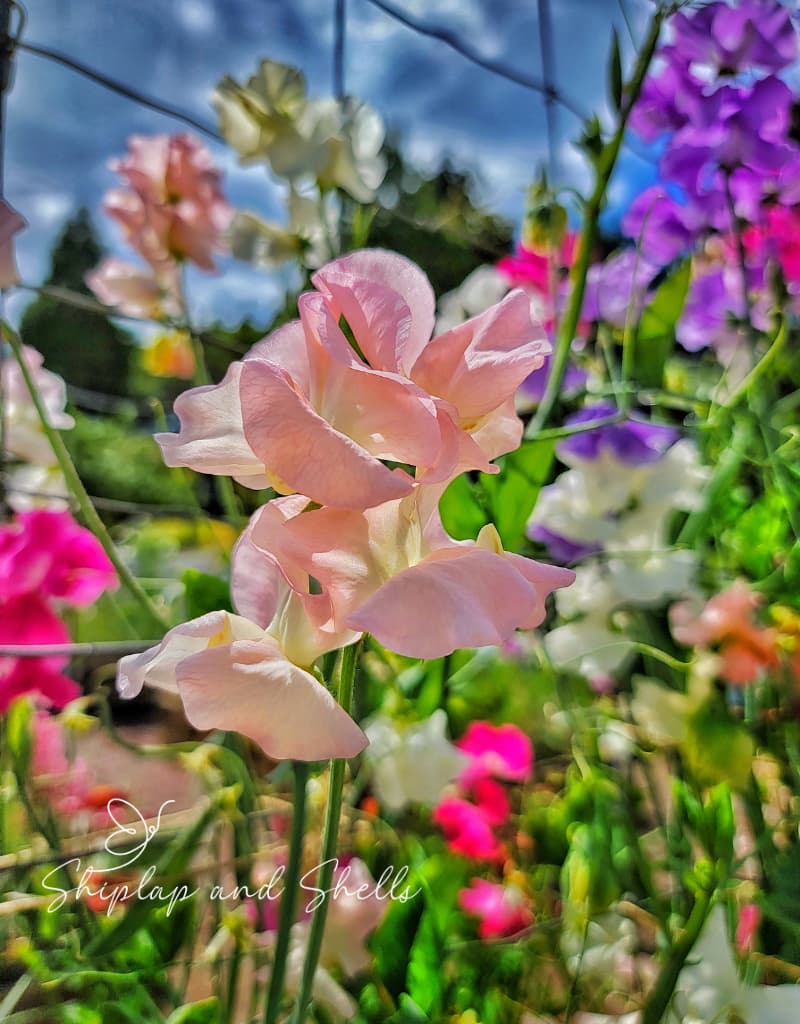
Best for: sweet peas, climbing roses, clematis, and any vining plant.
Set 6-foot posts 8-10 feet apart down the row and attach metal fencing or chicken wire between them. As the vines grow past about a foot, tie them loosely to the fencing. Add new ties weekly during peak growth.
Sweet peas are one of those flowers that look delicate but sprawl aggressively without something to hold onto. A simple trellis changes everything about how they perform.
5. Cages and Grow-Through Supports
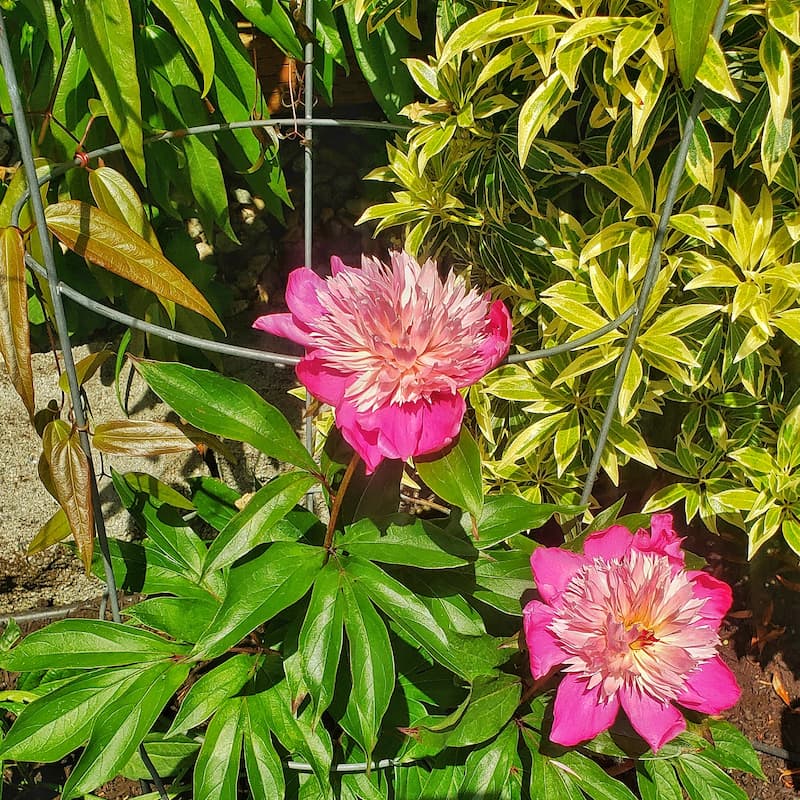
Best for: peonies and other top-heavy, multi-stemmed flowers.
Tomato cages, wire cages, and peony grow-through grids help place support around the whole plant from the ground up, which works well for flowers that bloom in all directions, rather than along one main stem. Set them in a place early in the season before the stems get tangled.
Tall Flowers That Benefit from Support
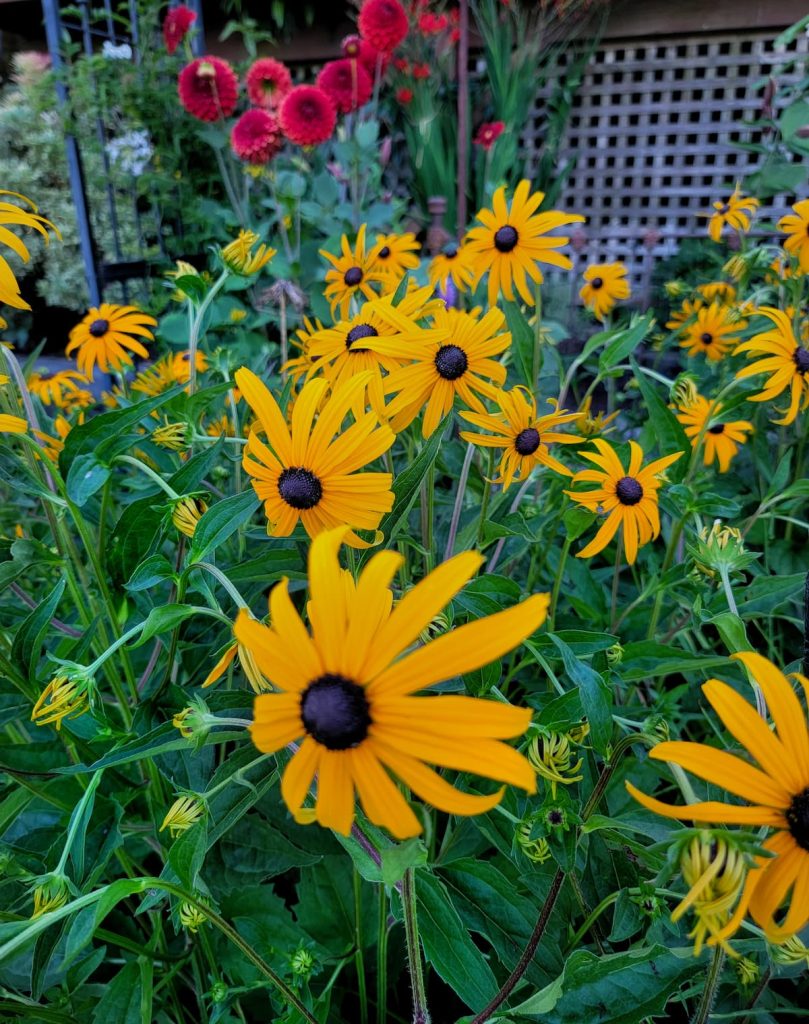
These are the plants most likely to disappoint you in a rainstorm without some backup:
Rudbeckia: may need staking depending on variety and exposure.
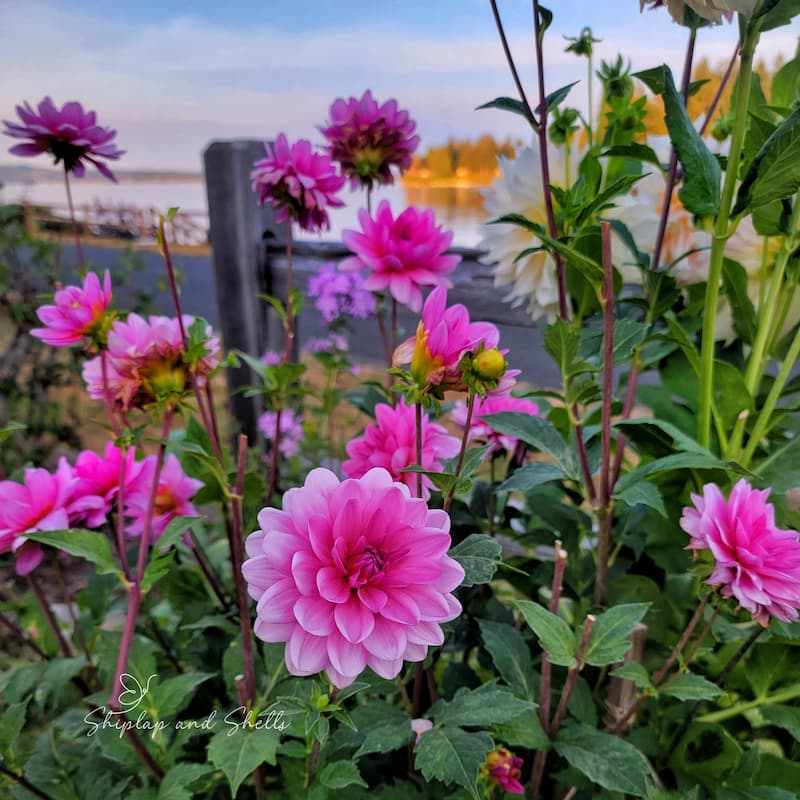
Dahlias: especially dinner-plate varieties with large, heavy blooms on thin stems. Corralling or individual staking works well.
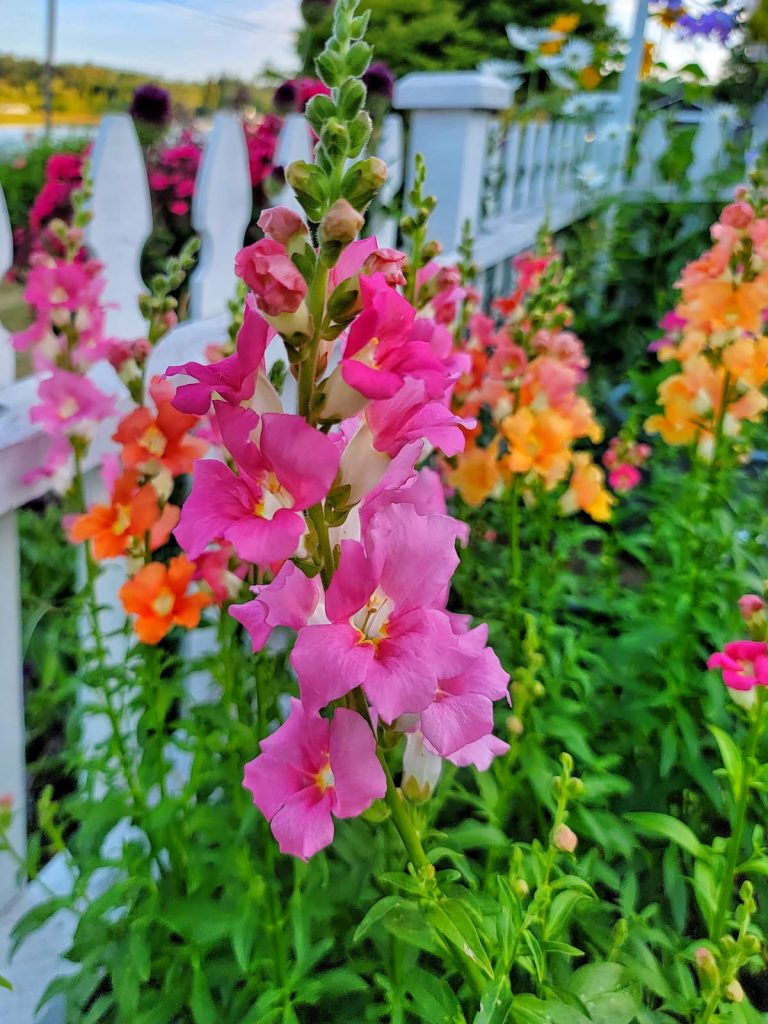
Snapdragons: tall varieties develop long spikes that get top-heavy. Netting is the most practical solution for beds.
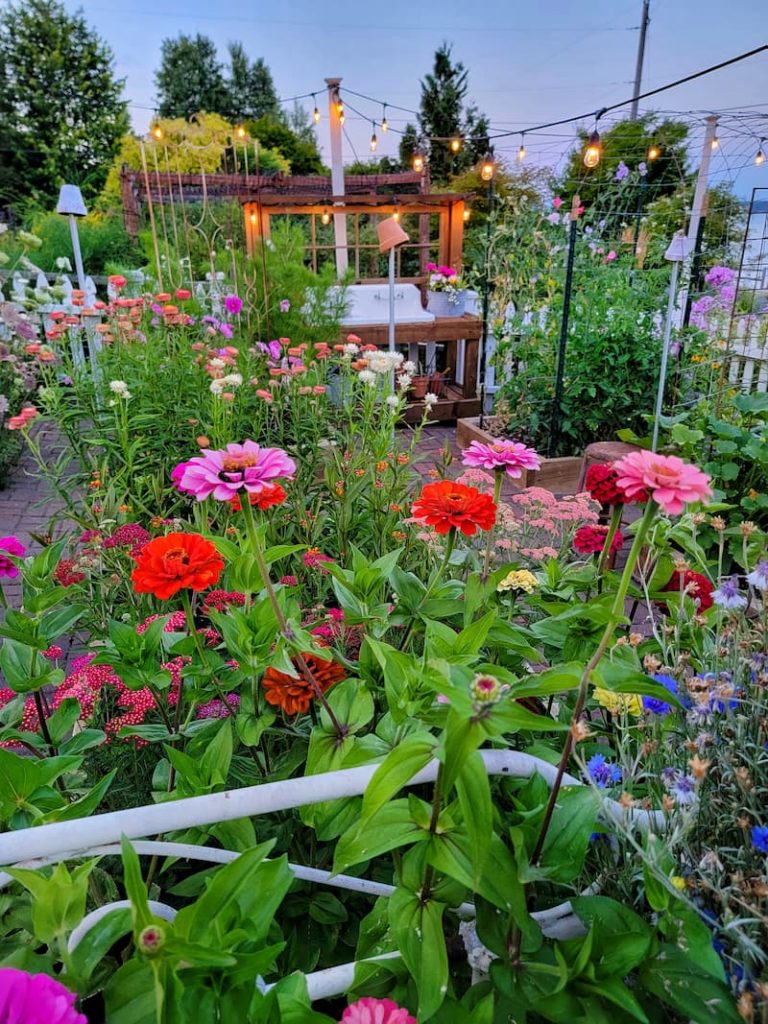
Zinnias: tall varieties can flop dramatically in wind and rain. Netting or corralling keeps the bed looking tidy all season.
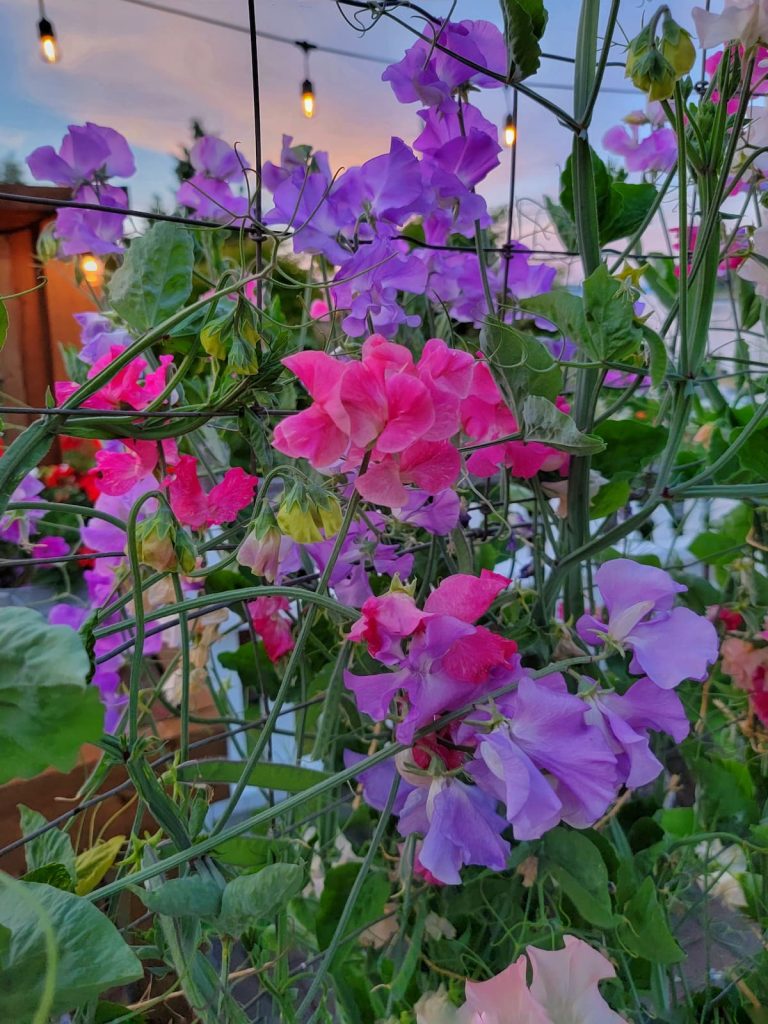
Sweet peas: delicate climbers that need a trellis from the start.
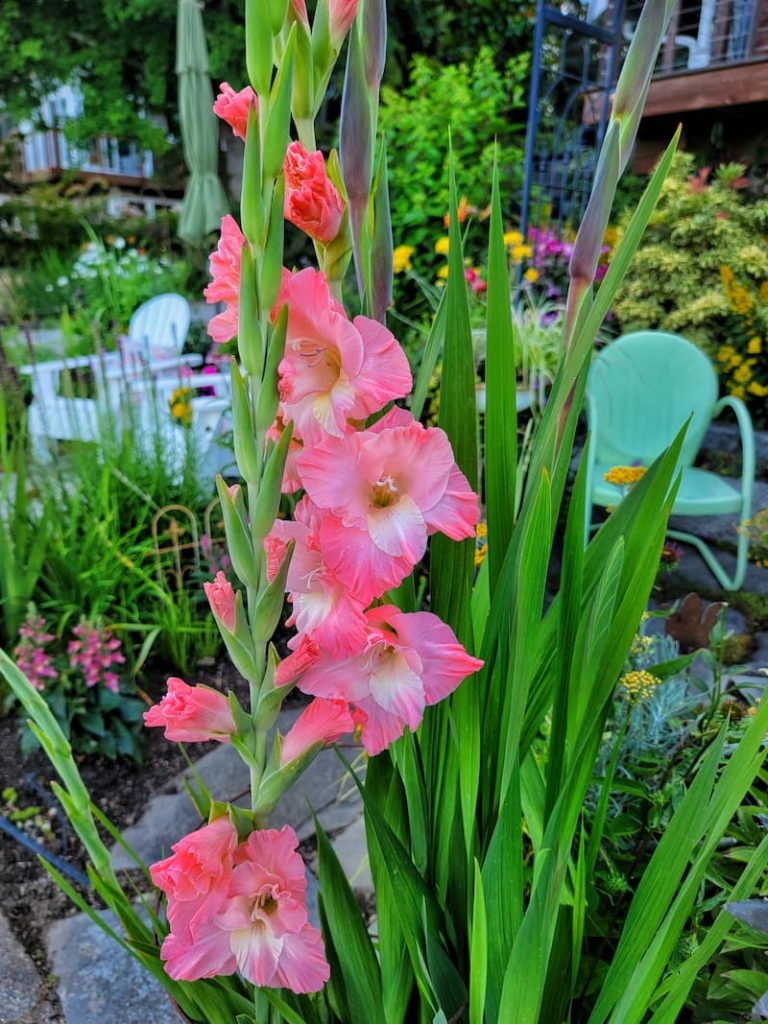
Gladiolus: tall flower spikes on single stems are classic candidates for individual staking.
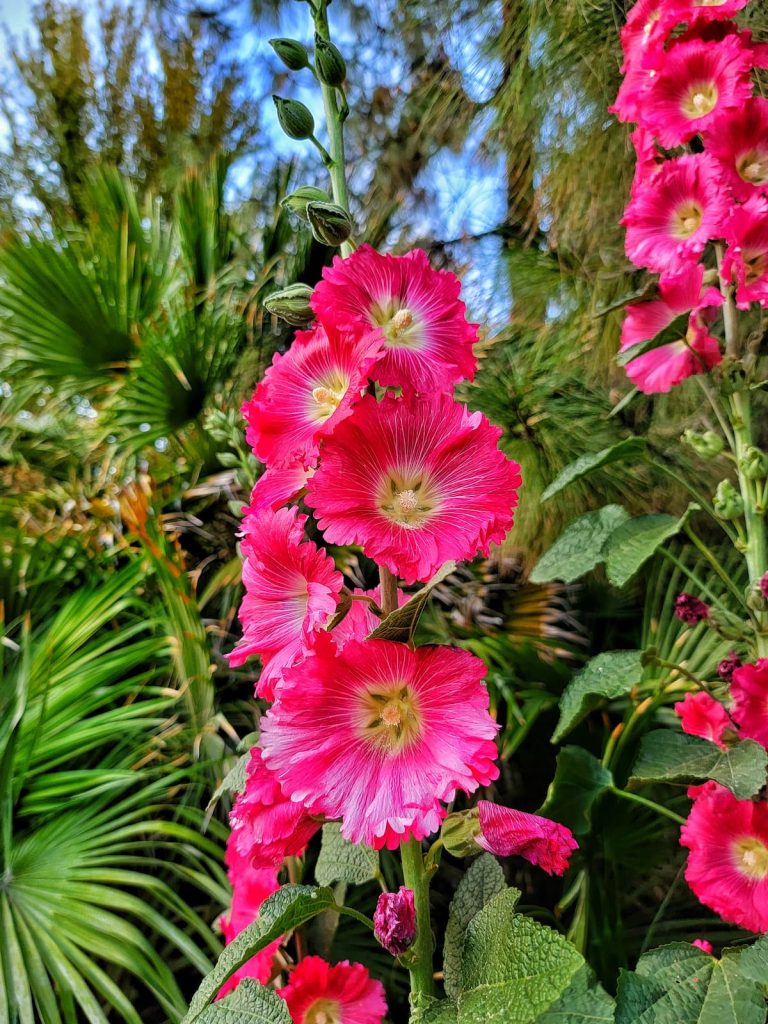
Hollyhocks: tall biennials that need staking as they get taller, especially in exposed spots.
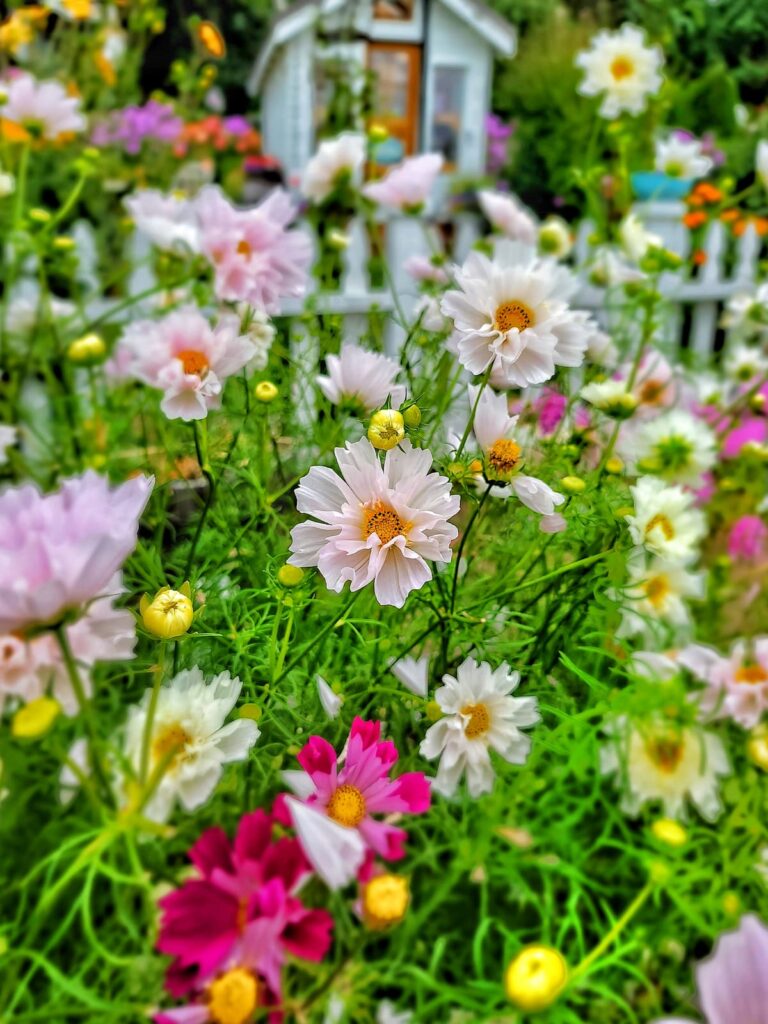
Cosmos: airy and beautiful, but surprisingly vulnerable to wind. Corralling or netting both work.
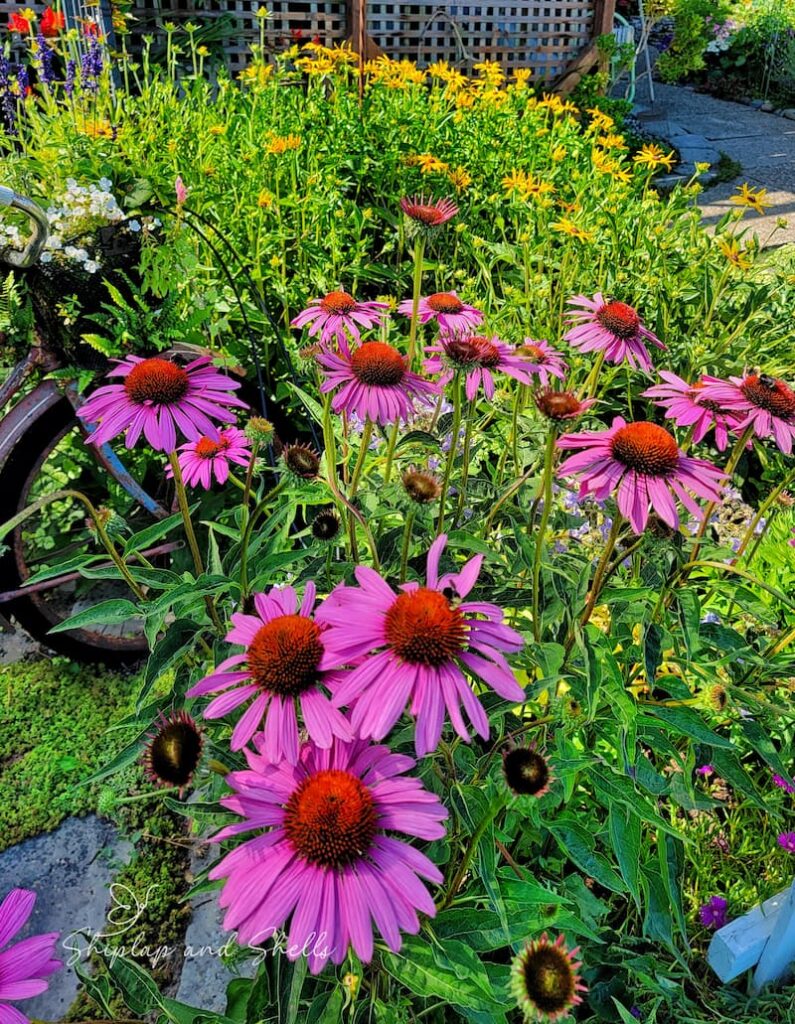
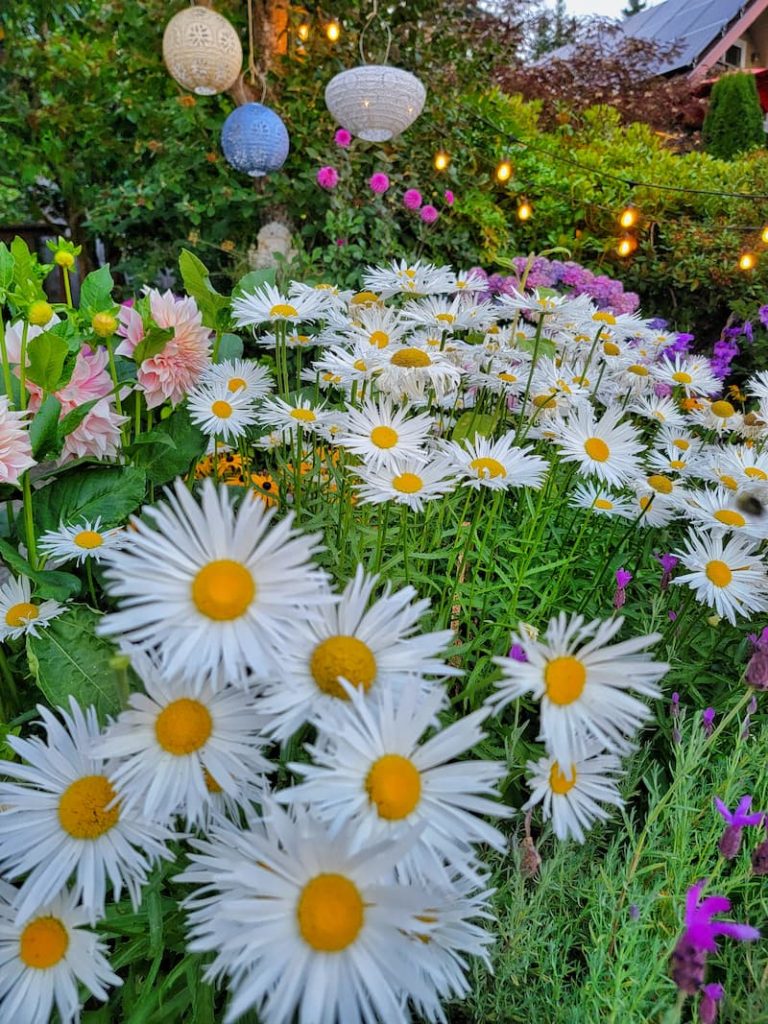
Shasta daisies and echinacea: staking early helps once the flower heads get heavy.
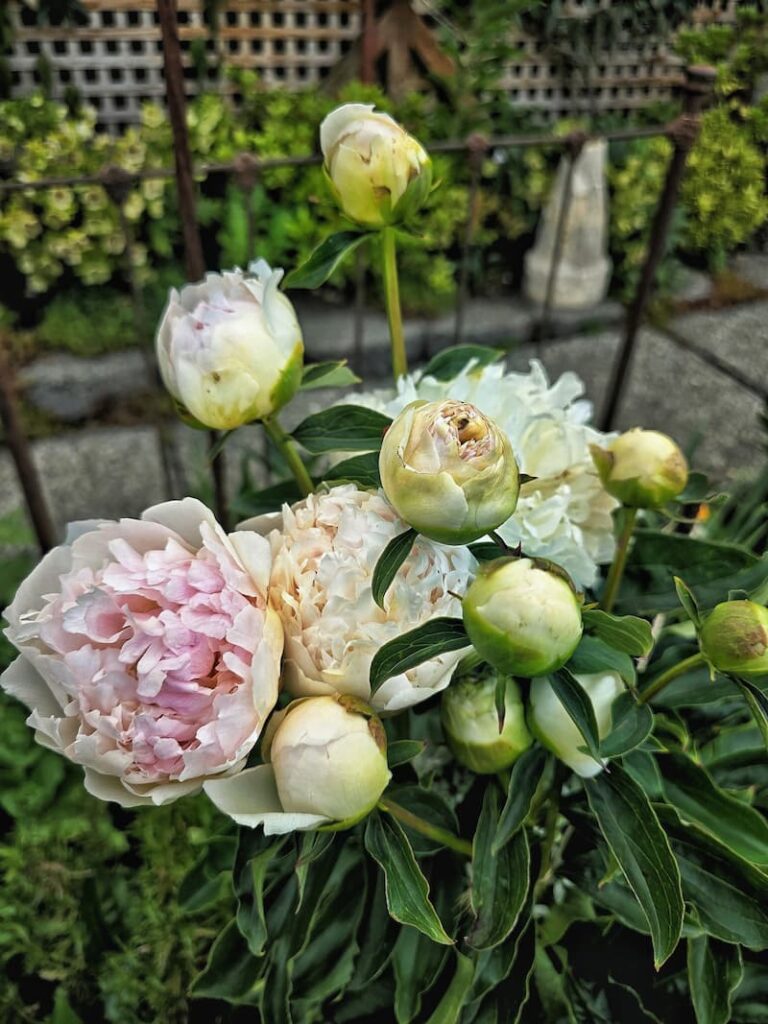
Peony: grow-through supports placed early in spring are the easiest method.
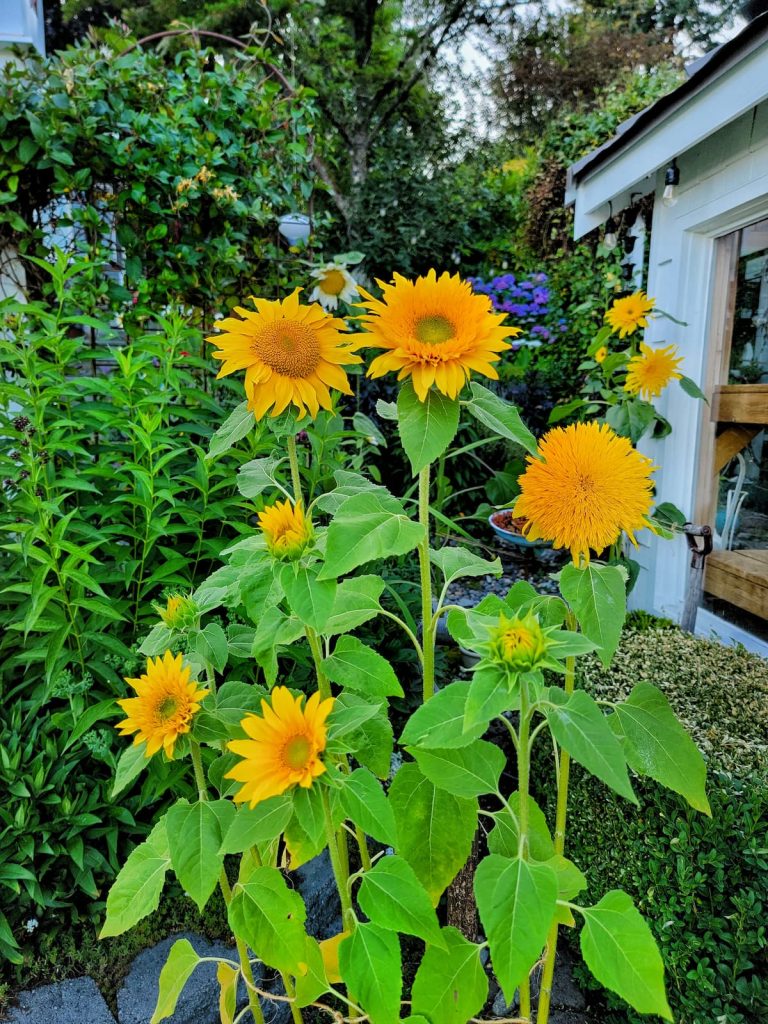
Sunflowers (tall varieties): taller types need staking; dwarf varieties generally stand on their own.
Frequently Asked Questions About Supporting Garden Flowers
When Should I Put Supports in for Tall Flowers?
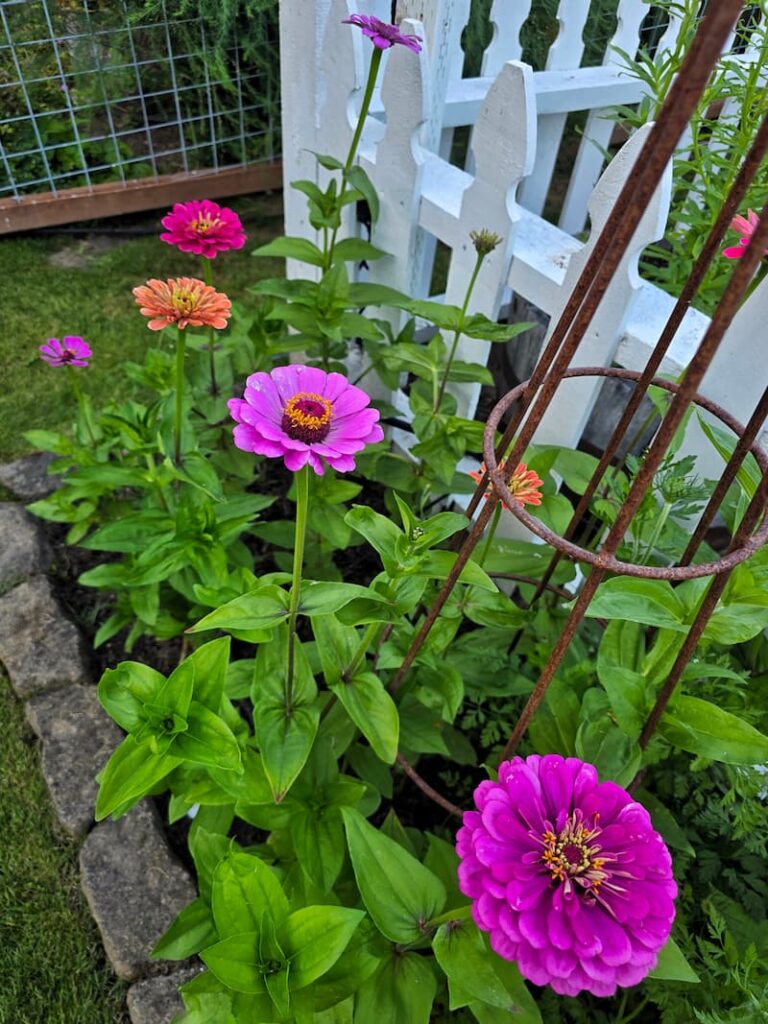
Earlier than you think. The ideal time is when the plants are about 6-12 inches tall, well before they need it. Once a stem has bent or a plant is already leaning, you’re working against the growth habit rather than guiding it.
For spring-planted flowers like dahlias and zinnias, I set up corralling and netting at planning time, so it’s done.
What is the Best Support for Dahlias?
Dahlias do well with either individual staking or corralling, depending on how many you’re growing. For a single plant or a few in a mixed border, a sturdy stake driven in at planting time works well.
For a dedicated dahlia bed, corralling the entire bed with stakes and twine at two heights is more efficient and holds up better in the wind. The dinner-plate varieties especially need strong support early, since those blooms get heavy fast.
Do Zinnias Need to Be Staked?
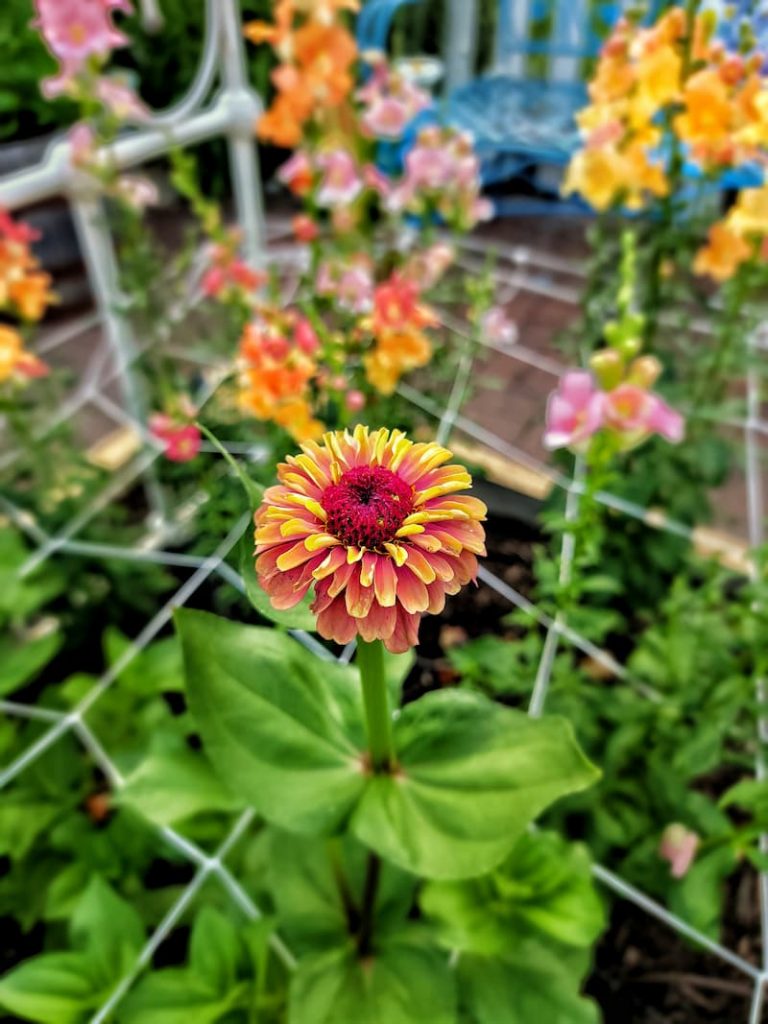
Tall zinnia varieties often do, especially in gardens that get summer wind or heavy rain. Shorter and mid-size varieties can usually manage on their own.
For tall zinnias in a cutting garden, netting is the most practical option, since it supports the entire bed without individual staking.
What Can I Use Instead of Plant Stakes?
Bamboo canes, metal garden stakes, and sturdy branches pruned from trees or shrubs all work. For corralling and netting, metal T-posts hold up better than wooden stakes over multiple seasons.
In a pinch, tomato cages work well for bushy plants like peonies and echinacea. The material matters less than getting it in place early and making sure it’s anchored firmly enough to hold through wind.
Will Staking Flowers Make Them Grow Tall?
Staking encourages straighter, more upright growth rather than dramatically more height. But for cut flower growers, that straightness matters a lot. Supported stems tend to be longer and more uniform, which makes a real difference at harvest.
How Do I Keep Sweet Peas from Falling Over?
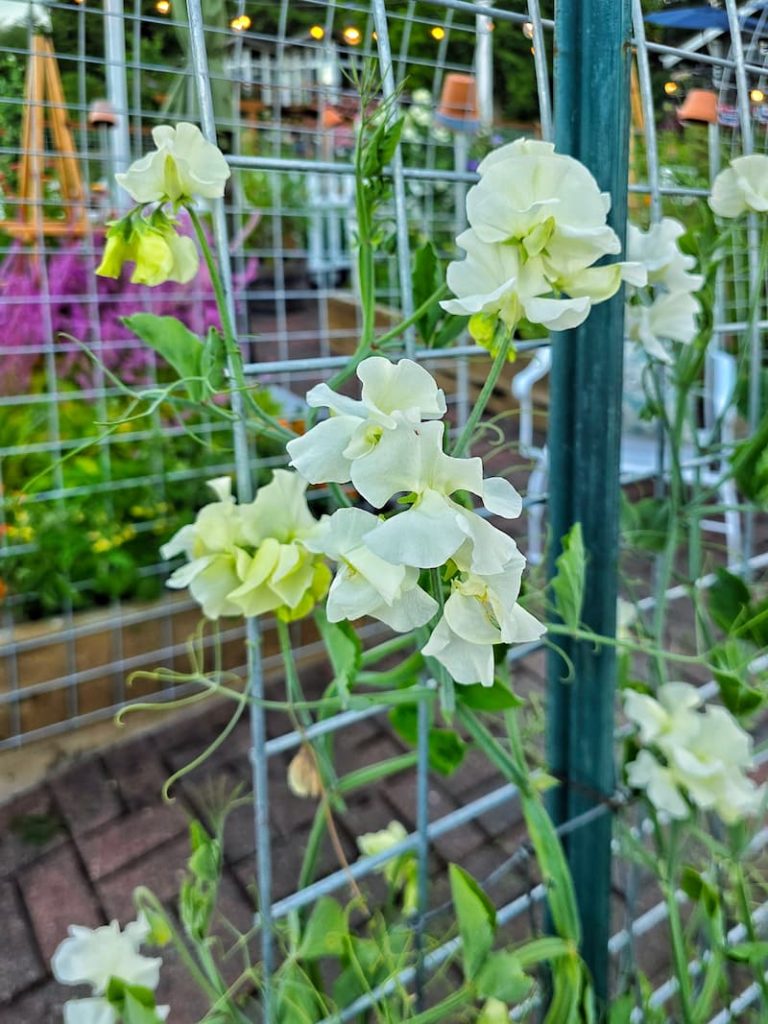
Sweet peas need something to climb from the very beginning. A trellis, netting attached to posts, or even a stretch of chicken wire between two stakes works well.
As vines grow, help them find the structure by tucking tendrils toward it. Left without support, sweet peas sprawl and tangle quickly, reducing airflow and eventually affecting bloom production.
Can I Use Tomato Cages for Flowers?
Yes, and they work especially well for peonies, echinacea, and other multi-stemmed plants that bloom in all directions. Place the cage over the plant early in spring before the stems fill in.
Standard tomato cages can also work for shorter dahlias, though taller varieties usually need something sturdier.
A Few Practical Notes
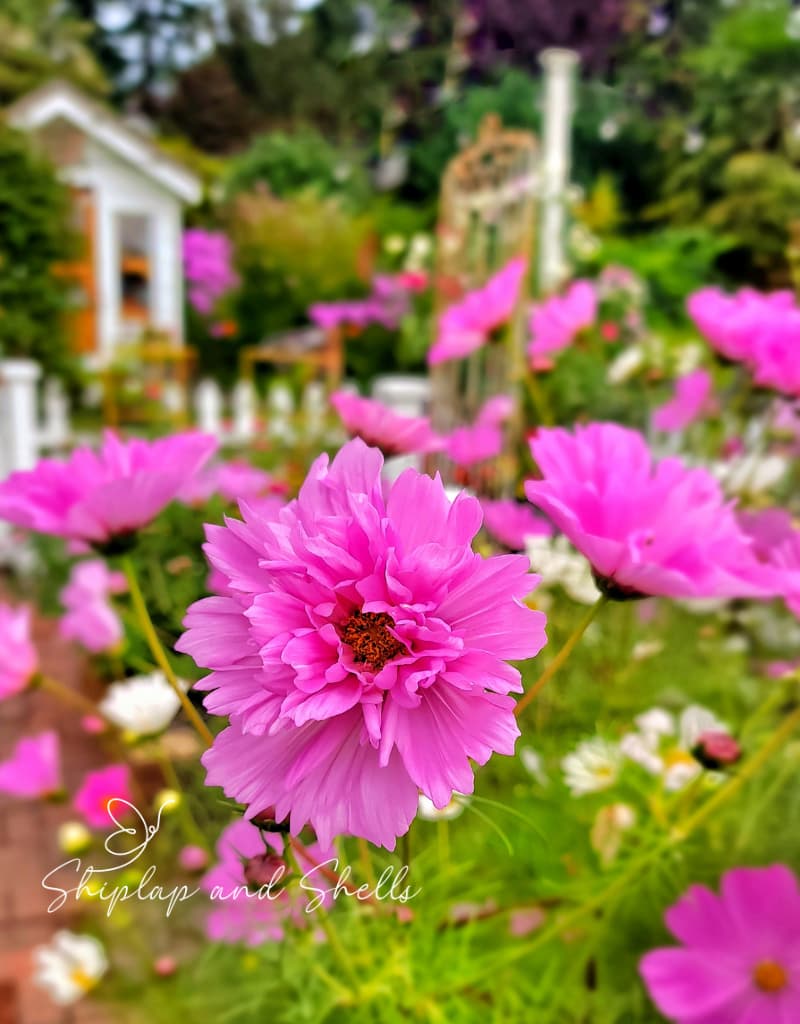
Starting support systems early is the single biggest thing you can do to make this easier. Once a plant is leaning or partially bent, you’re working against it. A few minutes of setup in early spring saves a lot of frustration in July.
For cut flower growers, properly supported stems also tend to be longer and straighter, which makes a real difference in both harvest quality and vase life.
Have a question about supporting a specific flower in your garden? Leave a comment below, and I’ll help if I can.
Until next time,
Happy Gardening!

I’m a self-taught hobby gardener. Everything I share on my blog is my opinion and what has worked for me.
MORE POSTS
For You To Enjoy
Follow Me for More Inspiration

Kim
So many great tips. Thanks for sharing your knowledge with us.
Thank you for following along Rachel. I appreciate it so much!
Liked all your comments on different things like different flowers staking them, netting them trellis such great ideals. I’ve been gardening for about 50 years and it’s so nice to have someone teach younger gardeners the way to grow in love and treat nature. Keep up the good work.🌺 the past few years have been hard on me like this year I cannot garden at all because of health problems. Enjoy now about everything. Your golden years are when you’re young, not waiting for them to come in your older age. Don’t let anyone tell you that you can’t have,you can’t do and you can’t go. Find a way that you can. Don’t wait!!! Good luck in life and gardening 👩🌾
This is so helpful Kim! Thanks for sharing! I’m going to pass on to my followers in my Sunday Round Up post this weekend!