
Visiting The Butchart Gardens: A Garden Lover’s Guide

Some gardens you visit once and check off the list. Butchart Gardens isn’t one of them. We’ve been here in June, August, and September, and I find something new to photograph every single time.
During our summer boat trips through the San Juan Islands and into British Columbia, we try to explore new anchorages and towns. But Butchart always makes the cut. The blooms change with the season. The beauty doesn’t.
You’ll see photos from several different visits throughout this post, so you can get a feel for how the gardens shift from early summer into fall.

As an Amazon affiliate, I earn a commission from qualifying purchases at no additional cost to you. My blog also contains other affiliate links for your convenience. Click here to read my privacy policy.
The Story Behind Butchart Gardens
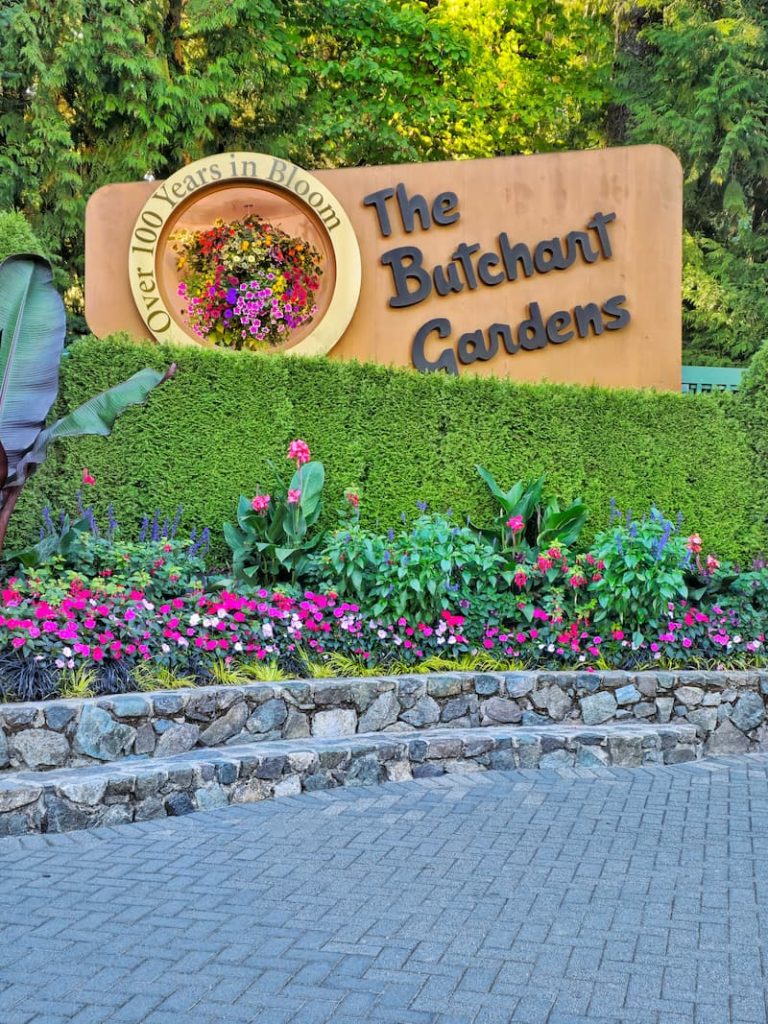
The gardens began in the early 1900s, when Robert and Jennie Buchart moved to Vancouver Island to build a cement plant on a limestone deposit at Tod Inlet.
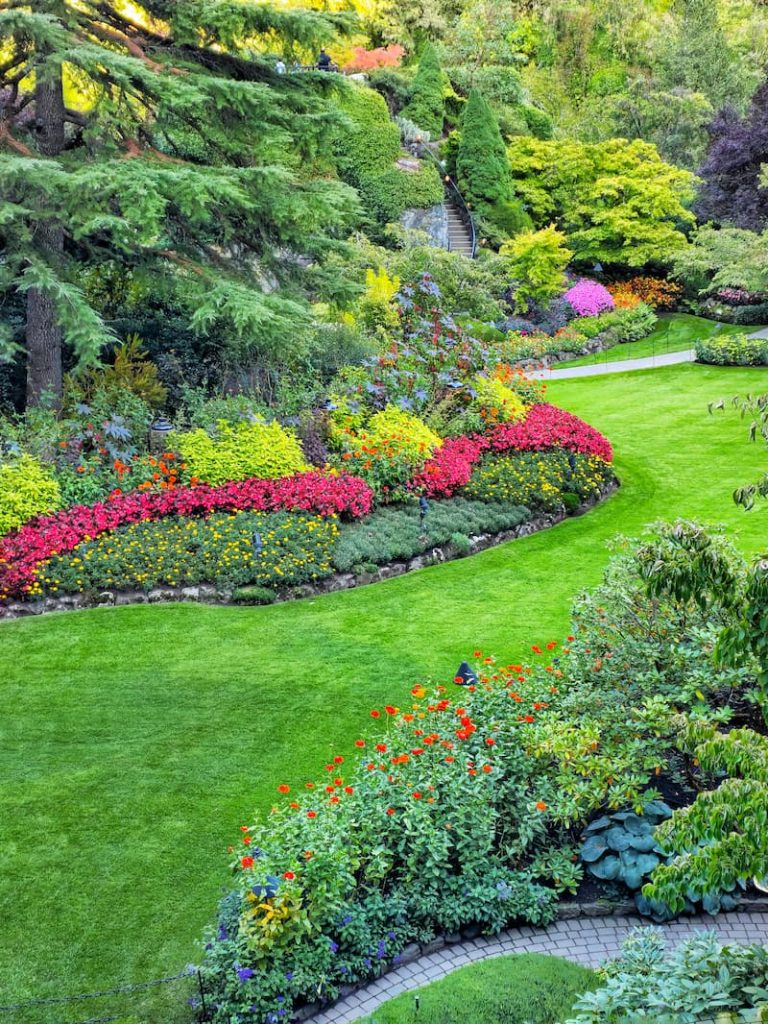
By 1909, the quarry was nearly depleted. Jenny looked at that bare industrial pit and saw a garden.
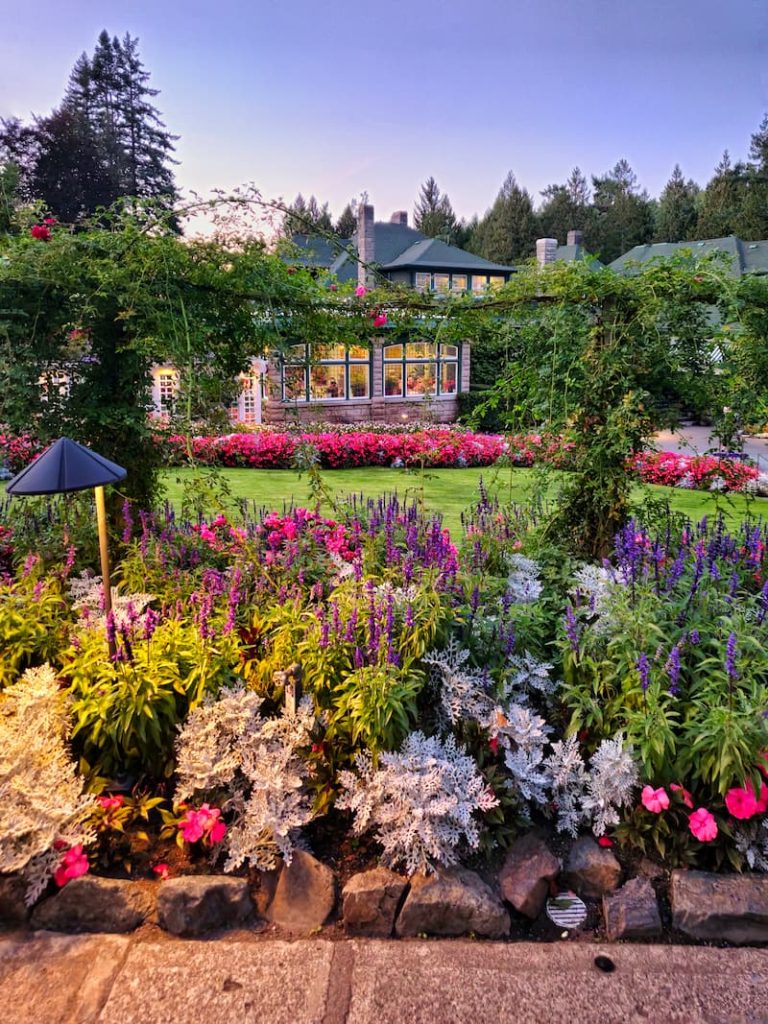
She started with the Sunken Garden, then kept going. The formal Italian Garden. The serene Japanese Garden.
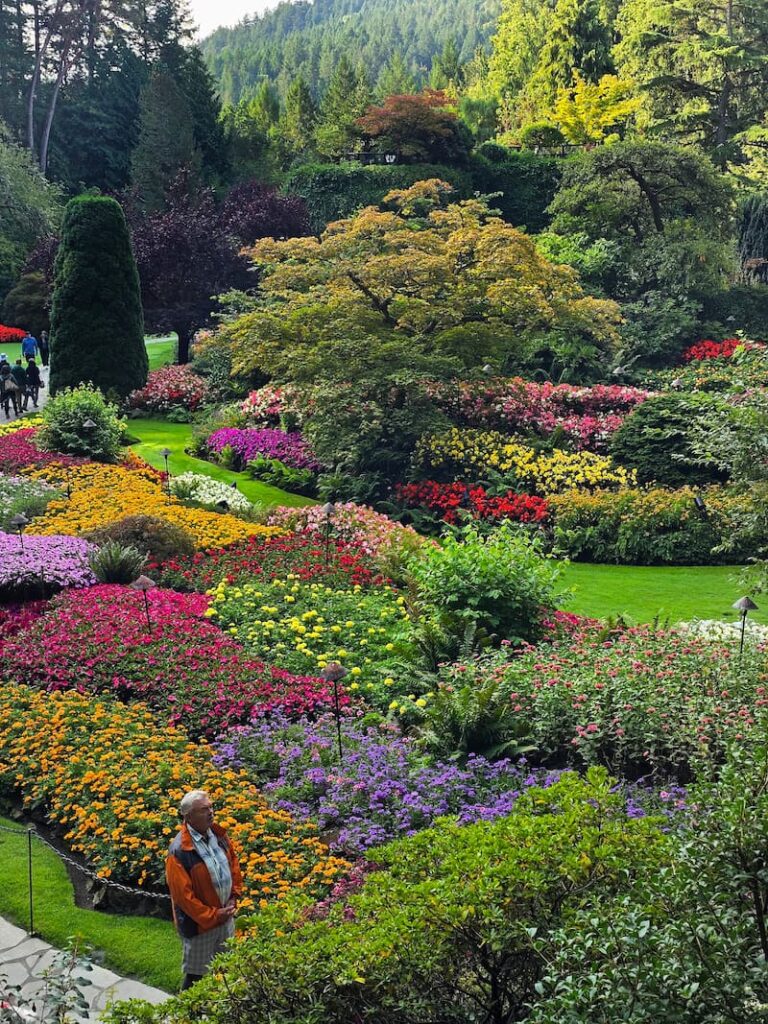
Generations of the Butchart family have maintained and expanded her work ever since, and the gardens are now recognized as a National Historic Site of Canada.
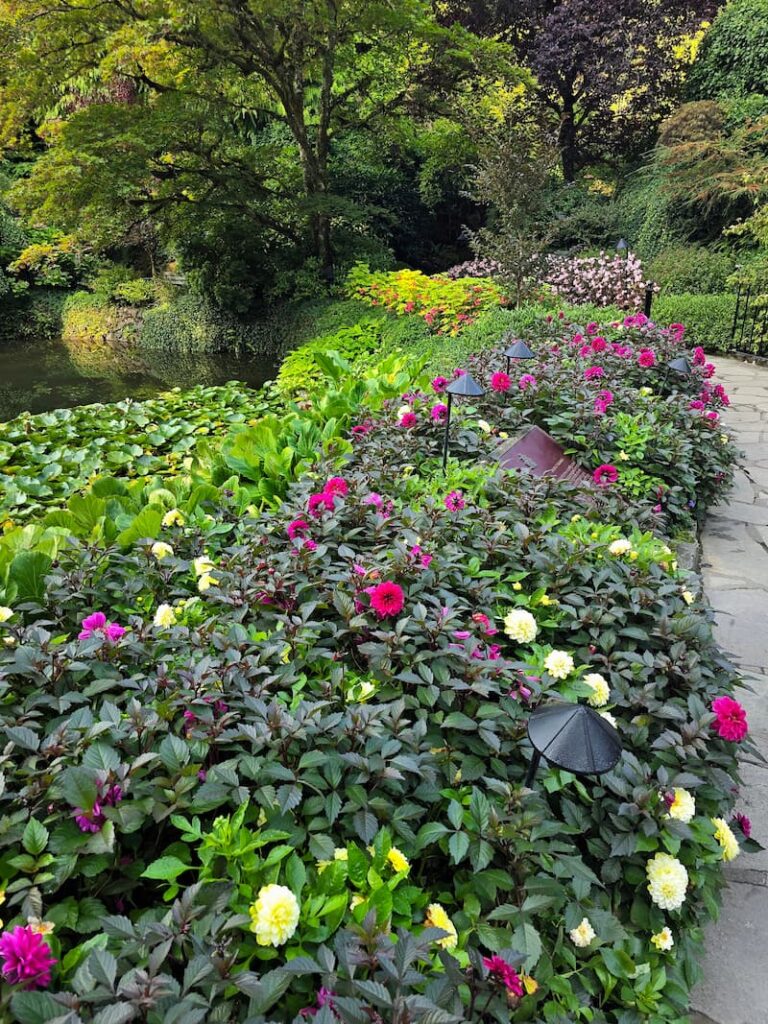
Today, they span 55 acres and over a million bedding plants in more than 900 varieties. Every time I stand at the Sunken Garden lookout, I think about what it took to see a flower garden in a hole in the ground.
The Sunken Garden
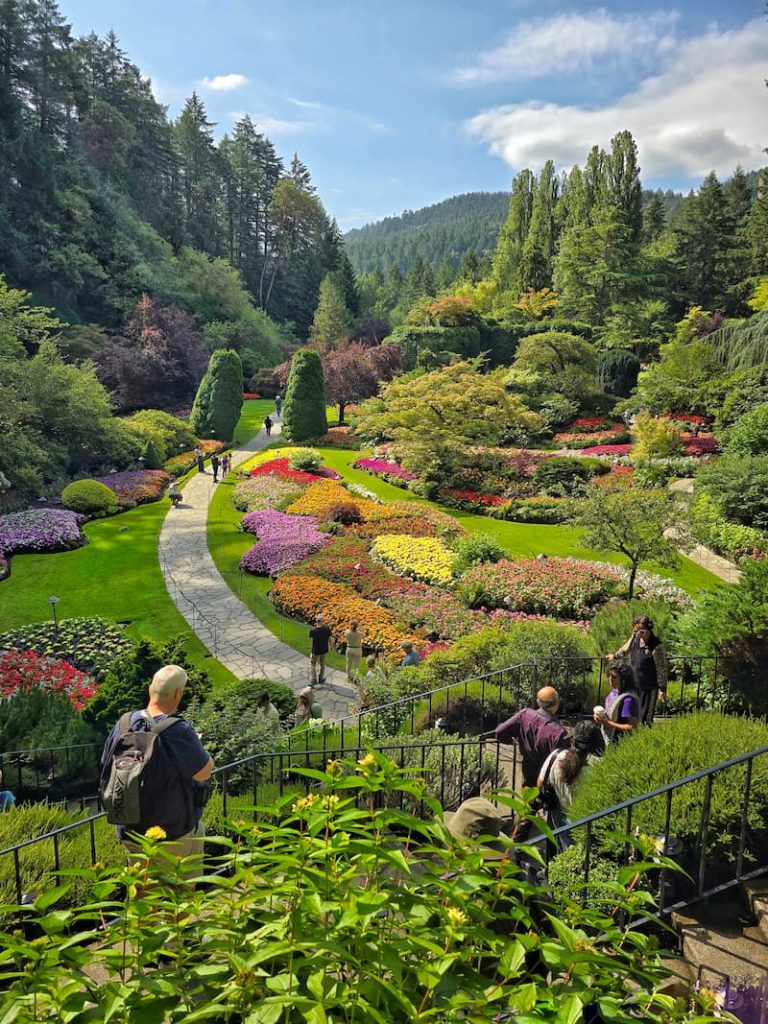
Jennie’s first garden, and still my favorite. Walking down those stairs into the quarry always makes me excited.
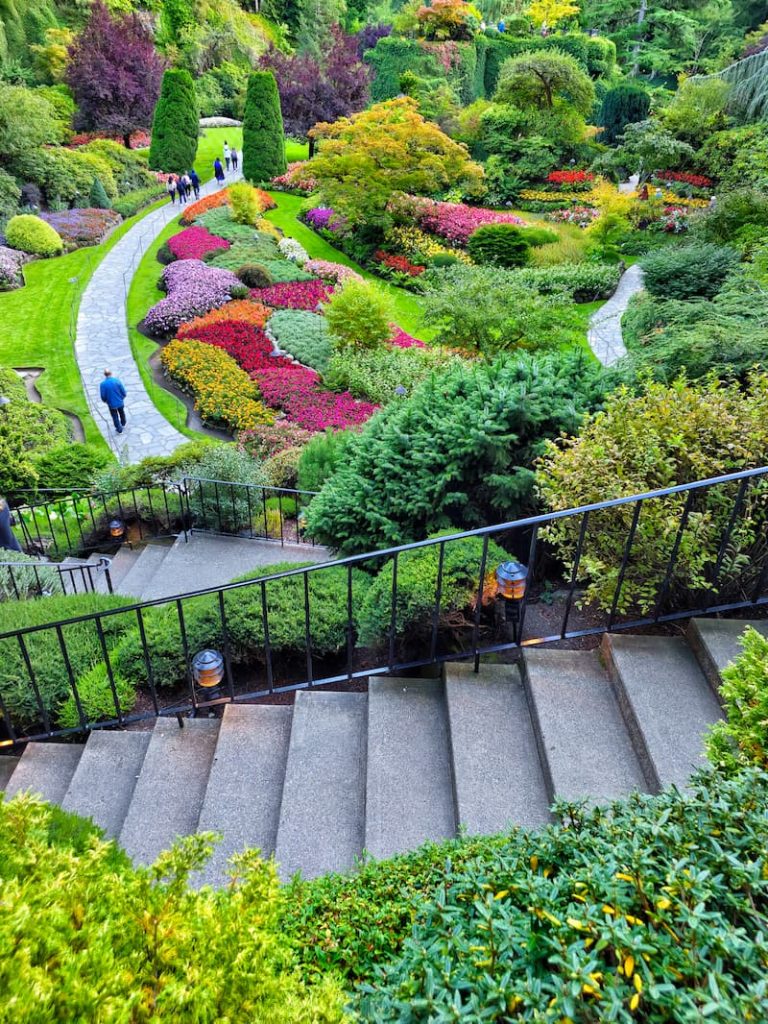
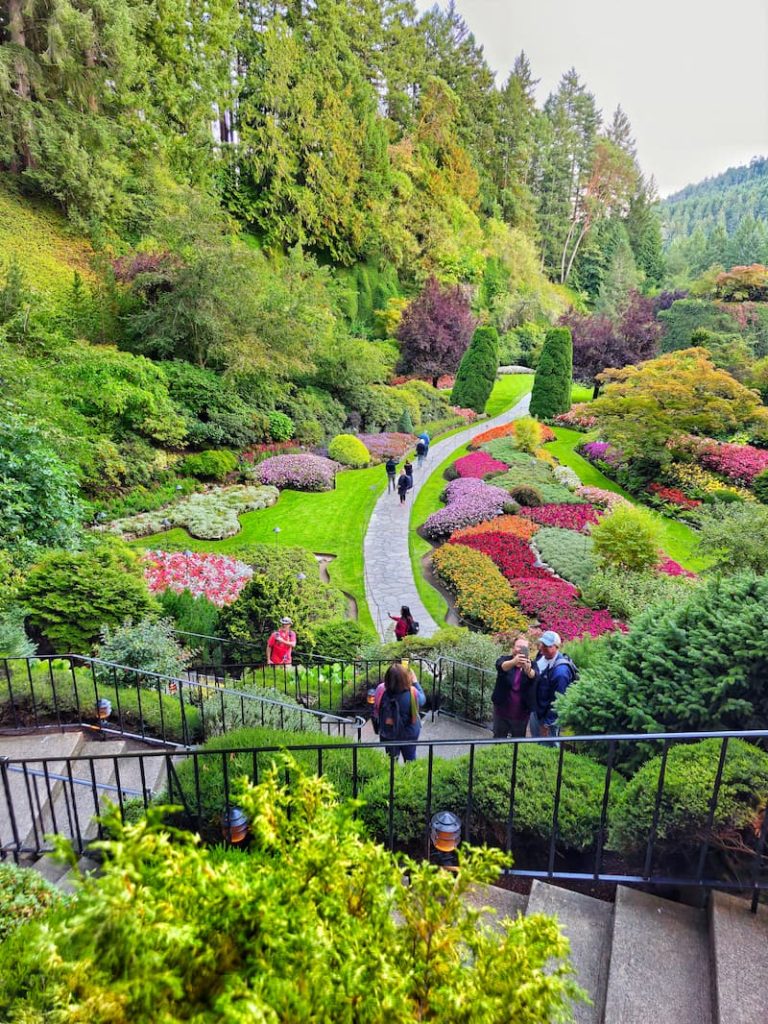
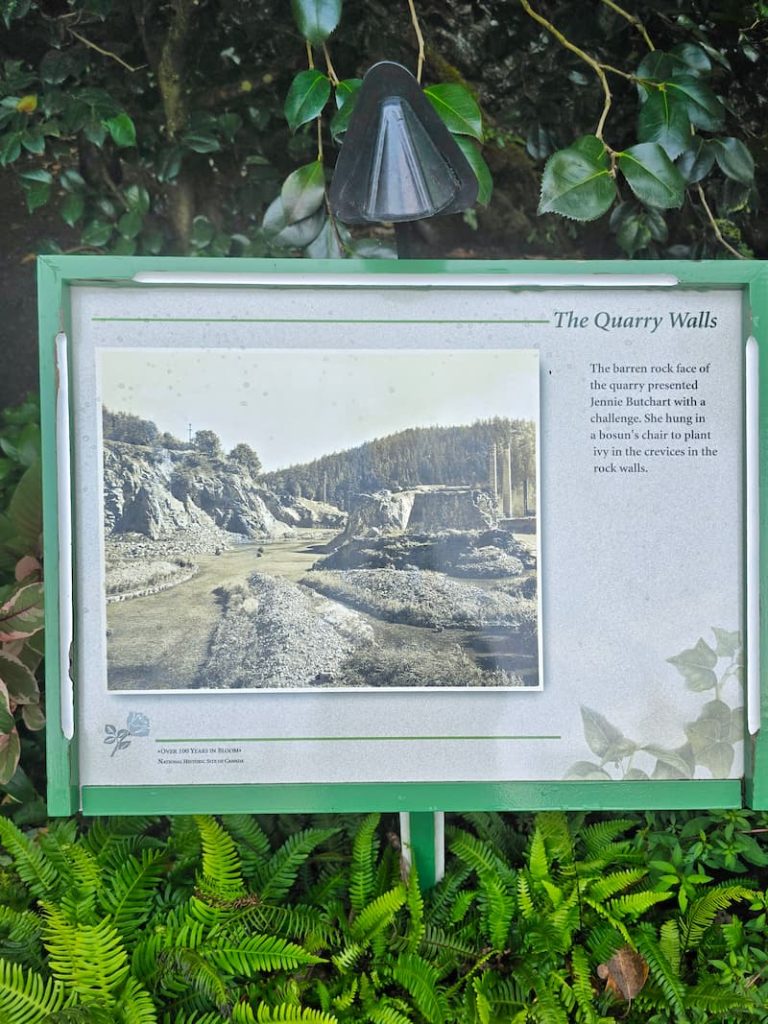
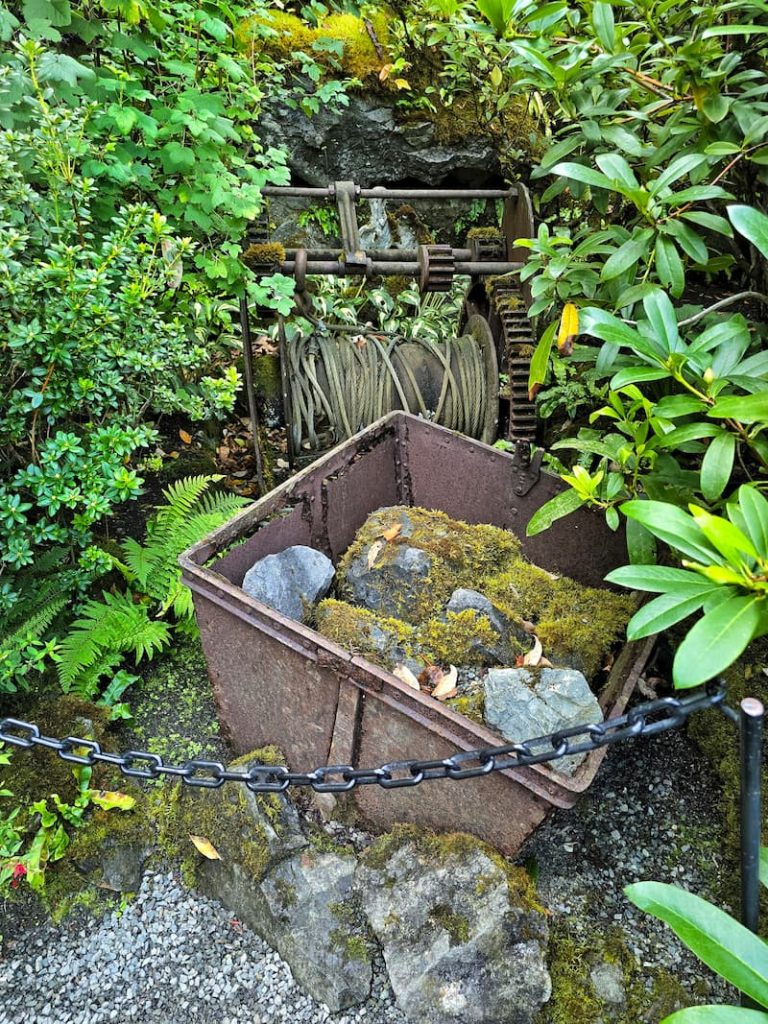
She wanted ivy growing in the rock wall crevices, so she had herself lowered down the quarry walls in a bosun’s chair to plant it. That detail tells you everything about her.
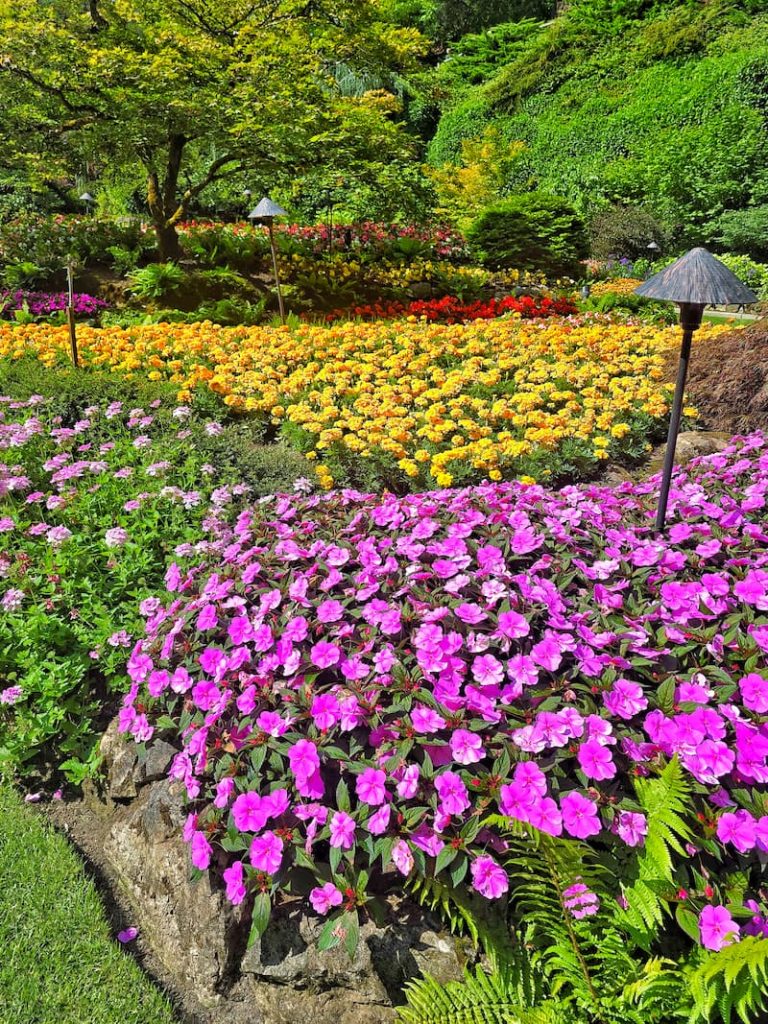
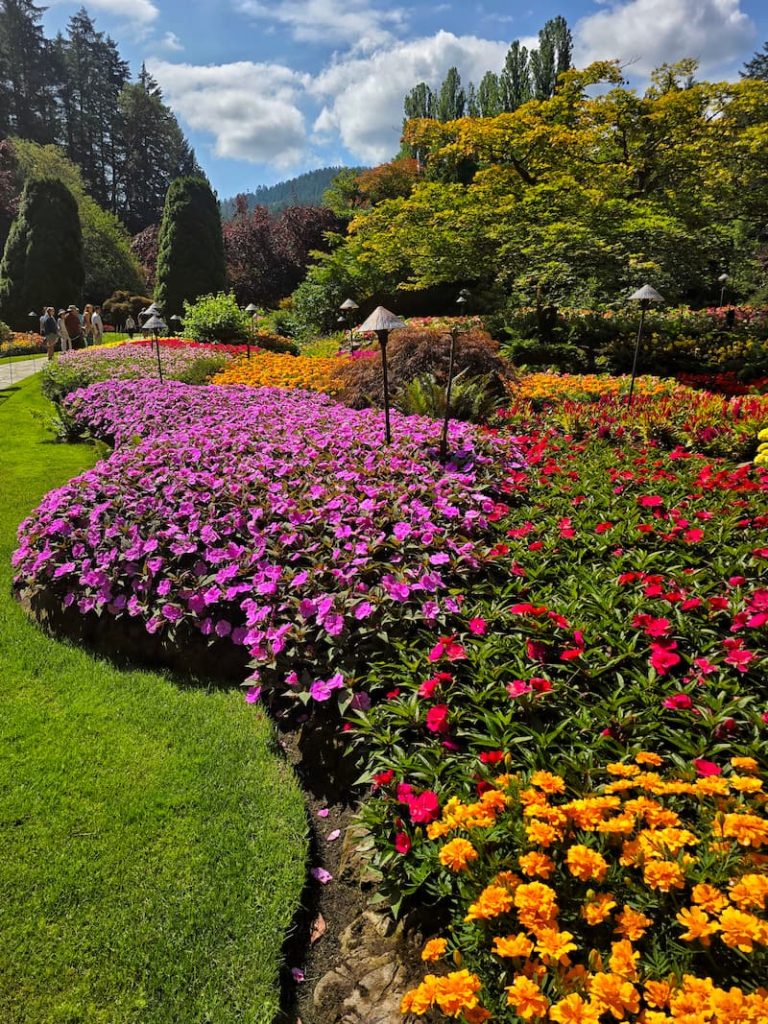
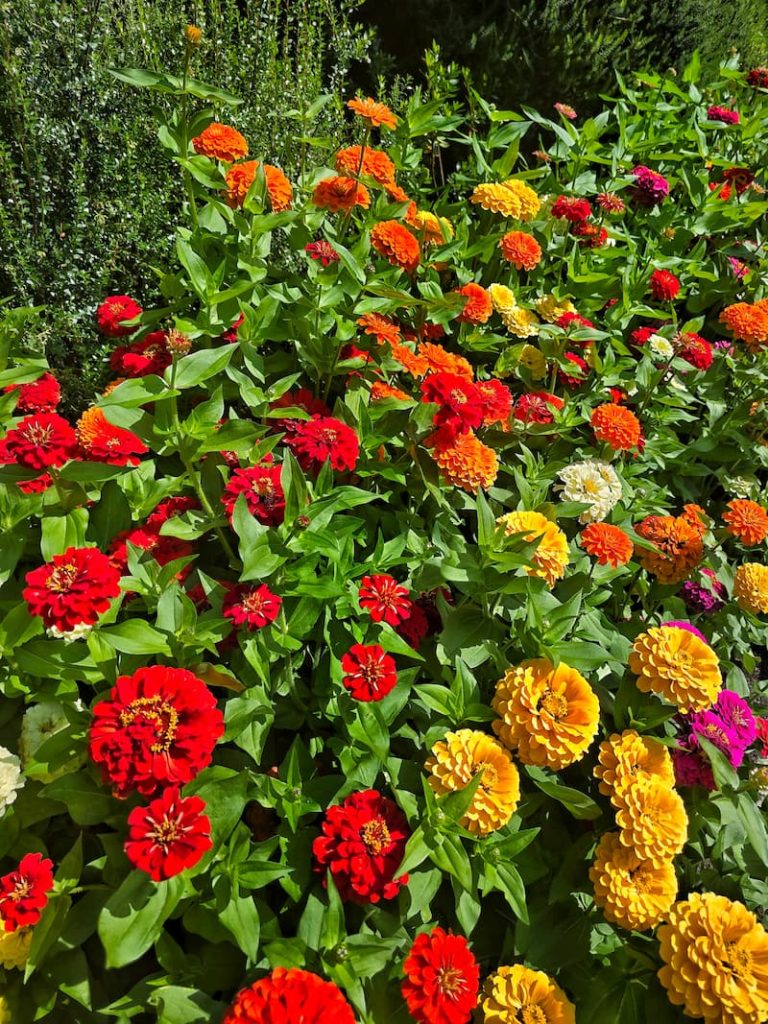
The beds are filled with annuals like impatiens, zinnias, and marigolds, surrounded by trimmed hedges and a central pond.
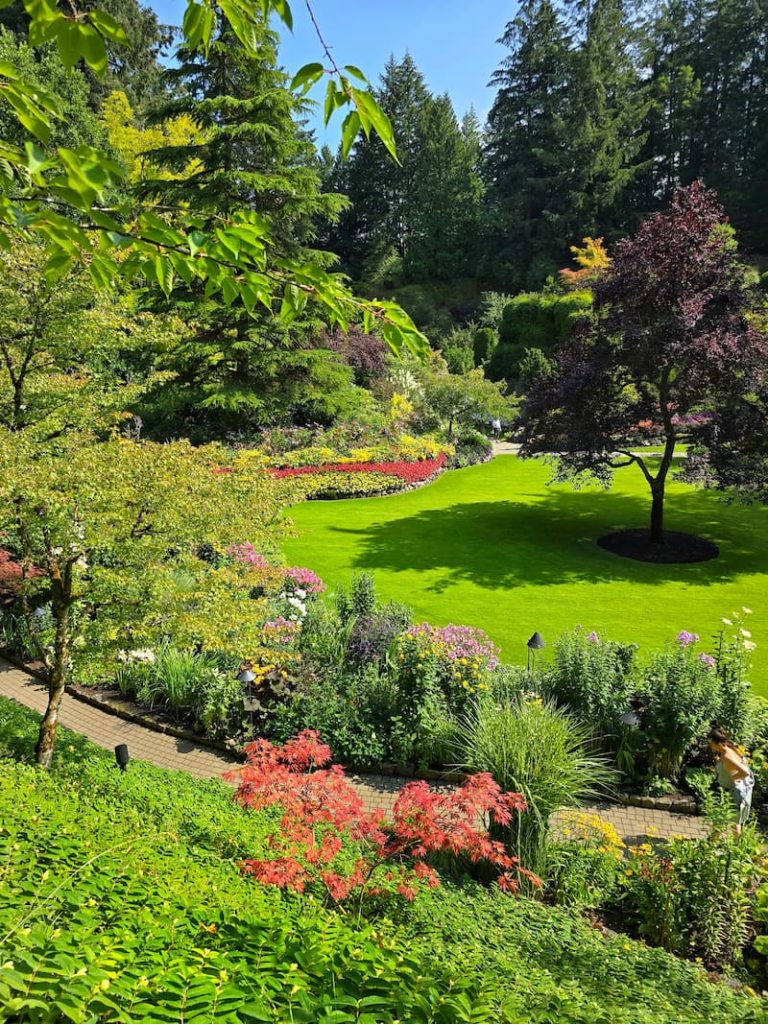
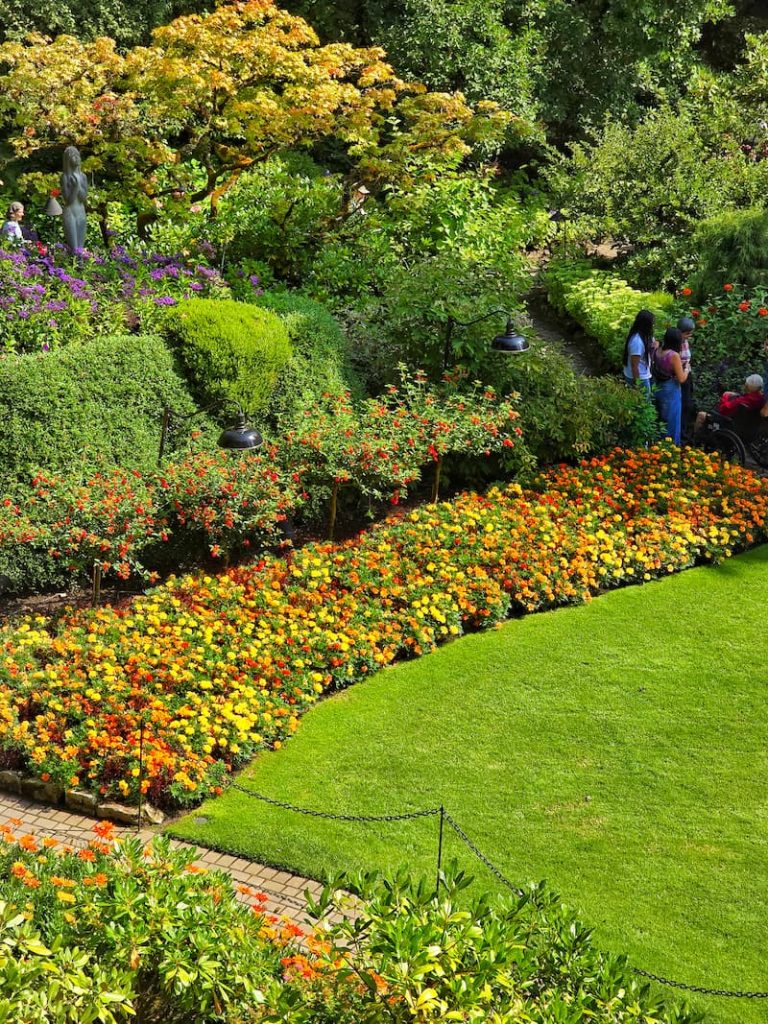
Winding paths lead to hidden corners and the sound of trickling water.
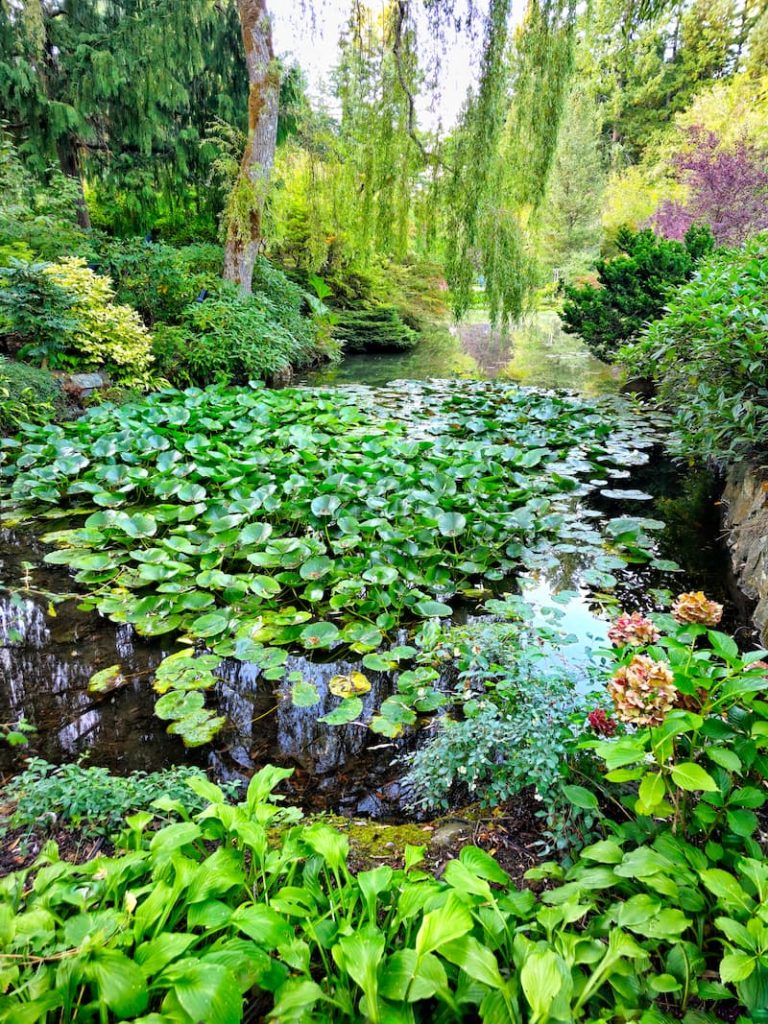
Off to one side of the Sunken Garden sits a freshwater pond covered with water lilies.
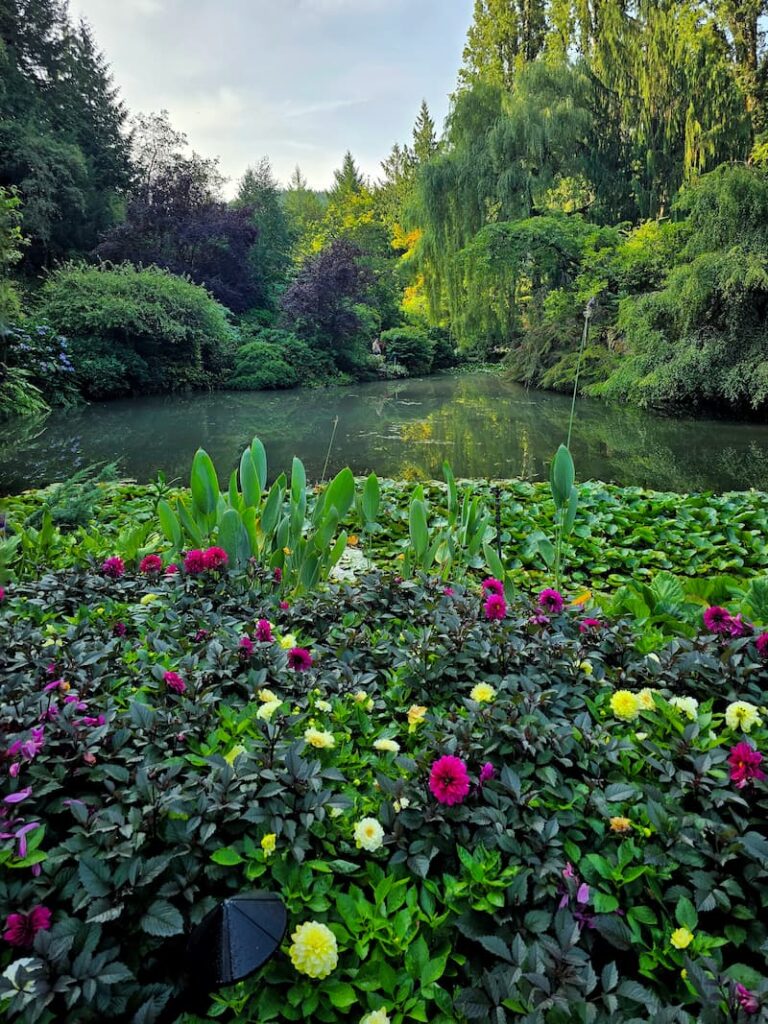
The flowers planted around the edge reflect on the still surface.
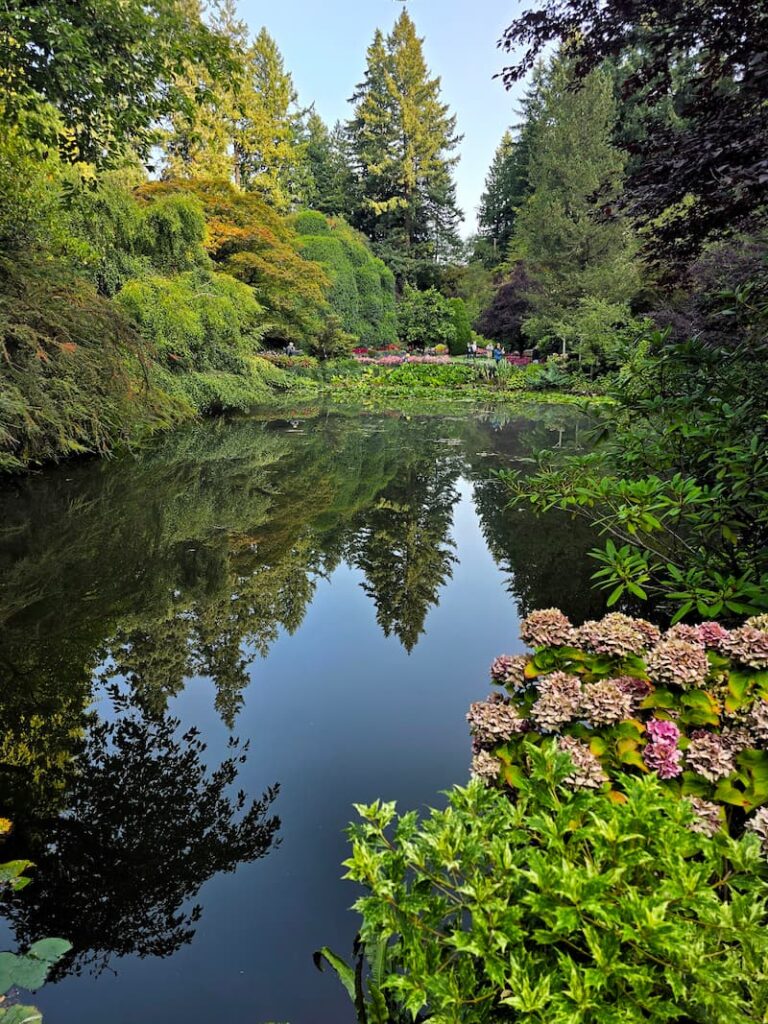
It’s one of the prettiest, quietest corners of the whole garden.
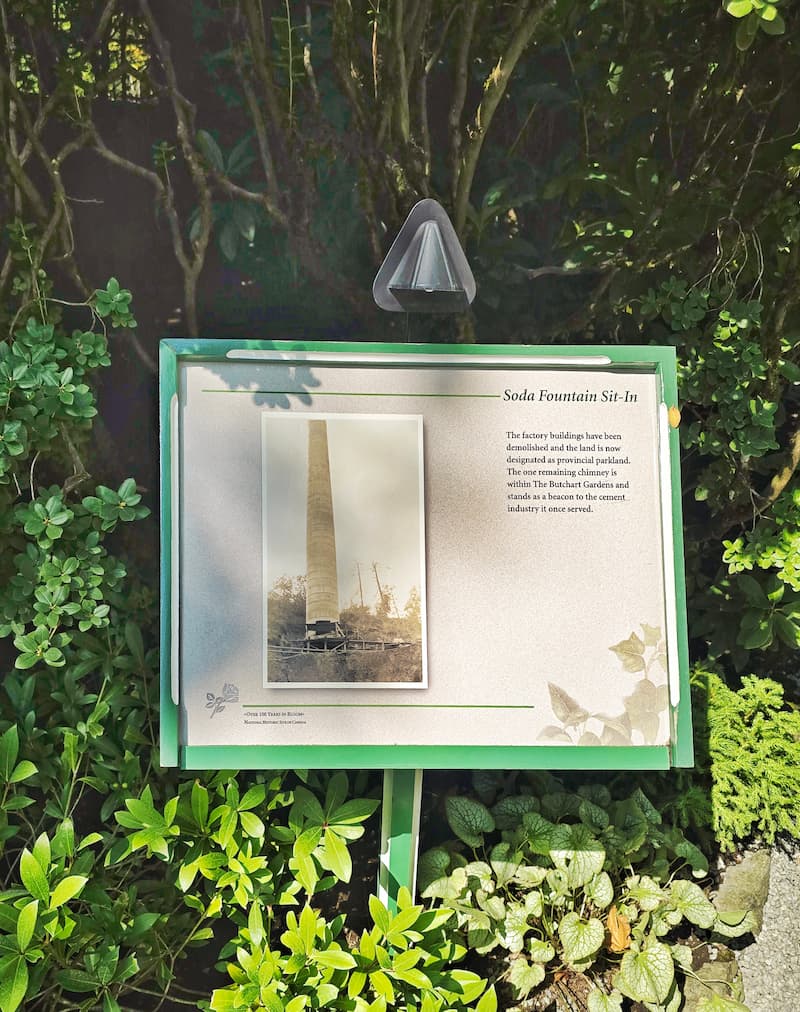
The one remaining cement plant chimney still stands within the gardens, a nod to what this place used to be.
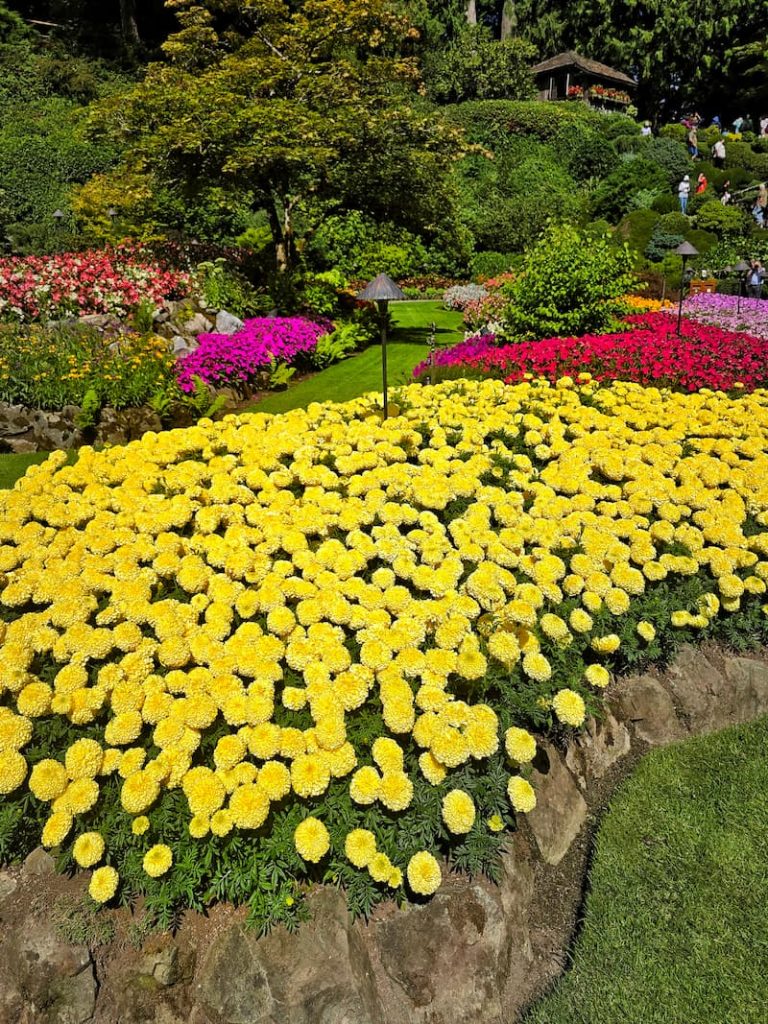
My tip: visit early in the morning, then come back in the evening to see the garden lit up. It feels like two different places.
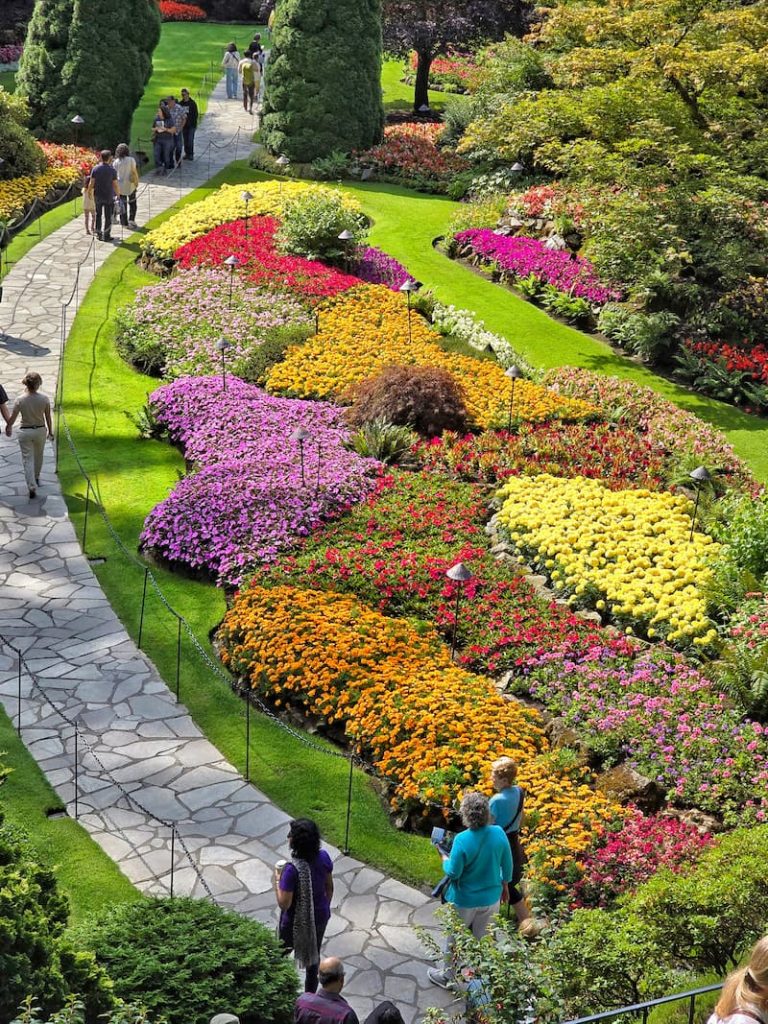
Fun Number Facts: The Sunken Garden
- 9 Years to Create
- 5 Acres of Gardens
- 151 Flower Beds
- 65,000 Bulbs Planted for Spring
The Rose Garden
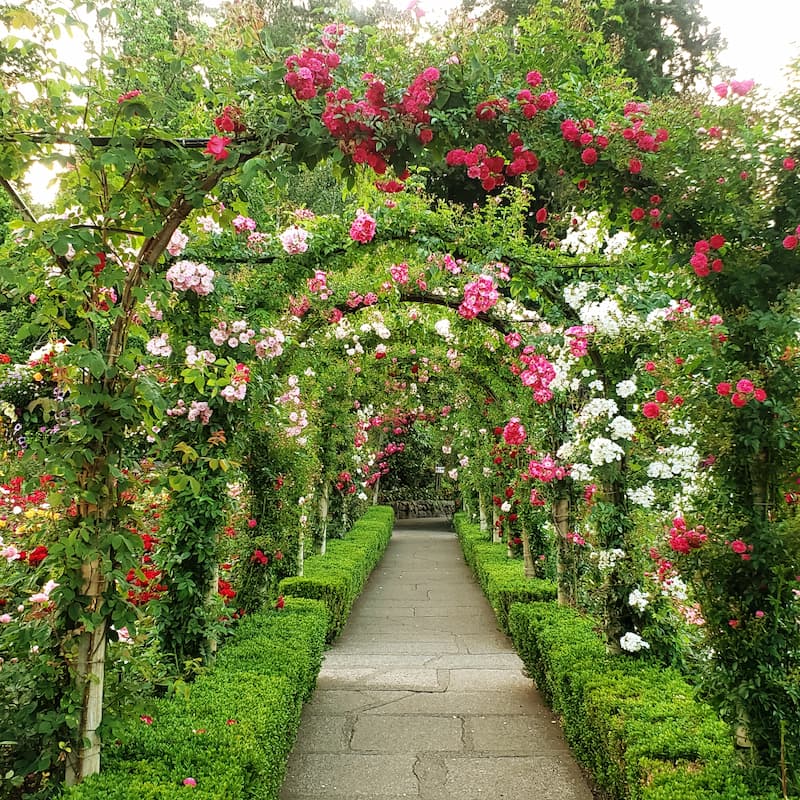
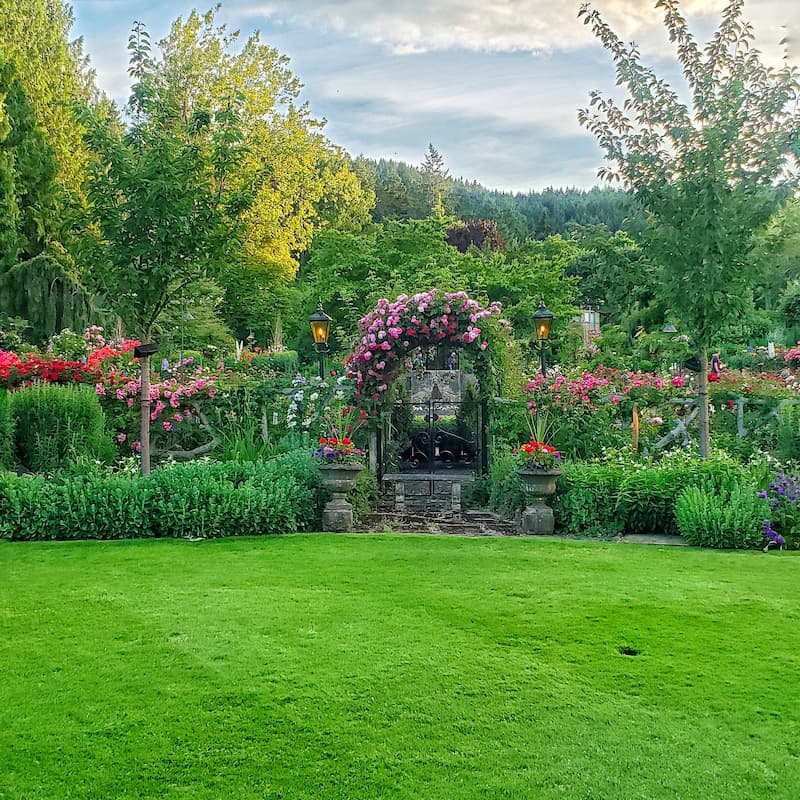
A short walk from the Sunken Garden brings you to rows of roses in every shade you can imagine.
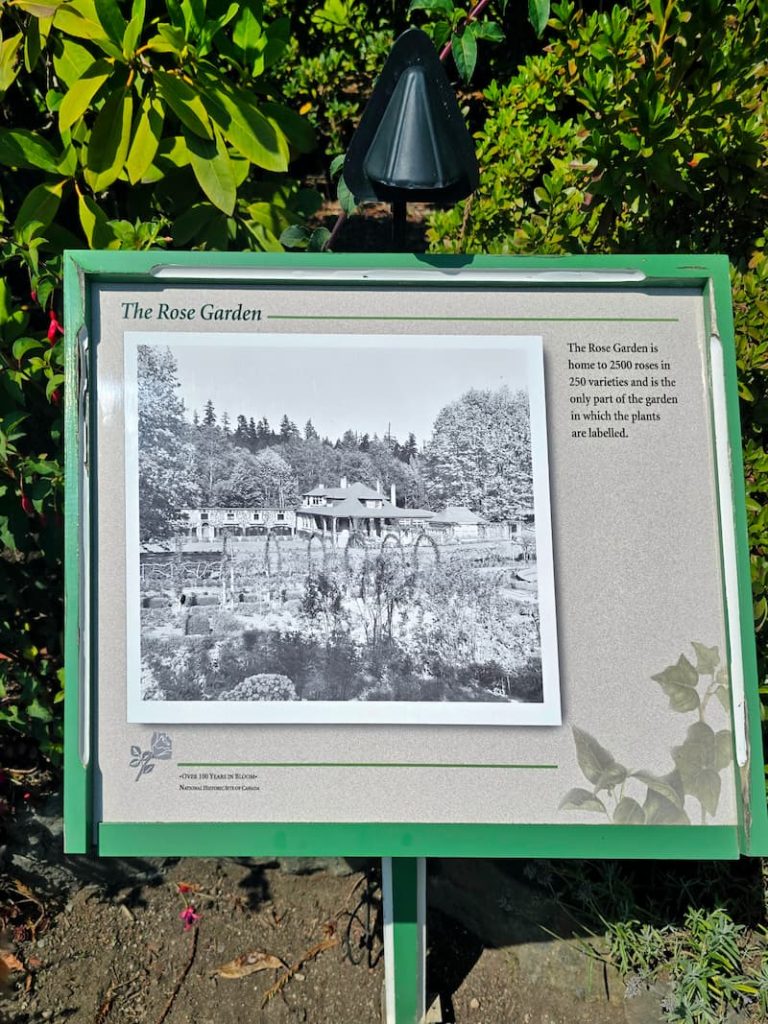
The collection includes 2,500 plants, with florabundas, ramblers, climbers, and hybrid teas blooming from summer into early fall.
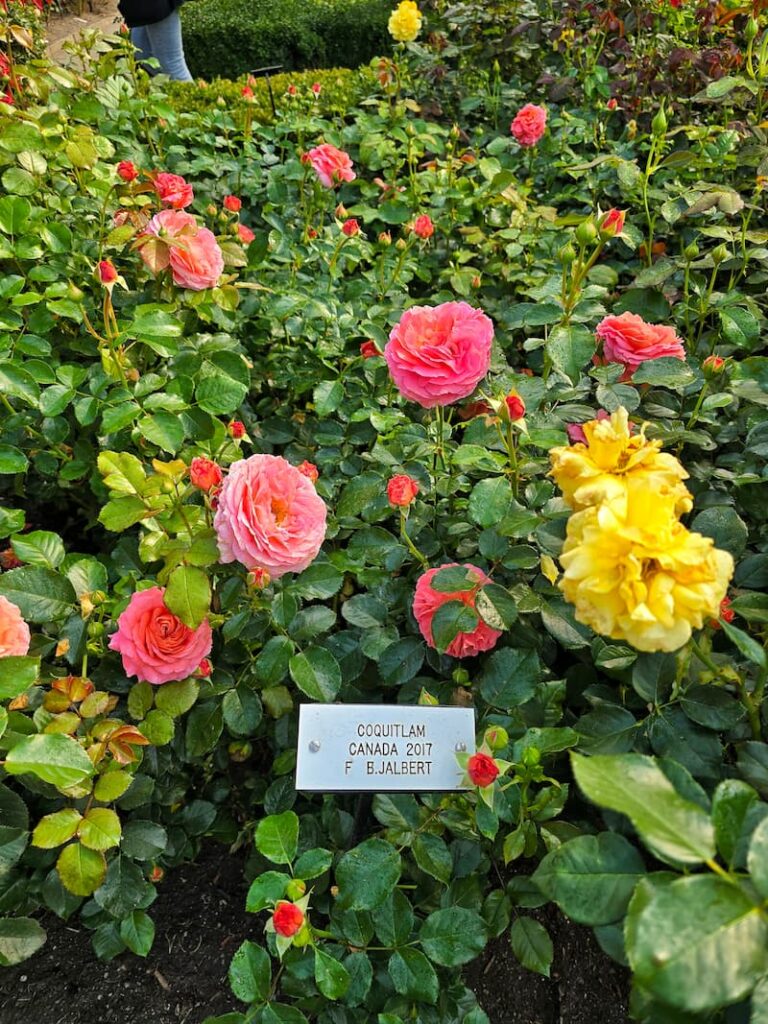
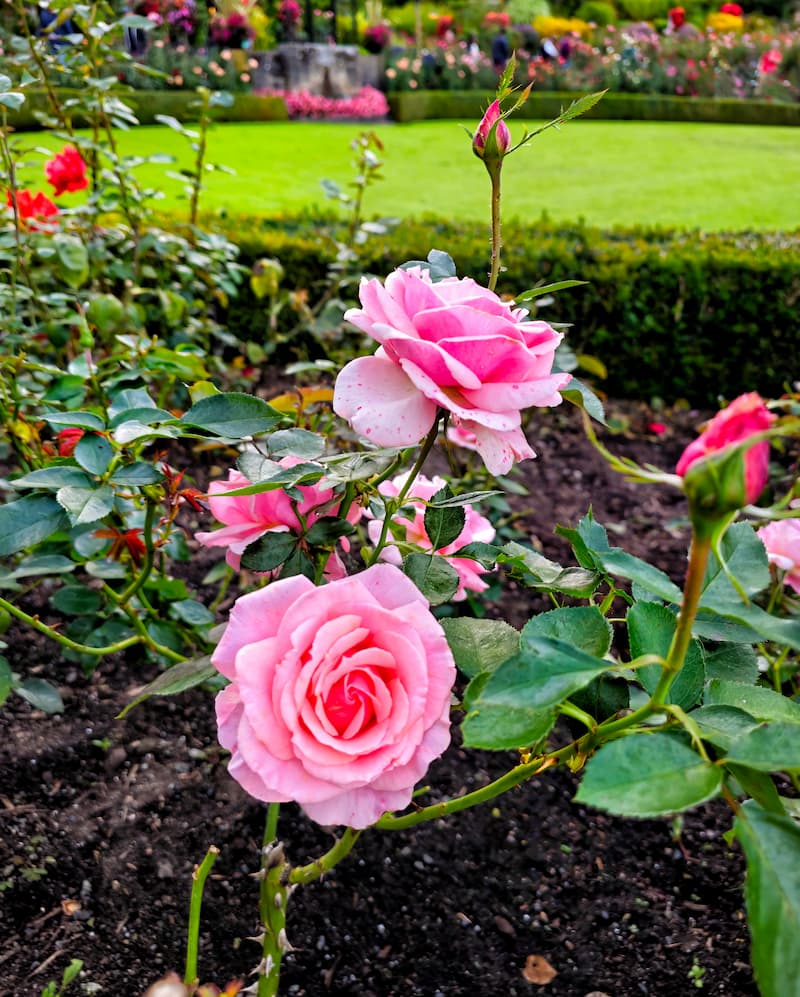
More than 250 varieties are labeled, which I appreciate as someone who always wants to know exactly what I’m looking at.
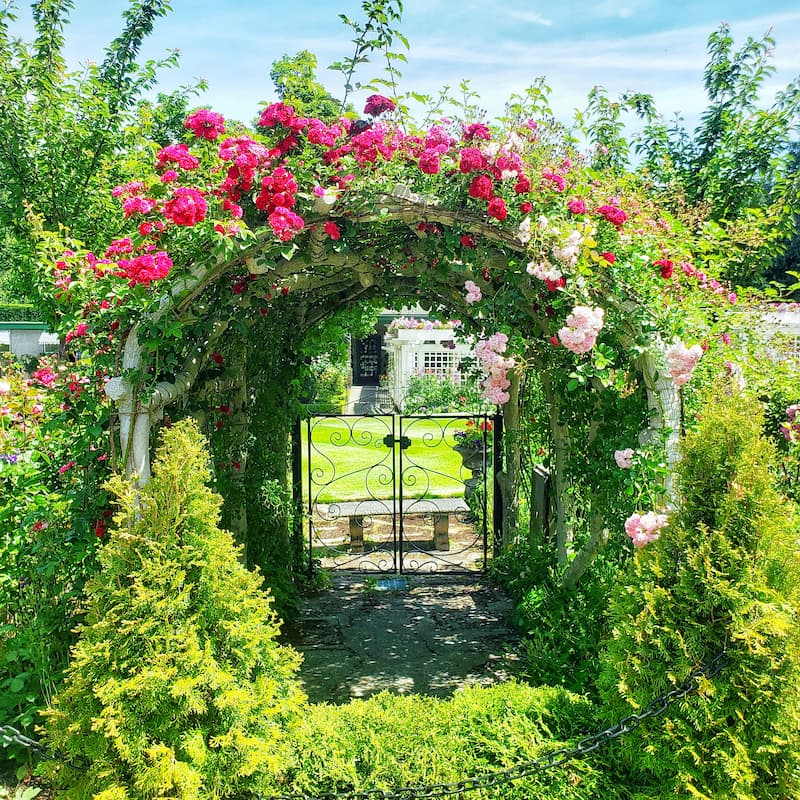
The arched arbor covered in climbing roses is worth the walk on its own.
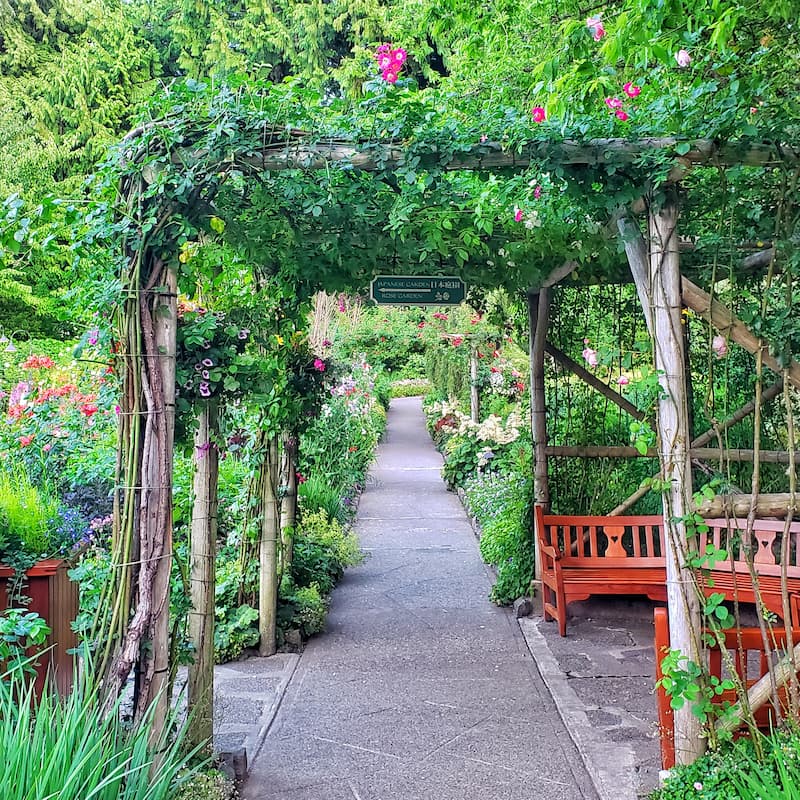
A run of 30 rose-covered arches leads you into the Rose Garden. The climbers and ramblers are trained up and over each one, so by midsummer, you’re walking through a tunnel of roses. I slow way down here, camera out the whole time.
Fun Number Facts: The Rose Garden
- 7 Types of Roses
- 280 Varieties of Roses
- 2,500 Rose Plants
- 30 Rose Arches
The Japanese Garden
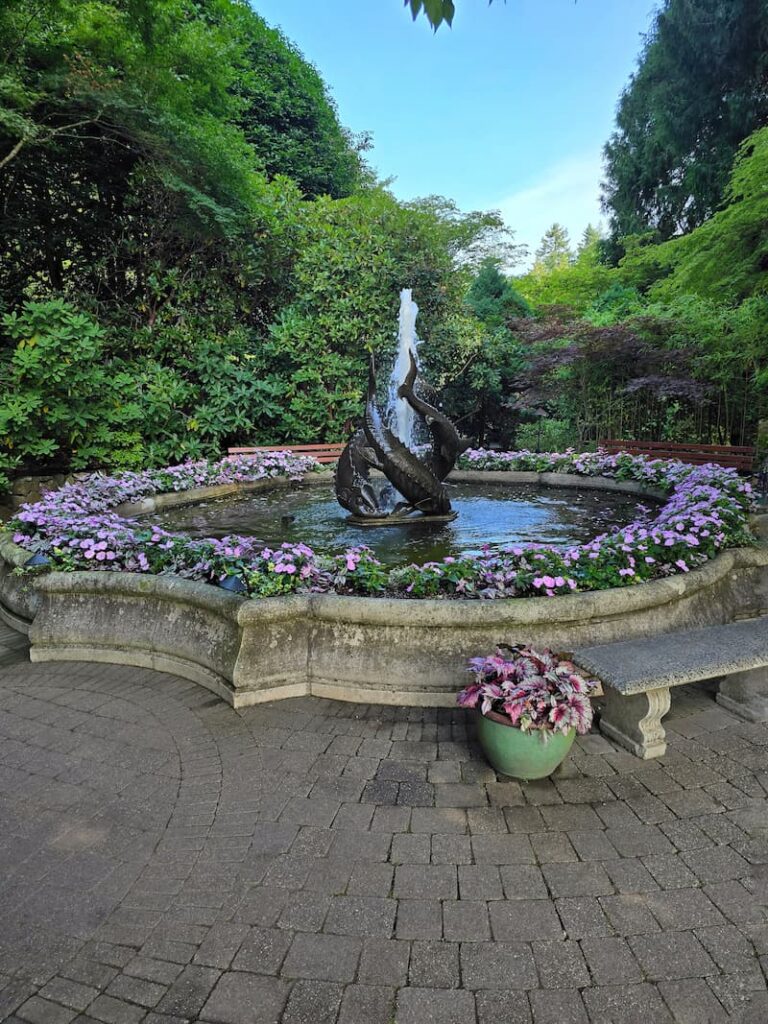
Just past the rose arches, where the path splits toward the Italian and Japanese Gardens, you’ll find the Sturgeon Fountain. Three bronze sturgeon arch and dive in a circle, water jetting up around them.
Sirio Tofanari, the same artist behind the donkey and foal near the Italian Garden, sculpted the fountain.
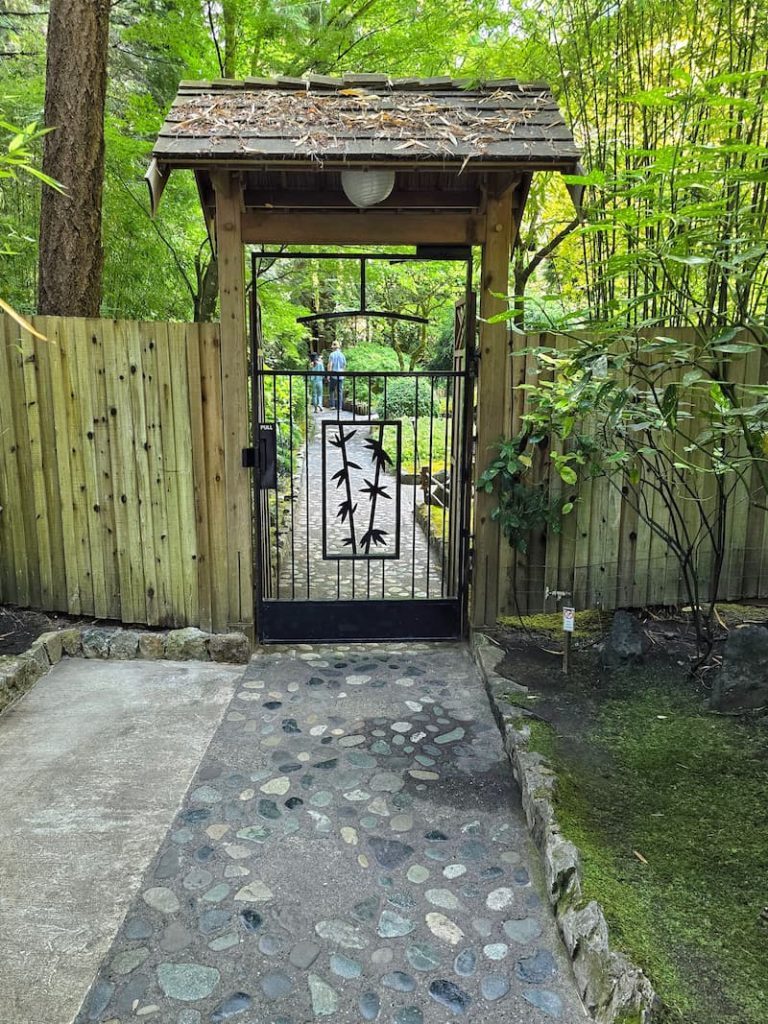
The Toii gate marks a complete shift in mood.
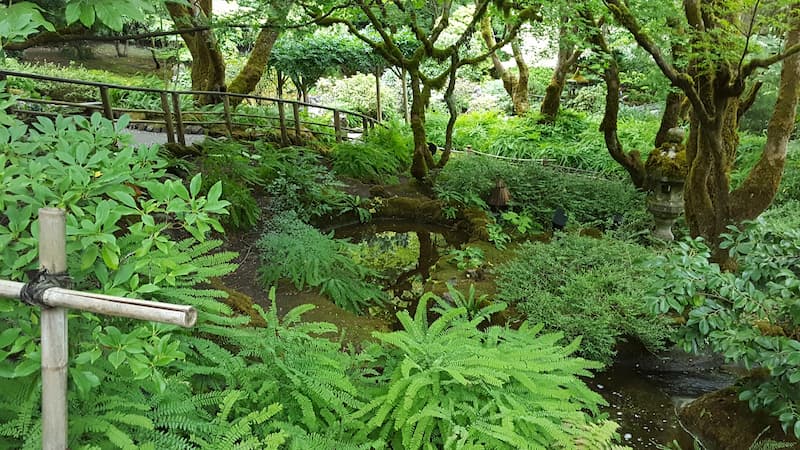
After the bold colors of the Sunken and Rose Gardens, this one is shaded, quiet, and green.
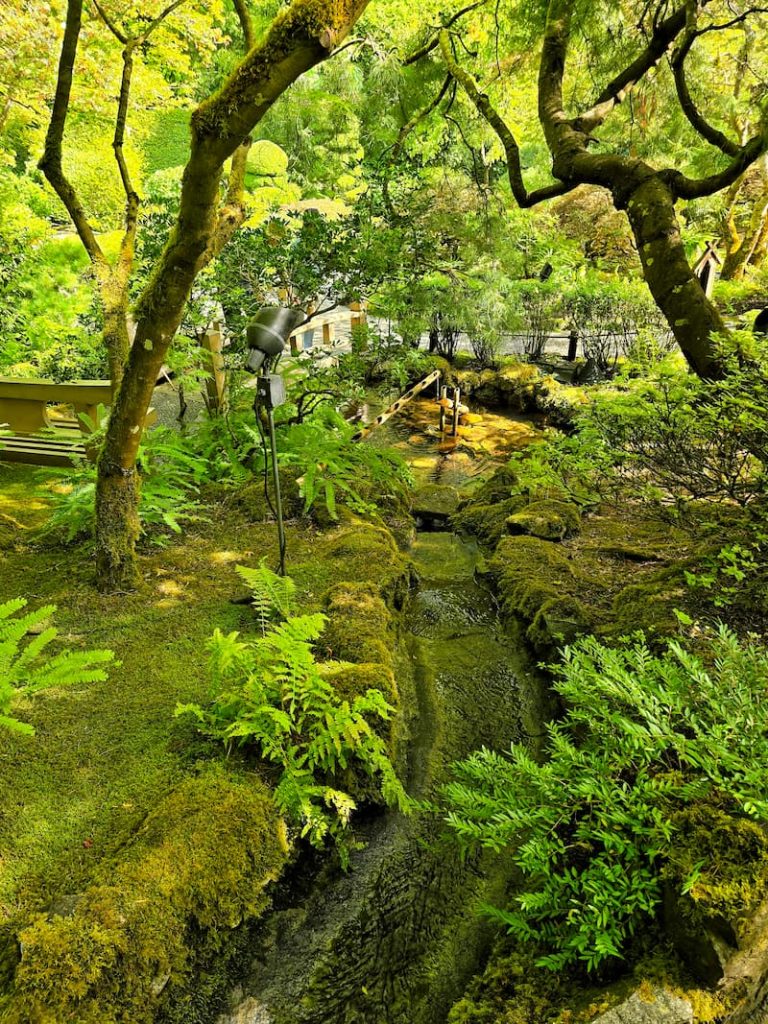
Designed by Japanese landscape architect Isaburo Kishida, the garden blends water, stone, and plants with real intention.
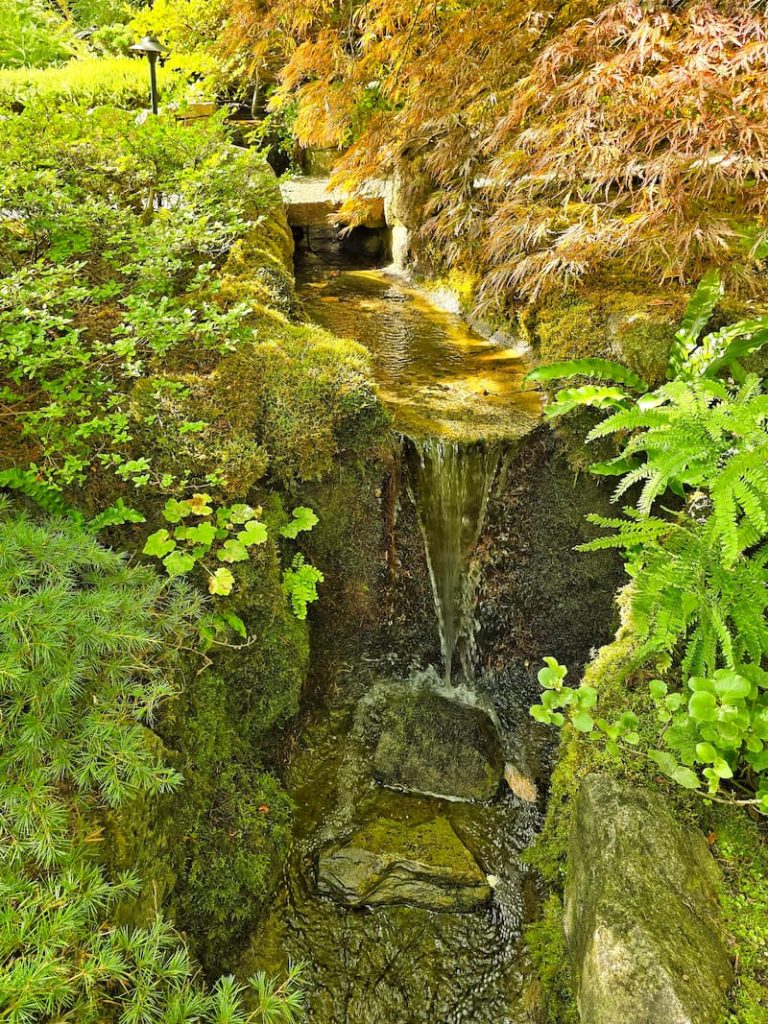
Japanese maples, koi ponds, stone lanterns, and the sound of water moving over rocks.
In late spring, the Himalayan blue poppies bloom here.
Fun Number Facts: Japanese Garden
- 1 Acre of Lush Landscape
- 500 Rhododendrons and Azaleas
- 74 Japanese Maples
- 200 Metres of Flowing Streams
The Italian Garden
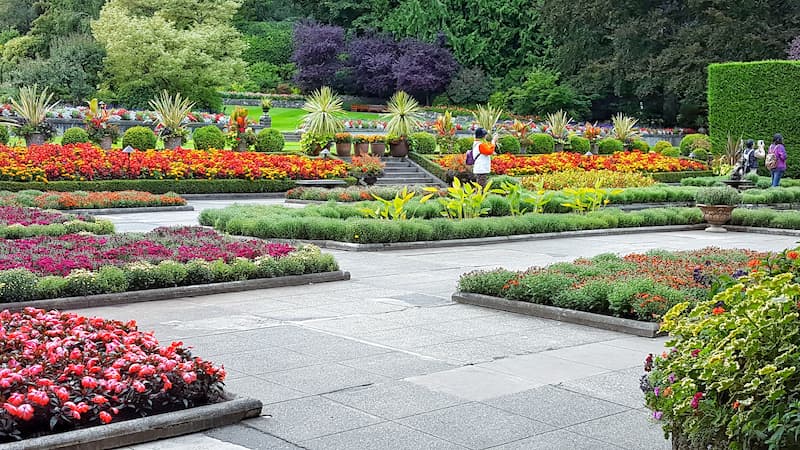
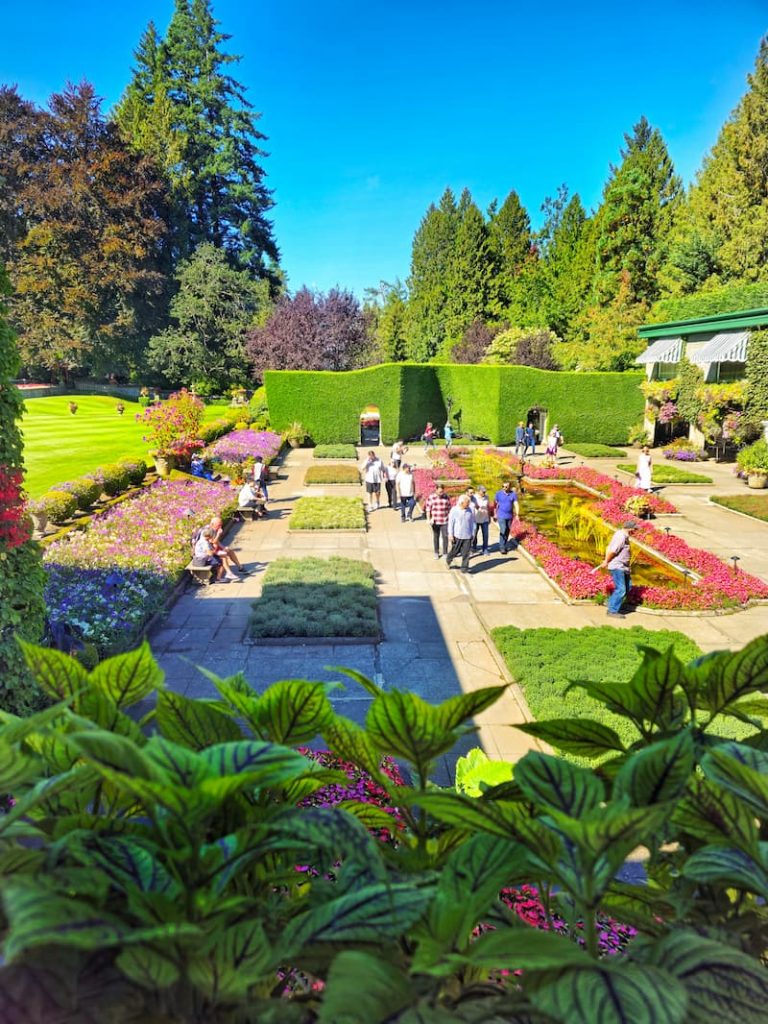
The most formal of the gardens, and built on the site of the family’s tennis court.
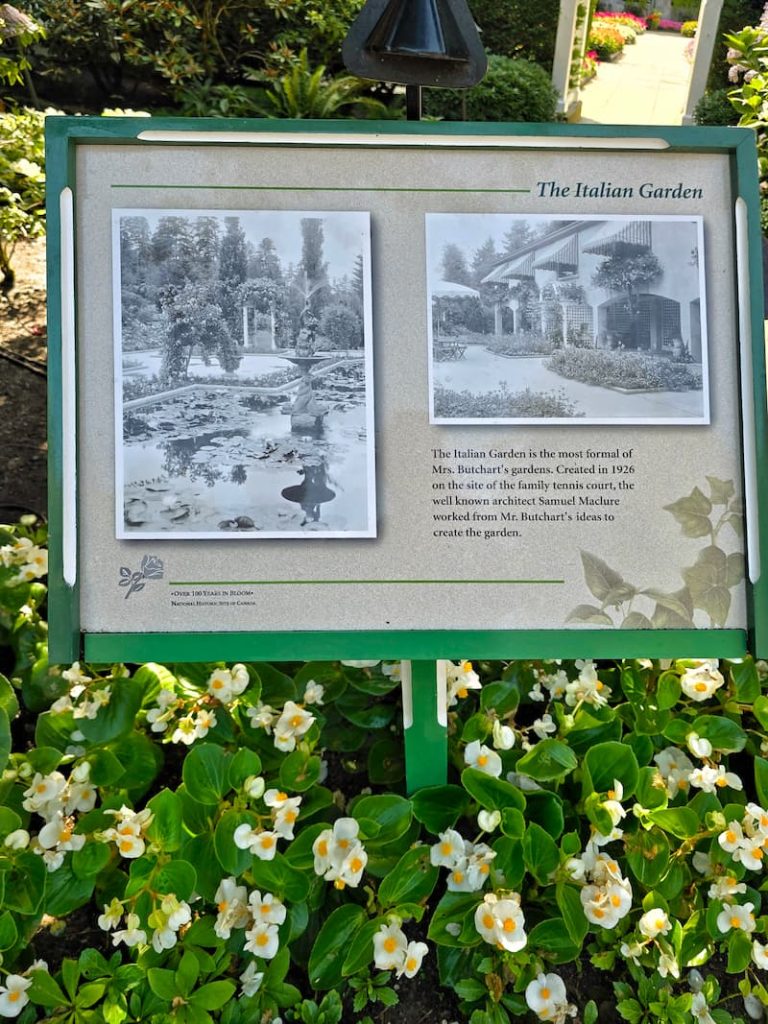
In 1926, architect Samuel Maclure designed it from Mr Butchart’s ideas, inspired by the grand estates of Europe.
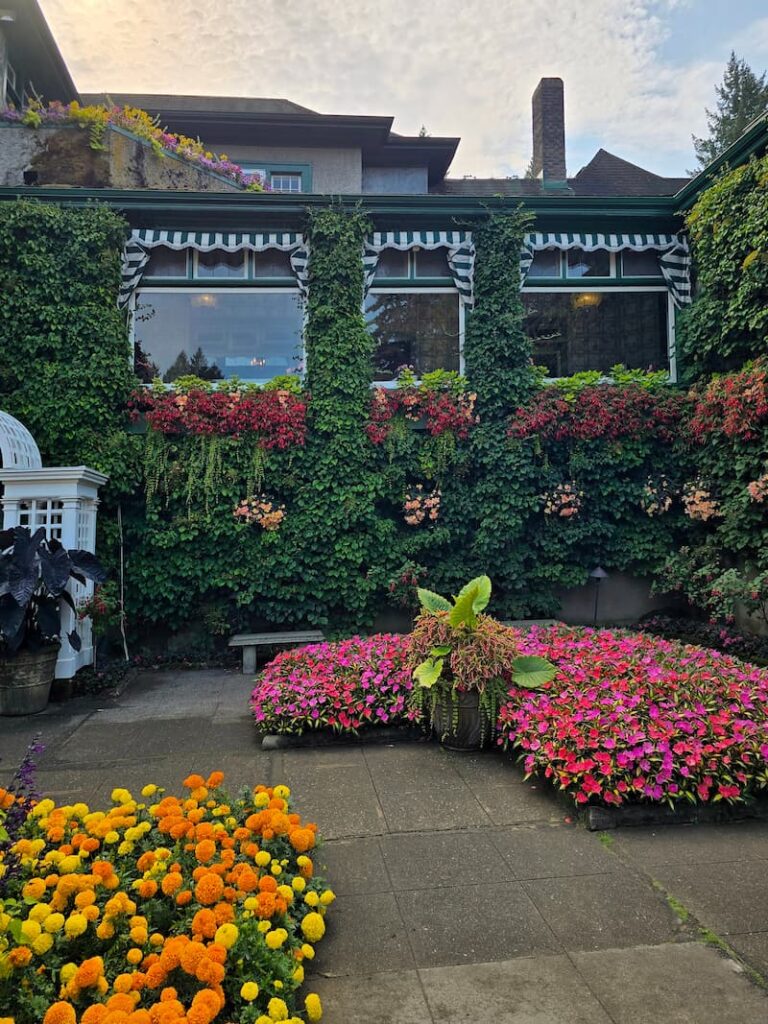
Depending on the season, you may see marigolds and impatiens in the summer.
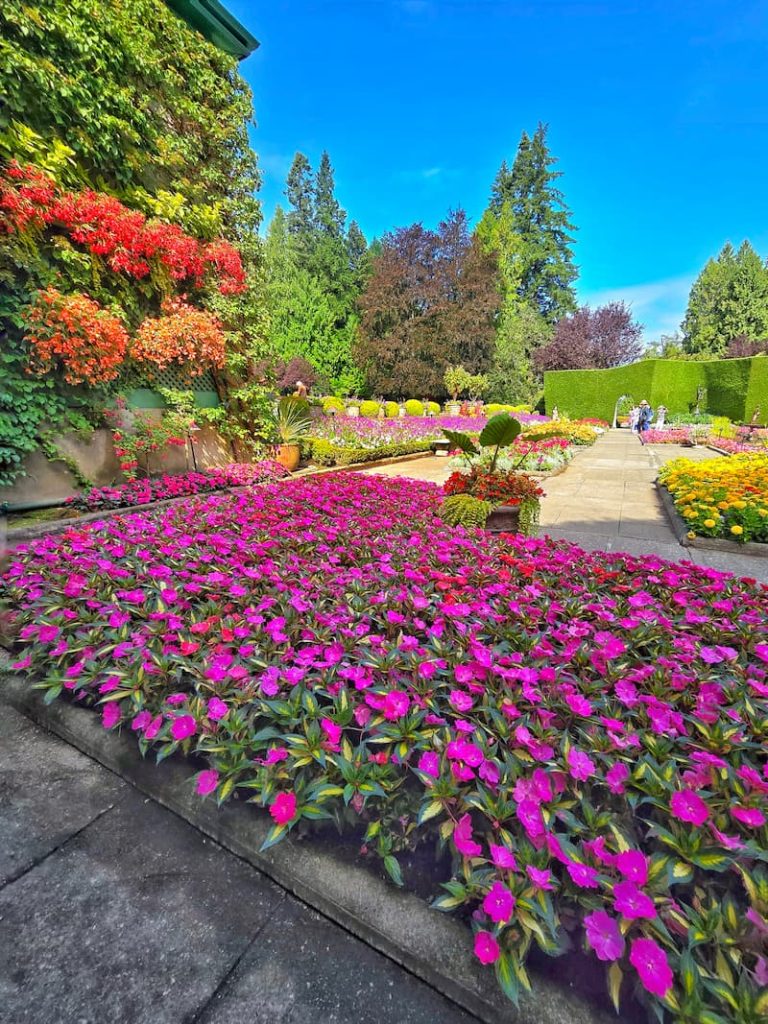
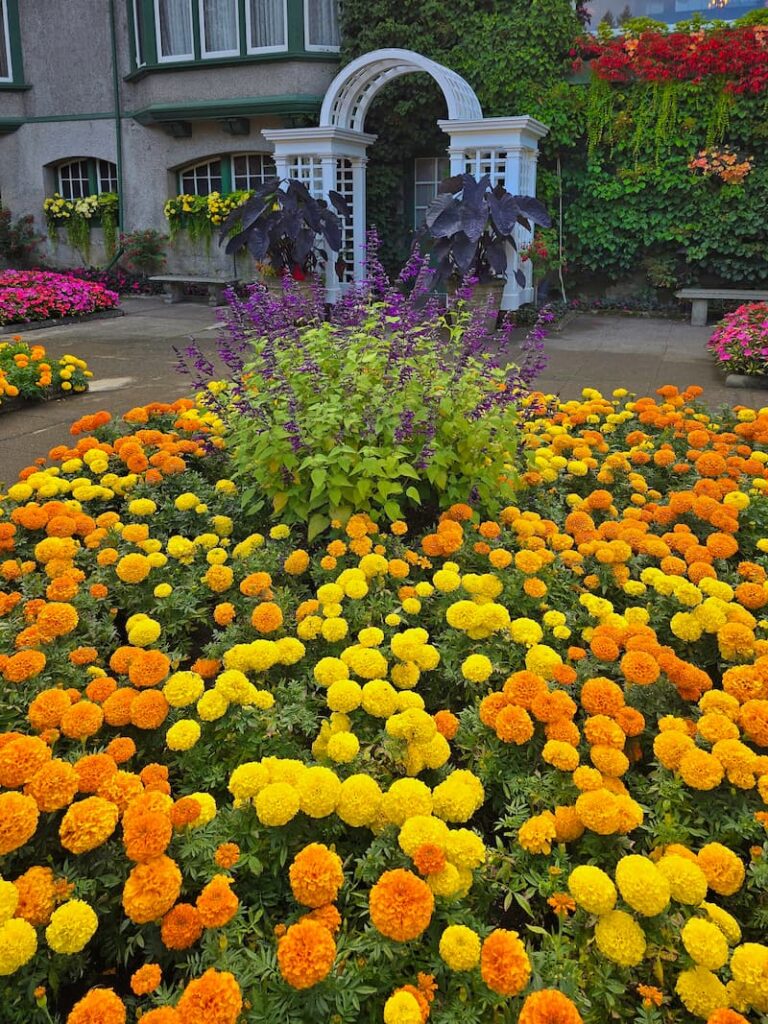
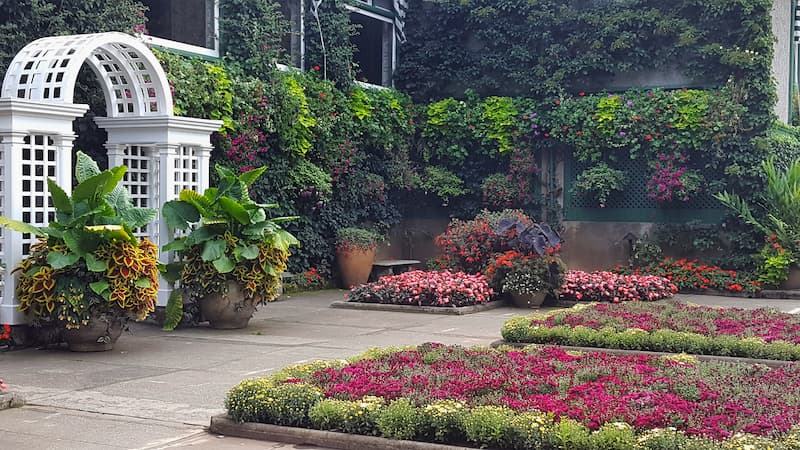
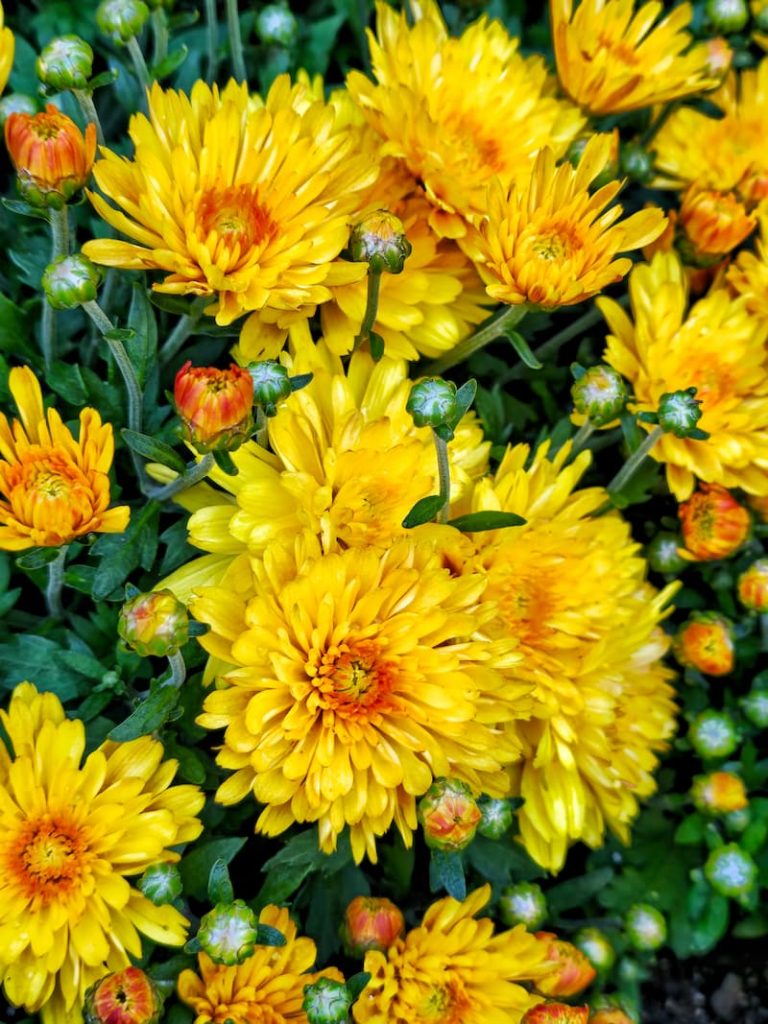
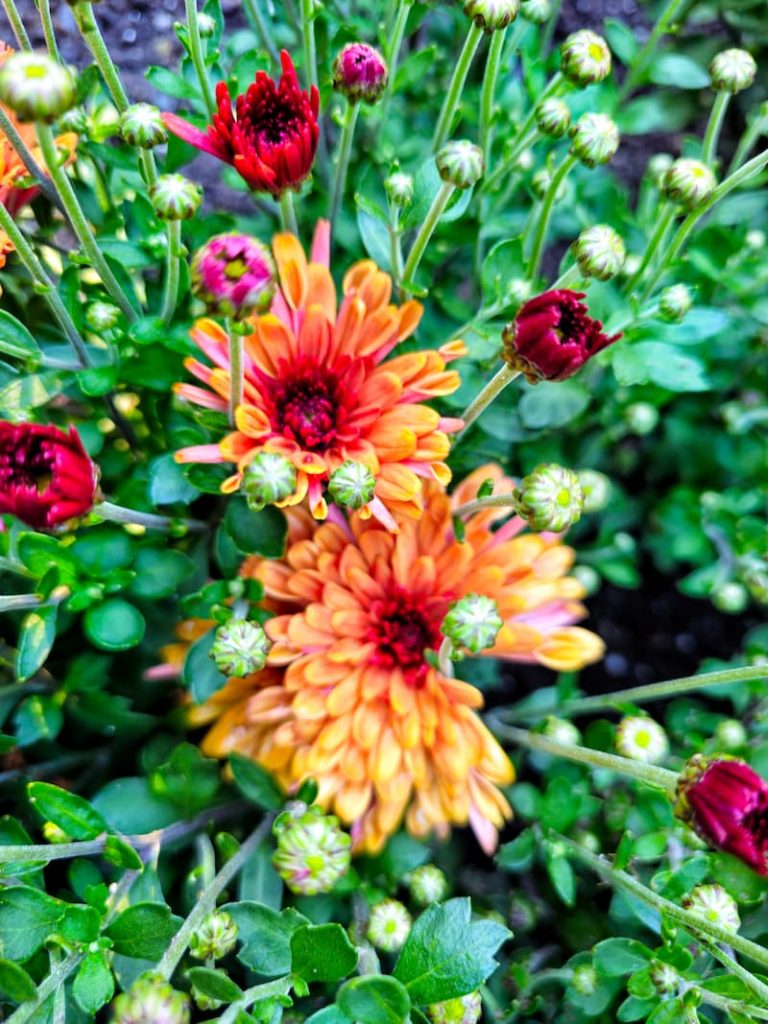
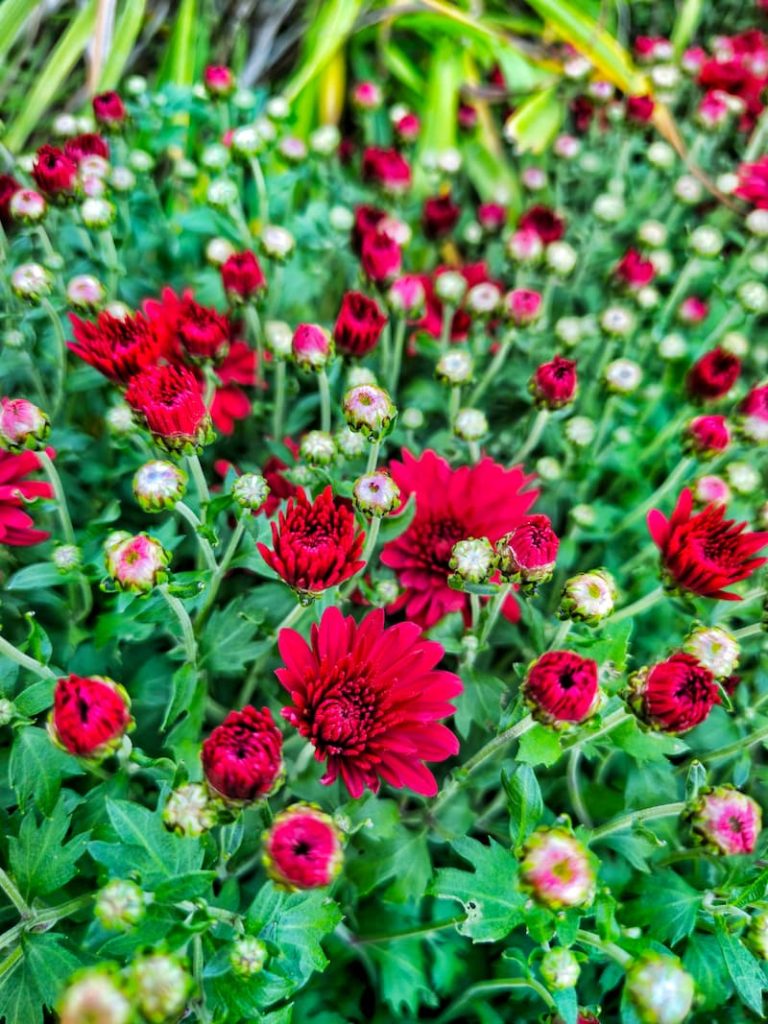
And then the bright colored mums are growing in the fall garden.
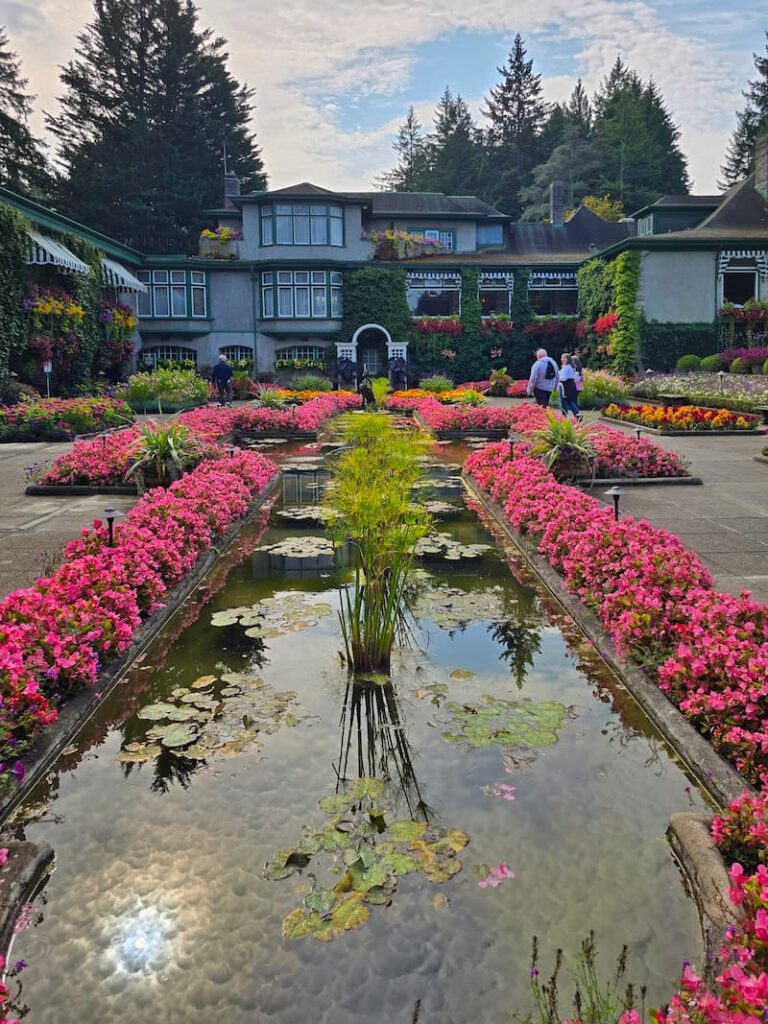
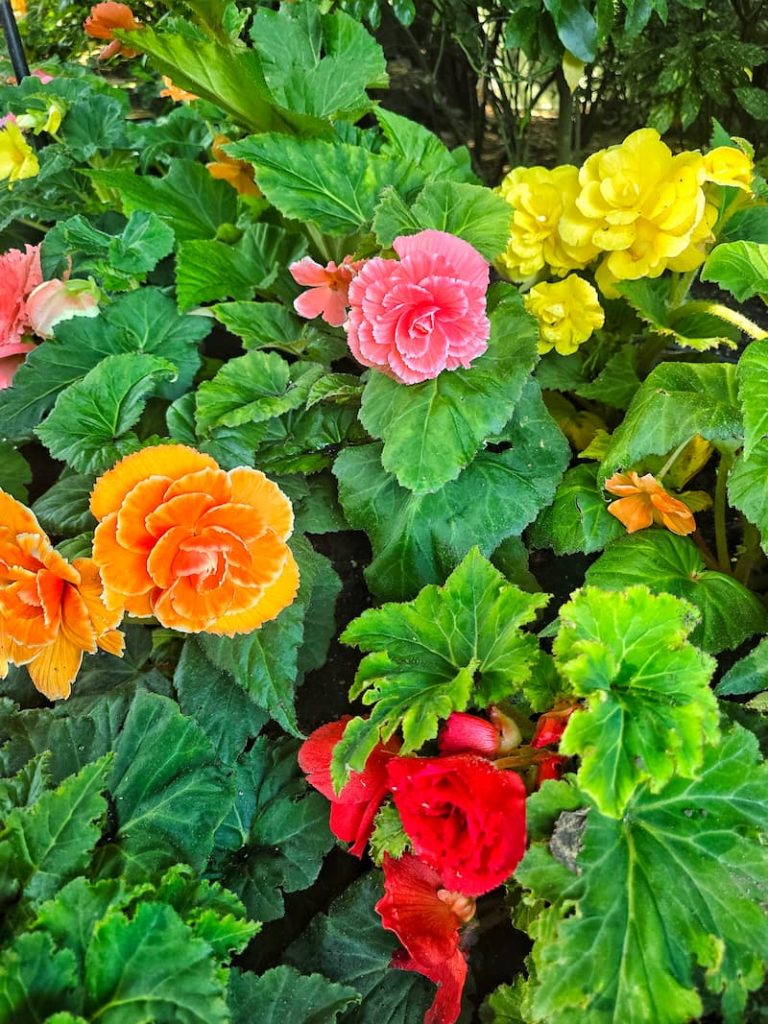
The Cross Pond runs the length of the Italian Garden, complete with lily pads and lined on both sides with pink begonias. The view of the old Butchart residence is just ahead.
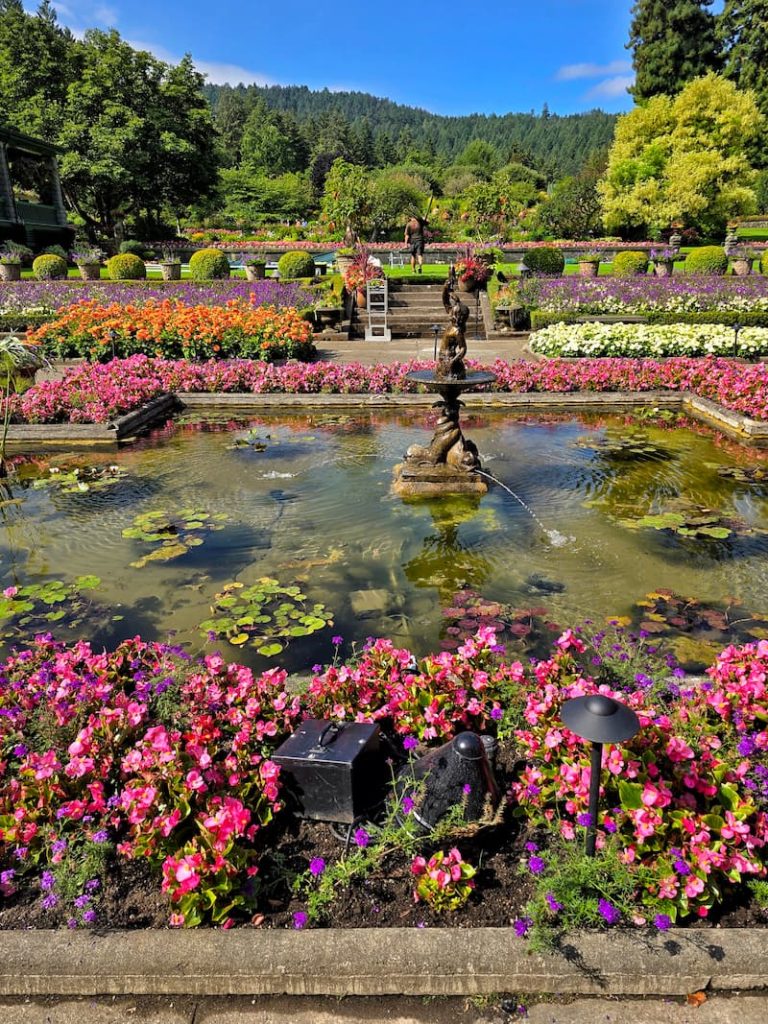
A tiered bronze fountain sits at the heart of the Italian gardens’ cross-shaped pond.
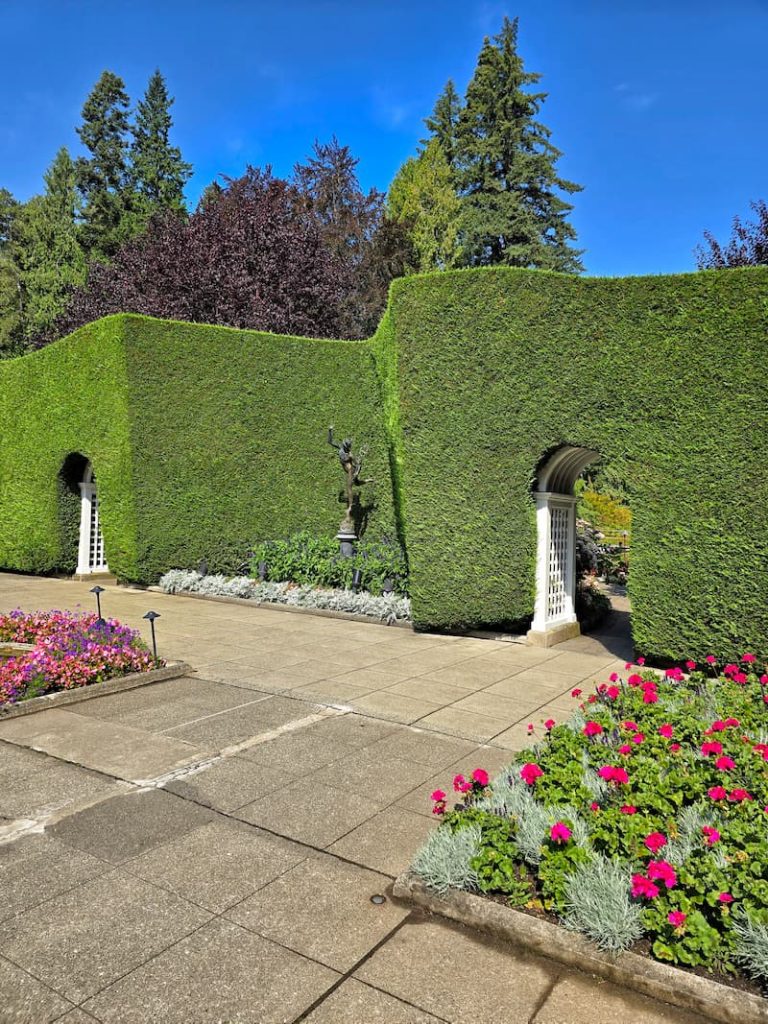
Everything here is about symmetry: manicured hedges, geometric beds, and a bronze statue of Mercury at the center.
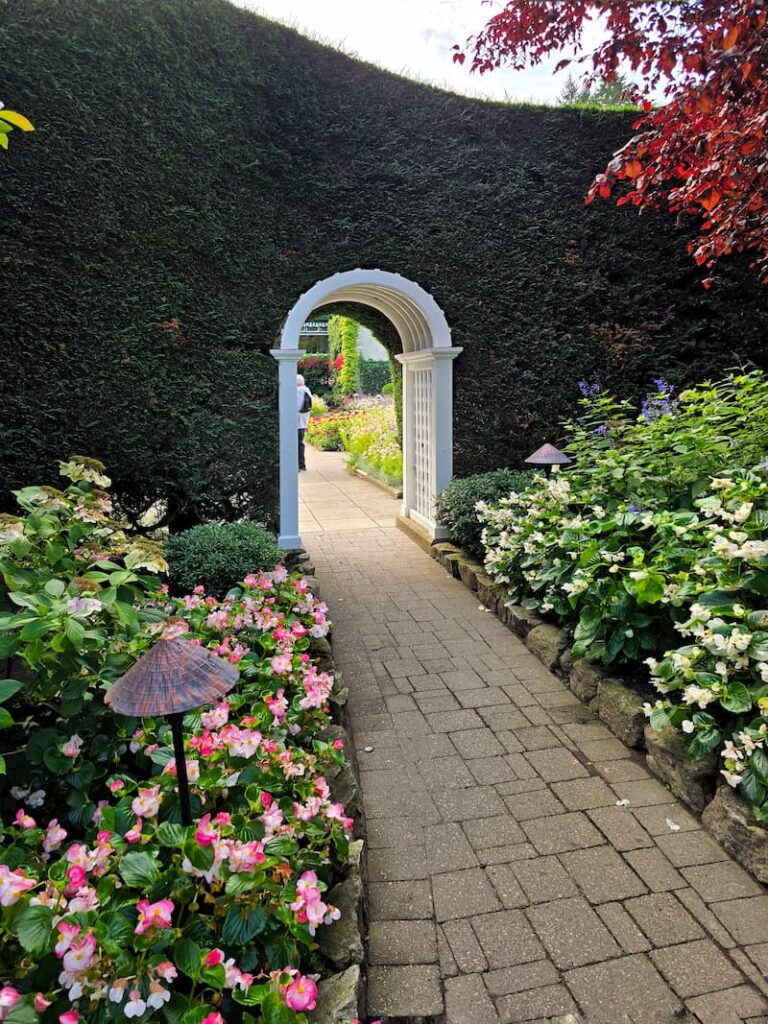
Here’s the other side of the wall.
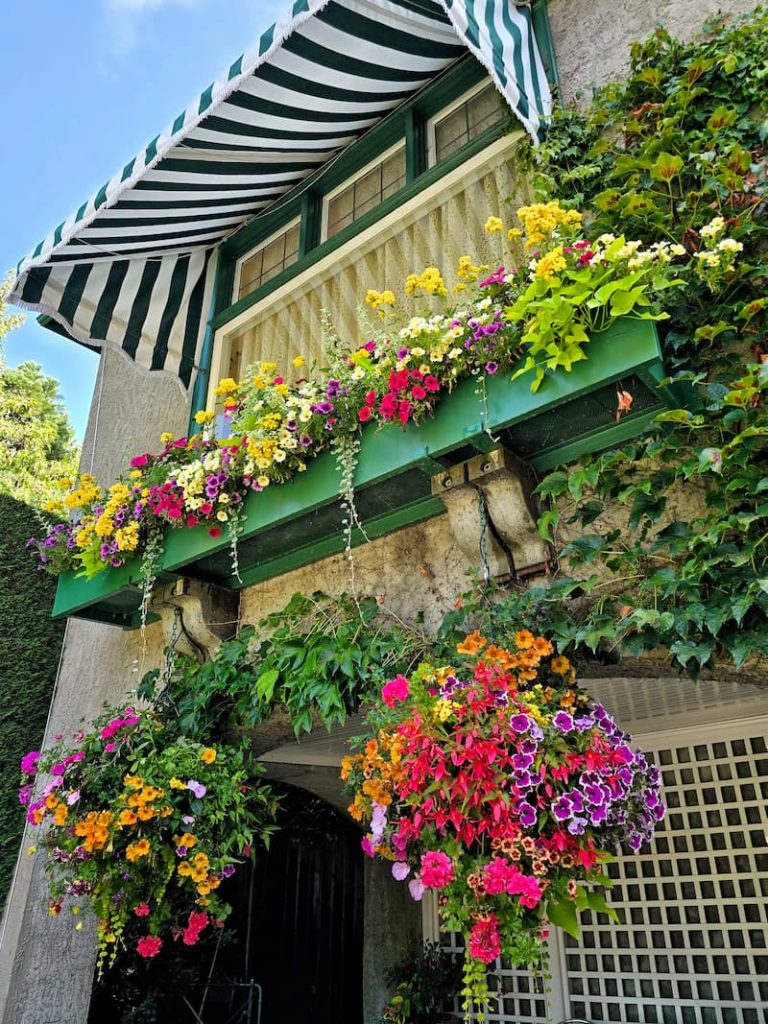
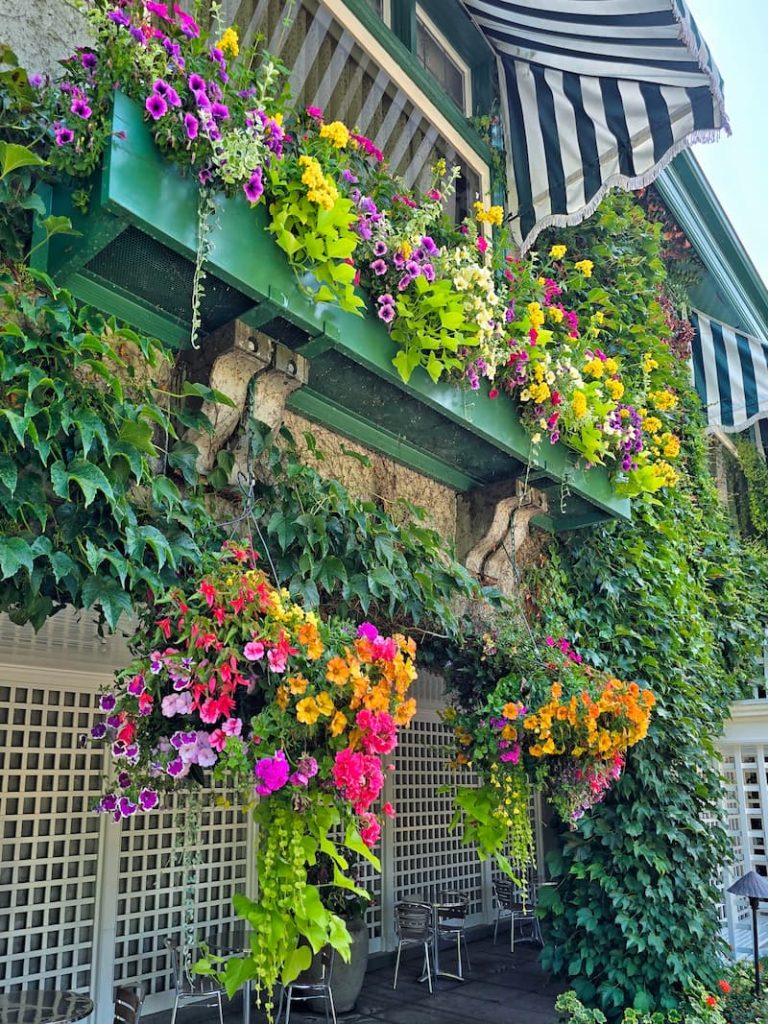
Vine-covered pergolas, urns overflowing with flowers, hanging baskets, and window boxes fill in the rest.
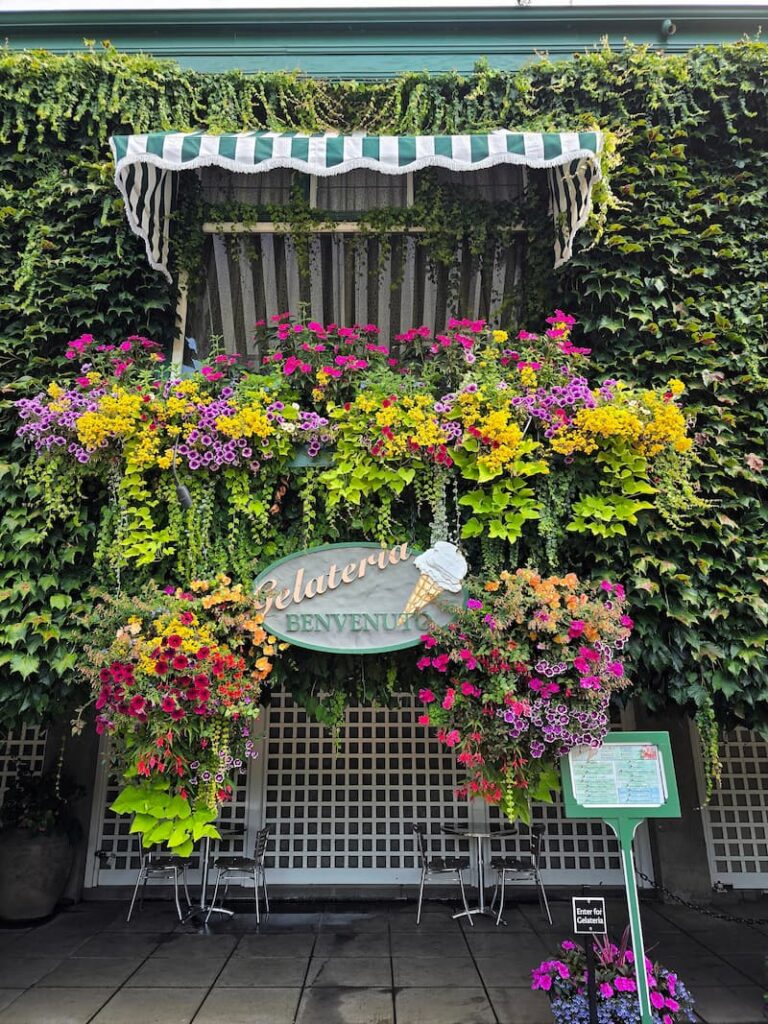
And there’s handmade gelato in the courtyard. Garden walks are better with a cone in hand.
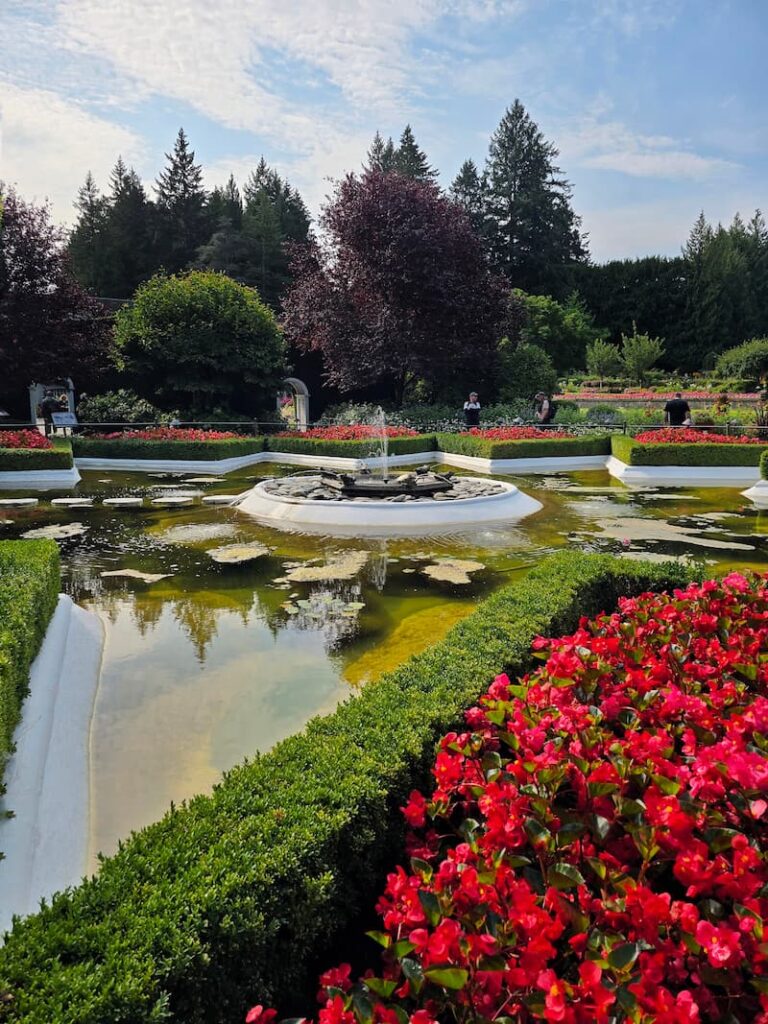
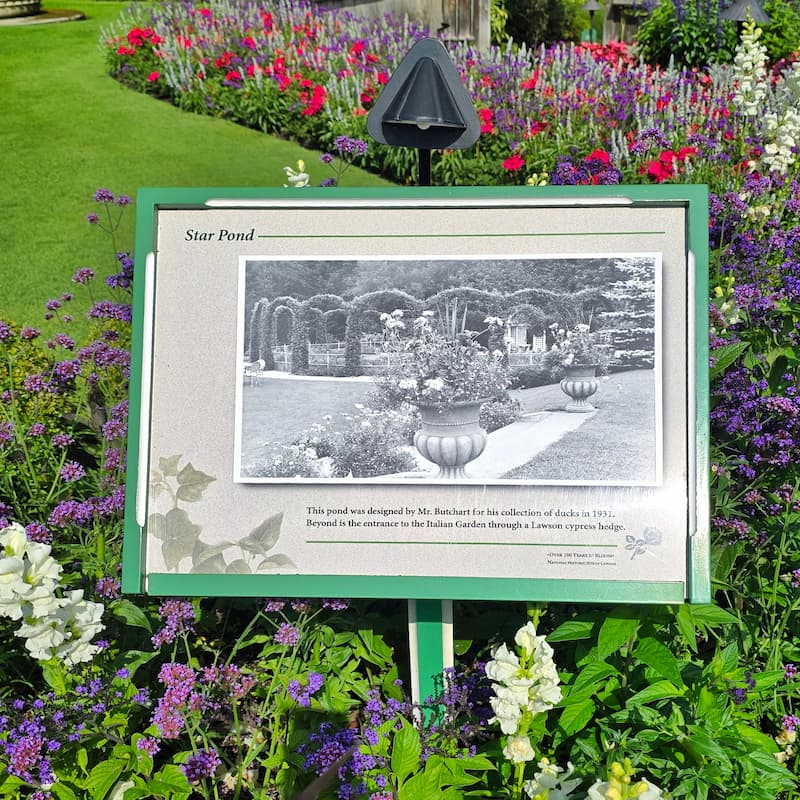
Just outside the Lawson cypress hedge is the Star Pond, designed by Mr Butchart in 1931 for his duck collection.
Fun Number Facts: Italian Garden
- 21,780 Square Feet of Gardens
- 18 Flower Beds
- 85 Varieties of Plants
- 22,000 Spring Bulbs and Biennials
The Mediterranean Garden
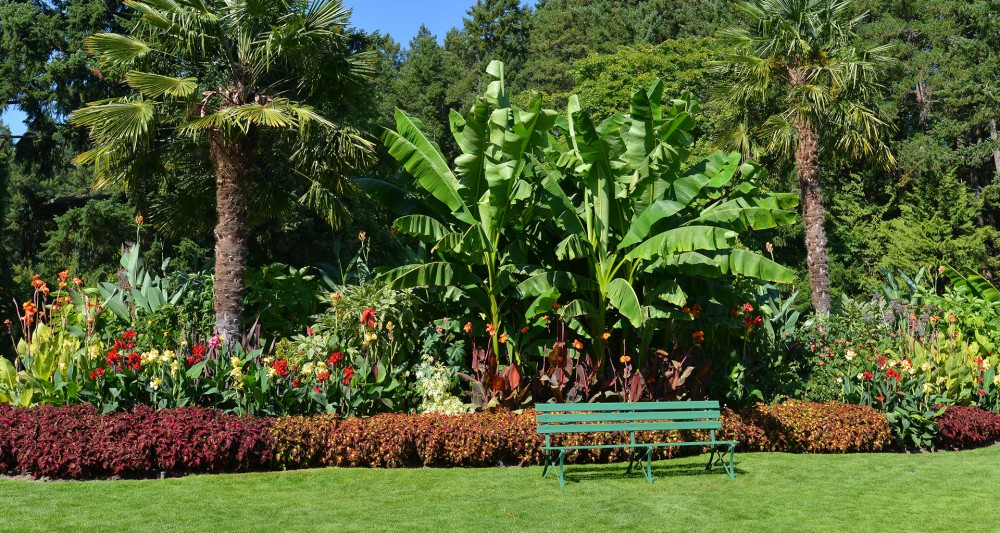
This one surprises people. Tucked near the entrance, the Mediterranean Garden showcases drought-tolerant plants that thrive in Vancouver Island’s mild coastal climate: agave, eucalyptus, and olive trees.
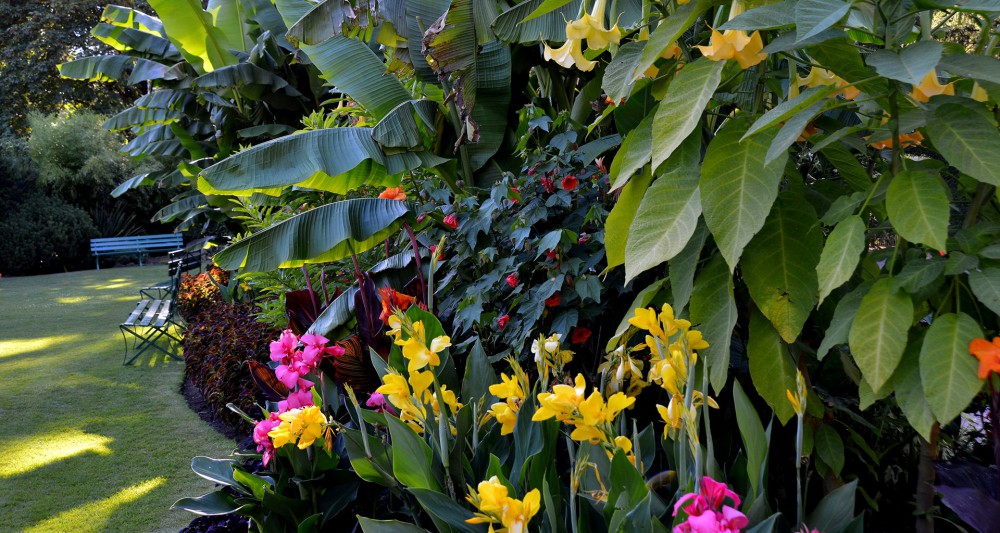
The warm tones and textured foliage are a complete contrast to the lush greenery everywhere else. It’s a good reminder that a beautiful garden doesn’t have to be a thirsty one.
Fun Number Facts: Mediterranean Garden
- 21780 square feet of gardens
- 9 garden beds
- 110 plant varieties
- 22 unique shrubs
The Dahlia Garden
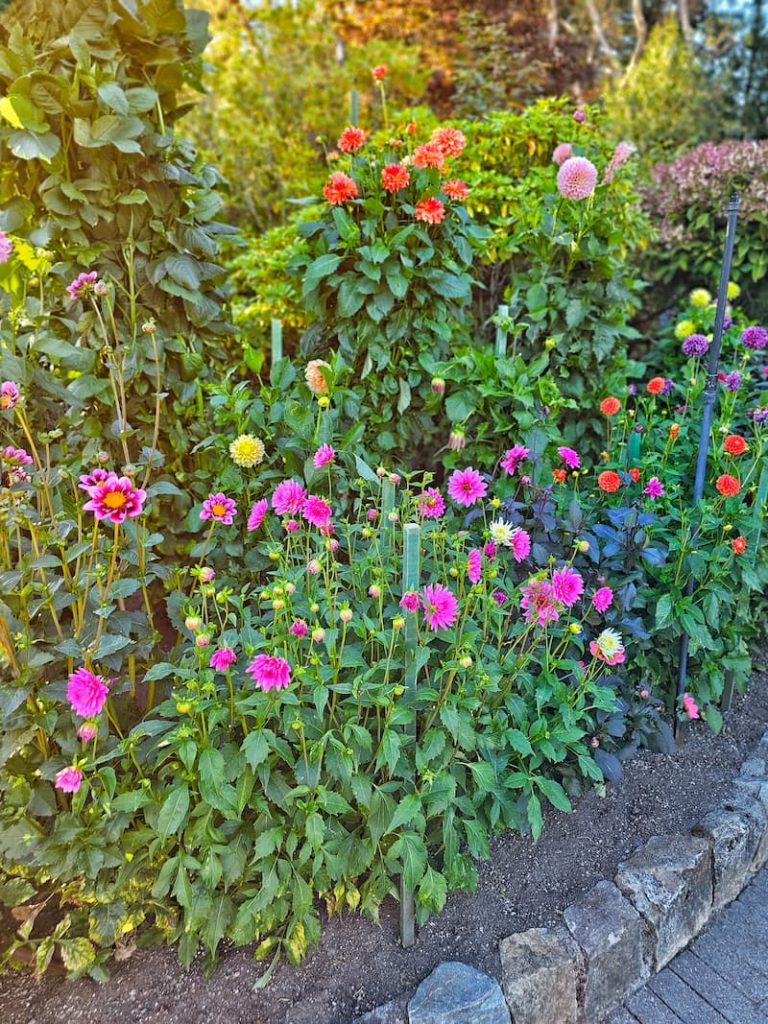
If you visit in August or early September, the dahlia borders alone are worth the trip. As someone who grows dahlias at home, I walk this stretch slowly and take far too many pictures.
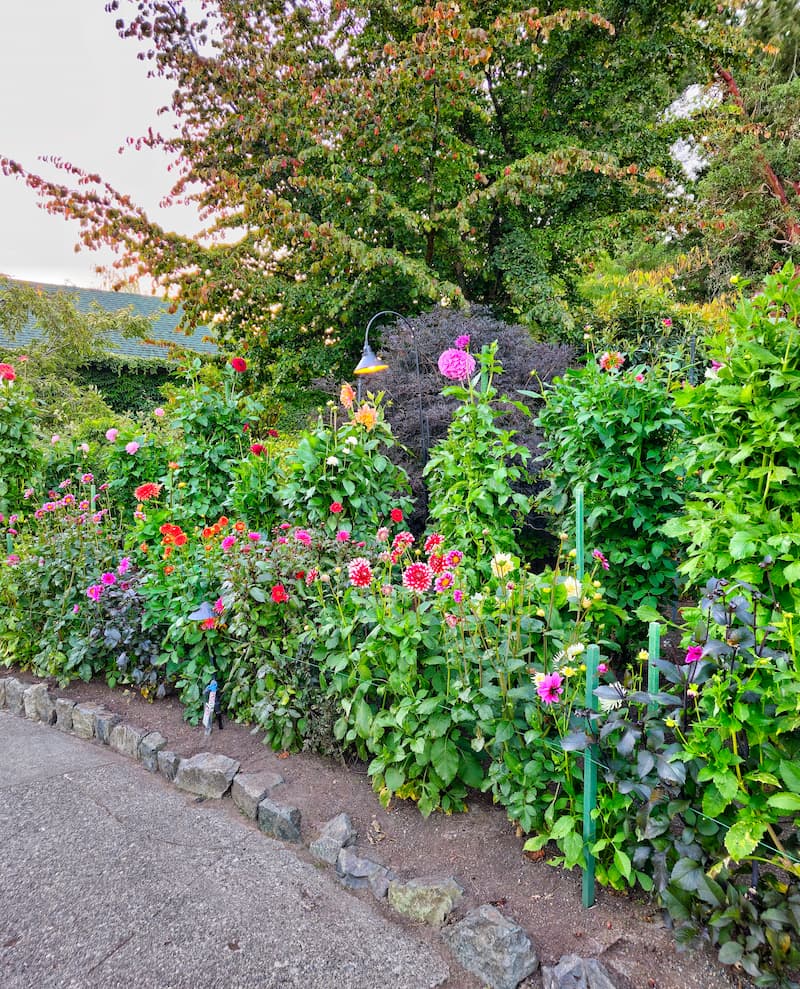
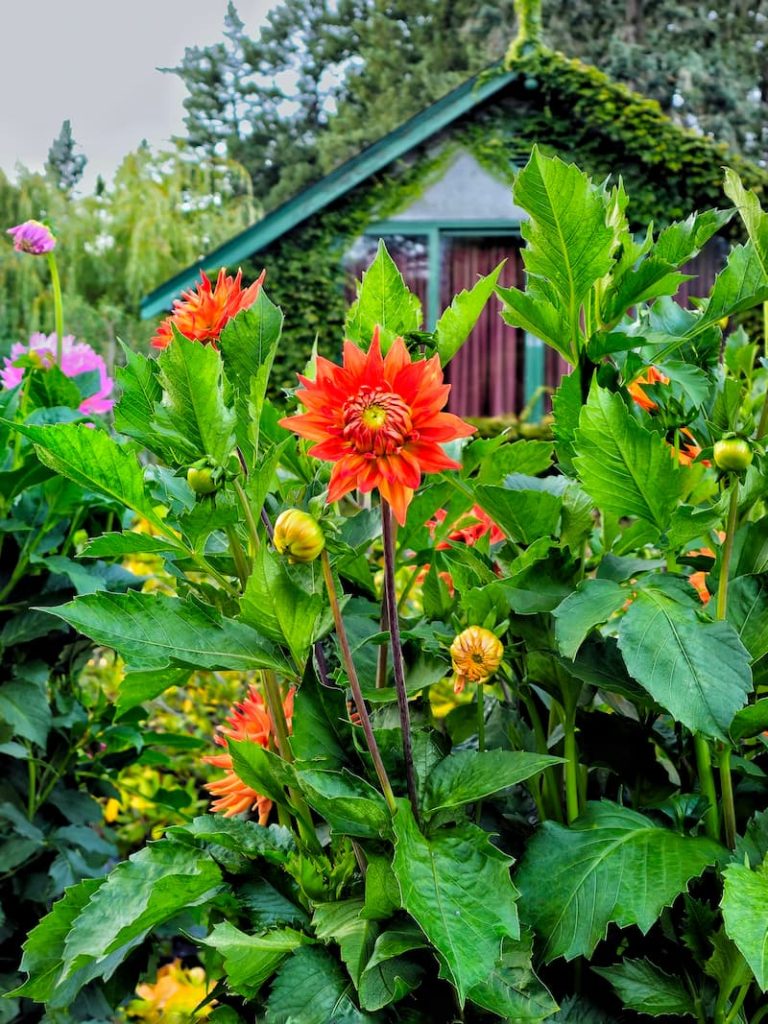
My one wish? That the varieties were labeled like the roses are.
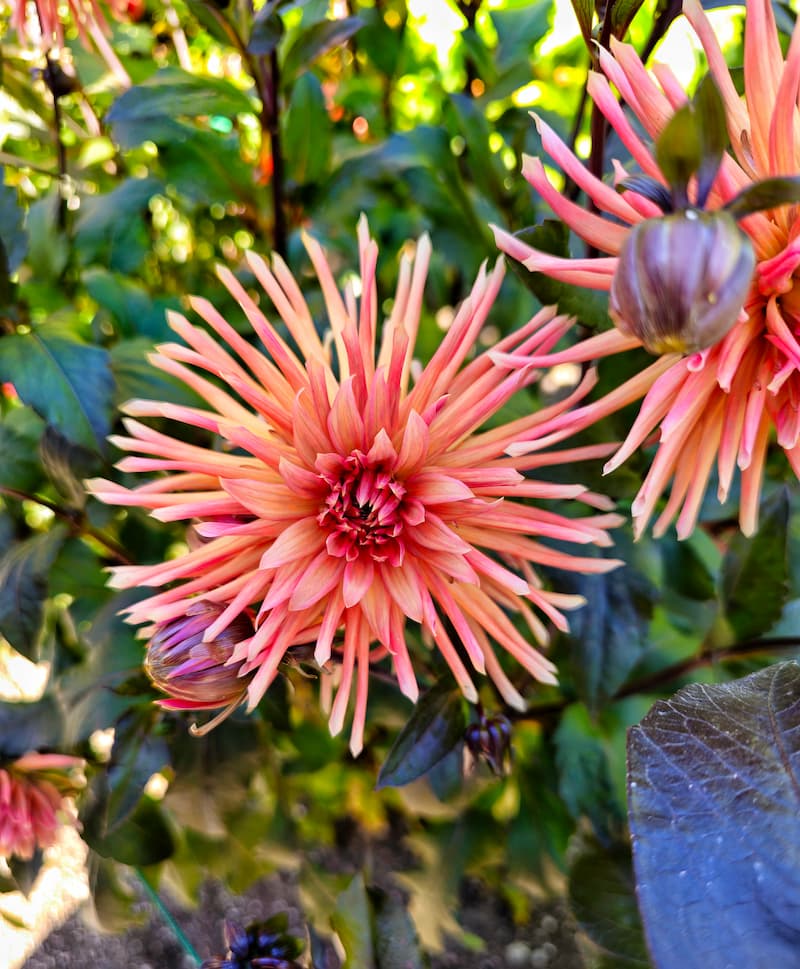
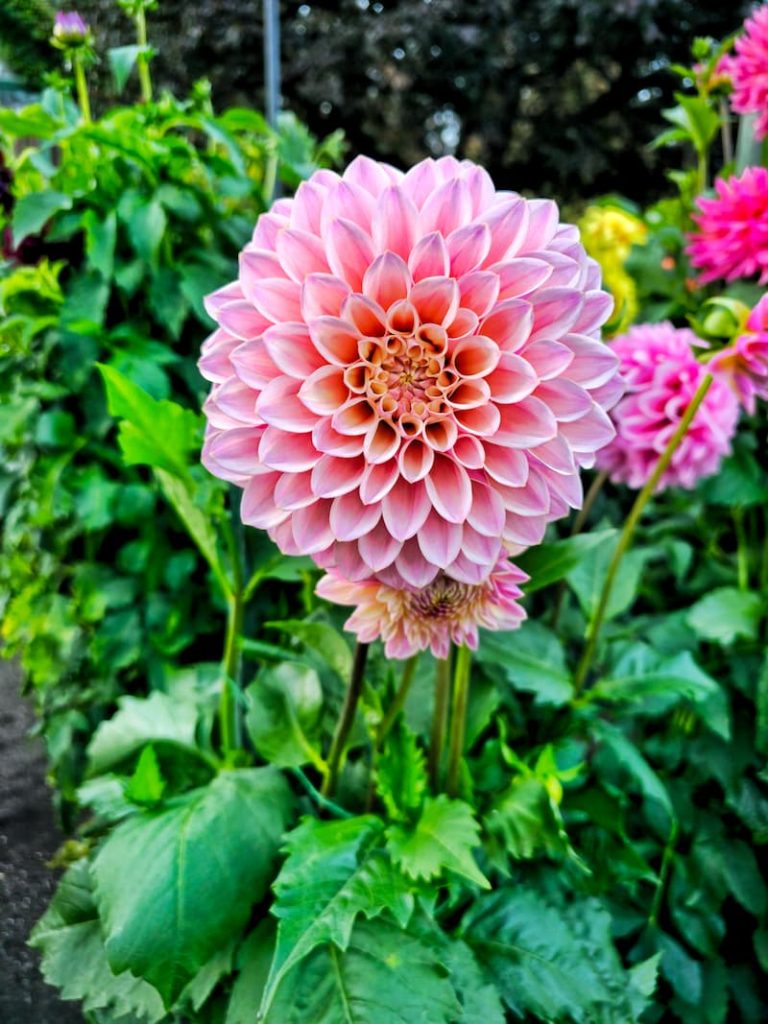
There are several I’d buy tubers of on the spot if I knew their names.
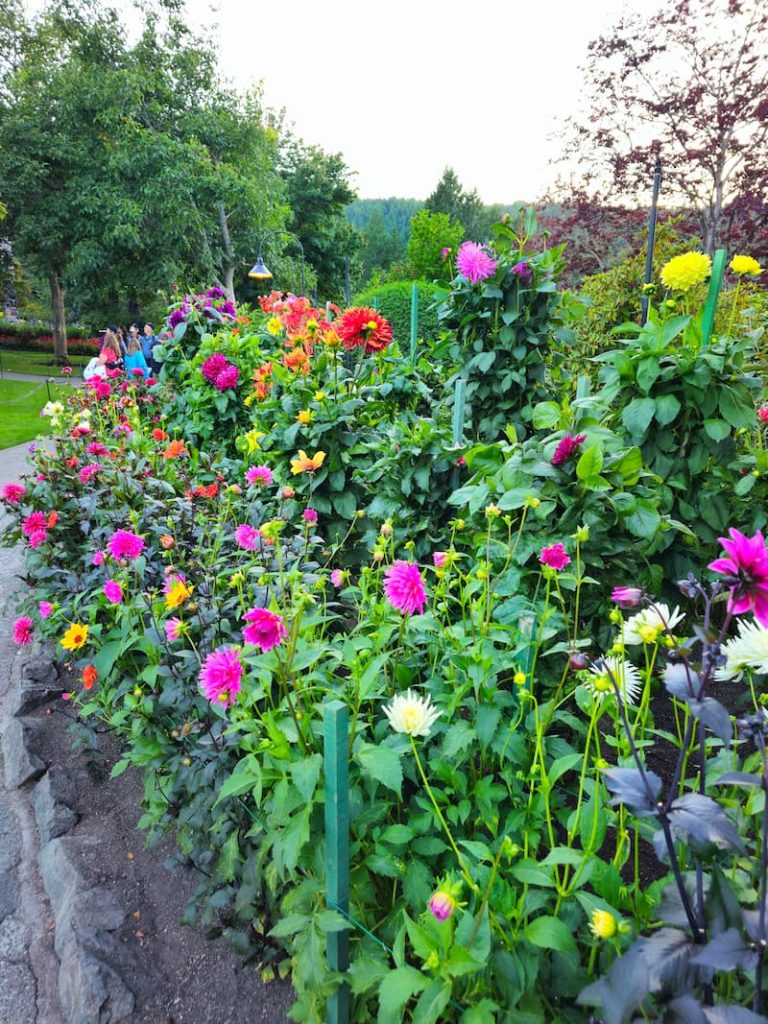
A photography note: my dahlia photos turn out much better in the early evening. The morning sun was too harsh on the blooms.
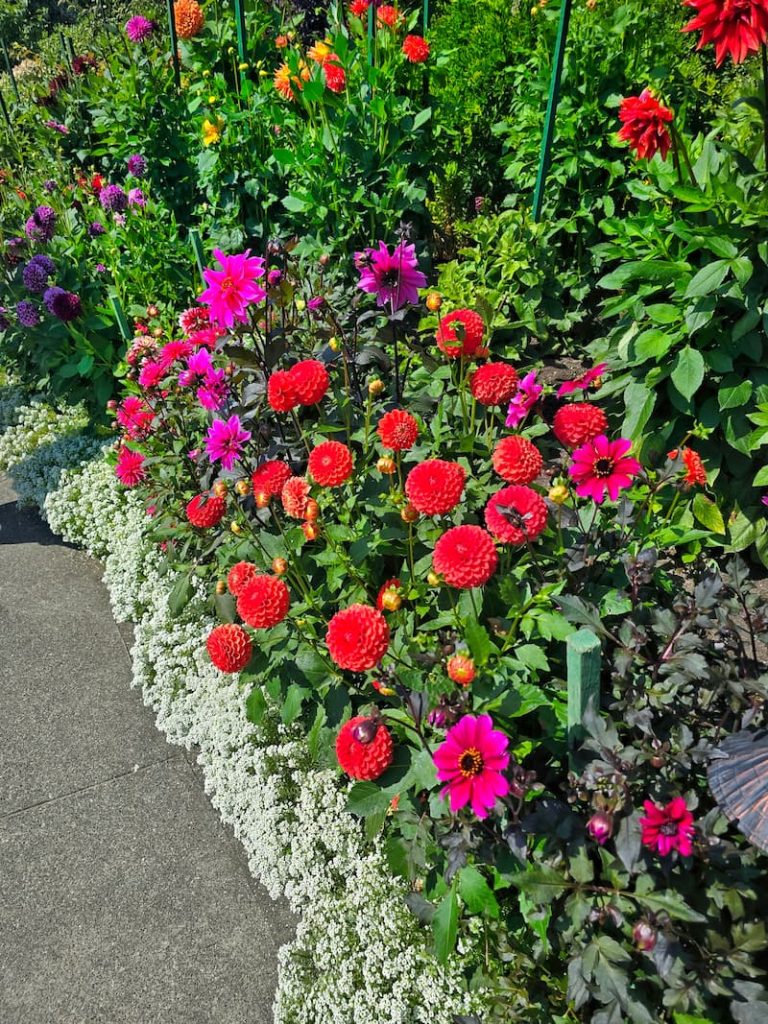

The photo above was taken several years ago when my mini dachshund, Lucy, was still with us. I held her most of the visit because she was scared of being stepped on.
The Greenhouse and Waterfall
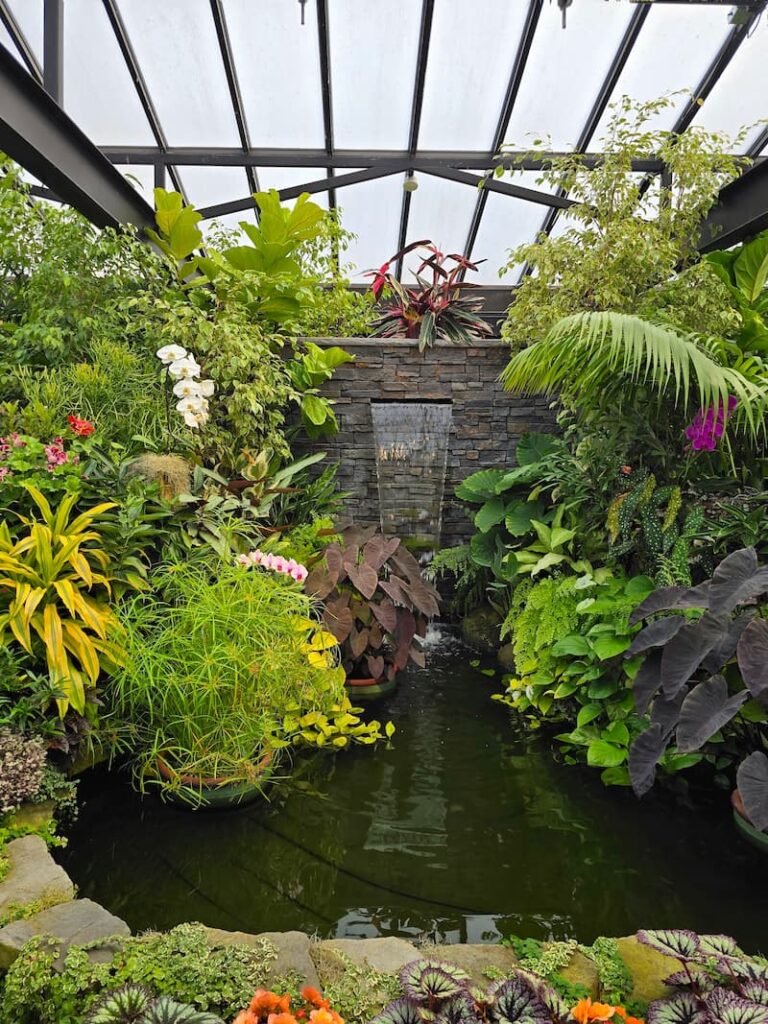
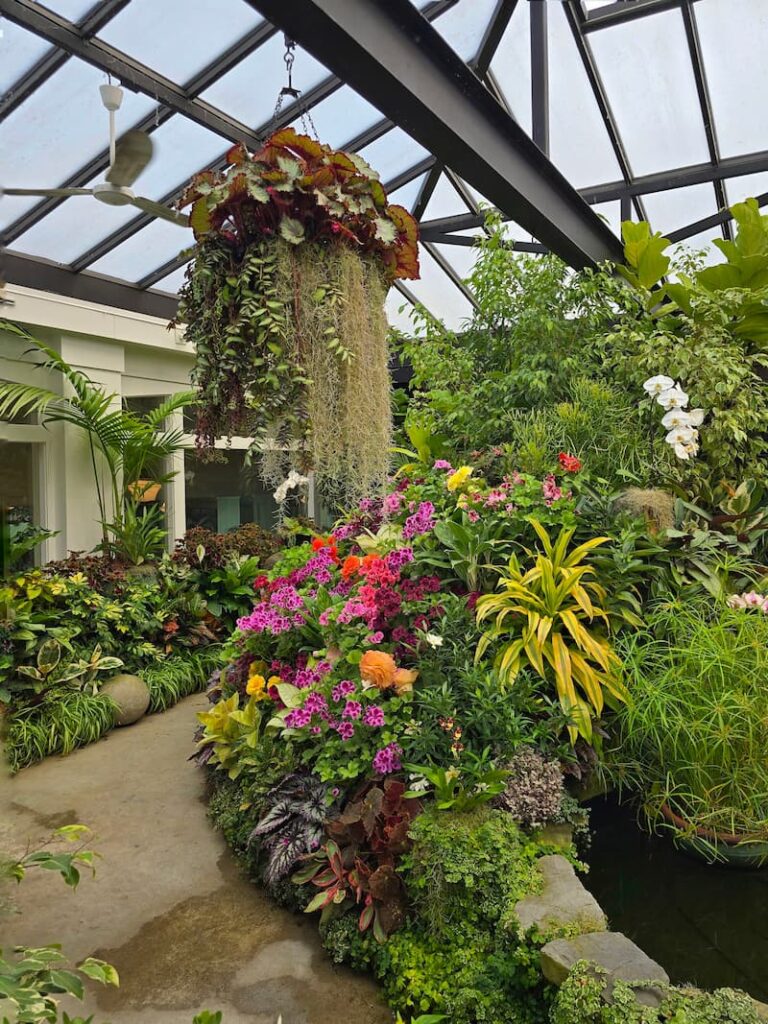
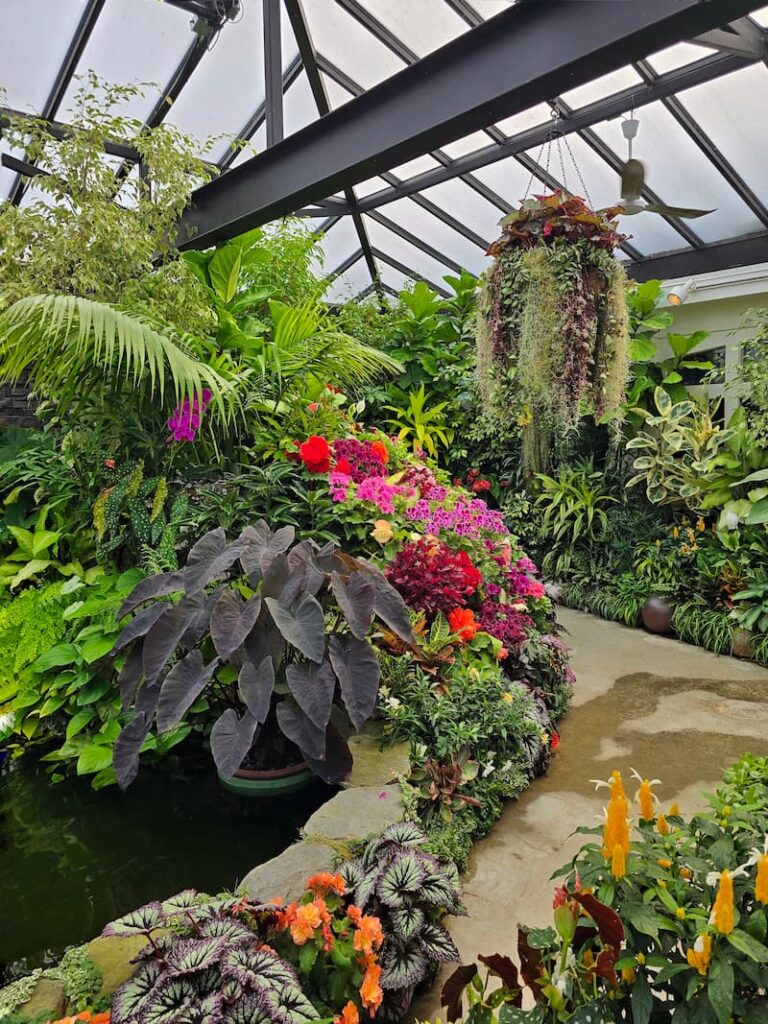
The display greenhouse is full of exotic plants and blooms I’ll never be able to grow in our own greenhouse at home. I still take notes anyway.
A Few More Highlights Worth Finding
Jennie Butchart’s Private Garden
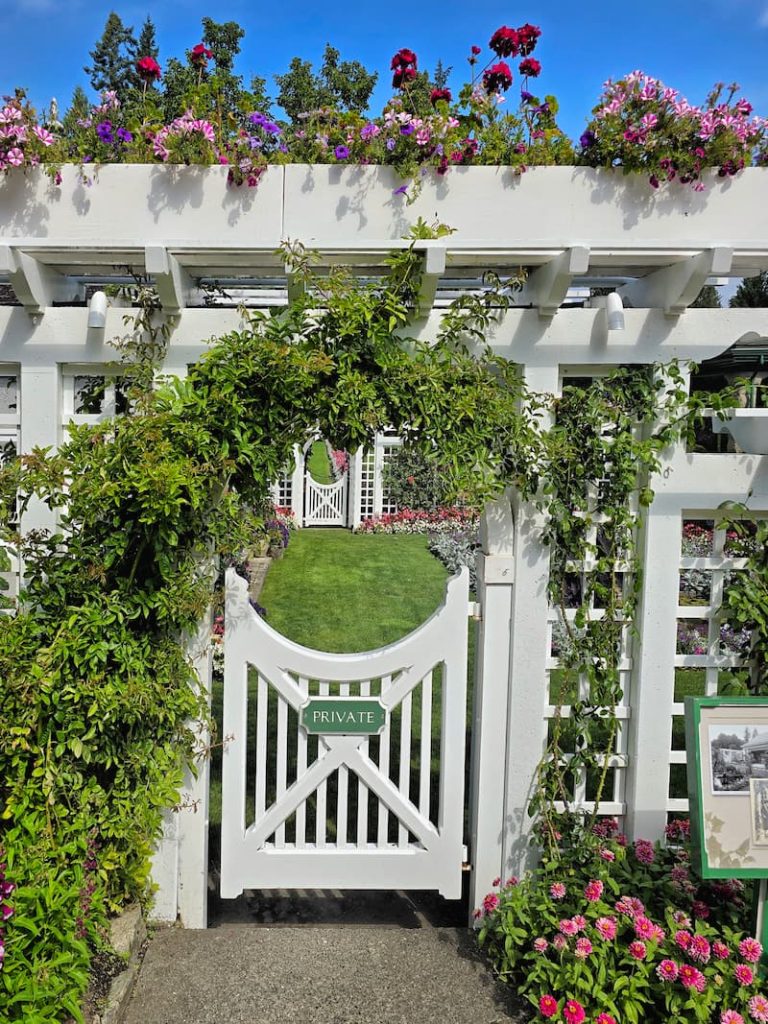
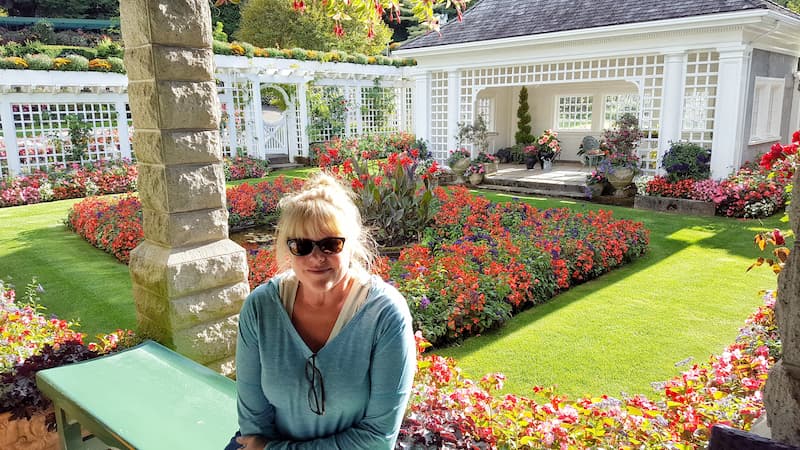
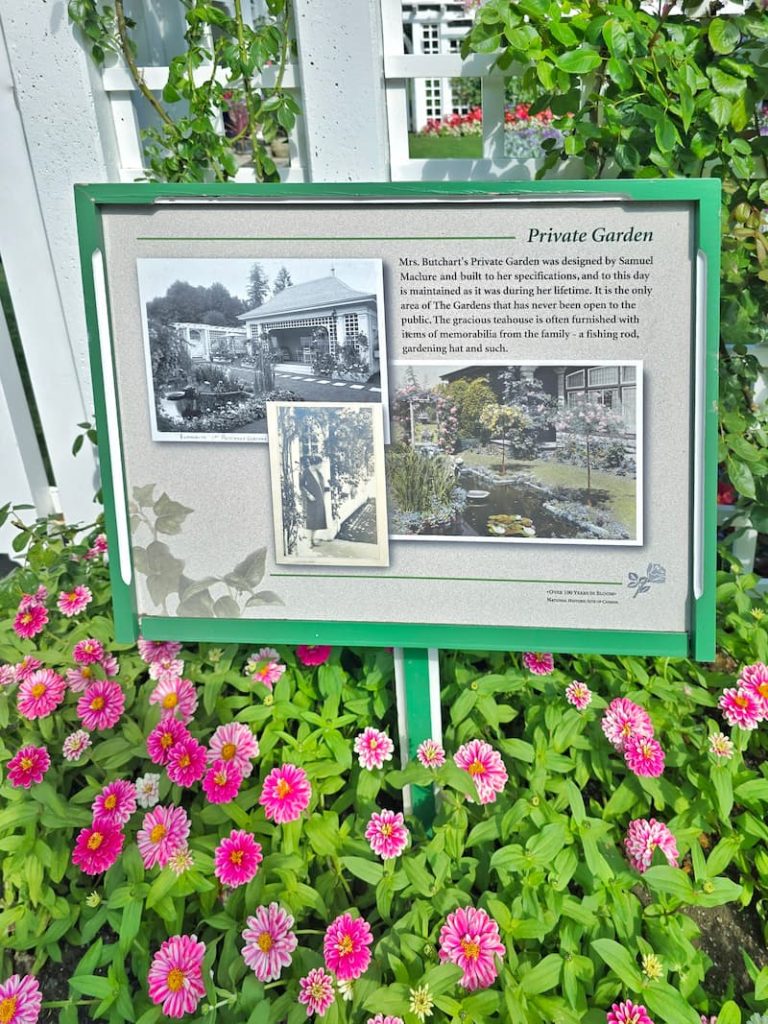
This is the one area never opened to the public, designed by Samuel Maclure to Jennie’s specifications and maintained exactly as it was during her lifetime.
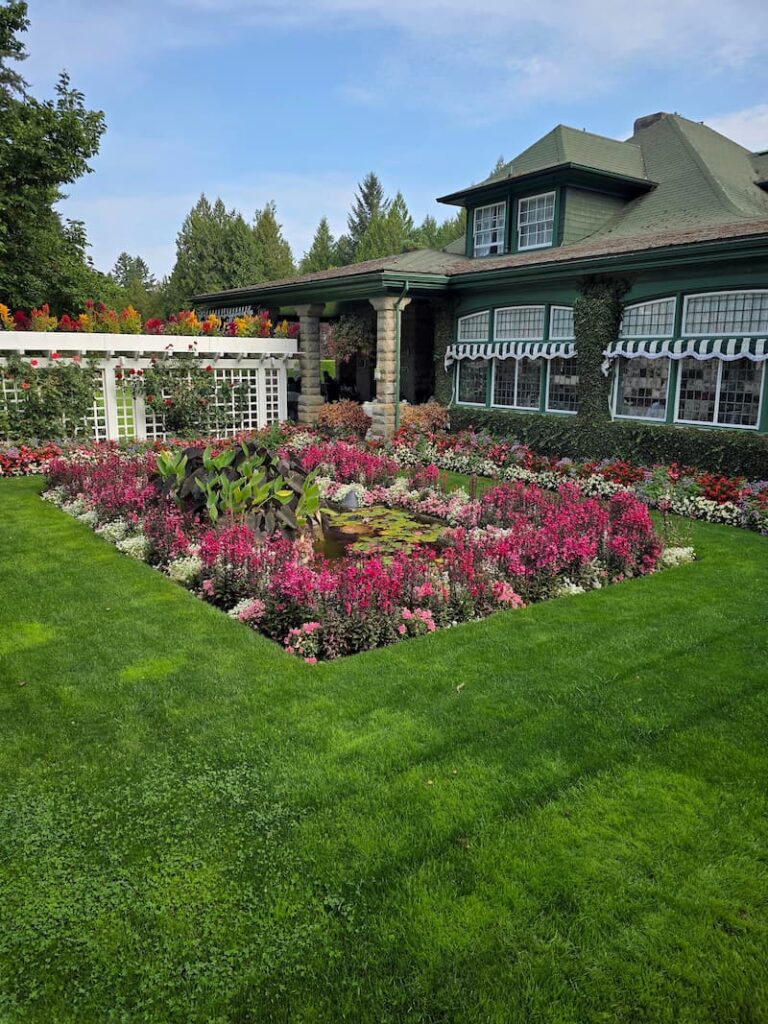
You can peek at it from the main house area, and the teahouse often displays family memorabilia such as a fishing rod or gardening hat.
The Ross Fountain
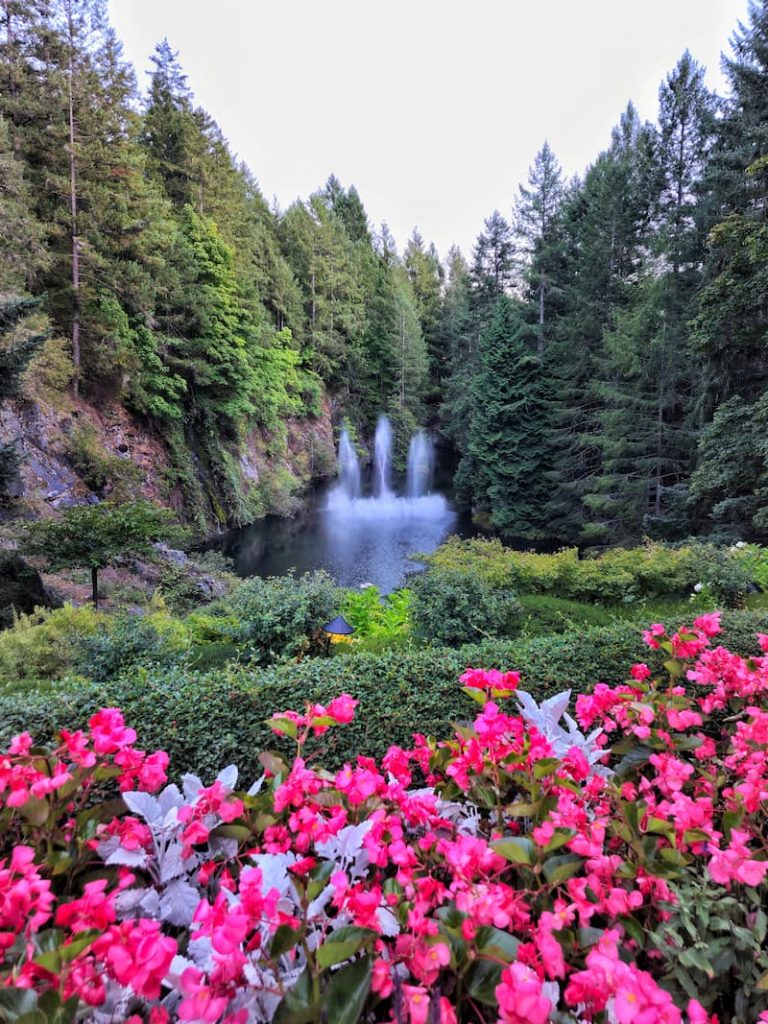
Set against the green-cloaked walls of the original quarry, with a limestone mound lookout over the Sunken Garden.
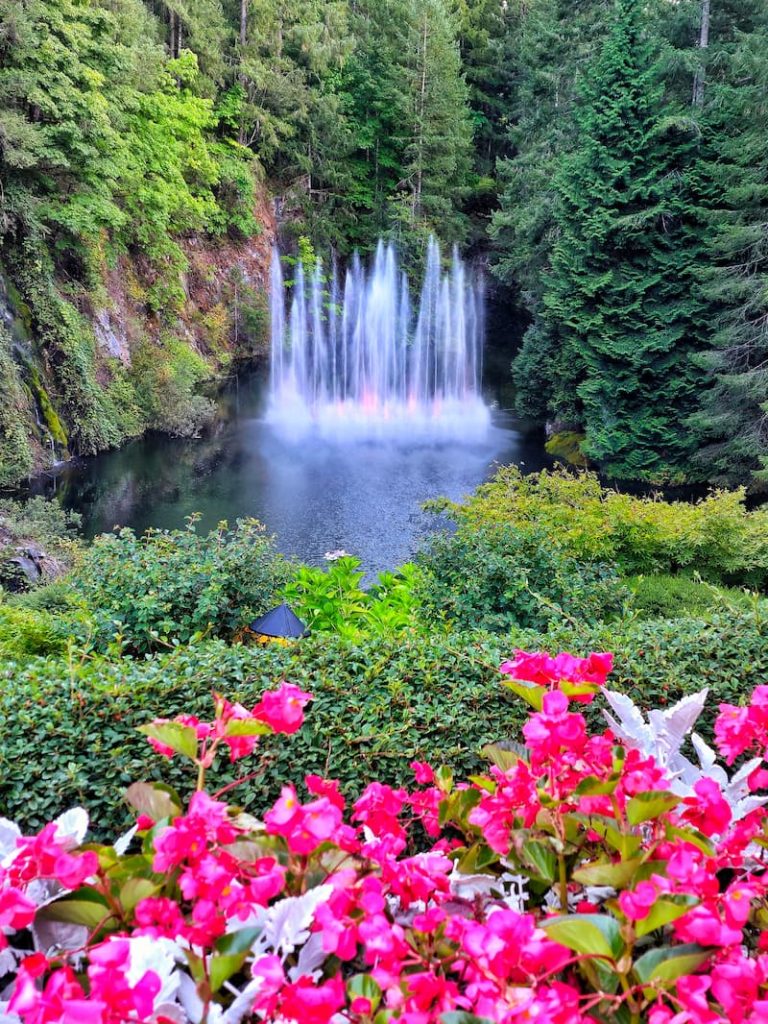
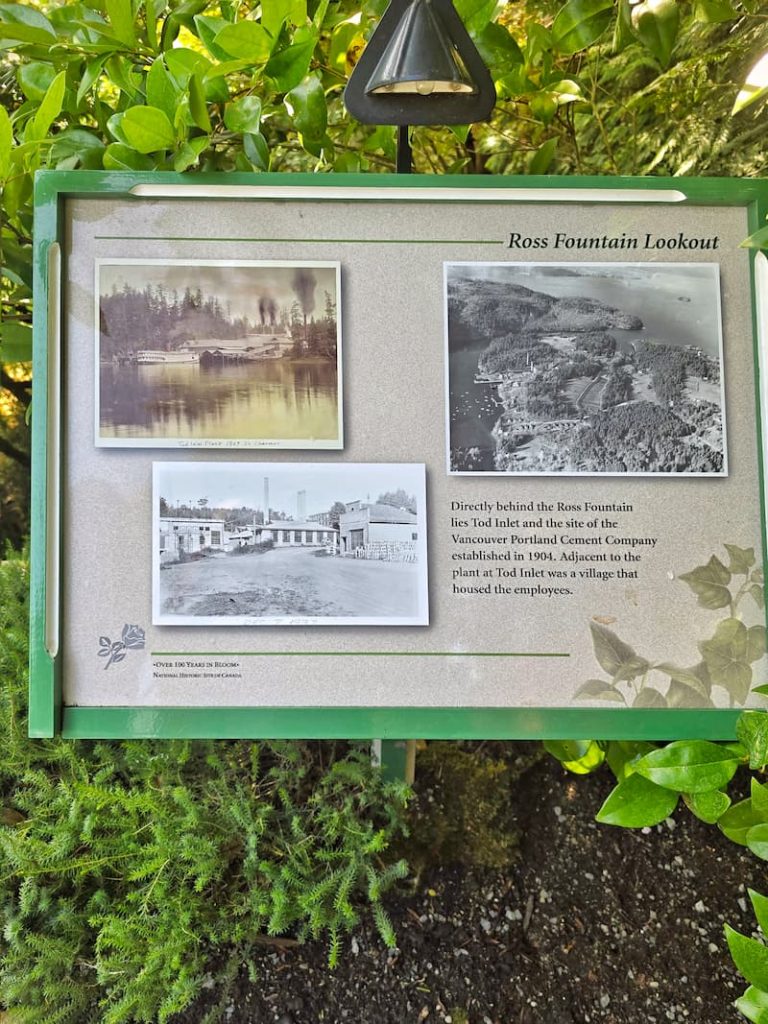
Beautiful during the day, even better lit up in the evening. Directly behind it lies Tod Inlet, where the cement company and its workers’ village once stood.
The Dragon Fountain
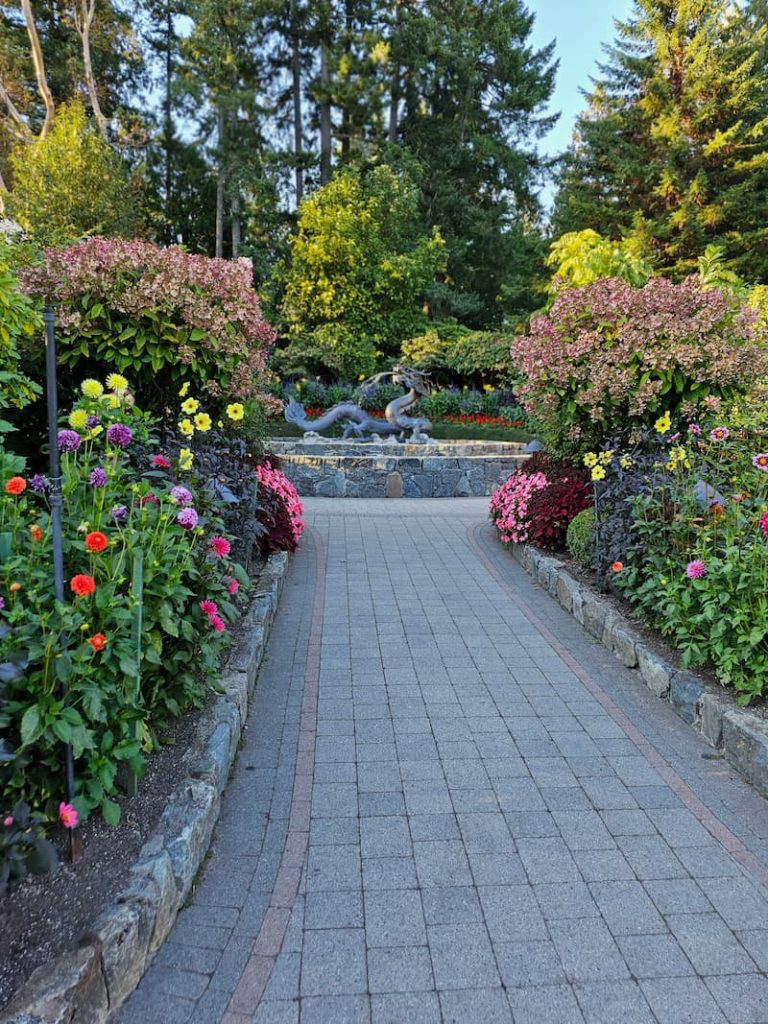
A bronze-and-granite sculpture near the dahlia borders, added in 2015 as a gift from Victoria’s sister city, Suzhou.
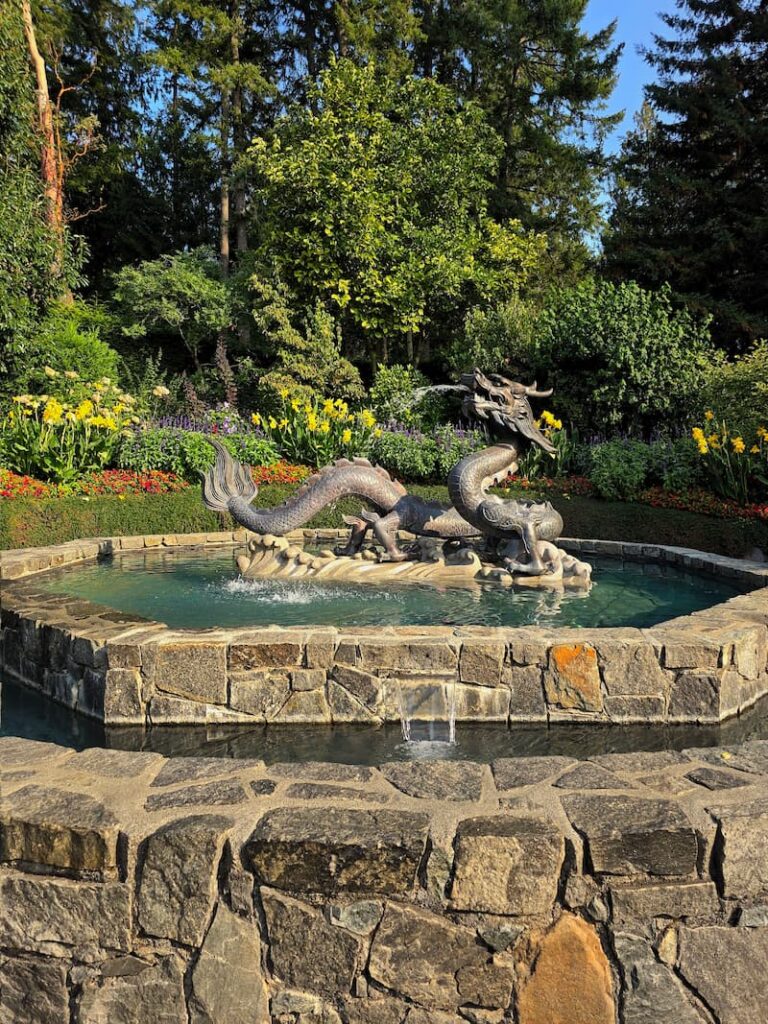

It makes a fun photo stop in Waterwheel Square.
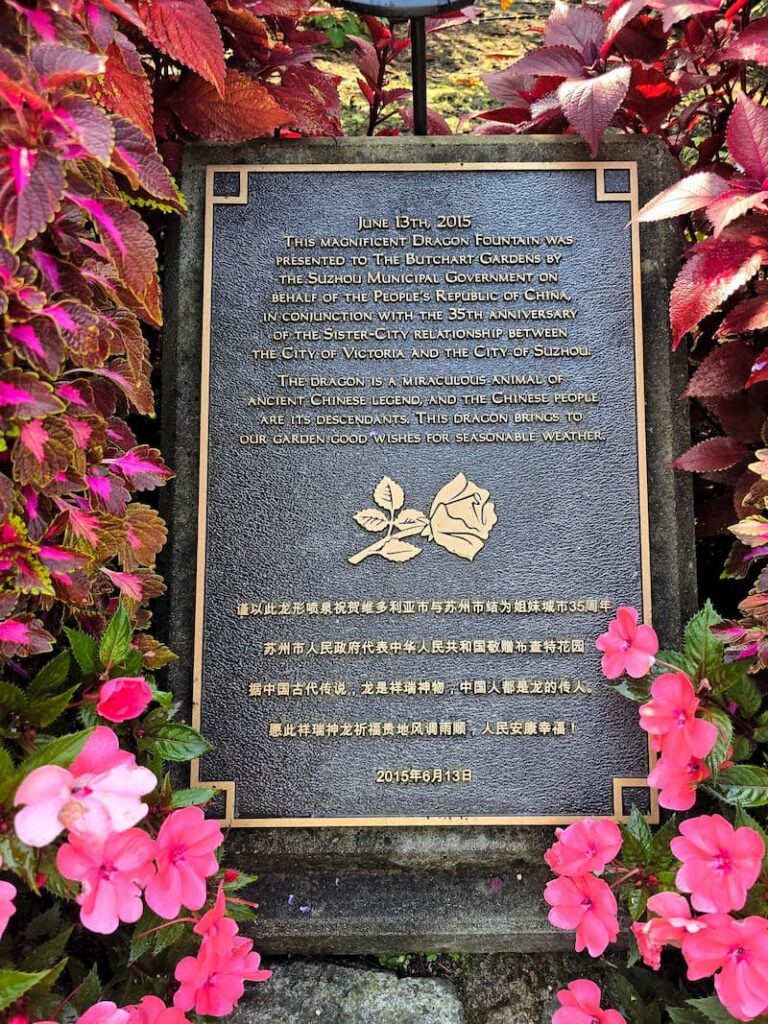
There’s a plaque here too, marking June 13, 2015, the day the Suzhou Municipal Government presented the Dragon Fountain to the gardens.
Flowers That Stopped Me in My Tracks
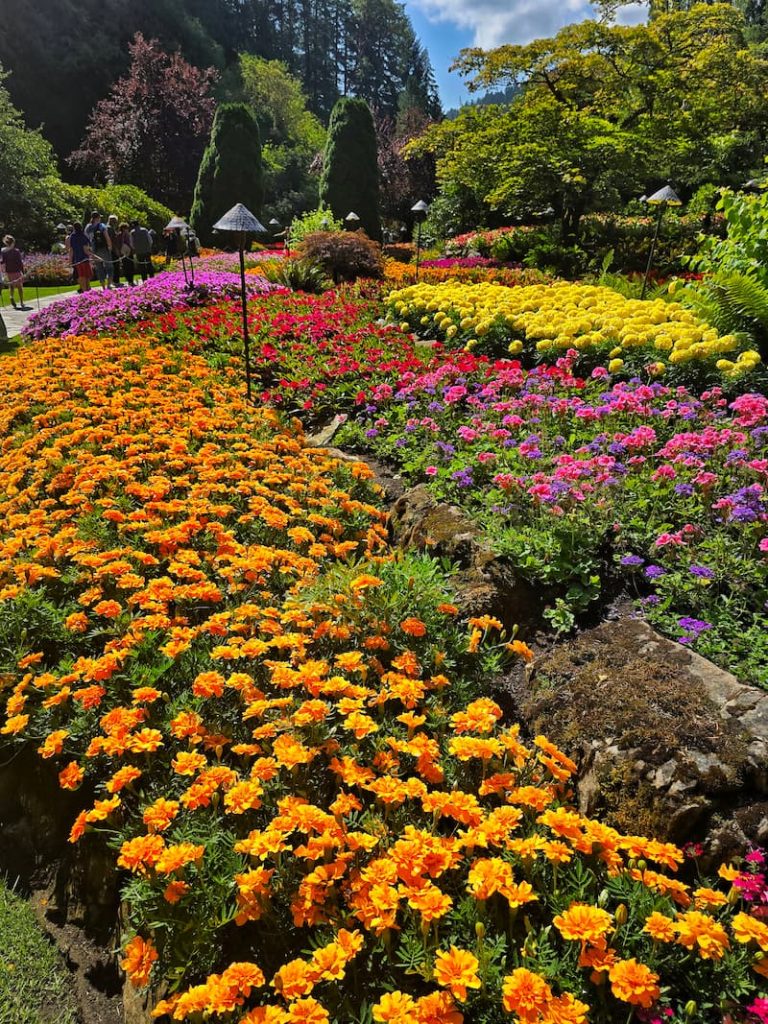
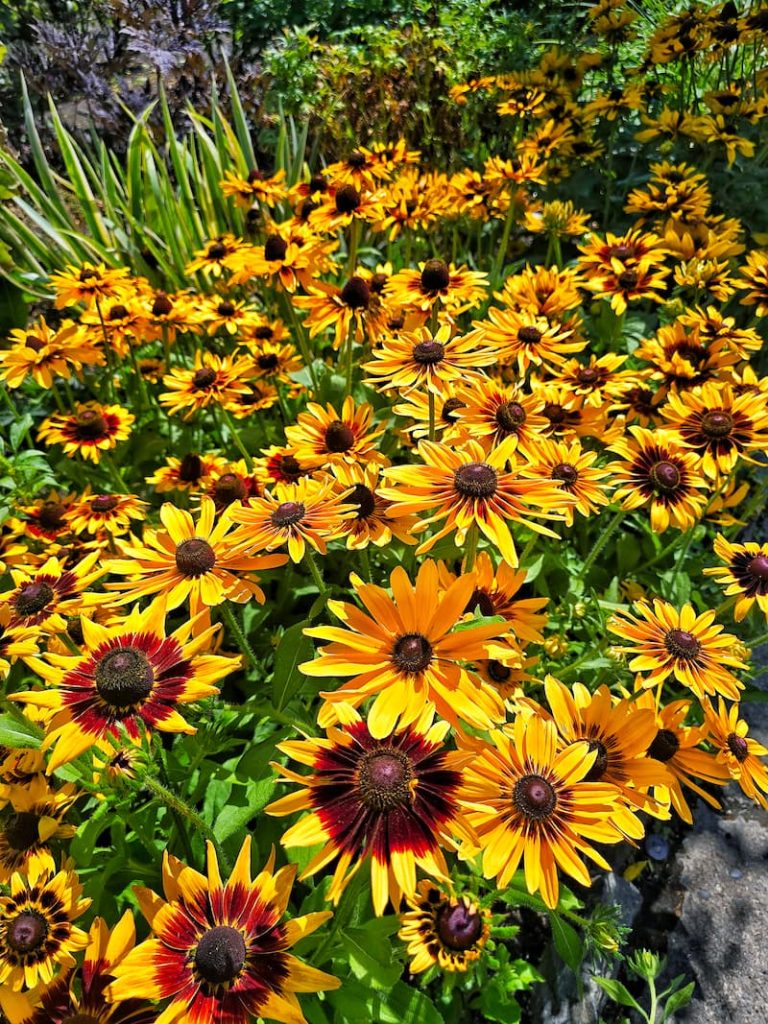
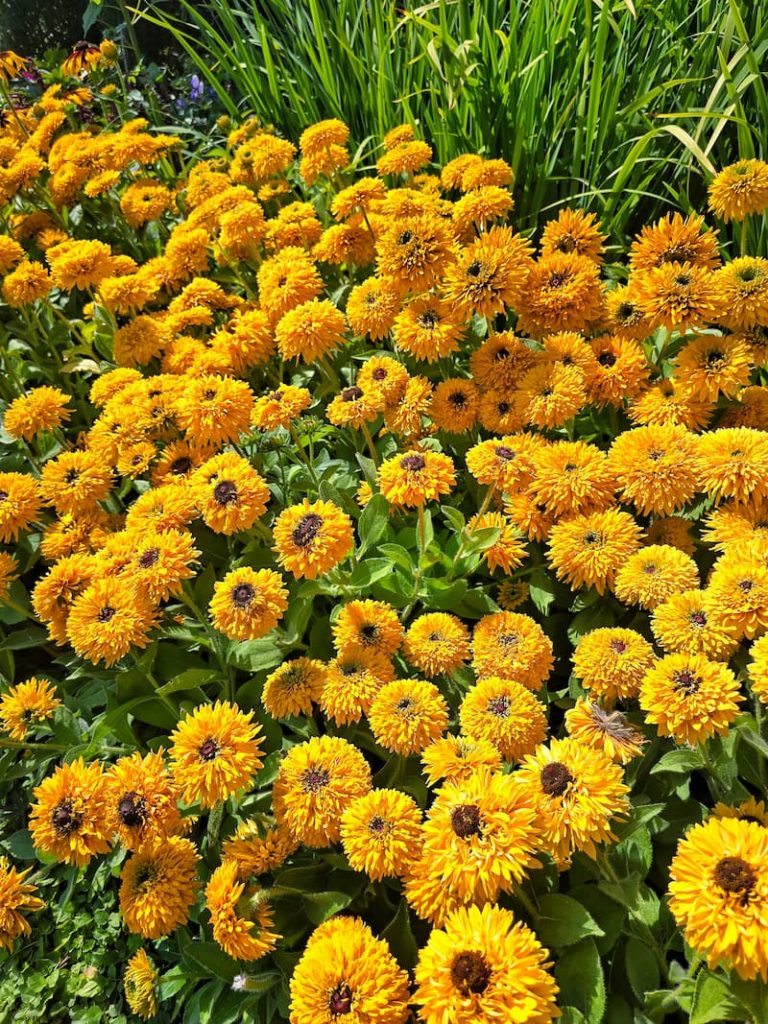
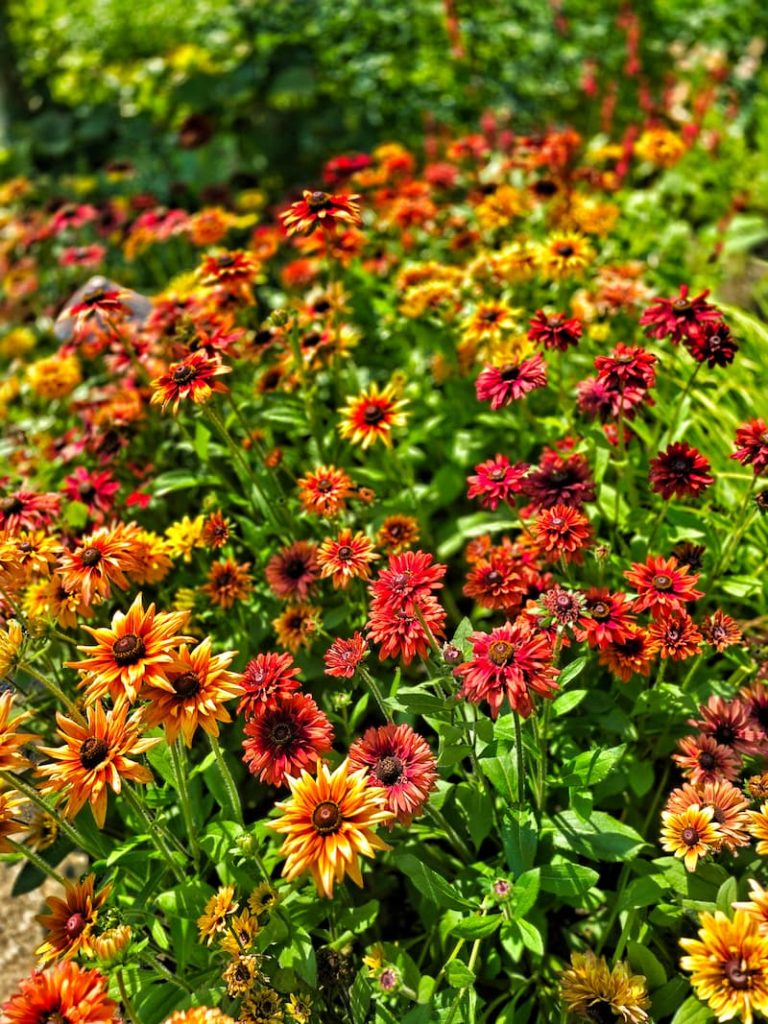
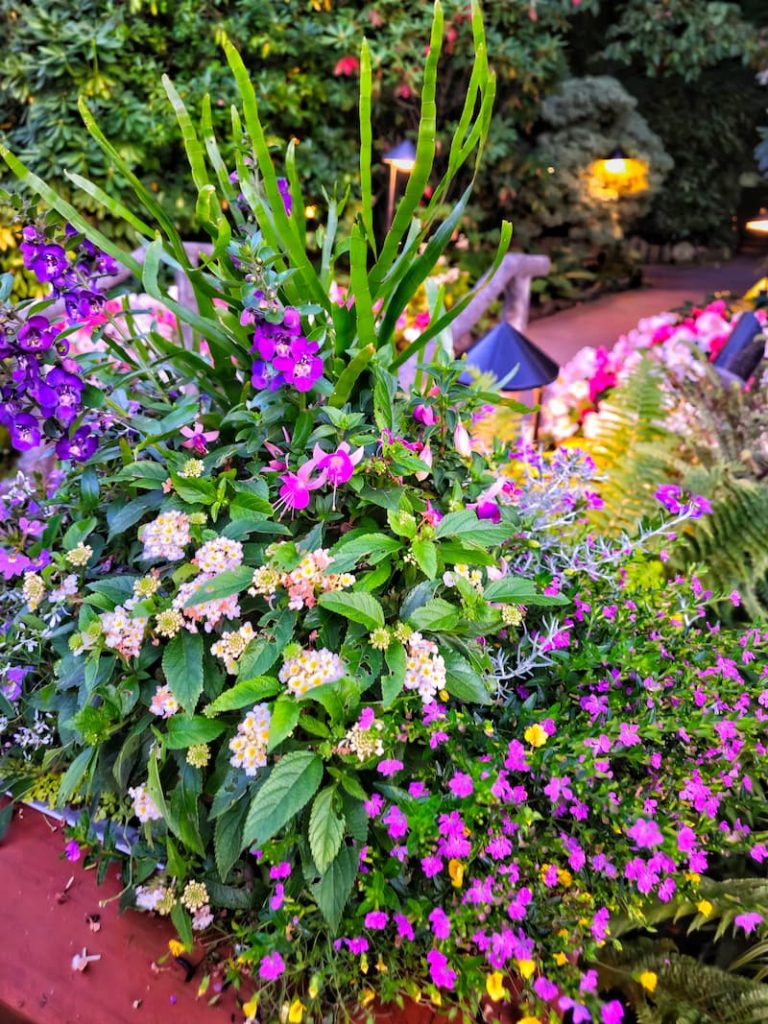
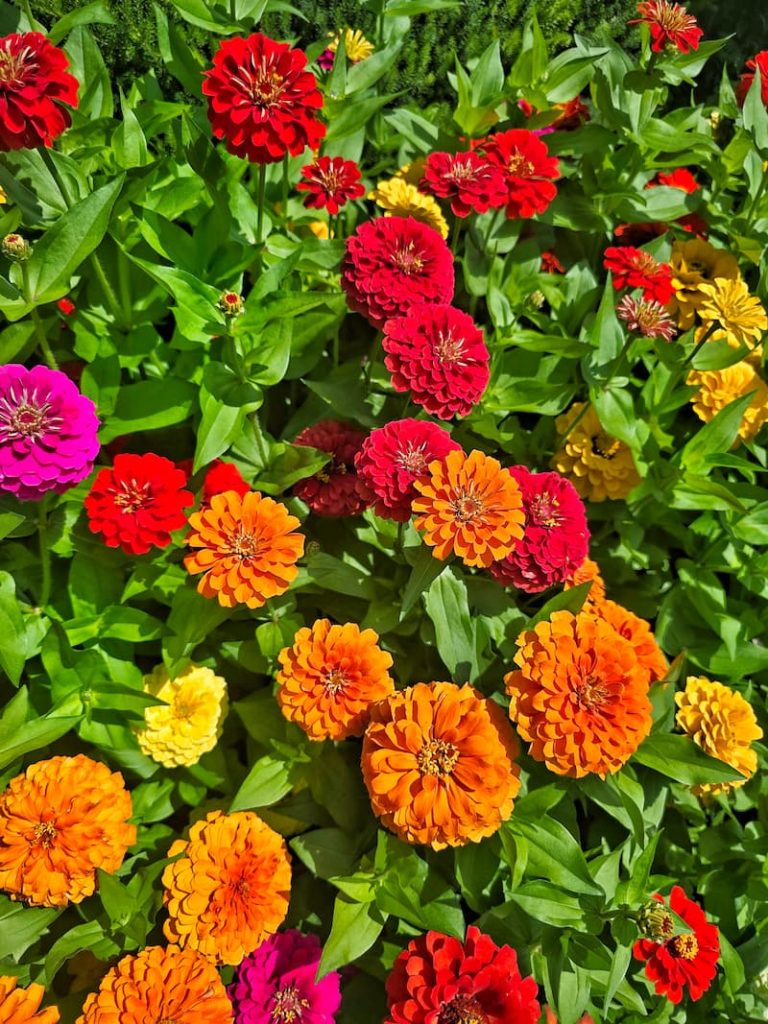
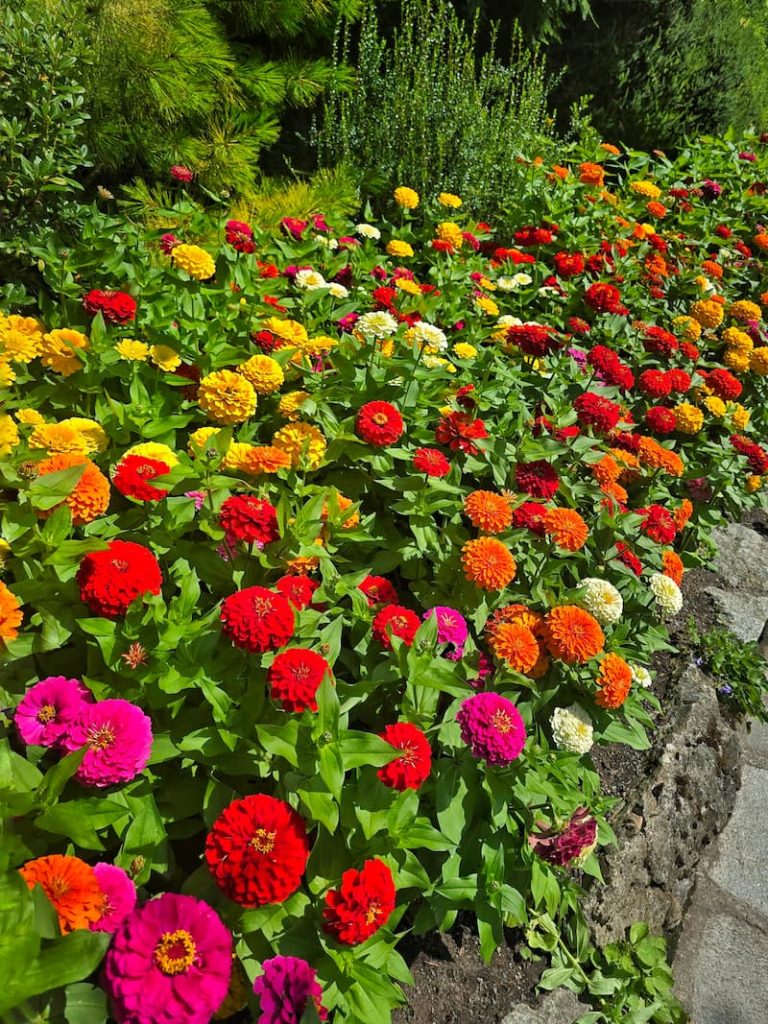
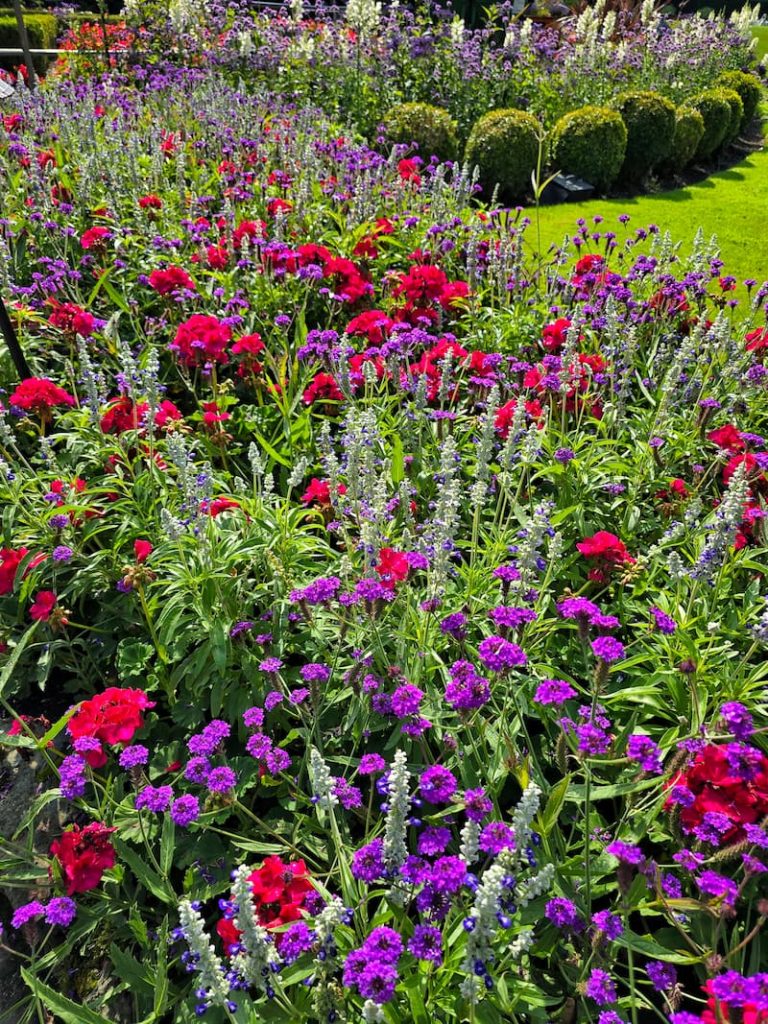
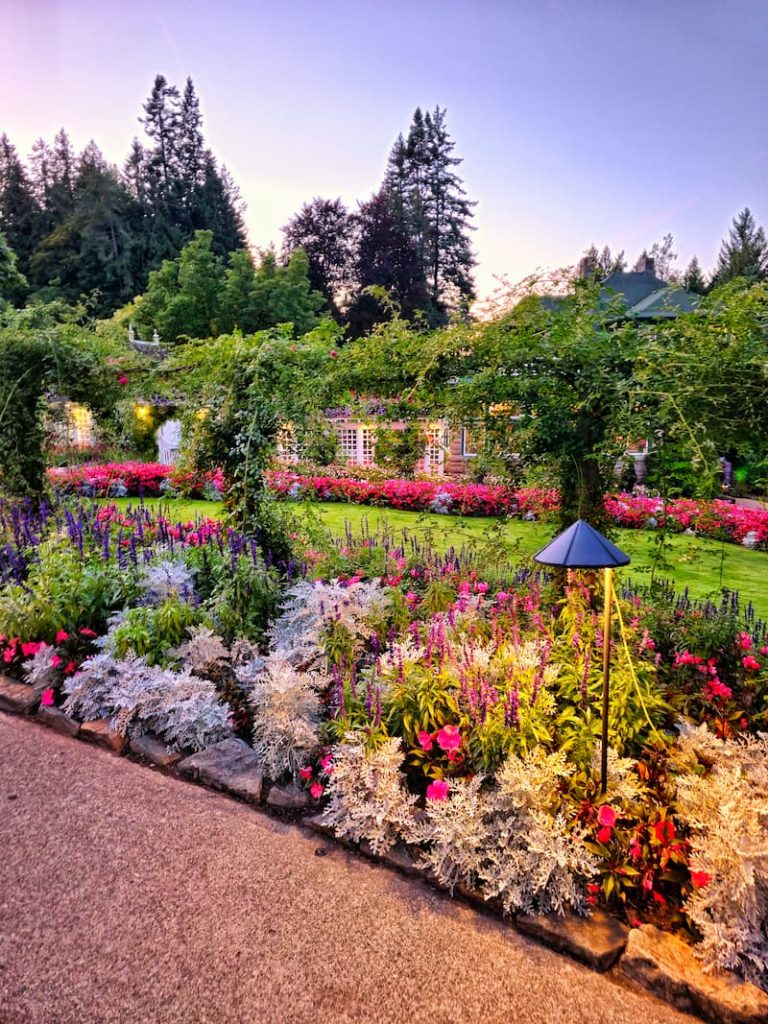
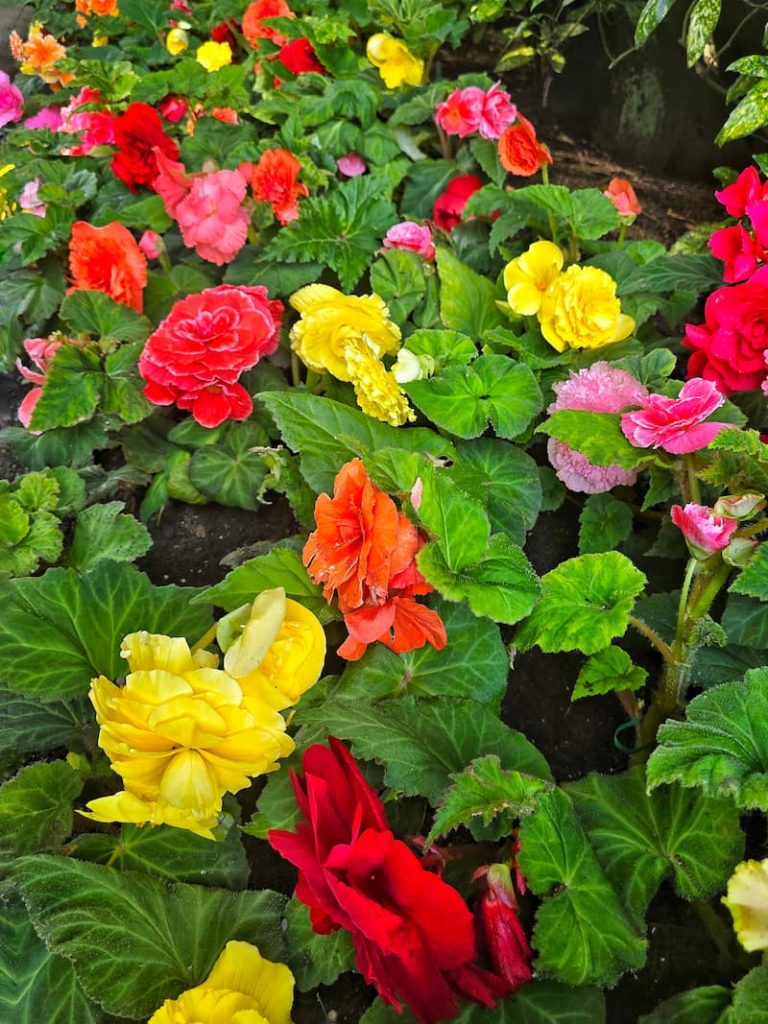
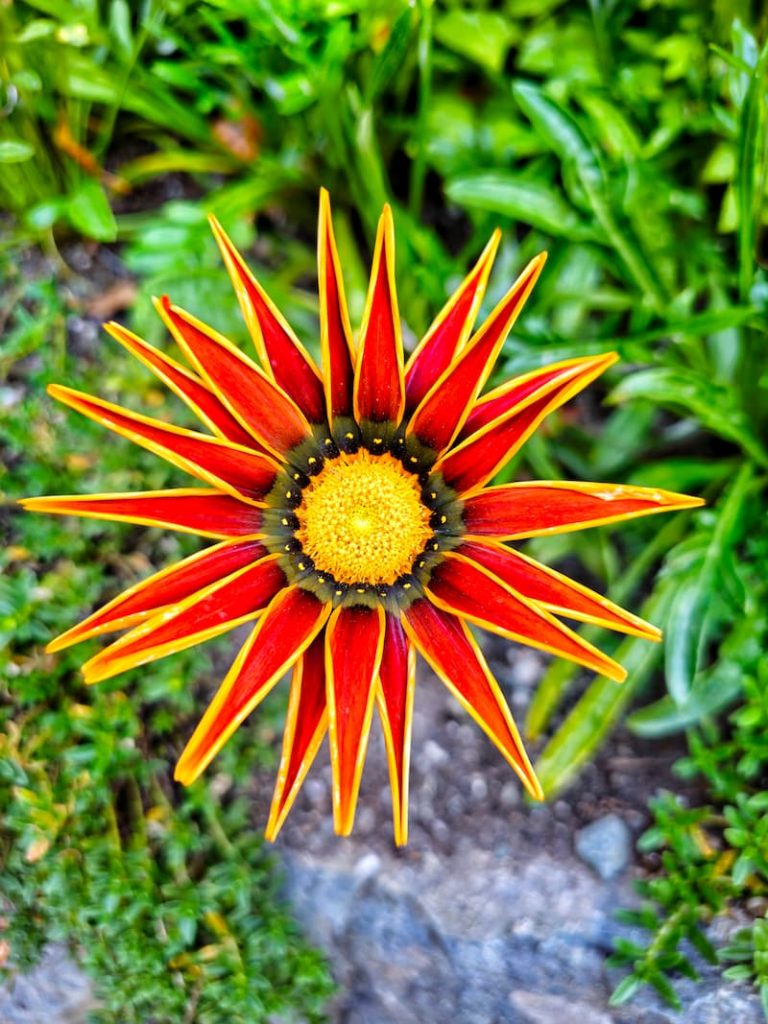
Over the years, I’ve photographed hundreds of flowers here. A few keep ending up in my camera roll.
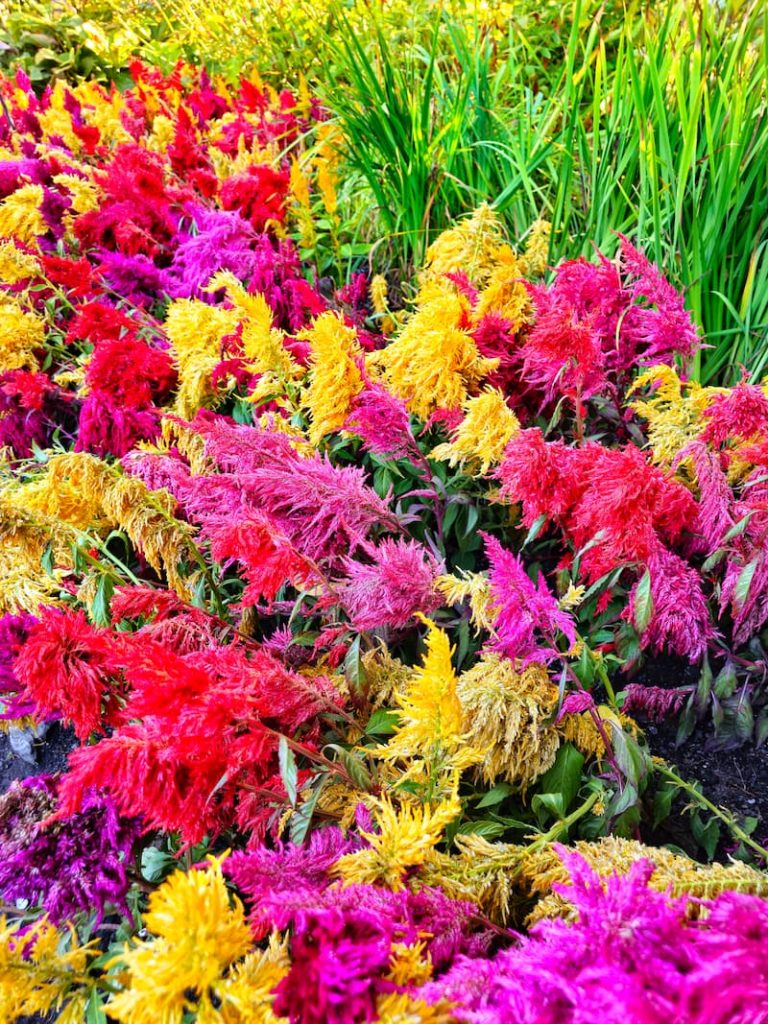
What Blooms Each Season

On select Saturday evenings in July and August, the gardens host fireworks choreographed to music. If your trip lines up with one, stay.
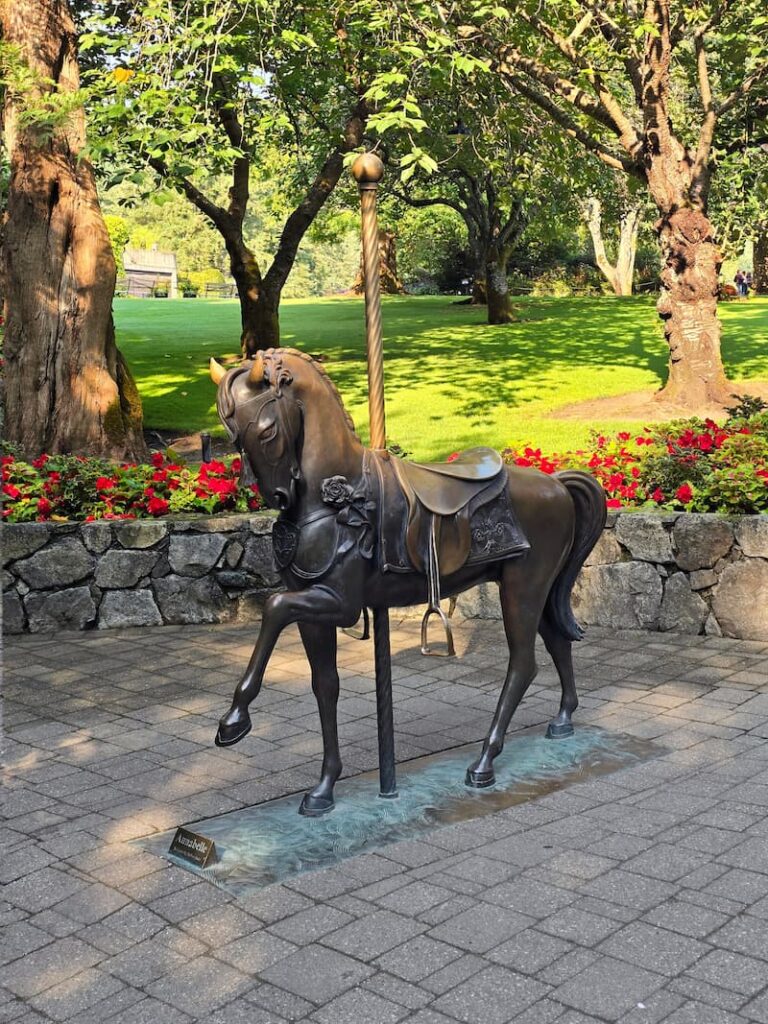
Near the Children’s Pavilion and Rose Carousel stands Annabelle, a bronze horse that kids love to climb on for a photo.
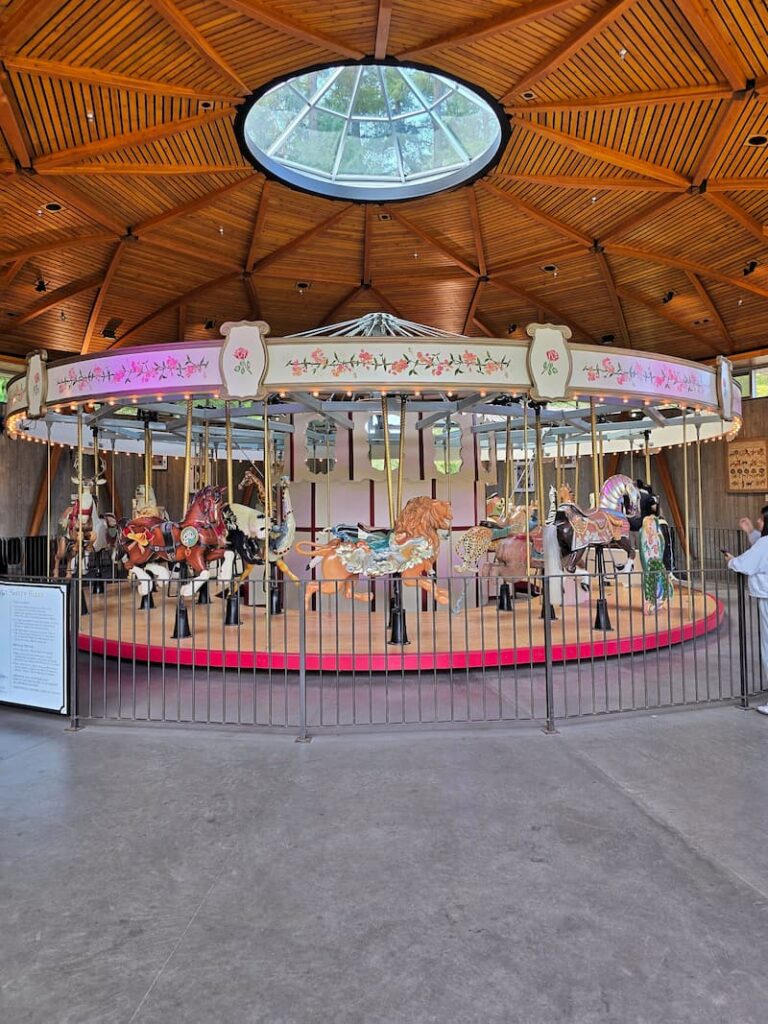
The carousel itself, with its 30 hand-carved wooden animals and two chariots, was added in 2009 by Robin-Lee Clarke, Jennie Butchart’s great-granddaughter and the current owner.
Afternoon Tea and Dining at Butchart Gardens
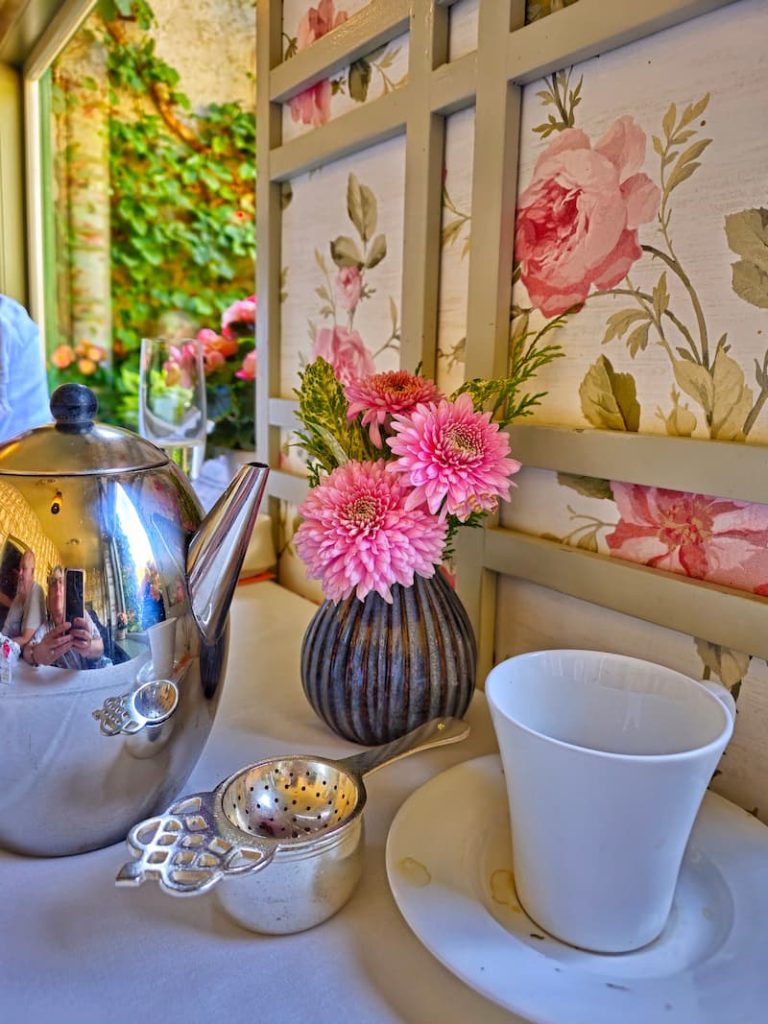
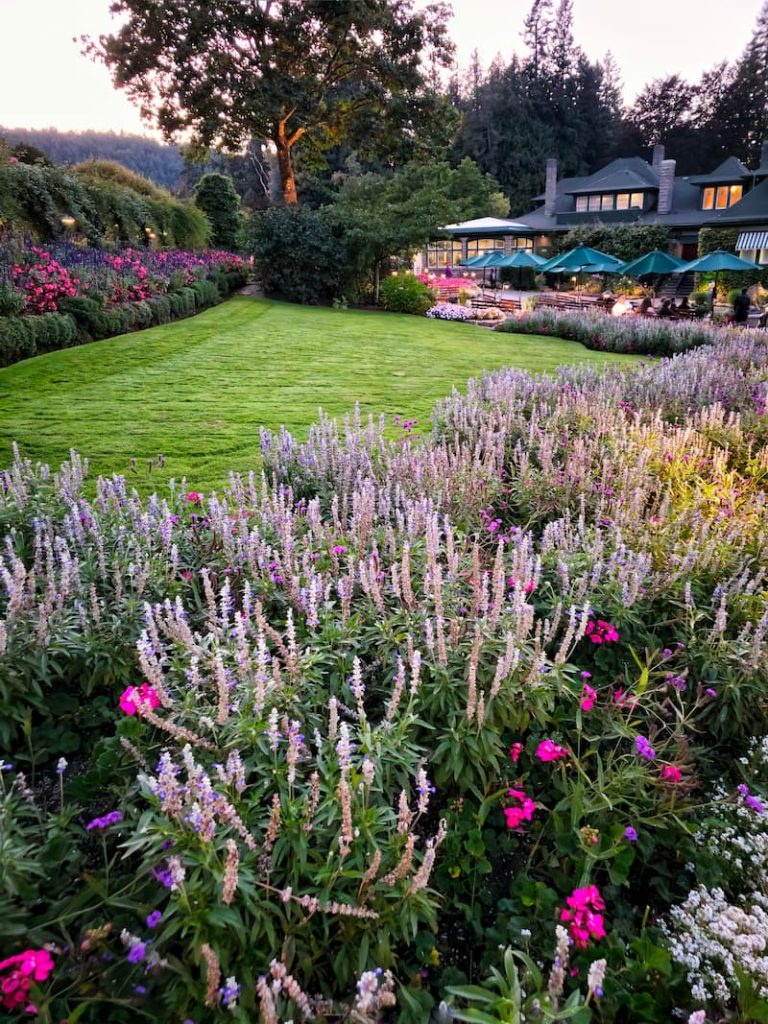
The dining room restaurant is inside the original Butchart family home, with the menu built around fresh, local ingredients and a view of the formal gardens.
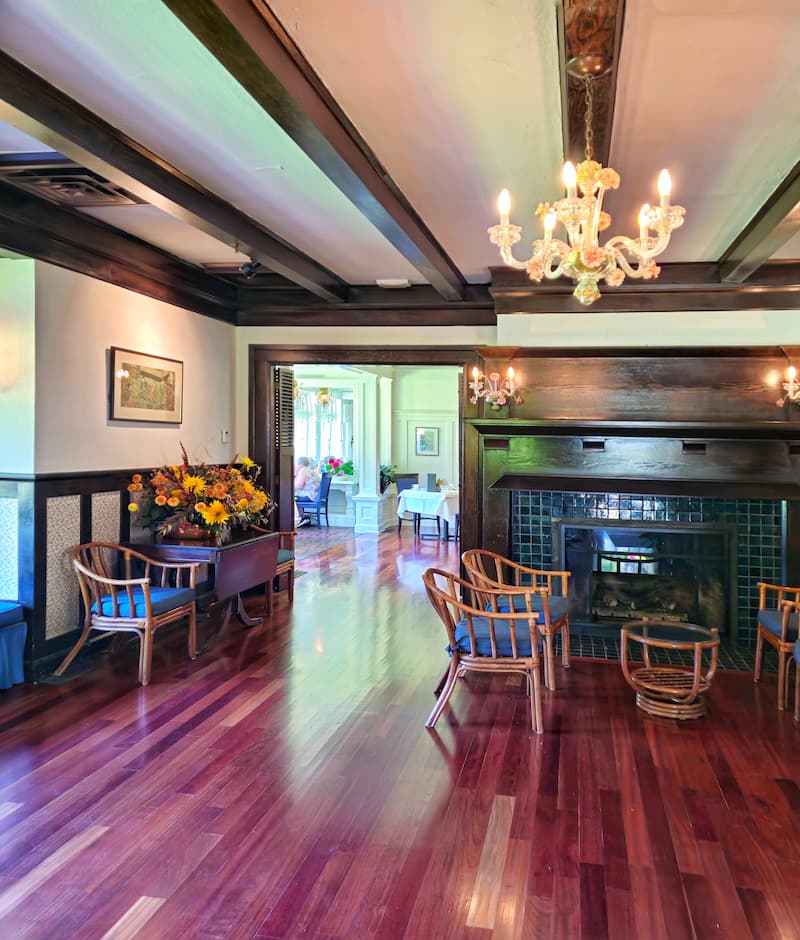
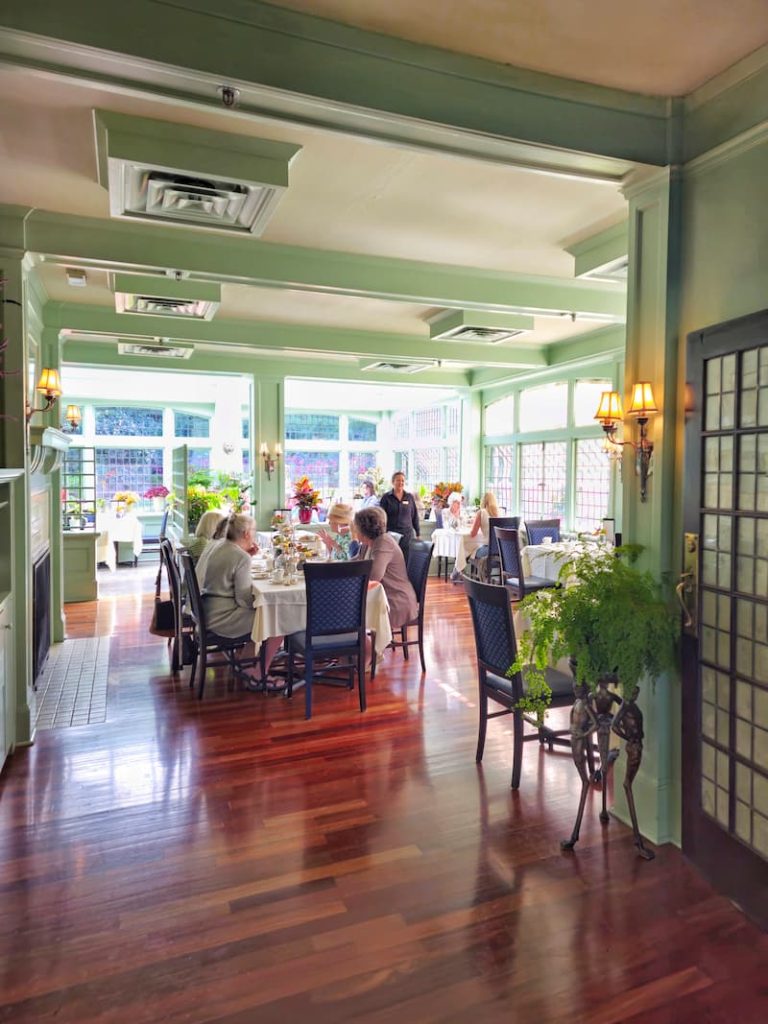
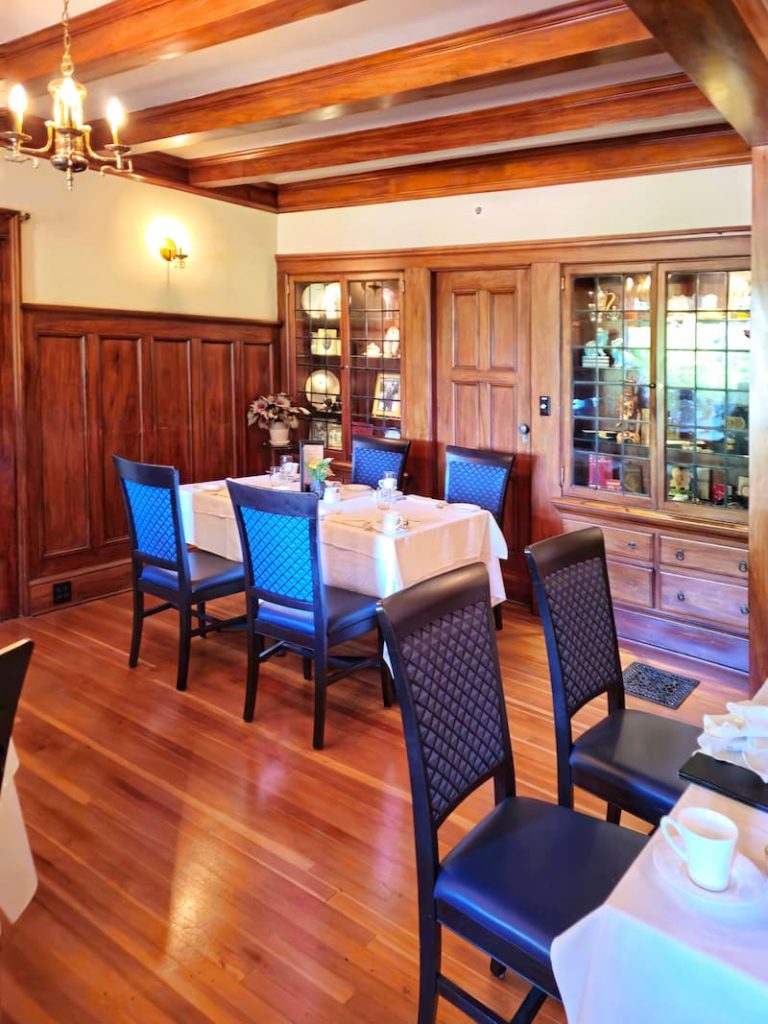

We’ve done the afternoon tea twice now.
Our favorite was the time we sat out on the porch with the gardens right in front of us.
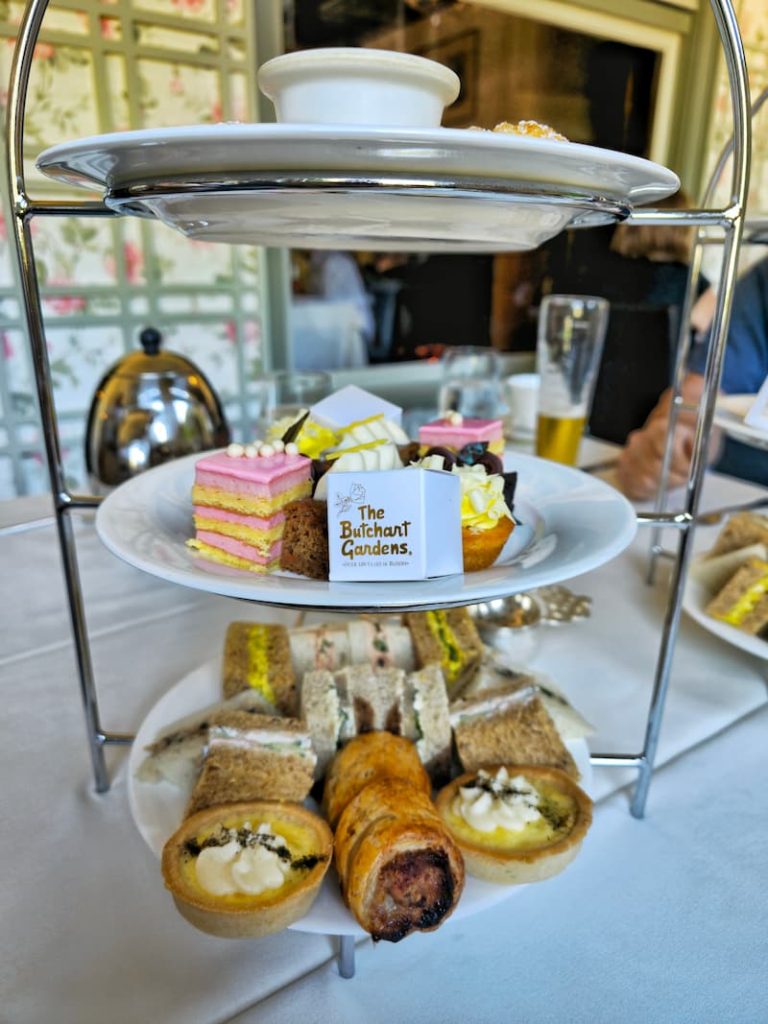
The tea tray of sandwiches, pastries, and desserts is generous, but honestly, the setting is the main course.
For something quicker, the Blue Poppy Restaurant overlooks the Italian Garden, and the coffee shop and gelateria are perfect when you’re anxious to get back to exploring.
Visiting Butchart Gardens By Boat
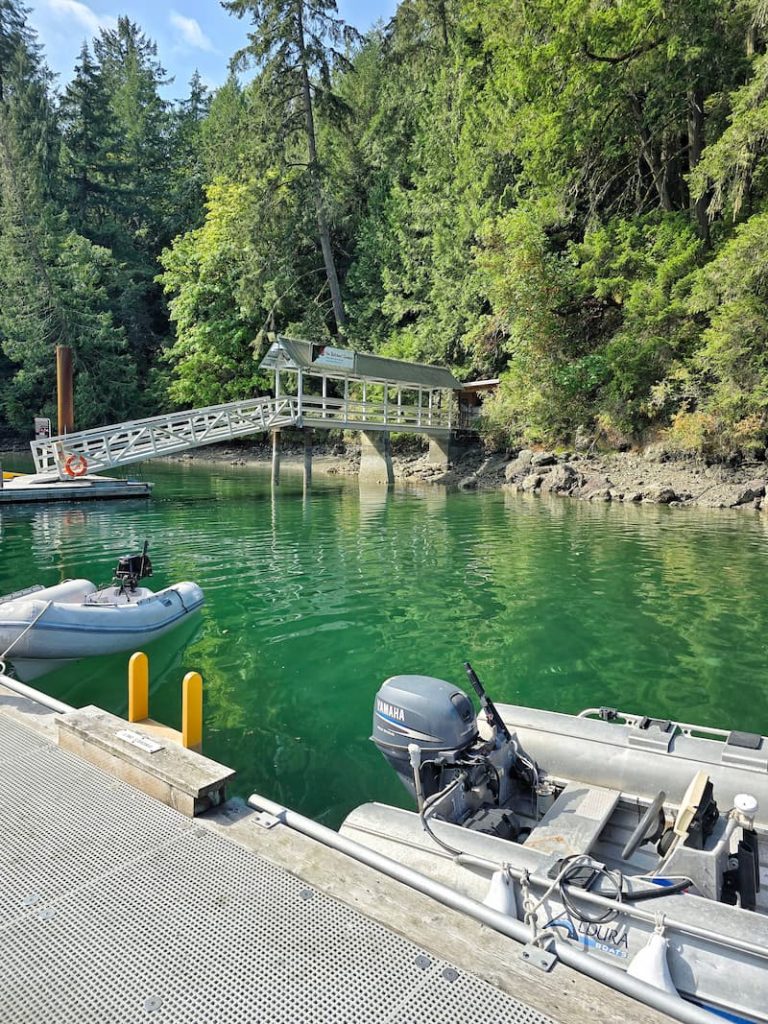
We’ve always arrived at The Butchart Gardens by boat, and I think it’s the best way to experience the gardens.
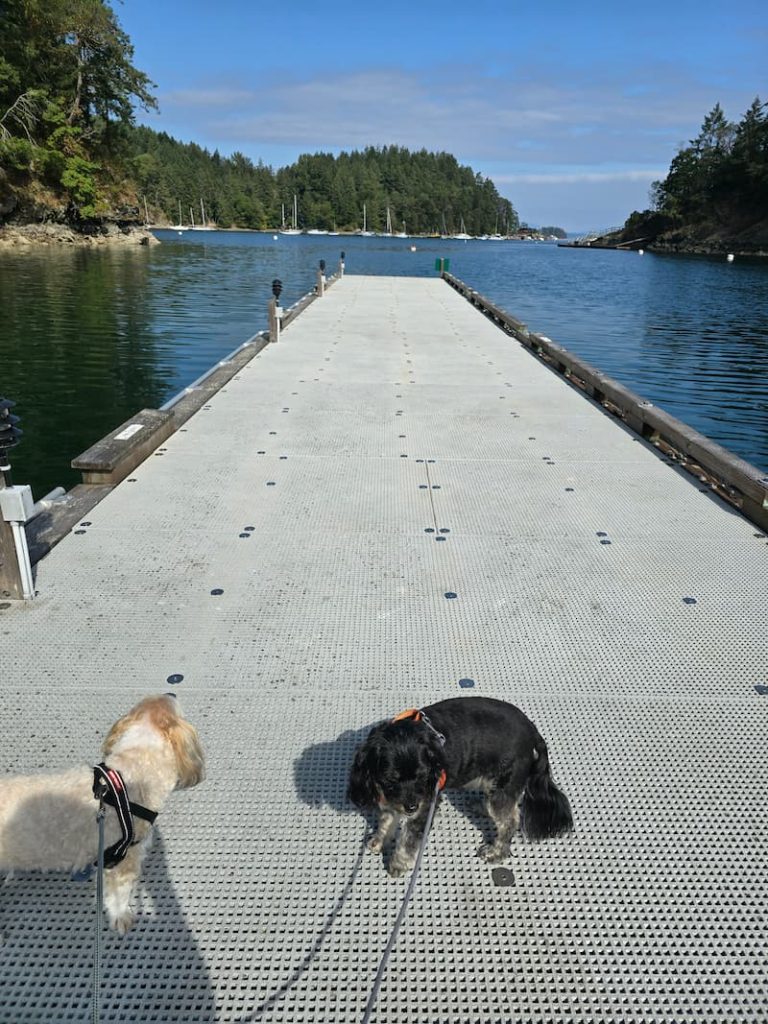
We anchor in Tod Inlet, less than a 10-minute dinghy ride from the small dinghy dock reserved for garden guests.
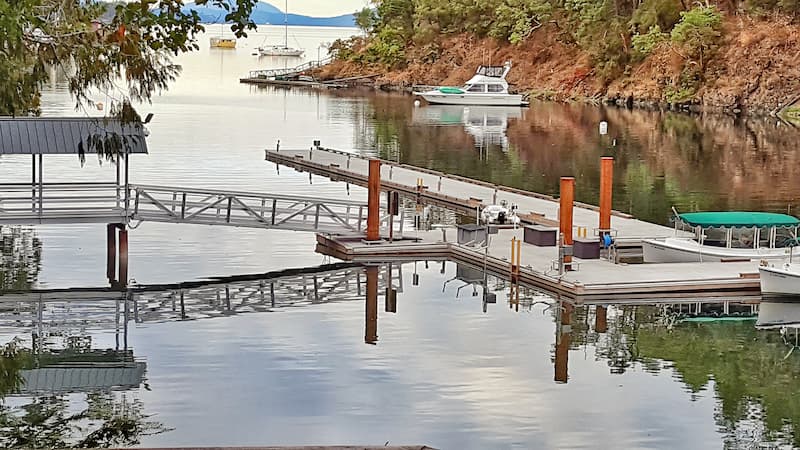
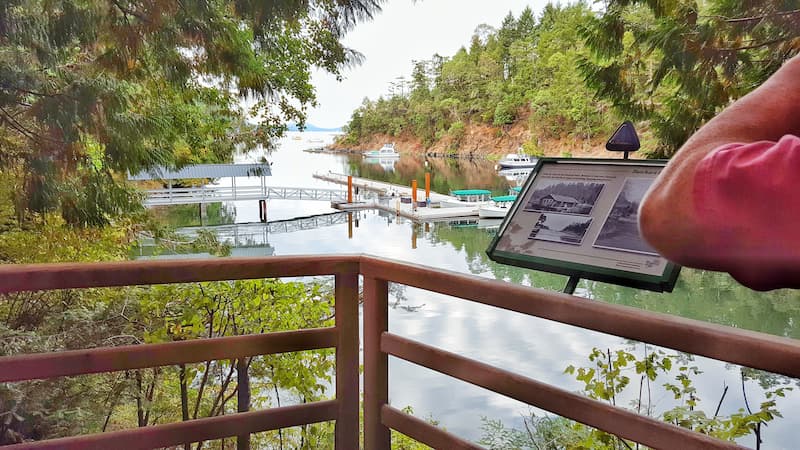
Back when we had our smaller boat, we’d tie to a buoy and stern-tie near the dock, which made it easy to return in the evening for a second stroll under the lights.
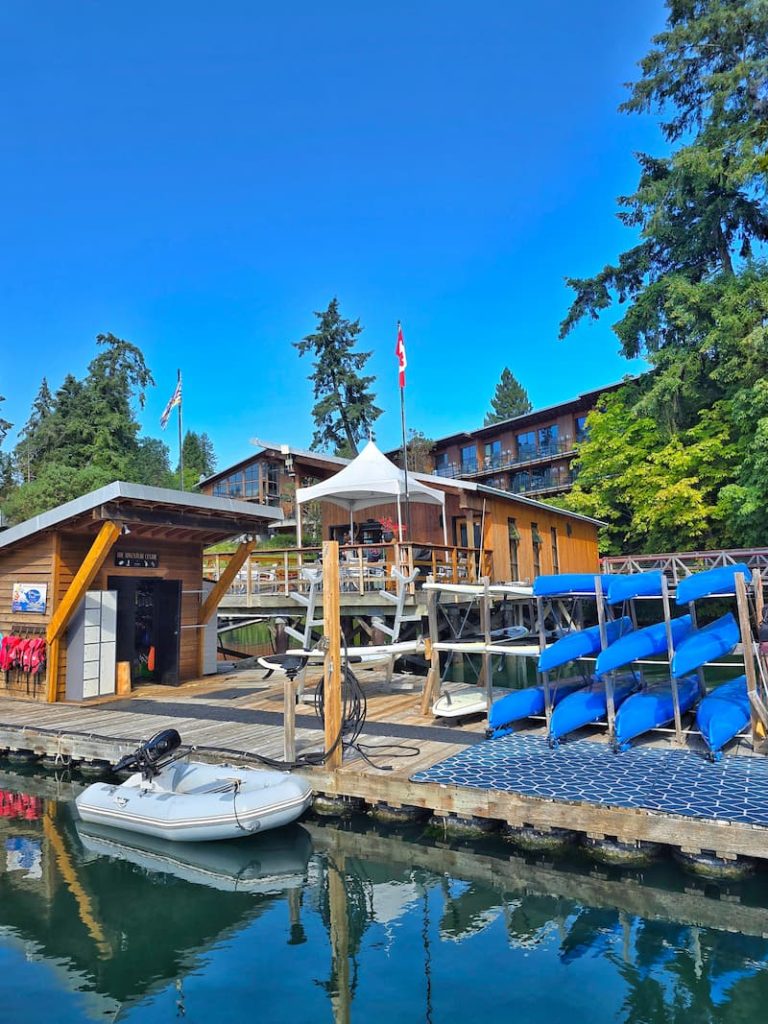
Brentwood Bay Marina is close by if you’d rather take a slip than anchor out.
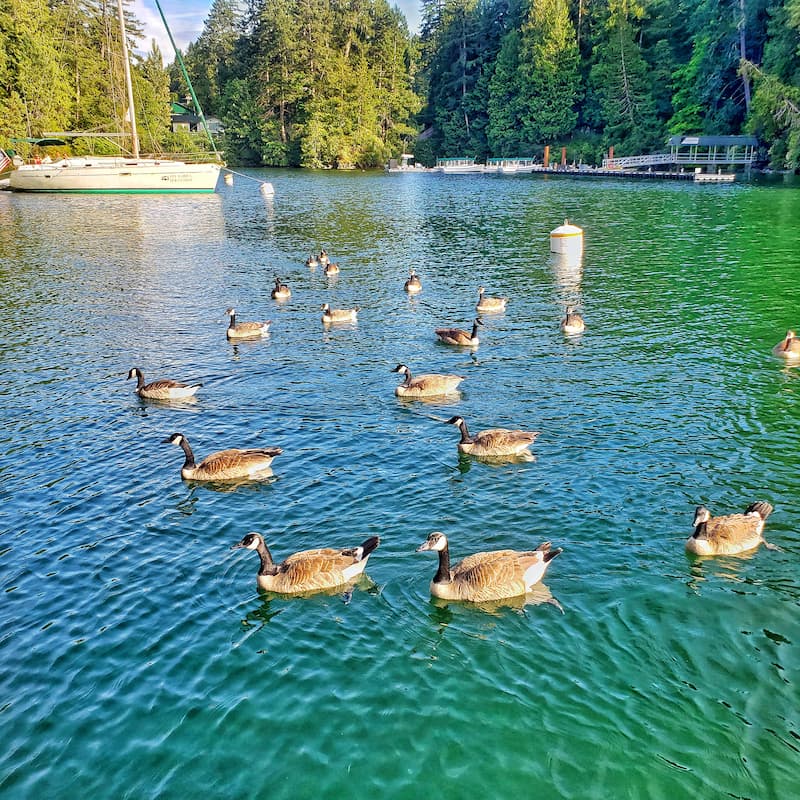
One more thing to watch for: the dinghy dock is also where seaplanes land to drop off and pick up visitors. It makes for good entertainment while you wait for your ride back to the boat.
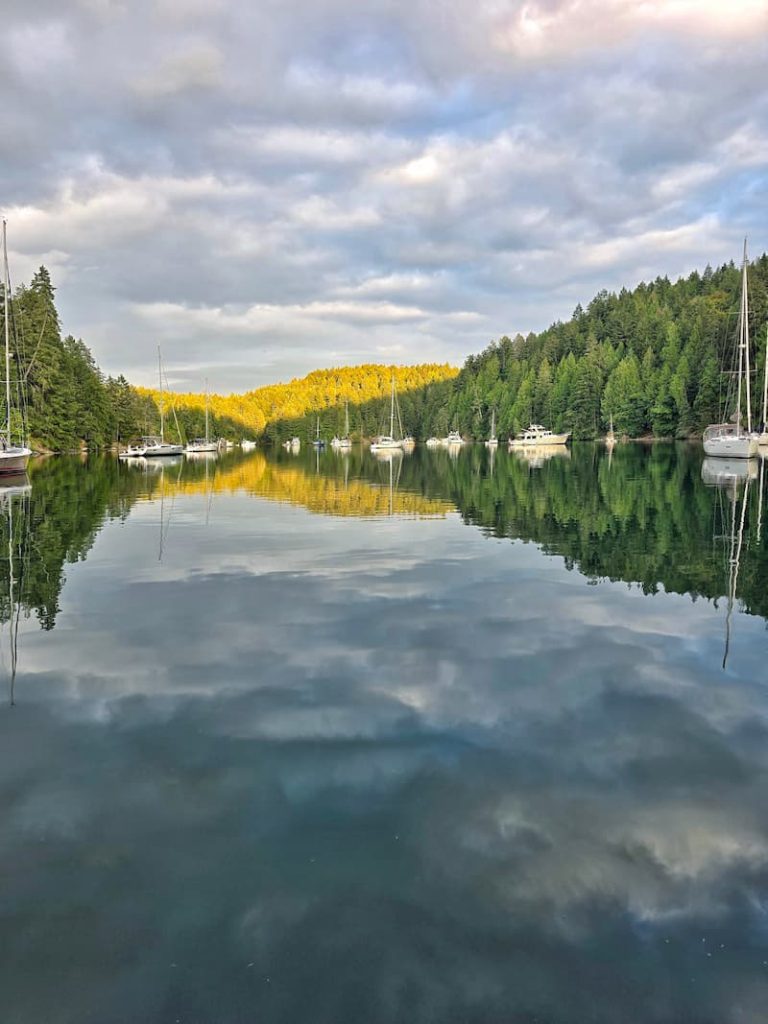
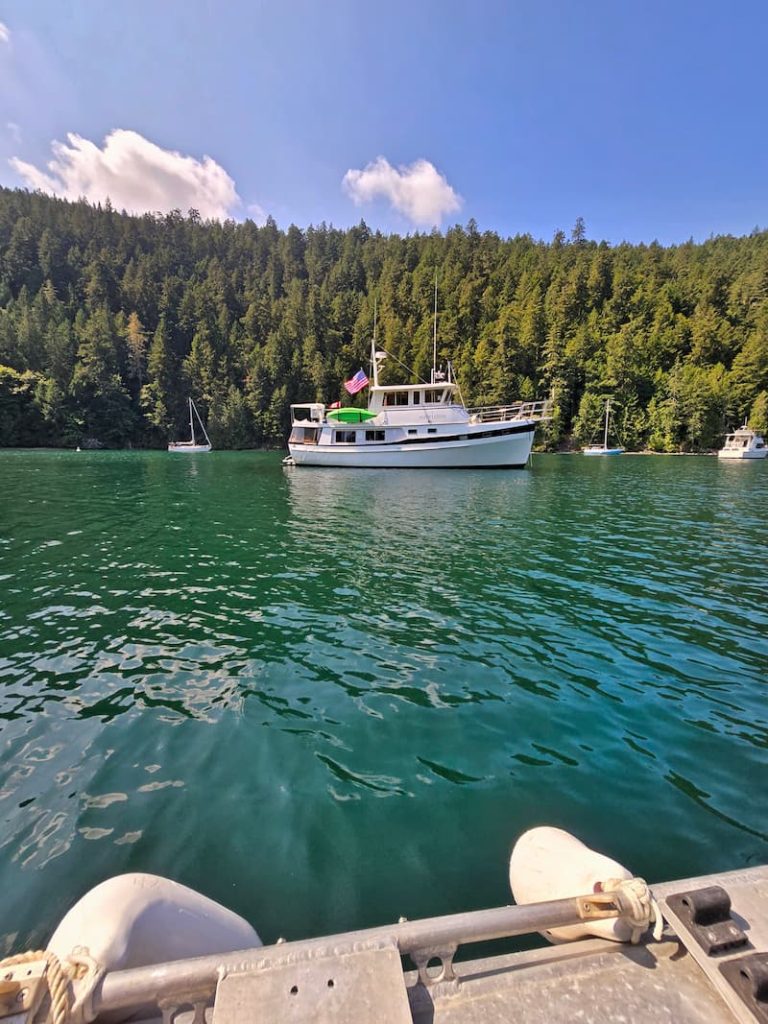
Our boat, Wildflower, anchored in Tod Inlet.
Let’s Plan Your Dream Garden With Our
Gardening Planner
Unlock Your Garden’s Potential.
Our 35-page Ultimate Garden Planner is designed to help you organize, track, and flourish in your gardening endeavors.
Get yours for $4.99
Tips for Visiting The Butchart Gardens
Common Questions About The Butchart Gardens
How Long Does It Take to Walk Through The Butchart Gardens?
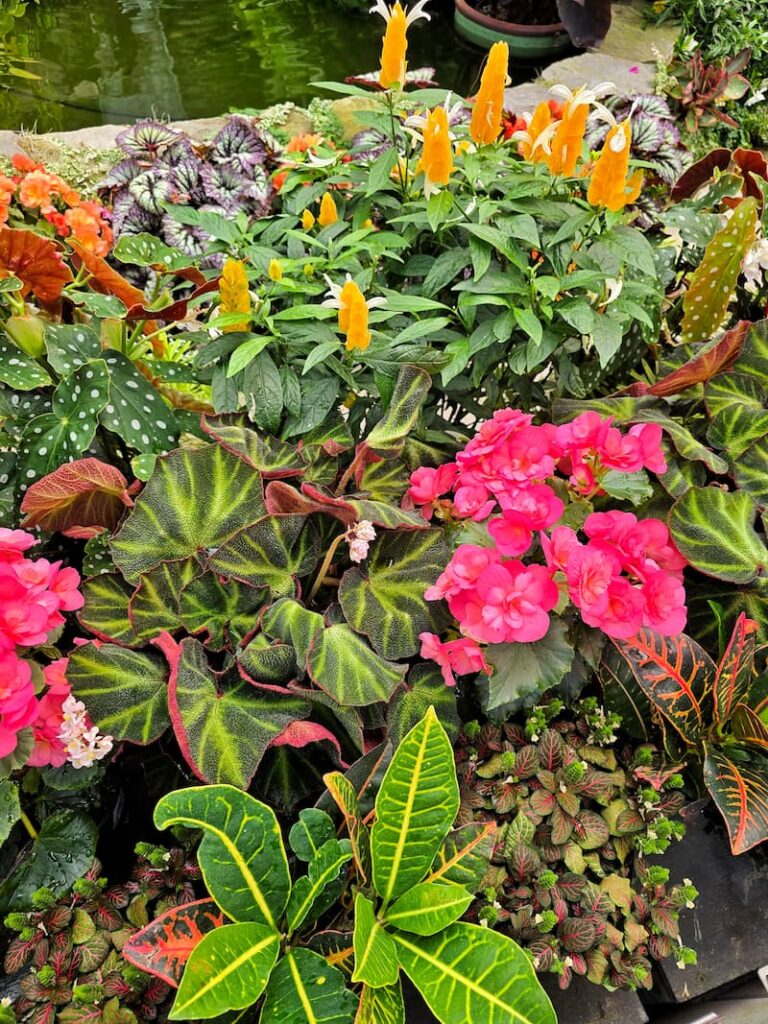
Plan on at least 2 hours to walk through the gardens. If you want to linger, take photos, and stop for tea or a meal, 3-4 hours is more realistic. Evening events like fireworks or the holiday lights call for a longer visit.
Can You Bring Your Own Food to Butchart Gardens?
Yes. You’re welcome to bring a picnic and enjoy it in the designated areas near the parking lot. It’s a great option before or after your garden walk.
What Is the Best Time to Visit Butchart Gardens?
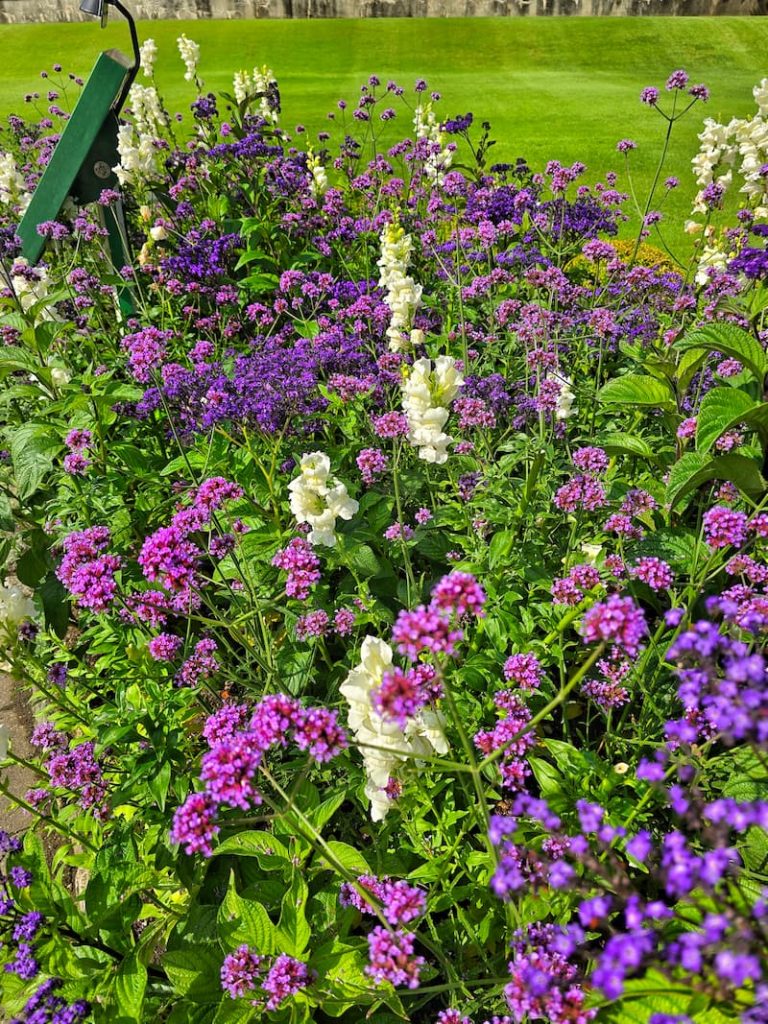
The gardens are beautiful year-round, so it depends on what you want to see. Spring and summer bring the fullest bloom, fall adds rich foliage color, and winter brings holiday light displays.
For fewer crowds, go early in the morning or later in the afternoon.
Are Dogs Allowed at The Butchart Gardens?

Yes, dogs are welcome throughout the gardens on a short leash. We bring Jax and Ollie every visit, and the staff has always been wonderful with them.
Final Thoughts About Butchart Gardens
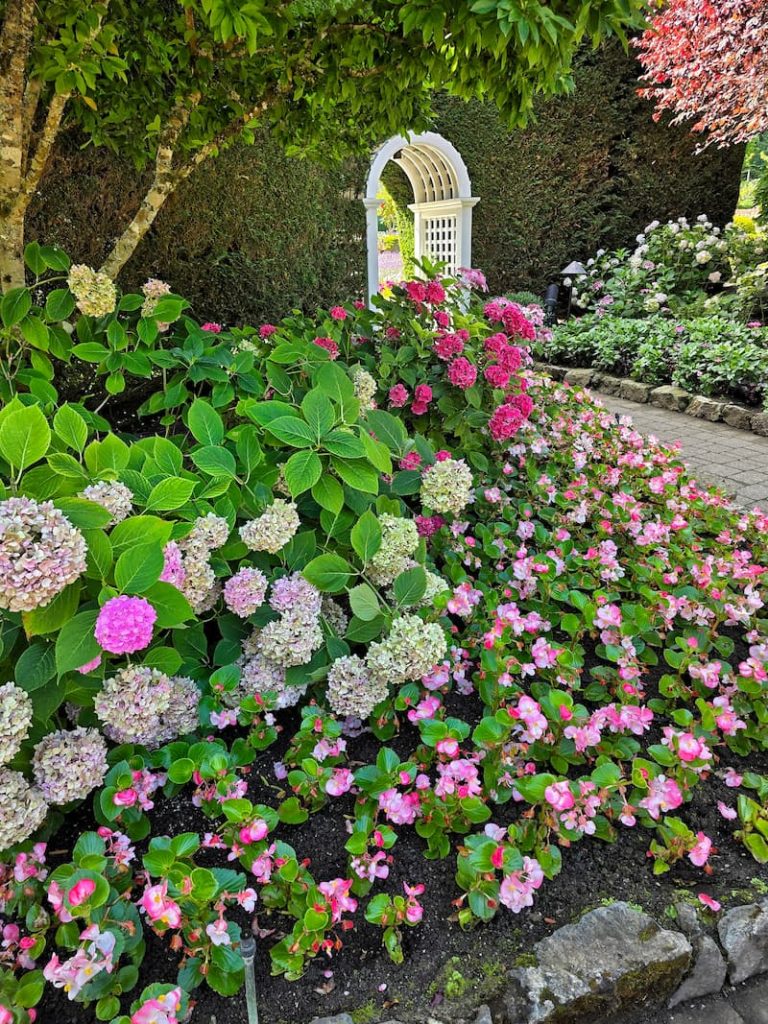
No matter how many times we visit, I’m in awe of this place. The thoughtfulness of every bed, the blooms that change with each trip, and the quiet paths between them.
Whether you’re a gardener looking for inspiration, a boater looking for a reason to drop anchor in Tod Inlet, or someone who just needs a peaceful day, Butchart delivers. I always leave eager to get back to my own garden to try something new.
If you have any questions or your own Butchart Gardens tips, share them in the comments below. And feel free to pass this post along to anyone planning a trip to Victoria.
Until next time,
Happy Gardening!

MORE POSTS
For You to Enjoy
Follow Me for More Inspiration



Oh my gosh, these gardens are the most gorgeous and inspiring! I love every single picture. Your trip has been soooo amazing.
I always get so much inspiration there Jill!
You would absolutely love it!