Create a Healthy Garden: Your Guide to Flower Companion Planting
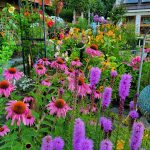
It took me years to discover that some of the best things I could do for my garden had nothing to do with fertilizer or fancy tools. Pairing the right flowers and herbs together, what gardeners call companion planting, turned out to be one of the simplest and most rewarding changes I ever made.
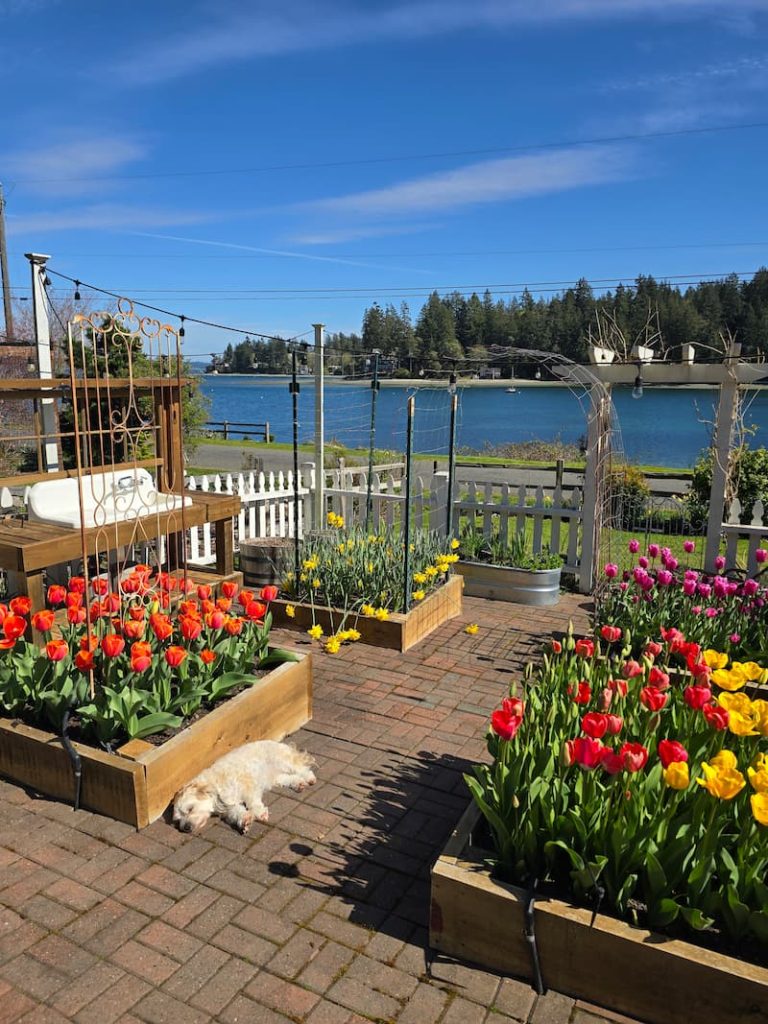
In my cottage garden on Puget Sound, companion planting shows up everywhere. Zinnias and cosmos grow together in the cutting garden. Marigolds grow alongside the tomatoes every season. Lavender and rosemary are tucked into beds throughout the garden, repelling pests and attracting pollinators. This season, I’m trying eggplant with lavender for the first time.
Flower companion planting works because plants have relationships with each other. Some protect, some attract, and some enrich the soil. Understanding a few of those relationships changes the way you plan a garden. This post covers the basics, the best pairings I’ve found, and a companion planting chart you can use as a quick reference all season long.
As an Amazon affiliate, I earn a commission from qualifying purchases at no additional cost to you. My blog also features other affiliate links for your convenience. Click here to read my privacy policy.
Why Companion Planting Works
The idea behind companion planting is simple: some plants make their neighbors healthier, more productive, and better protected. Here are the three main ways it makes a difference in the garden.
Natural Pest Control
Certain flowers confuse, repel, or trap pests before they become a problem. Marigolds deter nematodes and aphids. Nasturtiums act as a trap crop, luring aphids away from more vulnerable plants.
Lavender and rosemary repel mosquitoes, ants, and other common insects with their scent alone.
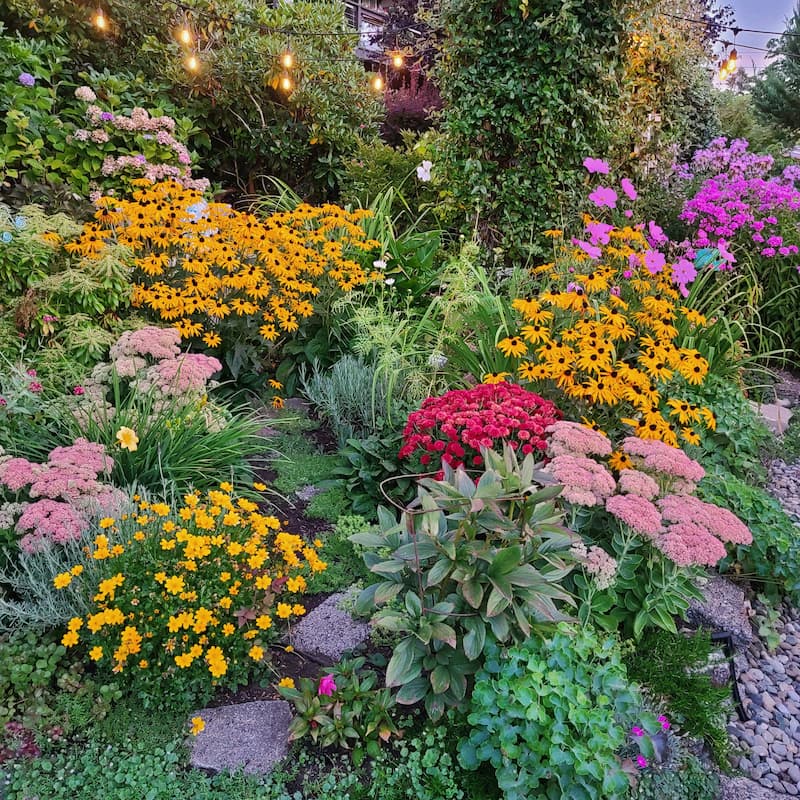
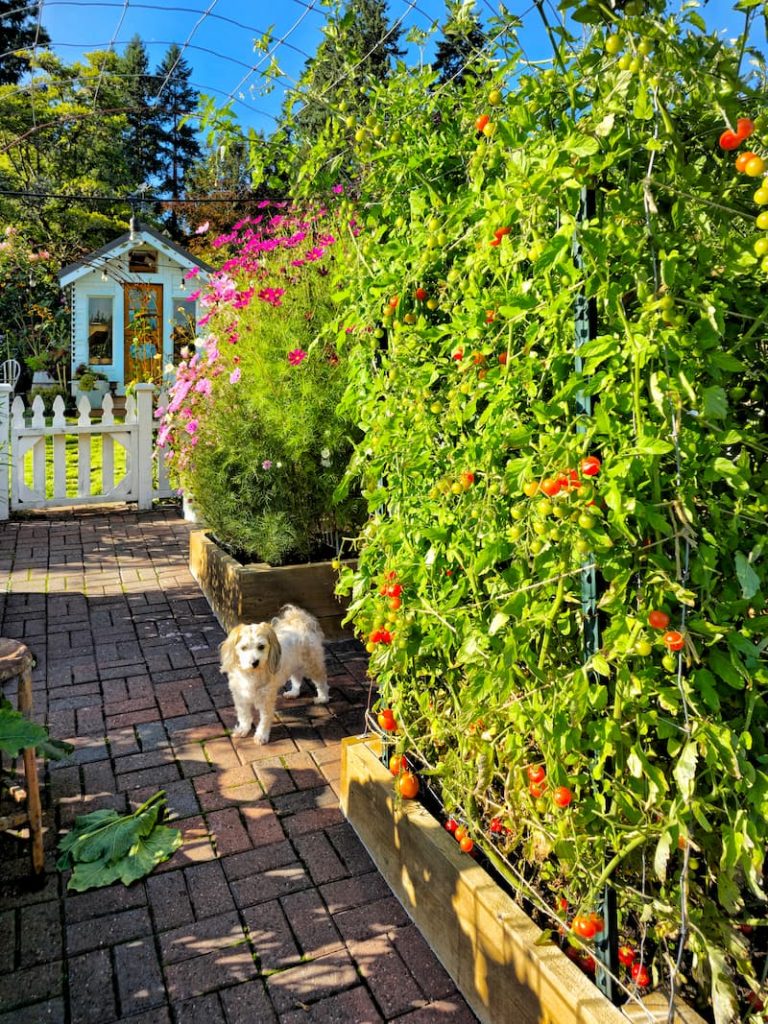
I’ve grown marigolds, nasturtiums, and basil alongside my tomatoes for years, rotating which companions I use each season. Pest pressure on the tomatoes has never been a serious problem. I don’t think that’s a coincidence.
This natural approach to pest control reduces the need for chemical intervention and keeps the garden ecosystem balanced rather than disrupted.
A Quick note about my garden
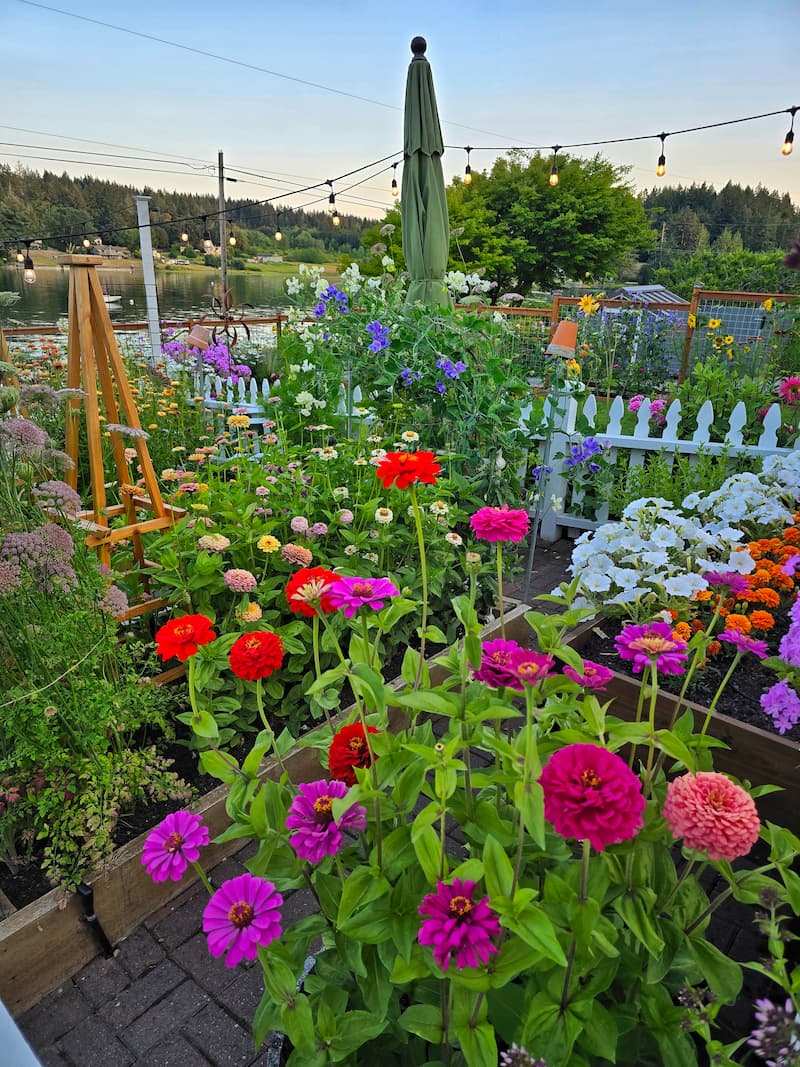
Most of the flowers I share here are grown from seed in our greenhouse and planted in raised beds and containers throughout our cottage garden.
Pollinator Support
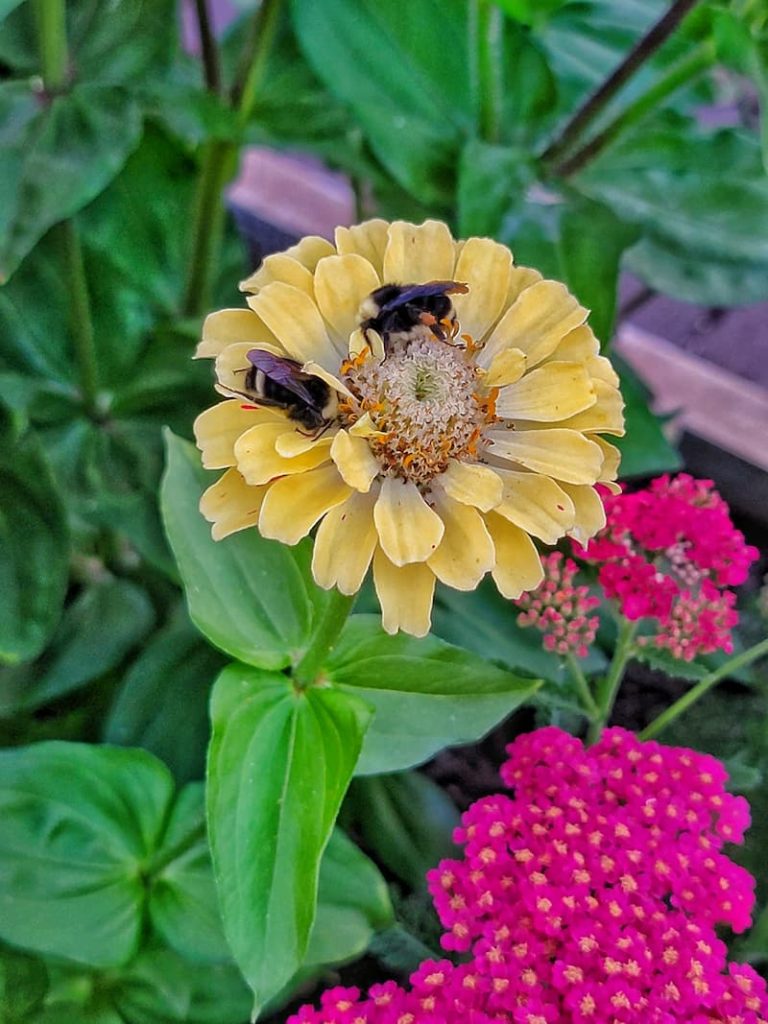
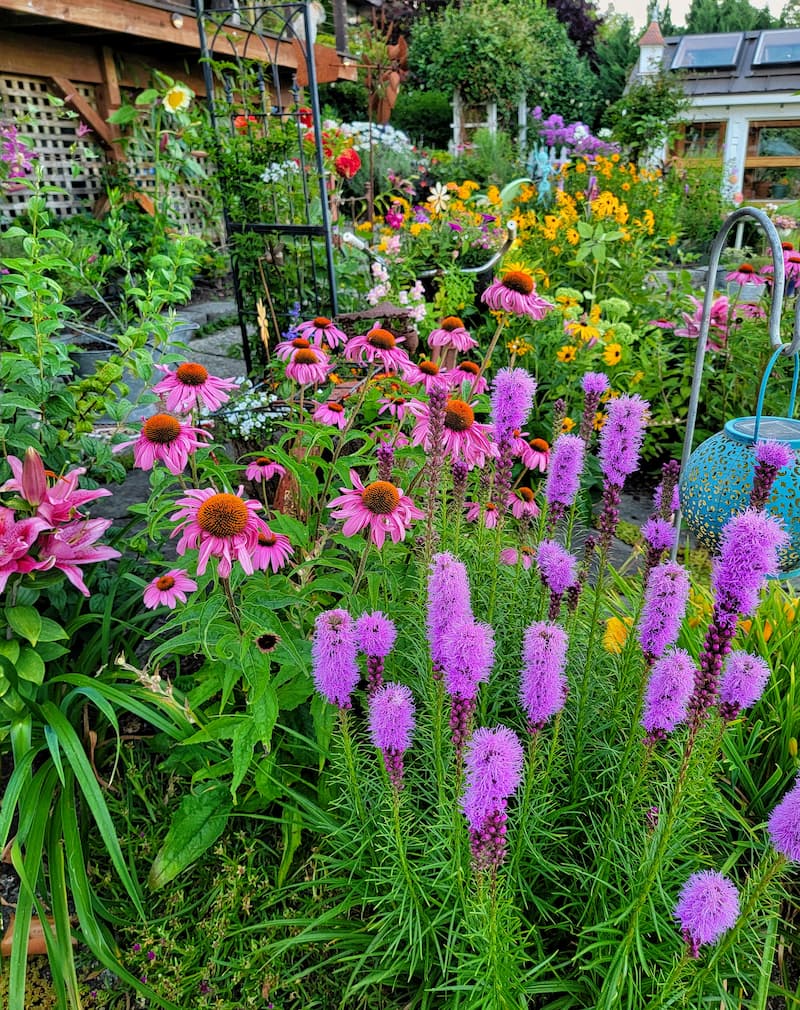
A garden with a good mix of companion flowers becomes a garden full of bees and butterflies. In my cottage garden, the pollinator activity around the coneflowers, alliums, lavender, zinnias, phlox, and sunflowers is constant through the growing season.
Pollinator-friendly flowers like bee balm and echinacea ensure that vegetables and fruits are properly pollinated, which directly affects your harvest. Staggering bloom times so something is always flowering keeps pollinators coming back throughout the season rather than just during a single peak week.
Soil Health and Plant Growth
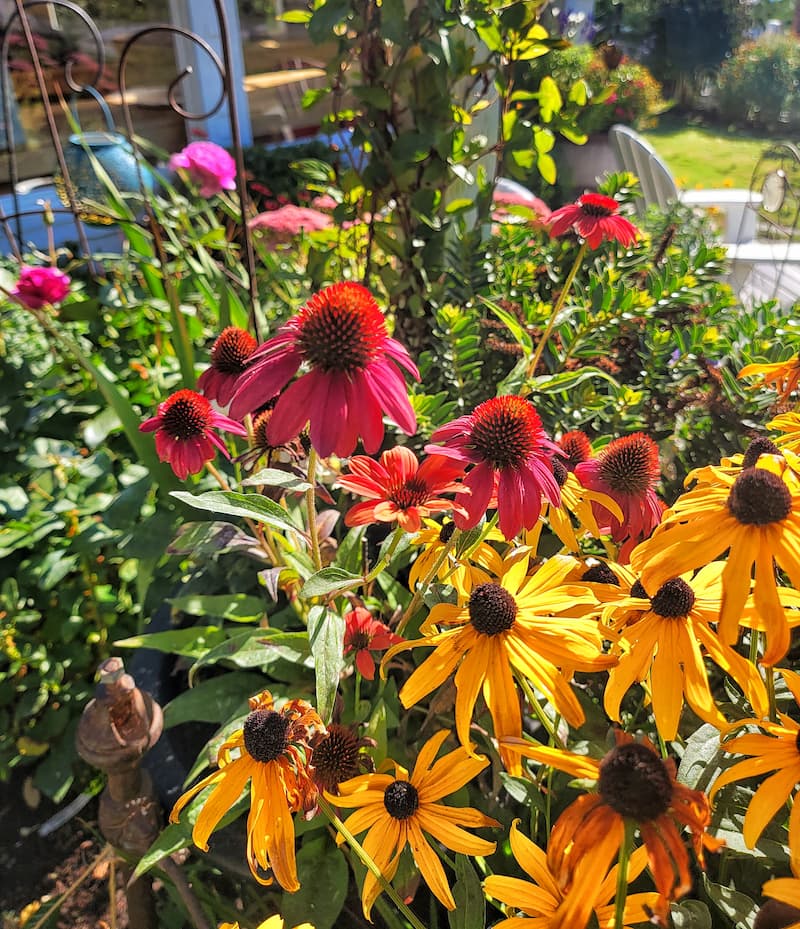
Some companion plants actively improve the soil for their neighbors. Marigolds suppress harmful nematodes. Sweet peas fix nitrogen, enriching the soil for nearby plants. Borage adds trace minerals and improves soil structures with its deep roots. Calendula attracts beneficial insects and enriches the soil as it decomposes.
Healthier soil means stronger plants, and stronger plants are naturally more resistant to the pests and diseases that companion planting helps deter. The two benefits reinforce each other over time.
Let’s Plan Your Dream Garden With Our
Gardening Planner
Unlock Your Garden’s Potential.
Our 35-page Ultimate Garden Planner is designed to help you organize, track, and flourish in your gardening endeavors.
Get yours for $4.99
Things to Consider When Choosing Companion Flowers
Choosing the right companion flowers involves a little planning up front, but it pays off all season long.
Color Combinations
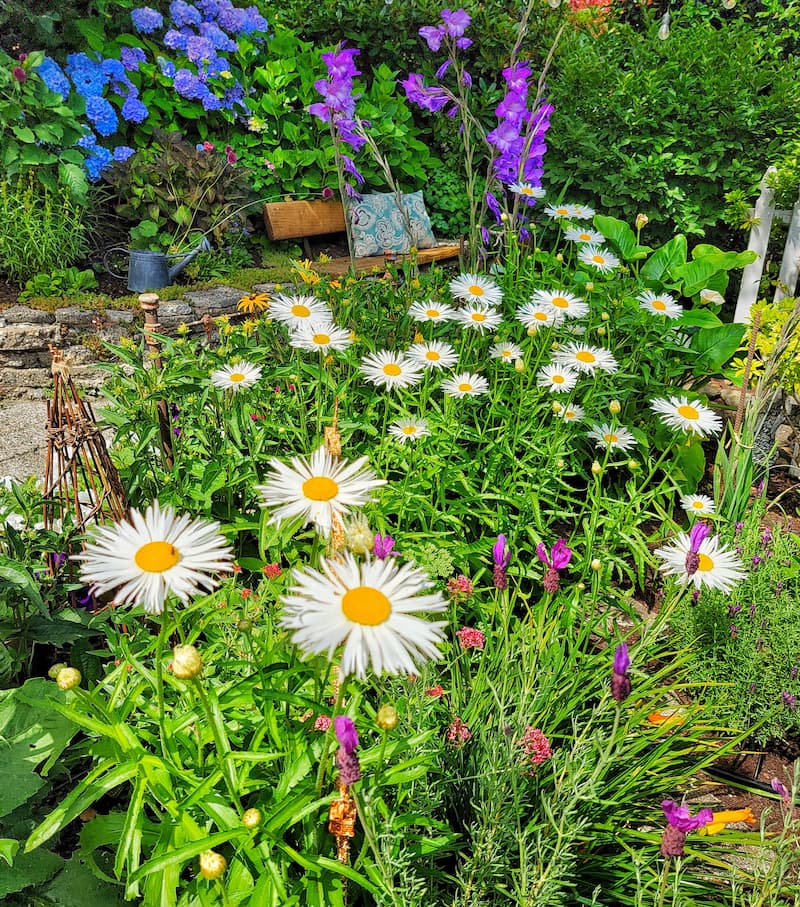
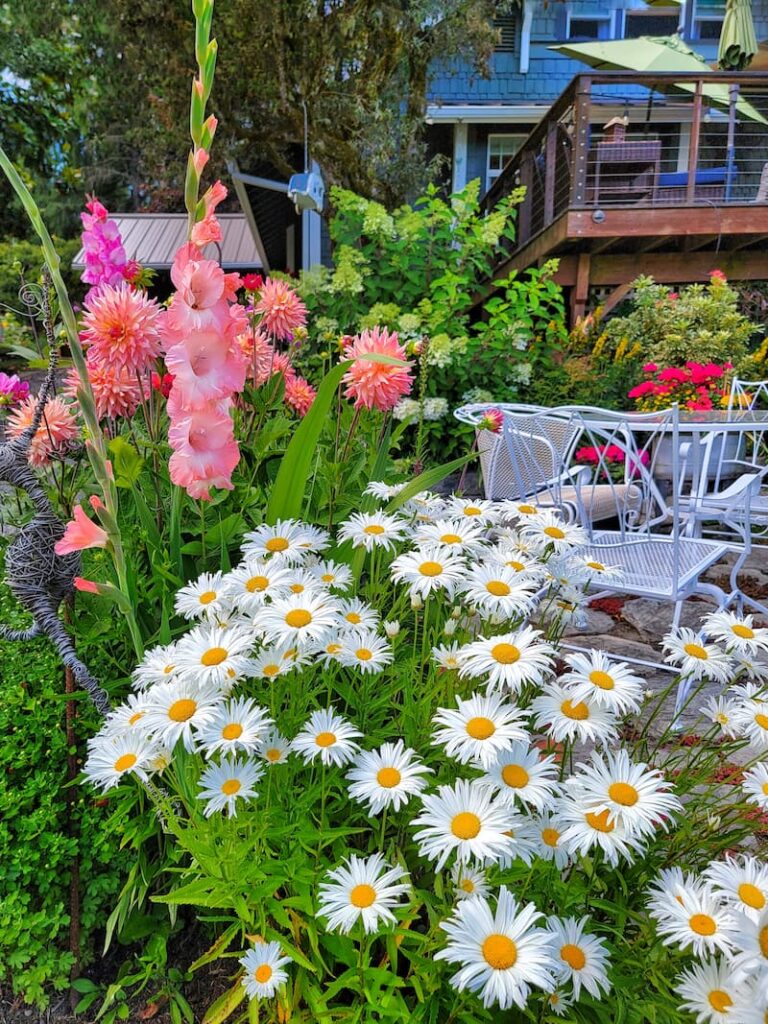
Color planning doesn’t have to be complicated, but a little thought goes a long way. When I have the time to be intentional about it, I’ll separate zinnia varieties by palette: pastels grouped with other soft-colored cut flowers in one part of the garden, brights in another.
Whites and purples are a combination I come back to regularly and try to build a dedicated space around when I can. The practical takeaway is to think about what will be blooming at the same time and whether those colors will work well together. Soft, muted tones tend to blend naturally. Bold colors make a statement and are best grouped with plants that can hold their own visually.
Light and Soil Needs
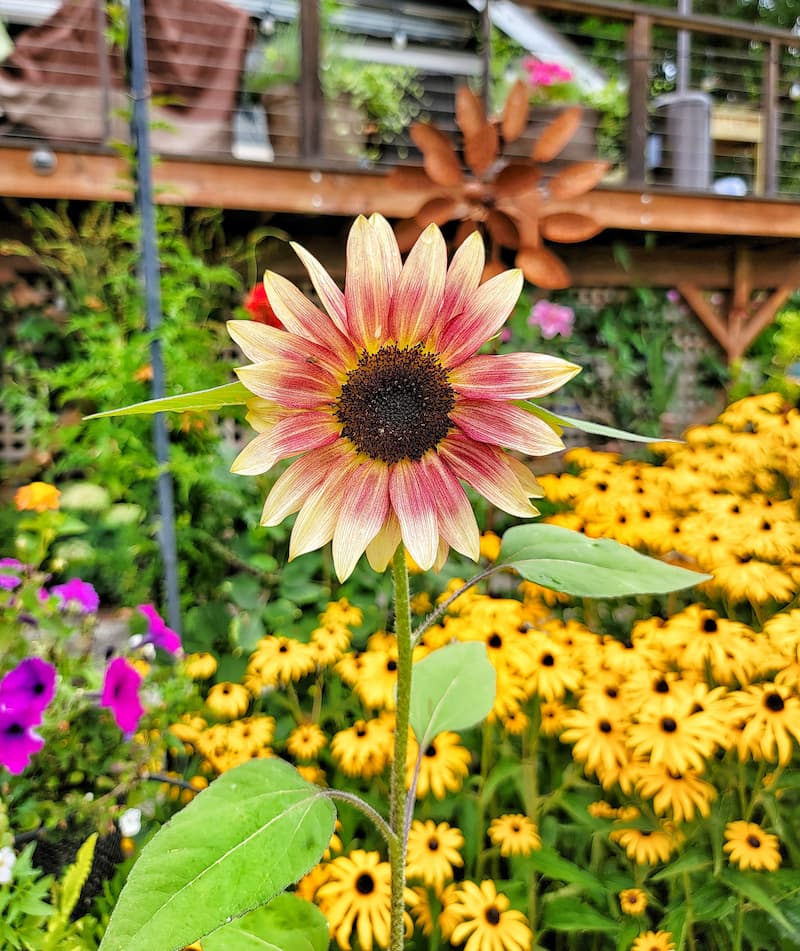
Group plants with similar sunlight requirements together. Sun-loving plants like zinnias and sunflowers should share a spot, while shade-tolerant flowers like hostas and astilbe do better in a more sheltered area.
Matching soil preferences matters too. Sunflowers thrive in well-drained sandy soil, while others prefer rich loamy conditions. Knowing your soil before you plant saves a lot of troubleshooting later.
Bloom Time
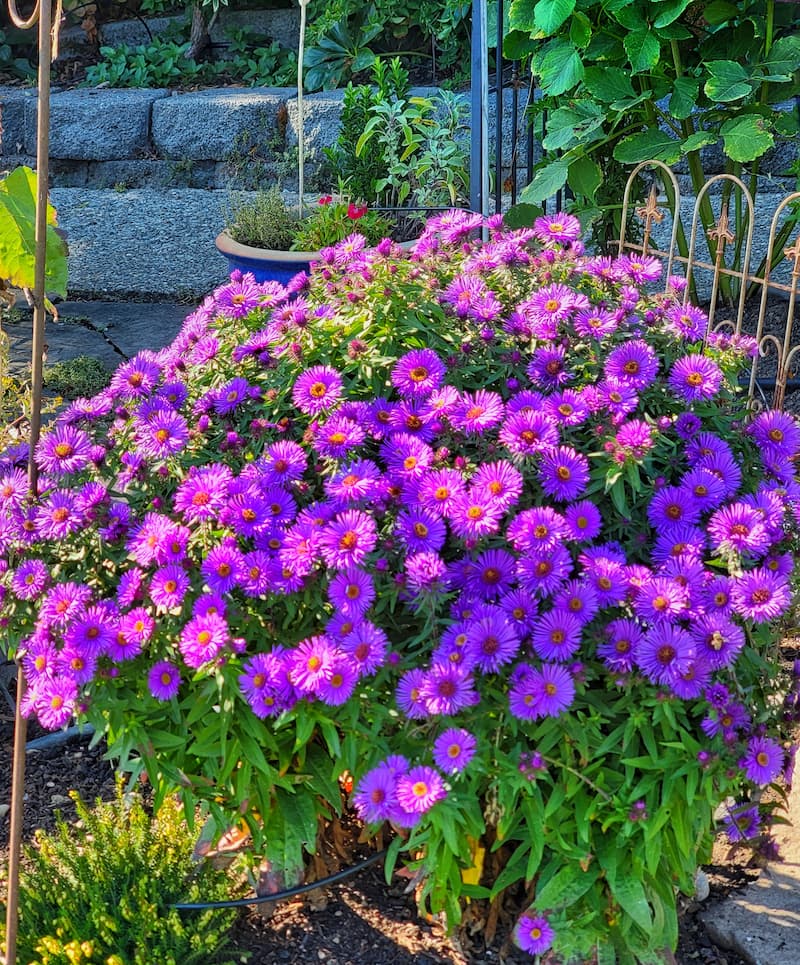
Staggering bloom times keep the garden colorful all season and give pollinators a continuous reason to visit.
Early bloomers: Crocuses and tulips kick off the garden’s display in early spring before much else is happening.
Mid-season bloomers: Peonies and irises peak in late spring to early summer, bridging the gap between early bulbs and summer annuals.
Late bloomers: Asters and chrysanthemums carry the garden through late summer and into fall, keeping color going until the first frost.
Annual vs. Perennial Companion Plants
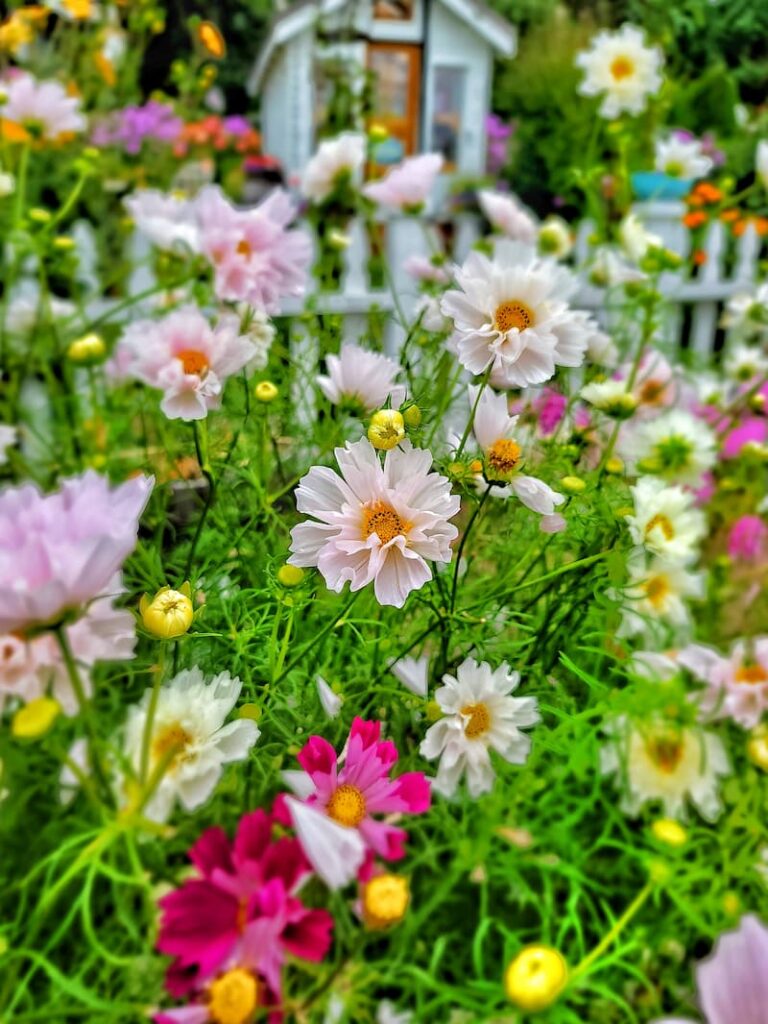
Understanding the difference between annual and perennial flowers helps you plan both the layout and the maintenance of your garden.
Annuals like marigolds, petunias, and zinnias complete their life cycle in one season. They need replanting every year, but reward you with a long, prolific bloom period and are great for filling gaps and adding seasonal color.
Perennials like peonies, lavender, and coneflowers return year after year, gradually spreading and becoming more established. They may have shorter bloom windows than annuals, but they provide long-term structure and reliability, which is the backbone of a cottage garden.
14 Best Flowers for Companion Planting and How They Help
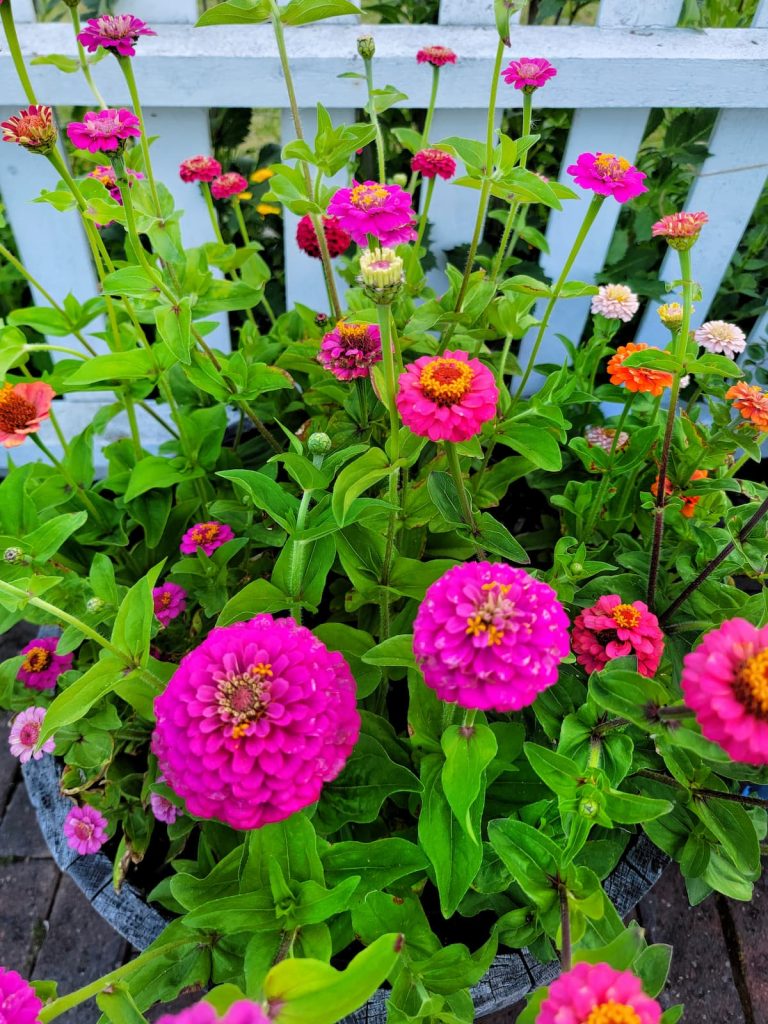
Different flowers bring different benefits to your garden. Some improve soil health, some repel pests, and some draw in the beneficial insects that do the pest control work for you.
Companion Plants for Soil Health
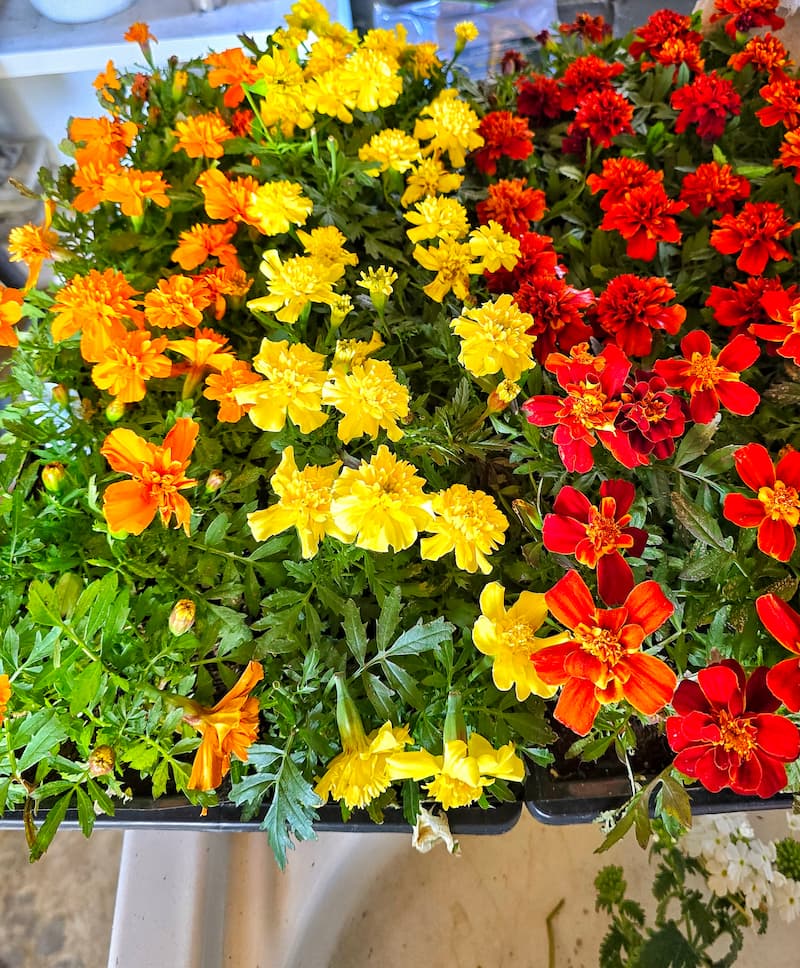
Marigolds
Marigolds are one of the hardest-working companion plants in the garden. They suppress harmful nematodes in the soil, deter aphids, and attract beneficial insects, all while adding bright color to any bed. I plant them with my tomatoes every season and rarely have serious pest issues as a result.
Borage
Borage adds trace minerals to the soil and improves soil structure with its deep roots. As it decomposes, it enriches the surrounding soil, making it a useful long-term companion.
Comfrey
Comfrey draws nutrients up from deep in the soil and releases them into the upper layers as leaves decompose. It’s one of the most effective natural soil enrichers you can grow, particularly useful near heavy feeders like tomatoes and squash.
Companion Plants for Pest Control
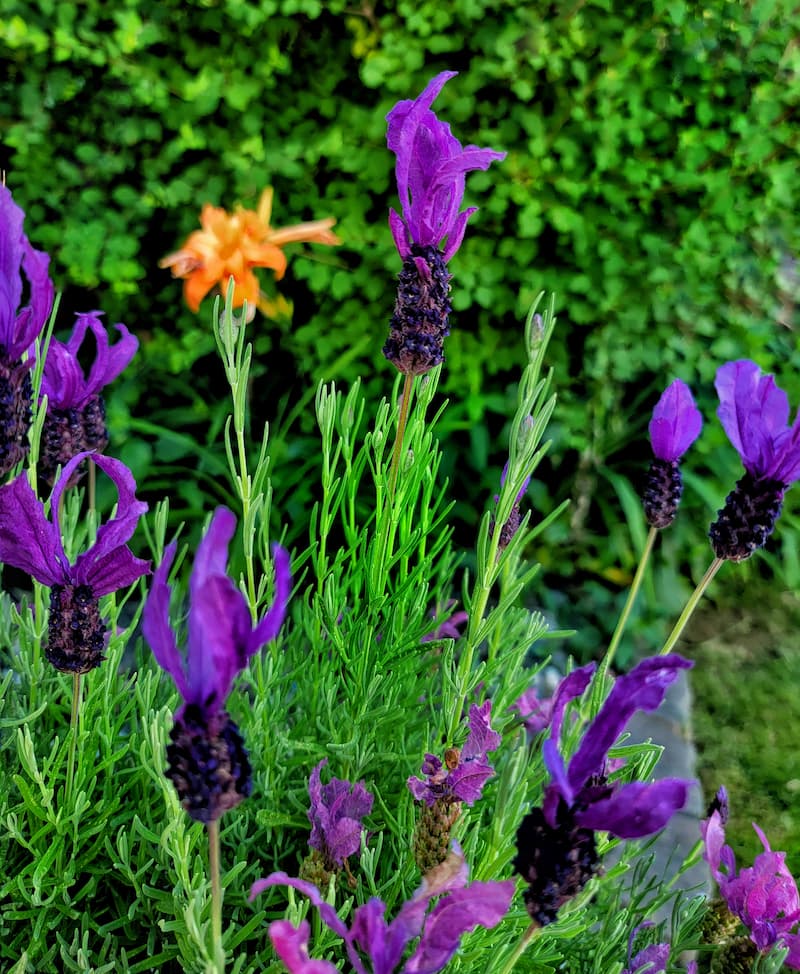
Lavender
Lavender’s strong scent deters mosquitoes, fleas, moths, and ants, protecting nearby plants all season long. I have it planted throughout the cottage garden, not just for pest control, but because it does so much good wherever it grows. It’s also one of the best pollinator plants you can have.
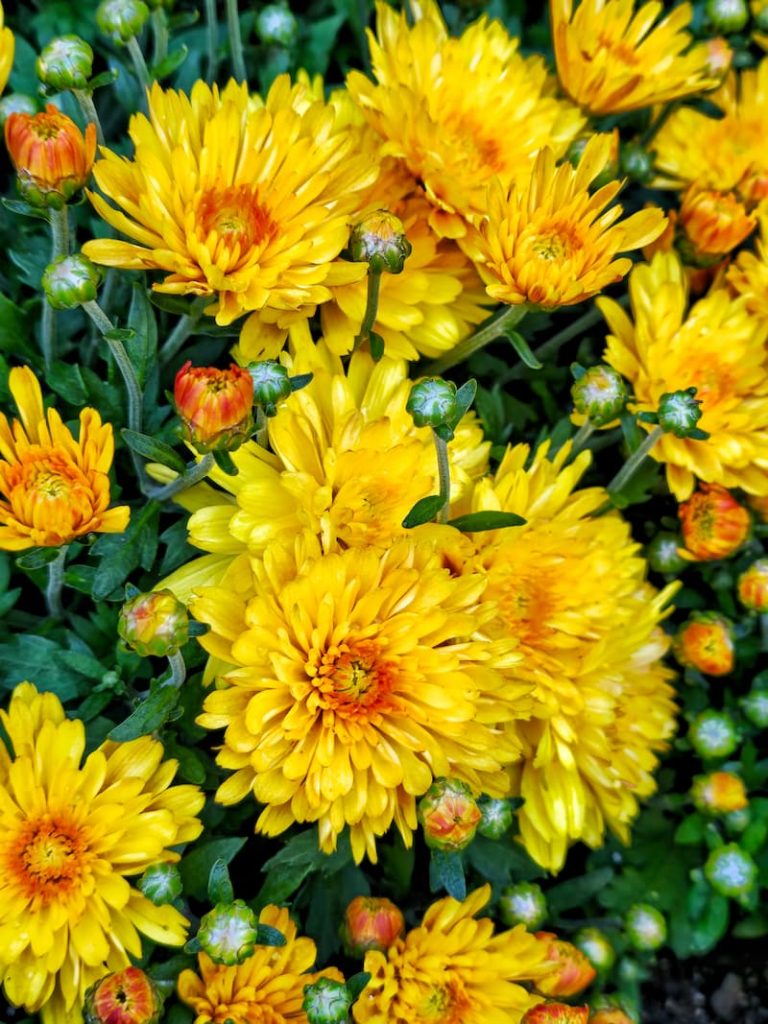
Chrysanthemums
Chrysanthemums contain pyrethrum, a natural insect repellent effective against ants, beetles, and other garden pests. A useful addition near vegetables and flowers that tend to attract insect pressure.
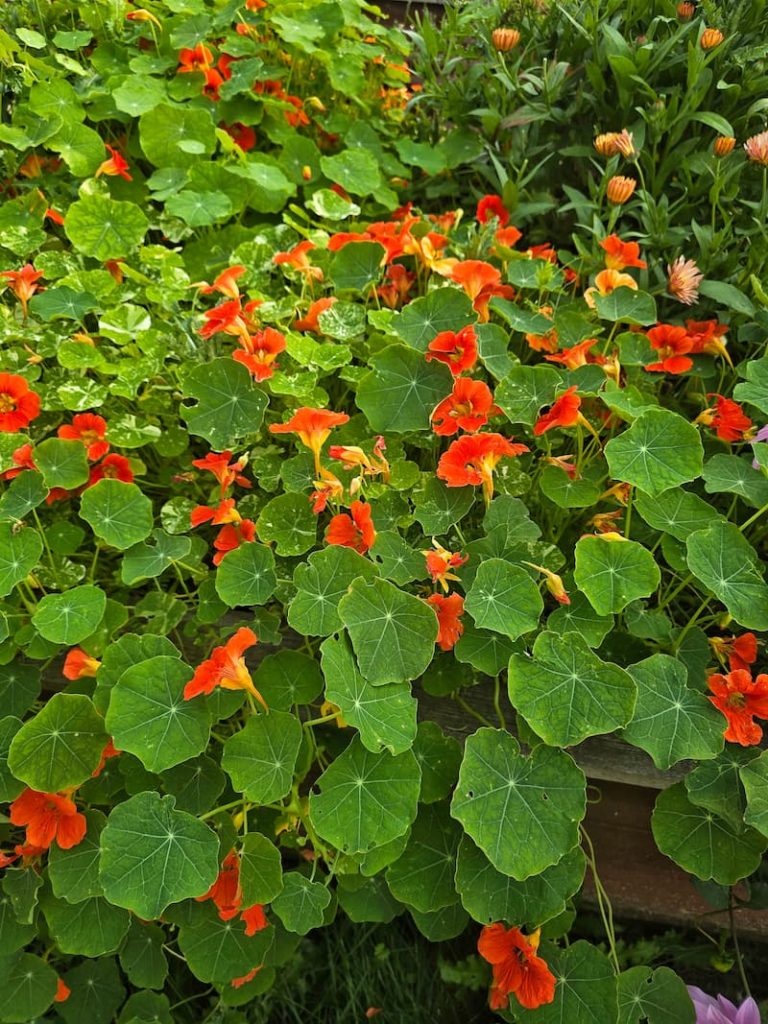
Nasturtiums
Nasturtiums are worth a special mention because they do two things at once, which can be confusing if you haven’t grown them before. They repel certain pests through the compounds they release, particularly aphids and squash bugs near tomatoes and cucumbers. At the same time, they act as a trap crop, drawing aphids onto the nasturtiums and away from more valuable plants.
Both things are true. The key is to plant them where you want to intercept pests, not just anywhere in the garden. I grow nasturtiums with my vegetables specifically for this reason.
Companion Plants that Support Beneficial Insects
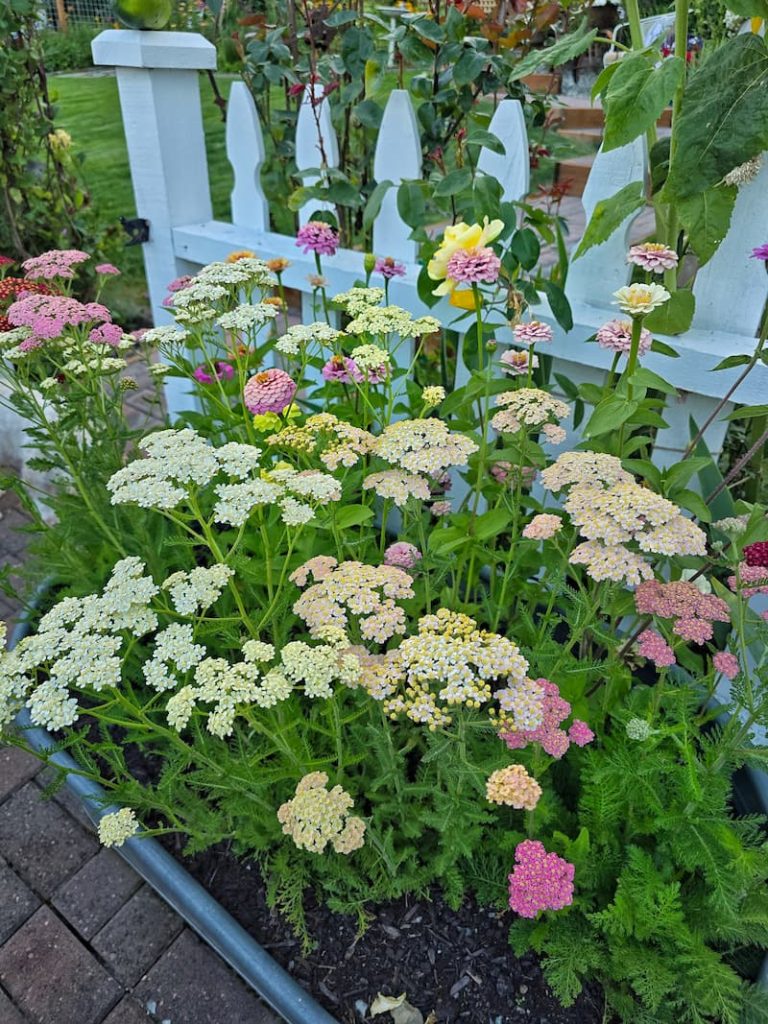
Alyssum
Sweet alyssum attracts hoverflies and parasitic wasps, which feed on aphids and other soft-bodied pests. This is my first season growing alyssum from seed in the greenhouse, and I have more plants than I know what to do with. They’ll be going in with both flowers and vegetables throughout the garden.
Yarrow
Yarrow is a magnet for ladybugs, lacewings, and predatory wasps, some of the most effective natural pest controllers you can encourage into a garden. It’s a perennial that comes back reliably and spreads gradually, making it a long-term investment.
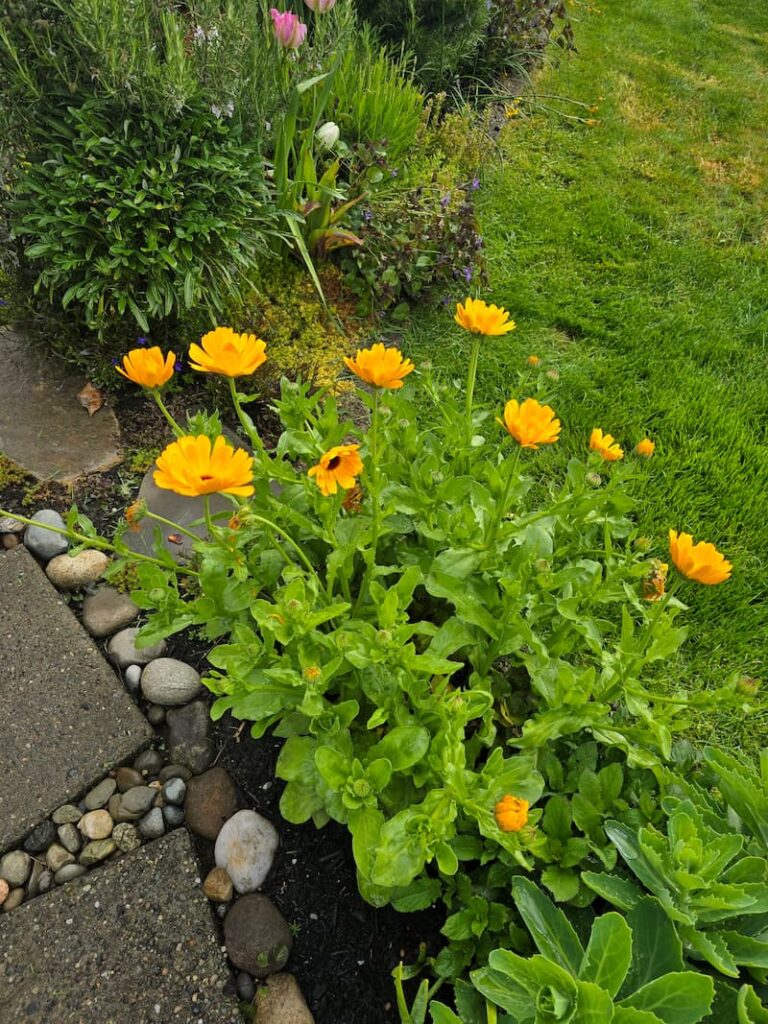
Calendula
Calendula draws in bees, predatory beetles, and other beneficial insects while also deterring aphids and nematodes. Like alyssum, this is my first year growing it from seed in the greenhouse, and I’m planting it throughout the garden with both flowers and vegetables. It’s one of those companion plants that earns its place everywhere you put it.
Companion Plants for Pollinators
Bee Balm
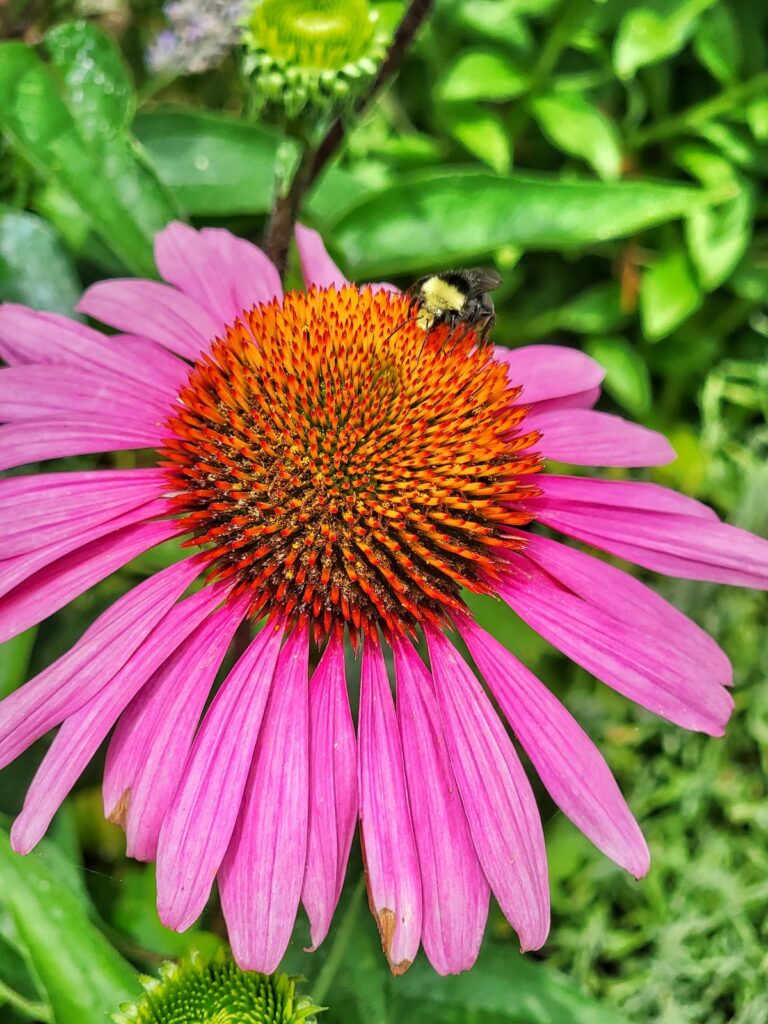
Bee balm is one of the most reliable pollinator plants you can grow. Bees, butterflies, and hummingbirds are all drawn to it consistently throughout the season. Plant it near vegetables and fruits that need strong pollination for the best results.
Echinacea (Coneflower)
Echinacea is a pollinator workhorse. The bee activity around mine through summer and into falls is constant, one of those flowers I can always count on to keep the garden buzzing. It’s a perennial, so once it’s established, it takes care of itself.

Sunflowers
Tall sunflowers attract pollinators and also act as a trap crop for aphids, drawing them away from more delicate plants. They provide natural shade for plants that need protection from intense midday sun, giving the garden height and structure. Plant them on the north or west side for shorter plants, so they provide shade without blocking light.
Cosmos
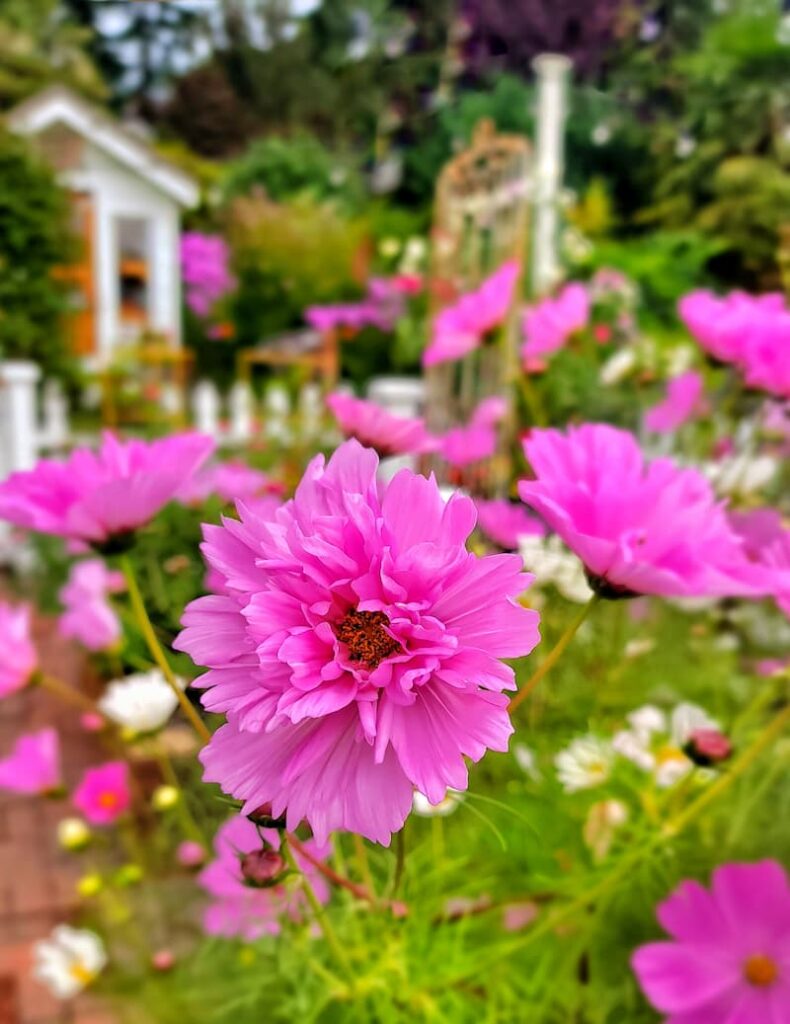
Cosmos attract pollinators and provide filtered, partial shade for plants that need some relief from intense midday sun. Their airy, delicate structure means they don’t create deep shade, just enough to help without taking over. They’re perfect for plants that want some protection without losing brightness entirely.
7 Good Flower Combinations to Try
These are some of my favorite companion planting pairings, combinations that work both practically and visually in the garden.
Roses and Lavender
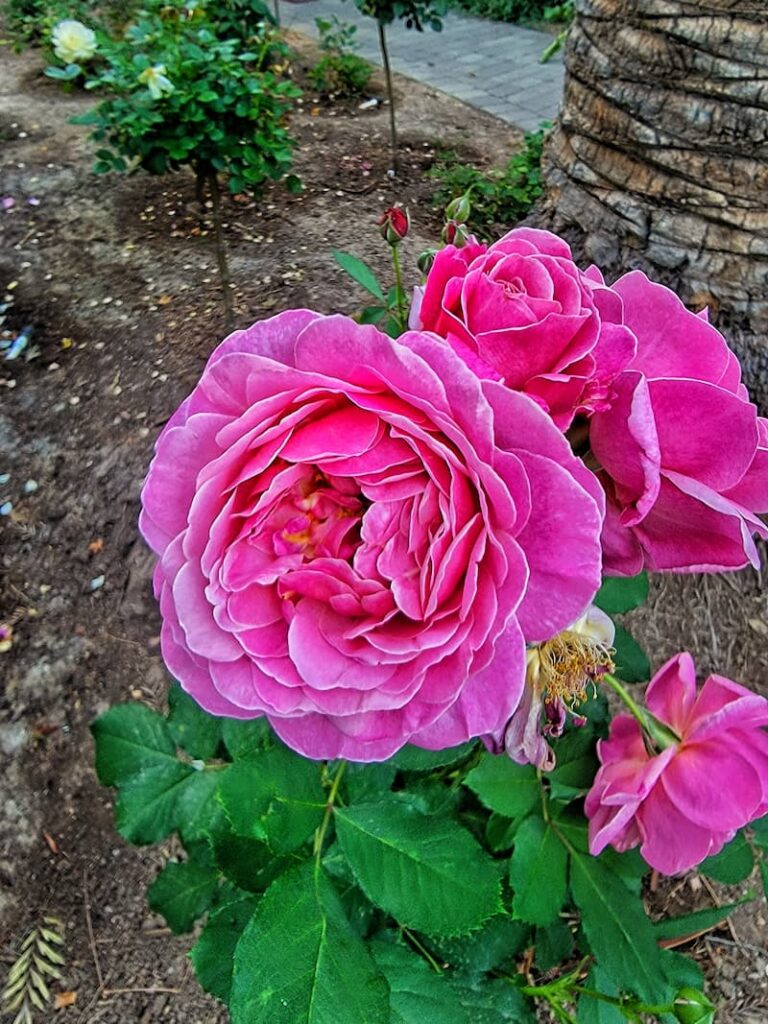
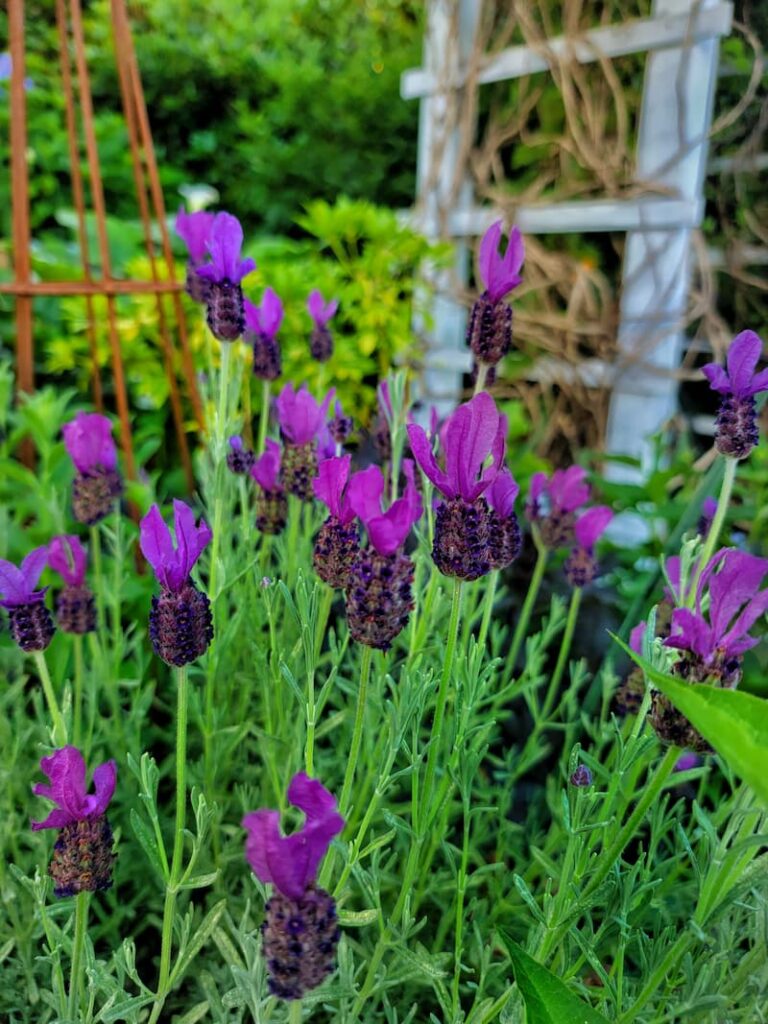
Lavender’s strong scent helps repel aphids and other pests that commonly target roses, making it one of the most useful companions you can plant nearby. Both attract bees and butterflies, so the pollinator activity around this combination is wonderful.
I’ve grown them together in the cottage garden over the past seasons, and the pairing is as beautiful as it is functional. The soft purple of the lavender against the rose blooms in a classic that never feels overdone.
Marigolds and Nasturtiums
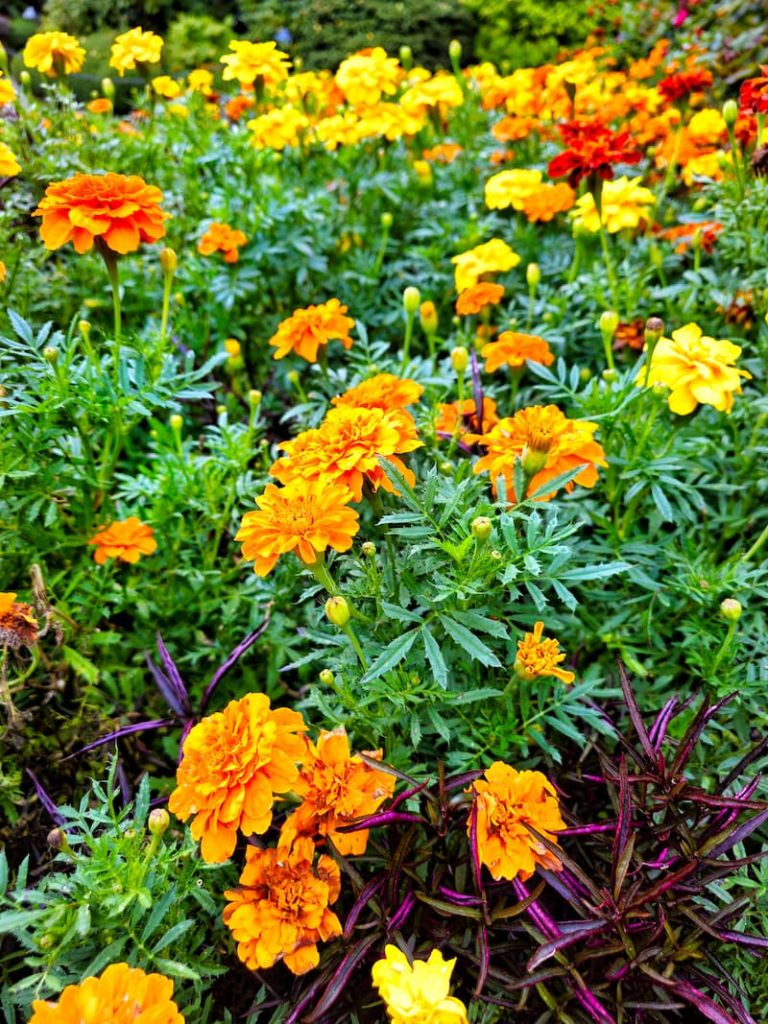
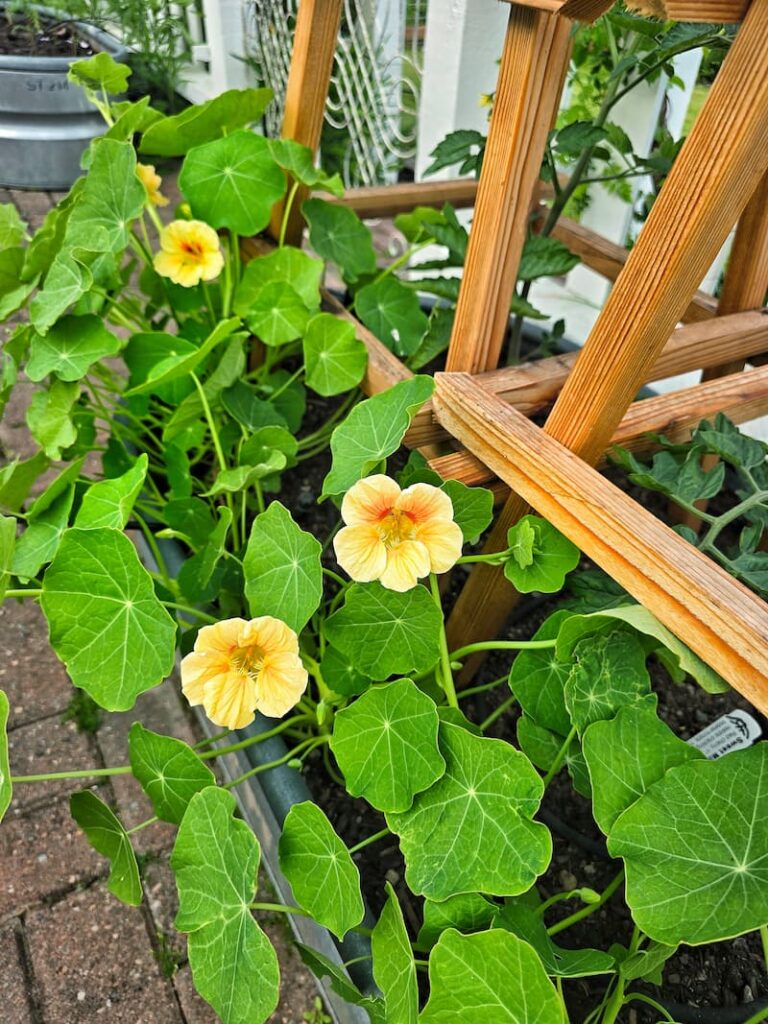
This is one of the hardest-working combinations in the garden. Nasturtiums act as a trap crop for aphids, drawing them away from more vulnerable plants, while marigolds deter nematodes and improve soil health.
Together they create a bright, cheerful planting that earns its place on every level. I use both regularly with my vegetables, and the difference in pest pressure is noticeable.
Zinnias and Cosmos
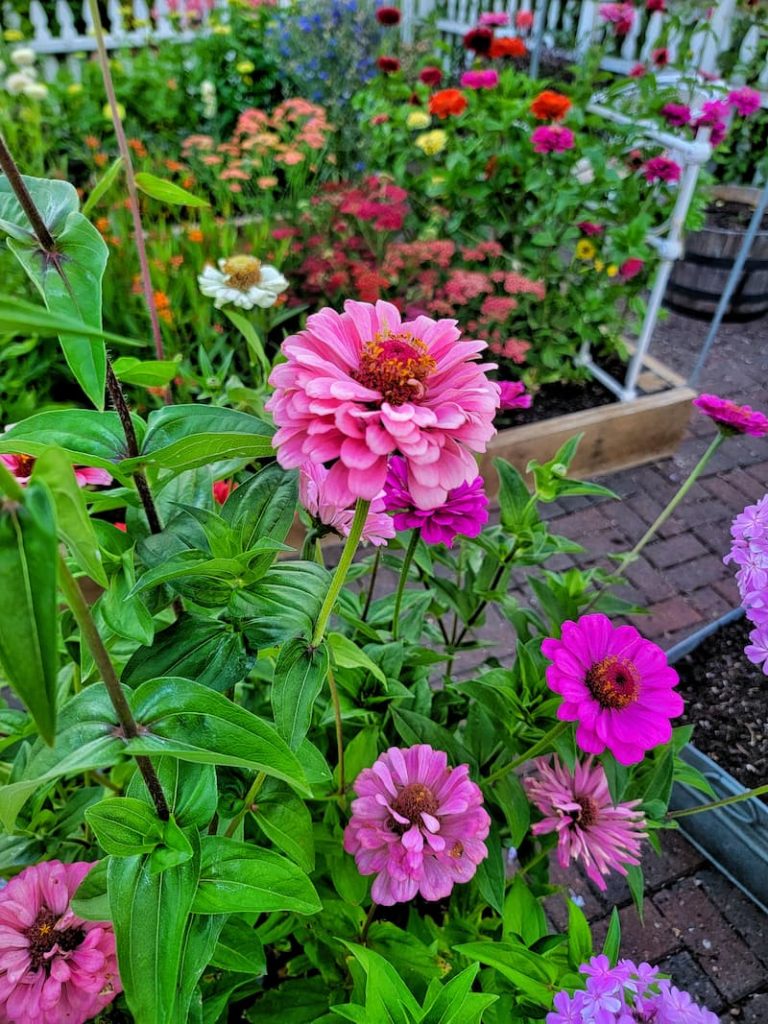
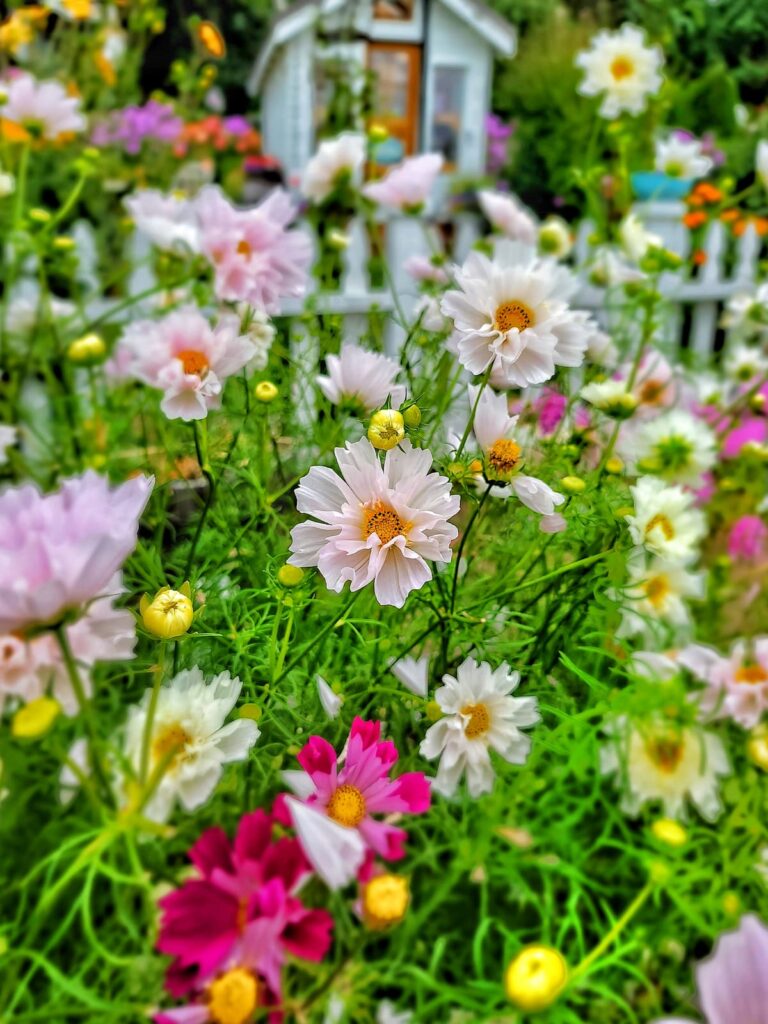
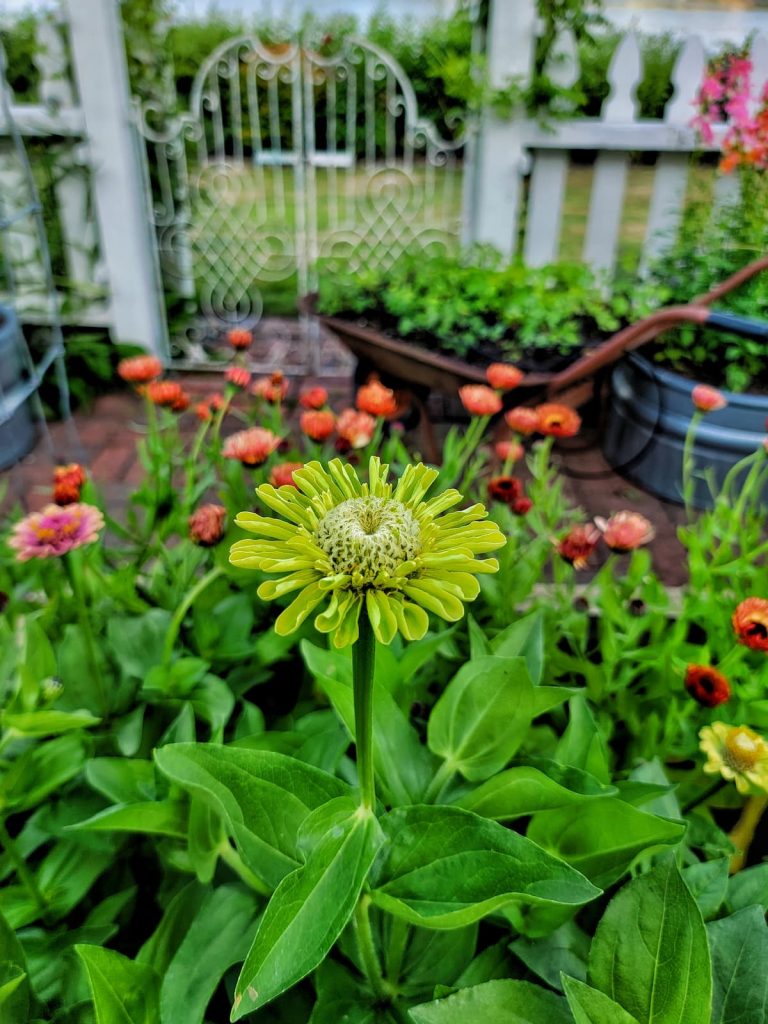
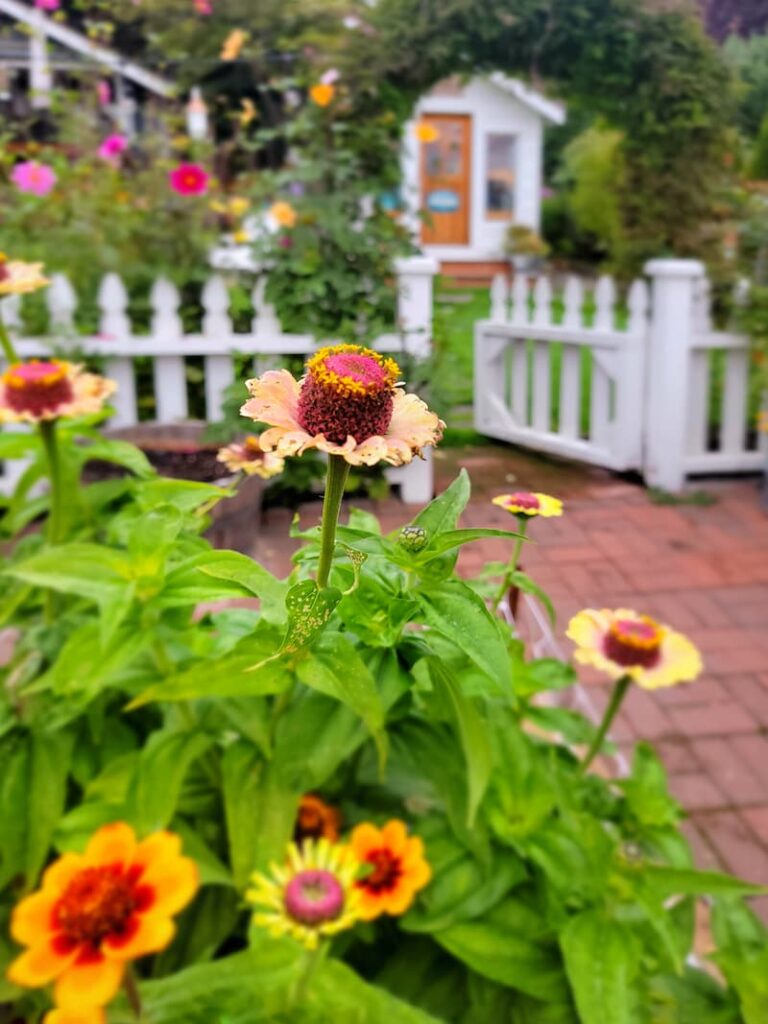
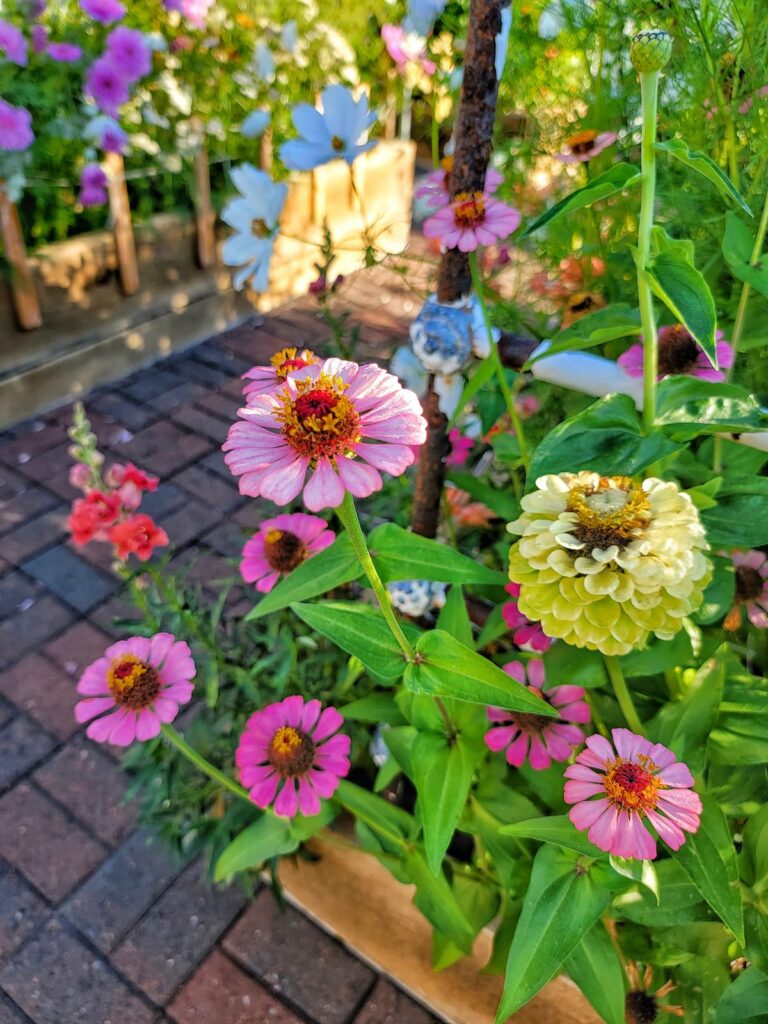
Zinnias and cosmos are two of my favorite flowers that grow together in the cutting garden. Both are excellent at attracting pollinators, both have long bloom periods that carry through the season, and they complement each other beautifully.
Zinnias bring structure and saturated color, while cosmos add a delicate, airy quality that softens the whole planting. They look just as good in a vase as they do in the garden.
Sunflowers and Dill
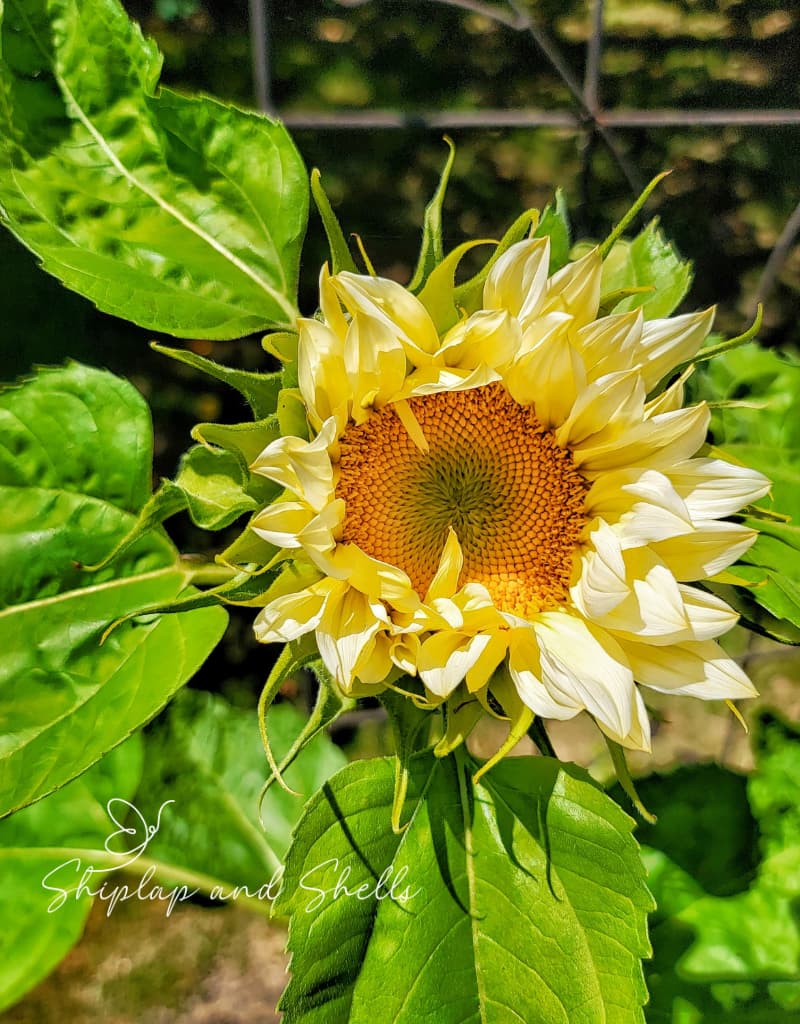
This is a combination I come back to every season. Dill attracts beneficial insects like ladybugs and parasitic wasps that help keep aphid populations in check. Sunflowers provide a natural support for the dill as it grows tall and starts to lean.
The feathery texture of the dill against the bold structure of the sunflowers is one of the combinations that look intentional without requiring much planning at all.
Alyssum and Petunias
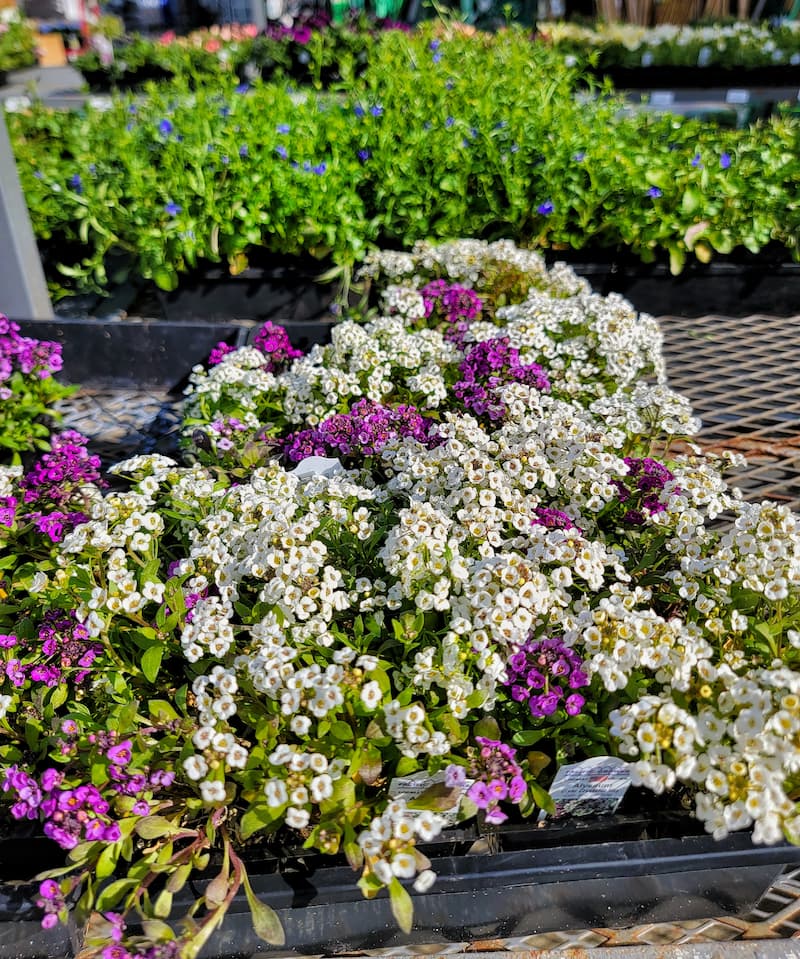
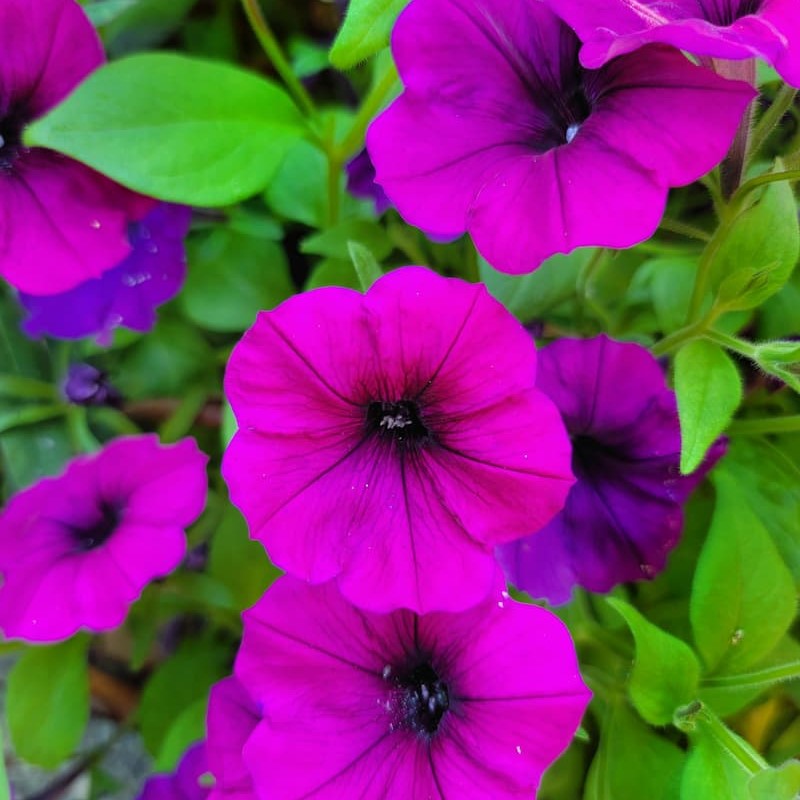
Alyssum attracts hoverflies and parasitic wasps that prey on common garden pests, while its low spreading habit helps suppress weeds and retain soil moisture for nearby plants. This is my first season growing both from seed in the greenhouse.
Both the petunias and alyssum have grown nearly double the size of what I’ve seen at the nursery. They’ll be going in together throughout the garden this season, and I’m looking forward to seeing how the combination performs.
Calendula and Tomatoes
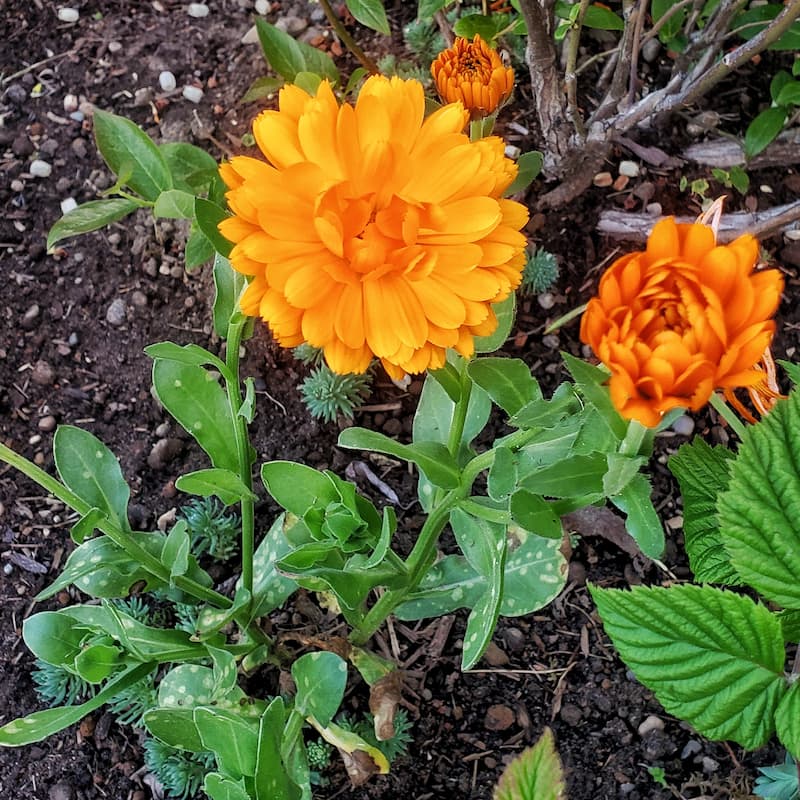
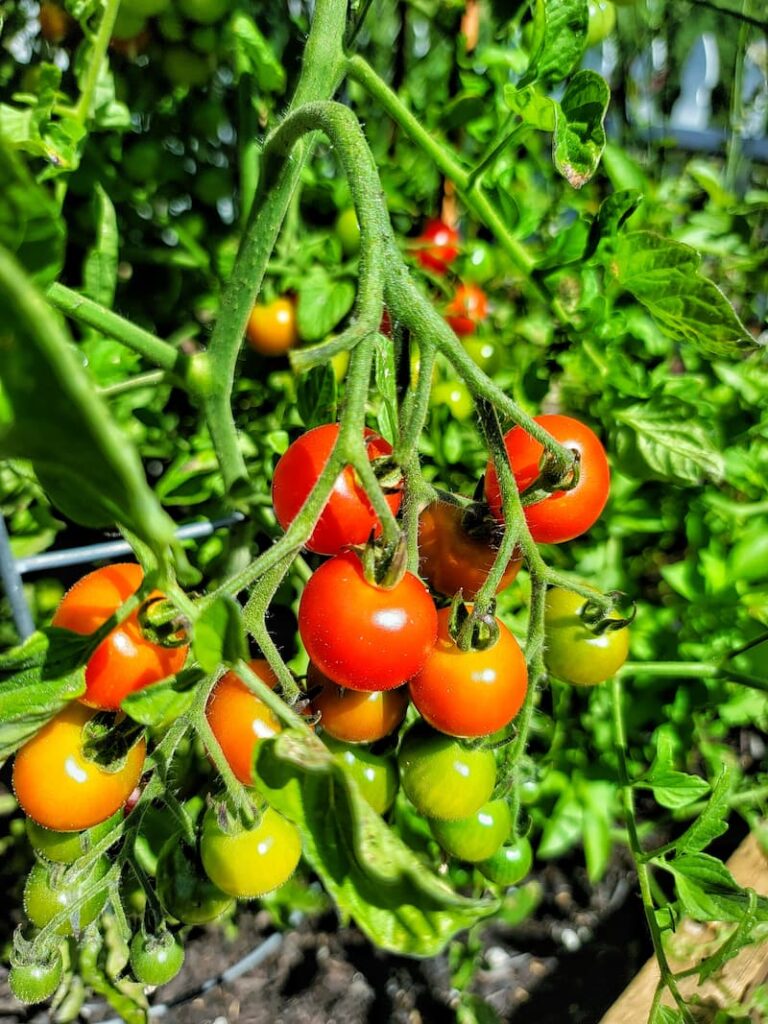
Calendula’s strong scent deters aphids, nematodes, and tomato hornworms, making it one of the most useful companions you can plant near tomatoes. It attracts pollinators and improves soil health as it decomposes.
The bright orange and yellow flowers against the green foliage and red fruits of the tomato plants are a combination that looks as good as it performs. I pair calendula with my tomatoes regularly, and it has become one of my garden standbys.
Bee Balm and Black-Eyed Susan
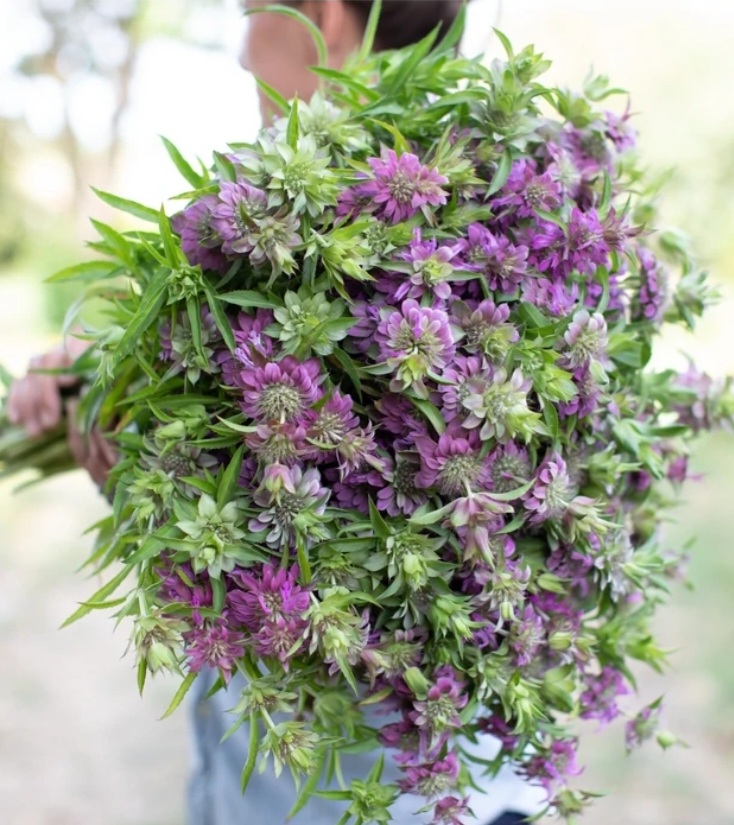
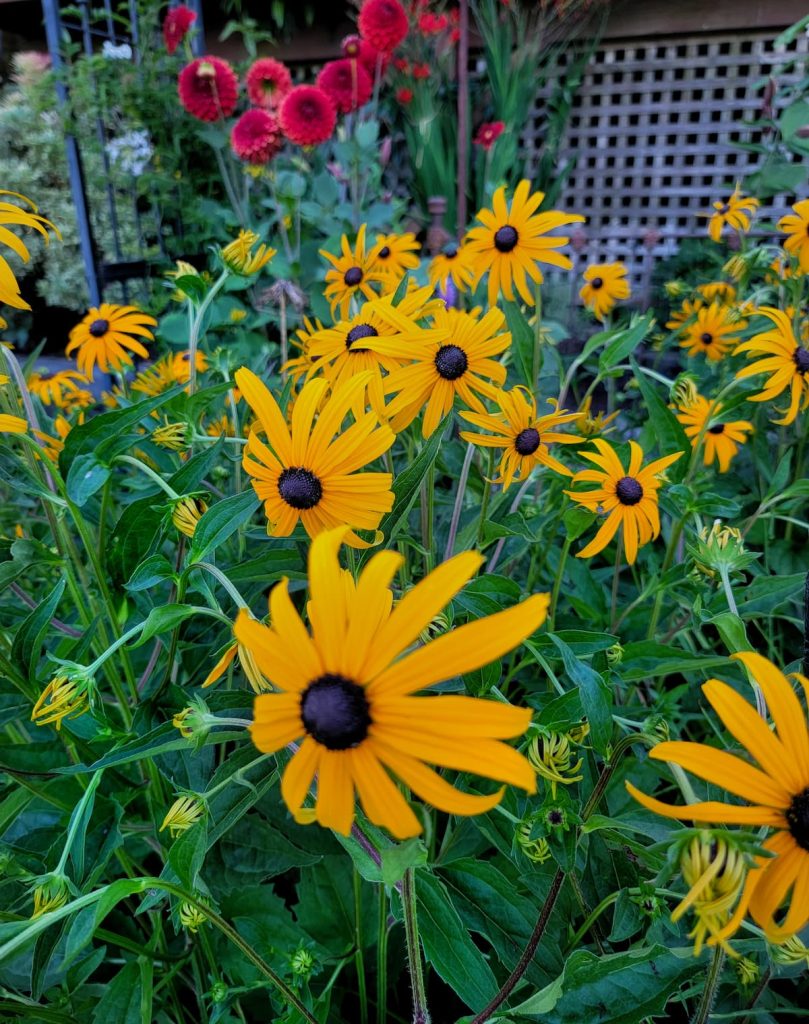
Both bee balm and black-eyed Susans are pollinator magnets. Bees, butterflies, and hummingbirds visit them constantly through the season, and both are generally disease-resistant and low-maintenance once established.
The upright stems of bee balm combined with the sunny, open blooms of black-eyed Susans create a layered, naturalistic planting that fits perfectly in the cottage garden setting.
These are some of my favorite companion planting pairings… combinations that work both practically and visually in the garden.
Companion Planting Flowers and Vegetables
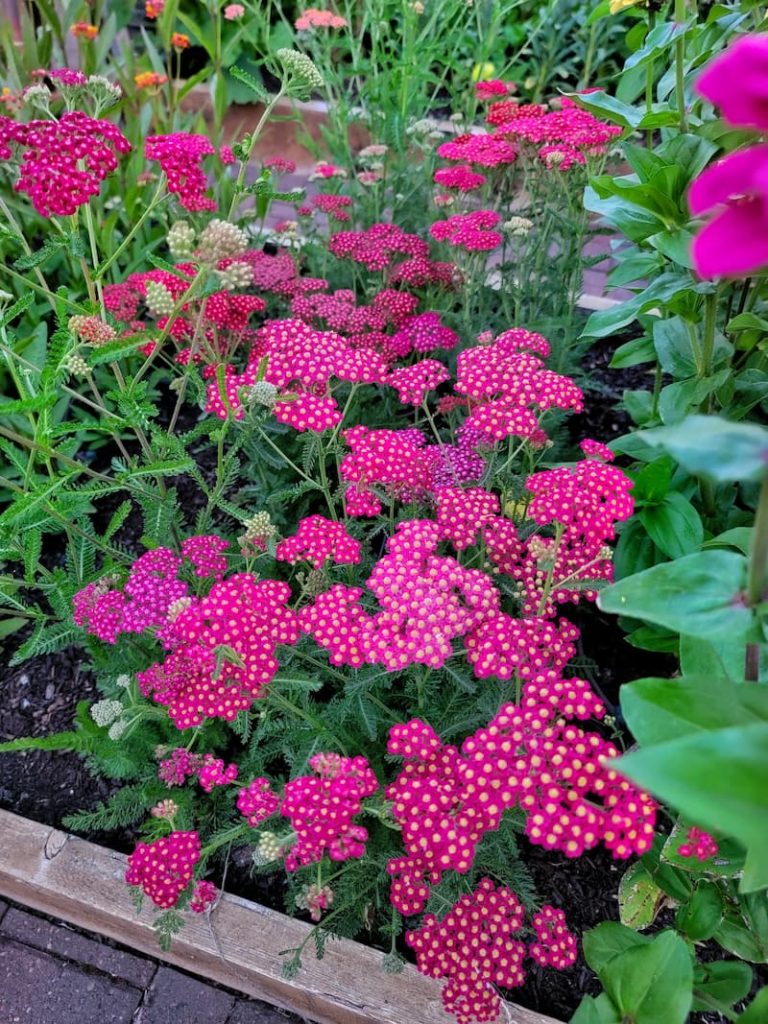
Combining flowers with vegetables is one of the most practical things you can do for a kitchen garden. The right pairings mean less pest pressure, better pollination, and healthier soil; all without reaching for chemicals.
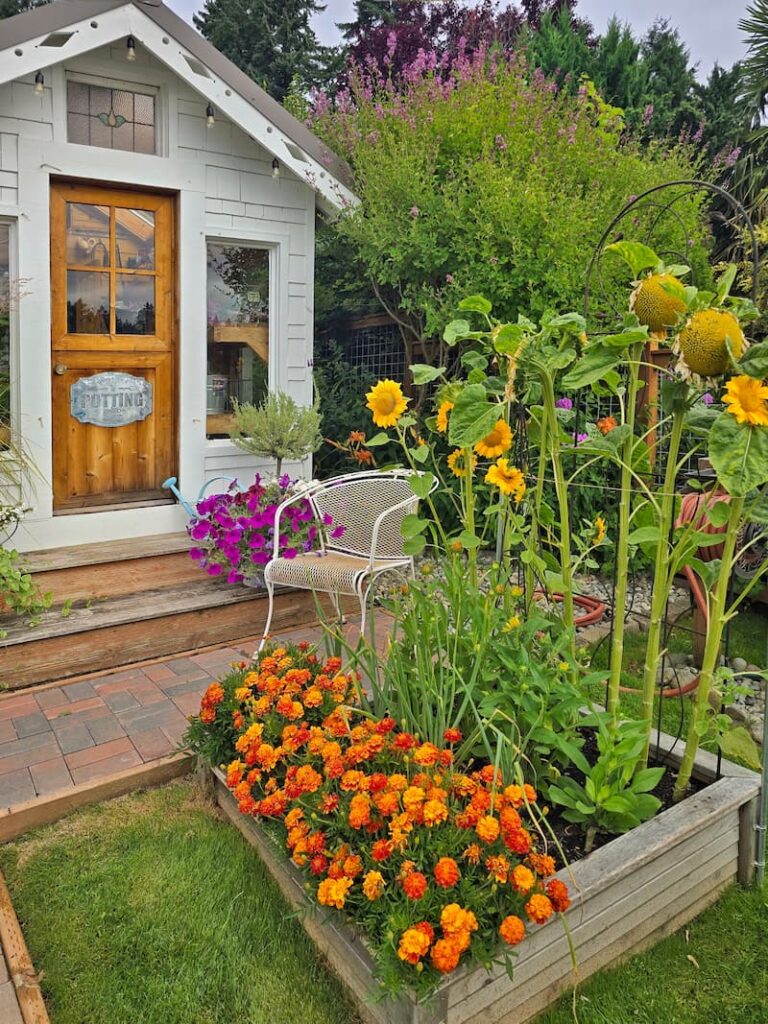
Marigolds and Tomatoes
Marigolds are my go-to tomato companion and have been for years. They release compounds that repel nematodes, aphids, and whiteflies, and attract beneficial insects that keep pest populations in check. I rarely have serious pest issues with my tomatoes, and marigolds are a big part of why. Plant them at the base of tomato plants or along the bed border.
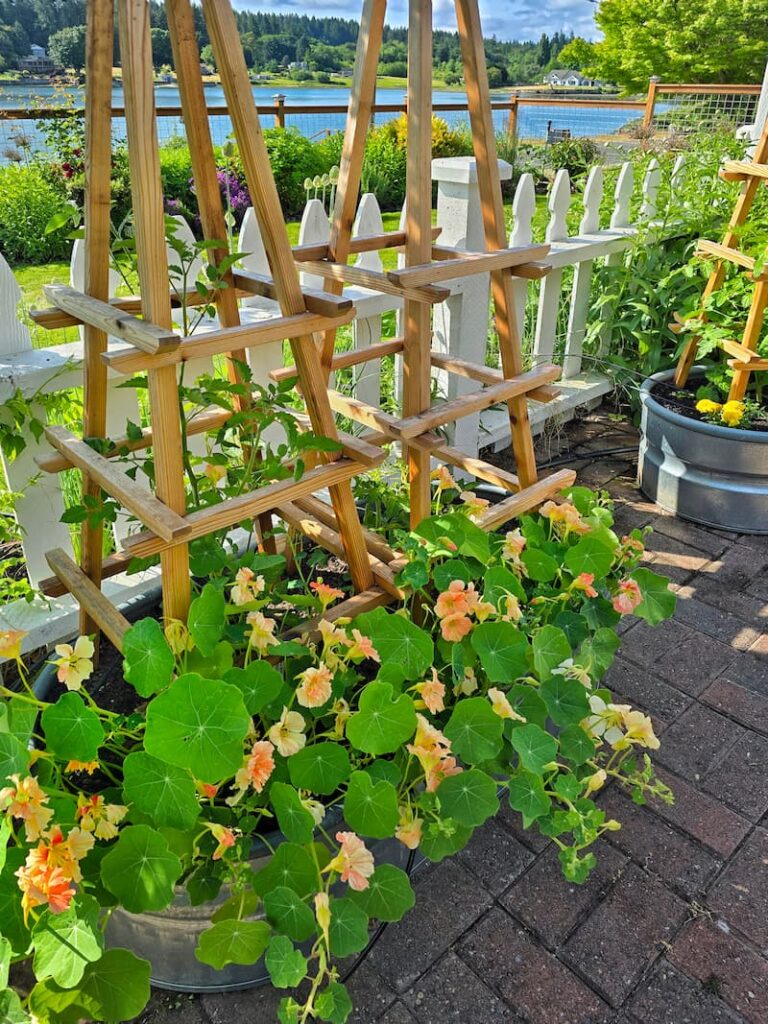
Nasturtiums and Cucumbers
Nasturtiums act as a trap crop for aphids and other pests, drawing them away from cucumber plants before they become a problem.
They also attract pollinators, which cucumbers need for good fruit set. This is my first year of growing cucumbers, and nasturtiums are already alongside them.
Calendula and Carrots
Calendula deters aphids, nematodes, and other pests that target carrots while attracting the beneficial insects that help keep the garden balanced.
It enriches the soil as it decomposes, benefitting the carrots growing nearby. Calendula with vegetables has become one of my most reliable combinations.
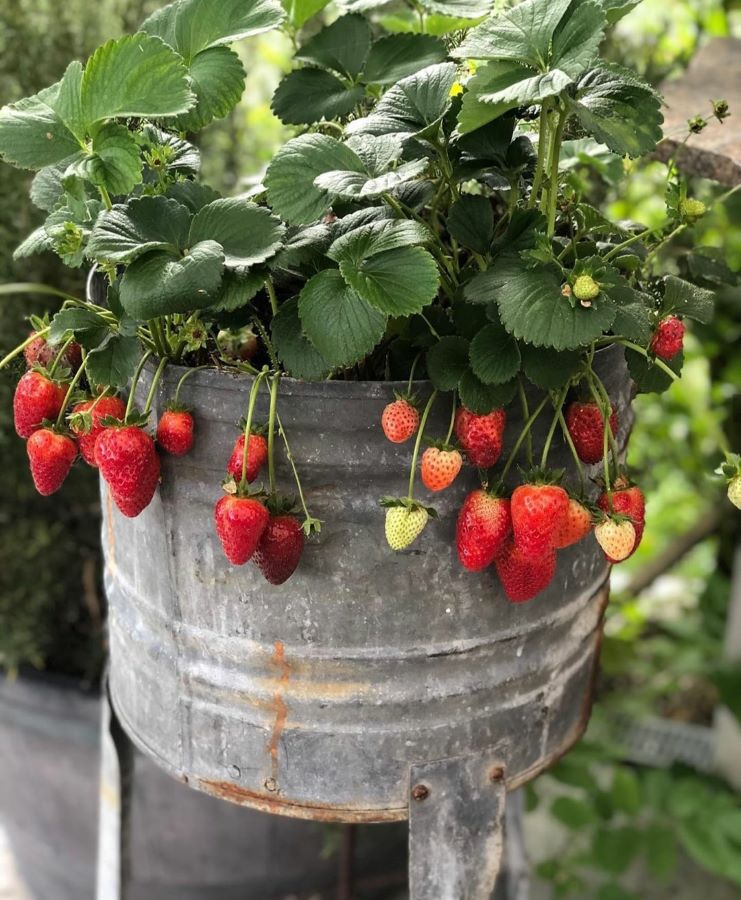
Borage and Strawberries
Borage is said to repel tomato hornworms and cabbage moths while attracting pollinators that increase strawberry yields. This also improves soil health by adding trace minerals as it decomposes.
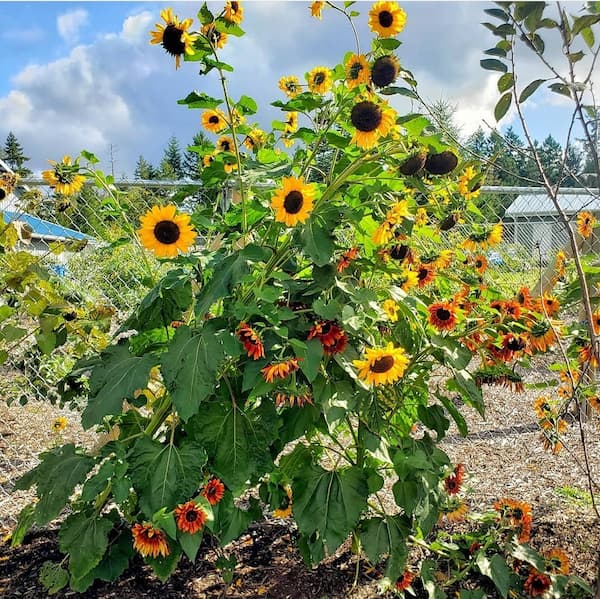
Sunflowers and Corn
Sunflowers attract pollinators and act as a trap crop for aphids, drawing them away from corn. They add significant height and structure to a vegetable garden, and their deep roots help break up compacted soil over time.
Note that sunflowers aren’t part of the traditional Three Sisters planting: that combination is corn, beans, and squash, but they make a useful addition to corn planting in their own right.
Alyssum and Lettuce
Alyssum attracts hoverflies and parasitic wasps that help control aphids and other pests on lettuce. Its low-spreading habit acts as a living mulch, reducing weeds and helping the soil retain moisture, both things lettuce appreciates.
I have already have alyssum planted alongside my lettuce this season, and the bed looks beautiful. The delicate white flowers against the lush green lettuce leaves are one of those pairings that work visually without any effort at all.
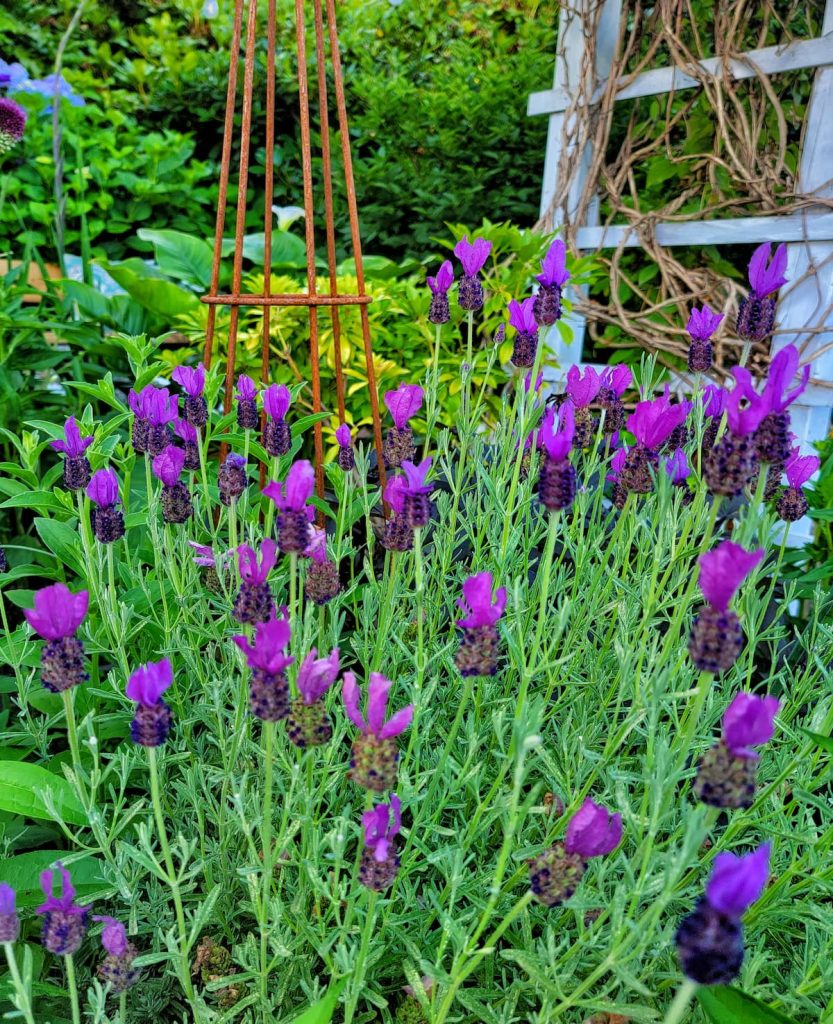
Lavender and Eggplants
Lavender repels moths, fleas, and beetles that commonly target eggplants while attracting bees that improve fruit set and harvest. This is a new combination for me this season.
I have lavender throughout the cottage garden, and moving it closer to the eggplants felt like a natural step. I’ll have a better sense of how well it performs by midsummer.
Companion Planting Herbs and Flowers
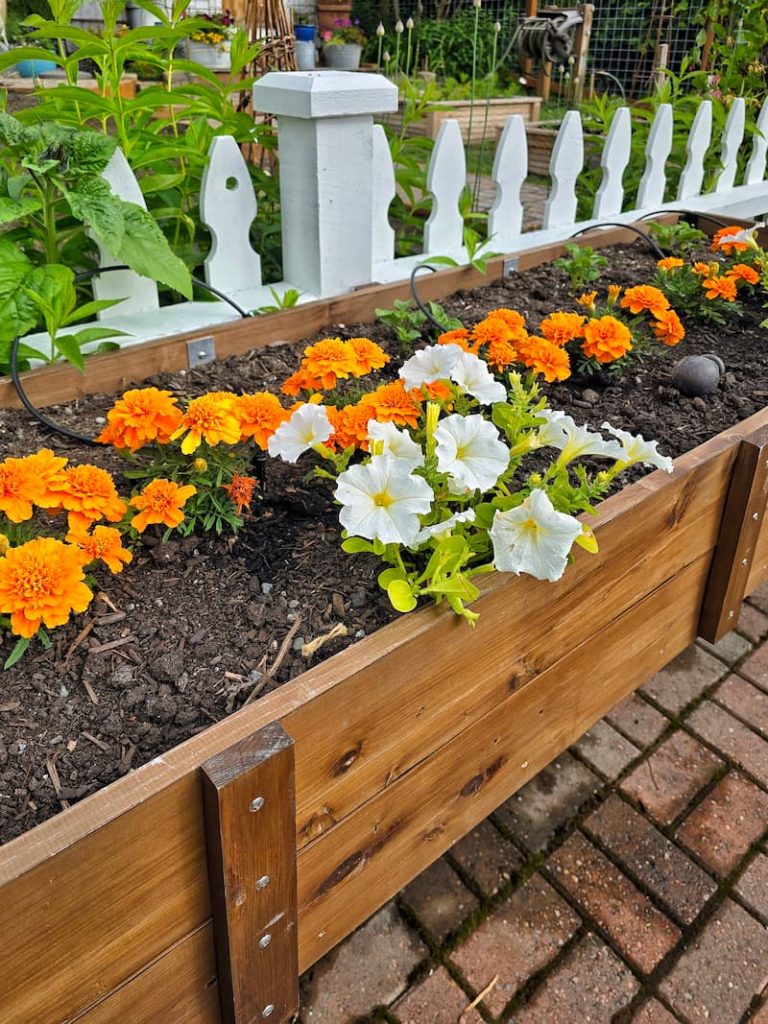
I grow herbs two ways in the garden. There’s the large herb container with parsley, thyme, rosemary, oregano, basil, and more…easy to grab what I need for dinner. And then there are those herbs planted throughout the cut-flower garden purely for companion planting purposes.
Those I let flower freely. A flowering herb attracts a completely different set of beneficial insects than a clipped one, and in the cutting garden, that’s exactly what I want.
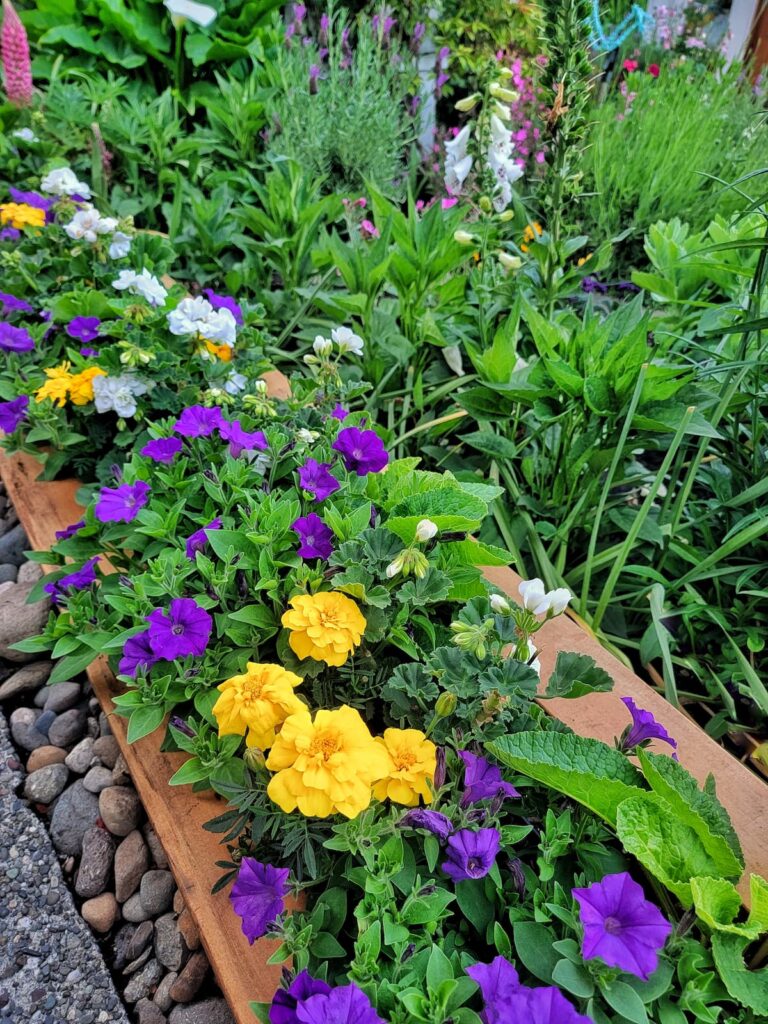
Basil and Marigolds
Basil deters mosquitoes and flies while marigolds keep nematodes and aphids at bay. Together, they create a natural pest barrier that works from two directions at once.
Both attract beneficial insects, and the combination of their scents makes for a genuinely aromatic garden corner. I grow basil with my tomatoes regularly and often have marigolds nearby as well, so this trio ends up together more often than not.
Chives and Roses
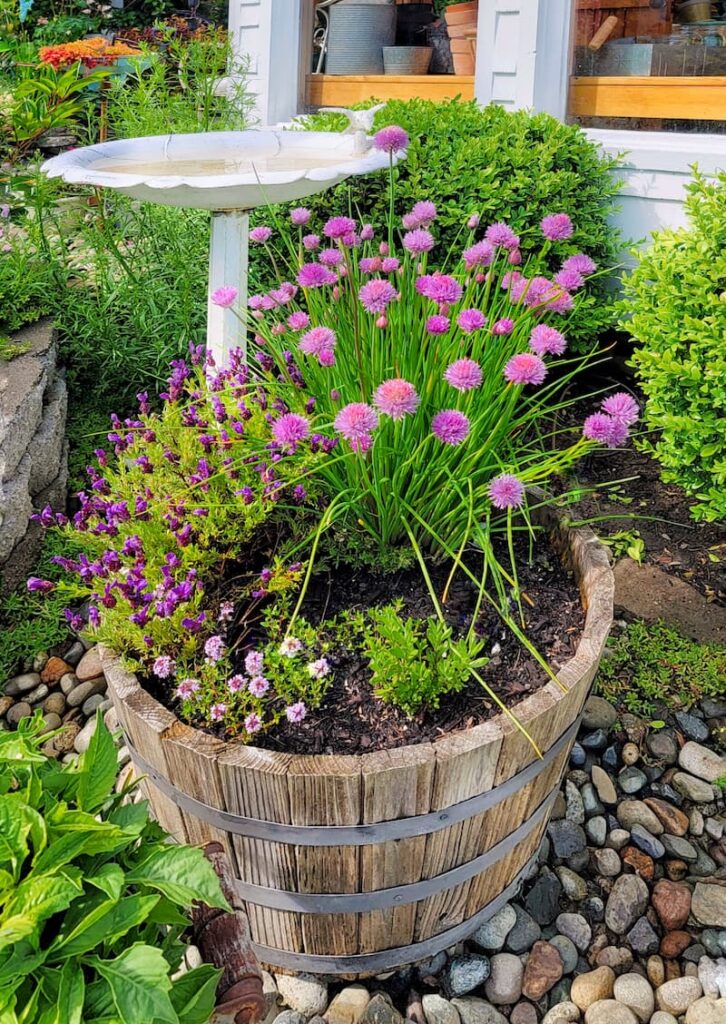
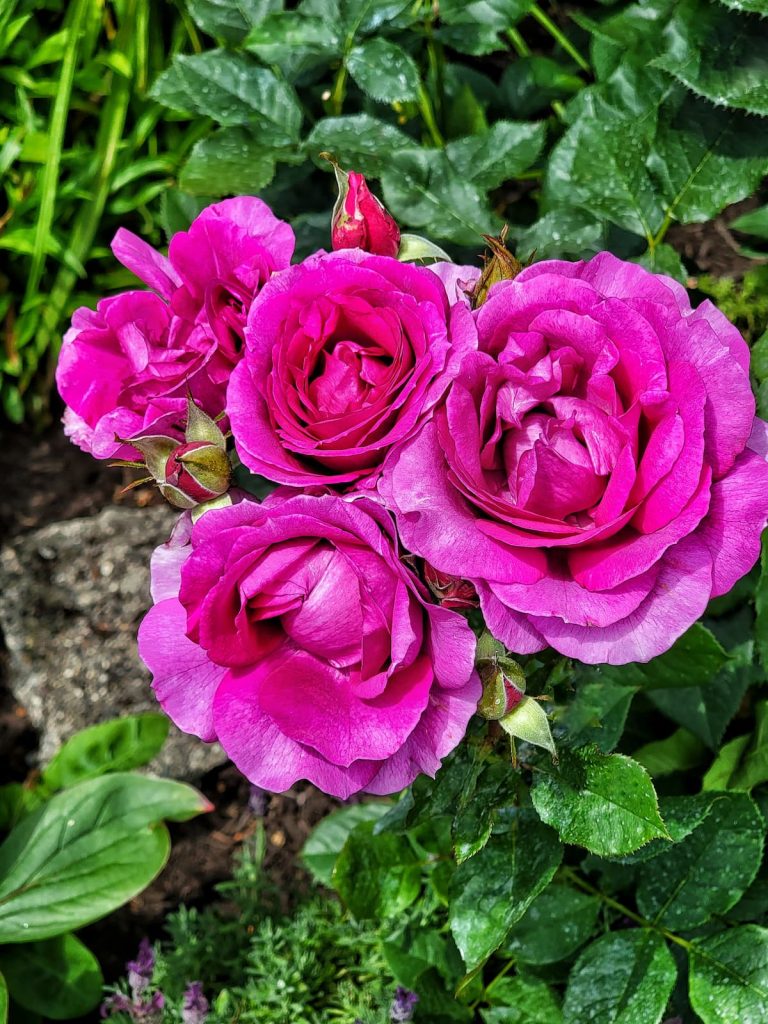
Chives help repel aphids and other pests that commonly attack roses, a genuinely useful companion for anyone dealing with aphid pressure on their roses, and most of us do.
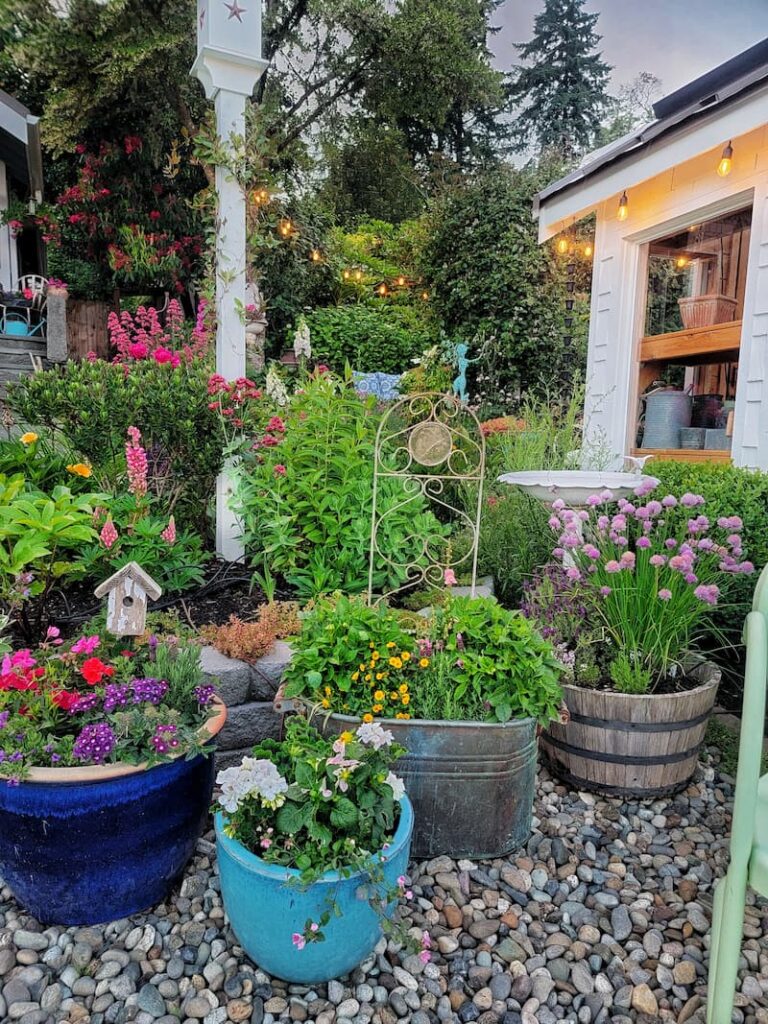
Both attract beneficial insects, and the tall, slender chive stalks with their purple pom-pom flowers create a beautiful contrast to the larger rose blooms. Worth planting at the base of rose bushes, where the chives can do their work quietly.
Dill and Sunflowers
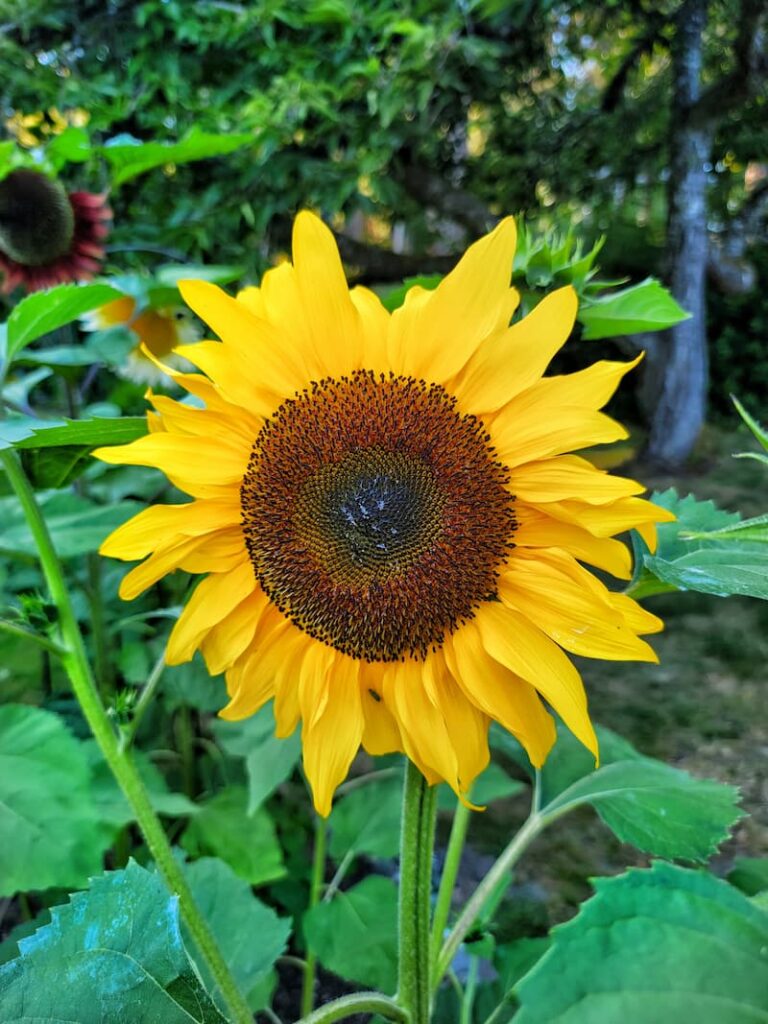
Dill attracts ladybugs and parasitic wasps that help control aphids and other pests, and sunflowers provide a natural support for the dill as it grows tall and starts to lean. This is a combination I come back to every season. I let the dill flower rather than cutting it back, which is when it attracts the most beneficial insects.
Parsley and Petunias
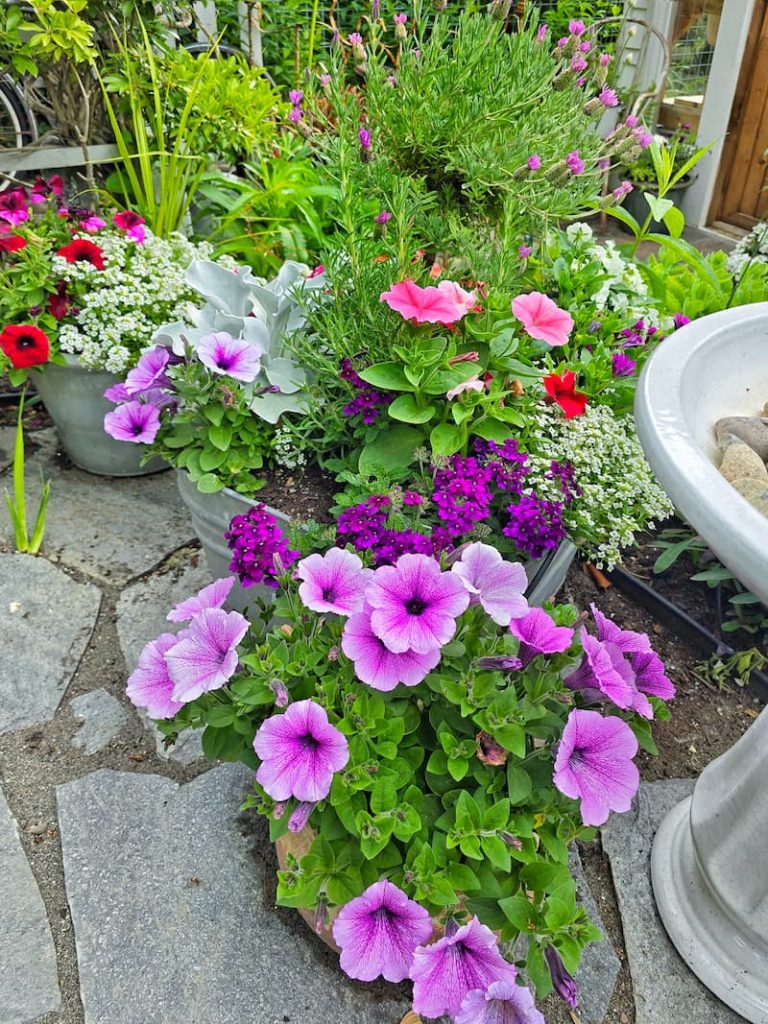
Parsley deters beetles and other pests that can damage petunias, and its dense foliage helps cover the soil and retain moisture for nearby plants.
I grow parsley in both my herb container and throughout the flower garden, and letting it go to flower in the cutting garden brings in beneficial insects that wouldn’t otherwise visit.
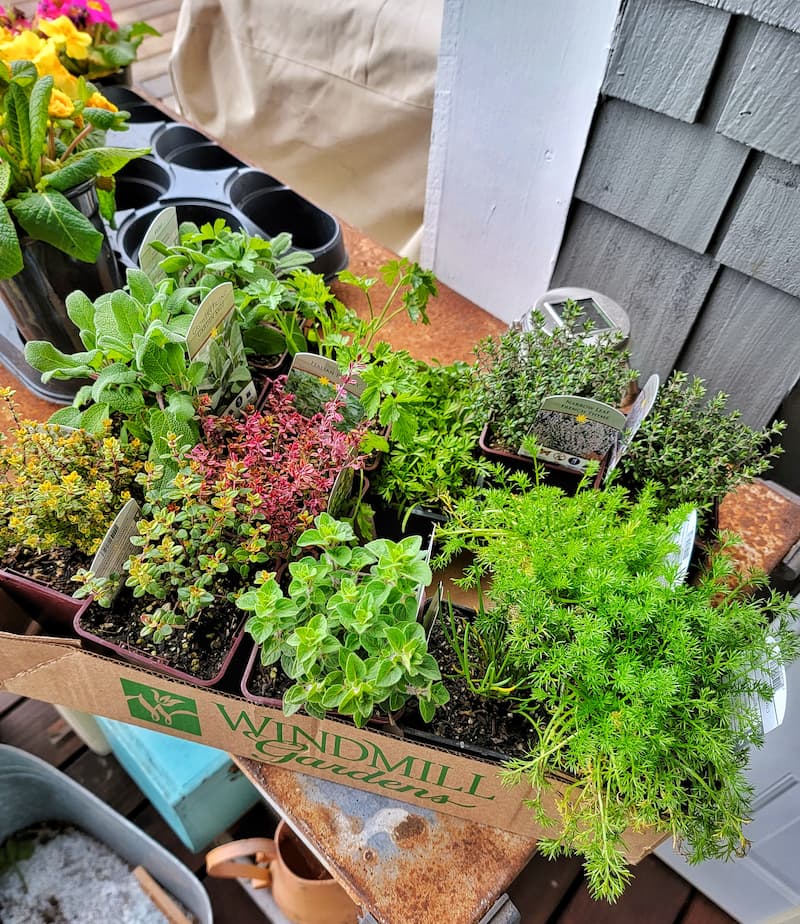
Thyme and Alyssum
Both thyme and alyssum are low-growing plants that spread naturally, making them excellent ground cover companions that suppress weeds and retain soil moisture. Thyme attracts bees constantly when it flowers, and alyssum draws in hoverflies and parasitic wasps.
I grow thyme throughout the garden and let it flower for exactly this reason. A flowering thyme plant is one of the busiest spots in the garden on a warm afternoon. With alyssum coming in strong from the greenhouse this season, I’ll be planting this combination in several spots.
Mint and Zinnias
Mint repels aphids, ants, and flea beetles, providing a protective barrier for zinnias and other nearby plants. Both attract bees and butterflies, making this a useful pollinator combination.
One important note: mint is invasive and will take over the bed quickly if left unchecked. Grow it in containers placed near the plants you want to protect. It will do its companion planting work from the pot.
Common Companion Planting Questions
What Flowers Can You Plant Next to Each Other?
Some of the most reliable flower pairings for both beauty and function are roses and lavender, marigolds and petunias, zinnias and cosmos, sunflowers and nasturtiums, calendula and salvia, dahlias and snapdragons, pansies and violas, sweet alyssum and impatiens, bee balm and black-eyed Susan, and tulips and daffodils.
The companion planting chart below is a useful quick reference for planning these combinations.
Is It Okay to Plant Flowers Next to Vegetables?
Absolutely, and I’d argue it’s one of the best things you can do for a vegetable garden. Flowers planted alongside vegetables provide natural pest control, attract the pollinators vegetables need for good fruit set, and improve soil health over time. The combinations covered earlier in this post are a good place to start.
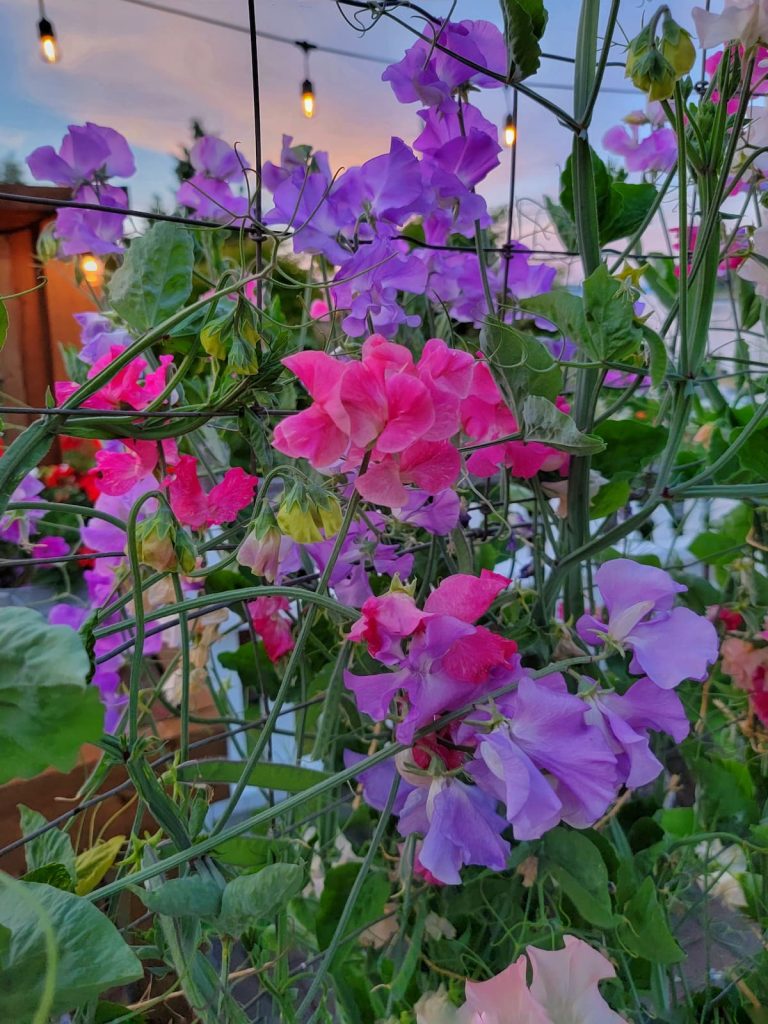
These cut flowers do double duty: beautiful in arrangements and genuinely useful in the garden: zinnias, sunflowers, dahlias, cosmos, sweet peas, marigolds, echinacea (coneflower), and snapdragons.
What Flowers Should Not Be Planted Together?
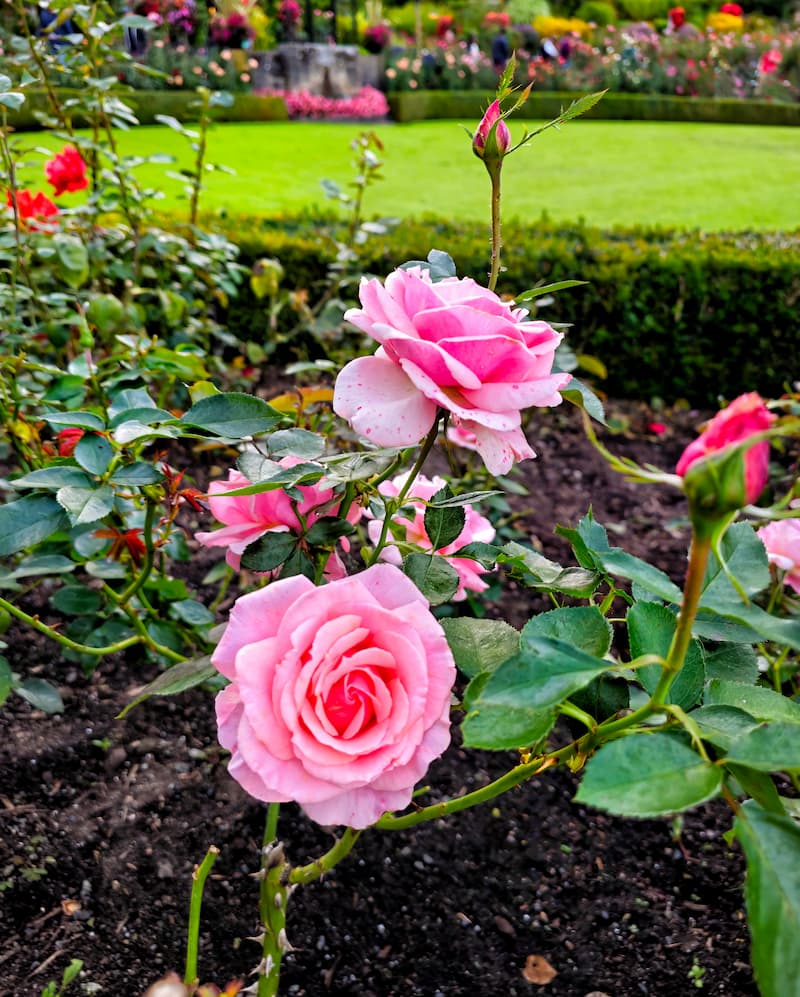
Knowing what to keep apart is just as important as knowing good companion pairings. Here are the combinations worth avoiding:
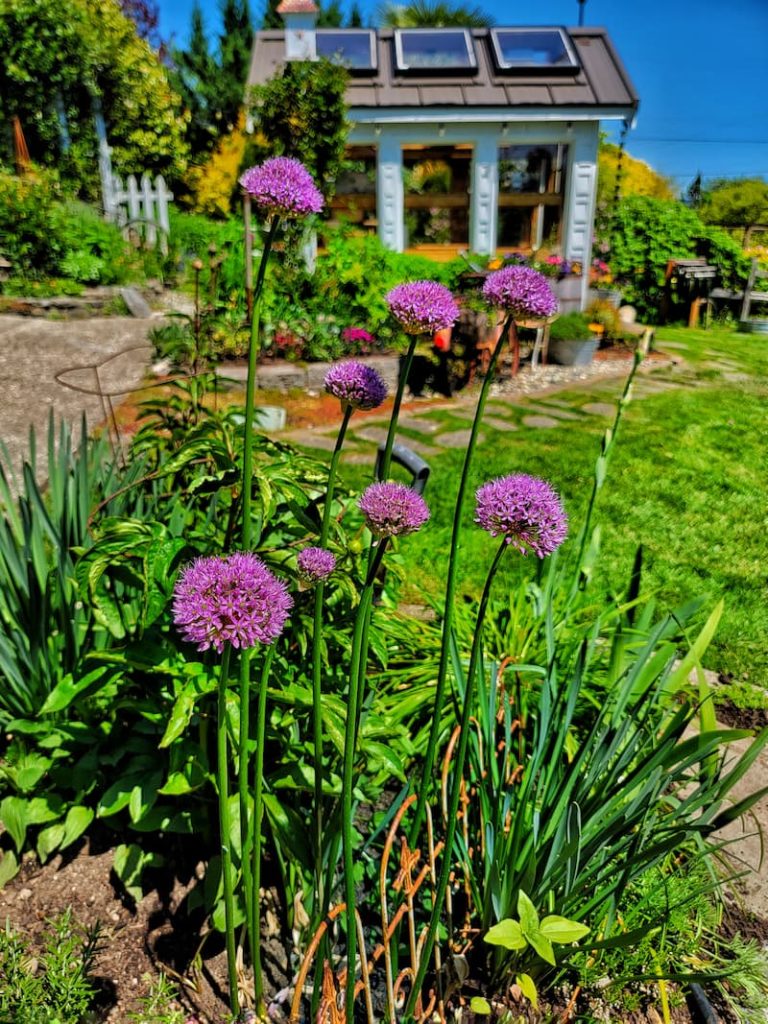
Garlic and Other Alliums Near Roses
Garlic and other alliums can inhibit rose growth through the chemicals they release into the soil. Both are also heavy feeders that compete for the same nutrients, which can reduce the vigor of both plants over time.
Fennel and Most Other Plants
Fennel releases allelopathic chemicals that inhibit the growth of many other plants. Grow it in its own dedicated spot away from the rest of the garden.
Carrots and Dill
Dill can stunt carrot growth if planted too closely, and it attracts carrot flies that can damage the crop. Keep these two apart, even though dill is a useful companion for many other plants.
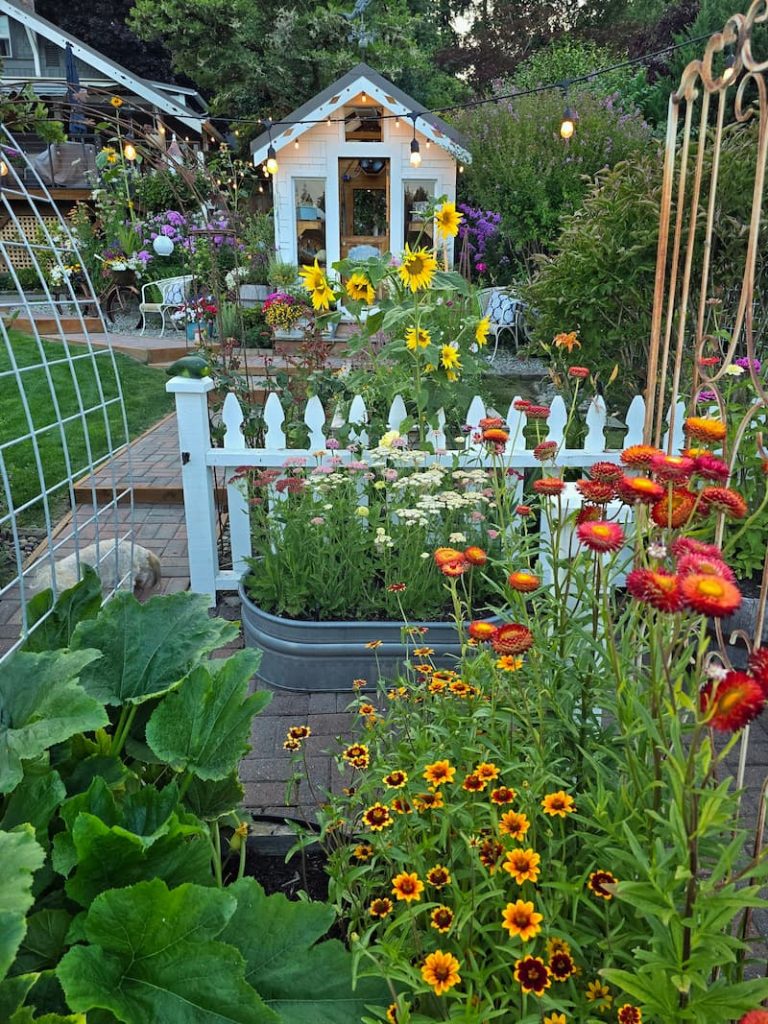
Sunflowers and Potatoes
Sunflowers produce allelopathic chemicals that can inhibit potato growth, and both have high nutrient demands, leading to competition. Keeps sunflowers away from the potato patch.
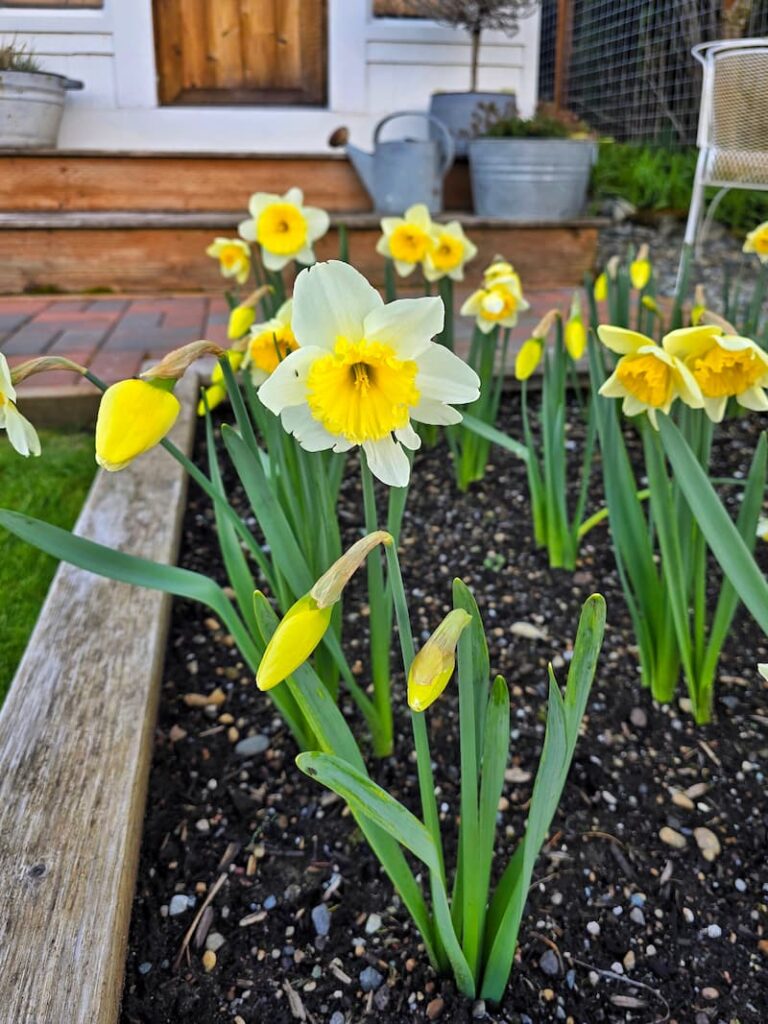
Hyacinths and Narcissus
These two bulb plants compete for the same soil nutrients when planted too closely, which leads to poorer performance for both. Give each its own space rather than combining them in the same bed.
Mint and Everything Else
Mint is by far the most important plant on this list, and the one I learned the hardest way. When I was a new gardener, I planted mint directly in the garden beds with no idea how invasive it really was. It spread quickly and took a long time to remove the roots. It is persistent in a way that is genuinely frustrating once it gets established.
Mint belongs in containers, not in the ground. You can still use it as a companion plant. Place the container near the plants you want to protect, and it will do its job. But keep it contained, or you will regret it.
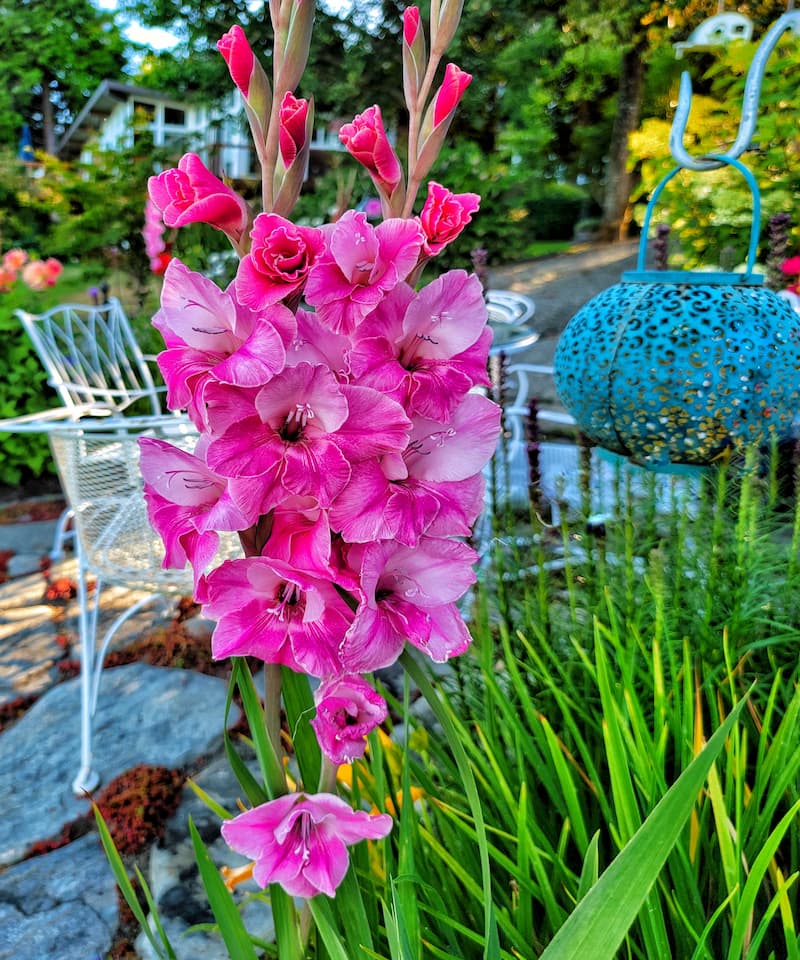
Gladiolus and Peas
Gladiolus can attract thrips and other pests that also affect peas, and compete for nutrients, reducing yields for both. Keep these apart in the vegetable and cutting garden.
Marigolds and Beans
Marigolds can occasionally inhibit bean growth through the chemicals they release, so both compete for soil nutrients. Given how useful marigolds are as companions for so many other plants, pair them elsewhere and keep them away from the beans.
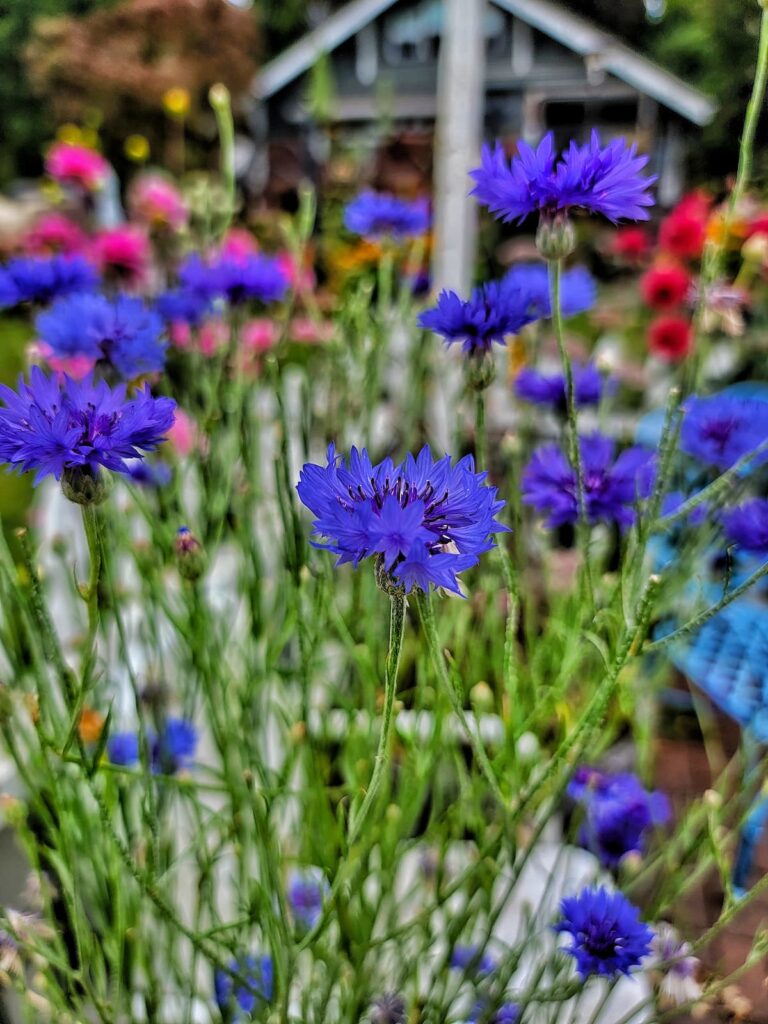
Cornflowers and Roses
Cornflowers can attract pests that also affect roses, and the two plants compete for nutrients. Roses have better companions available: lavender, chives, and geraniums are among them.
General Tips for Avoiding Incompatibility
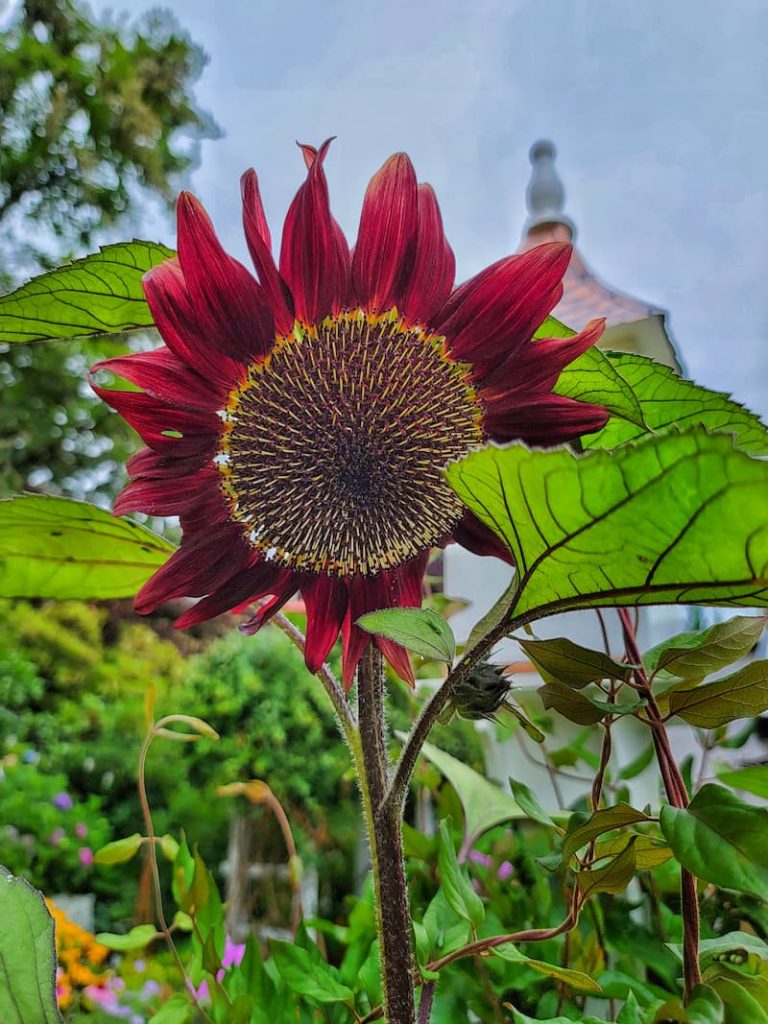
Always research the specific needs of plants before pairing them. What works beautifully in one combination can cause problems in another. Be especially cautious with allelopathic plants like fennel and sunflowers, which affect their neighbors through the soil.
Match companion plants with similar light, water, and soil requirements so neither is struggling to keep up. And keep invasive species like mint in containers… always.
Companion Planting Chart
A quick reference for planning your garden using companion planting. It covers popular flowers, their best companions, and the plants to keep them away from.
| Flower | Companion Flowers | Benefits | Avoid Planting With | Reason |
| Roses | Lavender, Geraniums, Marigolds | Repels pests, attracts pollinators, improves soil health | Garlic, Fennel | Inhibits growth, competes for nutrients |
| Marigolds | Petunias, Nasturtiums, Zinnias | Repels nematodes, aphids, attracts beneficial insects | Beans, Cabbage | Can inhibit growth, compete for nutrients |
| Lavender | Roses, Echinacea, Sage | Repels pests, attracts pollinators, drought-tolerant | Mint | Mint can be invasive |
| Zinnias | Cosmos, Sunflowers, Marigolds | Attracts pollinators, adds vibrant color | Potatoes | Potential for pest attraction |
| Sunflowers | Nasturtiums, Zinnias, Marigolds | Attracts pollinators, acts as a trap crop | Potatoes, Beans | Allelopathic properties, competes for nutrients |
| Tulips | Daffodils, Hyacinths, Crocuses | Early spring blooms, complementary heights, adds color | Fennel | Fennel can inhibit growth |
| Nasturtiums | Marigolds, Sunflowers, Beans | Acts as trap crop, attracts pollinators | Potatoes, Broccoli | Can attract pests that harm these vegetables |
| Dahlias | Snapdragons, Zinnias, Sunflowers | Attracts beneficial insects, adds color and structure | Carrots | Potential for pest attraction |
| Cosmos | Zinnias, Marigolds, Sunflowers | Attracts pollinators, adds airy structure | Potatoes | Can attract pests |
| Petunias | Marigolds, Lavender, Geraniums | Repels pests, attracts pollinators | Beans, Broccoli | Potential for pest attraction |
| Geraniums | Roses, Marigolds, Petunias | Repel pests, attracts pollinators, improves soil health | Fennel | Fennel can inhibit growth |
| Echanacea | Lavender, Sunflowers, Bee Balm | Attracts pollinators, adds height and color | Garlic, Mint | Can inhibit growth, compete for nutrients |
| Bee Balm | Echinacea, Black-Eyed Susan, Phlox | Attracts pollinators, improves soil health | Carrots, Beans | Can attract pests |
| Black-Eyed Susans | Bee Balm, Echinacea, Slavia | Attracts pollinators, adds height and color | Fennel | Fennel can inhibit growth |
| Sweet Alyssum | Impatiens, Petunias, Marigolds | Attracts beneficial insects, provides ground cover | Fennel | Fennel can inhibit growth |
| Snapdragons | Dahlias, Marigolds, Petunias | Repels pests, attracts pollinators, adds vertical interest | Carrots, Beans | Potential for pest attraction |
| Calendula | Carrots, Tomatoes, Nasturtiums | Repels pests, attracts pollinators, improves soil health | Potatoes | Potential for pest attraction |
Garden Supplies and Tools
Check out my favorite garden supplies and tools for the growing season. Whether you’re looking for potting soil or deer repellent, you’ll find what I use in my own garden.
Final Thoughts About Companion Planting
Companion planting is one of those gardening practices that rewards you twice: once practically and once visually.
On the practical side, it means fewer pest problems, healthier soil, better pollination, and less need for chemical intervention. The marigolds are doing their job next to the tomatoes. The alyssum is drawing in beneficial insects along the lettuce bed. The lavender is tucked throughout the garden, repelling pests and feeding pollinators. None of it is complicated, and all of it makes a real difference over a season.
On the visual side, it means a garden that looks like it grew that way naturally: zinnias and cosmos moving together in the breeze, dill feathering out beneath the sunflowers, nasturtiums spilling over the edges of the vegetable beds in bright orange and yellow. The best companion planting combinations are beautiful without trying to be.
Start with one or two pairings that make sense for what you already grow. Pay attention to what happens. Add more in the following season. That’s how a companion planted garden builds: gradually, practically, and more beautifully each year.
Until next time,
Happy Gardening!

I’m a self-taught hobby gardener. Everything I share on my blog is my opinion and what has worked for me.
MORE POSTS
For You To Enjoy
Follow Me for More Inspiration