
How to Harvest Cut Flowers from Your Garden
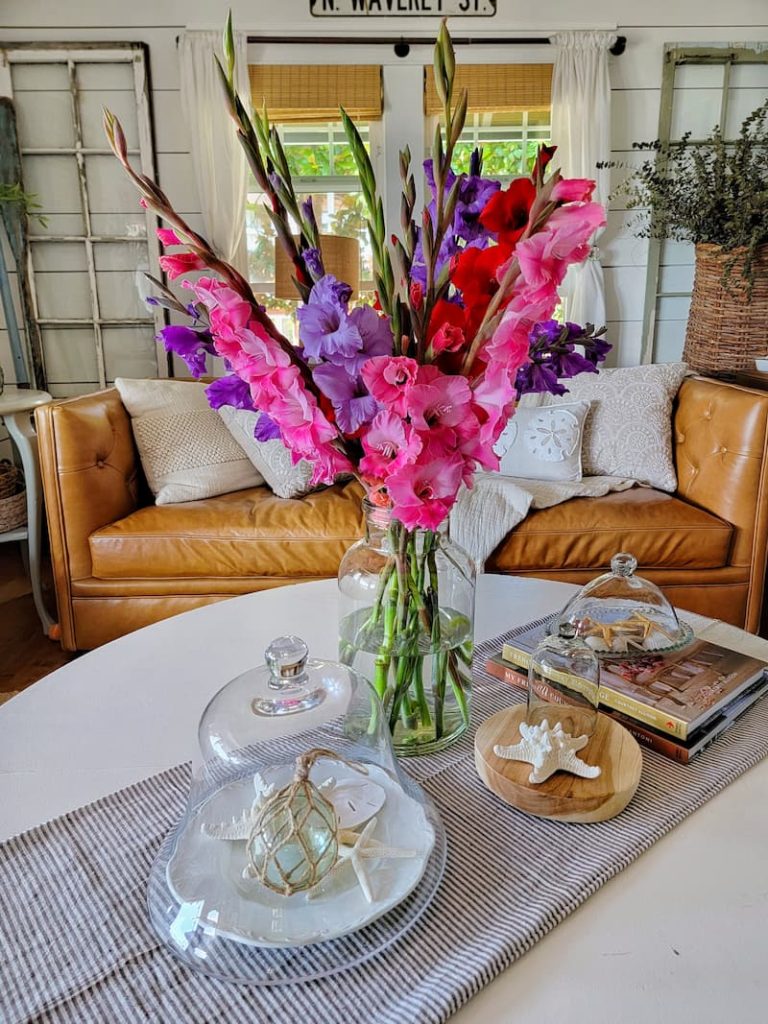
The flowers on my kitchen table right now have been there for over a week. Not because I did anything extraordinary, just because a few small habits done consistently make all the difference. Most of them happen in the garden, in the first few minutes after cutting.
It turns out that what happens before the flowers ever reach a vase matters just as much as anything you do with them afterward. The timing, the cut, the first few minutes after harvest. Get those right and everything else gets easier.
Here is everything I have learned about harvesting cut flowers from the raised beds at our cottage on Puget Sound.
As an Amazon affiliate, I earn from qualifying purchases at no extra cost to you. My blog also includes other affiliate links for your convenience. Click here to read my privacy policy.
Why Harvest Timing Makes or Breaks Your Vase Life
The single biggest mistake most people make is harvesting too late. By the time the flower looks fully open and picture-perfect on the plant, it has already used a significant portion of its bloom energy. Cut it then, and you are working with what is left.
Most cut flowers should be harvested before they reach full bloom. Buds that are just beginning to show color, or flowers that are a quarter to halfway open, will continue opening in the vase. You get the full arc of the bloom rather than the tail end.
The exception is flowers that don’t continue to open once cut. Those need to be harvested closer to full bloom. More on that in the flower-specific section below.
A Quick note about my garden
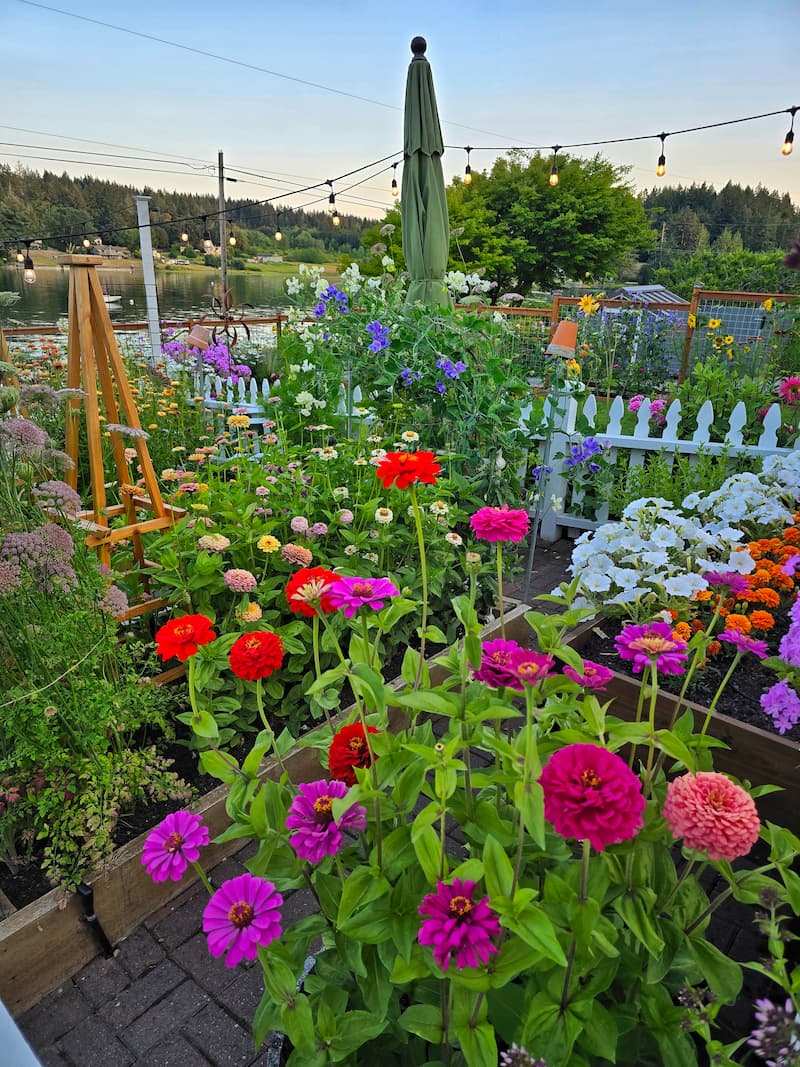
Most of the flowers I share here are grown from seed in our greenhouse and planted in raised beds and containers throughout our cottage garden.
The Best Time of Day to Cut Flowers from the Garden
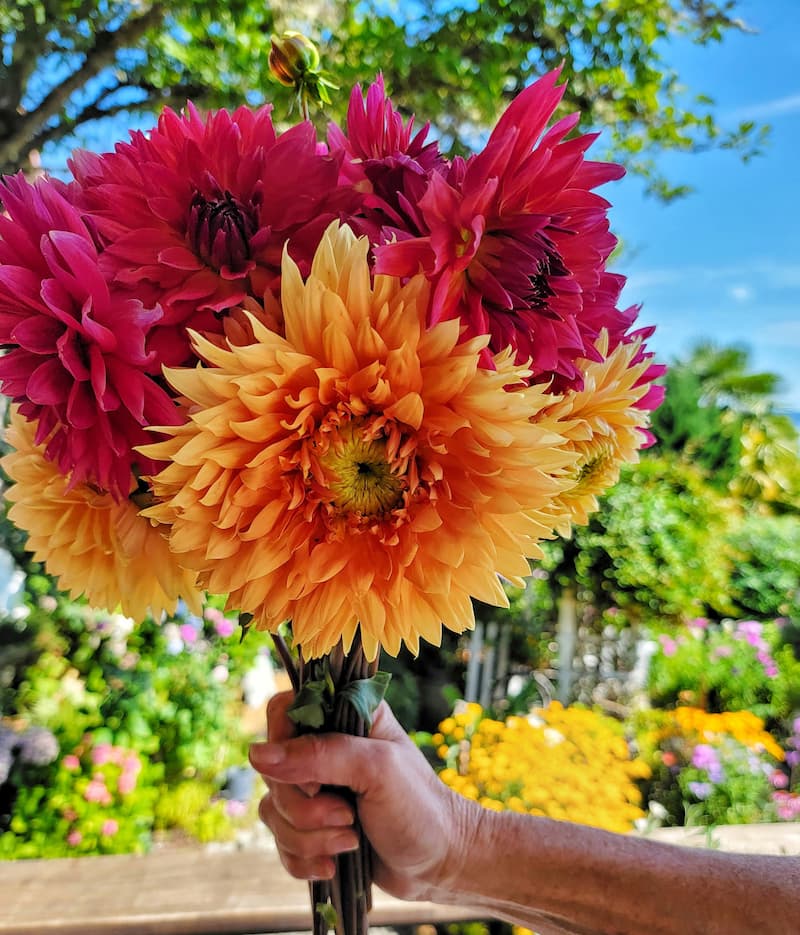
Early morning is the right answer, and it is not close.
Overnight, plants rehydrate. By morning, the stems are firm and full of water, the temperatures are cool, and the flowers have not yet been stressed by sun or heat. Cut them then, and they go into the vase in the best possible condition.
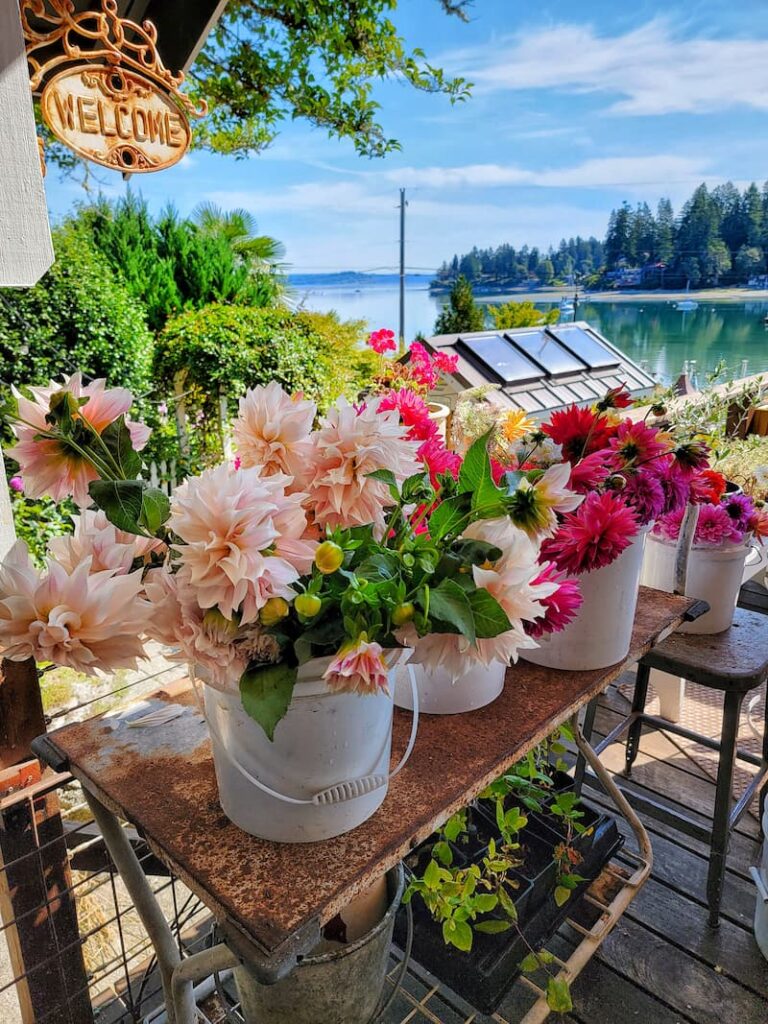
Midday is the worst time to harvest. Heat and sun pull moisture from the plant faster than the roots can replace it. Stems cut during peak heat wilt quickly and often do not recover well, even with proper conditioning.
If you miss the morning window, late evening is a reasonable second option. The heat has broken, the plants have had the afternoon to settle, and the stems will have a full night to rehydrate before you arrange them.
Let’s Plan Your Dream Garden With Our
Gardening Planner
Unlock Your Garden’s Potential.
Our 35-page Ultimate Garden Planner is designed to help you organize, track, and flourish in your gardening endeavors.
Get yours for $4.99
Tools for Harvesting Cut Flowers
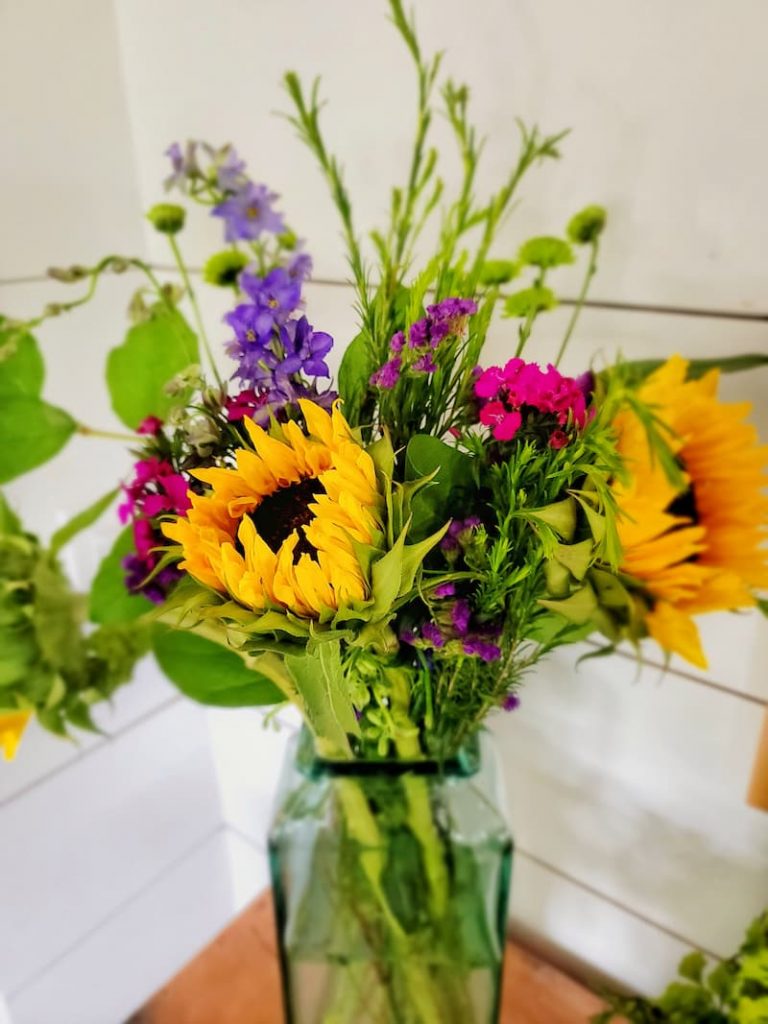
The right tools make a real difference. Dull or dirty blades crush stem tissue, which limits water uptake and shortens vase life from the first cut.
What You Need
A Note on Cleanliness
Wipe down your pruner blades with rubbing alcohol between varieties if you are quickly moving through the garden. It takes seconds and prevents the transfer of any disease or bacteria from one plant to the next.
I’ll be honest… I don’t always do this for every cut, but I do between different flower types, and always before I start harvesting for the day.
How to Cut Flower Stems Properly
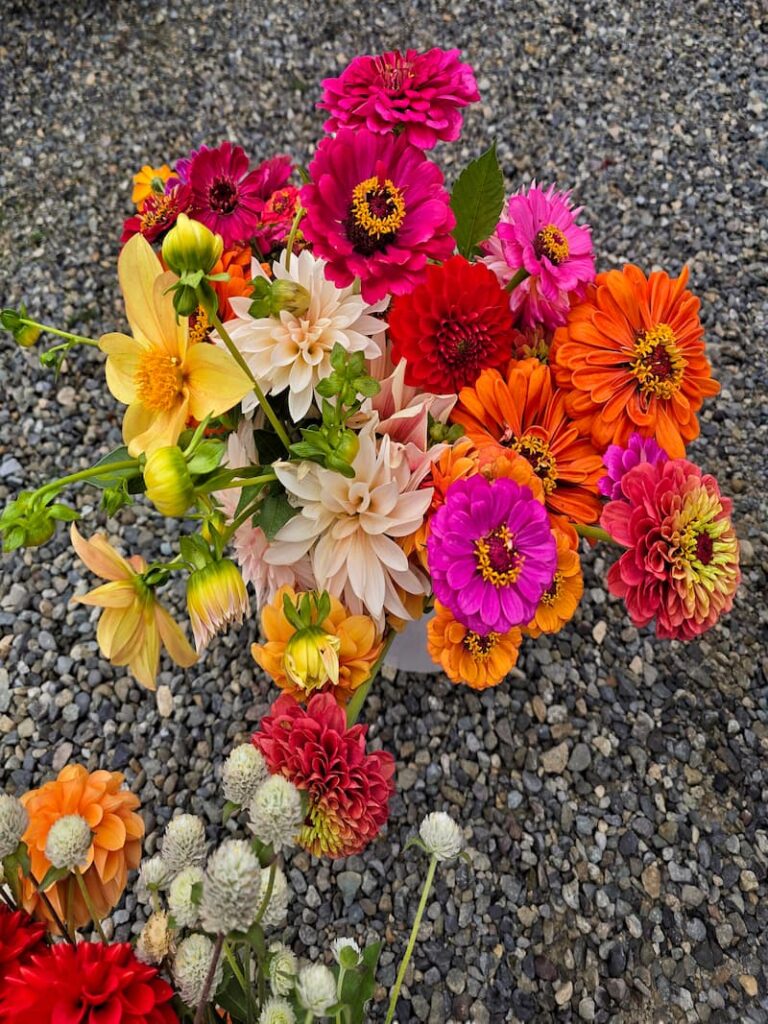
Always cut at a 45-degree angle. The angled cut does two things. It increases the surface area available for water uptake and keeps the stem from resting flat against the bottom of the bucket, where it’s blocked from absorbing water.
Cut above a leaf node when possible. On cut-and-come-again flowers like zinnias and cosmos, cutting just above the set of leaves encourages the plant to branch and produce more stems. This is the whole game with those flowers. The more you cut, the more they give you.
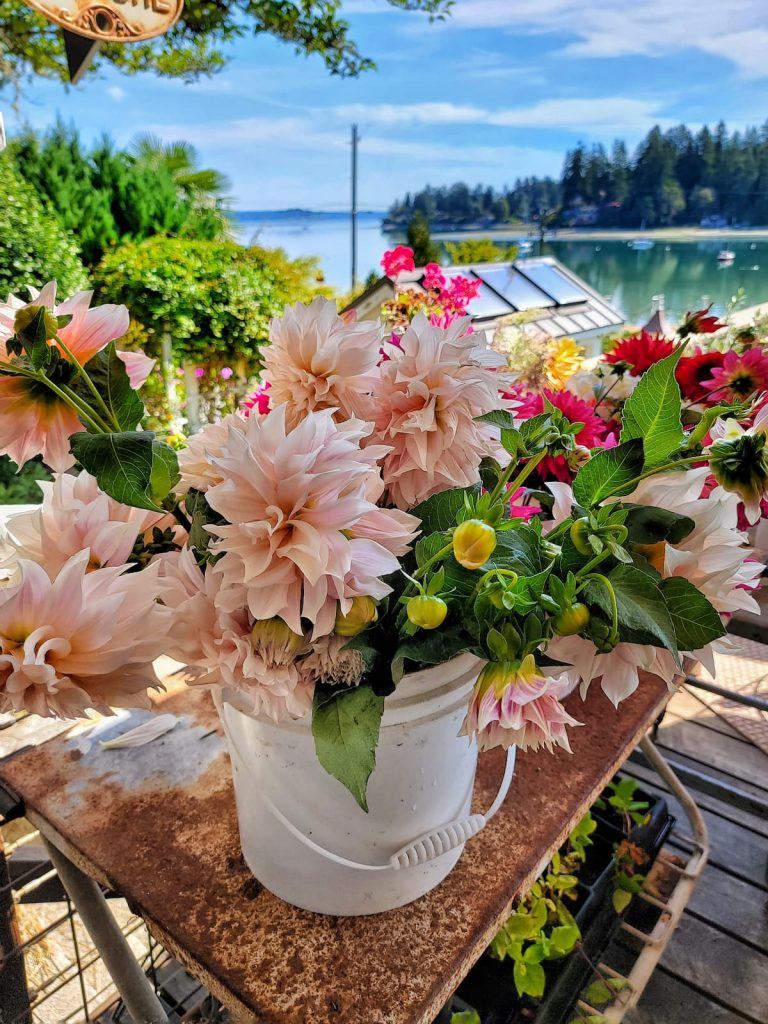
Get the stems into water immediately. Not in a few minutes. Immediately. The moment a stem is cut, it begins pulling in air. That air creates a bubble that blocks water absorption. Cold water between 35-50°F helps disperse those bubbles faster than room temperature water.
How to Condition Cut Flowers After Harvesting
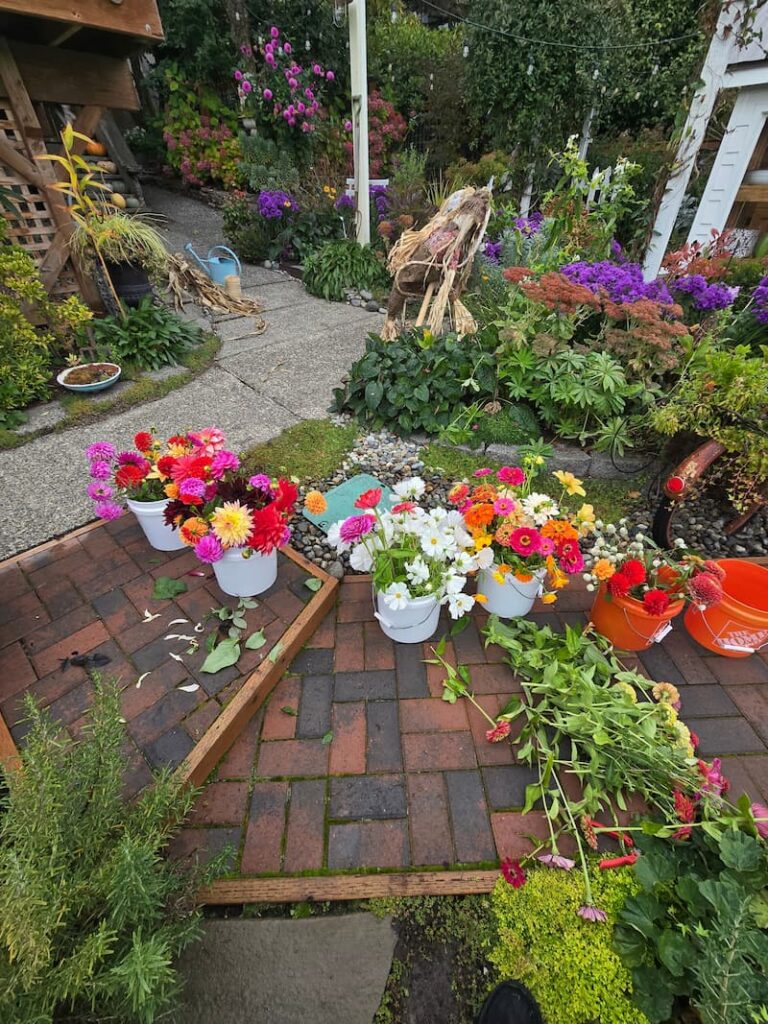
Conditioning is the step between the garden and the vase, and it’s worth doing properly.
After harvesting, strip any foliage that would sit below the waterline. Leaves in water rot quickly, feed bacteria, and cloud the water.
Then bring the flowers into a cool, dark space and let them rest for at least a few hours, ideally overnight.
This resting period lets the stems fully rehydrate after the stress of being cut. Flowers that have been properly conditioned arrange more easily, open more evenly, and last significantly longer in the vase.
Add flower food or floral preservative to your conditioning water. It provides sugar for energy, an acidifier to improve water uptake, and an antibacterial component to slow bacterial growth.
Garden Supplies and Tools
Check out my favorite garden supplies and tools for the growing season. Whether you’re looking for potting soil or deer repellent, you’ll find what I use in my own garden.
Flower-By-Flower Harvesting Guide
Different flowers have different needs. Here’s what I learned from growing each of these in a raised bed every season.
Zinnias
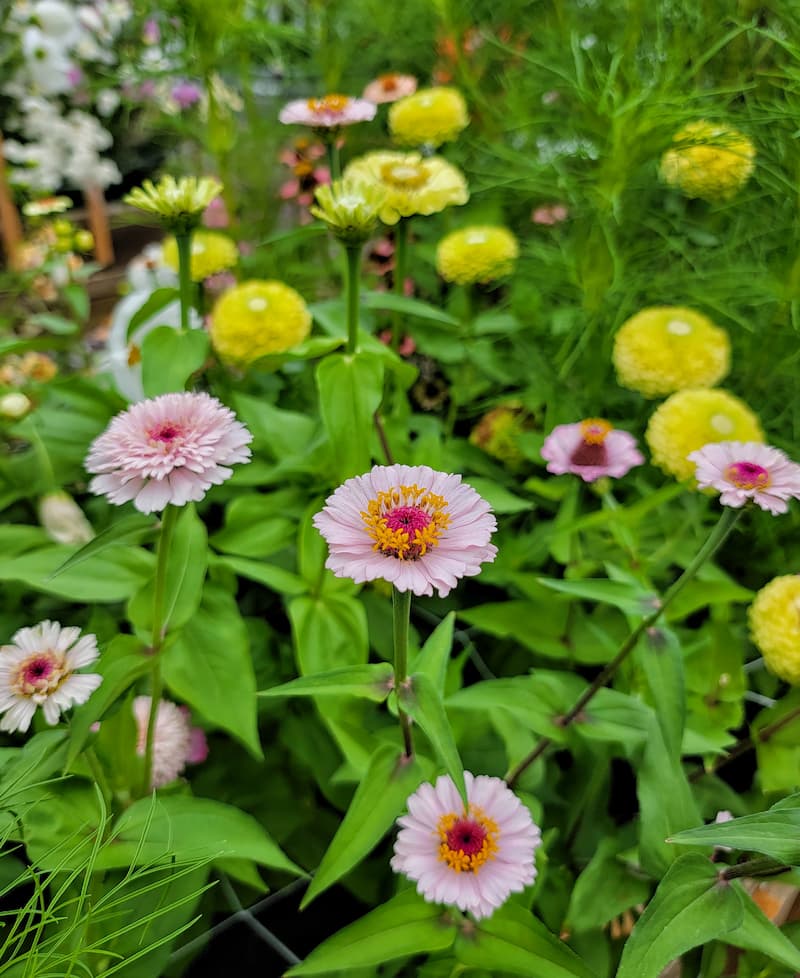
Zinnias are my favorite cut flower for one reason: the more you cut, the more you get. They are the definition of cut-and-come-again. A plant left to bloom on its own will slow down. A plant harvested regularly will keep producing new stems all season long.
Harvest when the bloom is just beginning to open, and the petals are showing full color, but the center is still tight. To test if a zinnia stem is ready, give it a wiggle test. Hold the stem near the base and gently shake it. If the stem is firm and the head holds steady, it is ready. If it flops, give it another day or two.
Cut long stems, ideally 12 to 18 inches, and cut just above a leaf node to encourage branching.
Cosmos
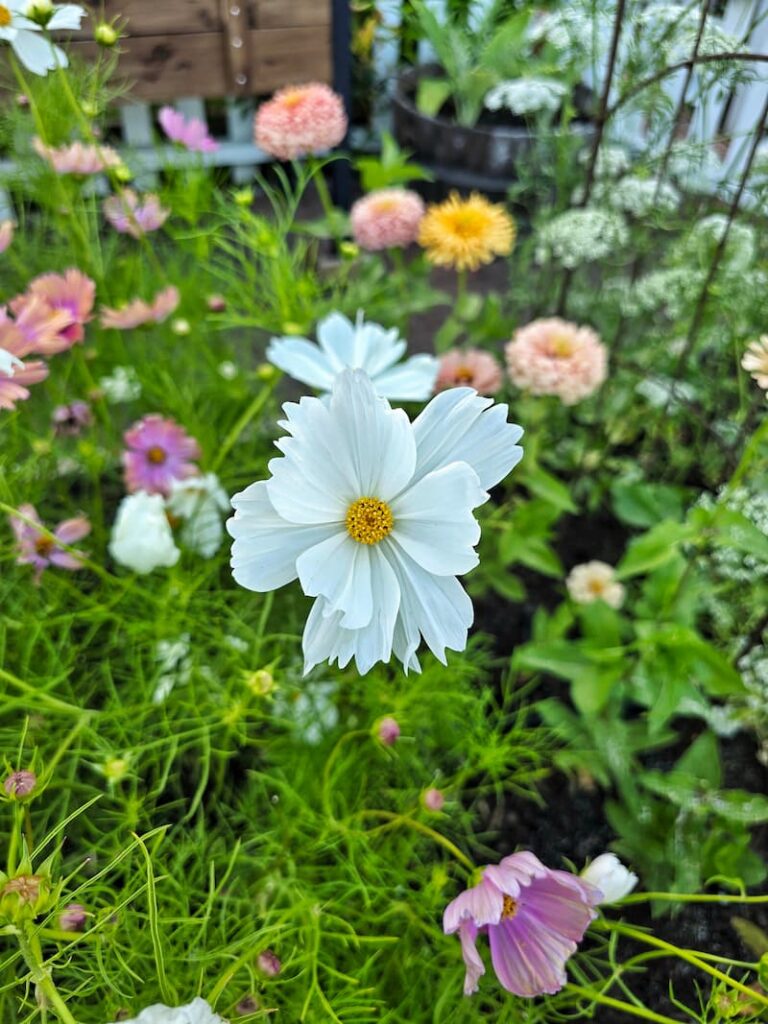
Cosmos are another reliable cut-and-come-again flower and one of the most generous producers in the garden. Like zinnias, regular cutting keeps them blooming. Stop cutting, and they will go to seed quickly.
Harvest cosmos when the buds are showing color but not yet fully open. The stems are delicate, so handle them gently and get them into water quickly. They condition well and open beautifully in the vase over the following day or two.
Dahlias
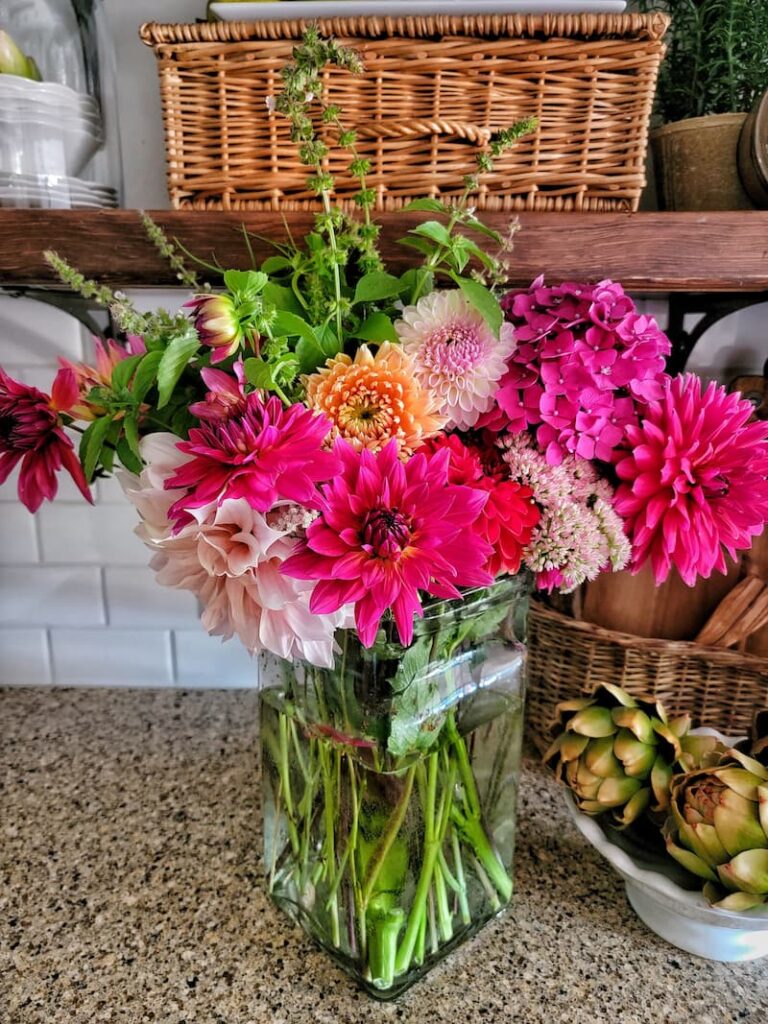
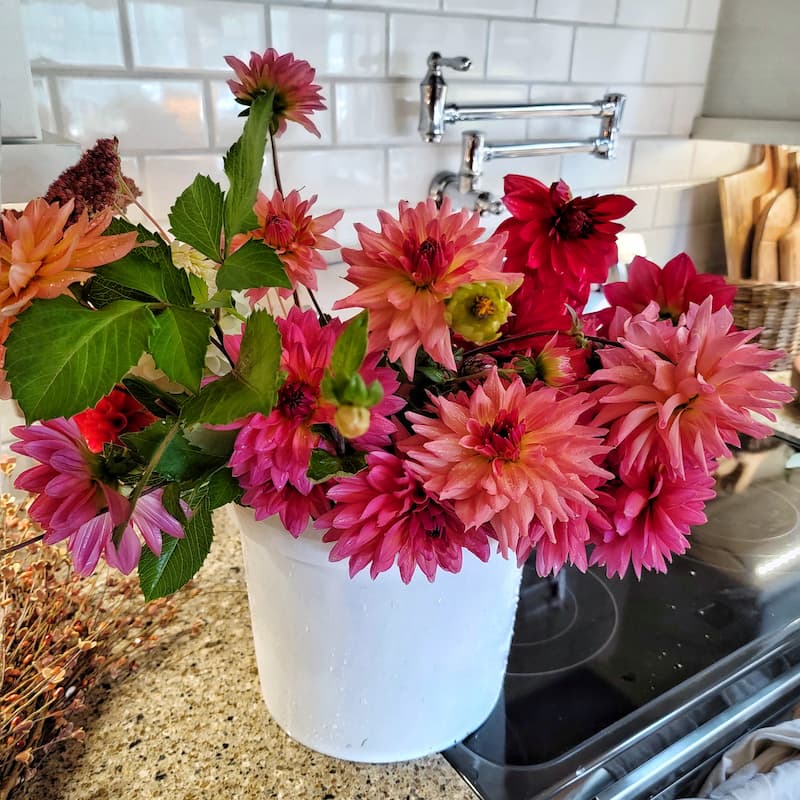
Dahlias are cut-and-come-again flowers as well. Each stem you harvest sends the plant back to work producing the next one.
Harvest when the bloom is fully open or nearly so. Unlike zinnias and cosmos, dahlias do not continue opening much once cut. What you see at harvest is largely what you get in the vase.
Cut in the early morning and immediately put the stems in cold water. Some growers use a boiling-water conditioning method for dahlias, briefly dipping the cut ends in hot water before transferring them to cold water. The idea is that it clears air bubbles and encourages uptake.
I have not found the need for this extra step with mine, but it is worth knowing about if you’re having trouble with stems that wilt quickly despite proper care.
Strip the foliage well. Dahlia leaves in water break down fast, so strip the foliage well.
Sunflowers
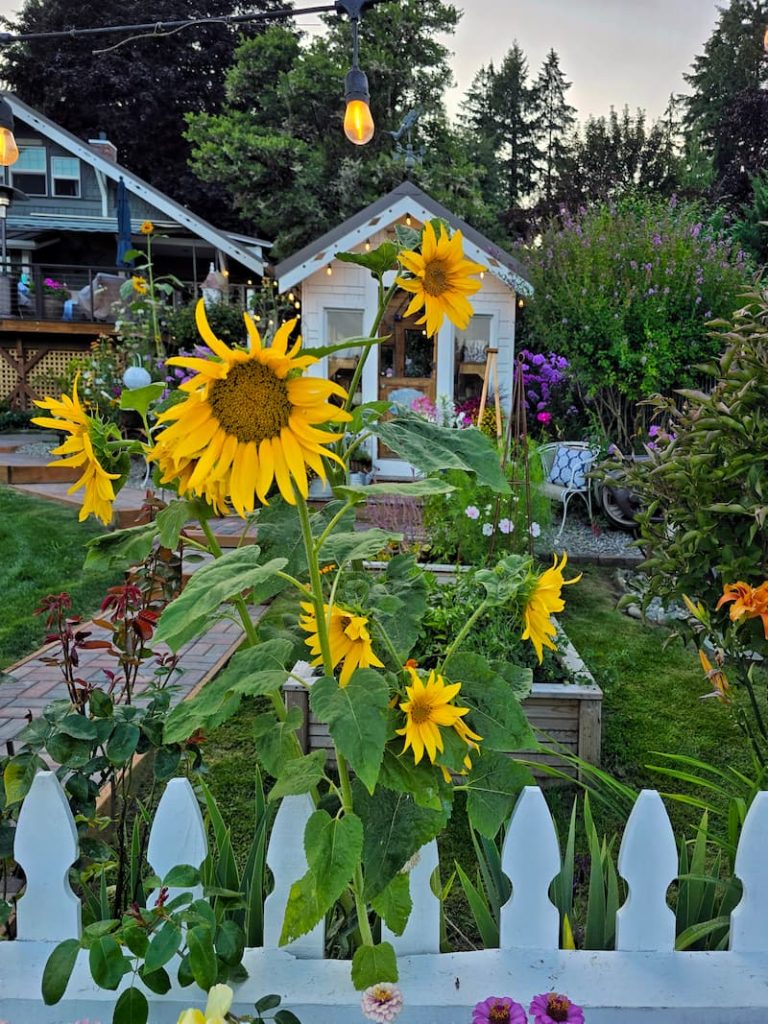
Sunflowers should be harvested when the petals are just beginning to open, and the center disk is still tight. Once the center starts to show pollen, the bloom is already past its best point for cutting.
Most sunflower varieties are single-stem, meaning one large flower per plant. Some branching varieties will produce side shoots after the main stem is cut, so it’s worth knowing which type you are growing.
Sunflowers drink a lot of water. Keep the bucket full and check it daily.
Strawflowers
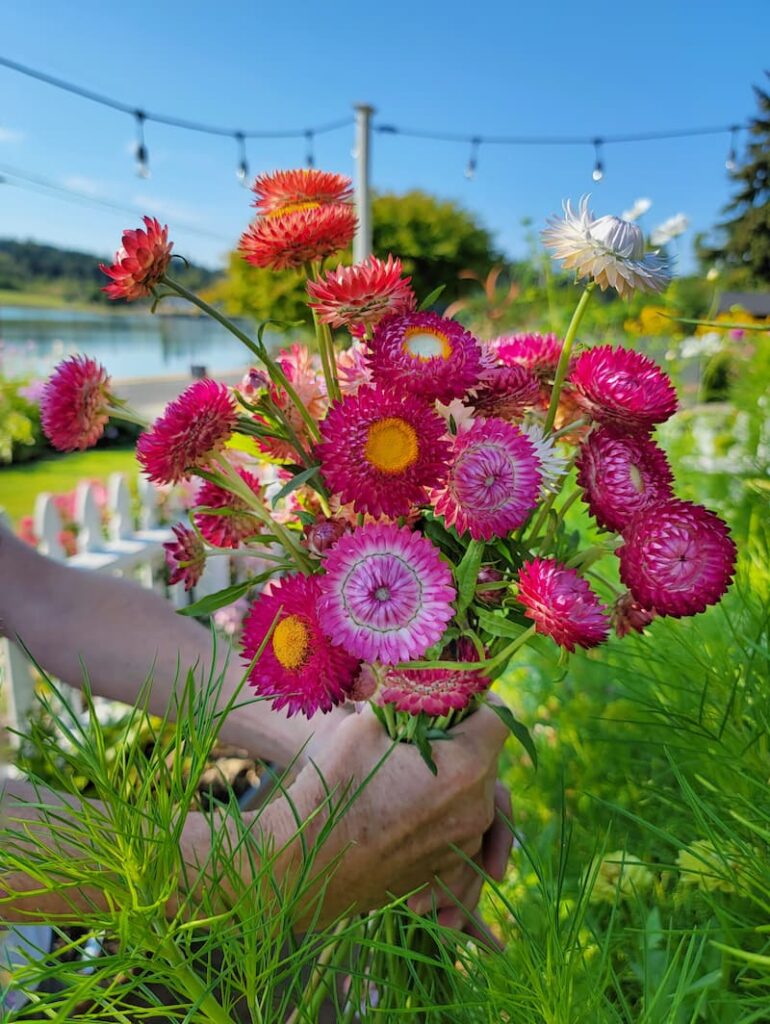
Strawflowers are unique in that their papery petals continue to open after cutting, sometimes dramatically. Harvest when the center is still closed or just barely beginning to show. If you wait until they look fully open on the plant, they will be overblown in your vase within a day.
They are also excellent for drying. Harvest at the same tight stage and hang upside down in a cool, dry spot. They hold their color beautifully.
Sweet Peas
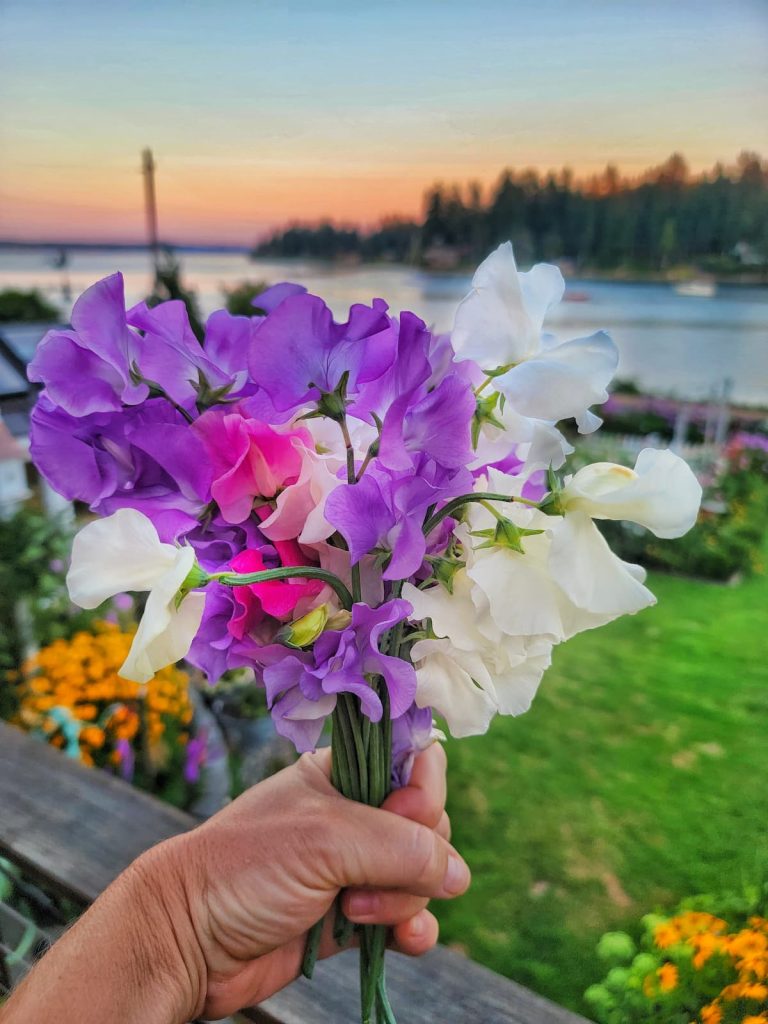
Sweet peas have one of the shortest vase lives of any cut flower, but they’re worth every bit of effort for the fragrance alone. Harvest when the lowest flower on the stem is just opening, and the upper buds are still closed. They will open progressively in the vase.
Sweet peas need to be cut frequently to keep the plant producing. Once they set seed, the plant begins to wind down. Check them every day or two during peak season.
Handle them gently. The stems are tender and bruise easily.
Hydrangeas
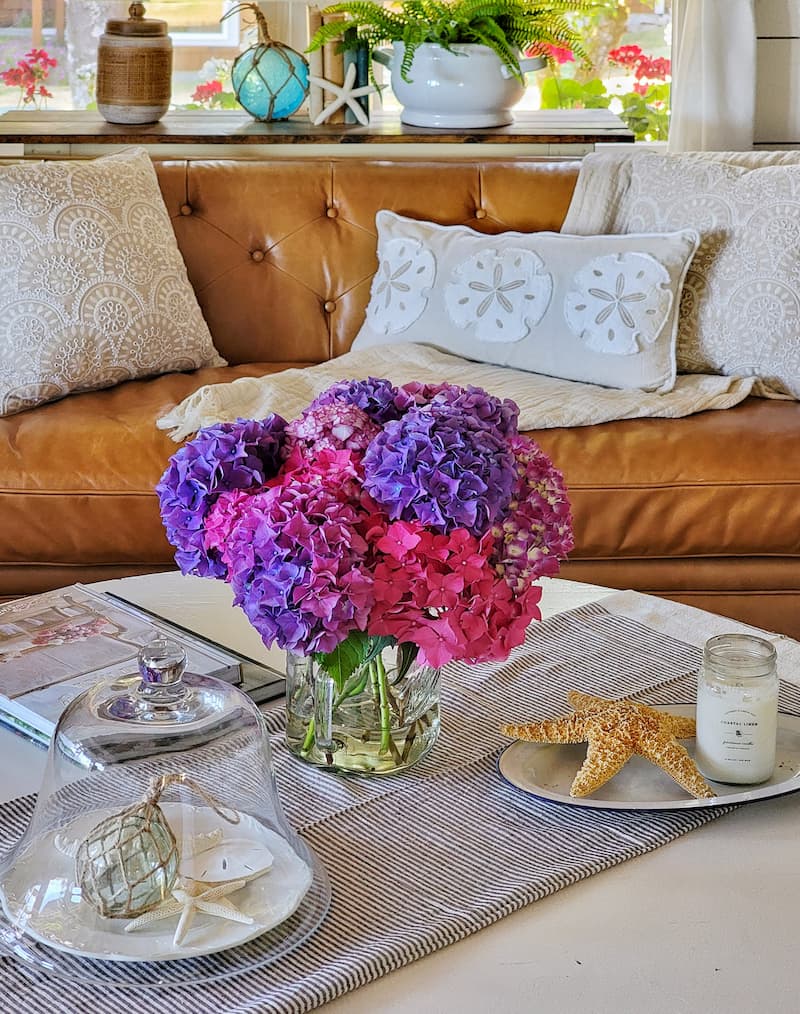
Hydrangeas deserve their own paragraph because they are, without question, the most particular flower I grow when it comes to harvesting.
Timing matters more with hydrangeas than almost any other flower. Harvest too early, when the blooms are still young and soft, and they will wilt almost immediately, regardless of what you do. Wait until the florets have a slightly papery feel, a sign that the bloom has matured enough to hold up after cutting. For most varieties, this is from late summer into fall.
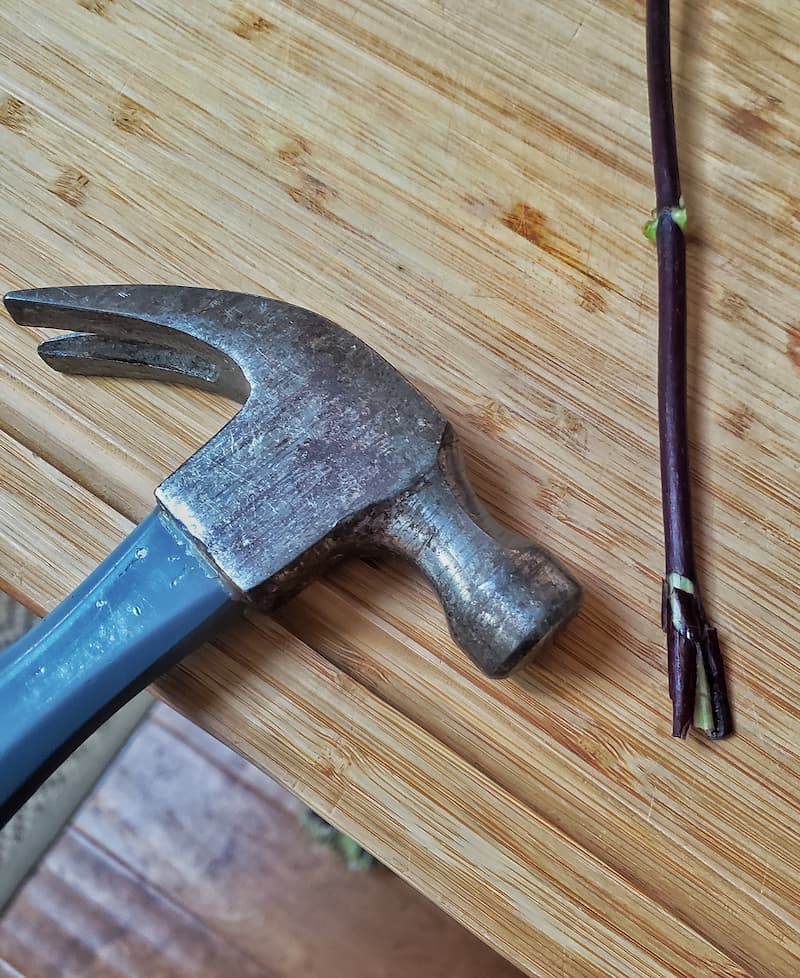
After making an angled cut, smash the bottom inch or two of the stem with a hammer before putting it in water. The woody stem does not absorb water efficiently on its own. Crushing it opens up the tissue and dramatically improves uptake.
Some growers also score the stem vertically with a sharp knife in addition to smashing. I do both for particularly thick stems.
Condition hydrangeas overnight in a cool, dark space before arranging. They benefit from a longer rest than most flowers.
Lilacs
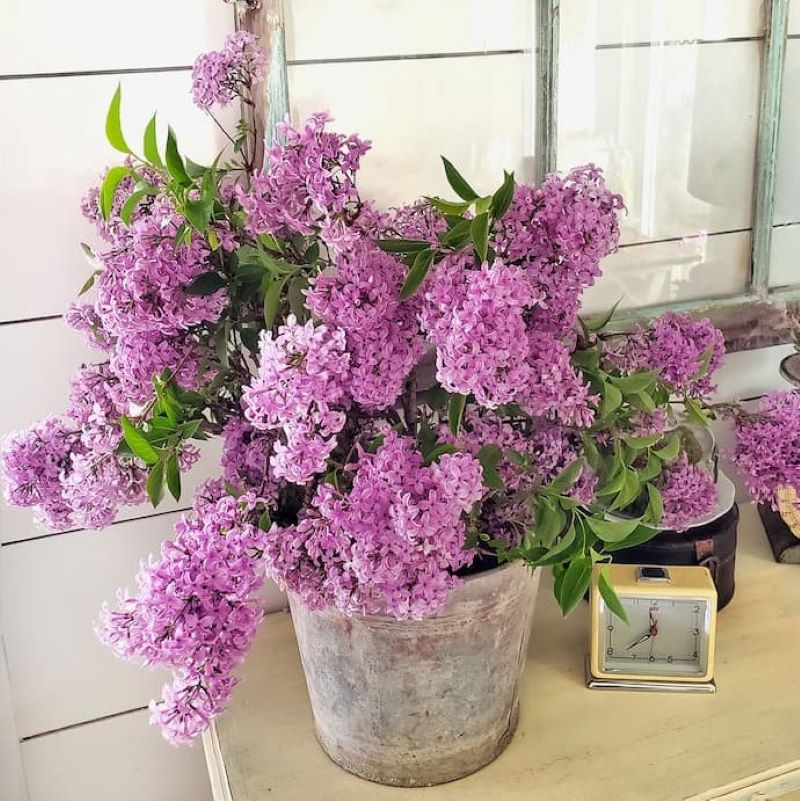
Lilacs follow the same logic as hydrangeas. The woody stems need help getting water, and the same hammer method applies. Smash the bottom of the stem well before putting them in water.
Harvest lilacs when the blooms are about half open. They will continue to open in the vase. Remove as many leaves as you can. Lilac foliage competes aggressively with the blooms for water.
Lilacs are one of the most fleeting cut flowers I know, lasting only a few days at best. Enjoy them for what they are and cut them often while the season is short.
Peonies
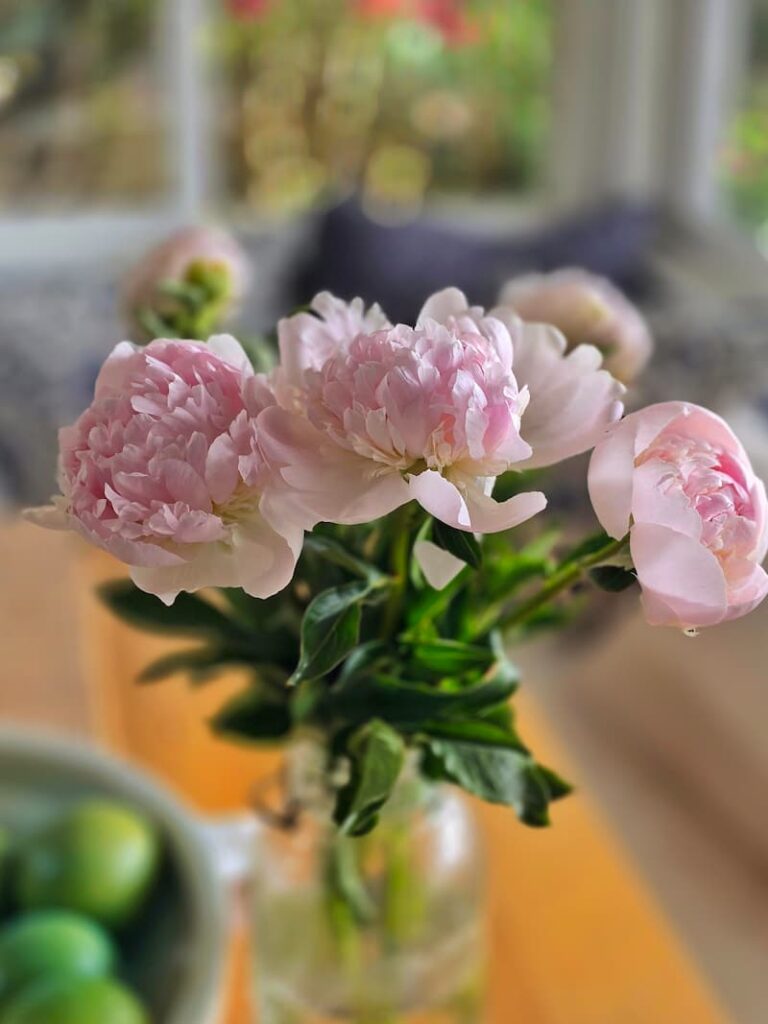
Peonies are one of the prettiest flowers to harvest, and one of the easiest to get wrong.
The key is to cut them early, much earlier than what feels right. Harvest when the bud is soft to the touch, like a marshmallow, and has good color, but is still completely closed. At that stage, they look almost unimpressive on the stem. They will open into full, lush blooms in the vase.
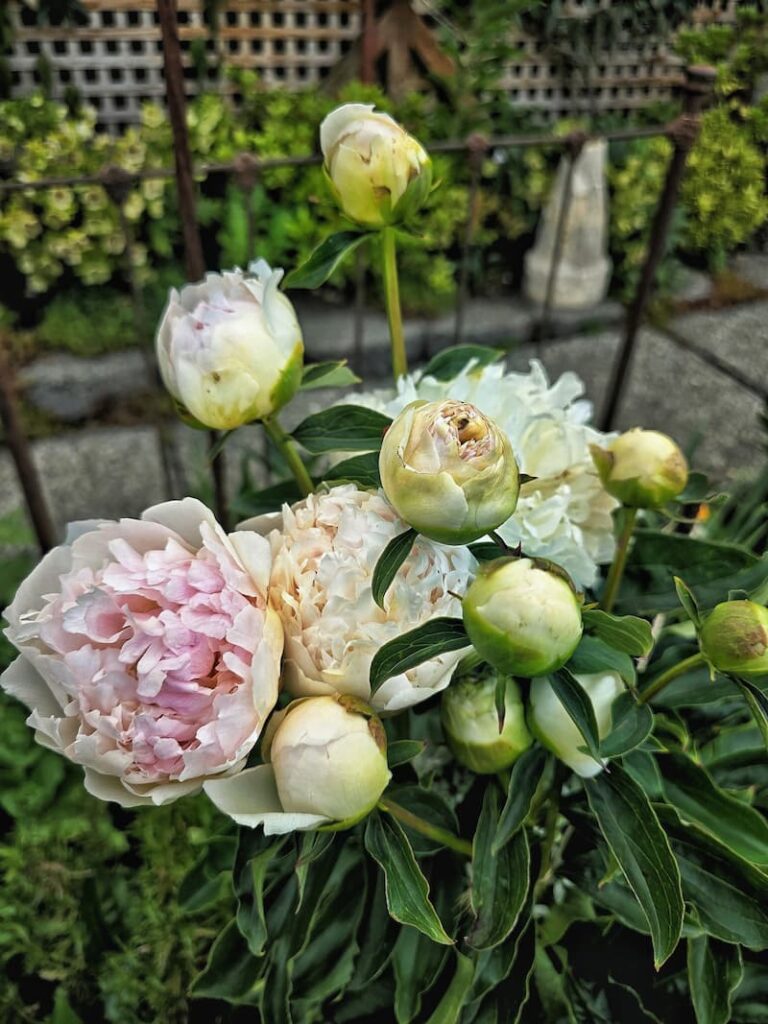
If you cut them when they are already open in the garden, you will get maybe a day or two in the vase. Cut them in the bud stage, and you will get a week or more.
Peonies always transport beautifully at the bud stage. If you’re cutting them to bring somewhere or give as a gift, bud stage is the right call.
Ants are common on peony buds and are harmless. A gentle shake before bringing them inside is all you need.
Celosia
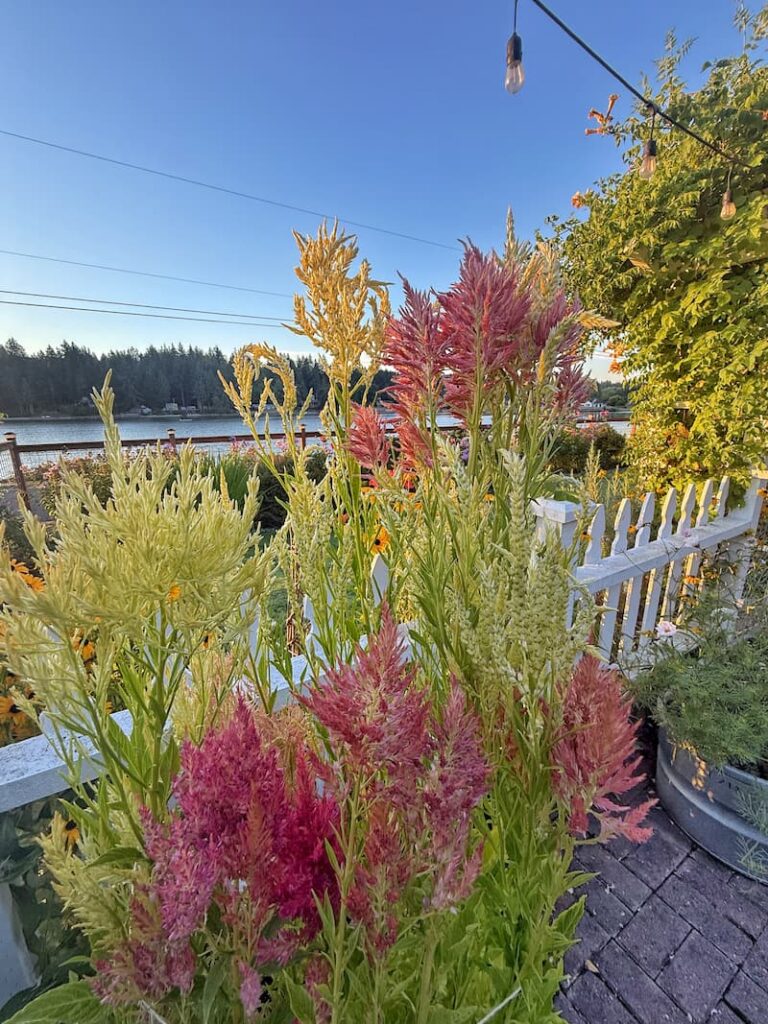
Celosia, both the plumed and crested varieties, should be harvested when the blooms are fully developed but before any fading at the tips. The color at harvest is the color you will keep.
Like strawflowers, celosia dries exceptionally well. Harvest at peak color and hang upside down to dry for arrangements that last for months.
Statice
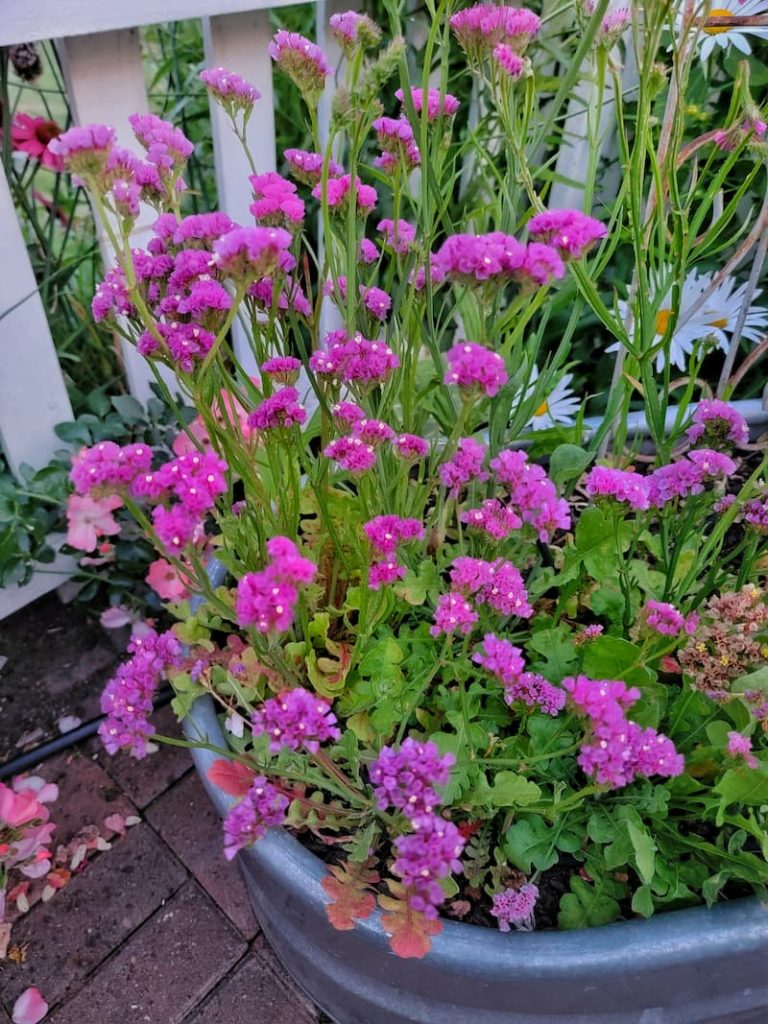
Statice is almost foolproof. Harvest when the small florets are fully open and showing full color. It dries naturally in the vase without any special effort and holds its color for a very long time.
It’s one of the most practical flowers in a cutting garden for exactly that reason. Fresh or dried, it just works.
Common Questions About Harvesting Cut Flowers
When is the Best Time to cut Flowers from the Garden?
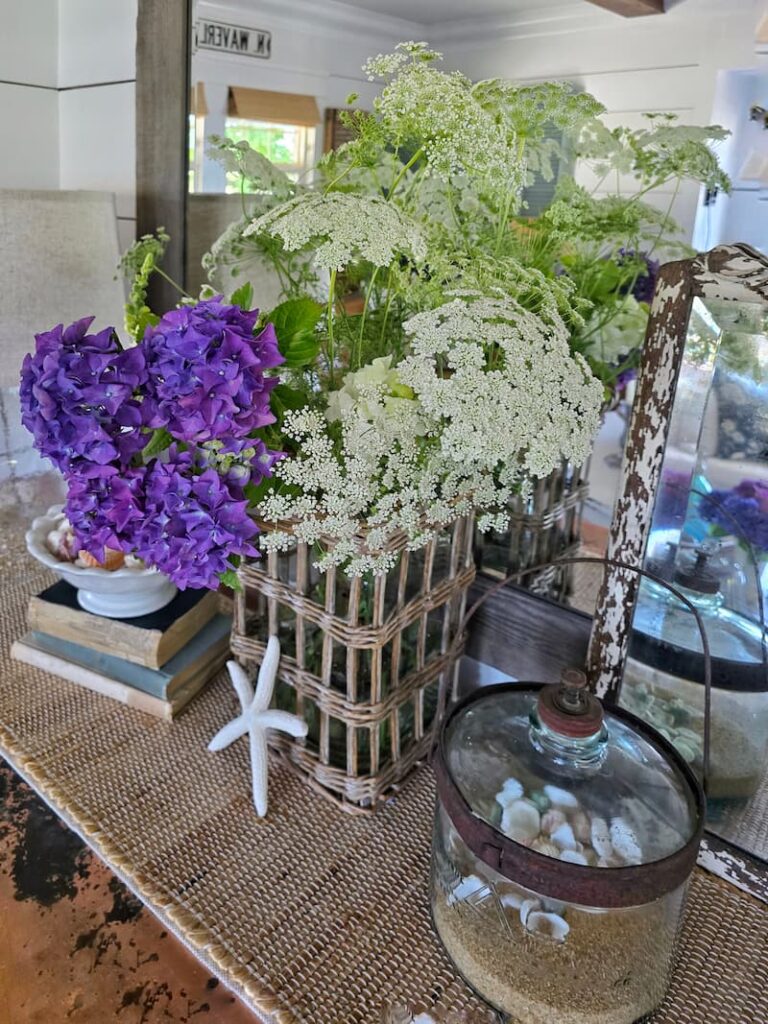
Early morning is the best time to harvest cut flowers. Plants rehydrate overnight, so morning stems are firm, full of water, and under the least amount of heat stress. If morning is not possible, late evening is the next best option. Avoid cutting in the middle of the day.
How Do You Keep Cut Flowers from Wilting After Cutting?
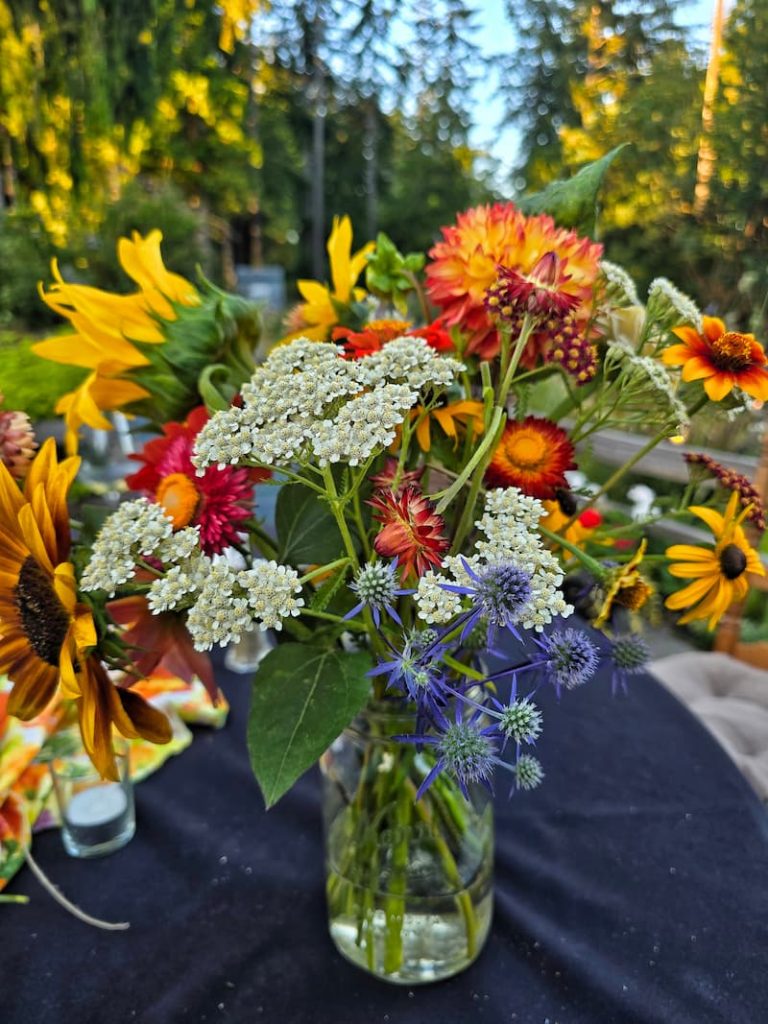
Get stems in cold water immediately after cutting. Strip foliage below the waterline, add flower food to the water, and let the flowers rest in a cool, dark space for several hours before arranging. Re-cutting the stems at the angle right before they go into the vase gives them a fresh surface for water uptake.
Should You Cut Flowers Before or After They Bloom?
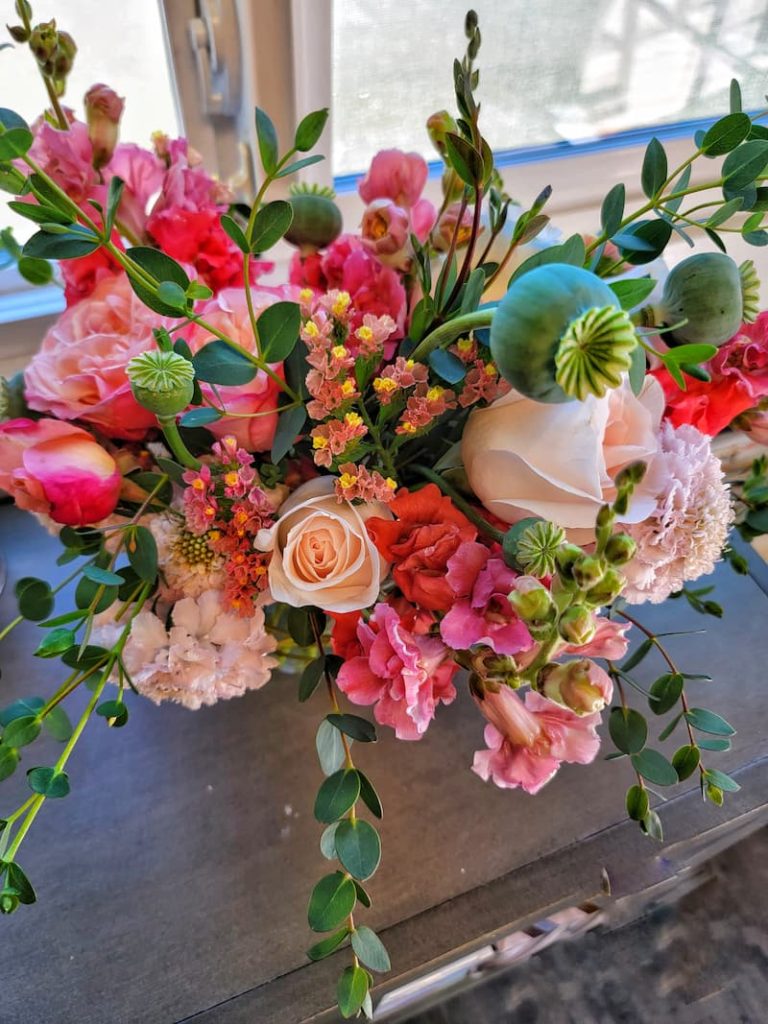
For most flowers, cut just before full bloom, when buds are showing color but not yet fully open. They will finish opening in the vase, and you can get the full bloom period. Dahlias are an exception and should be cut when nearly or fully open, as they do not continue to open much after cutting.
How Do You Harvest Hydrangeas Without Them Wilting?
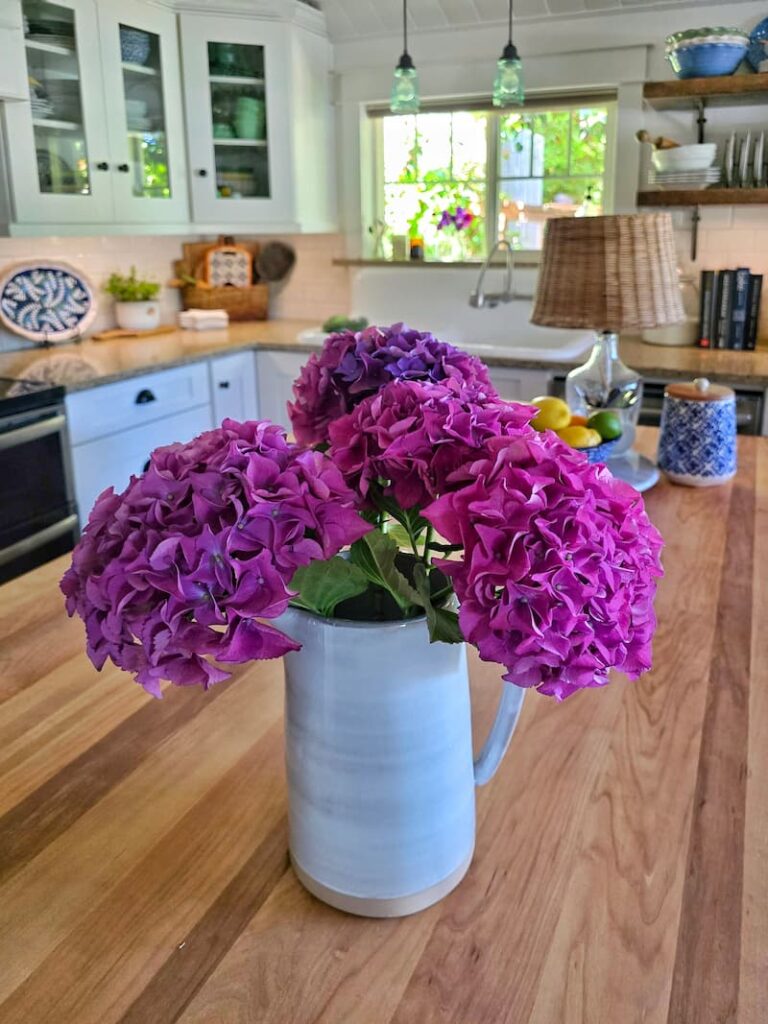
Wait until the blooms have a slightly papery texture before cutting, which signals they have matured enough to hold up. Cut the stem at an angle, then smash the bottom inch or two with a hammer to open up the woody tissue for better water absorption. Condition overnight in cool water before arranging.
Which Flowers Are Cut-and-Come-Again?
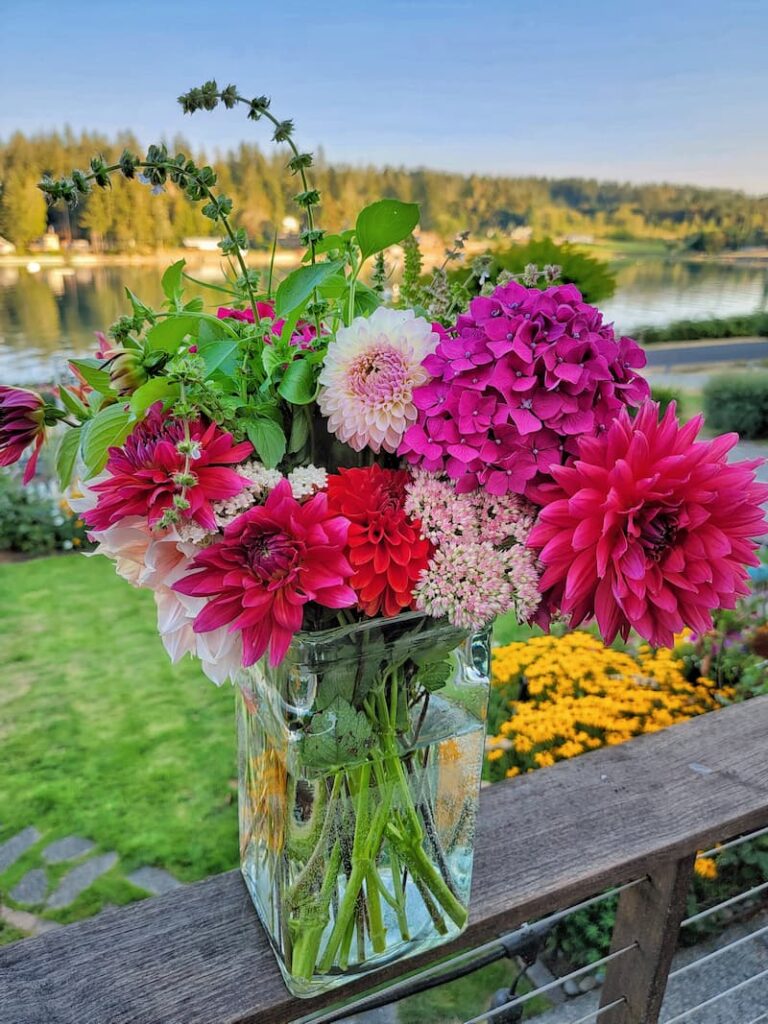
Cut-and-come-again flowers produce new stems continuously when harvested regularly. Zinnias, cosmos, and dahlias are the most reliable cut-and-come-again flowers for a cottage cutting garden. Sweet peas also fall into this category. The more consistently you cut, the more the plant produces.
One More Thing
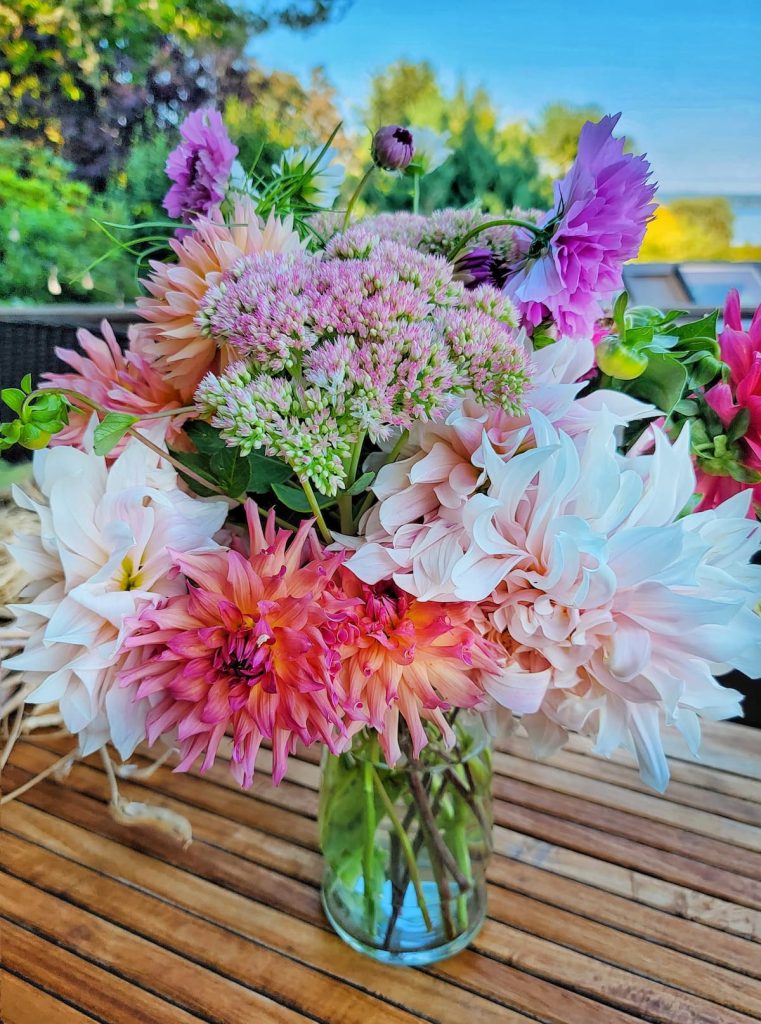
If I had to pick the two habits that made the biggest difference in how my cut flowers perform, it would be harvesting in the early morning and getting stems into cold water the moment they are cut.
Everything else, the tools, the conditioning, the flower food, it all builds on that foundation. Start there, and the rest falls into place.
If you want to keep those flowers going once they are in the vase, I have a full guide to extending vase life that pairs well with this post.
Happy Harvesting!
Until next time,

MORE POSTS
For You To Enjoy
Follow Me for More Inspiration
About Kim Robinson
Kim is the creator of Shiplap and Shells, where she shares life in her 1920s beach cottage and Pacific Northwest garden. Along with her husband and two pups, Jax and Ollie, she’s spent the past 13 years turning their little seaside home into a cozy space filled with vintage charm, blooming gardens, and everyday moments worth savoring.