
The Best Cut-and-Come-Again Flowers for a Cottage Cutting Garden
There is a version of a cutting garden where you are constantly replanting, waiting, and calculating what will be ready and when. I have been in that version. It is a lot of work.
Then there’s the other version. The one where you walk out to the raised beds in the morning, fill a bucket, come inside, and know with complete confidence that the garden will have just as much to offer next week as it does today… Maybe more.
That second version is built almost entirely on cut-and-come-again flowers.
These are the flowers that respond to cutting by producing more. You harvest a stem and a plant. Rather than winding down, it branches out and sends up new growth. Cut it again. It comes back again. This cycle continues from early summer until frost stops it.
I’ve been growing cut flowers at our cottage on Puget Sound for years, and these are the varieties I grow in the raised beds every single season. Not because they look good on a list, but because they’re reliable in my vases from July through October, and I always know there will be more.
As an Amazon affiliate, I earn from qualifying purchases at no extra cost to you. My blog also includes other affiliate links for your convenience. Click here to read my privacy policy.
What Does Cut-and-Come-Again Actually Mean?
When you cut a stem just above a leaf node, you remove the apical bud, the dominant growing tip. The plant responds by activating the lateral buds below the cut, which develop into new branching stems. Each of those stems eventually produces a flower. Cut those, and the process repeats.
The practical result is a plant that produces far more flowers over the course of a season than it ever would if left alone. A zinnia that is never cut might give you one or two blooms before it sets seed and slows down. A zinnia that is cut regularly every few days can produce dozens of stems from a single plant over the course of a summer.
The keyword is regularly. Cutting once and waiting does not unlock the full potential of these plants. Consistent harvesting, even when you don’t need the flowers, is what keeps them producing at their peak. If stems are left too long and the plant goes to seed, it signals that the job is done. You want to stay ahead of that.
A Quick note about my garden
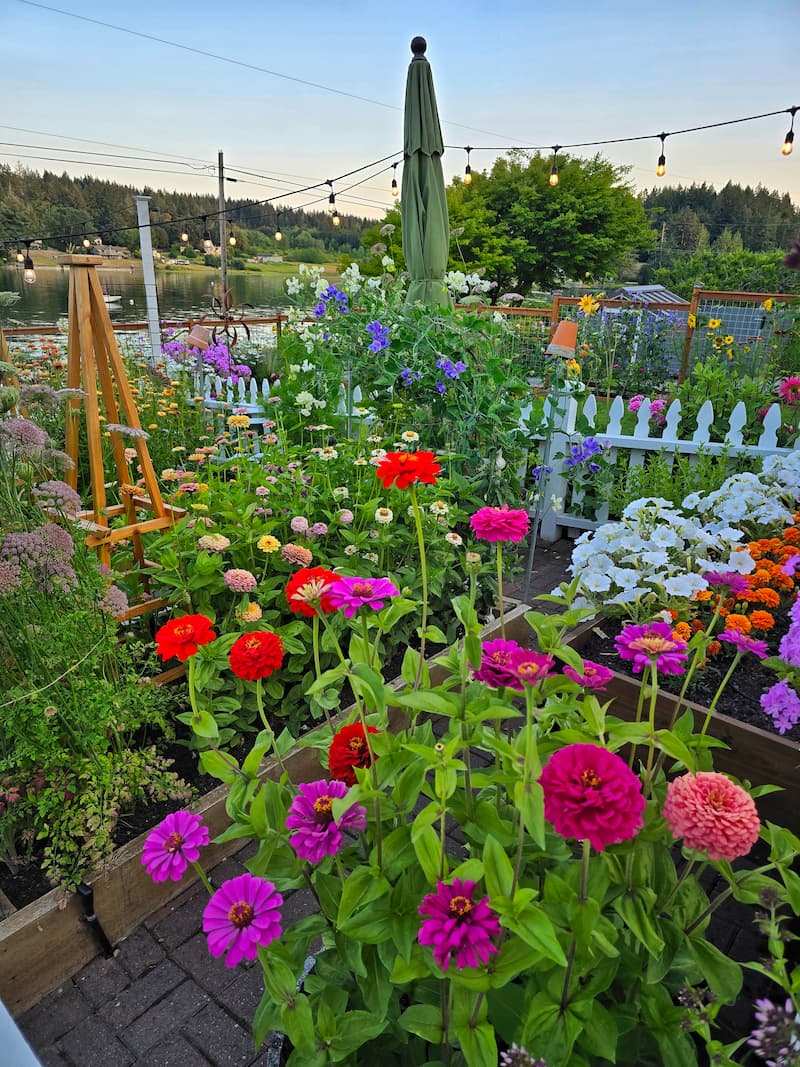
Most of the flowers I share here are grown from seed in our greenhouse and planted in raised beds and containers throughout our cottage garden.
The One Rule That Makes Everything Else Work
Cut more than you think you should, and cut more often than feels necessary.
This is the single habit that separates a cutting garden that trails off in August from one that is still going strong in October. Most gardeners are too gentle with their plants. They cut one or two stems, leave the rest, and wonder why production slows.
That’s basically what happens when you think the flowers are too pretty to cut and leave them.
When I’m in a heavy production period, you’ll find me in the cut flower garden at least every two to three days. I cut long stems and into the plant further than feels comfortable.
Some days I cut things I’m not going to use so that I can keep the plant branching. The flowers I don’t really need go into a bucket for neighbors, the table on the deck, or the compost ( that usually never happens due to the many flower takers I know). The point is to keep the plant working.
It takes a season or two to trust this. Once you see the results, it’s surprisingly easy.
The Hero Flowers: Big, Bold, and Worth Every Inch of Space
These are the flowers that anchor a vase arrangement. They are the first thing you see, the reason the arrangement works, and the ones that make people ask what you’re growing.
Zinnias
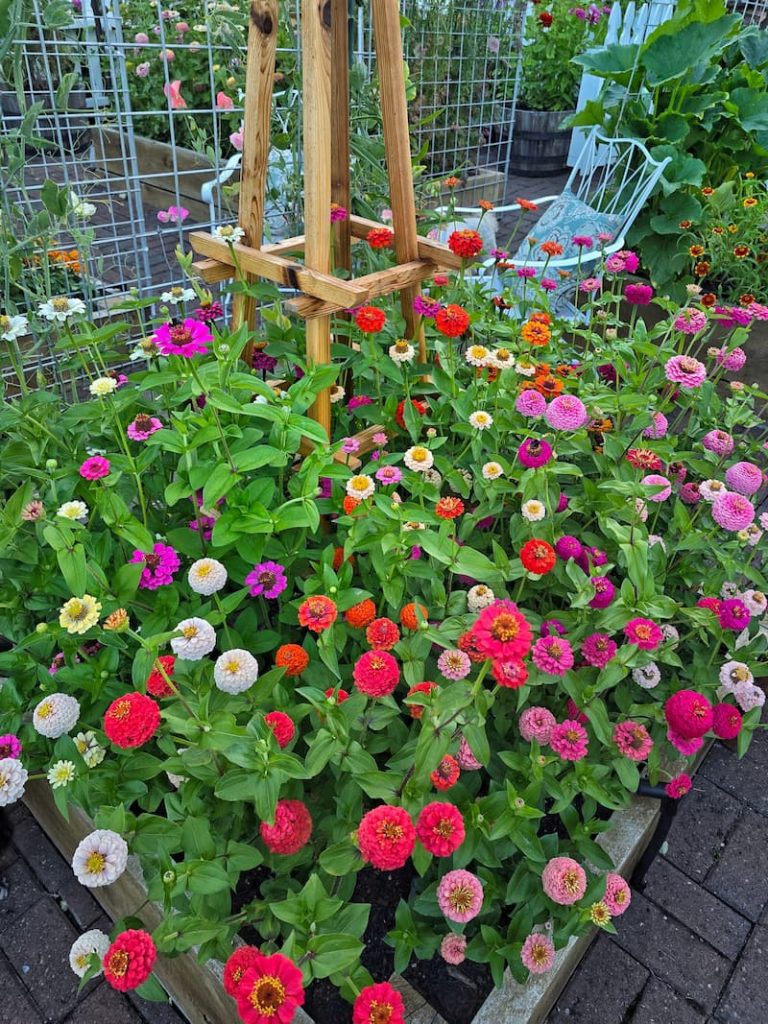
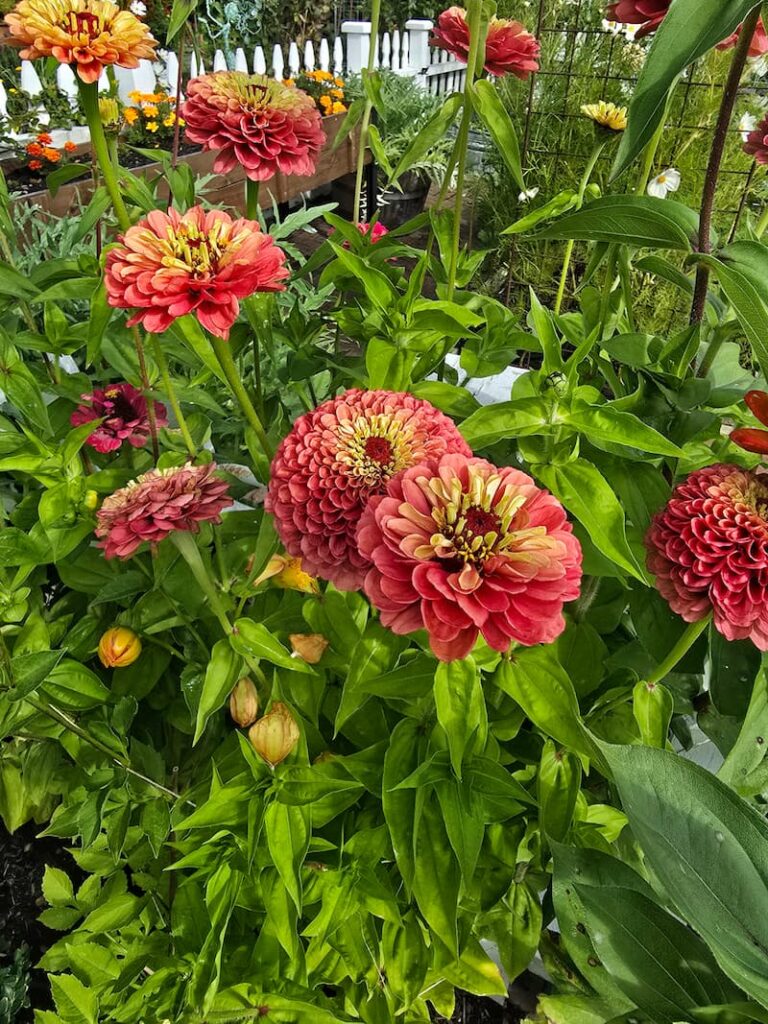
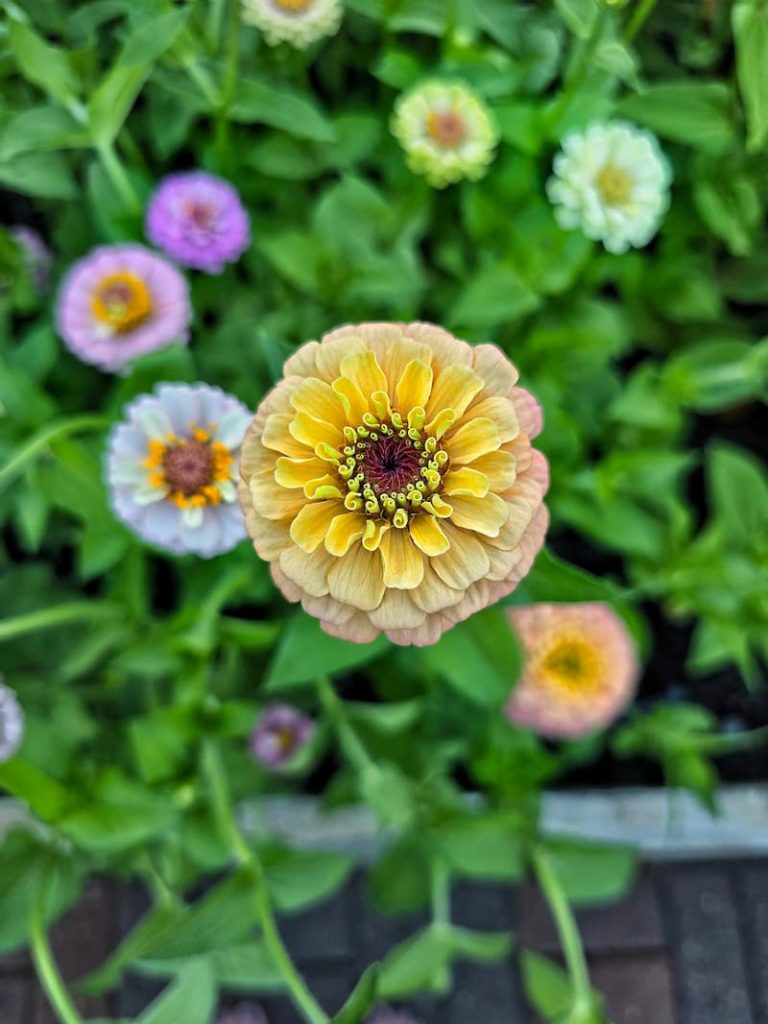
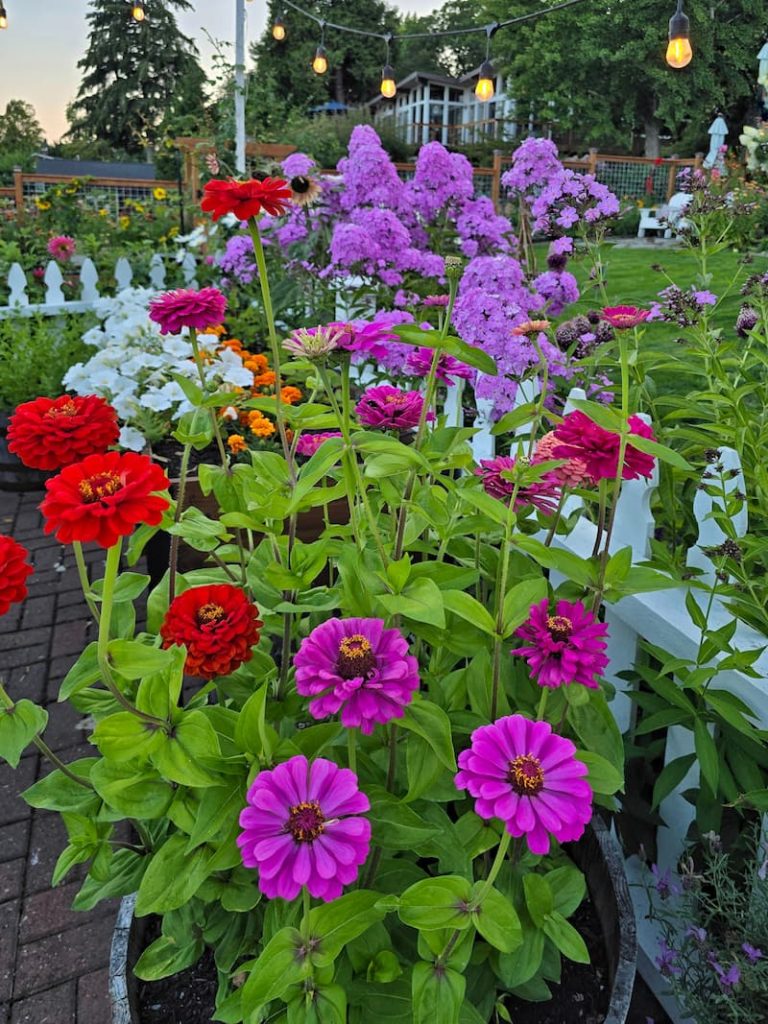
If I could only grow one cut-and-come-again flower, it would be zinnias. They are the most reliable producers in my raised beds, the most forgiving of imperfect conditions, and the most generous with their blooms. From mid-summer until the first hard frost, there is rarely a week without zinnias in the house.
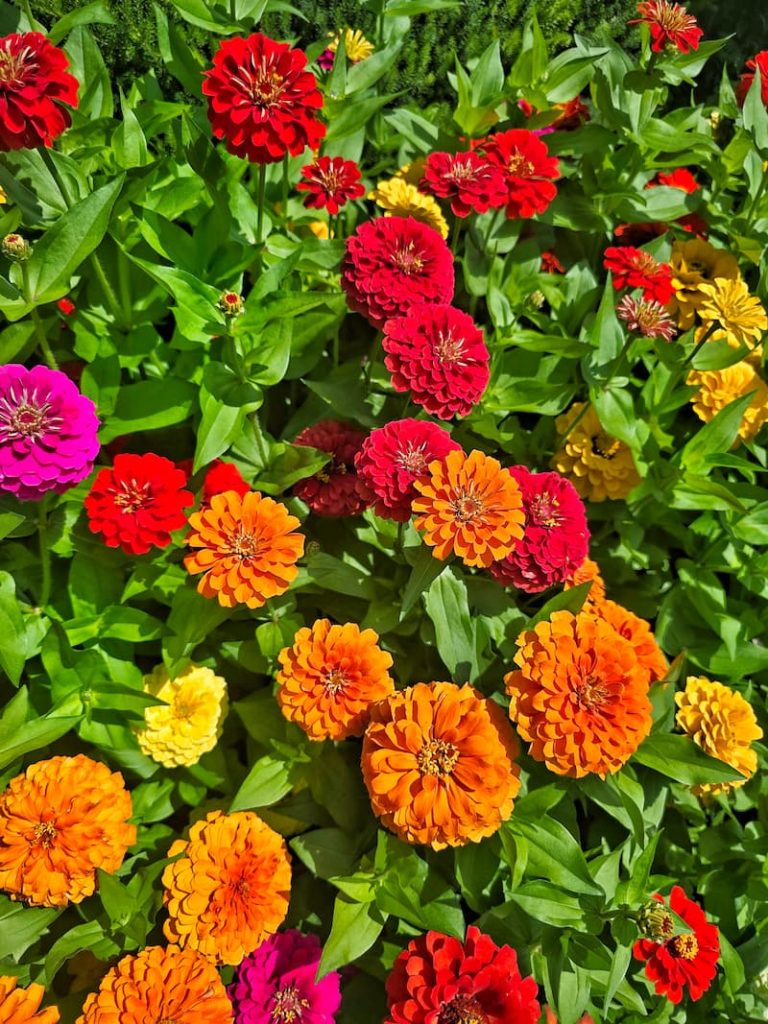
The more you cut, the more you get. A plant that is cut every few days will become a branching, multi-stemmed producer. A plant left alone will give you a few large blooms and slow down.
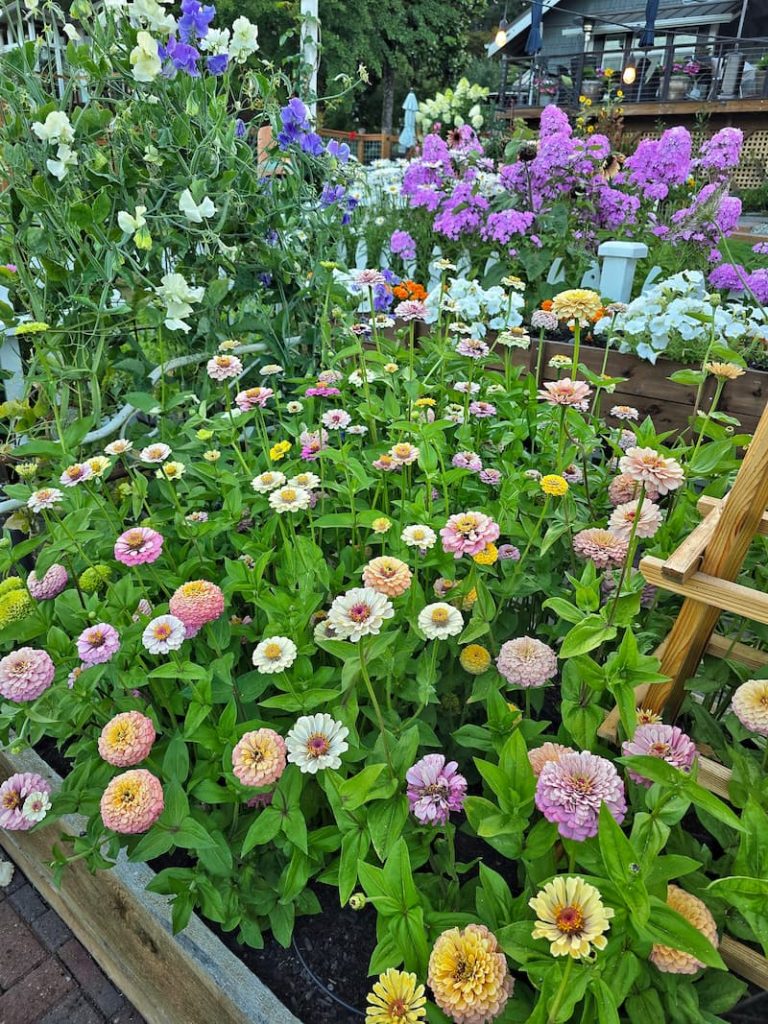
Cut when the bloom is just opening, and the petals are showing full color. Use the wiggle test: hold the stem near the base and give it a gentle shake. If it flops, it’s not ready. If it holds firm, cut it. Always cut just above the leaf node to encourage branching.
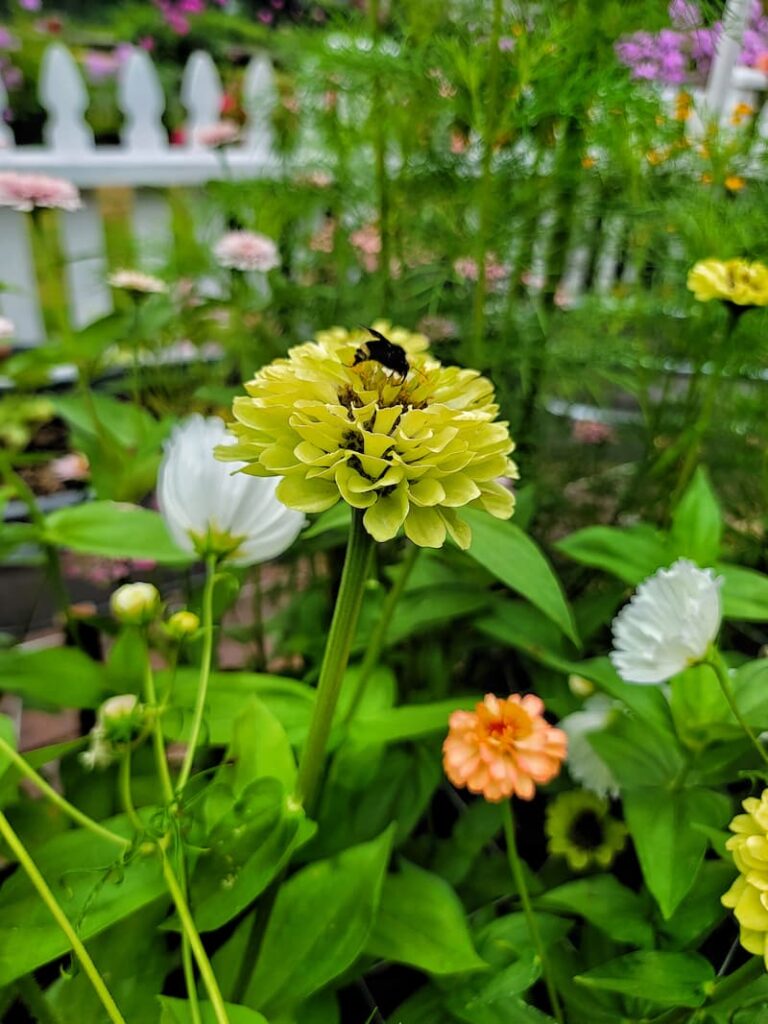
For a cottage cutting garden, look for taller varieties with long stems. Benary’s Giant is a reliable classic. Oklahoma series produces elegant, slightly smaller blooms on long stems. The Queen series, one of my favorites, is beautiful for a more antique color palette.
Dahlias
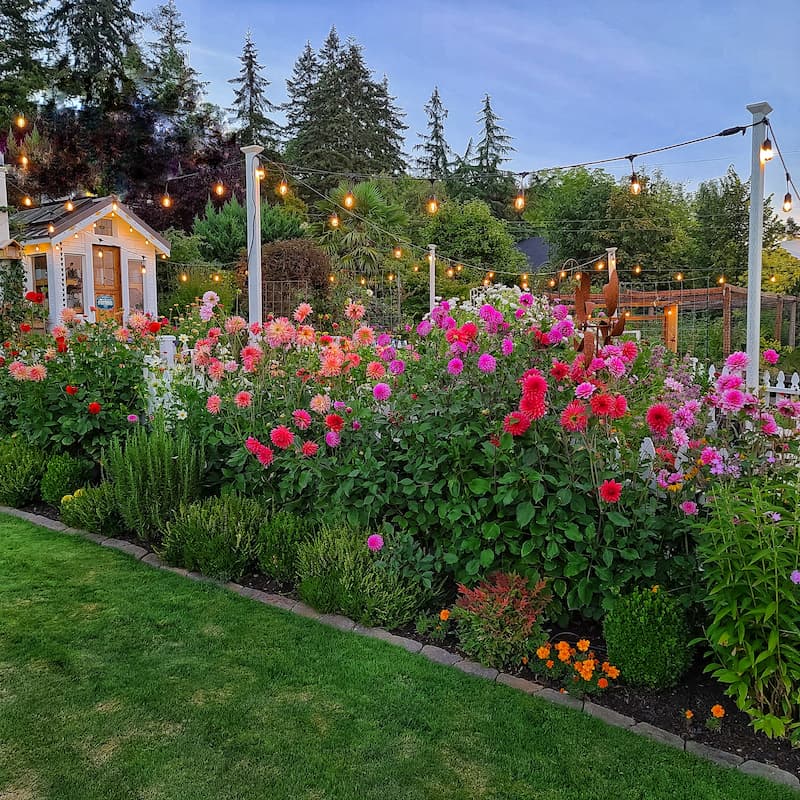
Dahlias require more from you than zinnias do. They need to be dug and stored in colder climates. They take longer to get going in the spring and are not as forgiving of neglect. They’re also, without question, worth it.
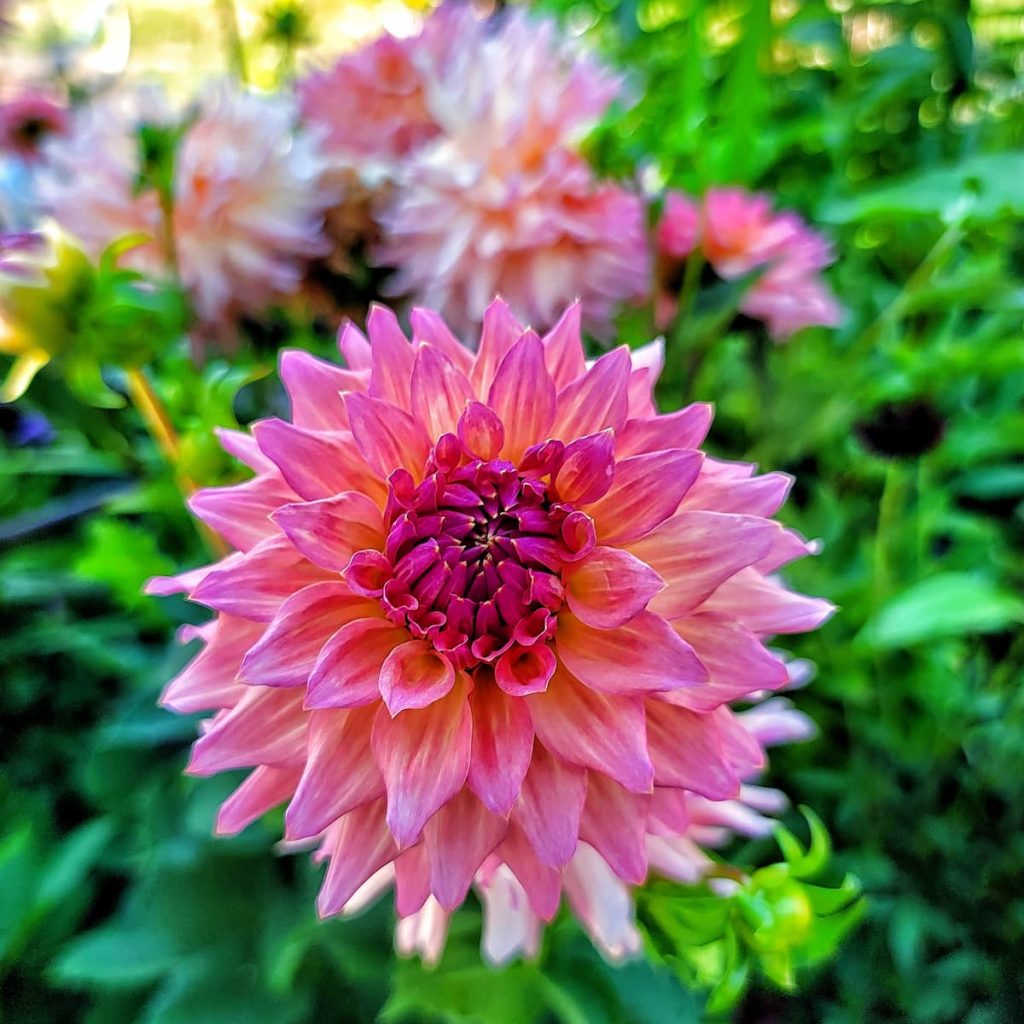
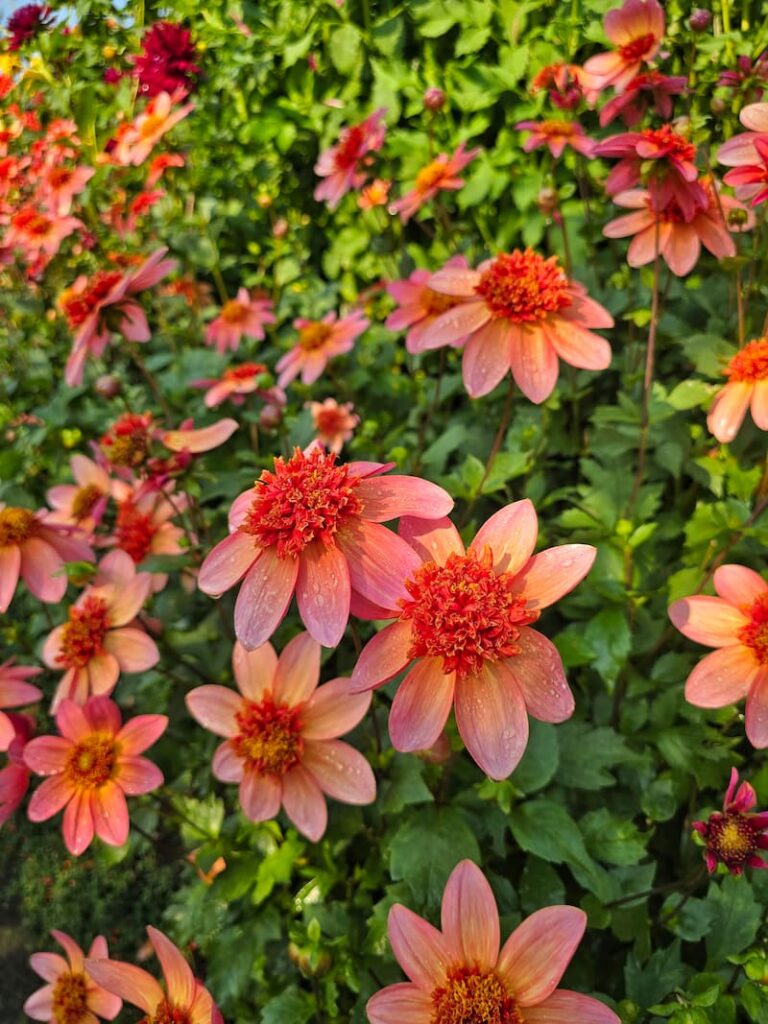
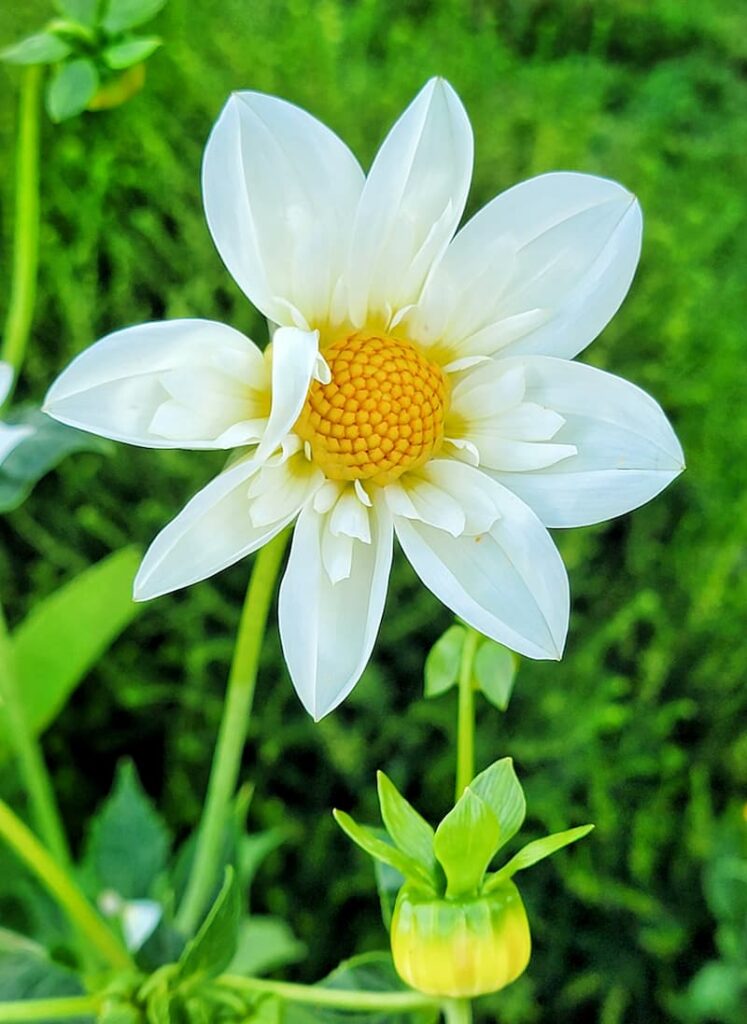
Once dahlias start flowering, they are among the most productive cut-and-come-again plants in the garden. Each stem you cut sends the plant back into production. I have dahlias in my vases from late summer right through the first frost, which in the Pacific Northwest can stretch well into October.
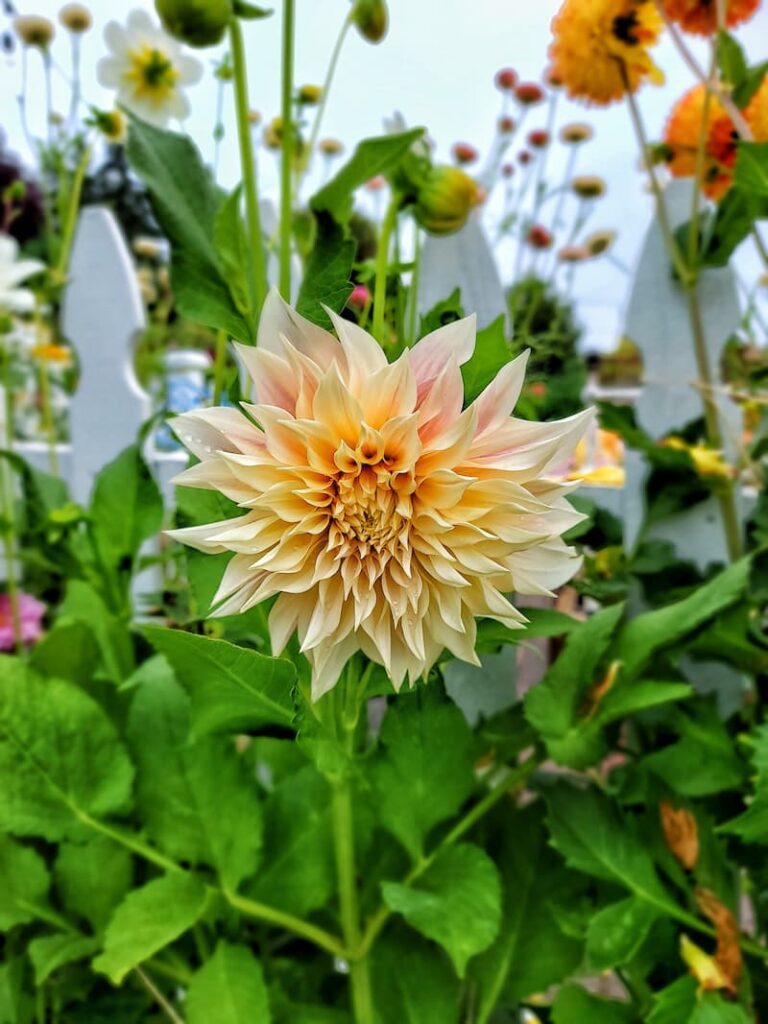
Unlike zinnias and cosmos, dahlias do not continue to open much after cutting them. Harvest when the bloom is fully open or nearly so. Cut in the early morning, strip the foliage, and put the stems immediately in cold water. Dahlia leaves break down quickly in the water and will shorten vase life if left on.
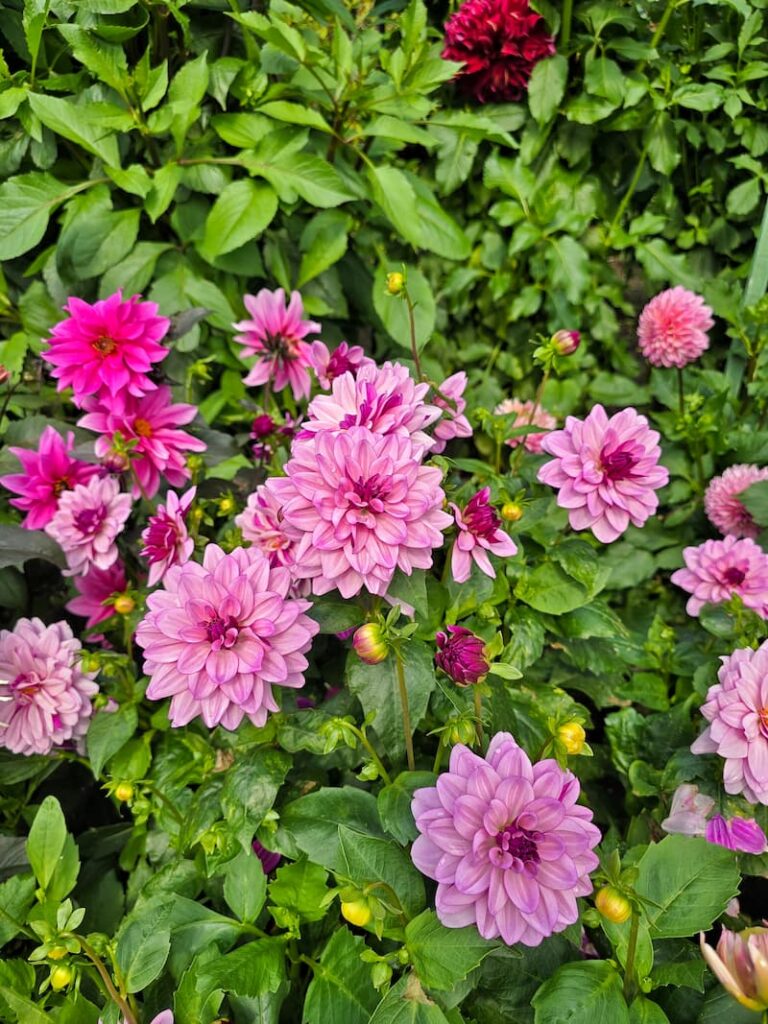
Pinch dahlias early, when the plants are about 12 inches tall, to encourage a bushy, multi-stemmed structure from the start. A pinched dahlia produces far more cutting stems than one left to grow straight up.
Sunflowers
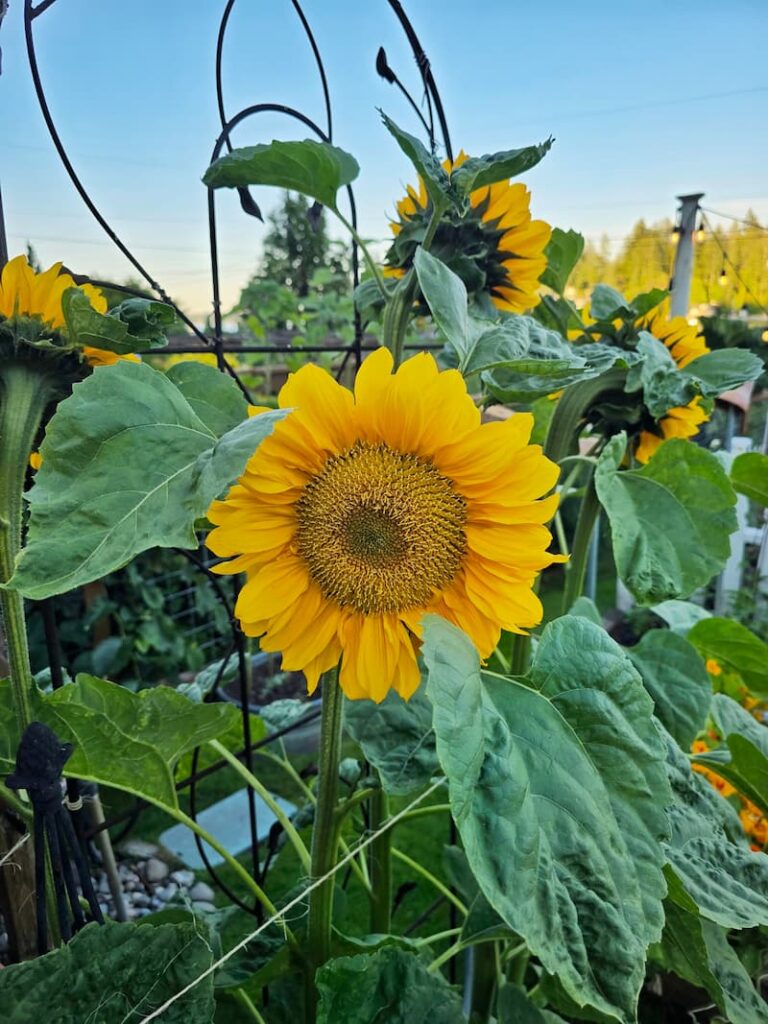
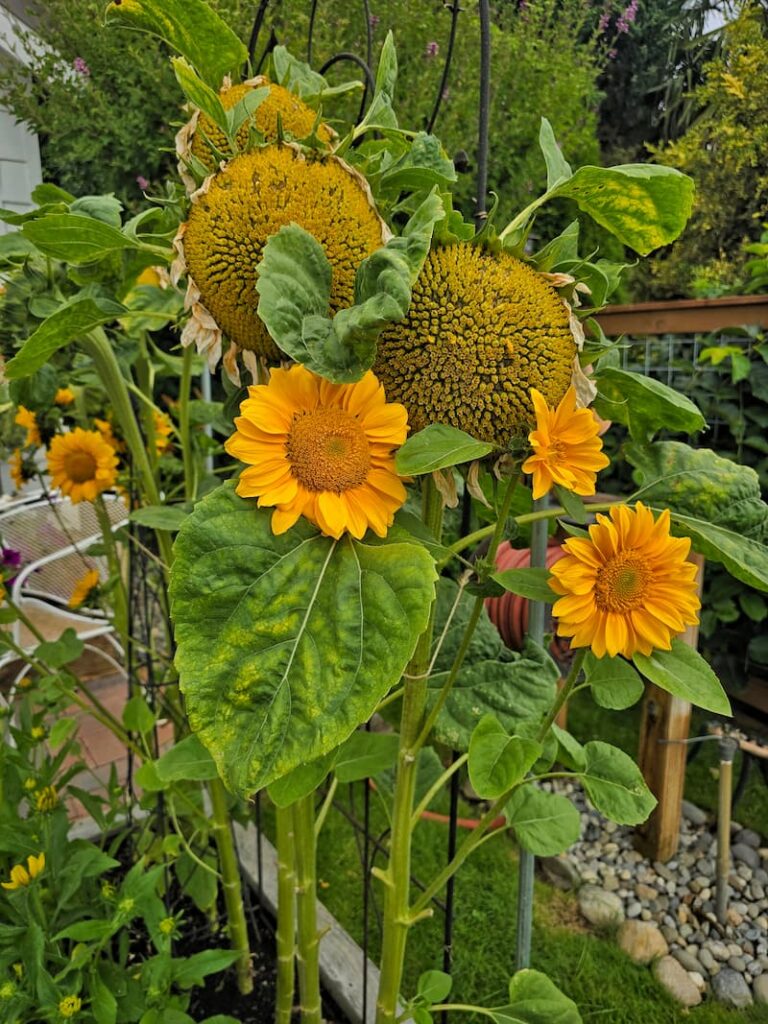
Most sunflower varieties are single-stem, meaning one flower per plant, which makes them less efficient for a cutting garden than true cut-and-come-again varieties. The exception is branching sunflower varieties, which produce a central bloom followed by multiple side shoots that can be harvested throughout the season.
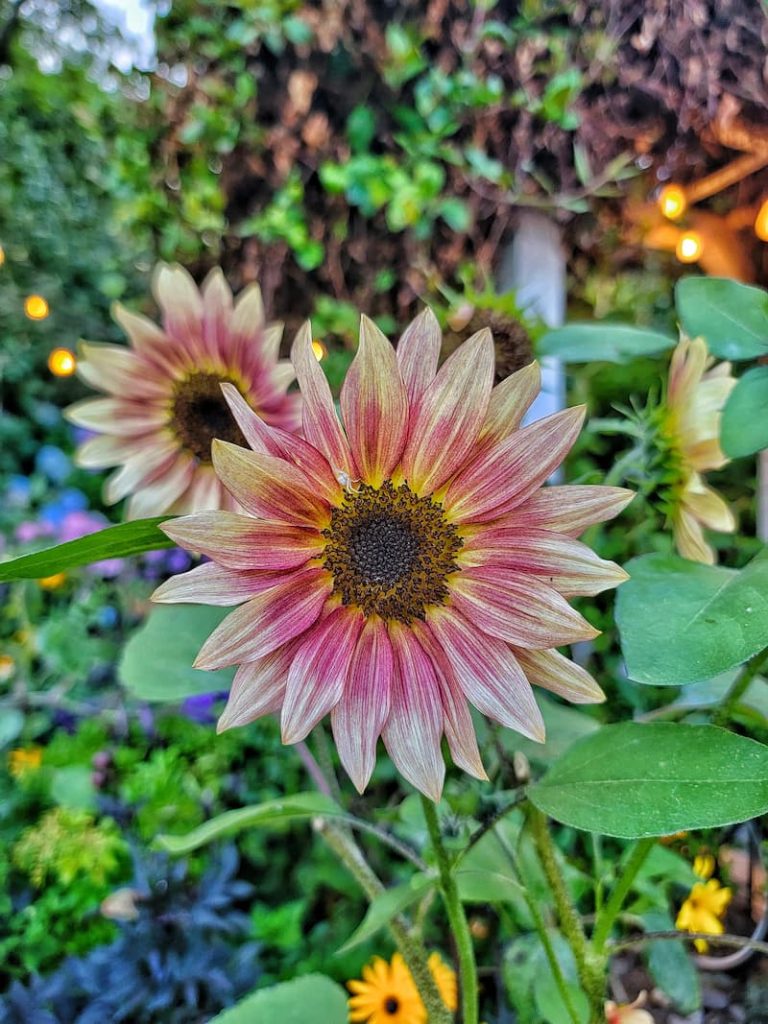
If cutting is the goal, specifically look for branching varieties. Lemon Queen is a reliable one. The ProCut series (my favorite) offers both single-stem and branching options. Even with branching varieties, sunflowers are not as prolific as zinnias or cosmos, but because of the scale of the blooms, they’ll always be in my cottage cutting garden.
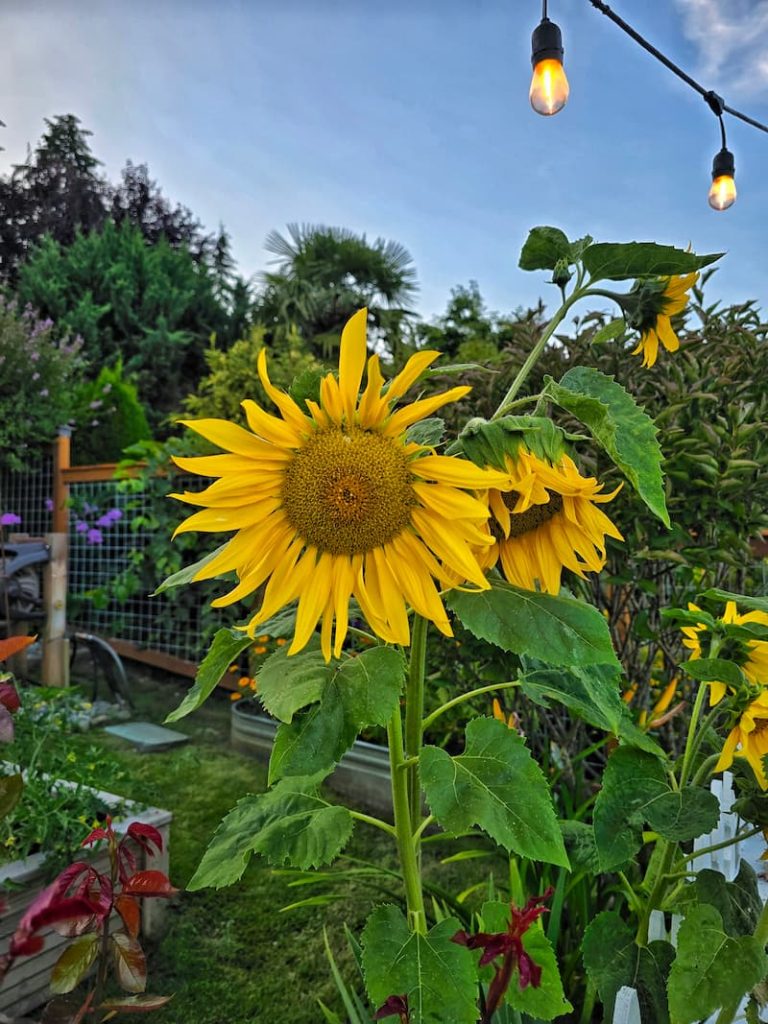
Harvest when the petals are just beginning to open, and the center disk is still tight. Sunflowers drink a lot of water. Check the vase daily.
Let’s Plan Your Dream Garden With Our
Gardening Planner
Unlock Your Garden’s Potential.
Our 35-page Ultimate Garden Planner is designed to help you organize, track, and flourish in your gardening endeavors.
Get yours for $4.99
The Supporting Cast: Stems That Make an Arrangement Sing
Every great vase arrangement has flowers that are not necessarily the star, but without them, the whole thing falls apart. These are the stems that add movement, softness, contrast, and the sense that the arrangement was gathered rather than constructed.
Cosmos
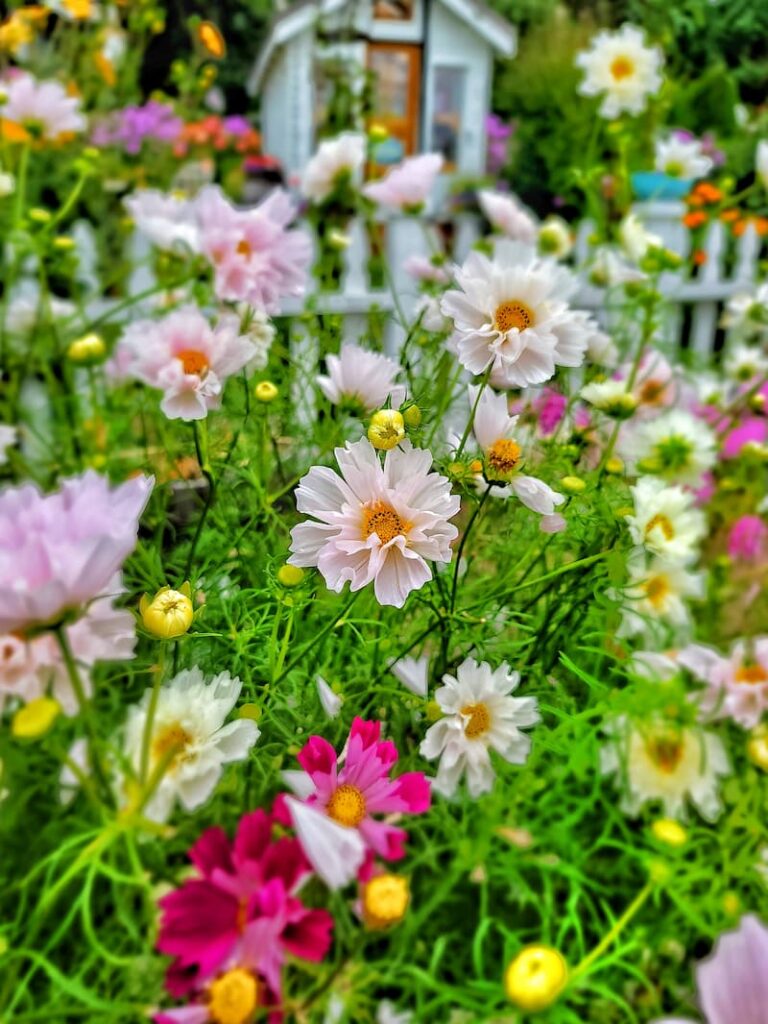
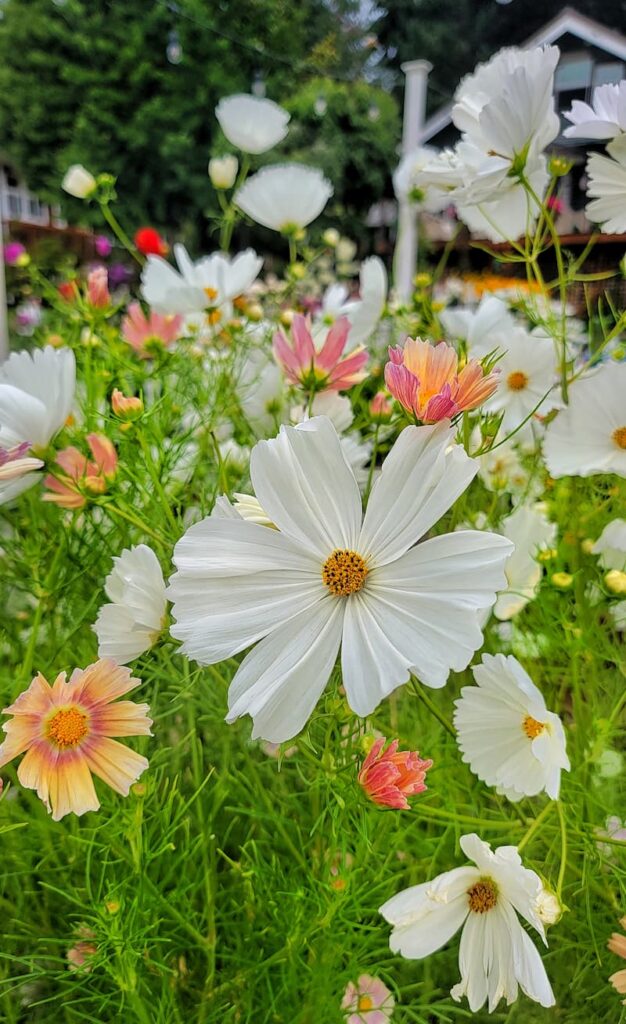
Cosmos germinate easily, grow quickly, ask for very little, and produce an almost endless supply of delicate, airy blooms from midsummer onward. They are also genuinely one of my favorites.
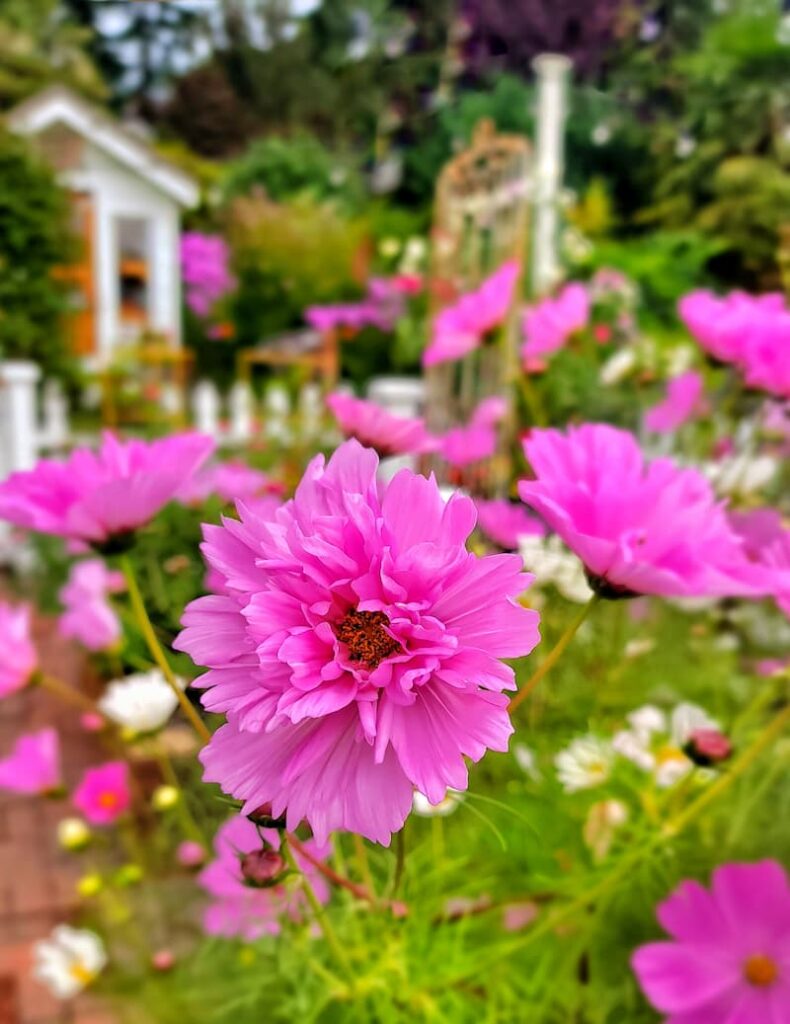
Cosmos are perfect cut-and-come-again producers. The more you cut, the more the plant branches and blooms. Let them go to seed, and they’ll slow down fast, so stay on top of harvesting even when you have more than you need.
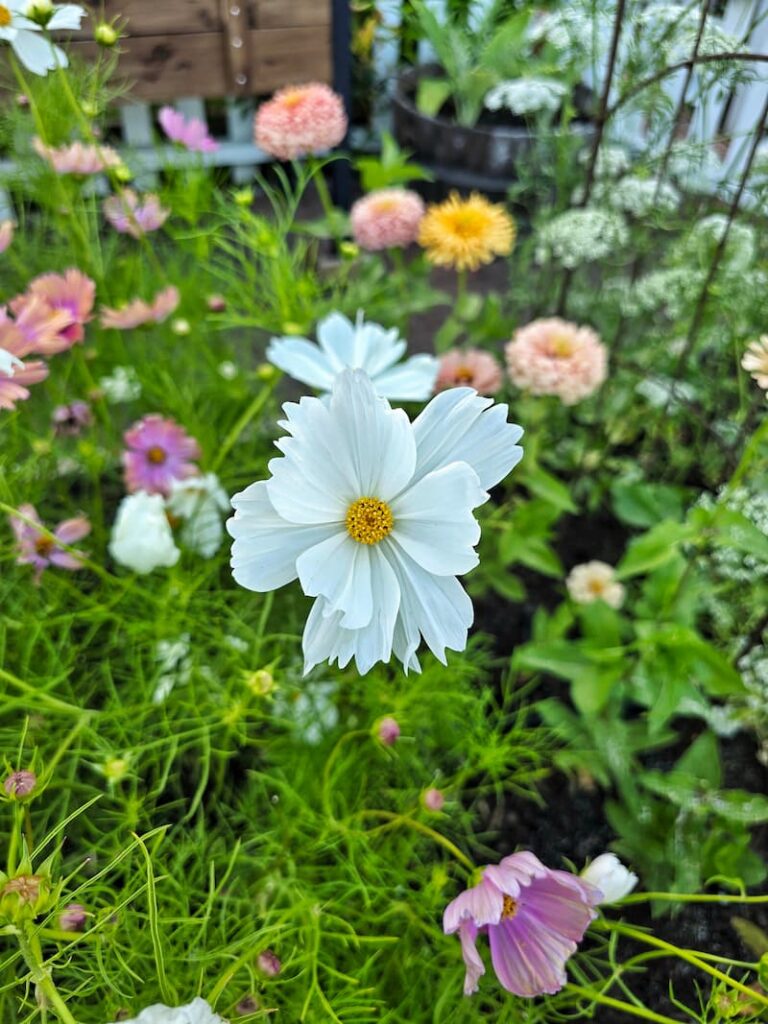
Harvest when the buds are showing color but not yet fully open. The stems are slender and need to be handled gently. Get them into water quickly. They condition well and open beautifully over the next day or two.
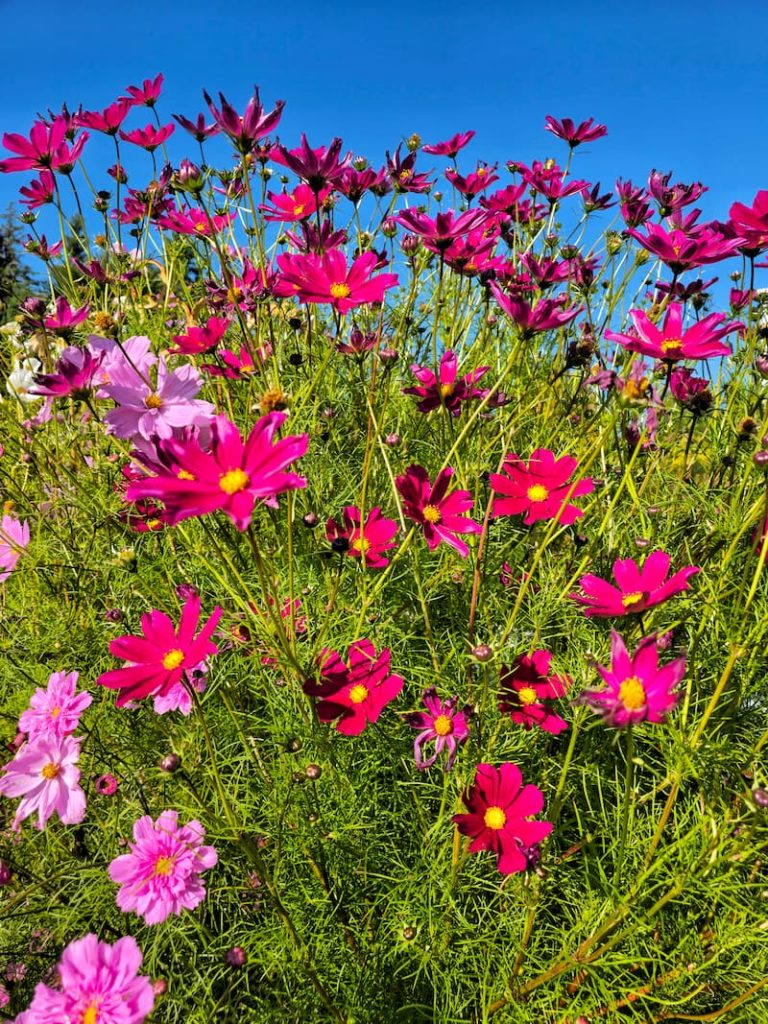
Cosmos add movement and lightness to an arrangement in a way that heavier blooms cannot. Their feathery stems make a vase of flowers look like they were gathered from the garden, which is exactly the look I’m always after.
Snapdragons
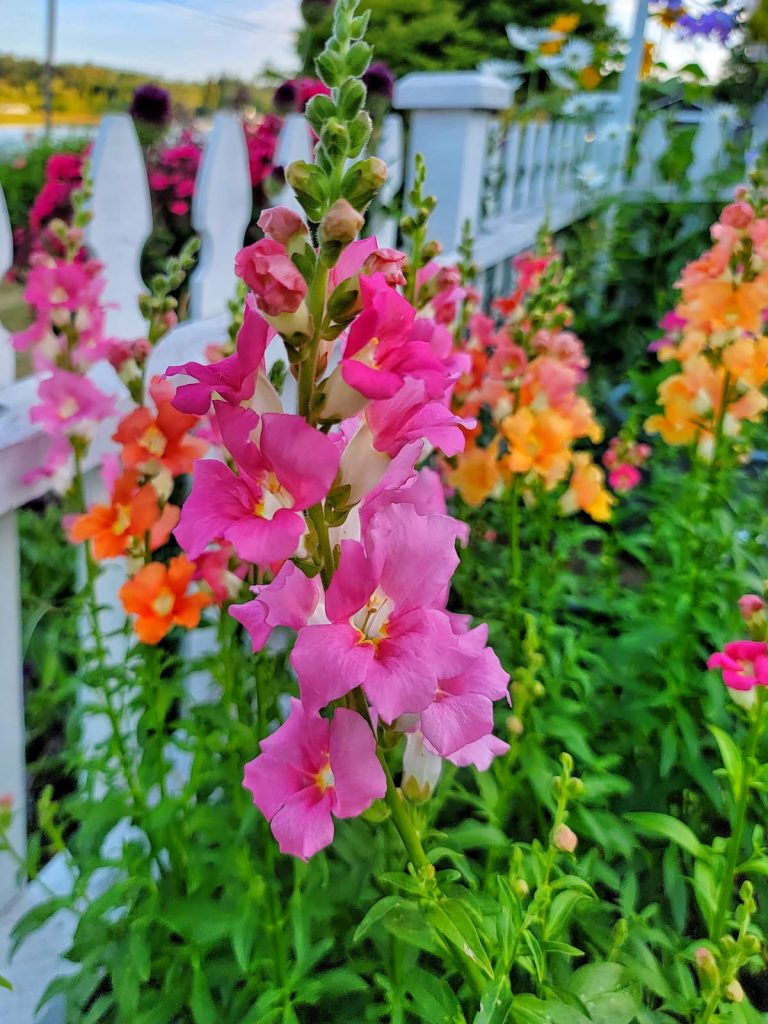
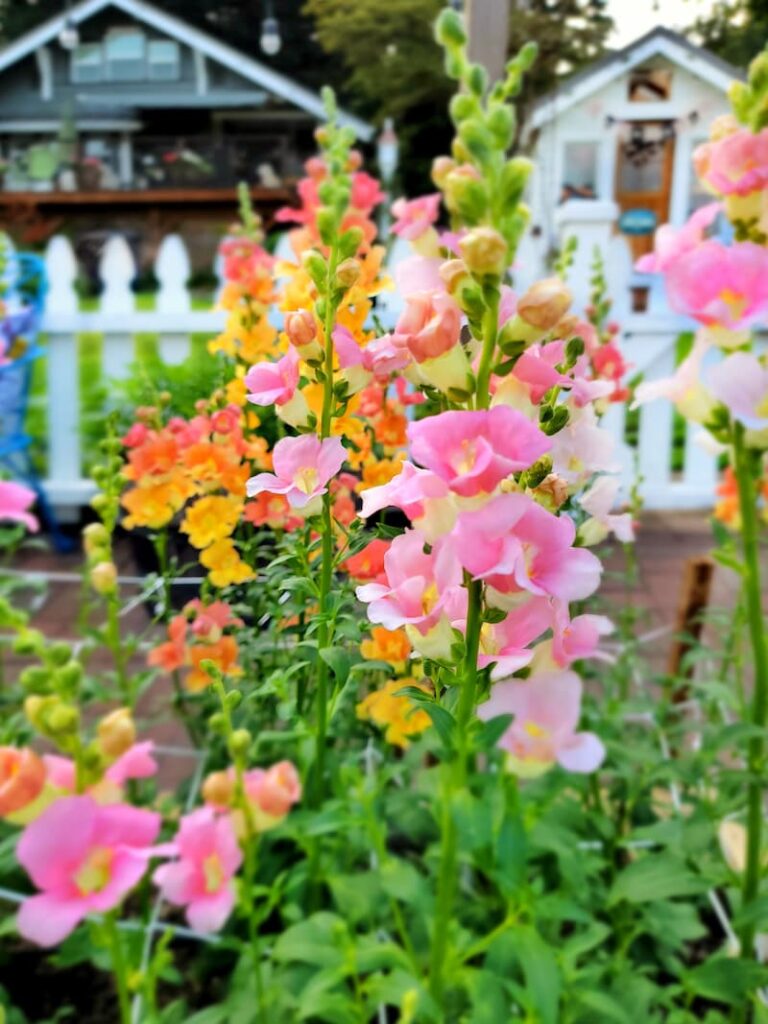
Snapdragons are a cut-and-come-again flower that always have a place in the garden. It’s that vertical line. A vase of all-around flowers, no matter how beautiful they are individually, reads as flat. Snapdragons solve that.
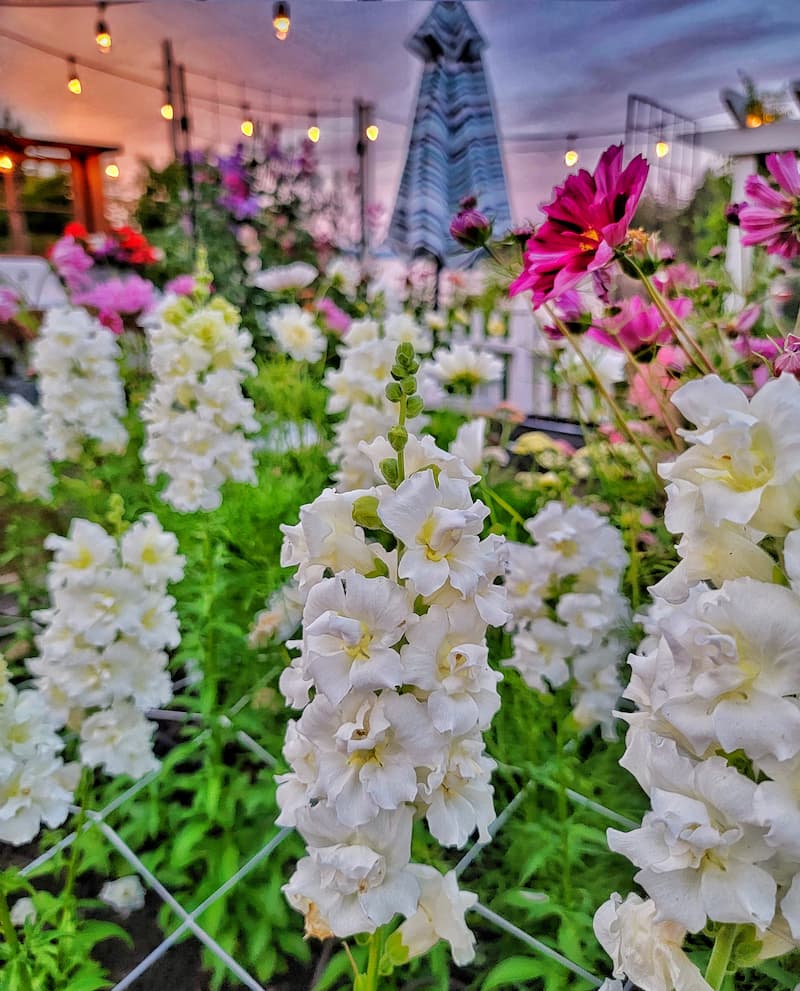
They are also cool-season performers, which makes them valuable at the beginning and end of a cutting season when zinnias and dahlias are not yet producing or have been finished by frost. In the Pacific Northwest, snapdragons can have a remarkably long season.
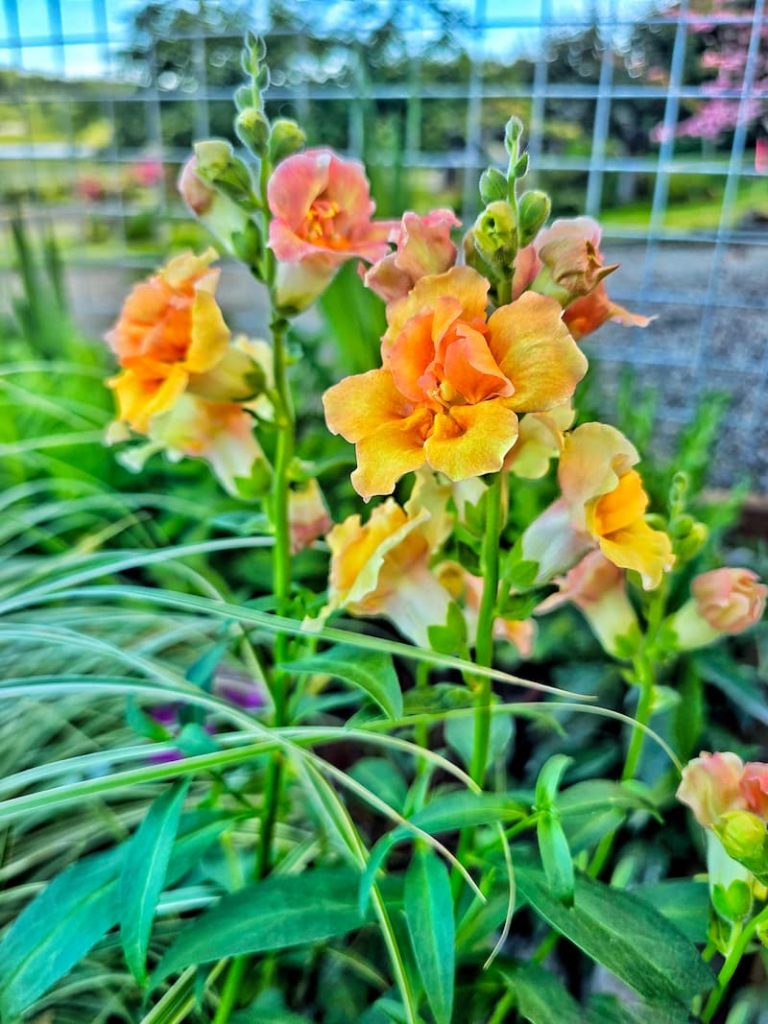
Cut when the lowest two or three florets on the spike are open. The rest will open progressively in the vase. Cut regularly, and the plant will produce new side shoots.
Sweet Peas
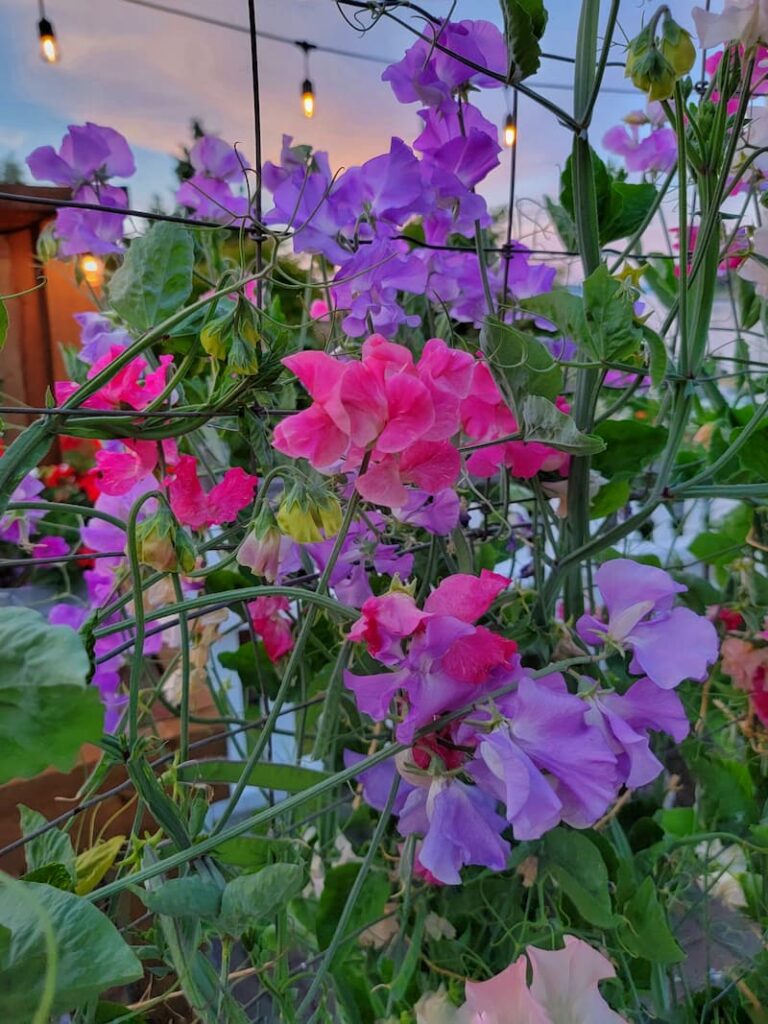
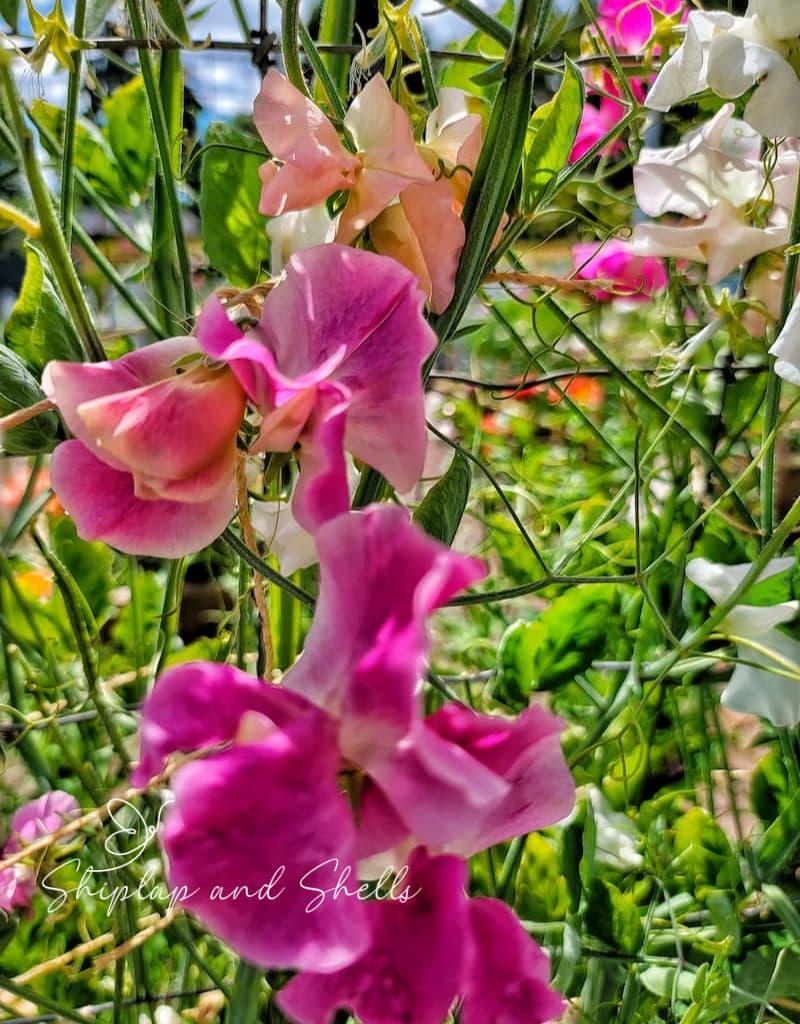
Sweet peas have a shorter vase life than almost anything else I grow. They last maybe three to five days in the best conditions. I grow them anyway, every single year, because nothing else smells like sweet peas and nothing else gives an arrangement that particular kind of cottage softness.
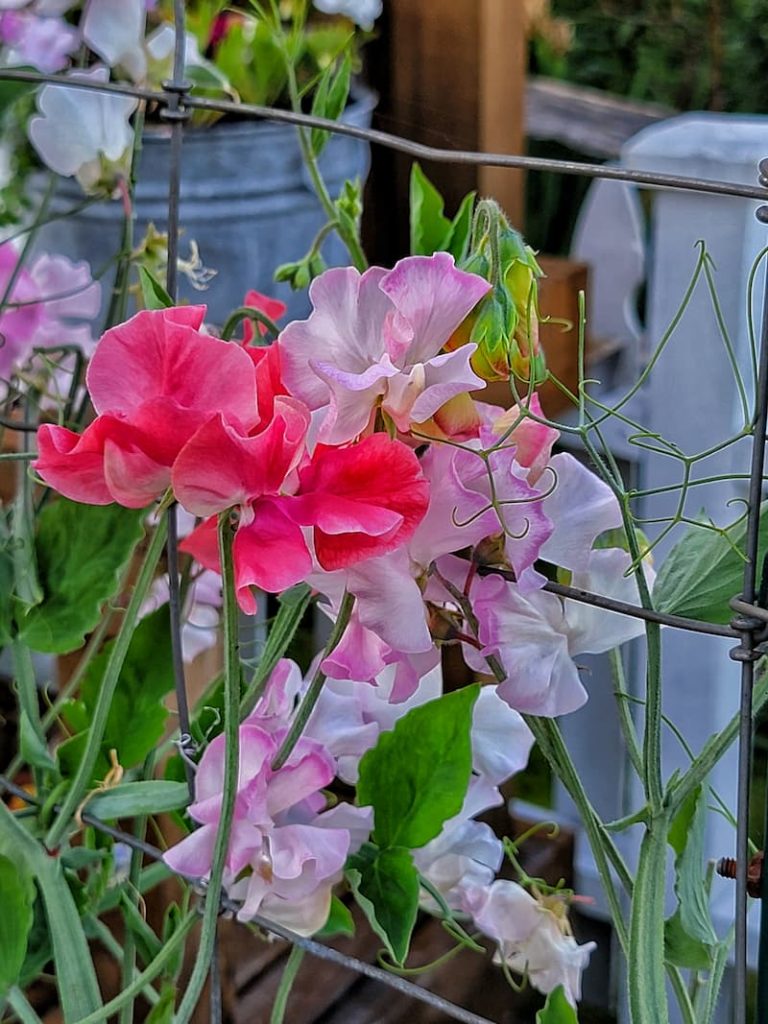
They are reliably cut-and-come-again, but with a catch. They must be cut constantly. Once a sweet pea sets seed, the plant considers its job finished and winds down quickly. During peak season, I check them every day or two and cut everything ready, whether I need it or not.
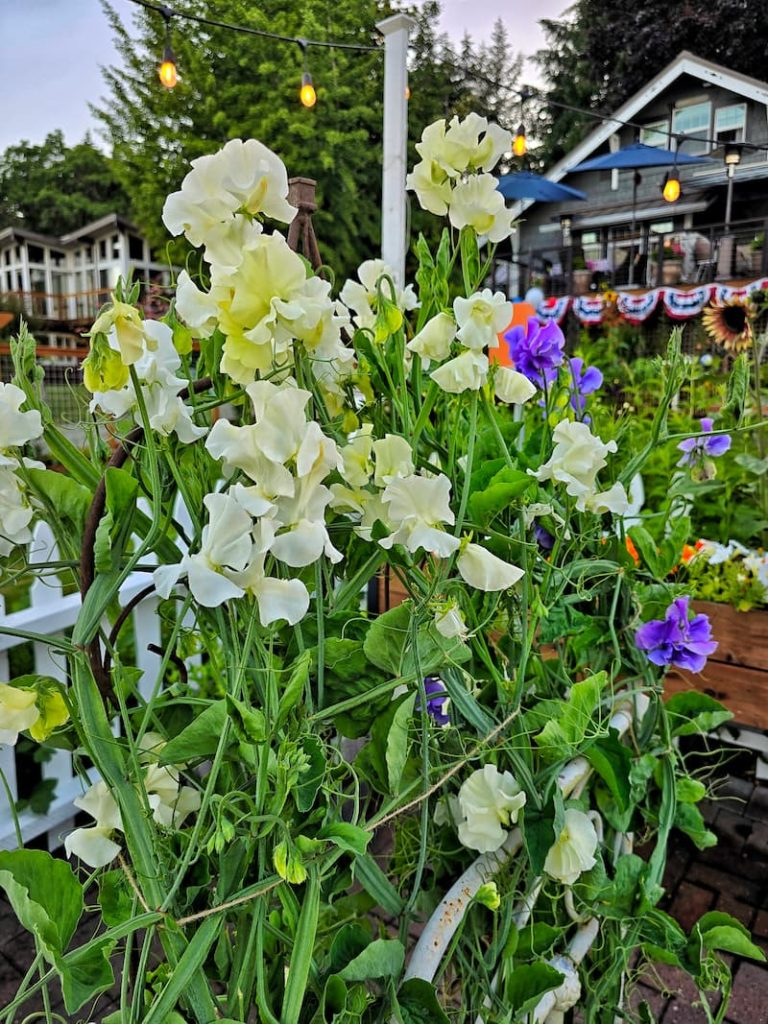
Harvest when the lowest flower on the stem is just opening, and the upper buds are still closed. Handle the stem gently. They bruise easily and wilt fast if they are not in water promptly.
The Fillers and Textures: Underrated and Irreplaceable
This is the category most cutting garden guides shortchange, and it is a mistake. Filler flowers are what give an arrangement depth, texture, and a sense of abundance. They are also, in several cases, the longest-lasting stems in the whole vase.
Strawflowers
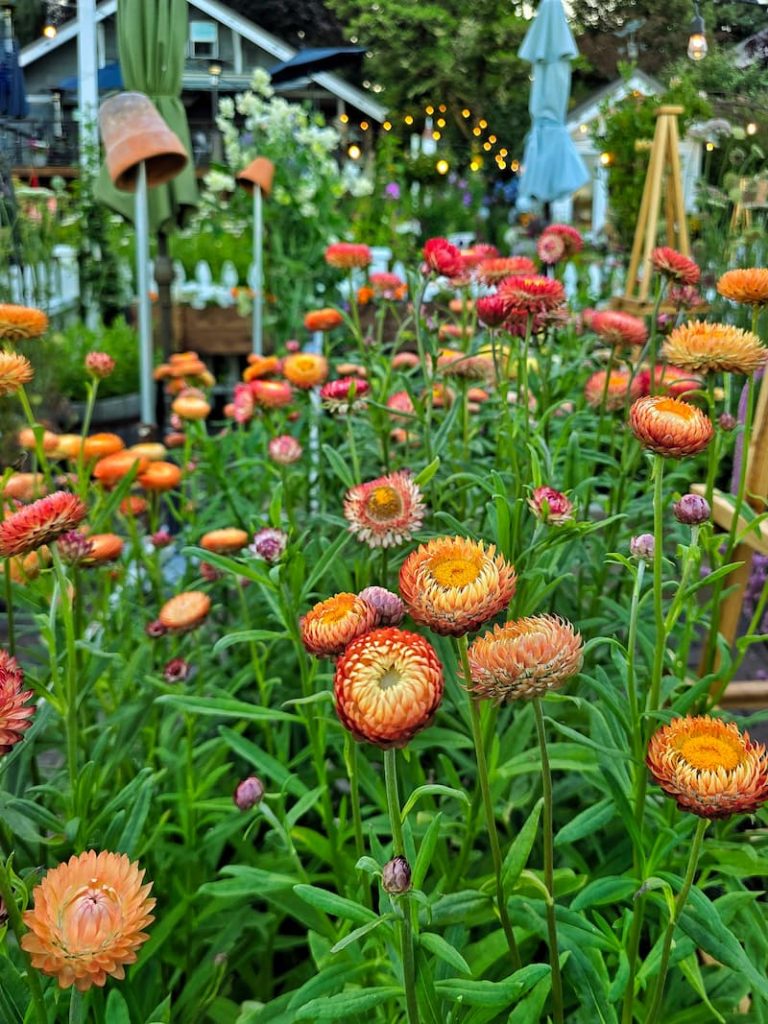
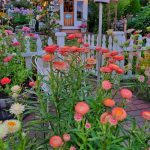
Strawflowers are one of the most underrated flowers in the cottage cutting garden. The papery petals come in a range of warm, rich colors that hold beautifully in the vase and dry even better. A strawflower in a dried arrangement looks almost exactly as it did when freshly cut.
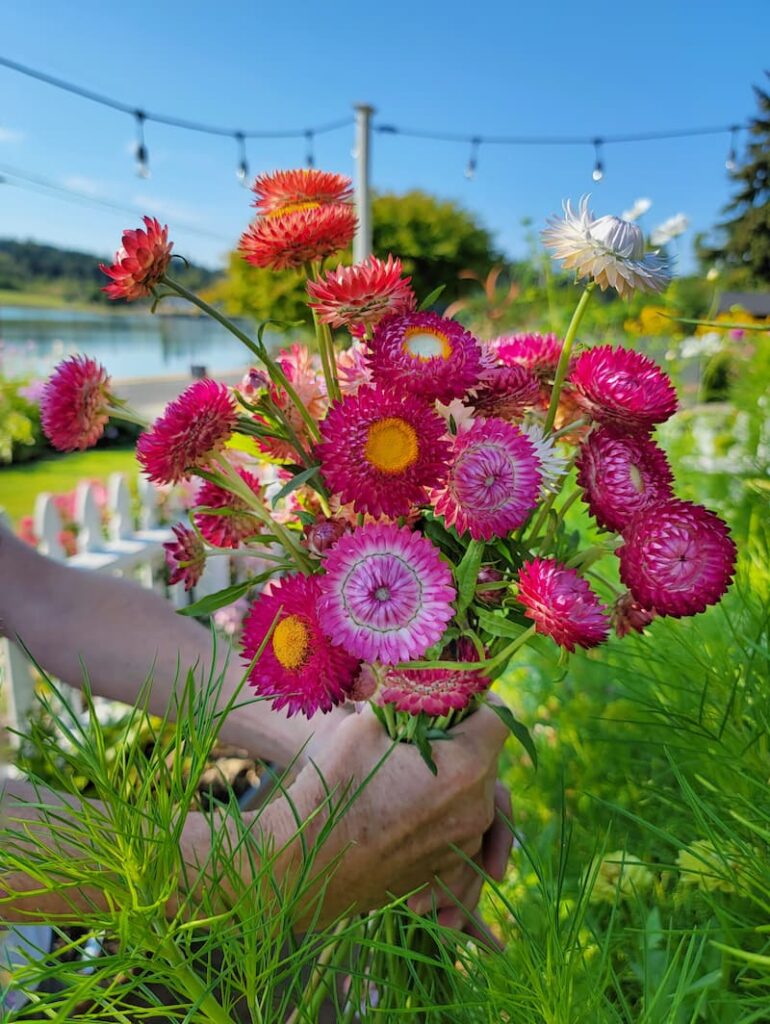
They are reliable cut-and-come-again producers and will bloom continuously from midsummer until frost. Harvest when the center is closed or just barely beginning to open.
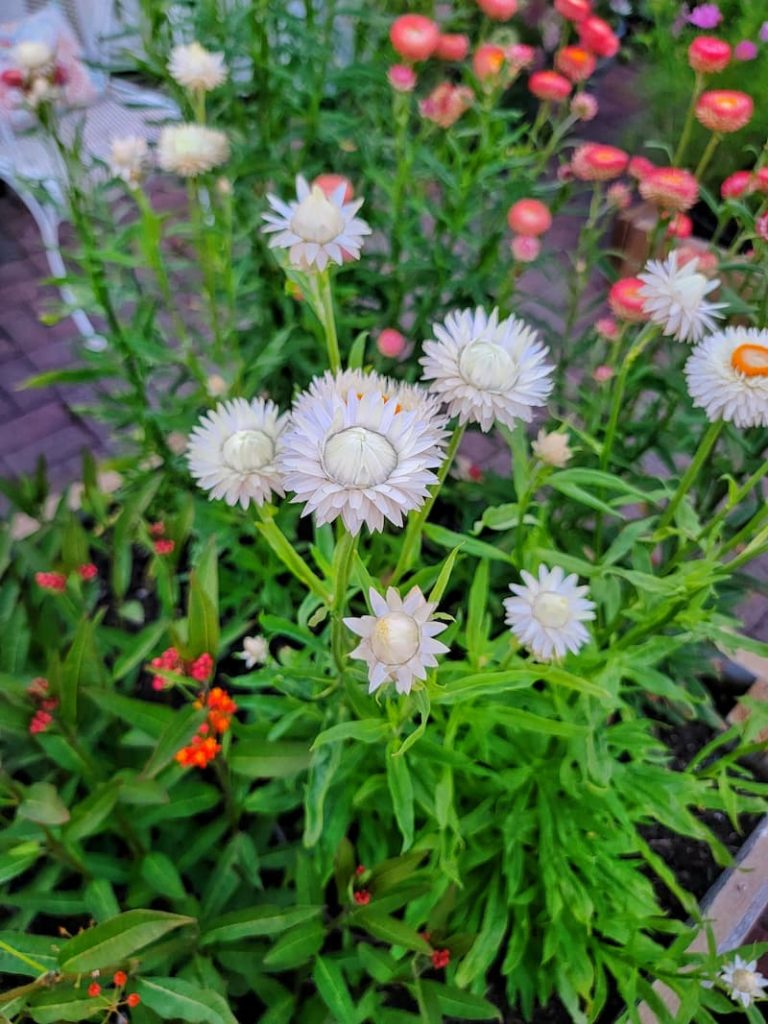
For drying, harvest at the same tight stage and hang upside down in a cool, dry place. They hold their color for months.
Bachelor’s Button
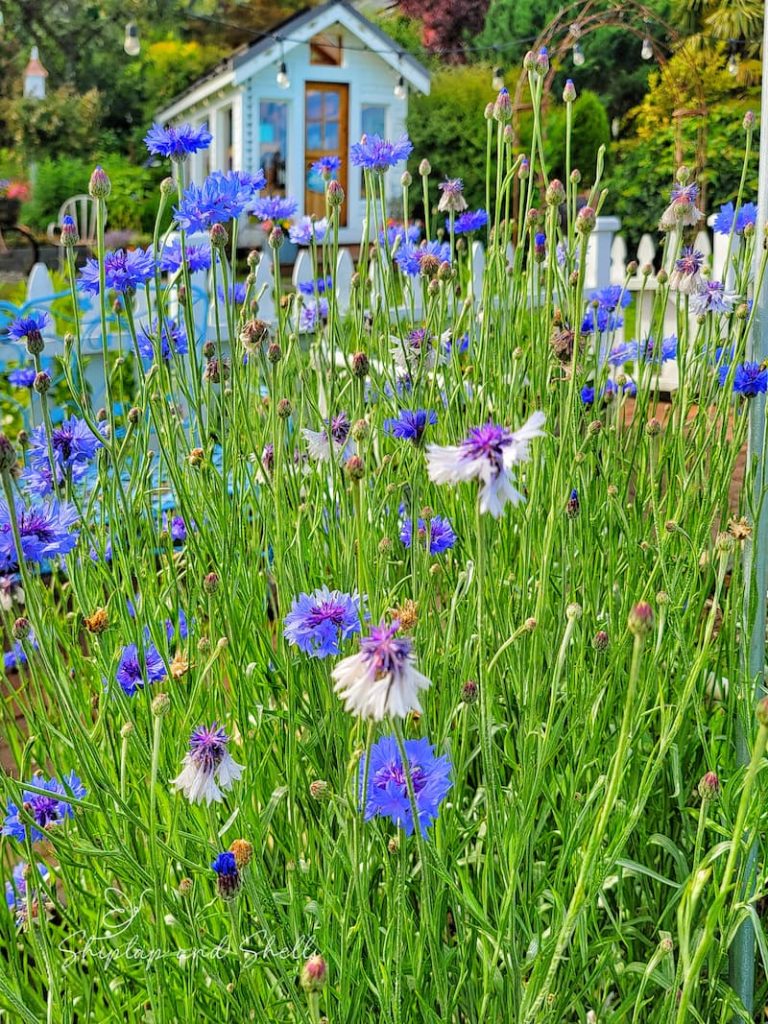
Bachelor’s buttons, also called cornflowers, are one of the truest blues you can grow in the cutting garden. Blue is generally hard to find among cut flowers. Bachelor’s buttons fill the gap reliably and without much fuss.
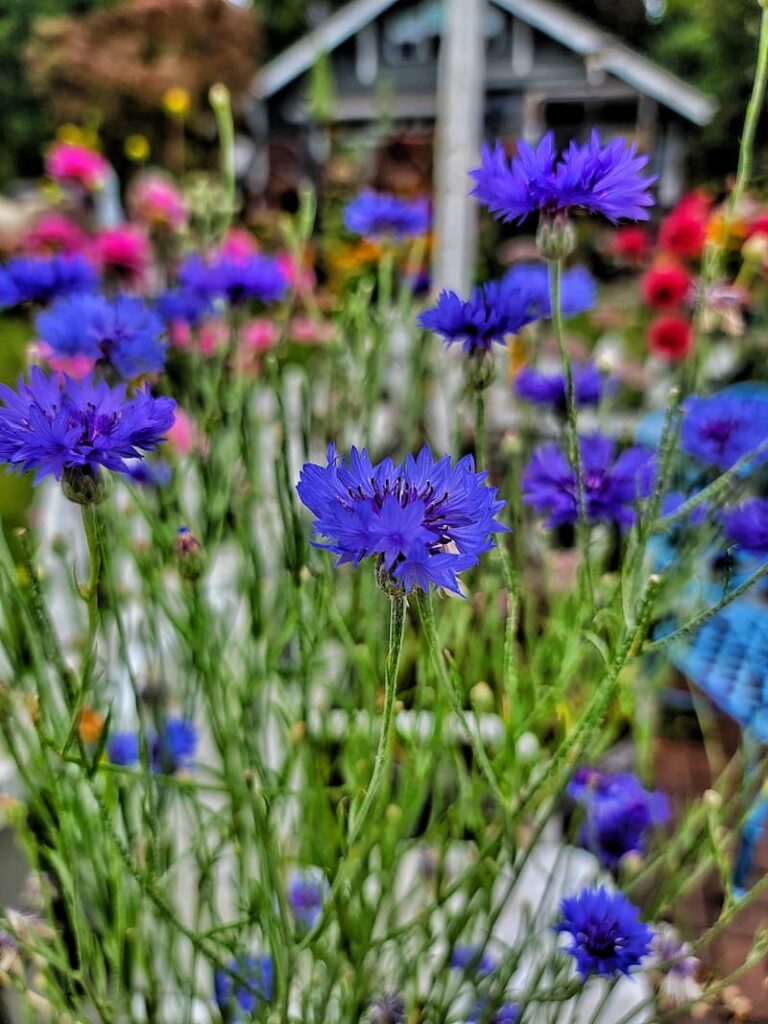
They are cool-season performers, similar to snapdragons, which means they tend to peak in late spring and early summer before the heat of midsummer slows them down. In the Pacific Northwest, where summers stay moderate, they often continue producing well into the season.
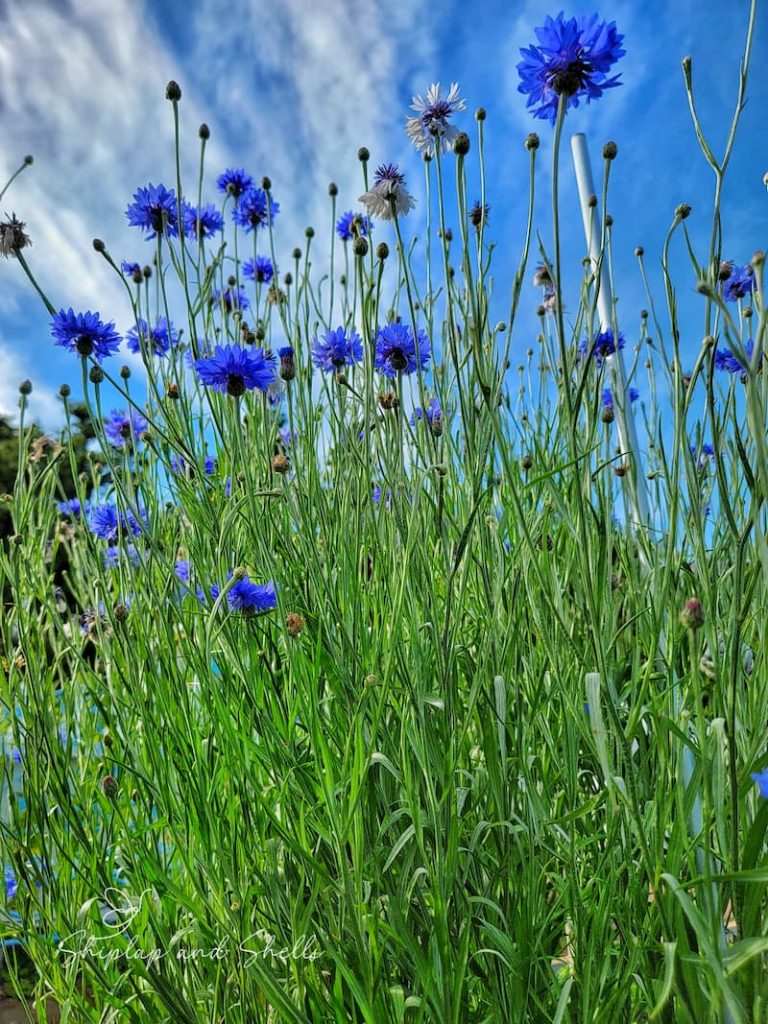
Cut when the bloom is just fully open. Regular cutting keeps new buds coming. They’re not the longest-lasting cut flowers, but the color they bring to an arrangement is worth it.
Celosia
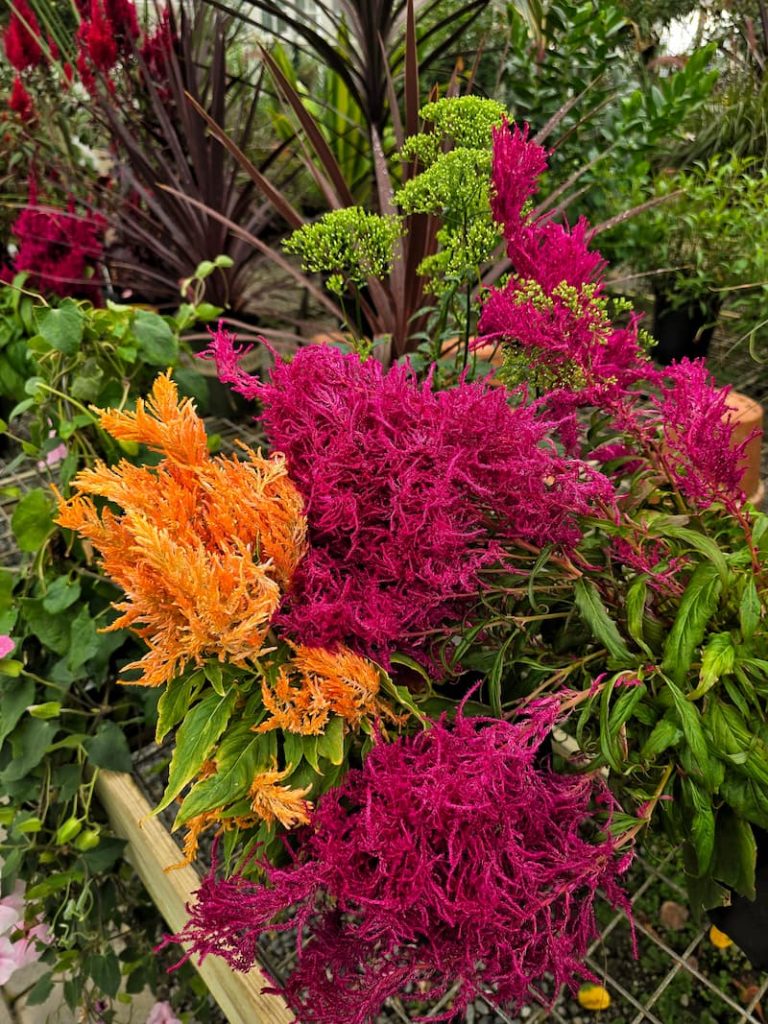
Celosia comes in two main forms in my raised beds: plumed, with feathery upright spikes, and crested, with a distinctive velvety brain-like form. Both are cut-and-come-again and excellent for adding texture and warmth to late-summer and fall arrangements.
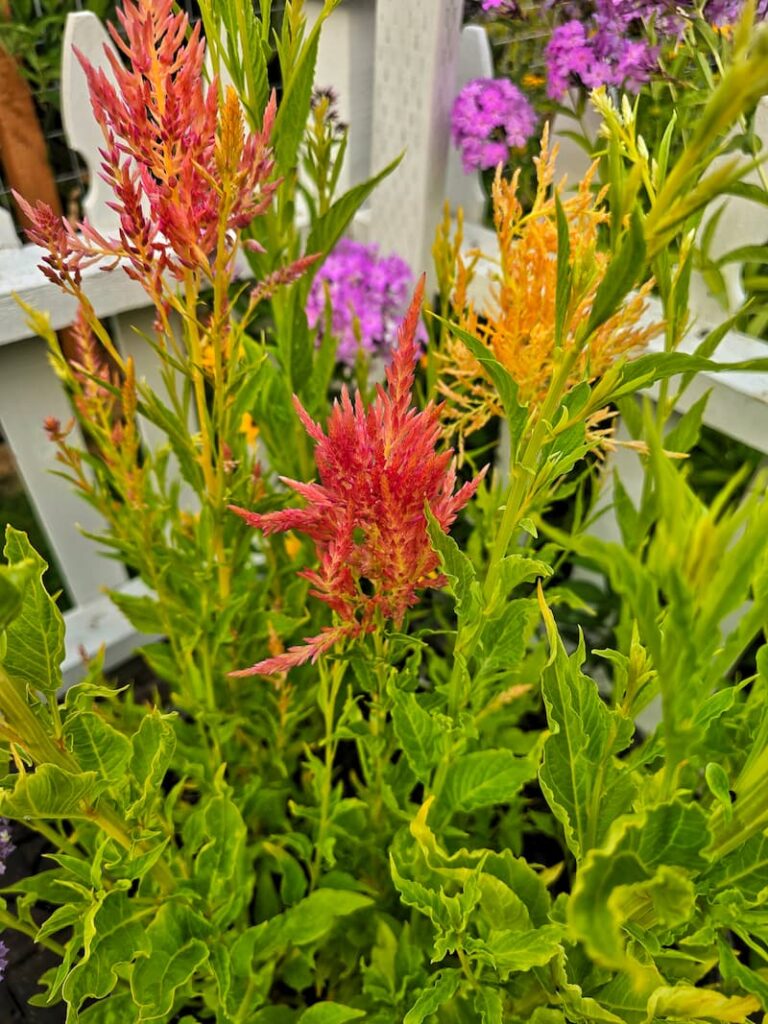
Harvest when the blooms are fully developed and at peak color. The color at harvest is the color you keep, so do not wait for more. Like strawflowers, celosia dries beautifully. A stem that starts fresh in a vase will often dry in place and look good for months afterward.
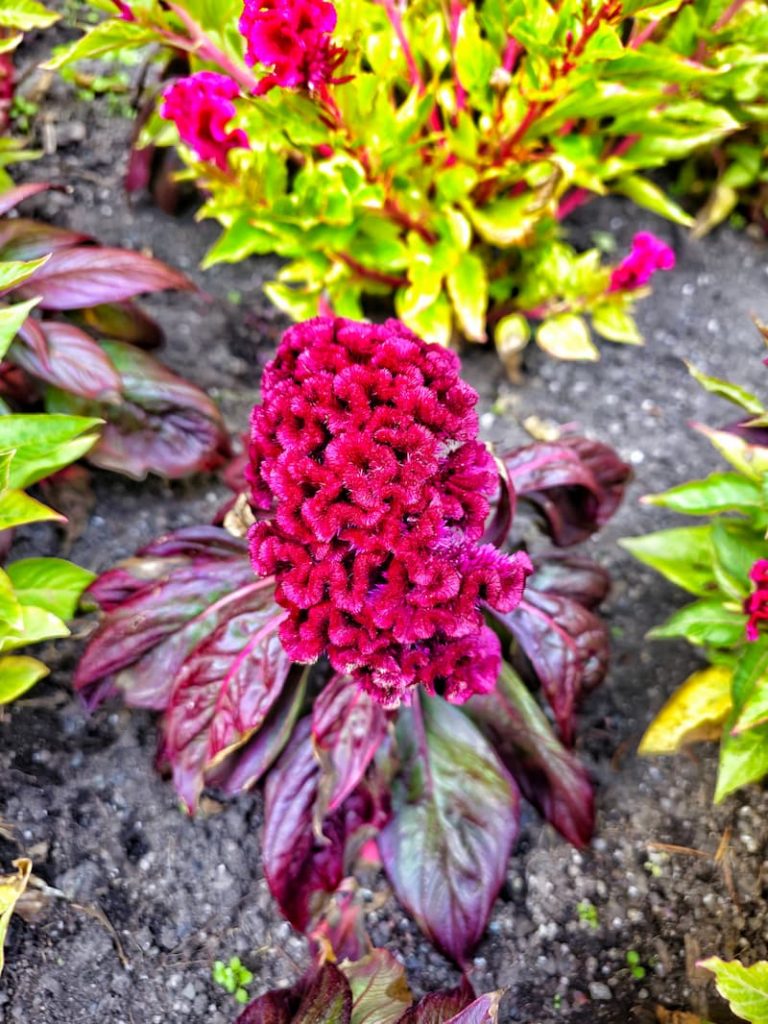
Celosia is heat-loving and tends to hit its stride in the warmest part of summer. It’s one of the last plants still producing strong color in the fall garden.
Globe Amaranth
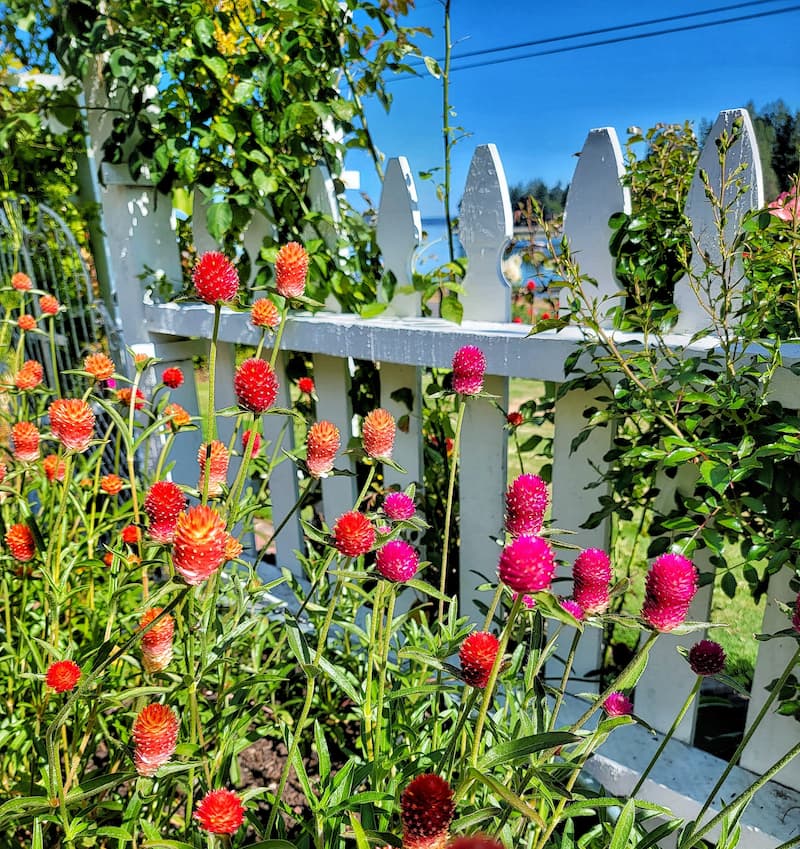
Globe amaranth might be another underrated flower. Small, clover-like pompom blooms in shades of magenta, purple, white, and salmon. It’s endlessly useful as a filler, and one of the longest-lasting flowers in a vase and as a dried stem.
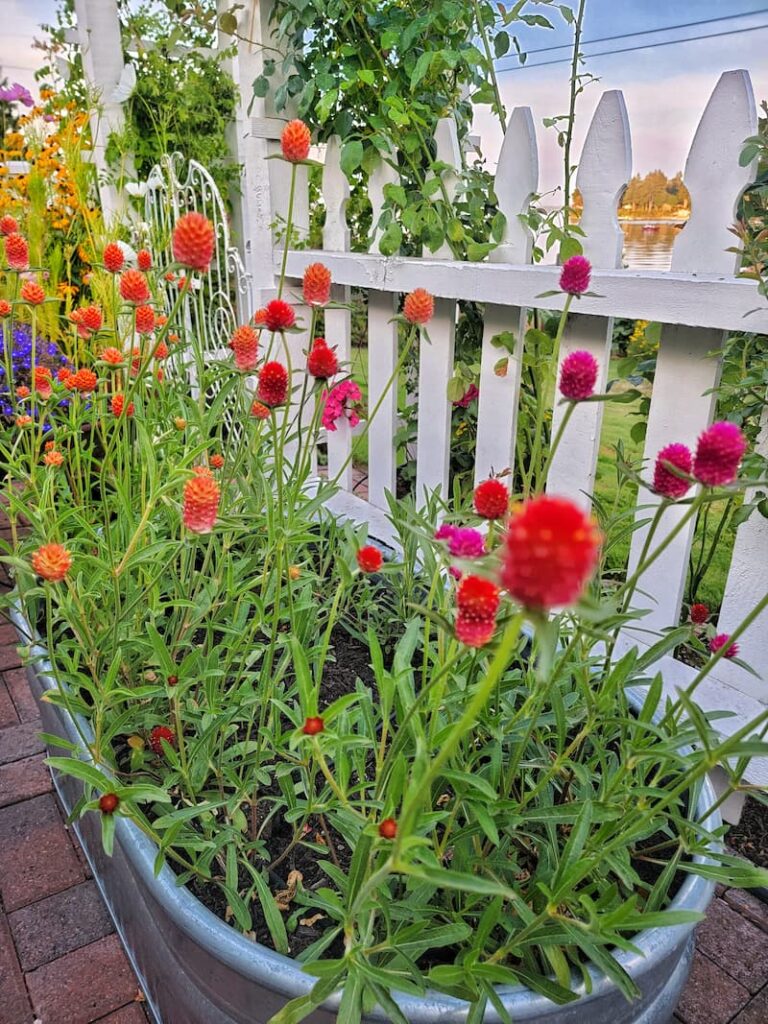
It is also one of the most reliable cut-and-come-again producers I grow. It asks for very little, tolerates heat well, and keeps producing right up to frost. Cut the stems regularly, and the plant just keeps branching.
Fresh globe amaranth adds a playful, informal feel to your arrangement. Dried, it holds its color almost indefinitely. If you’re not growing it already, add it to next year’s seed order. You will wonder how you did without it.
Statice
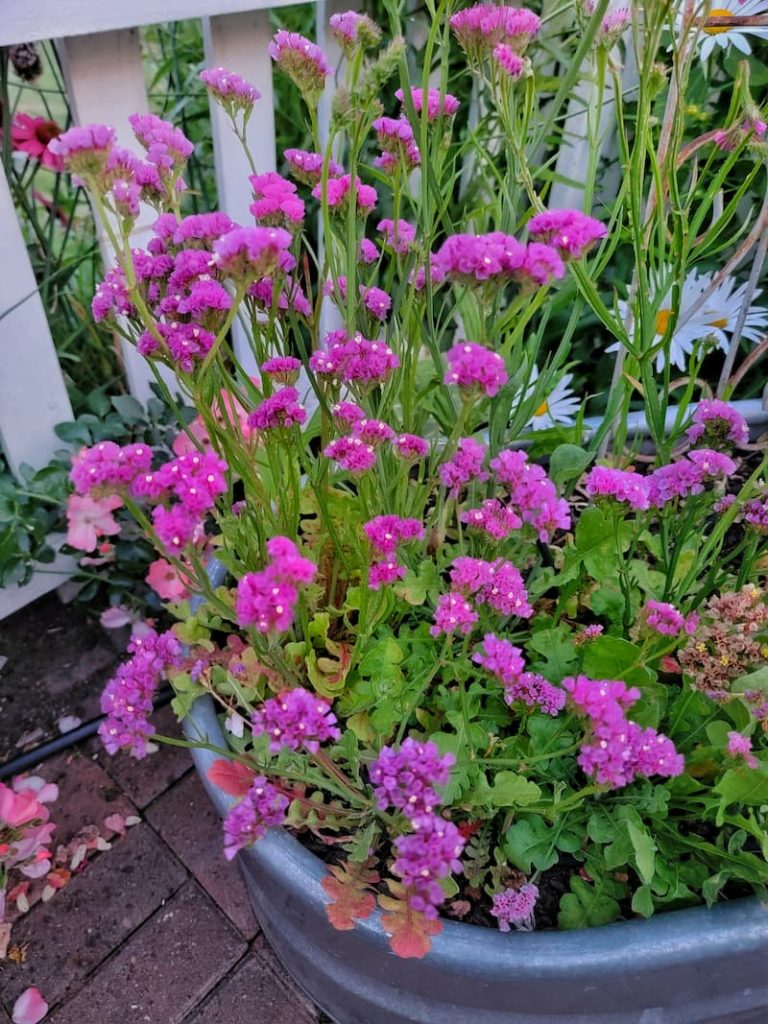
Statice is a flower I reach for when I want an arrangement to look full without adding more of the obvious focal flowers. The tiny florets come in purple, white, pink, and yellow, and they fill in around everything else effortlessly.
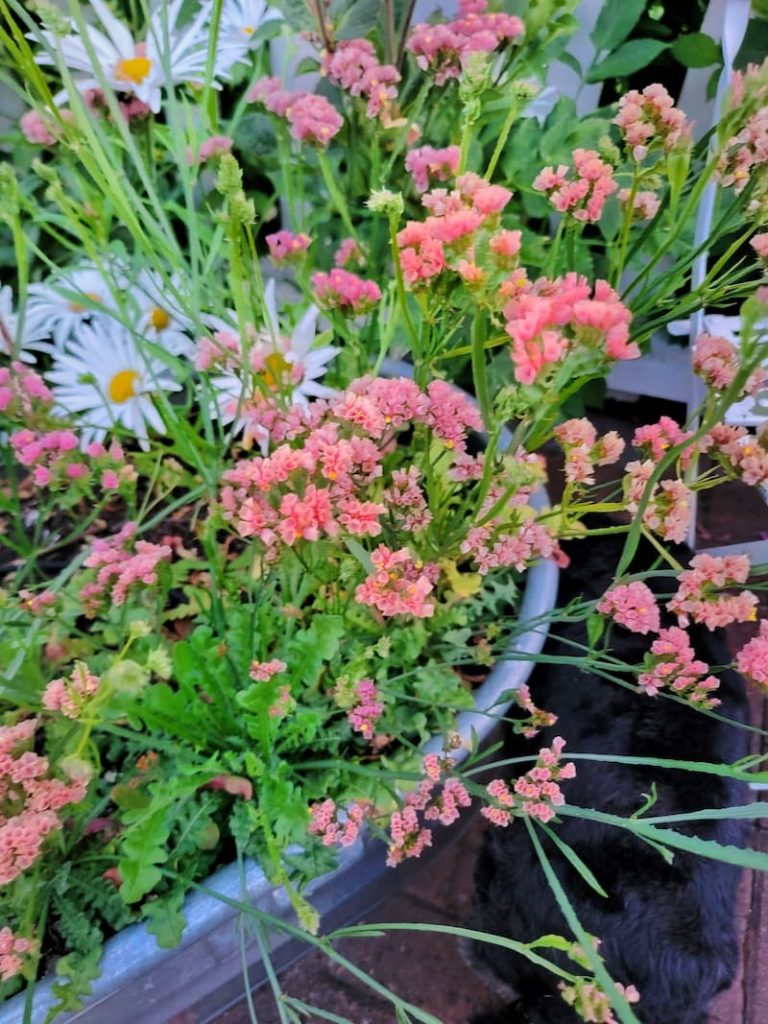
It’s also nearly foolproof to dry. Stems harvested fresh will dry naturally in a vase and hold their color for a very long time. I end up leaving dried statice in vases all over my house, and hanging upside down from the kitchen pan rack well after the other flowers are gone.
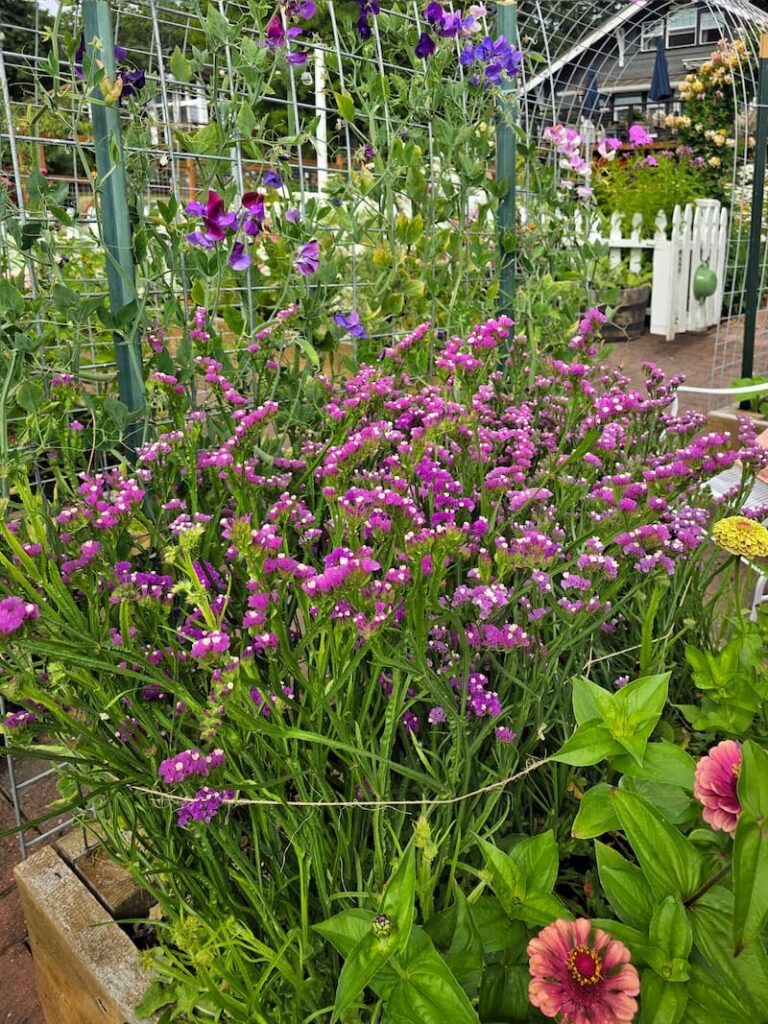
Harvest when the florets are fully open and showing full color. Regular cutting keeps new stems coming throughout the season.
How to Keep Your Cut-and-Come-Again Garden Producing All Season
Cut on a Schedule, Not Just When You Need Flowers
The biggest shift in how I approach the cutting garden is this: I cut on a schedule, not just when I want flowers for the house. Every two to three days, I do a full harvest pass through the raised beds, cutting anything ready, regardless of whether I have an immediate use for it.
Never Let Plants Go to Seed
The moment a cut-and-come-again plant successfully produces seed, it begins to wind down. It’s completed its biological purpose. Staying ahead of seed production is the most important maintenance task in the cutting garden.
This means cutting before flowers are fully spent, deadheading anything you missed, and being ruthless about removing seed heads the moment you notice them. It sounds like a lot of work. In practice, if you’re harvesting regularly, you are already doing most of it.
Feed the Plants
Plants producing at this rate are working hard. A balanced fertilizer applied every two to three weeks through the growing season keeps them healthy enough to sustain that production.
I use a liquid fertilizer during the height of the season. Stressed, underfed plants slow down and become more susceptible to disease.
Keep Up with Irrigation
Consistent moisture matters more than abundant moisture. Irregular watering, wet then dry then wet again, stresses plants and interrupts production. Drip irrigation in the raised beds makes a noticeable difference in how consistently my flowers produce through the drier stretches of our Pacific Northwest summers.
Common Questions About Cut-and-Come-Again Flowers for Beginners
What Are the Best Cut-and-Come-Again Flowers for Beginners?
Zinnias and cosmos are the most forgiving and most productive options for anyone starting a cutting garden. Both germinate easily from seed, tolerate imperfect conditions, and produce generously with minimal fuss.
If you are new to cut flowers, start with these two and add others as your confidence grows.
How Often Should You Cut Cut-and-Come-Again Flowers?
Every two to three days during peak production is ideal. The more consistently you cut, the more the plants produce. Waiting until you need flowers means leaving production on the table. Cut on a schedule and cut more than you think you need.
Do Cut-and-Come-Again Flowers Grow Back Every Year?
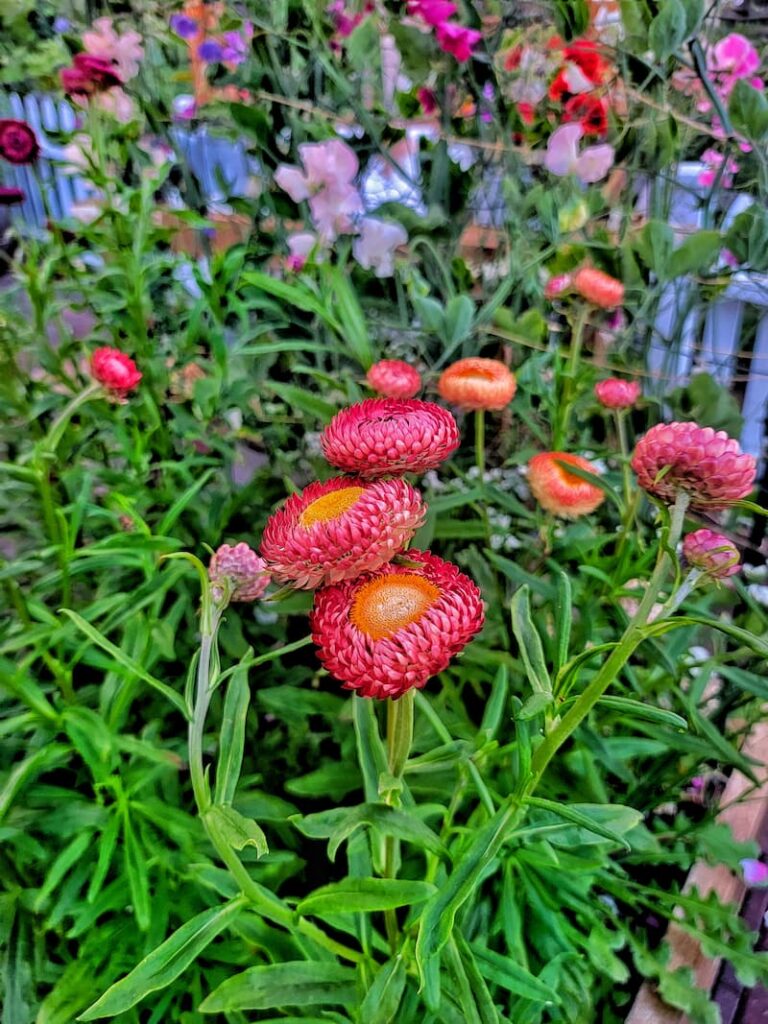
Most of the best cut-and-come-again flowers, including zinnias, cosmos, snapdragons, sweet peas, strawflowers, bachelor’s buttons, celosia, globe amaranth, and statice, are annuals.
They complete their full lifecycle in one season and don’t come back on their own. Dahlias are tubers that can be dug up, stored over winter, and replanted the following spring.
What Is the Difference Between Cut-and-Come-Again Flowers and Regular Flowers?
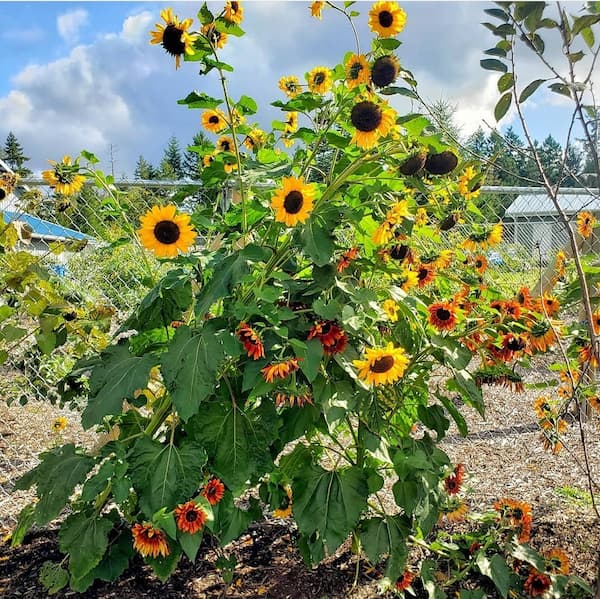
Regular cut flowers, sometimes called one-and-done flowers, produce a single bloom per stem and do not reliably rebloom after cutting. Peonies and sunflowers, with single-stem varieties, are good examples.
Cut-and-come-again flowers respond to cutting by branching and producing new flowering stems, giving you a continuous harvest rather than a single flush.
Can You Grow Cut-and-Come-Again Flowers in Raised Beds?
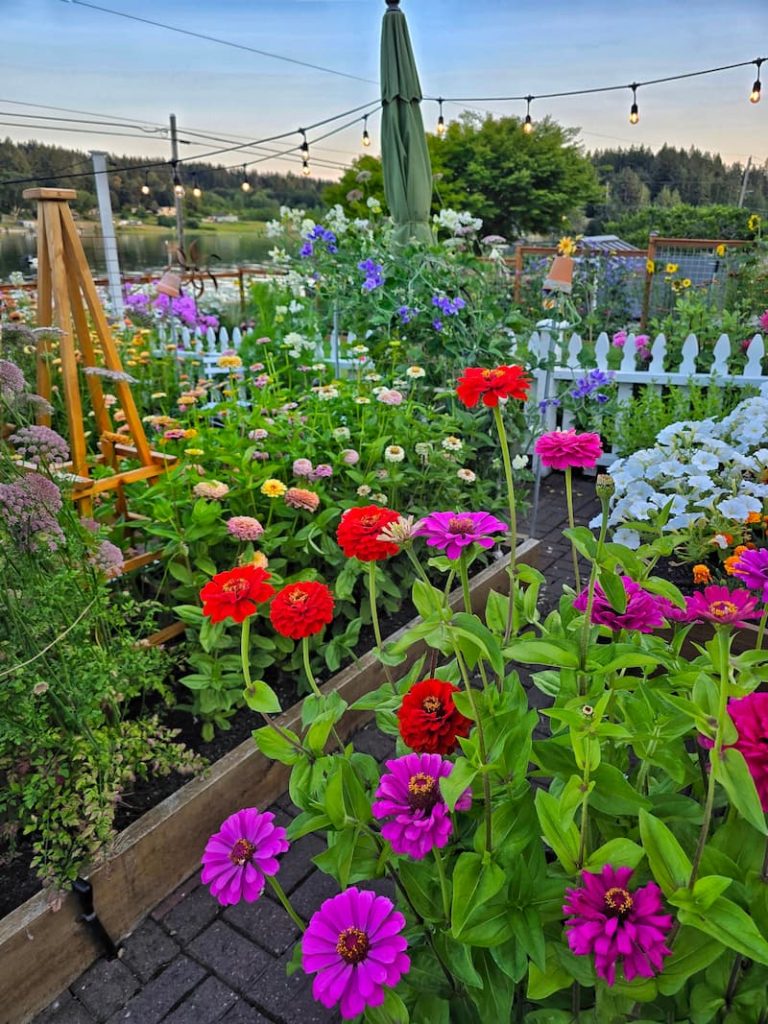
Raised beds are an excellent choice for a cutting garden. The improved drainage, better soil control, and easier access for regular harvesting make them well-suited for high-production cut flower growing. Most cut-and-come-again annuals thrive in raised beds with good organic matter and consistent moisture.
Garden Supplies and Tools
Check out my favorite garden supplies and tools for the growing season. Whether you’re looking for potting soil or deer repellent, you’ll find what I use in my own garden.
A Garden That Gives Back
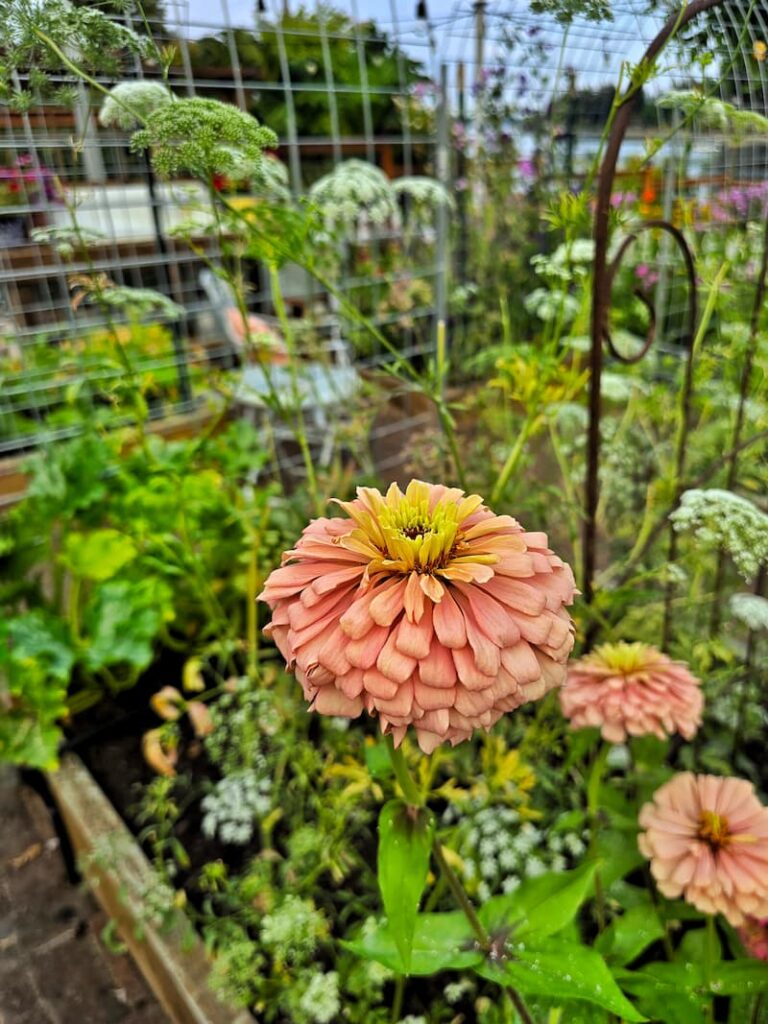
What I love most about creating a cutting garden around cut-and-come-again flowers is the relationship it creates with the garden. The more attention you give it, the more it produces. The more you take, the more it offers.
It’s a good deal.
If you are just getting started, pick two or three from this list and see how they do in your space. Zinnias and cosmos will not let you down. Add globe amaranth for texture, and you will have a vase-ready combination that carries you through most of the summer.
For more on what to do with your flowers once you’ve cut them, my guide to harvesting cut flowers covers everything from timing to tools and conditioning. And if you want to keep those stems going as long as possible once they’re in the vase, this post on extending vase life is the next read.
Until next time,
Happy Gardening!

MORE POSTS
For You To Enjoy
Follow Me for More Inspiration
About Kim Robinson
Kim is the creator of Shiplap and Shells, where she shares life in her 1920s beach cottage and Pacific Northwest garden. Along with her husband and two pups, Jax and Ollie, she’s spent the past 13 years turning their little seaside home into a cozy space filled with vintage charm, blooming gardens, and everyday moments worth savoring.