
How to Cut Back Outdoor Garden Evergreen Ferns

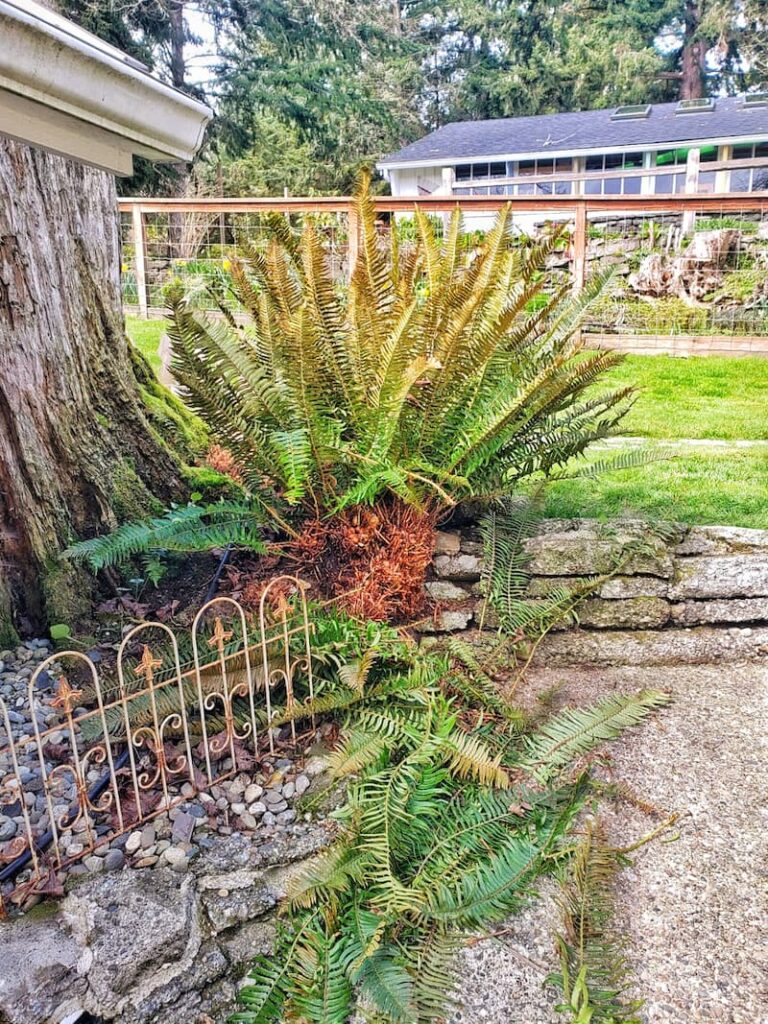
If your evergreen ferns are starting to look tired or weathered after winter, now is the perfect time to refresh them. Cutting back outdoor evergreen ferns in late winter or early spring helps clear away old fronds and makes room for fresh new growth. It’s one of the easiest ways to give a shade garden seasonal rest.
Here in the Pacific Northwest, evergreen ferns are a quiet staple in the garden. They hold their greenery through the colder months and bring softness and texture to shady spaces long before everything else wakes up. But even these reliable plants benefit from a yearly trim.
I usually tackle this task in late February or early March in Zone 8b, just before the new fiddleheads begin to emerge. It’s a simple job, and one of those small garden tasks that makes everything feel fresh again.
In this guide, I’ll walk you through when to cut back evergreen ferns, how to prune them safely, and what to expect as new growth begins.
As an Amazon affiliate, I earn a commission from qualifying purchases at no additional cost to you. My blog also features other affiliate links for your convenience. Click here to read my privacy policy.
Evergreen Ferns in the Garden
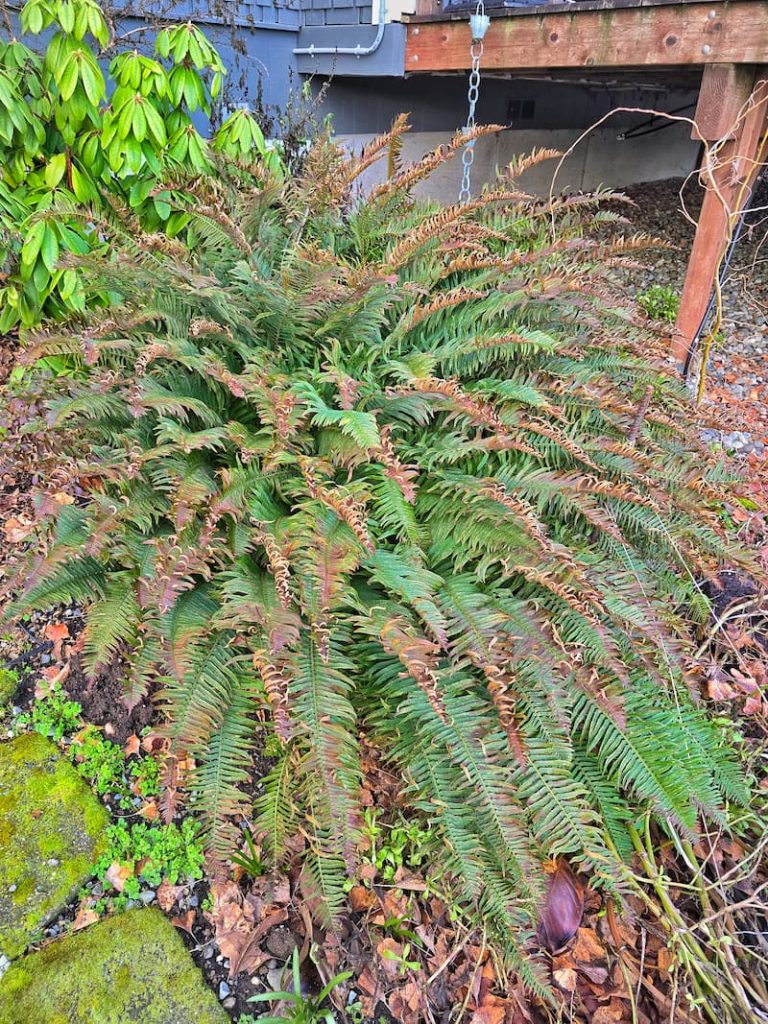
Evergreen ferns are a familiar sight in Pacific Northwest gardens, especially in shady areas where many flowering plants struggle. Unlike deciduous ferns that disappear in winter, evergreen varieties hold onto their fronds year-round, adding structure and greenery even on gray days.
They thrive in bright, indirect light or gently filtered shade, often tucked beneath trees or along woodland-style garden paths. Over time, older fronds naturally begin to brown and fade as the plant prepares for fresh spring growth.
That’s why cutting back evergreen ferns each year makes such a difference. Removing tired foliage not only improves the plant’s appearance but also allows new fiddleheads to emerge cleanly and grow without crowding.
Different Types of Ferns to Cut Back
Garden ferns come in a variety of species, each with unique characteristics and requirements for optimal growth.
Let’s Plan Your Dream Garden With Our
Gardening Planner
Unlock Your Garden’s Potential.
Our 35-page Ultimate Garden Planner is designed to help you organize, track, and flourish in your gardening endeavors.
Get yours for $4.99

When to Cut Back Outdoor Evergreen Ferns
Timing matters when you’re pruning evergreen ferns. It’s not just how the plant looks, but how well it grows through the season.
The best time to cut back outdoor evergreen ferns is in late winter or very early spring, just before new growth begins to emerge. Here in the Pacific Northwest (Zone 8b), I usually tackle this job in late February or early March, when the garden is starting to wake up but the new fiddleheads haven’t fully appeared yet.
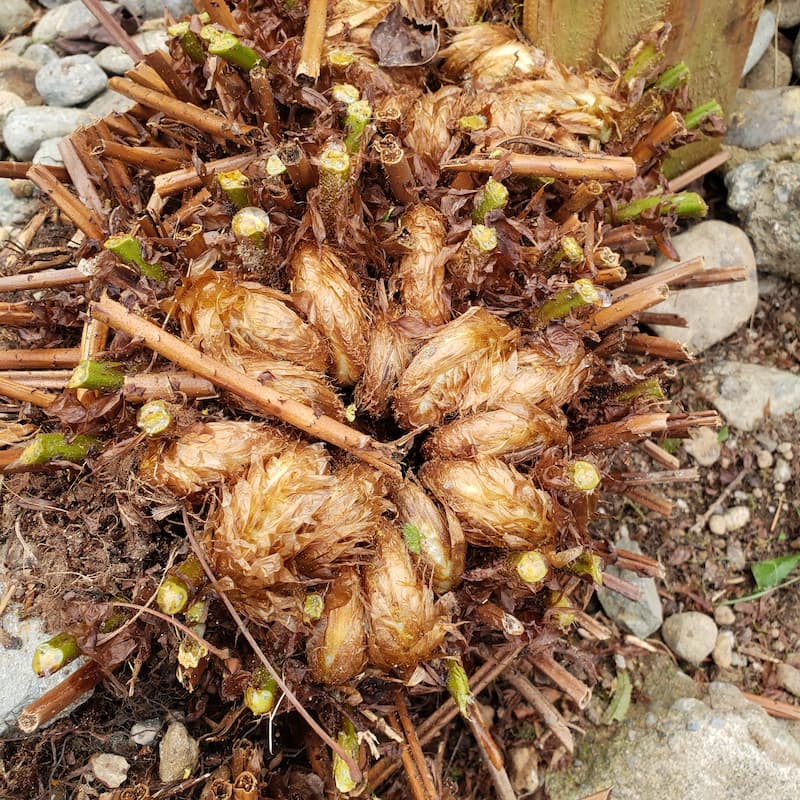
Pruning too early can expose the crown to harsh winter weather, while waiting too long can make it easy to cut new growth accidentally. The sweet spot is that quiet window right before the fresh fronds start to uncurl.
It’s one of those small seasonal tasks that instantly makes the garden feel cleaner and ready for spring.
The right time to prune your evergreen ferns is before new fiddleheads, the curled beginnings of new fronds, start to show. This makes the process easier and reduces the risk of damaging the new growth.
How to Cut Back Outdoor Evergreen Ferns
Pruning evergreen ferns is simple once you know what you’re looking for. The goal is to remove tired or damaged growth while protecting the fresh new fronds that will soon emerge.
Tools You Will Need
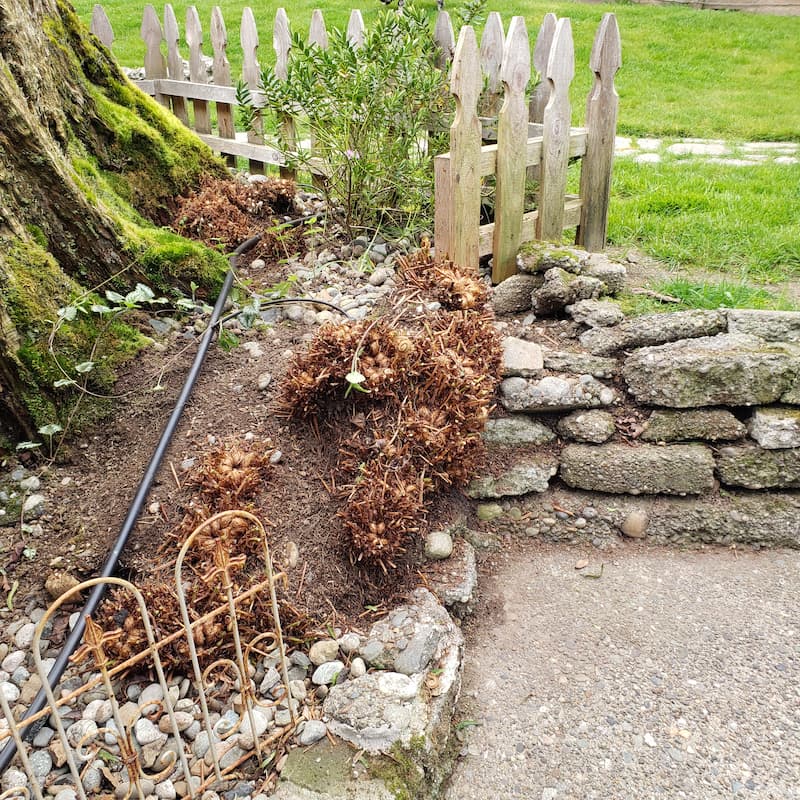
Pruning evergreen ferns is a delicate task that requires the right tools for a clean cut and to minimize damage ot the plant. Here are the essential tools you’ll need to cut back your evergreen outdoor ferns:
Step-by-Step Guide to Cutting Back Evergreen Ferns
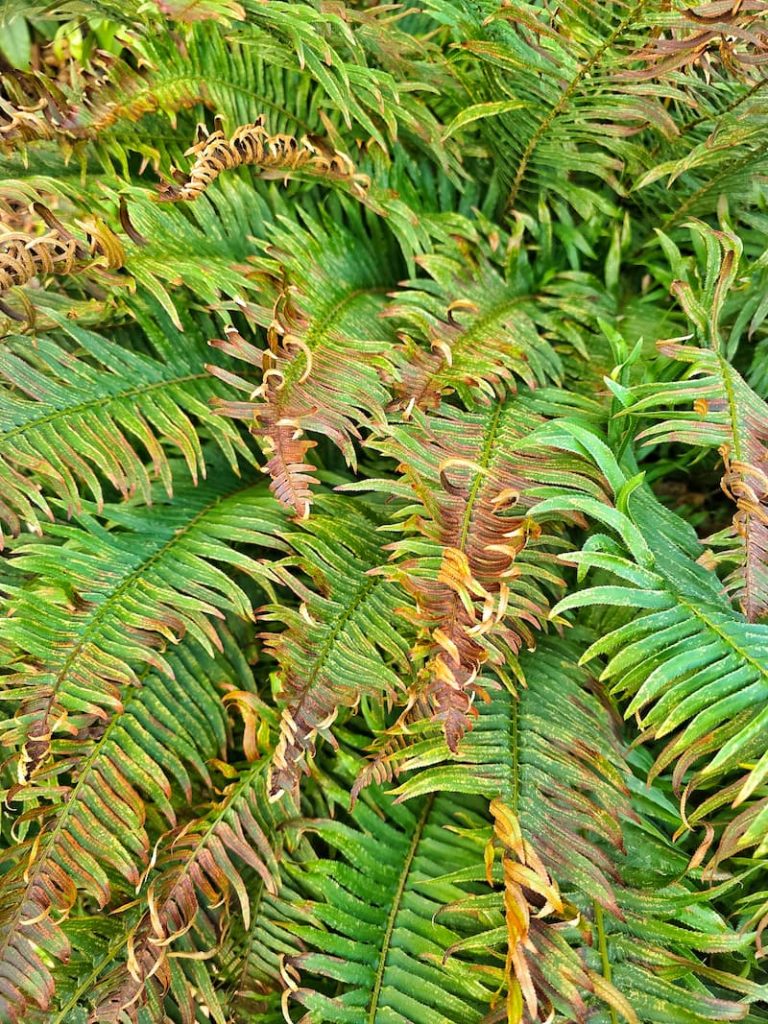
Pruning evergreen ferns encourages healthy growth and maintains the plant’s aesthetic appeal. Follow these steps to ensure you cut back your ferns correctly and safely:
Start With a Quick Inspection
Take a moment to look closely at your fern before cutting. You’ll usually notice older fronds that have turned brown, spotted, or flattened from winter weather. These are theones ready to go.
Make sure your pruning shears are clean and sharp before you begin.
Decide How Much to Cut Back
If most of the plant is still green and healthy, remove only the older fronds near the base or interior of the plant.
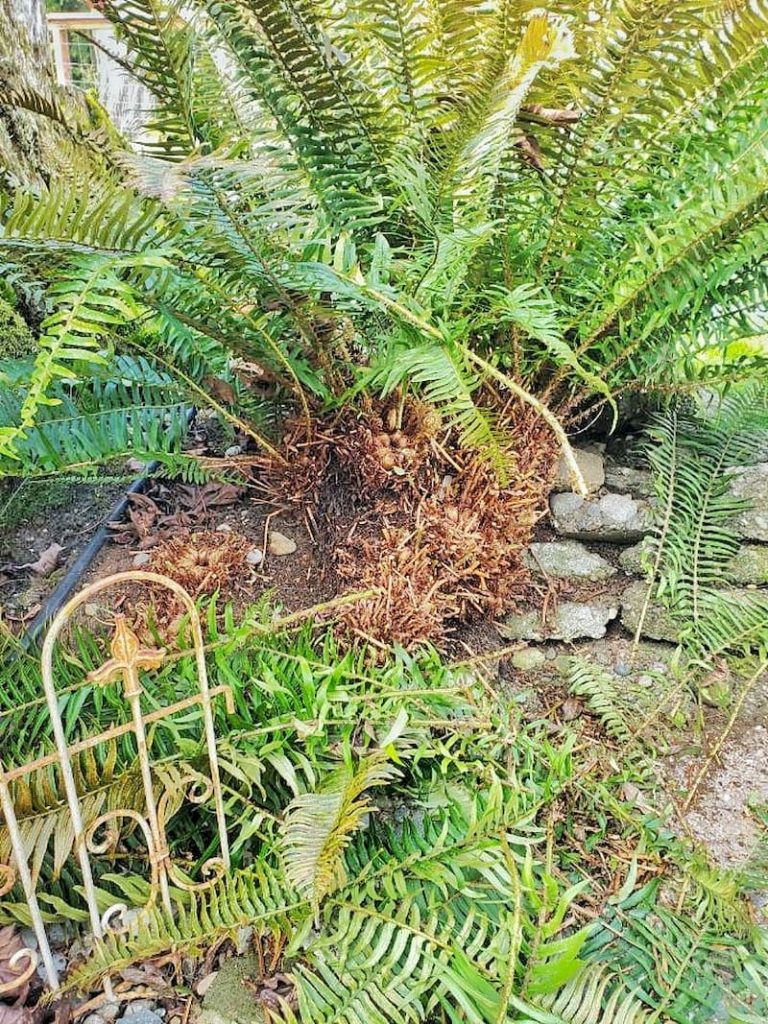
In my garden, I often cut evergreen ferns all the way down because many of the fronds are weathered by late winter. They look a little bare for a short time, but the fresh spring growth comes back quickly.
Make Clean, Careful Cuts
Cut close to the ground or main stem at a slight angle, being careful not to damage the crown or any emerging fiddleheads. Clean cuts help prevent water from collecting and reduce the risk of disease.
Clear Away Old Fronds
Gather and remove all cut foliage. If any fronds show signs of disease, dispose of them rather than adding them to the compost pile.
Gentle Aftercare
After pruning, give your ferns a light watering to settle the soil. Adding a thin layer of organic matter or compost helps retain moisture and gives the plant a gentle boost as new growth begins.
What to Expect After Cutting Back Your Ferns
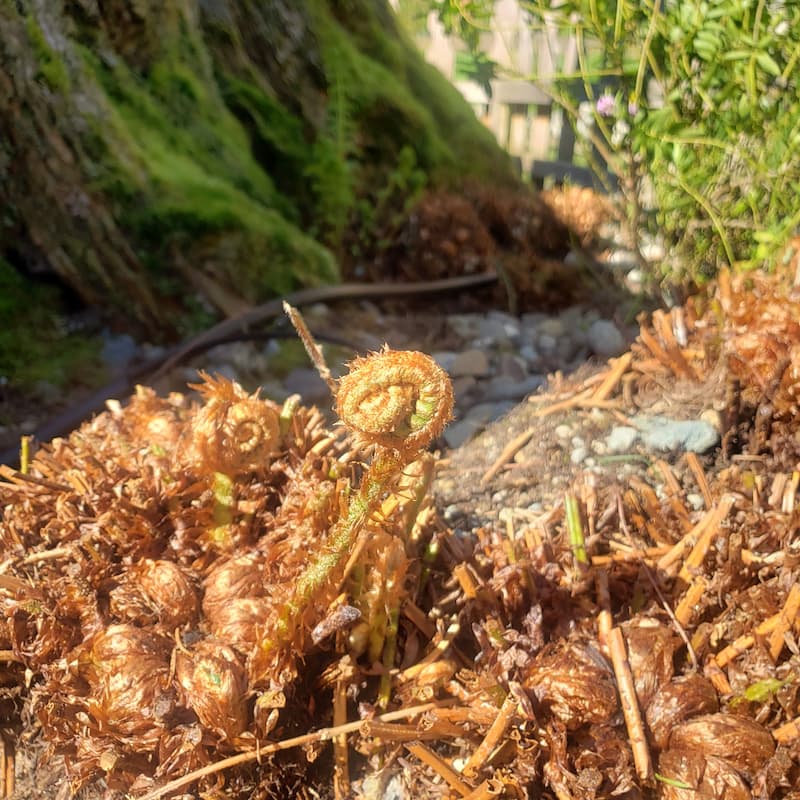
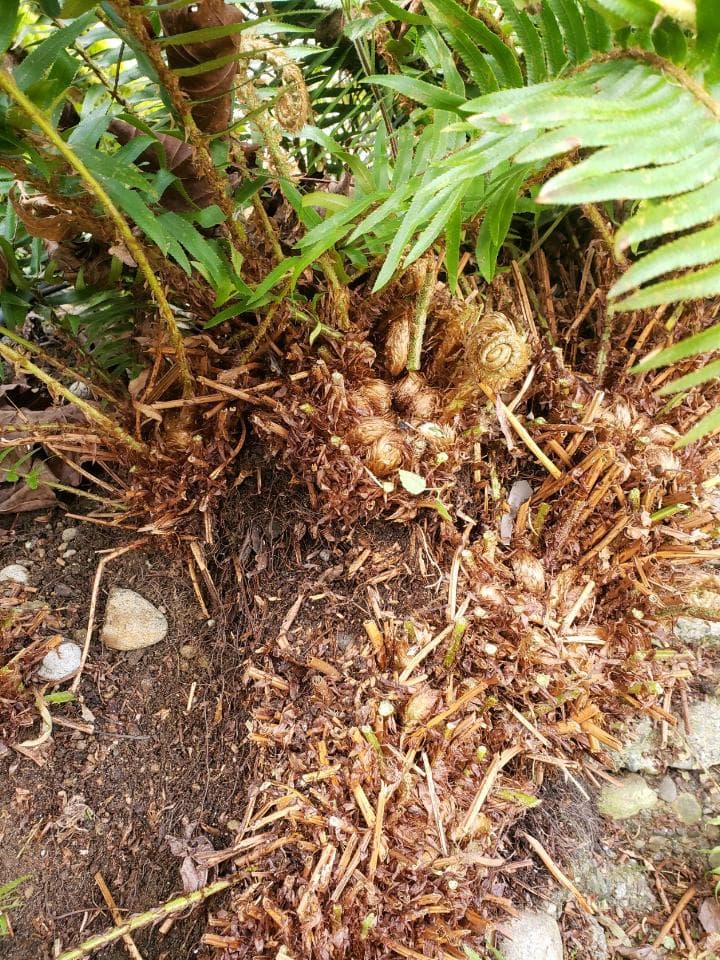
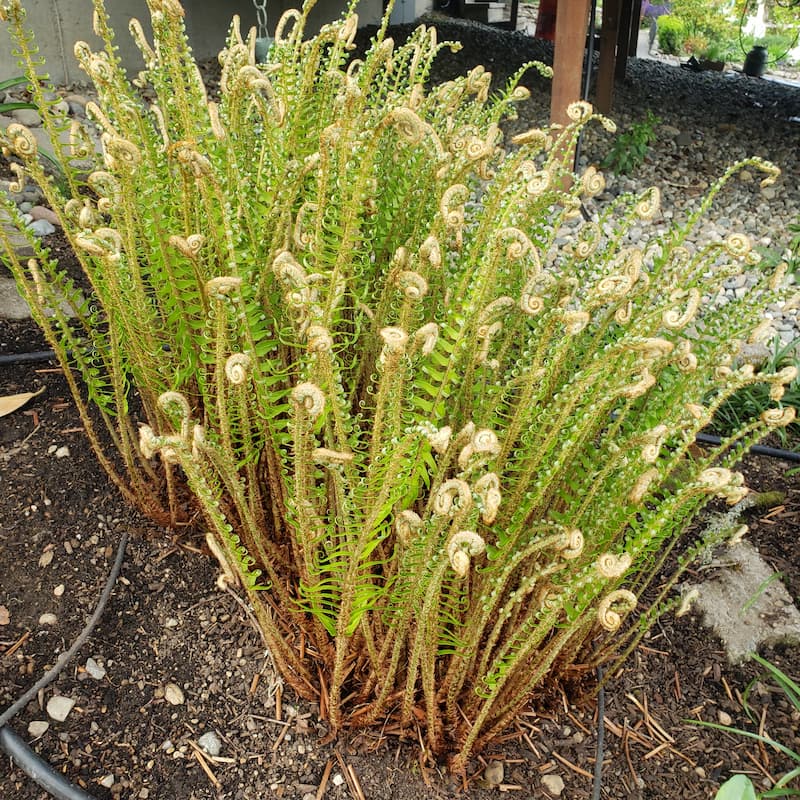
After pruning, you’ll usually start noticing tiny curled shoots forming at the base of the plant. These are the new fiddleheads and the beginning of fresh fronds that will slowly unfurl as spring settles in.
This stage always feels a little magical to me. One day, the fern looks completely cut back, and just a short time later, you start seeing those tight green spirals pushing up through the soil.

There is one small downside to pruning evergreen ferns hard each year. They can look a little rough for a few weeks. The garden may feel temporarily bare while you wait for new growth to fill in again.
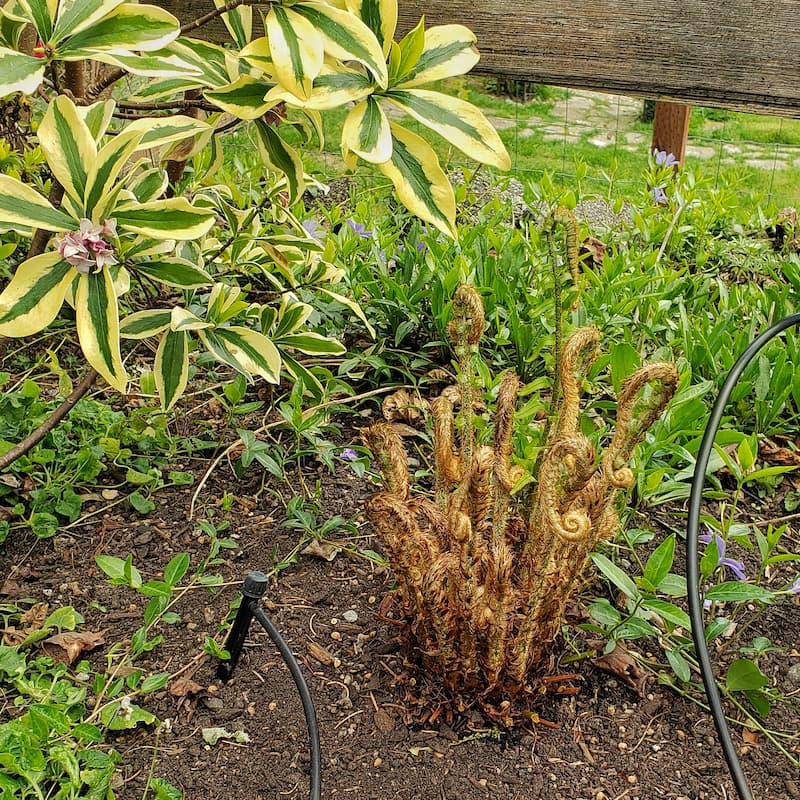
But give it a little time. Once the new fronds open, the plant looks fresh, full, and healthier than before.
How Long Does It Take for New Fronds to Grow Back?
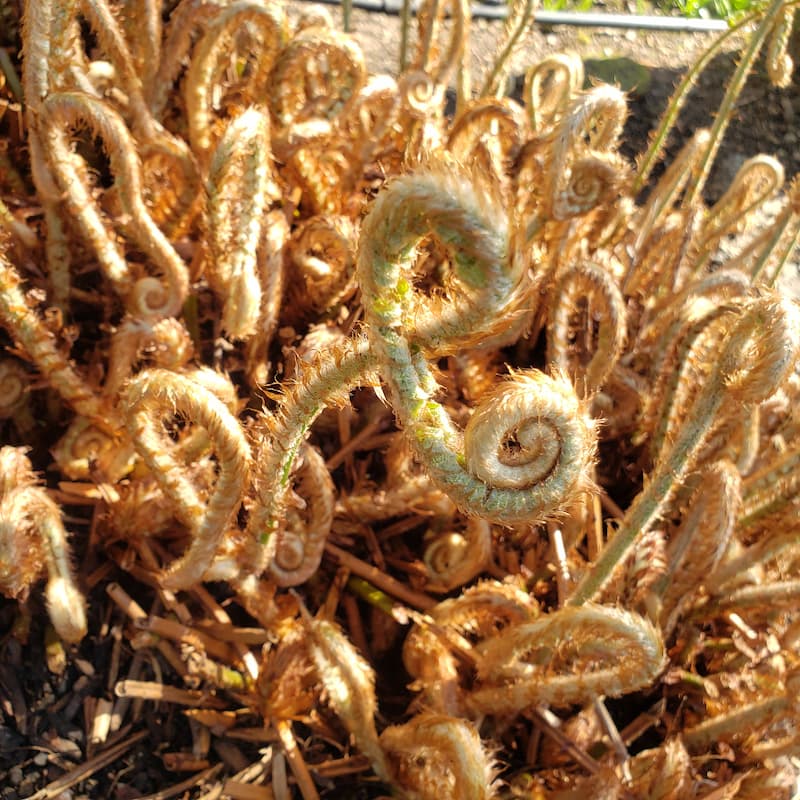
In most gardens, new fronds begin showing within about 2-4 weeks after pruning. The exact timing depends on the fern variety and your local weather, but once temperatures start warming, growth usually happens quickly.
It’s one of those small reminders that the garden is always working behind the scenes, even when it looks quiet at first.
Garden Supplies and Tools
Check out my favorite garden supplies and tools for the growing season. Whether you’re looking for potting soil or deer repellent, you’ll find what I use in my own garden.
Ongoing Care Through the Season
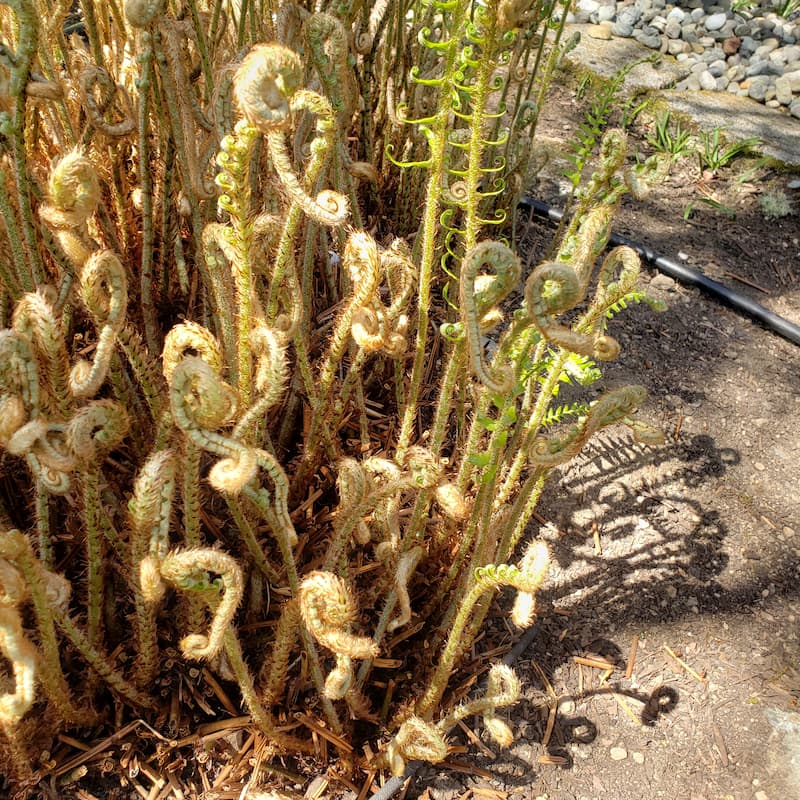
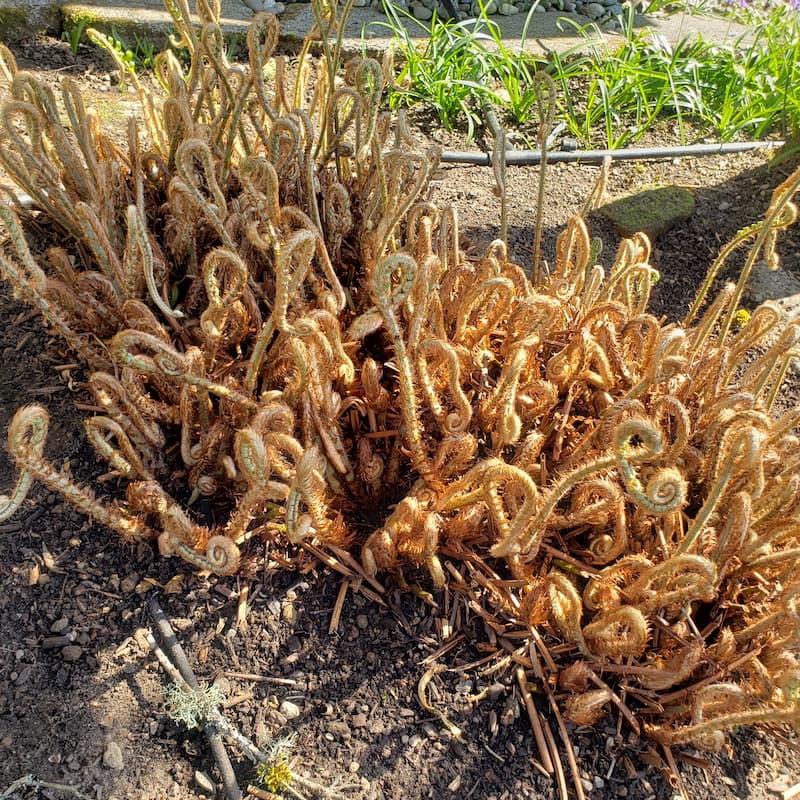
Evergreen ferns are wonderfully low-maintenance once they settle back in, but a little attention throughout the year keeps them looking their best.
I like to remove any damaged or pest-affected fronds as I notice them rather than waiting for a big cleanup later. This helps prevent disease and keeps the plant looking fresh without much effort.
If a fern ever looks particularly tired or unhealthy, cutting it back completelyis often the easiest reset. Most varieties bounce back beautifully once conditions improve.
Common Mistakes When Cutting Back Evergreen Ferns

Pruning evergreen ferns is fairly simple, but a few small mistakes can slow recovery or affect how full the plant looks in spring. Here are the ones I see most often, and they’re easy to avoid once you know what to watch for.
Cutting at the Wrong Time
The biggest mistake is pruning too early or too late. Cutting in the middle of winter can expose the plant to cold damage, while waiting until new growth appears makes it easy to accidently trim fresh fiddleheads.
Late winter or very early spring, just before new growth starts, is usually the safest window.
Cutting Too Close to the Crown
It’s tempting to cut everything as low as possible, but damaging the crown can slow regrowth. Aim to cut close to the base while leaving the plant’s center undisturbed.
Clean, angled cuts help the plant recover quickly.
Ignoring Signs of Stress
If you notice spotting, pests, or unusual damage, remove affected fronds early. Small adjustments throughout the season are easier than waiting until problems spread.
Frequently Asked Questions About Cutting Back Evergreen Ferns
Final Thoughts on Cutting Back Outdoor Evergreen Ferns
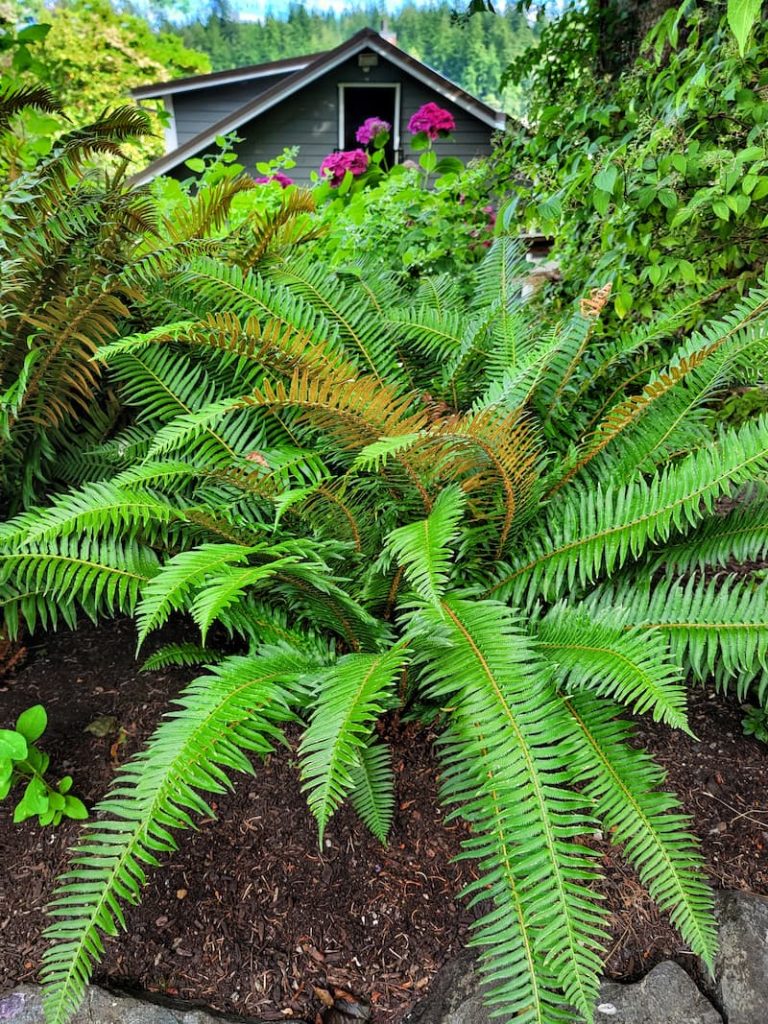
Evergreen ferns are one of those quiet garden plants that ask very little but give so much back, especially in shady spaces where greenery matters through the colder months.
Cutting them back each late winter or early spring is a simple reset that helps everything look fresh again. The garden may feel a little bare for a short while, but once those new fiddleheads begin to unfurl, the transformation happens quickly.
If you’re gardening in the Pacific Northwest like I am, this small seasonal task is a gentle reminder that spring is on its way, even when the weather still feels a little gray.
And honestly, you don’t have to make it complicated. A quick cleanup, a little patience, and your ferns will do the rest.
If you found this post helpful, feel free to share it with a fellow gardener who’s getting their shade garden ready for spring.
Until next time,
Happy Gardening!

I’m a self-taught hobby gardener. Everything I share on my blog is my personal opinion and what has worked for me.
MORE POSTS
For You To Enjoy
Follow Me for More Inspiration






Kim, inspecting my ferns tomorrow to see what kind they are….I’ve never done this. Thanks for all the great info.
I have spring bulbs around my ferns so when I cut back the fronds, I have them to enjoy until the new ones grow in, then the bulb foliage gets hidden, a win win. My first year following your blog and I have found it so delightful.
I am so ready to get going on the garden. I am making quite a few tweaks to the garden this spring Kim and I are so excited to be able to grow even more! Thank you for all the tips, so helpful!
I love your posts. Very informative. I have a problem, though, understanding why when I have a subscription, as soon as I open a post and start reading, the entire screen is covered by a request to sign up for your posts! Then immediately an Ad will appear which blocks about a third of the screen, and I have to wait for a countdown before I can get rid of it. Very, very annoying. Anything you can do?
I can’t tell you how much I appreciate you letting me know about this. I have to work with both the ad agency and my email subscription company to find a solution. This would totally annoy me as well. I will try to see what I can do to make this a more enjoyable experience.
Kim,
Perfect timing! I needed this advise.
I do prune mine every year or at least every other year. I did want to mention that we have a lot of deer here and they love the fiddle heads, new growth, so I spray with deer spray while they are growing. Once they reach maturity they aren’t interested.
Great tips! My ferns are just starting to grow. Yours look so good already! xo