
Best Fall Blooming Plants to Transform Your Seasonal Garden
Just when the garden seems to be winding down, the asters, mums, and dahlias show up to prove autumn has a beauty all its own. Fall-blooming plants keep the color going long after the summer flowers have faded.
In my Pacific Northwest garden, I love the shift from sunny daisies and sweet peas to richer jewel tones that carry me into the fall season. These fall flowers brighten beds and containers, and they provide pollinators with one last feast before winter.
Here are the fall-blooming plants I come back to every year: perennials, annuals, and a few cut flower favorites that keep the season going strong.
As an Amazon affiliate, I earn a commission from qualifying purchases at no additional cost to you. My blog also features other affiliate links for your convenience. Click here to read my privacy policy.
Why Add Fall Blooming Plants to Your Garden?
A few reasons I rely on my fall bloomers every year:
A Quick note about my garden
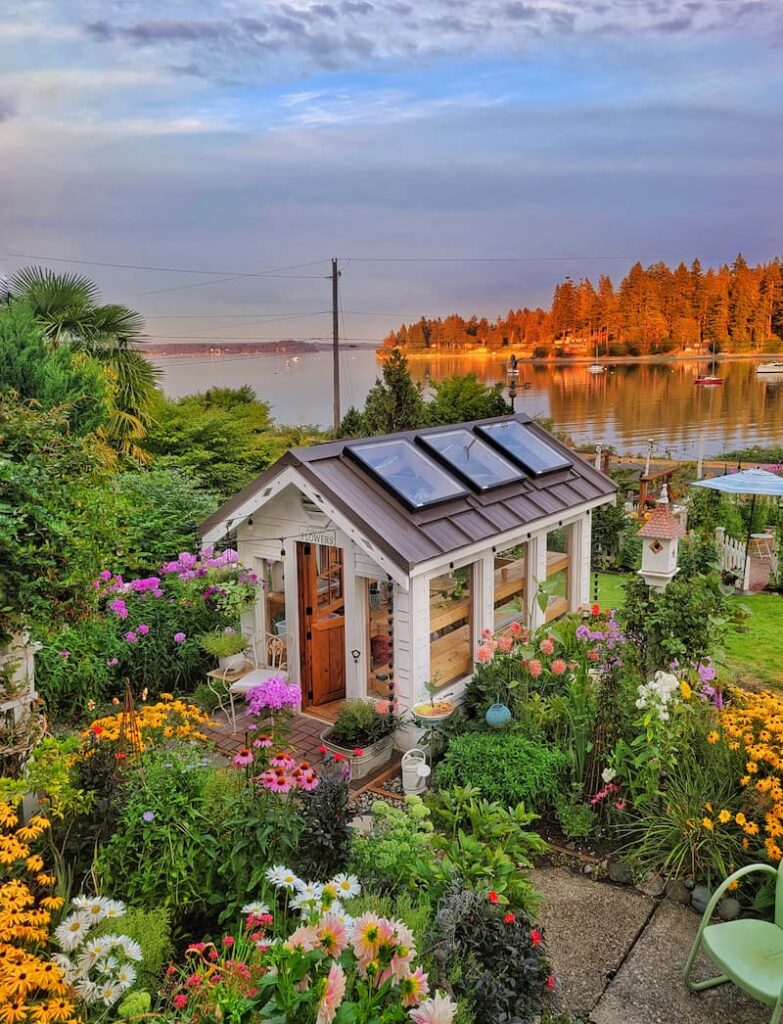
Most of the flowers I share here are grown from seed in our greenhouse and planted in raised beds and containers throughout our cottage garden.
Best Fall Blooming Perennials
Asters
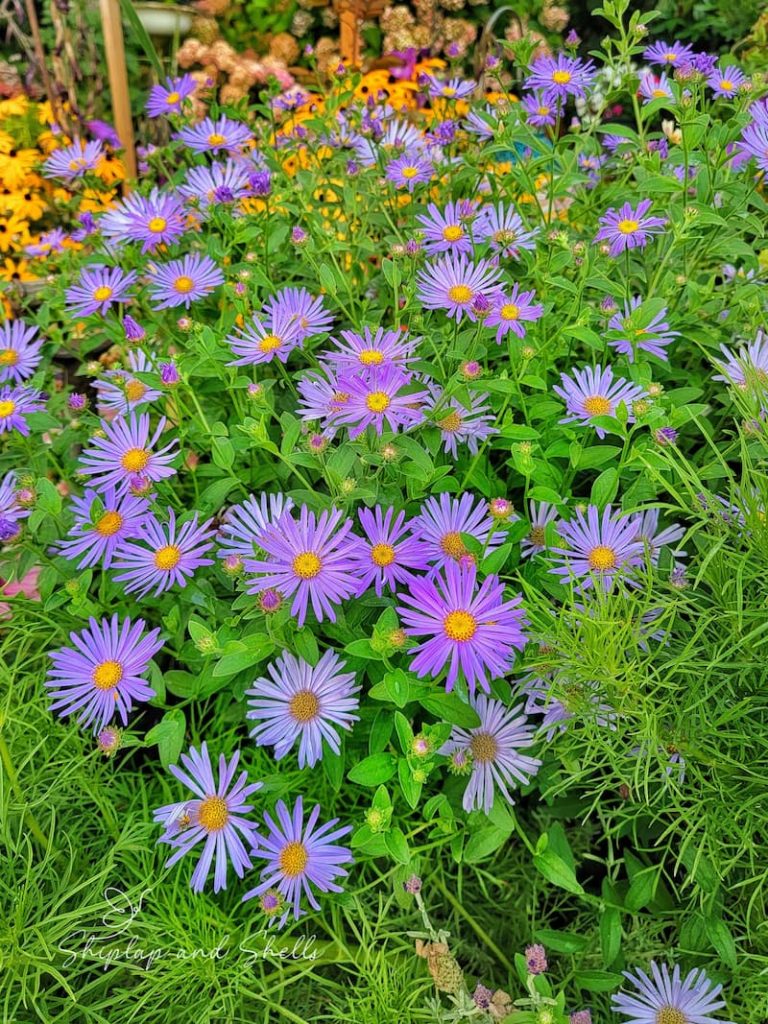
Asters are the unsung heroes of the fall garden. They bloom from late August through October with cheerful star-shaped flowers in purple, pink, white, and blue.
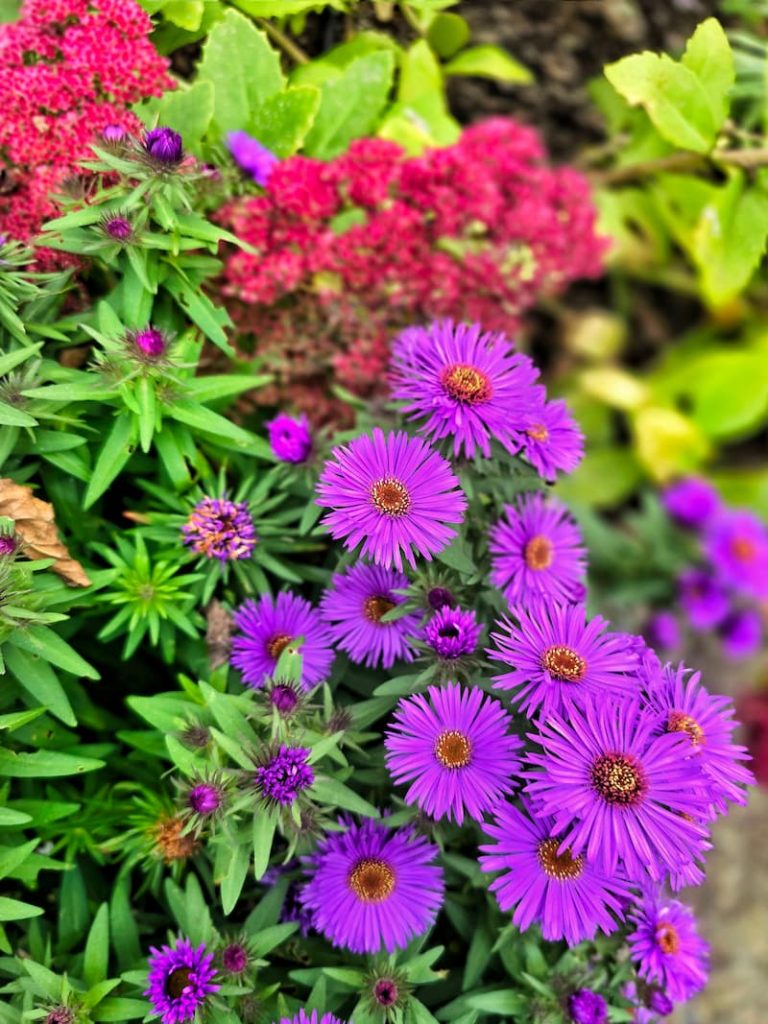
In my garden, asters are always buzzing with bees and butterflies this time of year. Plant them in clusters along borders or pathways for a real punch of color.
Chrysanthemums (Mums)
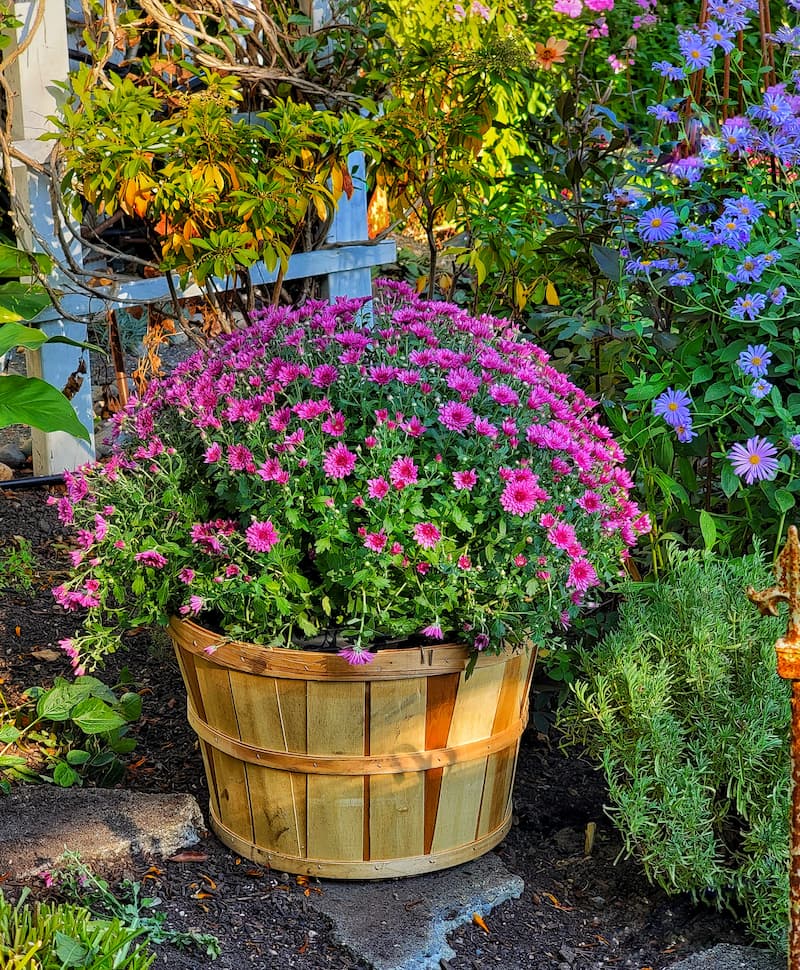
Nothing says fall like mums. Their dense, bushy blooms can last six weeks or more, carrying color right up until frost.
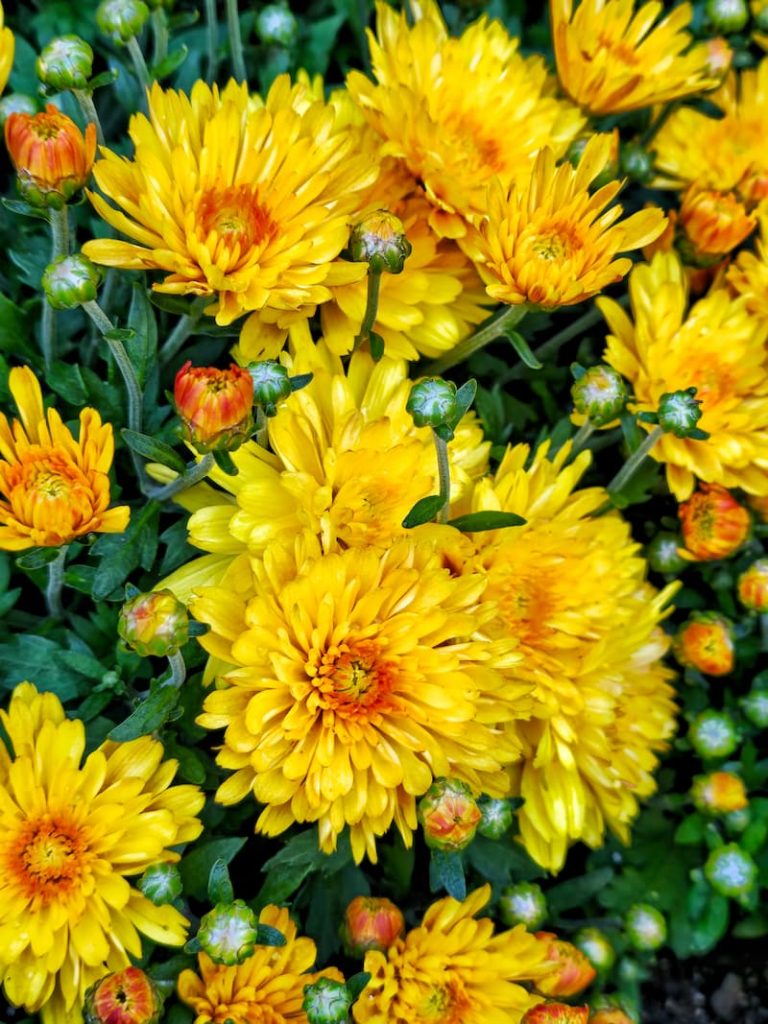
I pinch mine back in early summer for bushier growth and more blooms. They’re perfect in porch pots with pumpkins or mass-planted in beds. Even a single mum on the porch says welcome to fall.
Sedum ‘Autumn Joy’
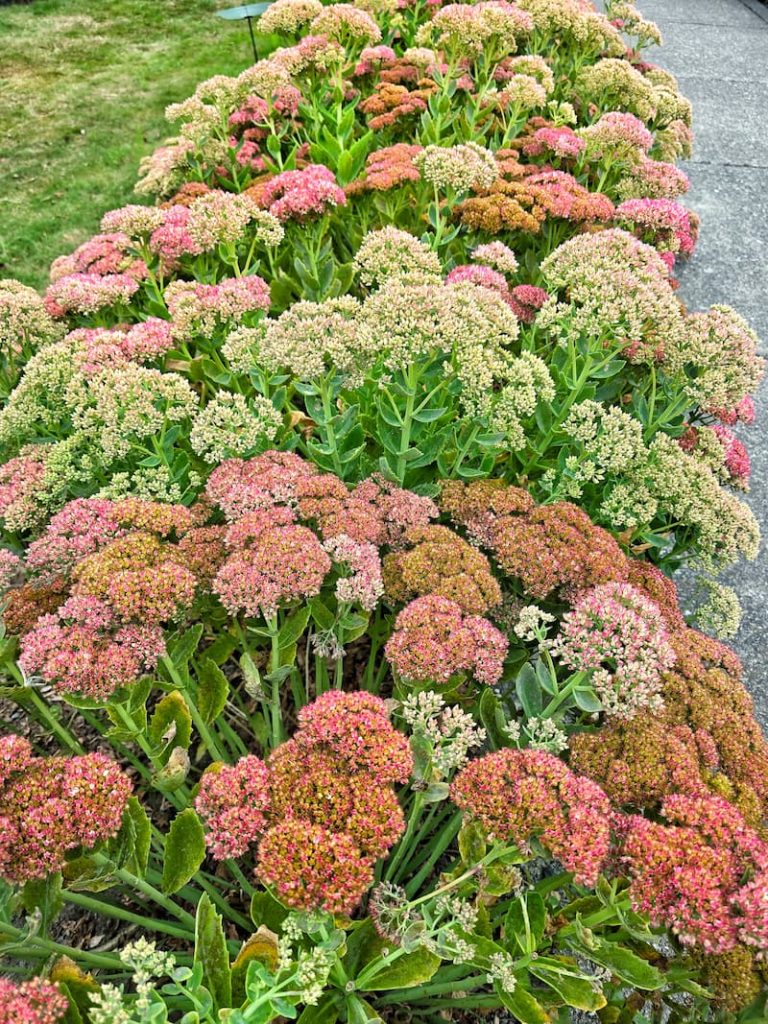
If you want a plant that thrives on neglect, Sedum ‘Autumn Joy’ is it. The succulent-like leaves and clusters of star-shaped flowers shift from soft pink to a deep copper-red as the season winds down.
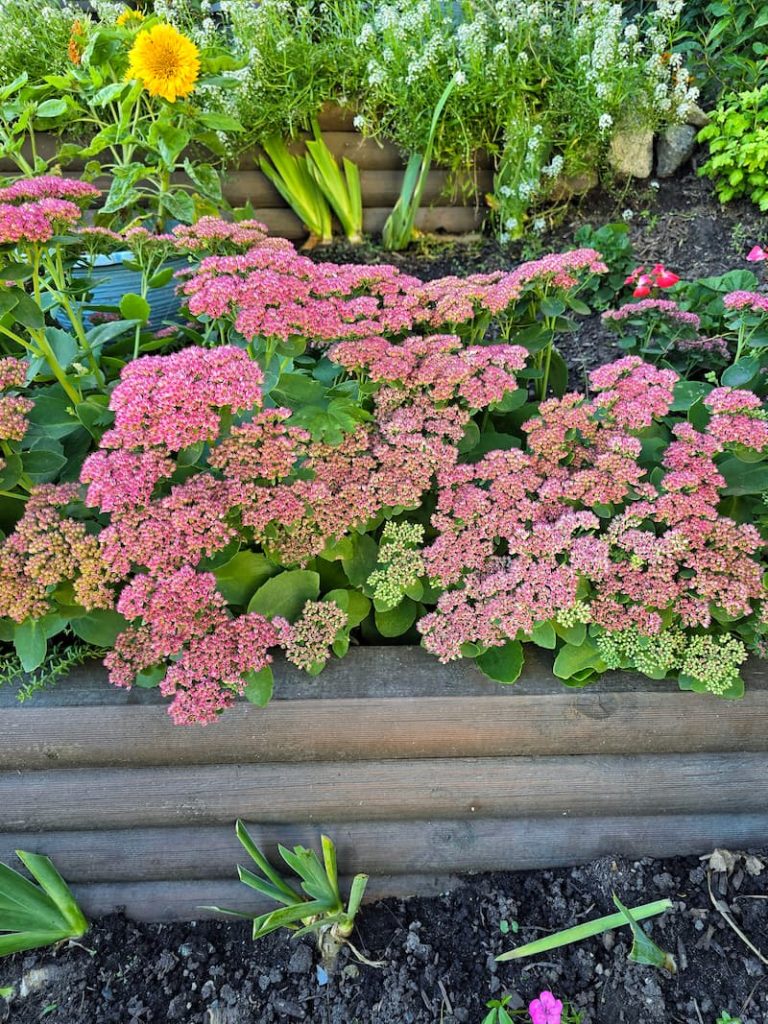
Butterflies can’t resist it, and I love snipping a few stems for arrangements because they seem to last forever. Even after blooming, the seed heads add winter interest.
Japanese Anemones
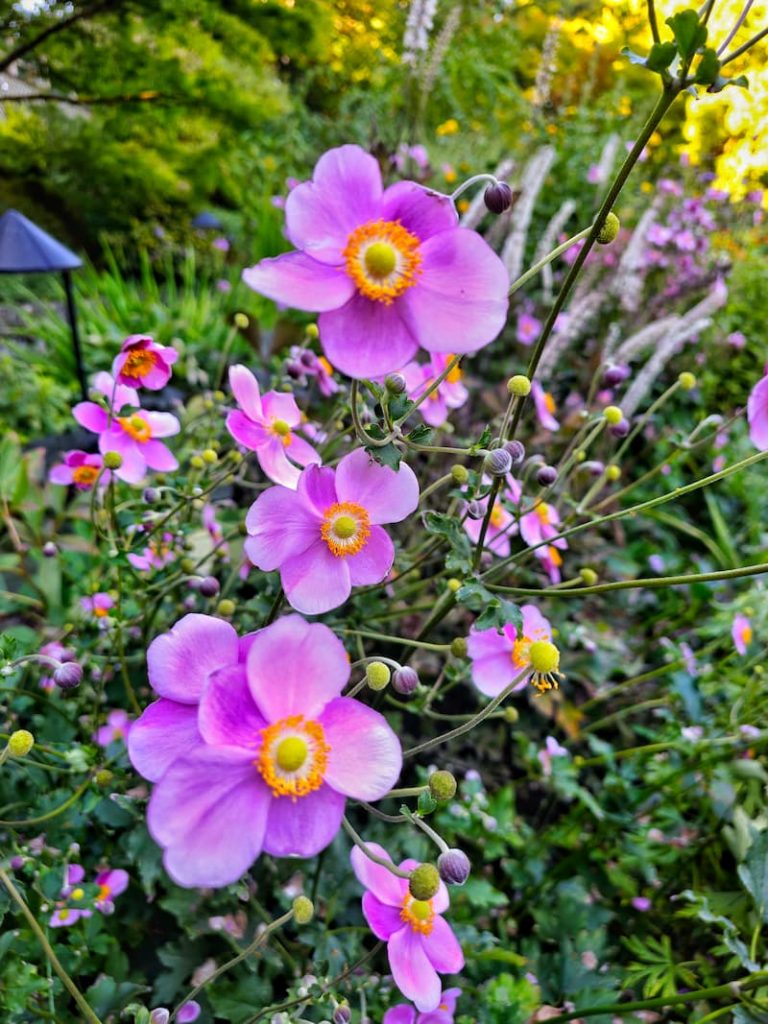
Also known as windflowers, Japanese anemones add elegance to shady spots as everything else winds down. They bloom from late summer into October with delicate white, pink, or mauve petals that dance in the breeze.
In my garden, they’re reliable bloomers in those tricky part-shade areas. They naturalize slowly over time, forming drifts that make the whole space feel softer.
Black-Eyed Susans (Rudbeckia)
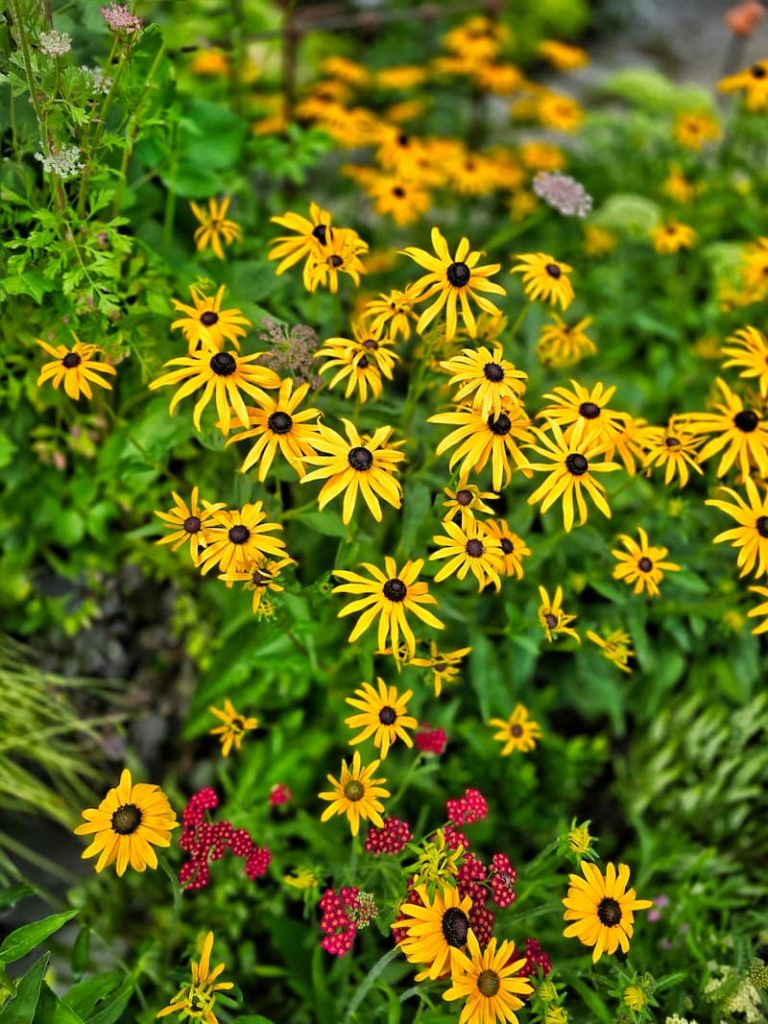
Black-Eyed Susans (Rudbeckia)
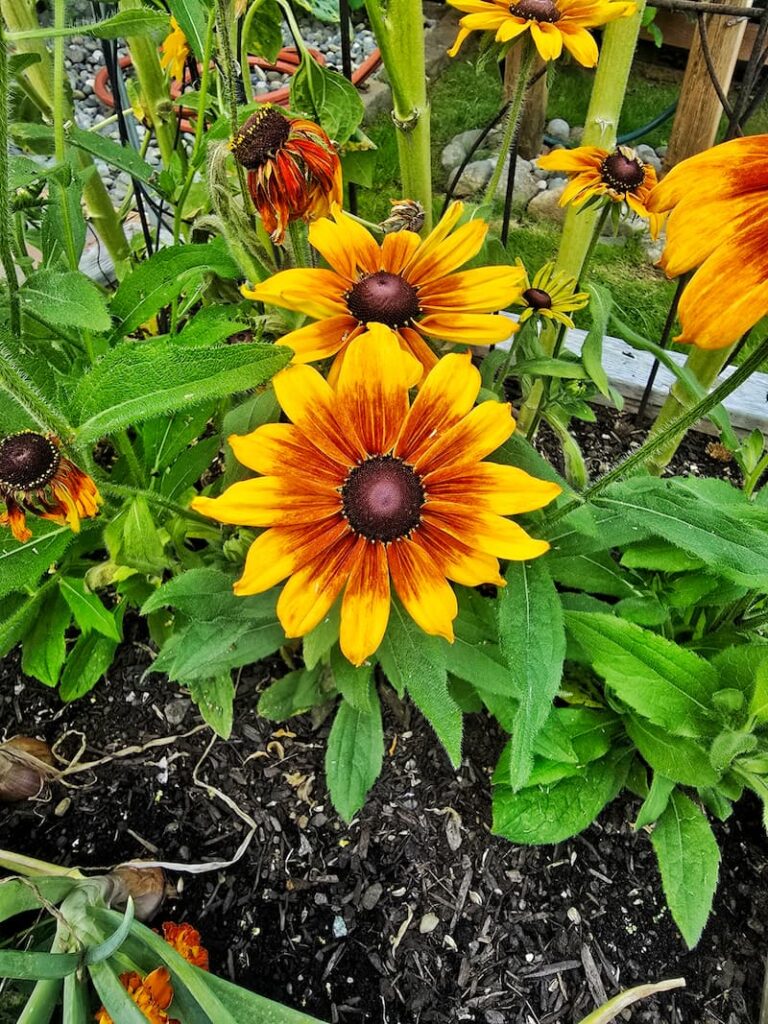
These golden blooms with dark centers are hard workers in the fall garden. Black-eyed Susans flower from mid-summer into early fall, often blooming for weeks.
Pollinators love them, and they’re tough enough to bloom where more delicate flowers won’t. I let a few go to seed each year because the birds enjoy them almost as much as I do.
Tickseed (Coreopsis)
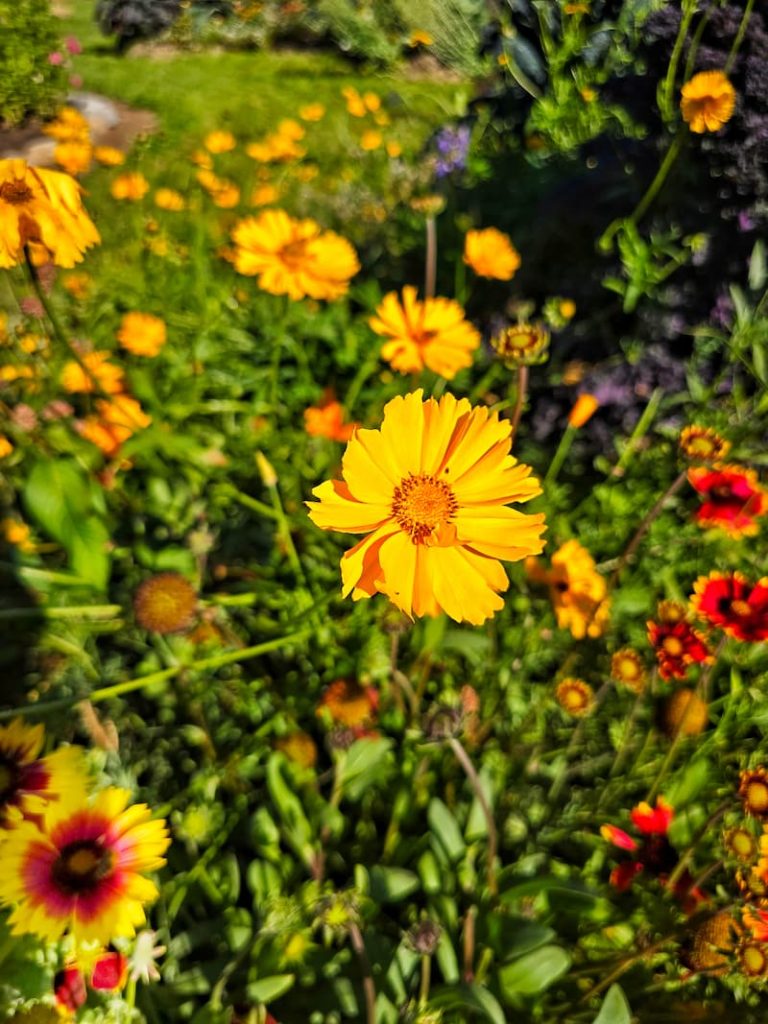
Tickseed is a little ray of sunshine that doesn’t know when to quit. It blooms from early summer well into fall, keeping borders bright.
Most varieties are golden yellow, though some have pink or red tones. It’s a pollinator favorite, and the fine, airy foliage adds soft texture. In my beds, it pairs beautifully with purple asters.
Hydrangeas
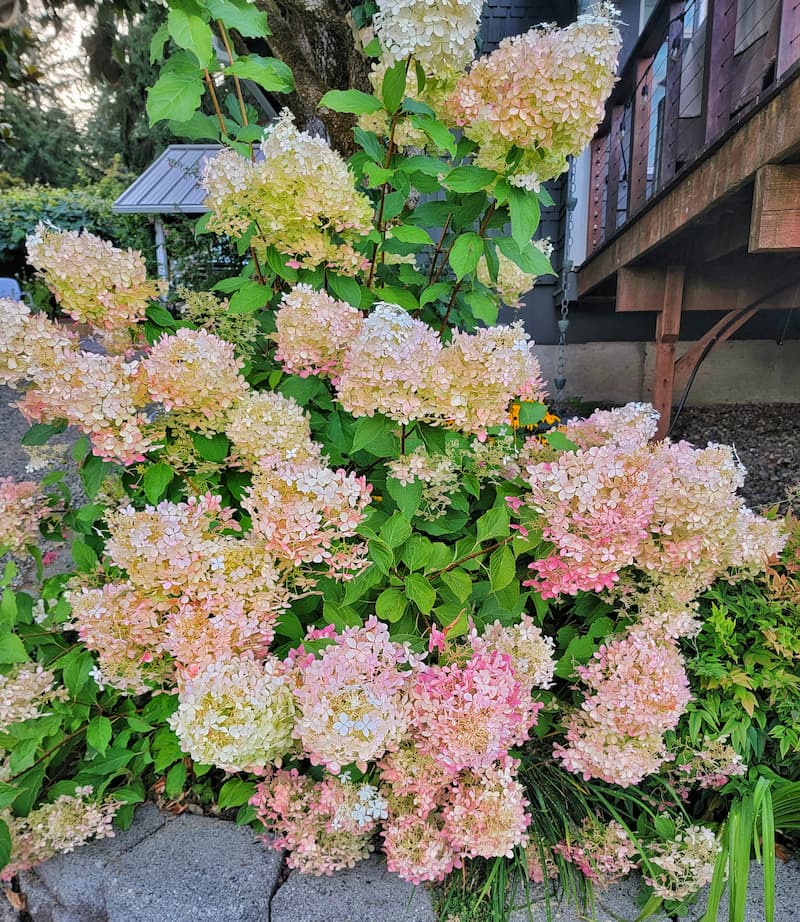
Hydrangeas may be summer stars, but many varieties, especially panicles like Hydrangea paniculata, keep blooming well into fall. As temperatures drop, the blooms often shift into dusty pinks, purples, and deep burgundy.
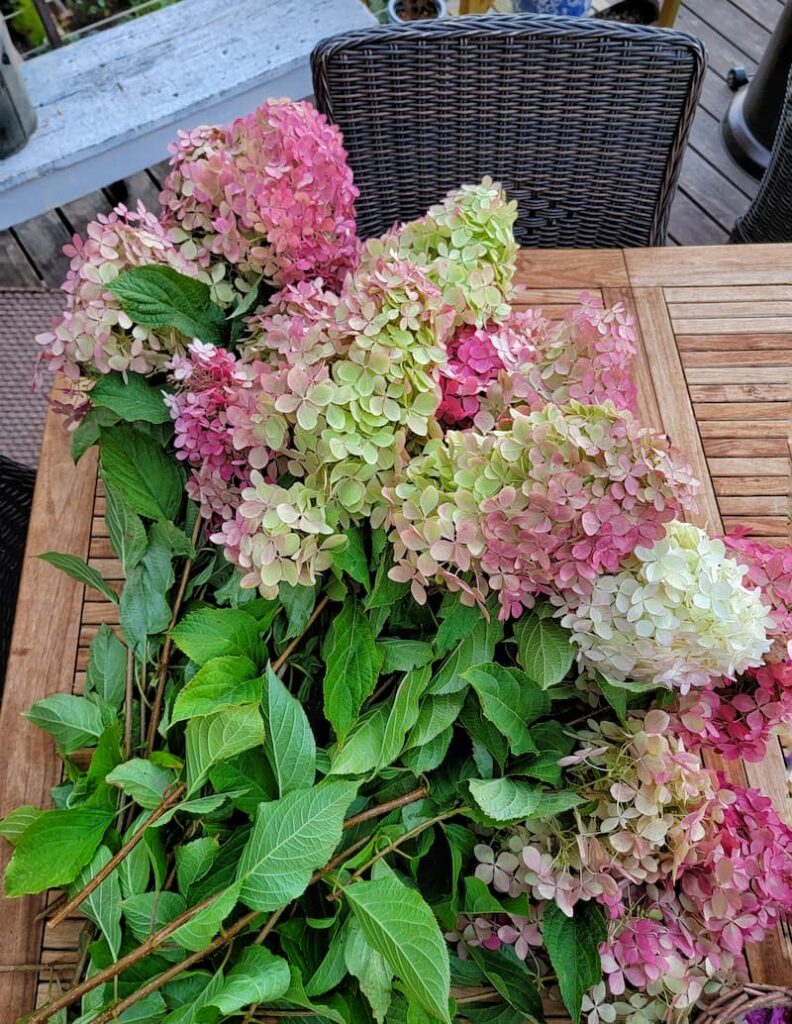
I love cutting hydrangea blooms for arrangements this time of year. Their muted fall tones look gorgeous indoors. And when left on the shrub, they dry beautifully right on the plant.
Dahlias
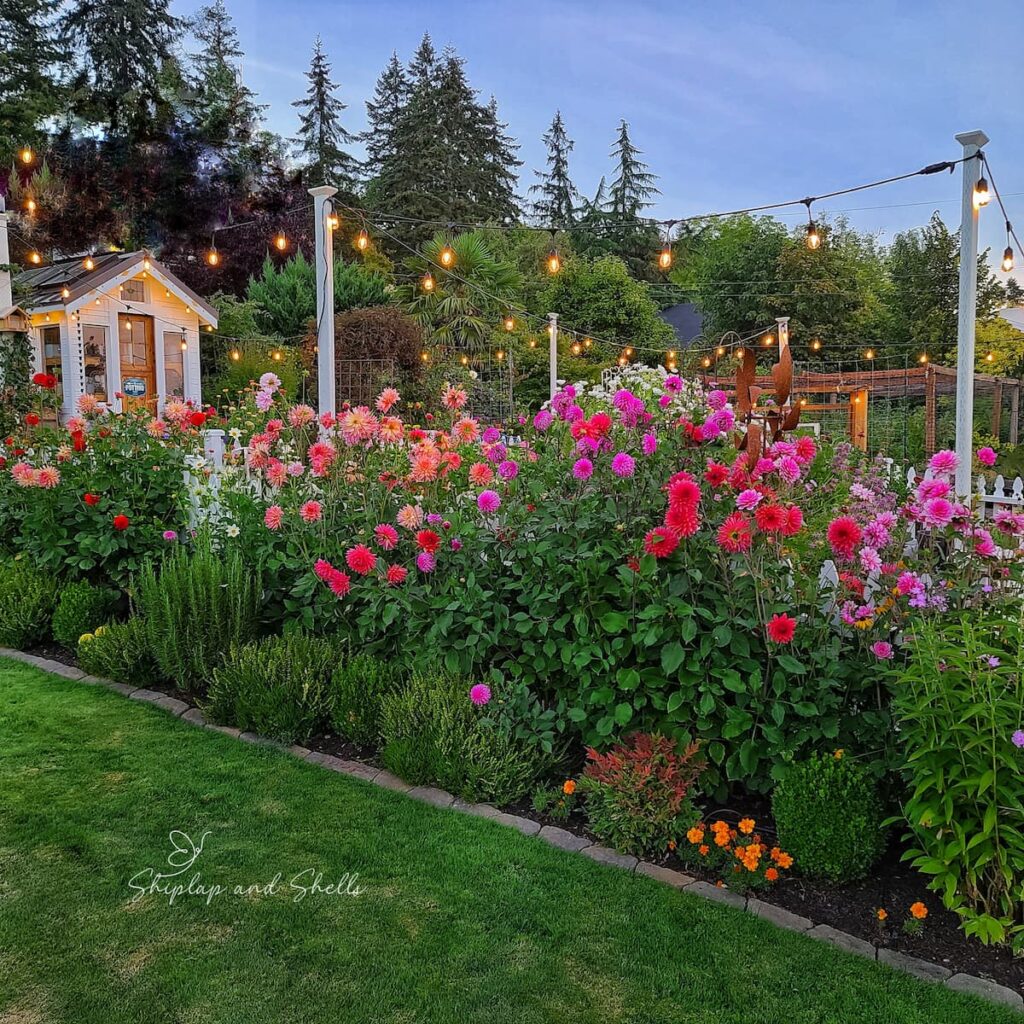
Dahlias are the showstoppers of the late summer and fall garden. The blooms range from petite pom-poms to dinner-plate giants, in everything from pastels to bold jewel tones.
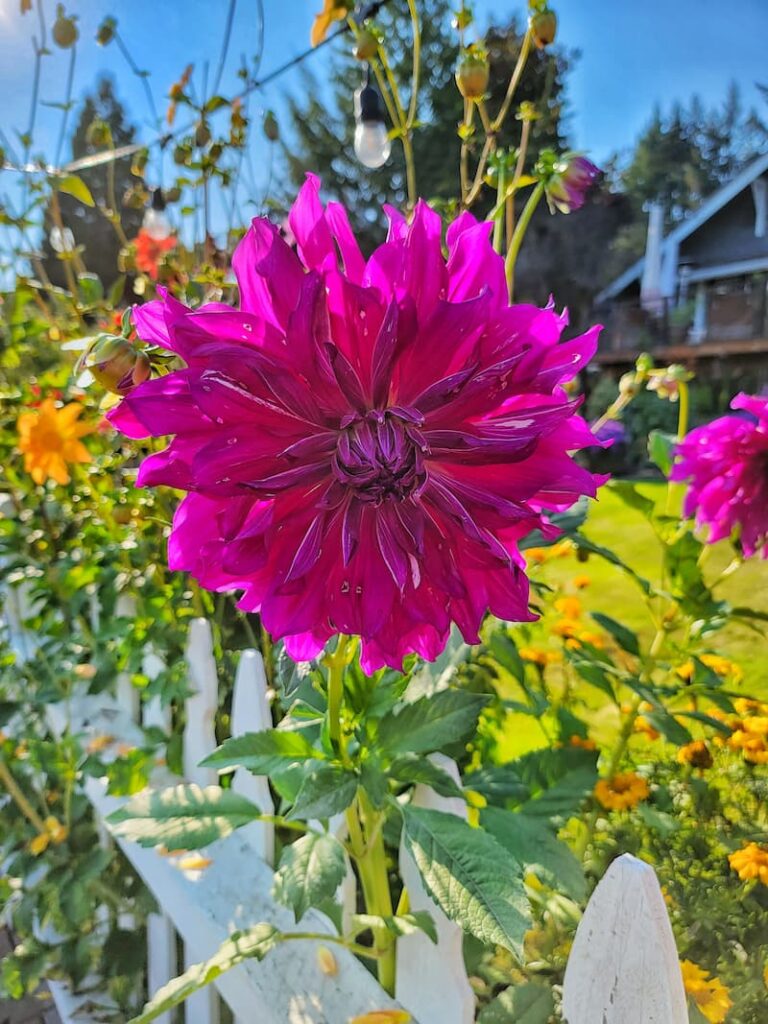
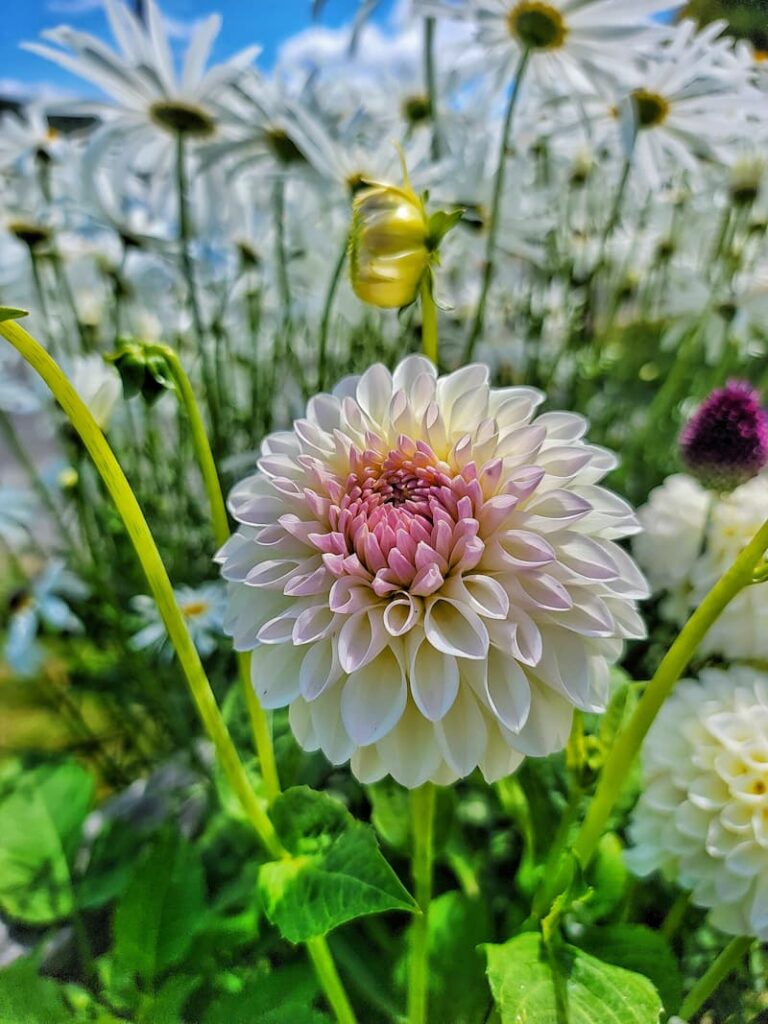
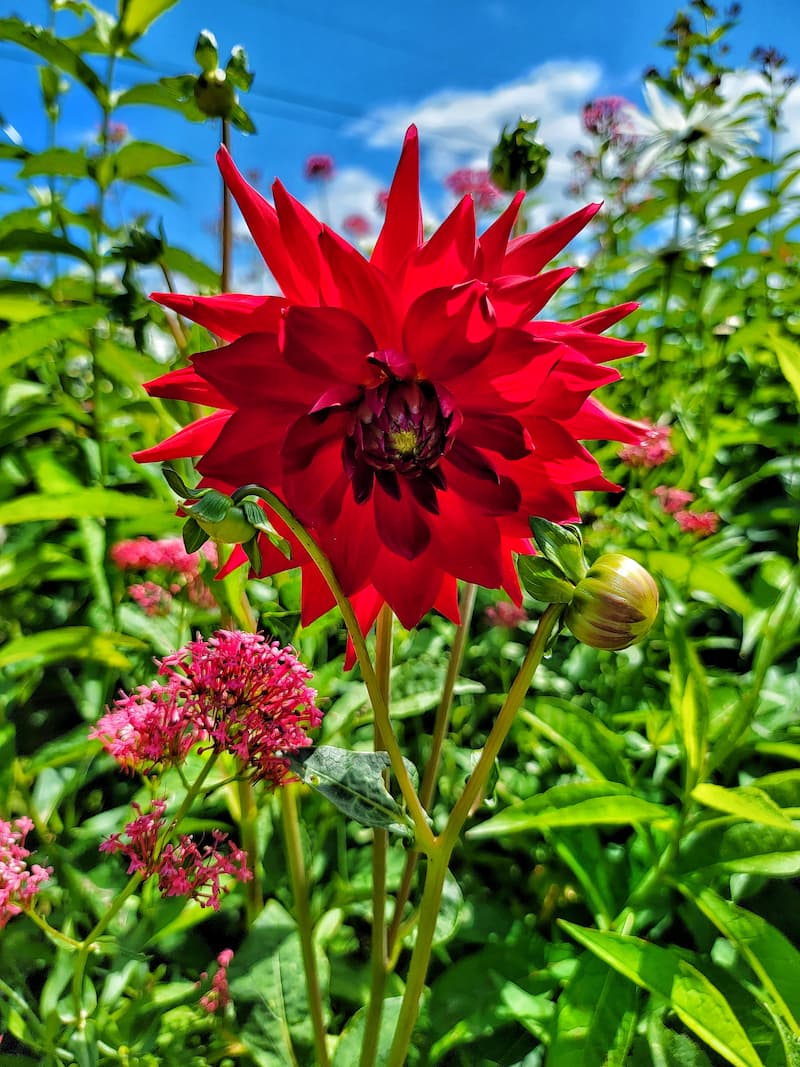
I can’t get enough of them in bouquets. Those structured blooms are florist-quality straight from the garden. The only downside? Heavy autumn rains can ruin open flowers, so I cut them ahead of storms to enjoy inside.
Best Fall Blooming Annuals
Zinnias
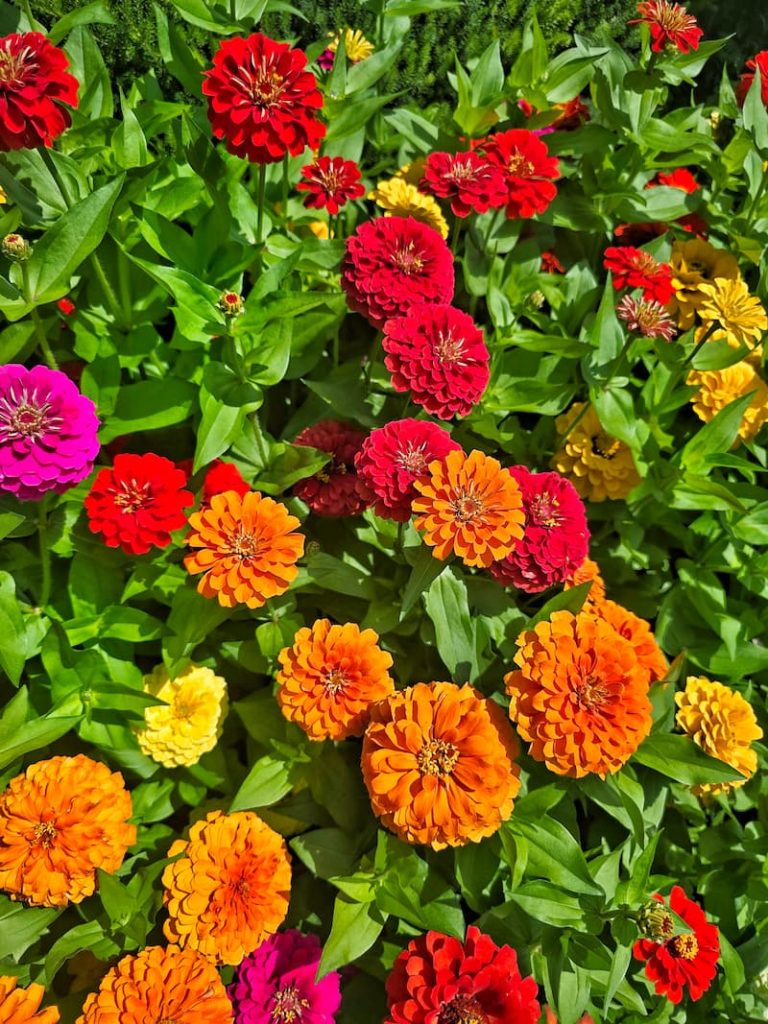
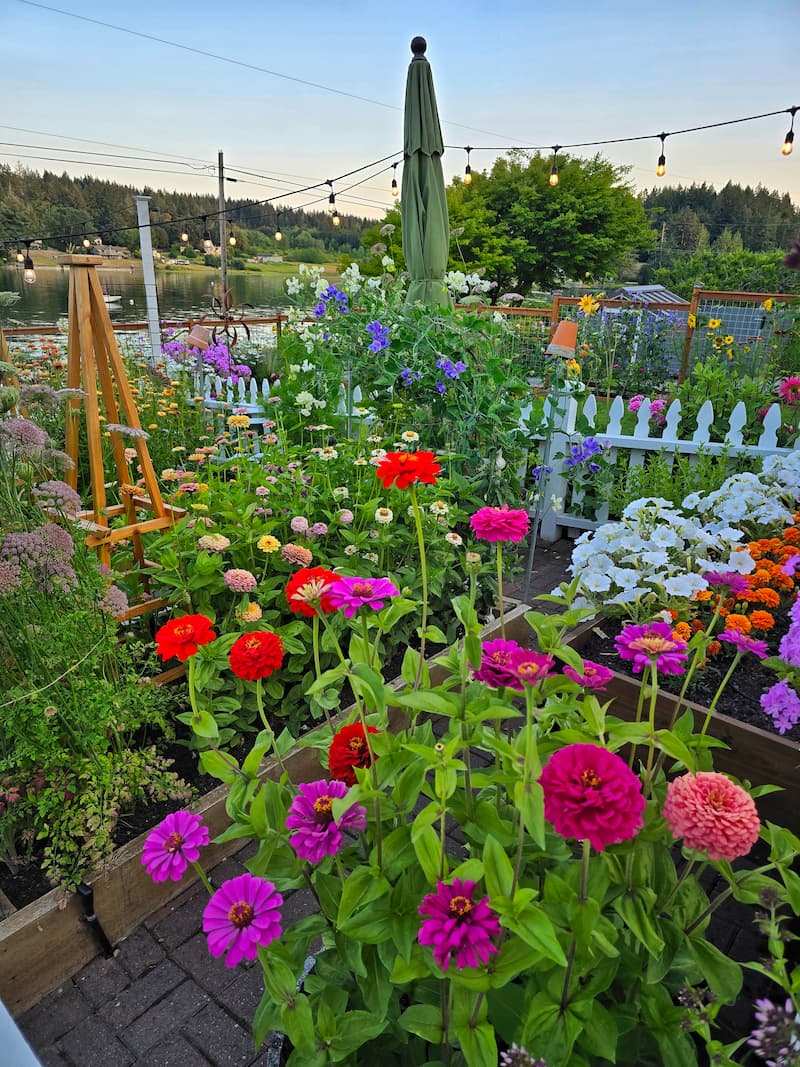
If there’s one flower that makes me smile every time, it’s a zinnia. They come in almost every color imaginable: pink, red, yellow, orange, purple, even bi-color. And they bloom nonstop until the first frost.
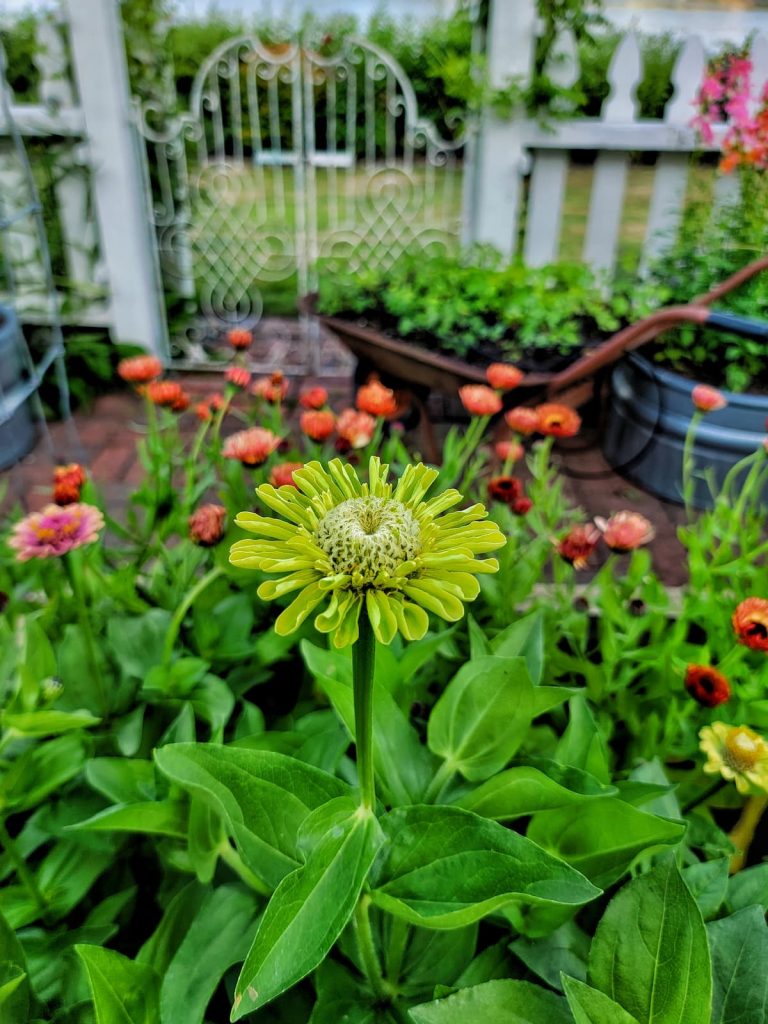
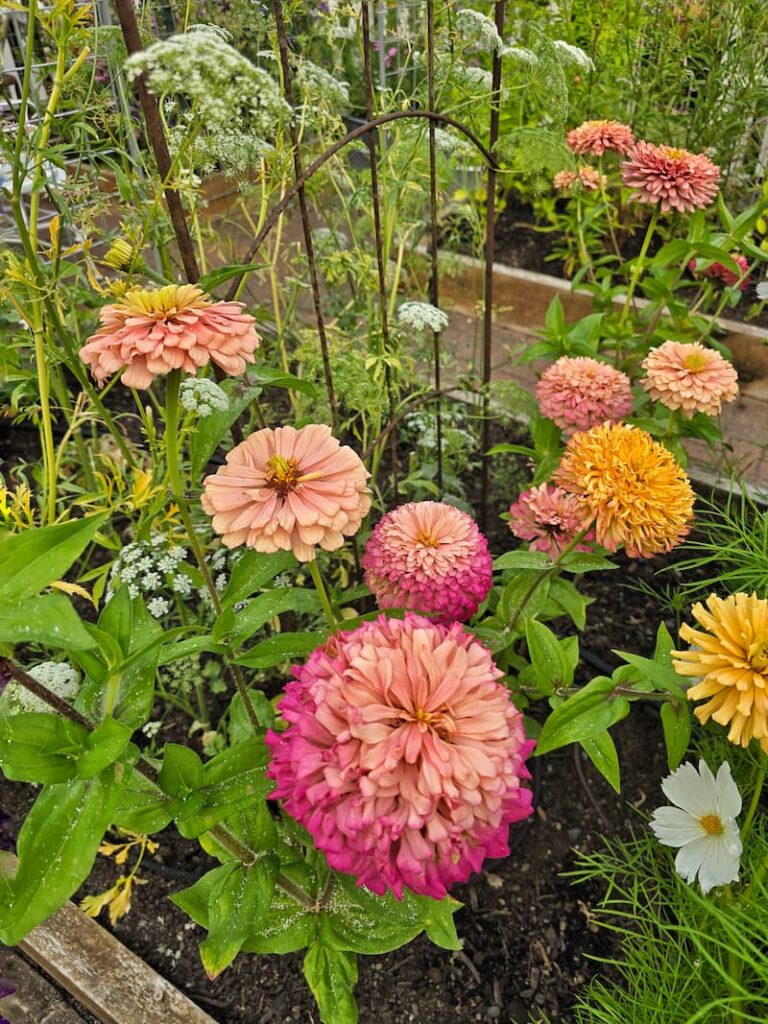
They’re my go-to for cut flowers because they last forever in a vase. By late summer, mine sometimes show powdery mildew on the leaves, but the flowers keep going strong. Best advice? Keep cutting, and they’ll keep blooming.
Strawflowers
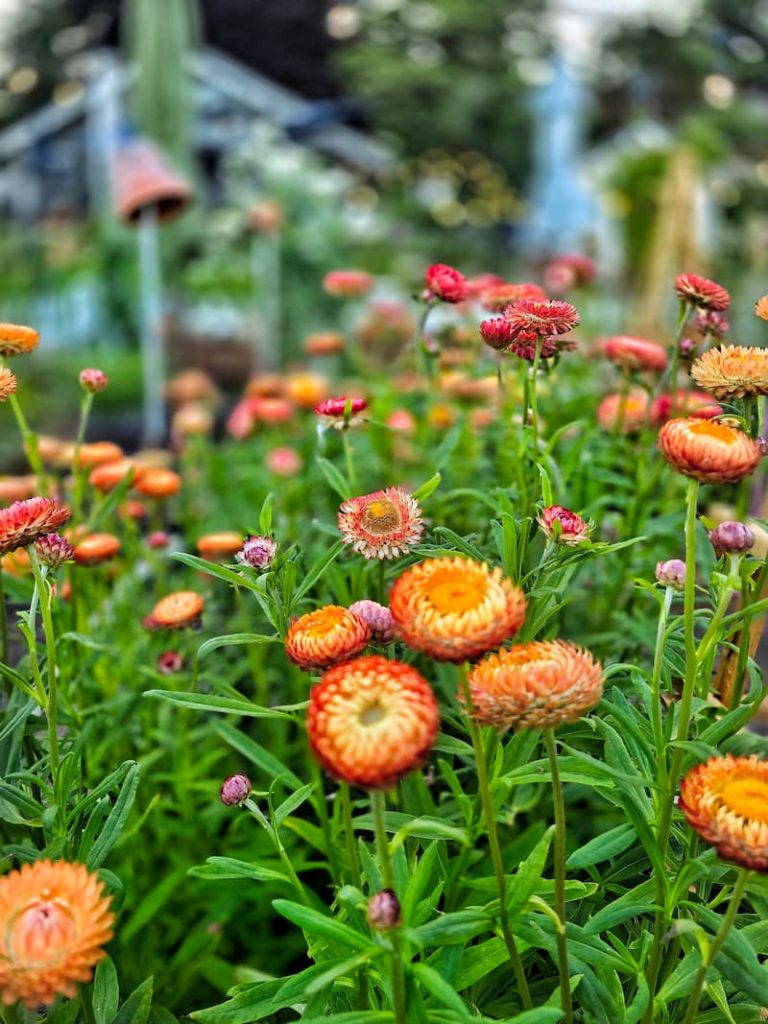
Strawflowers are fall’s secret weapon. The papery petals almost feel fake, and the best part is how well they hold their color when dried.
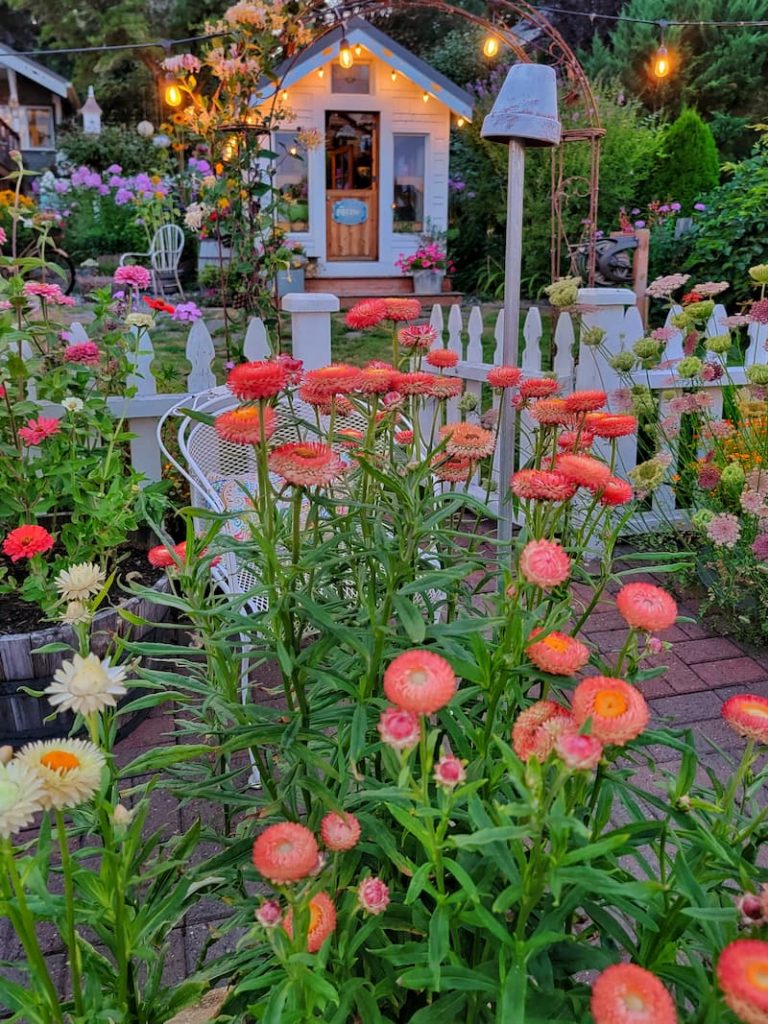
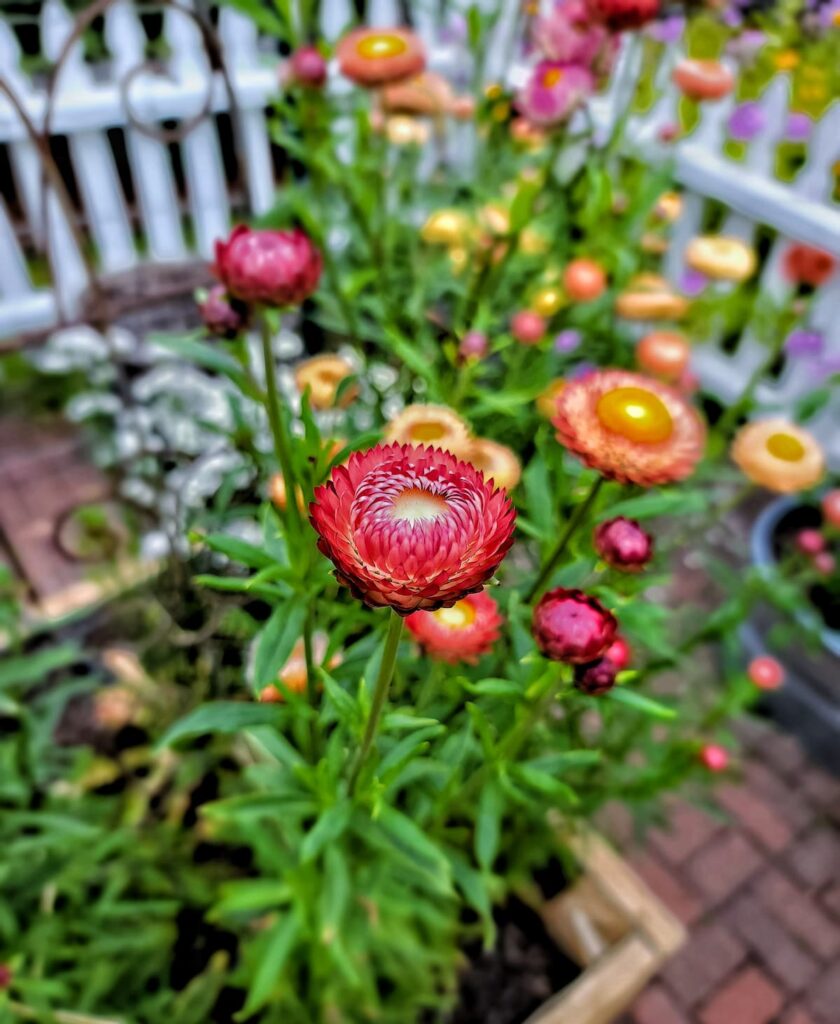
I grow them for both fresh and dried arrangements. They’re stunning in bouquets and wreaths, and they keep their color long after the season ends. In my fall garden, strawflowers are the gift that keeps giving.
Cosmos
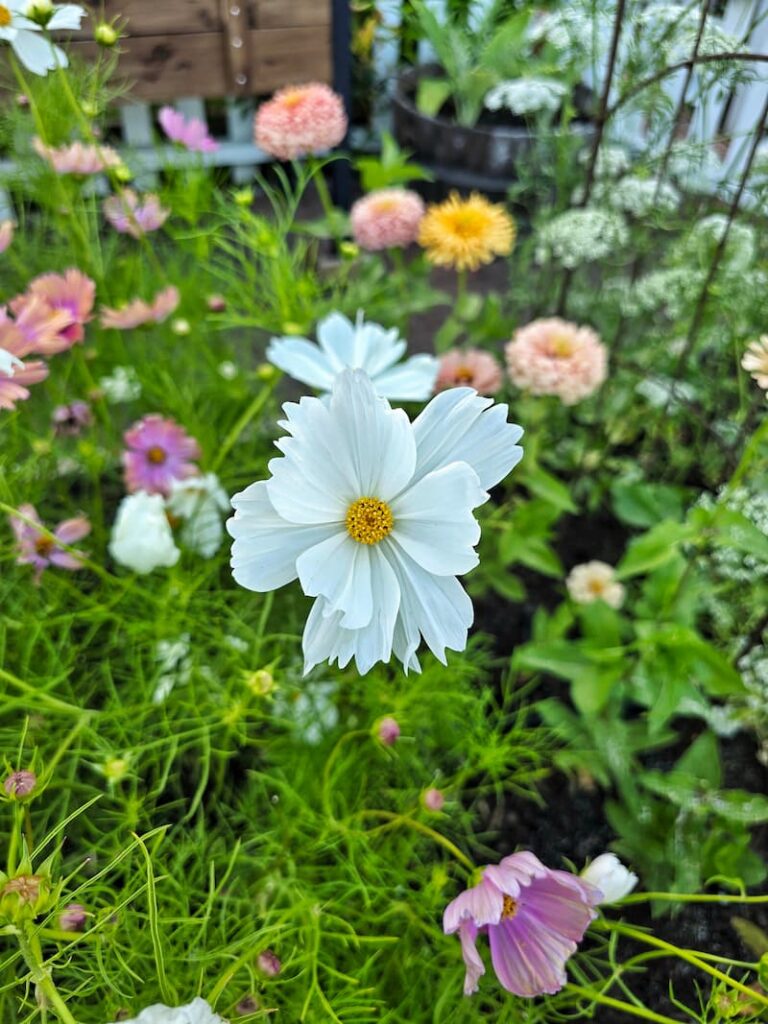
Cosmos bring a touch of whimsy to the fall garden. The daisy-like flowers sway on tall, feathery stems like they’re dancing in the breeze.
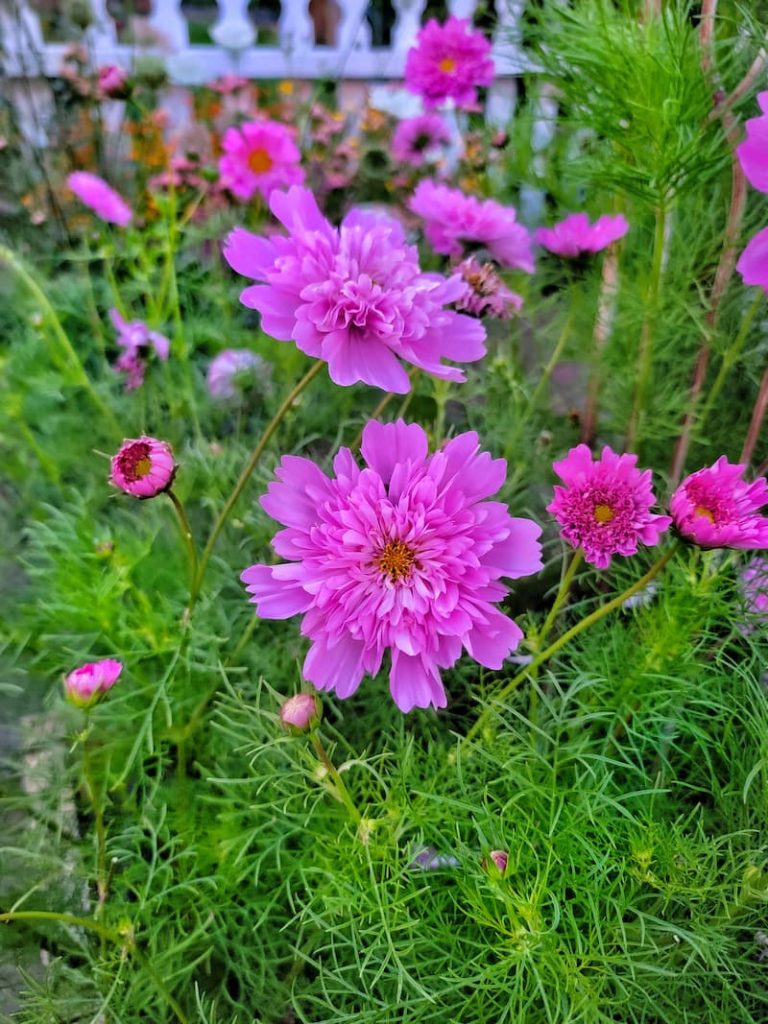
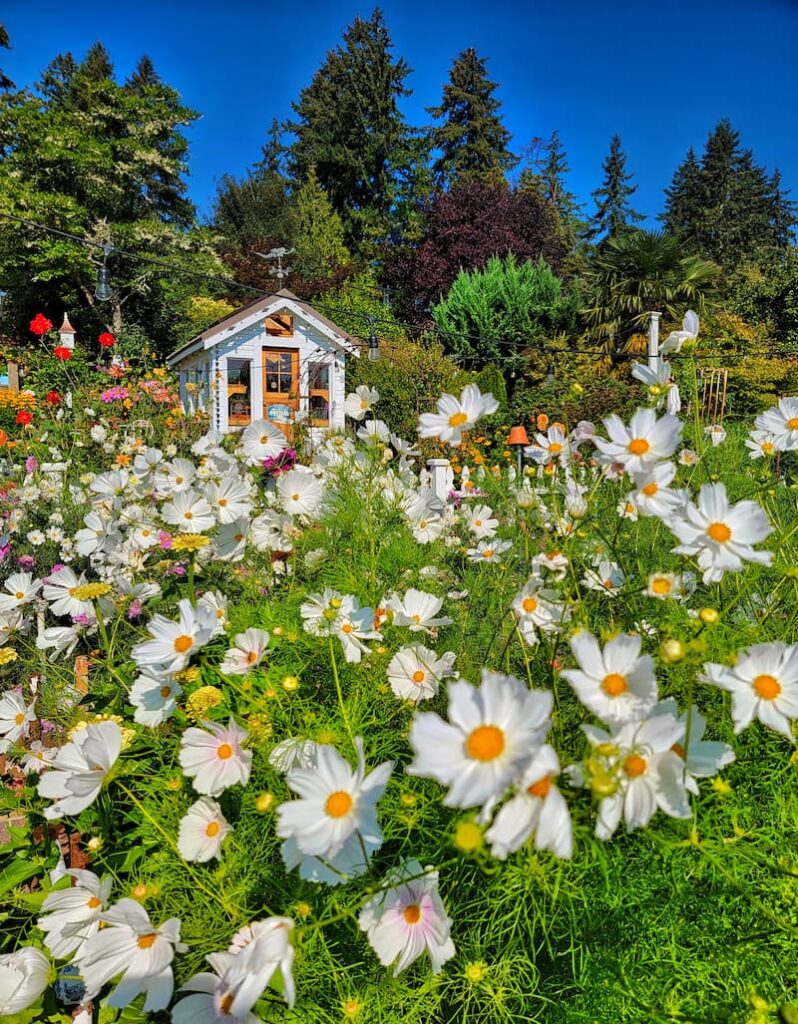
Cosmos reseed easily, so I often find them popping up where I didn’t plant them, which is always a happy surprise. Their airy texture contrasts perfectly with bold dahlias in a fall flower arrangement.
Sunflowers
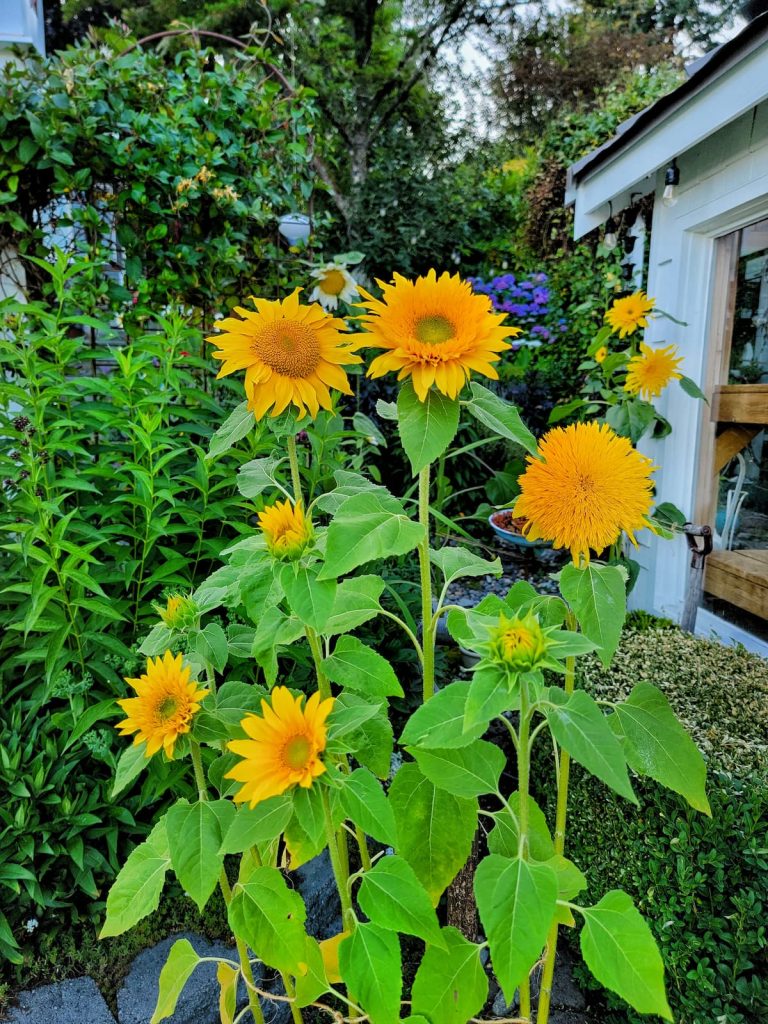
Sunflowers aren’t just for summer. They’re stunning in fall, too. The classic golden yellow is always a favorite, but I love the deep red, bronze, and bi-color varieties for autumn arrangements.
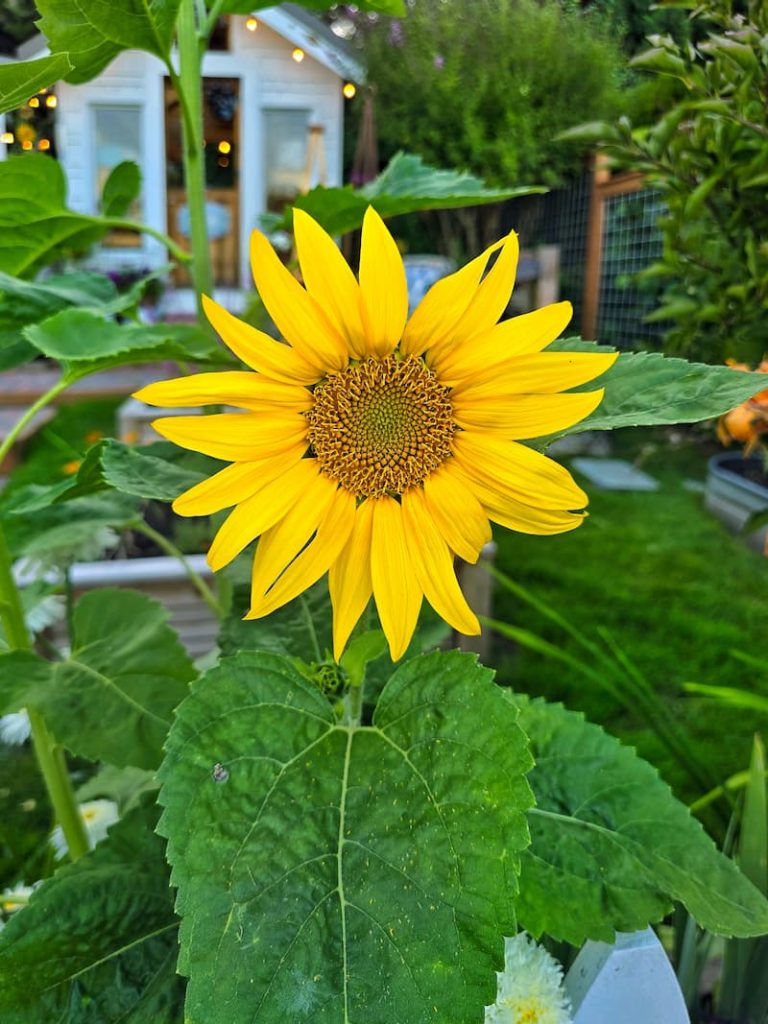
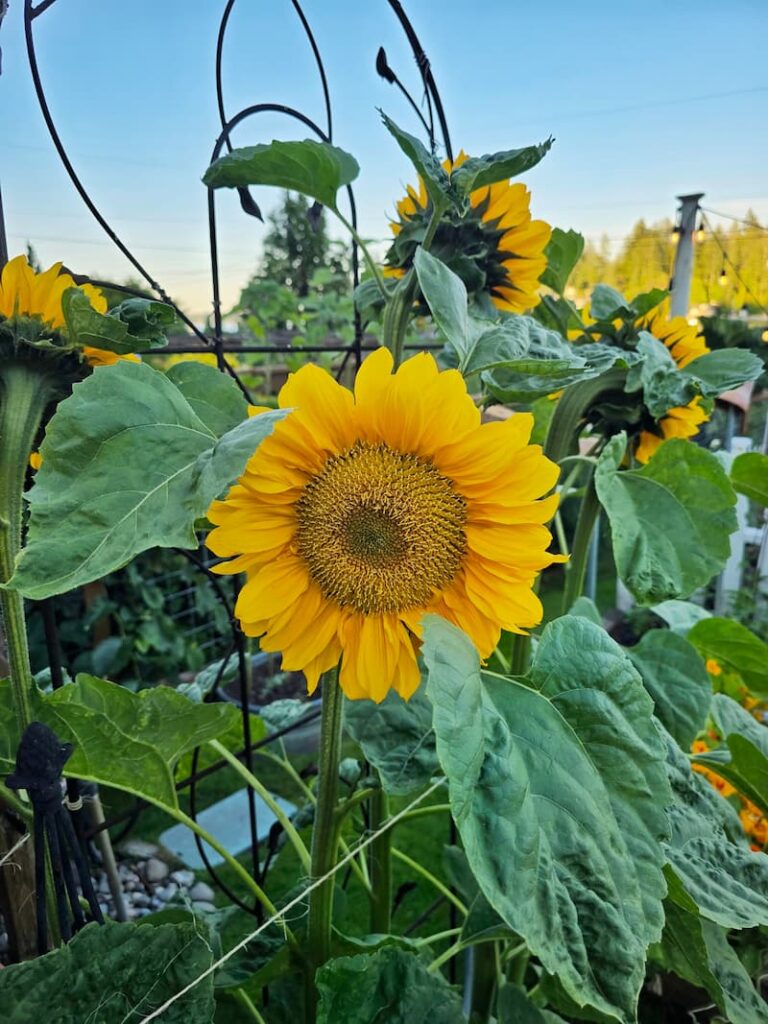
Sunflowers are pollinator magnets, and once the blooms fade, the seed heads feed the birds. In my garden, they’re the bridge between summer cheer and autumn warmth.
Celosia
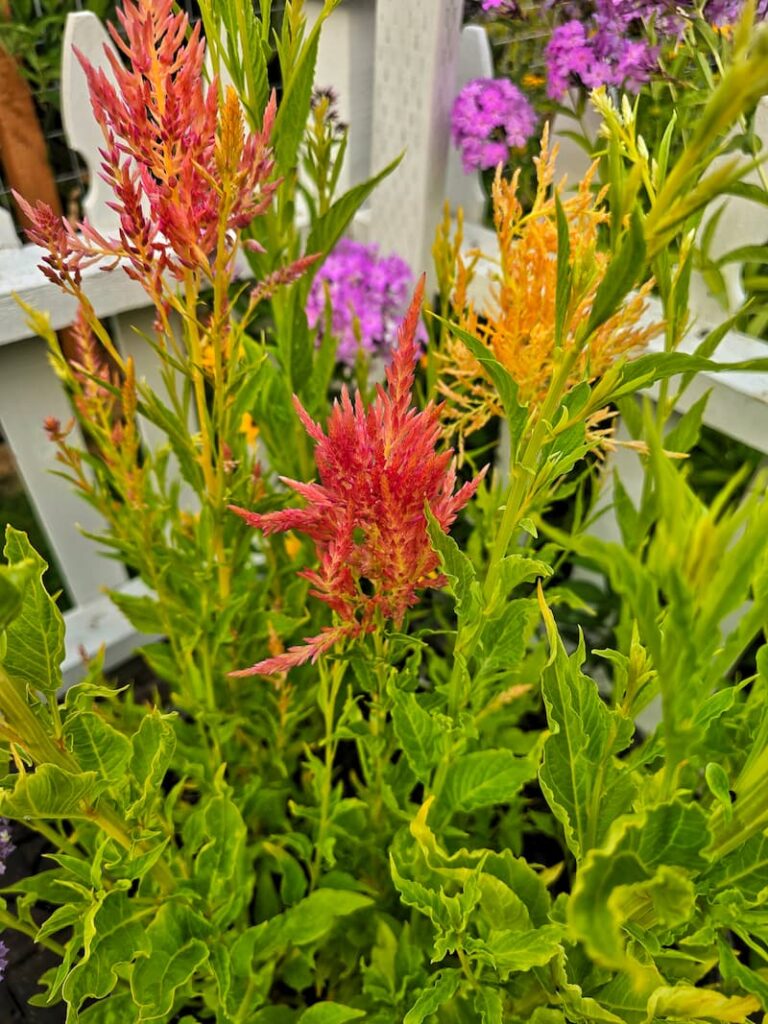
Celosia is bold, fun, and just a little wild. The blooms look like flames or velvety tufts, and the colors are electric: reds, oranges, yellows, and purples.
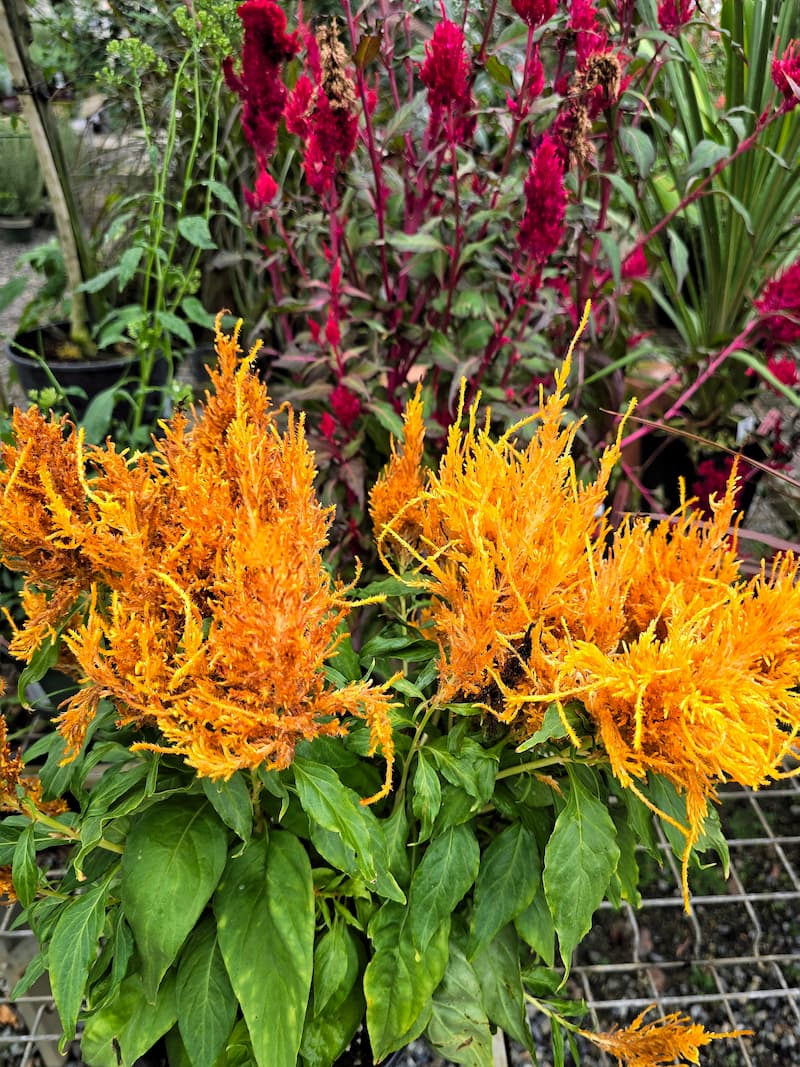
I love adding celosia to containers. It makes a display look instantly lush and textured. These flowers are long-lasting and can be dried for later, too.
Pansies and Violas
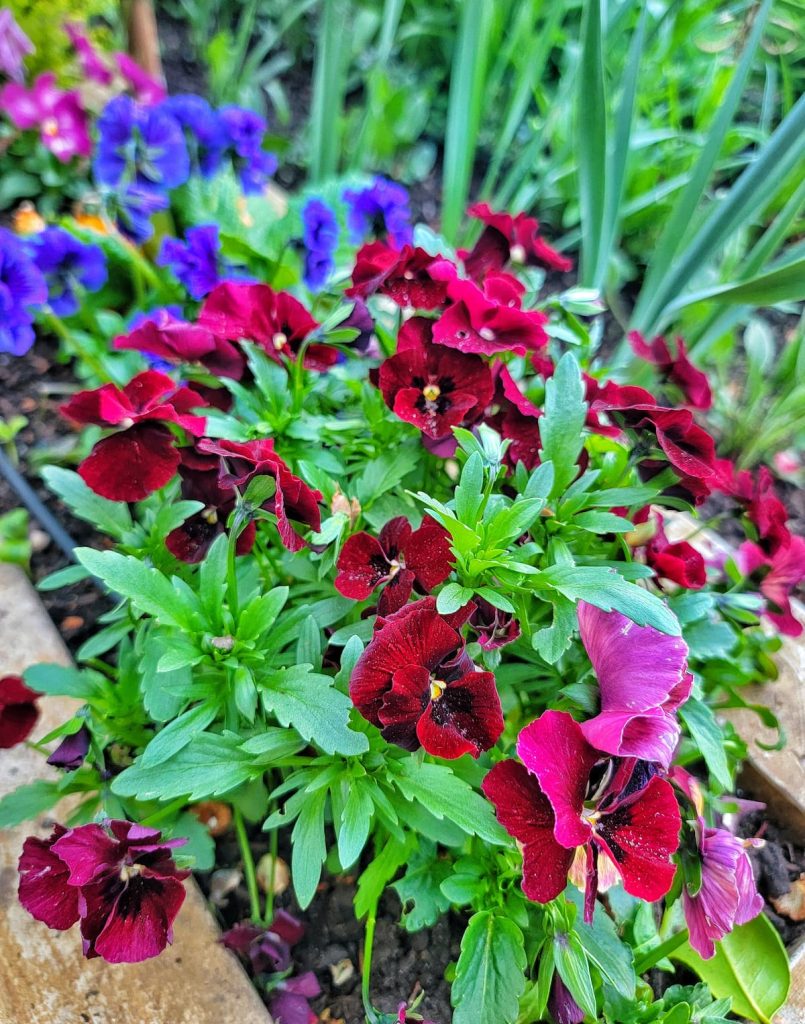
Sweet and cheerful, pansies and violas thrive in cool temps, which makes them perfect for fall and early spring alike. Their little petals in purple, yellow, blue, and white soften containers and window boxes.
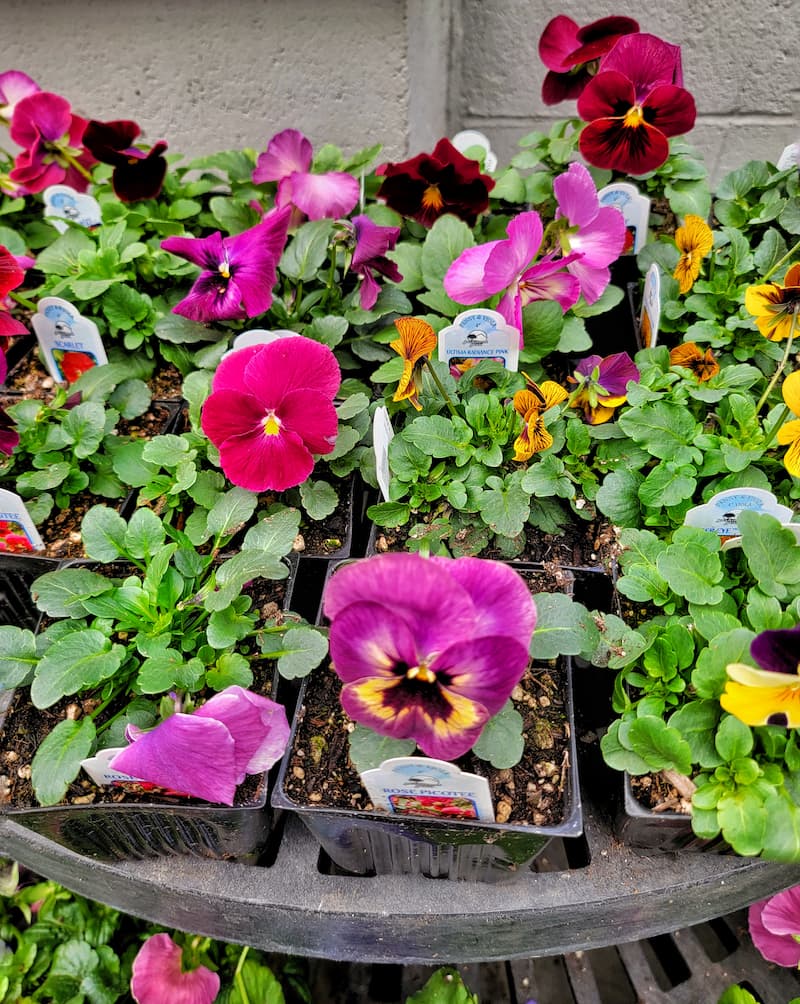
I plant them in window boxes with pumpkins tucked around for instant coziness. They may be small, but they hold up beautifully in chilly weather, even after a light frost.
Marigolds
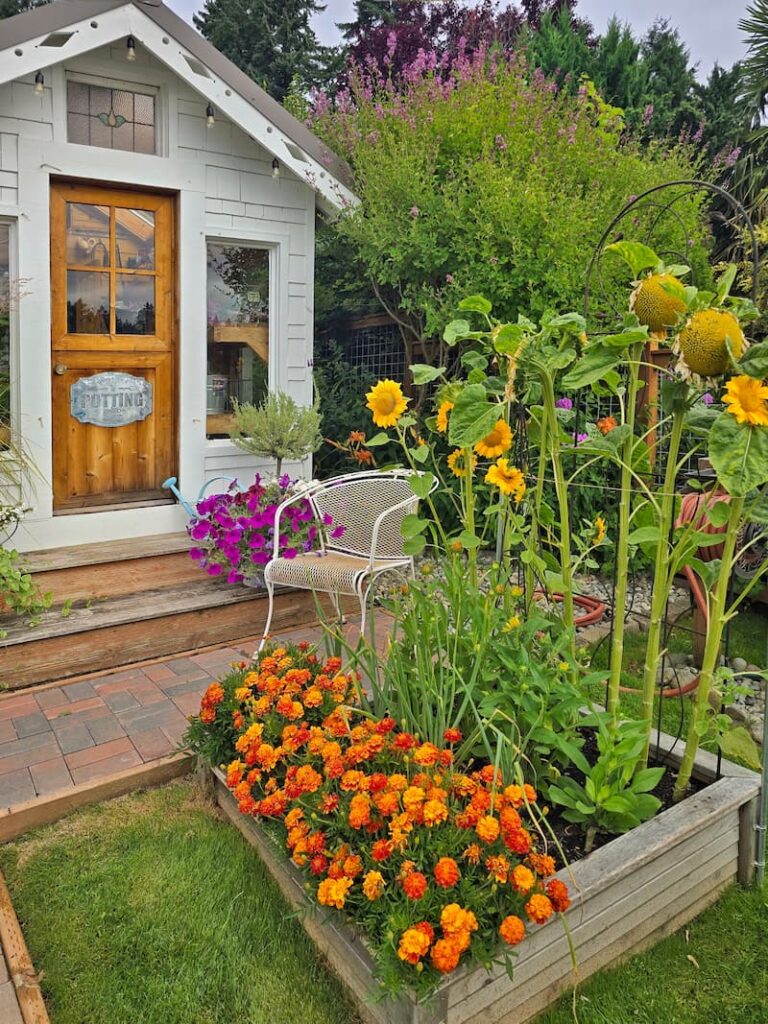
Marigolds are little bursts of sunshine that don’t quit until frost. Their bright yellows, oranges, and reds light up beds and planters when everything else is fading.
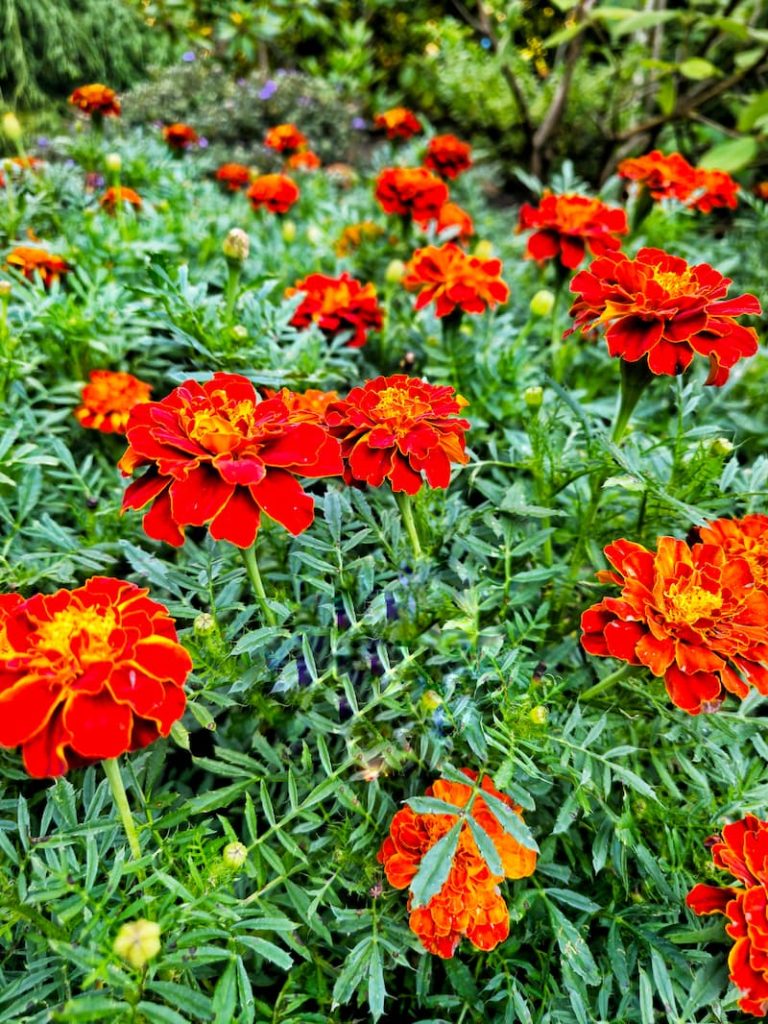
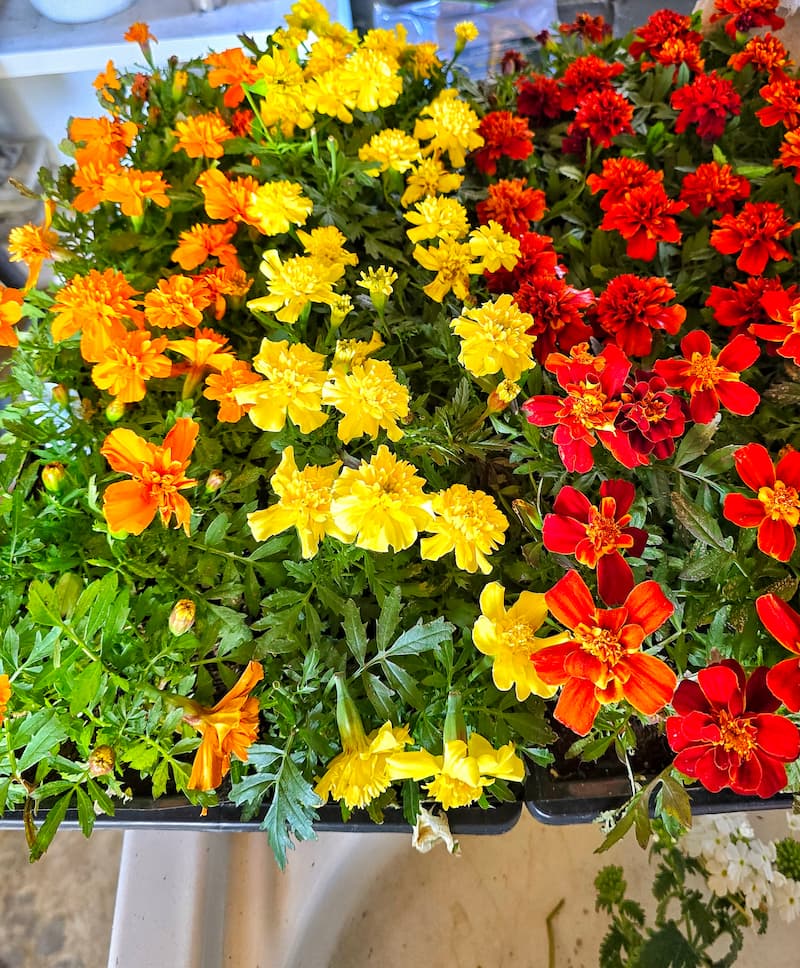
They’re garden multitaskers, too. The scent helps repel pests, so they make great companions for vegetables. I love mixing marigolds into fall containers with ornamental kale for a fiery pop of color.
Let’s Plan Your Dream Garden With Our
Gardening Planner
Unlock Your Garden’s Potential.
Our 35-page Ultimate Garden Planner is designed to help you organize, track, and flourish in your gardening endeavors.
Get yours for $4.99
Fall Blooming Plants for Cut Flowers
If you love bringing flowers inside as much as I do, fall doesn’t have to mean the end of fresh bouquets. Some of the best cut flowers of the season shine in September and October. Here are my go-to fall cut flowers with a few tips for making them last indoors.
Dahlias
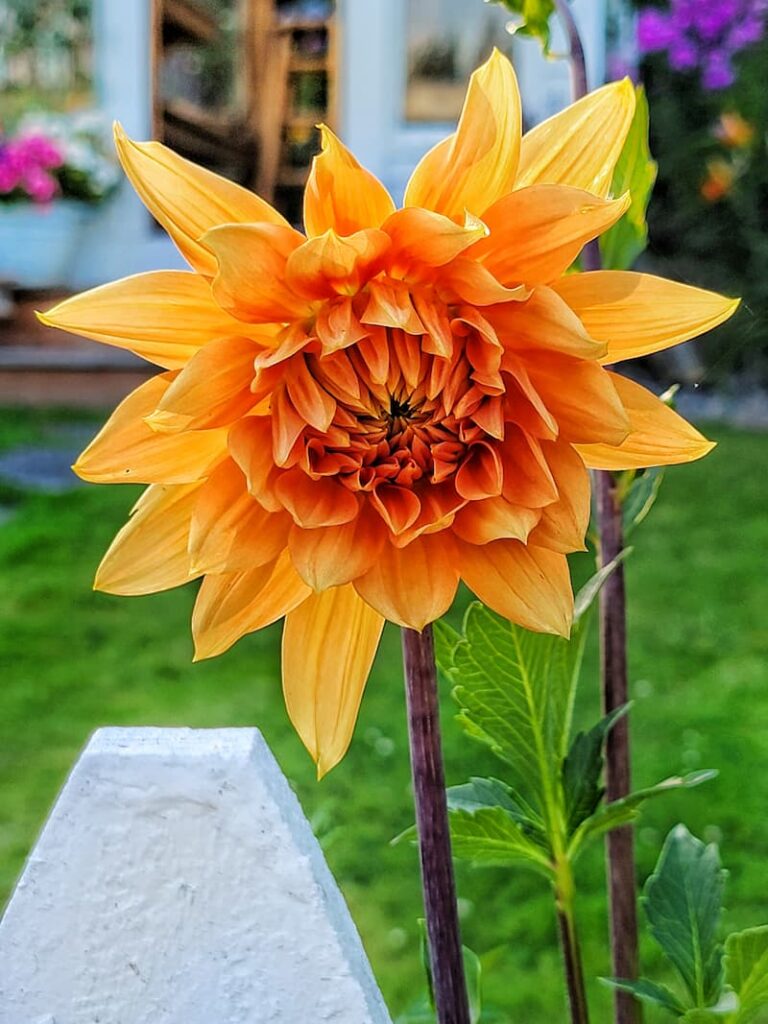
Dahlias are the gems of fall bouquets. With so much variety, from petite pom-poms to massive dinner plates, they bring structure, color, and drama to any arrangement.
I love mixing dahlias with cosmos and zinnias for a casual cottage bouquet, but a vase full of dahlias alone is always a showstopper.
Zinnias
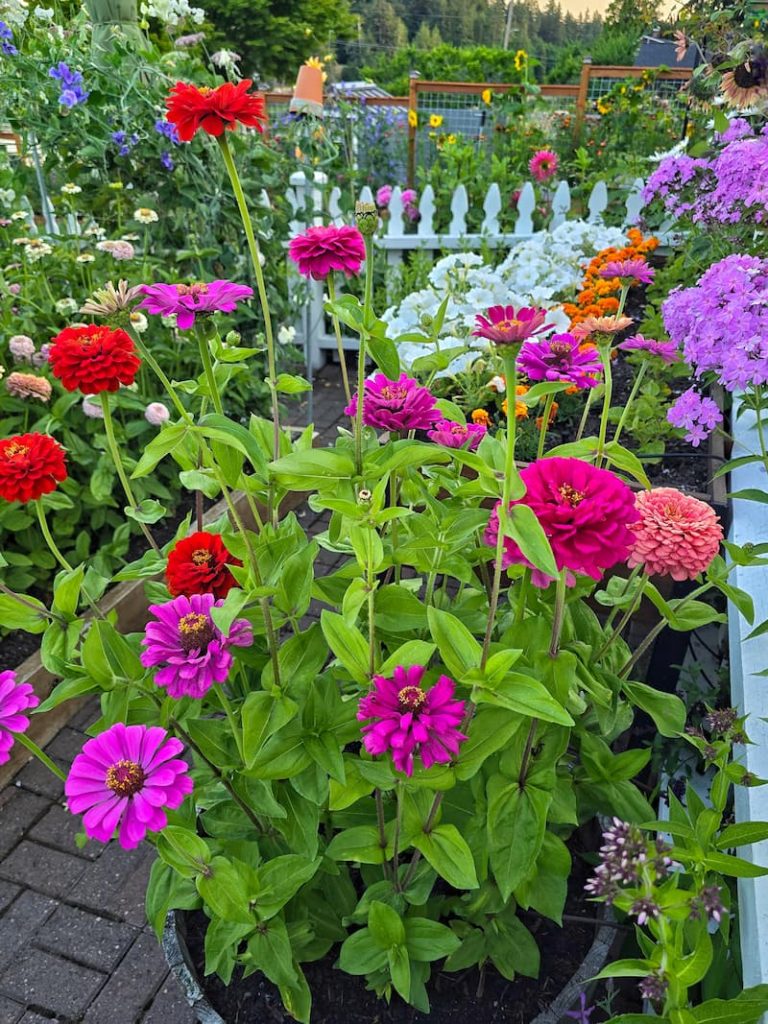
Zinnias are a productive cut flower. They bloom until frost in bold, saturated colors that brighten any fall bouquet.
In my house, a handful of zinnias on the kitchen counter always makes the room feel cheerful, even as the days get shorter.
Cosmos

Cosmos bring a touch of whimsy indoors with their airy, daisy-like blooms. The delicate stems add movement and lightness to arrangements.
I often mix cosmos with dahlias. The contrast of structured and feathery makes a bouquet feel more playful.
Sunflowers
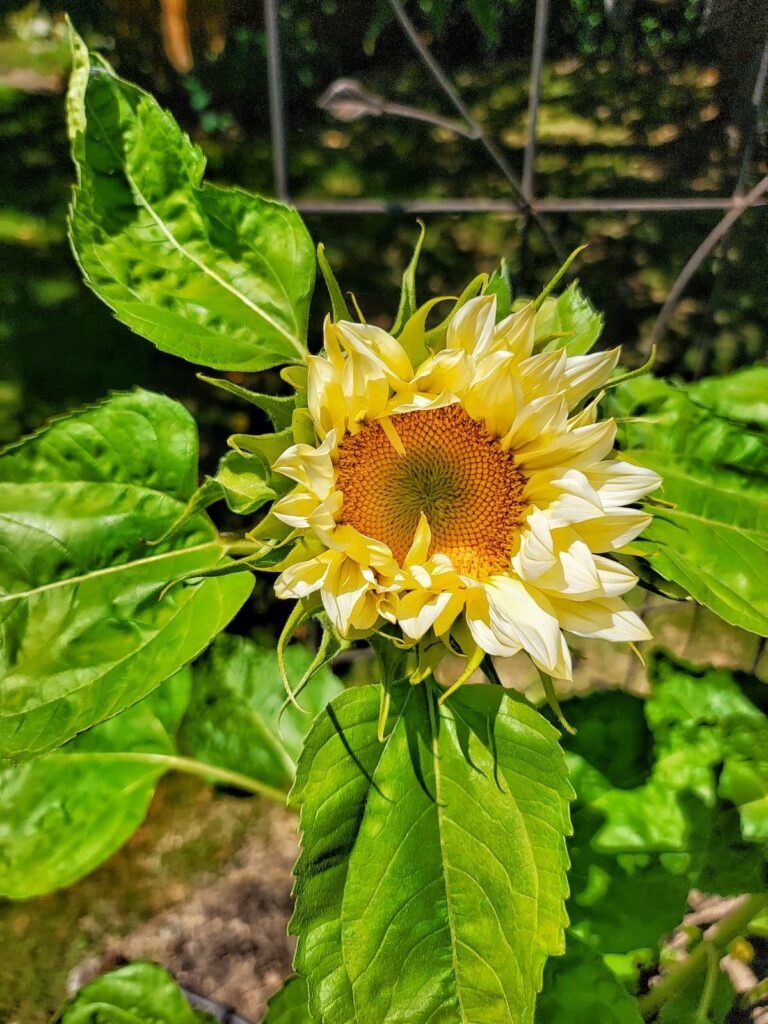
Sunflowers are the ultimate mood-boosters, and the fall varieties in red, brown, and bi-color tones are perfect for autumn arrangements.
A single sunflower stem in a tall vase makes a statement, but they’re also wonderful clustered in a pitcher for a farmhouse feel.
Strawflowers
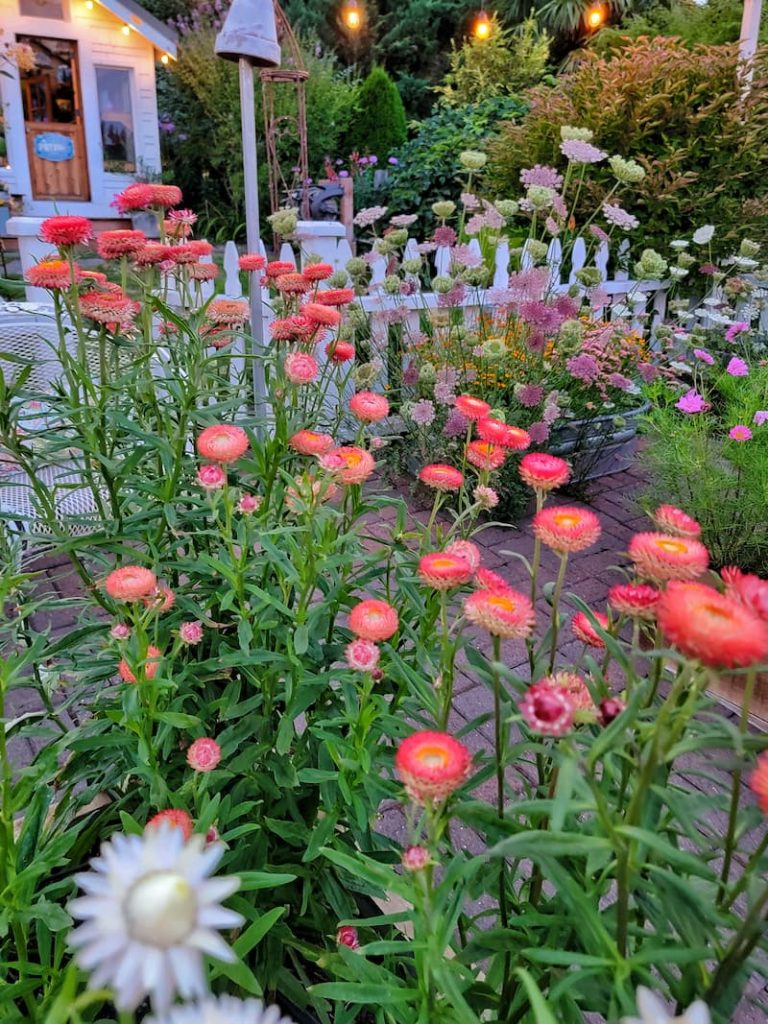
Strawflowers are a cut-and-come-again gift. Fresh, they bring bright pops of orange, pink, and yellow. Dried, they hold their shape and color beautifully for months.
I always try a few strawflowers at the end of the season. They make the prettiest wreaths and are so fun to craft with once the garden is tucked in for winter.
Tips for Success with Fall Blooming Plants
Fall Blooming Plants FAQs
The most reliable fall-blooming plants include asters, chrysanthemums (mums), sedum ‘Autumn Joy’, Japanese anemones, black-eyed Susans, tickseed, and panicle hydrangeas among perennials, plus annuals like zinnias, cosmos, sunflowers, strawflowers, celosia, marigolds, and pansies. Dahlias also bloom from midsummer right up until the first frost.
Sedum ‘Autumn Joy’ is about as easygoing as it gets. It’s drought-tolerant, deer-resistant enough to skip, and thrives on neglect once established. Asters and black-eyed Susans are close runners-up, since both are hardy perennials that come back year after year with very little fuss.
For quick color, tuck mums, pansies, and ornamental kale into containers and window boxes. They hold up well in cool weather. For lasting color, plant fall perennials like asters, sedum, and Japanese anemones in late summer to early fall so their roots establish before the cold sets in.
Dahlias, zinnias, cosmos, sunflowers, and strawflowers are my favorite fall cut flowers. Dahlias and zinnias give you structure and bold color, cosmos add airy movement, sunflowers make a statement, and strawflowers do double duty, fresh or dried. Cut in the cool morning and strip the lower leaves for the longest vase life.
Late summer to early fall is the sweet spot. Planting then gives roots time to establish while the soil is still warm, but the air has cooled, setting the plants up to survive winter and come back stronger in spring.
Yes. Late-season blooms are a lifeline. Asters, sedum, black-eyed Susans, sunflowers, and cosmos give bees, butterflies, and hummingbirds one last feast before winter, and these little seed heads left standing feed birds like goldfinches through the colder months.
Garden Supplies and Tools
Check out my favorite garden supplies and tools for the growing season. Whether you’re looking for potting soil or deer repellent, you’ll find what I use in my own garden.
Final Thoughts on Fall Blooming Plants
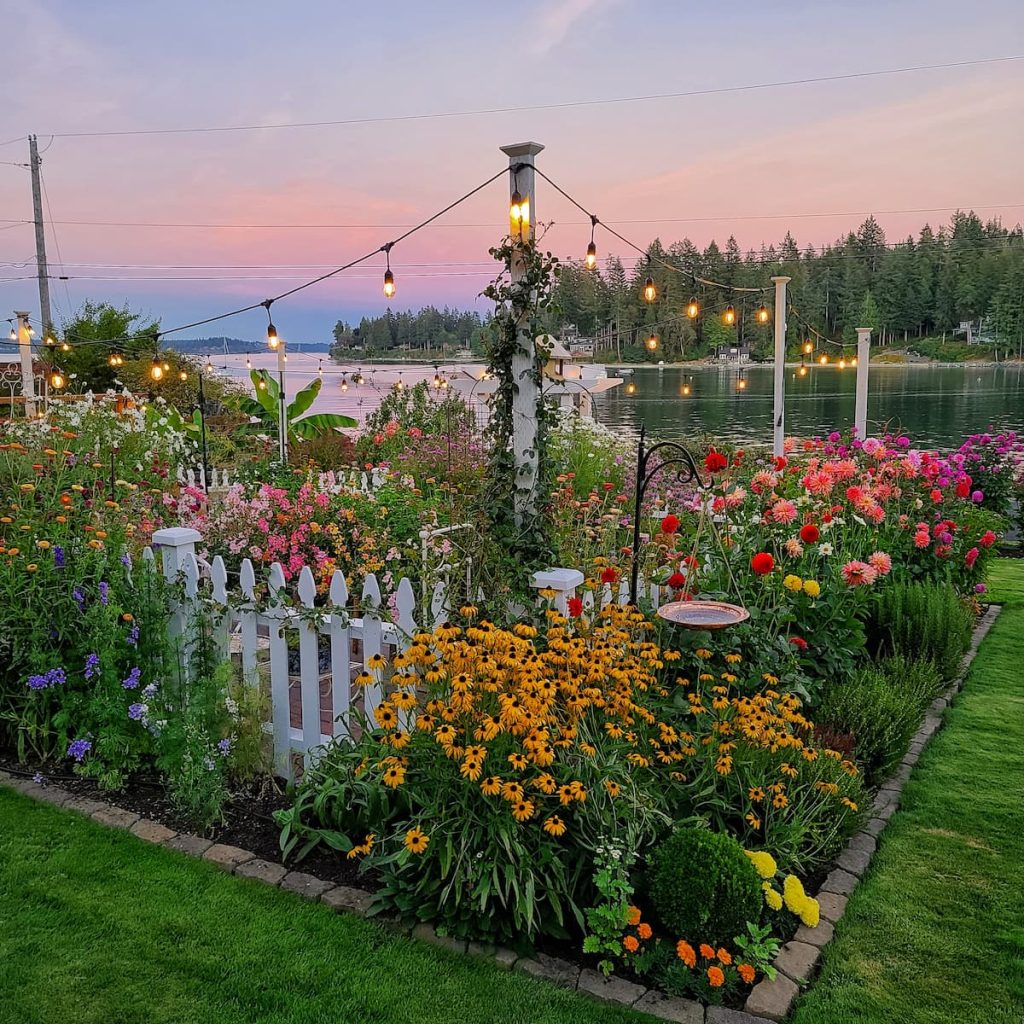
Fall blooming plants are the secret to keeping the garden alive with color, texture, and life long after summer fades. From the bold drama of dahlias to the cheerful mums and the whimsical sway of cosmos, these flowers make autumn every bit as lovely as spring and summer.
What I love most is that they do double duty. They brighten the garden for us and feed the pollinators one last time before winter. Add a few cut-flower favorites like zinnias or straw flowers, and you’ll have a fresh bouquet right up until frost.
New to fall gardening? Start with a couple of easy wins… mums in a container, or asters in a sunny border. More seasoned? Layer perennials and annuals for nonstop color through the whole season.
And don’t forget to grab my free Fall Gardening Checklist to stay on track with planting, care, and seasonal tasks. If this post helped, pass it along to a fellow gardener who wants to keep their garden blooming a little longer this year.
Until next time,
Happy Gardening!

I’m a self-taught hobby gardener. Everything I share on my blog is my opinion and what has worked for me.
MORE POSTS
For You To Enjoy
Follow Me for More Inspiration

Even though we’re in 2 completely different zones I’m always so excited to see what’s growing in your garden, Kim. It’s such a gorgesous way to celebrate the season. Thank you for all your tips and tricks so we can grow beautiful blooms too. Big hugs and can’t wait to share this tomorrow, CoCo PS: Just finished your travel series, it was fabulous, welcome home!
Thank you so much for the thoughtful comments and for reaching out CoCo. I’m happy that you can find tips that work for your garden. I appreciate you sharing my post on your blog. You are so sweet. I look forward to reading your Front Porch post this weekend. I’m a little behind but look forward to all the inspiration.
Gosh, your fall garden looks beautiful! Your gardens look beautiful in any season, though! I love the witch weather vane!! So cute!
Kim what a gorgeous garden tour!!! it all looks so beautiful! love it!!!