
Add Timeless Style to Your Home with Vintage and Antique Decor
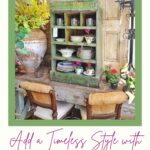
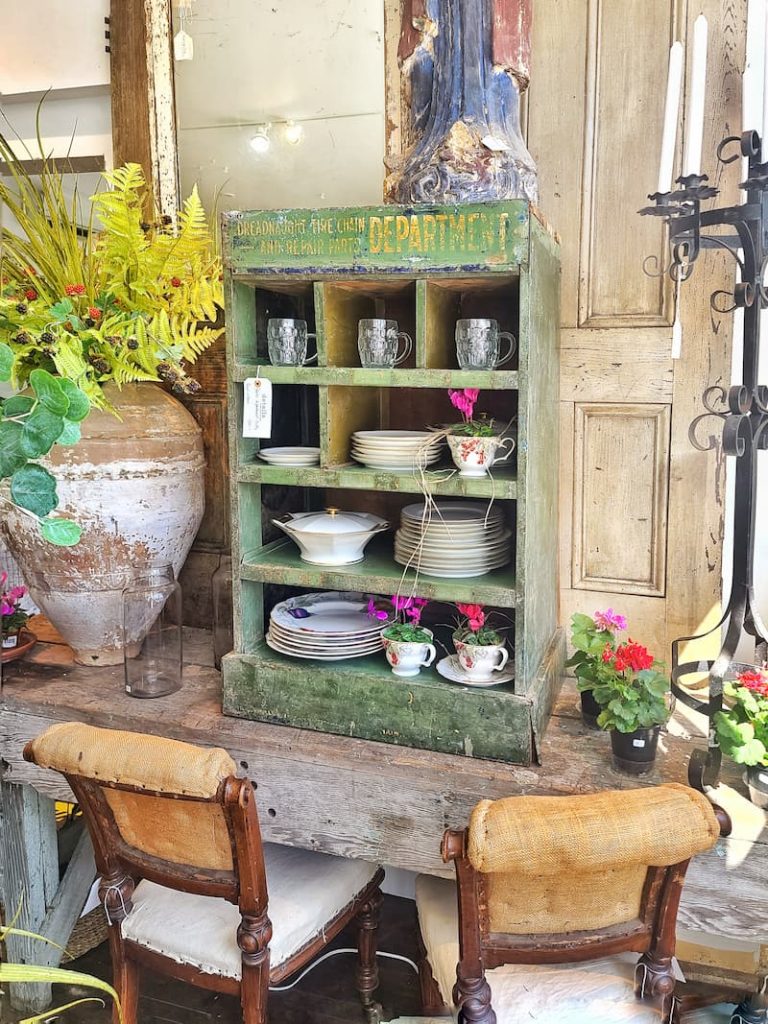
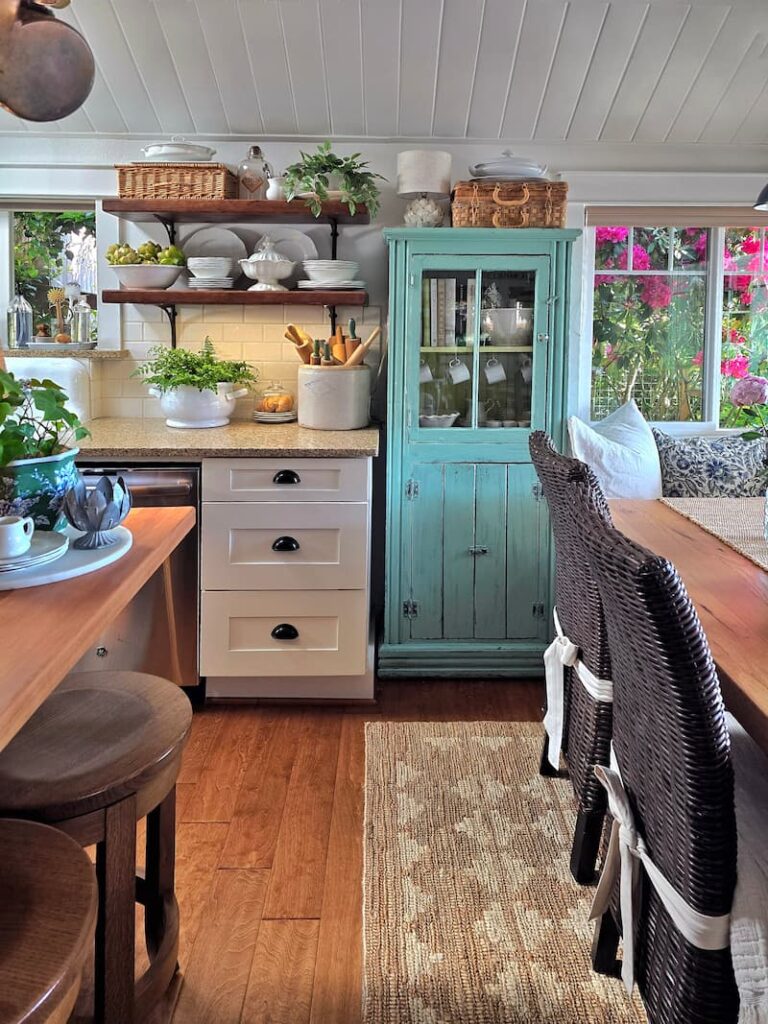
Some of my favorite things in this cottage have a past. The teal glass cabinet in the kitchen, the ironstone stacked on our open shelves, and the copper-top buffet in the living room that I knew was immediately coming home with me.
Each one landed here through a different adventure, and together they give the house a feeling that nothing off a showroom floor ever could.
I get a lot of questions about how I shop for vintage and antique pieces, what to look for, where to find them, and how to know if you’re getting a good deal. Today, I’m pulling those answers together in one place.
As an Amazon affiliate, I earn from qualifying purchases at no extra cost to you. My blog contains other affiliate links for your convenience. Click here to read my privacy policy.
The Vintage Collections in This House
Over the years, certain categories have drawn me back again and again. A few things I’m always on the lookout for:
Most of these started as a single good find that I loved, and then I just kept going. That’s usually how collections happen. You’re not planning a collection, you’re just drawn to something, and one day you look around and realize you have eight of them.
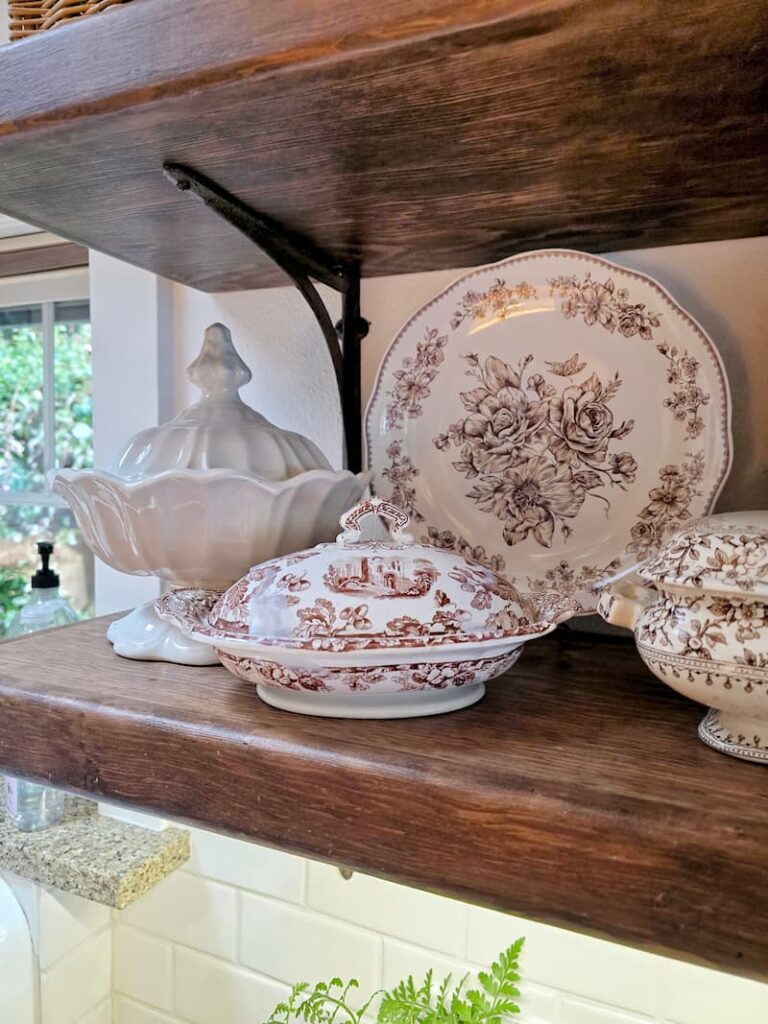
What I love most about these pieces isn’t the objects themselves. It’s that each one carries some trace of a life before mine. A scratch in the wood, a worn spot on the handle, a chip in the glaze. Those imperfections are the whole point.
Antiques vs. Vintage: What’s the Difference?
When I first started decorating our 1920 cottage, I used these words interchangeably. Turns out there’s a real distinction, though, for decorating purposes, it rarely changes which pieces I fall for.
Antiques
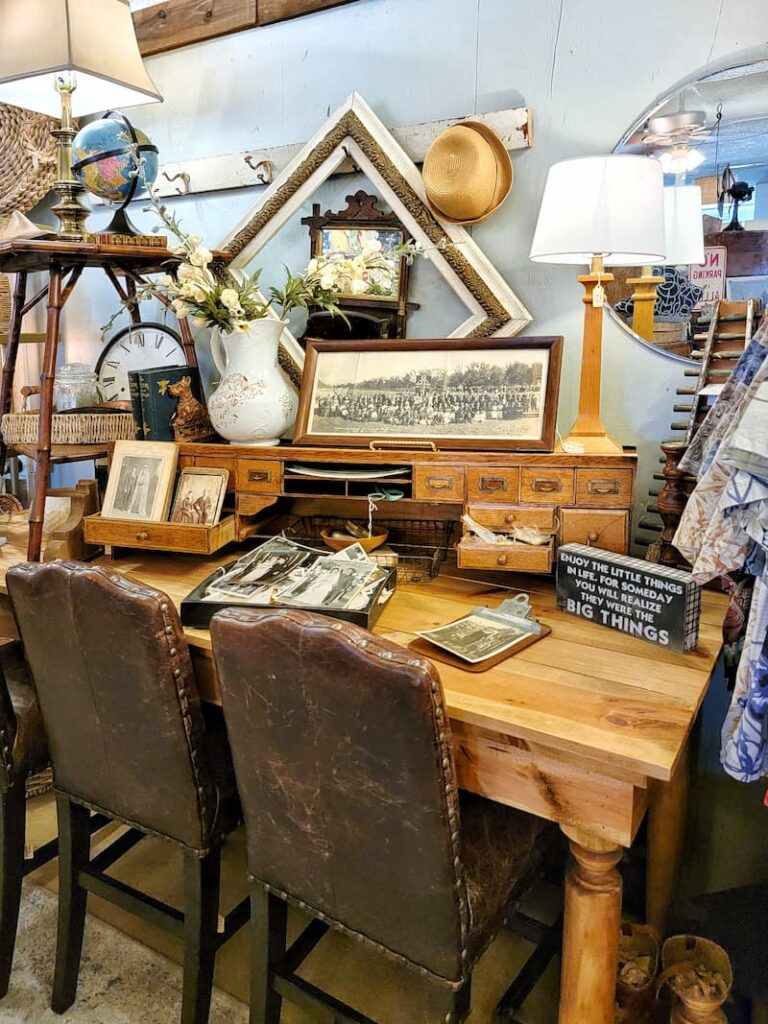
An antique is generally defined as something at least 100 years old, still in its original or near-original condition. The age is part of what commands a higher price, but so is craftsmanship.
Many antique pieces were made with materials and techniques that aren’t common anymore, which is why they’ve held up this long. You’ll usually see wear, patina, and minor imperfections, and those are features, not flaws.
Vintage
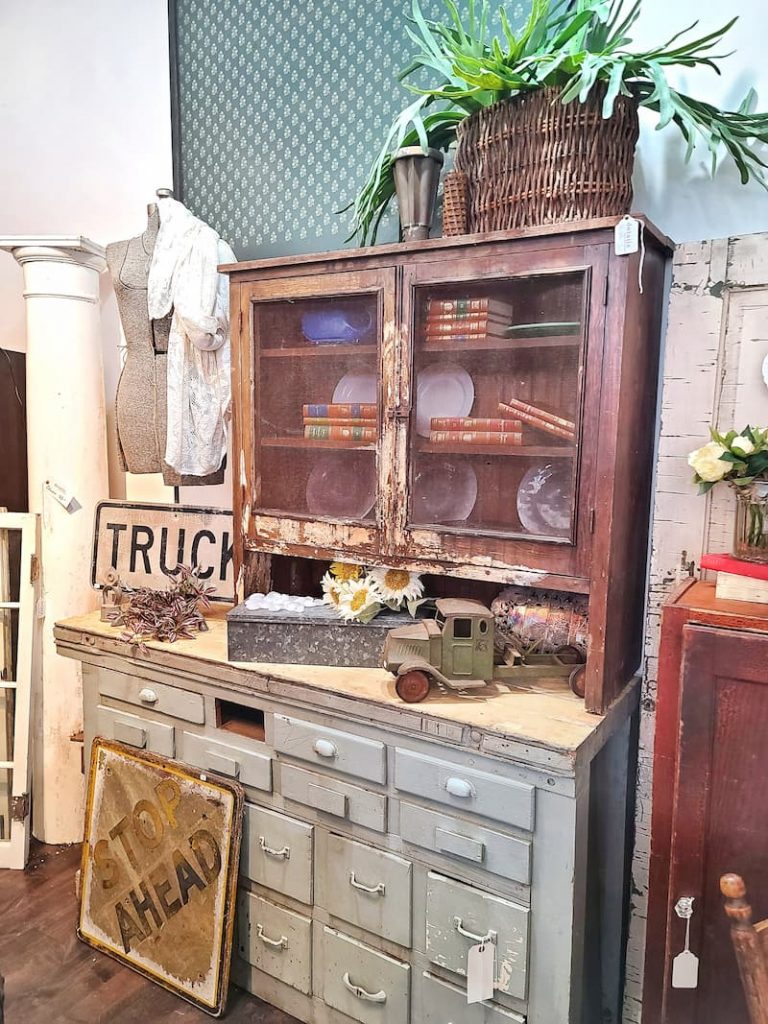
Vintage covers the range of roughly 20 to 99 years old. More abundant than true antiques, often more affordable, and still full of character. Because vintage spans several decades, the styles and aesthetics vary widely.
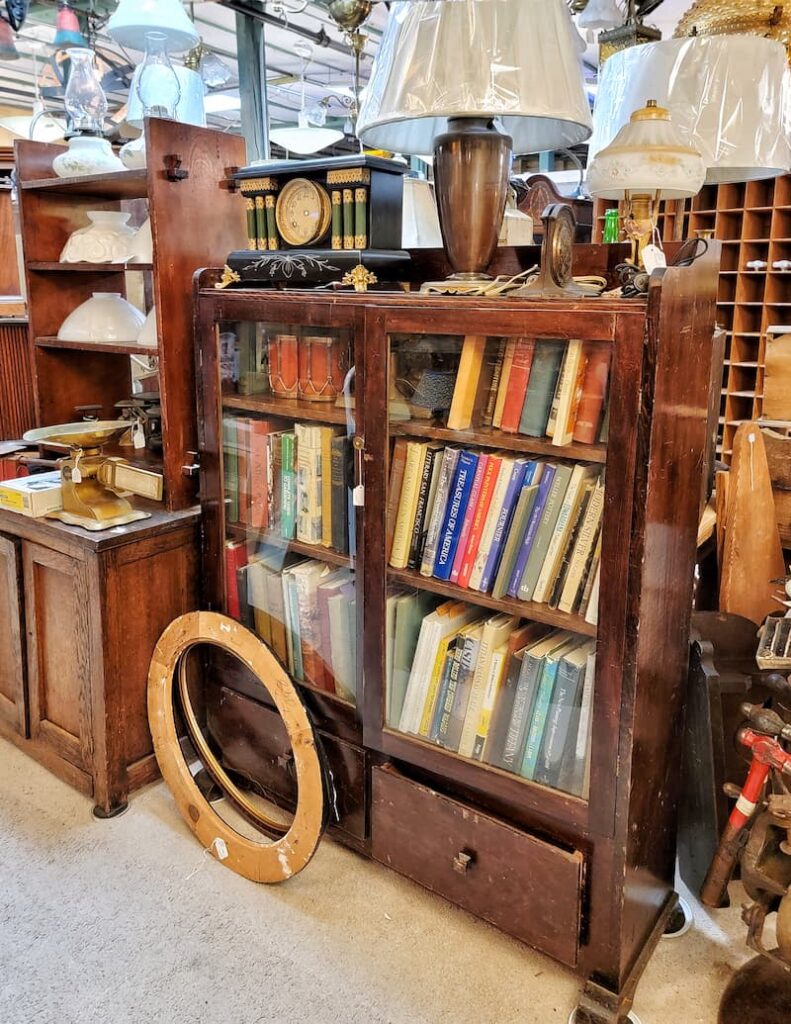
Mid-century modern, farmhouse, cottagecore, 1970s earthenware, all that falls under this umbrella. That variety is part of what makes vintage shopping so interesting.
Whether something is technically antique or vintage matters less to me than whether it belongs in the house.
Can You Negotiate at Antique Stores and Flea Markets?
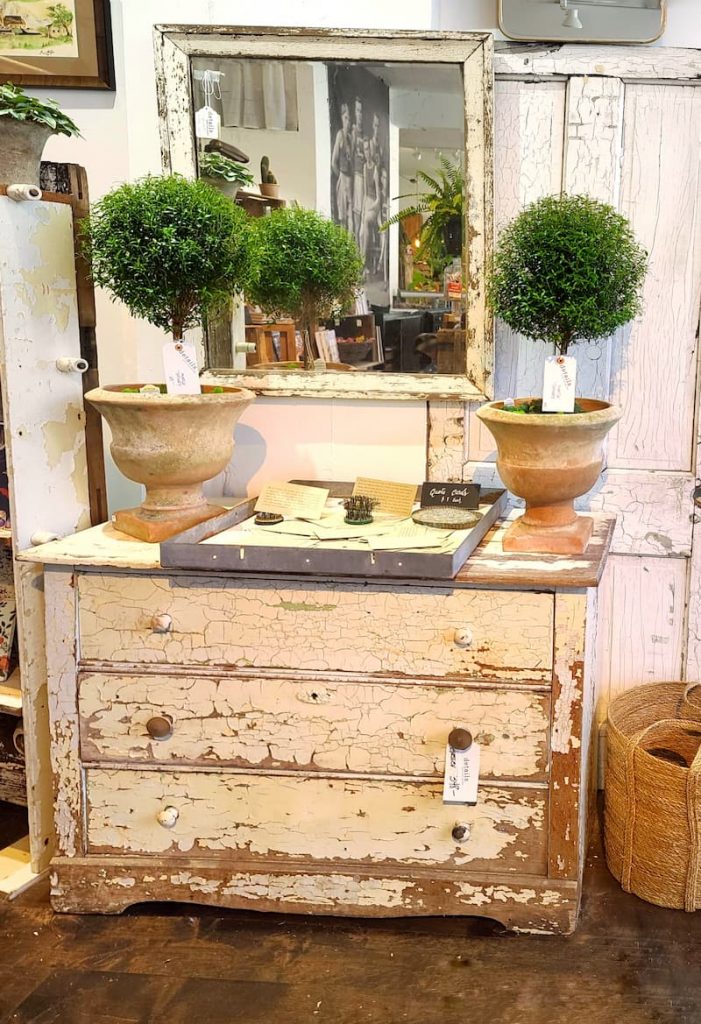
Yes, and you should feel comfortable asking. Negotiating is a normal part of buying vintage and antique pieces, especially at flea markets, estate sales, and when buying directly from sellers on Facebook Marketplace or similar platforms.
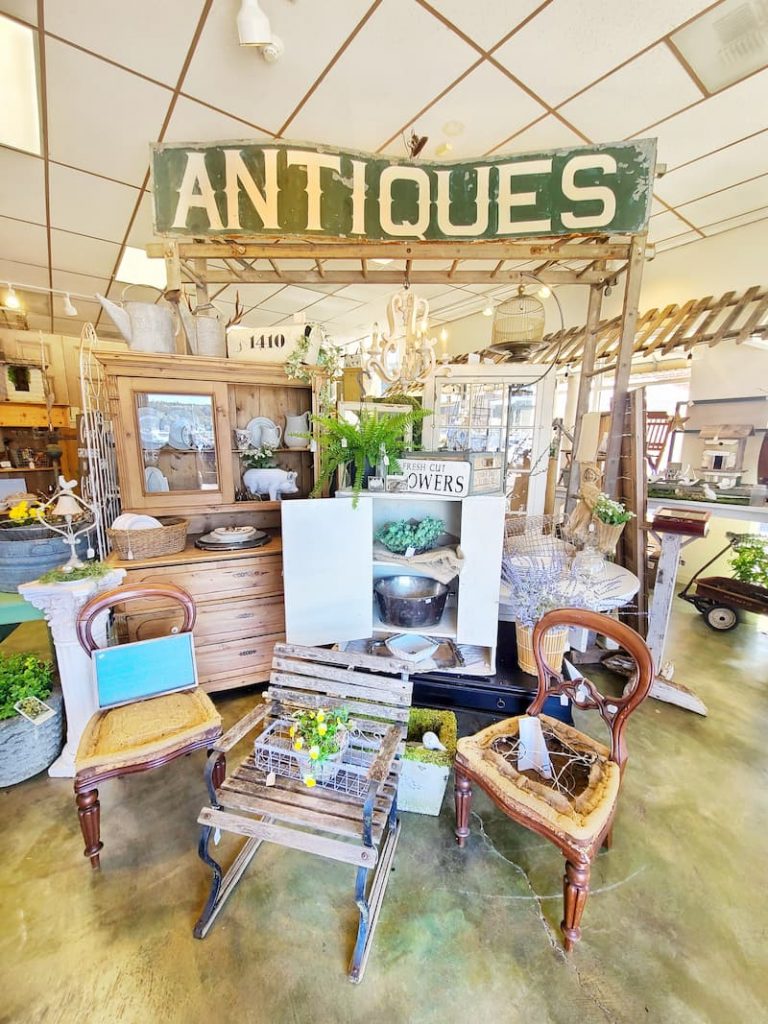
At antique malls, the person working the counter often rents their booth from the store and doesn’t personally own the inventory. They may not have the authority to lower a price.
In that case, ask them to take your contact information and check with the booth owner. This happens regularly, and good dealers are usually happy to follow up. More often than not, they’d rather sell the piece than watch it sit.
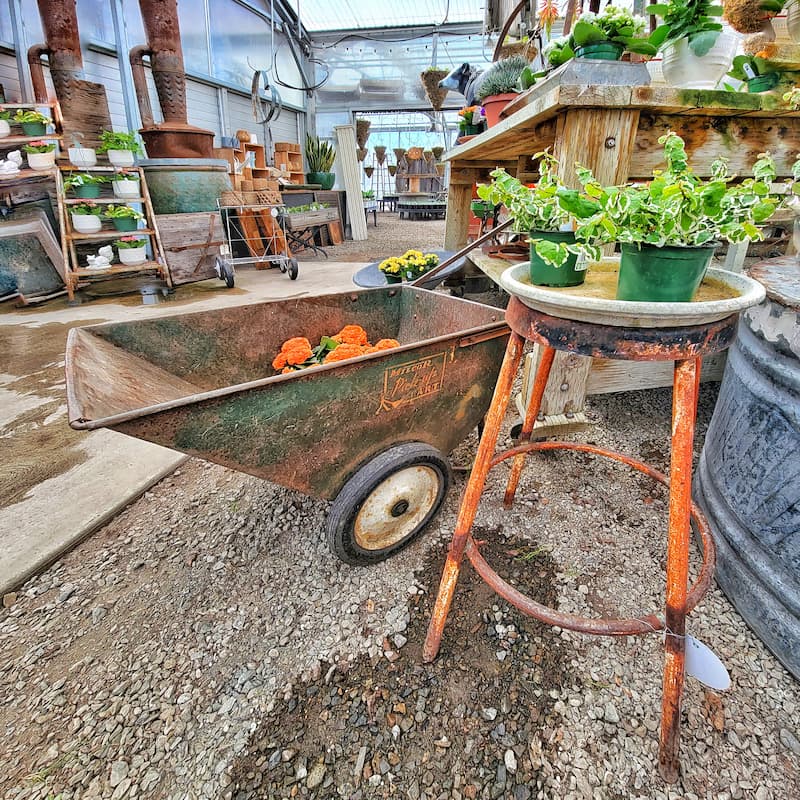
A few things worth knowing before you start negotiating:
The worst that happens is they say no. The piece is still there, and you still get to decide if it’s worth the asking price.
What is Thrifting, and Why Does It Work?
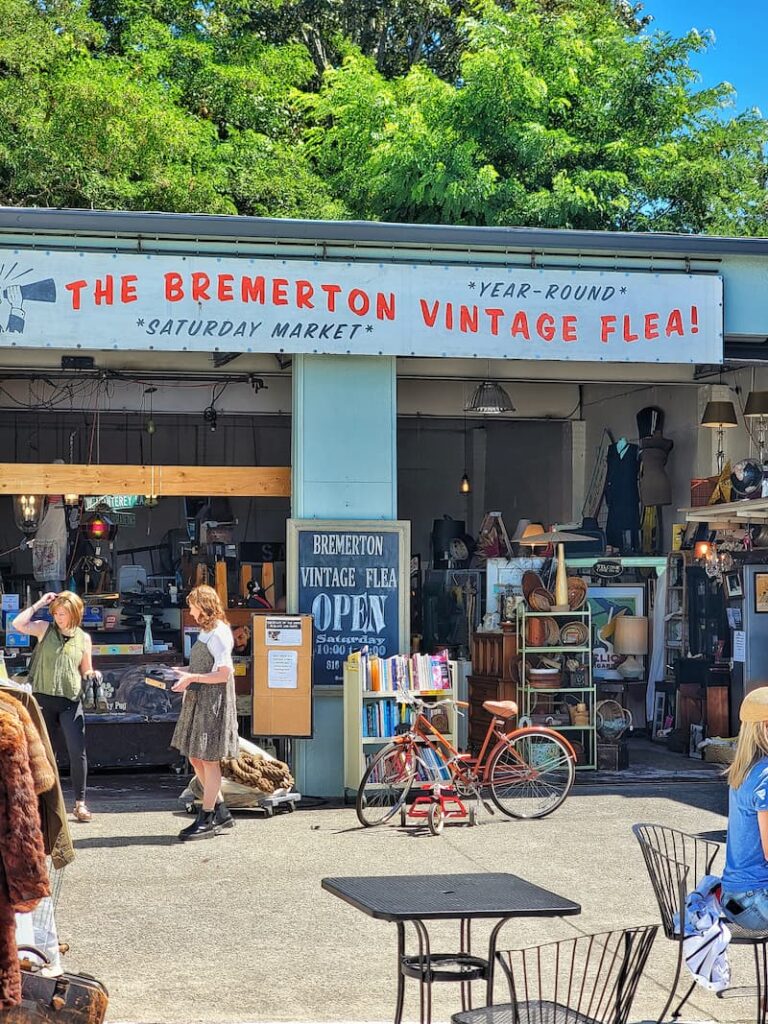
Thrifting is shopping for secondhand items at thrift stores, estate sales, garage sales, or online marketplaces. The appeal is obvious: lower prices, one-of-a-kind finds, and the genuine satisfaction of rescuing something with good bones from neglect.
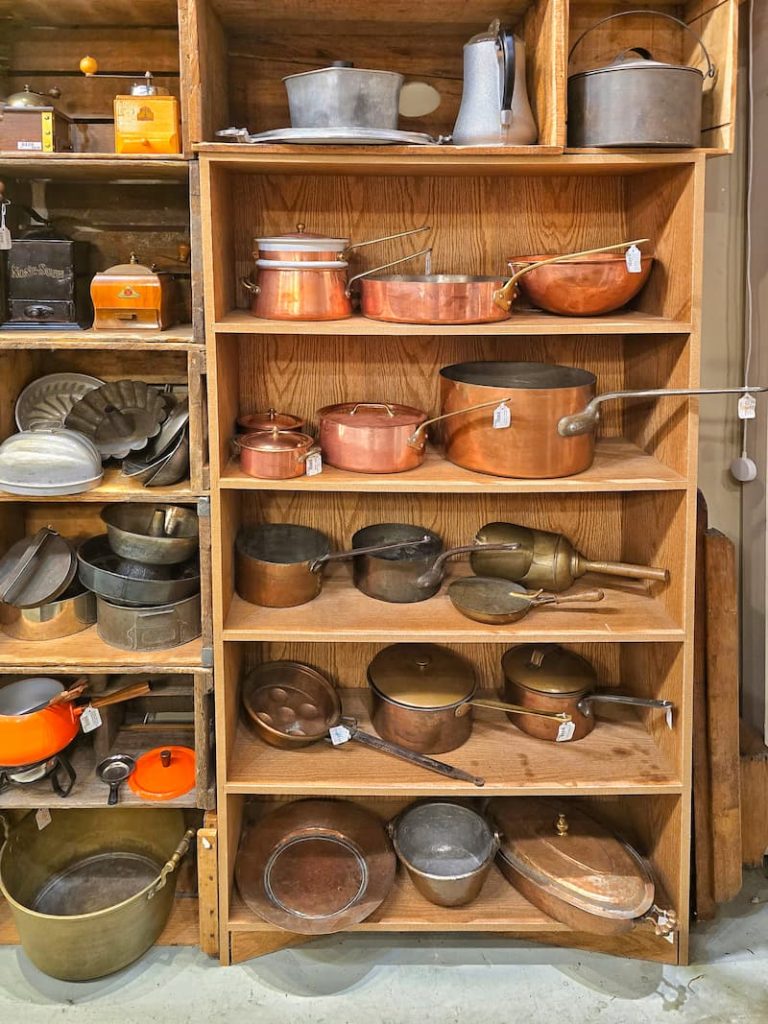
Some of the best pieces in this house came from thrift stores, where they were completely unrecognized. A vintage scale for a few dollars, a flower frog buried in a bin, or a copper pot that clearly had no idea it was worth real money… The hunt is the fun part.
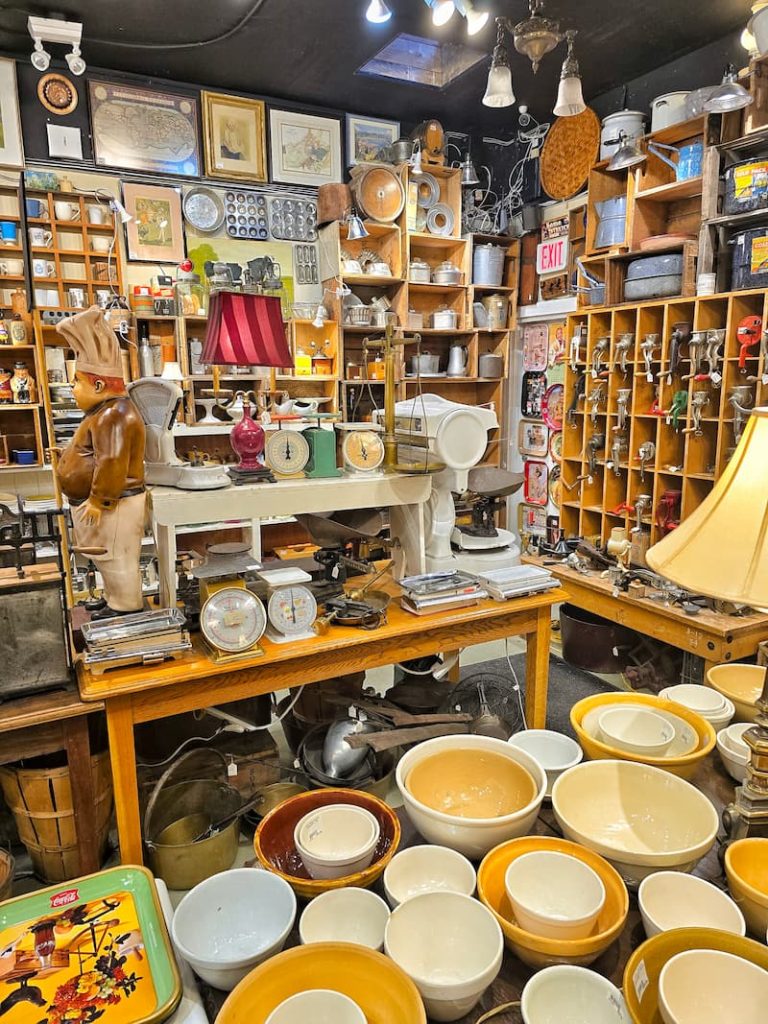
And sometimes I find it needs a little work before it shines. A coat of paint, a repair, a good cleaning. That’s part of the process. I’ve taken plenty of pieces home that looked rough and turned them into something I genuinely love. It’s worth looking past the surface, especially at thrift store prices.
What to Know Before You Go Vintage Shopping
Make a List
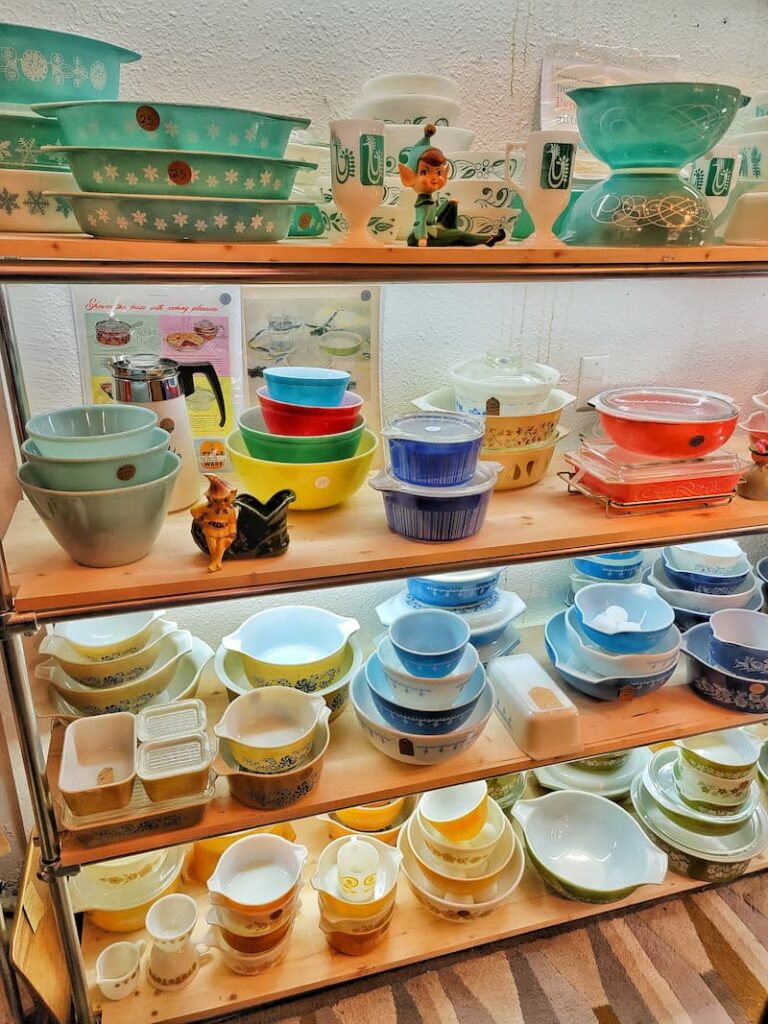
Walking into an antique mall or flea market without any direction is how you spend three hours, come home with nothing you needed, and somehow spend more than you intended. A short list of what you’re actually looking for helps.
That said, leave room for the unexpected. The best finds are rarely what you went looking for. The list keeps you grounded; the wandering is where the good stuff happens.
Research Ahead of Time
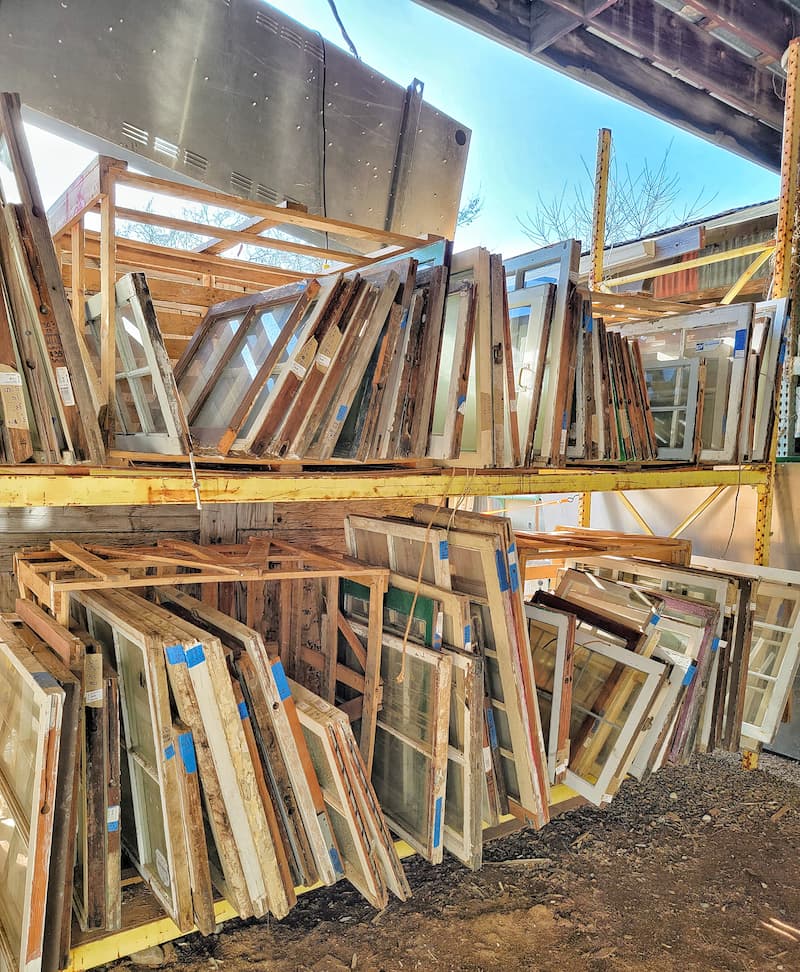
Not every antique store carries every kind of thing. Some specialize in furniture, others in architectural salvage, others in a specific era or aesthetic. A quick search or a look at a shop’s Instagram before you go can tell you whether it’s worth the trip.
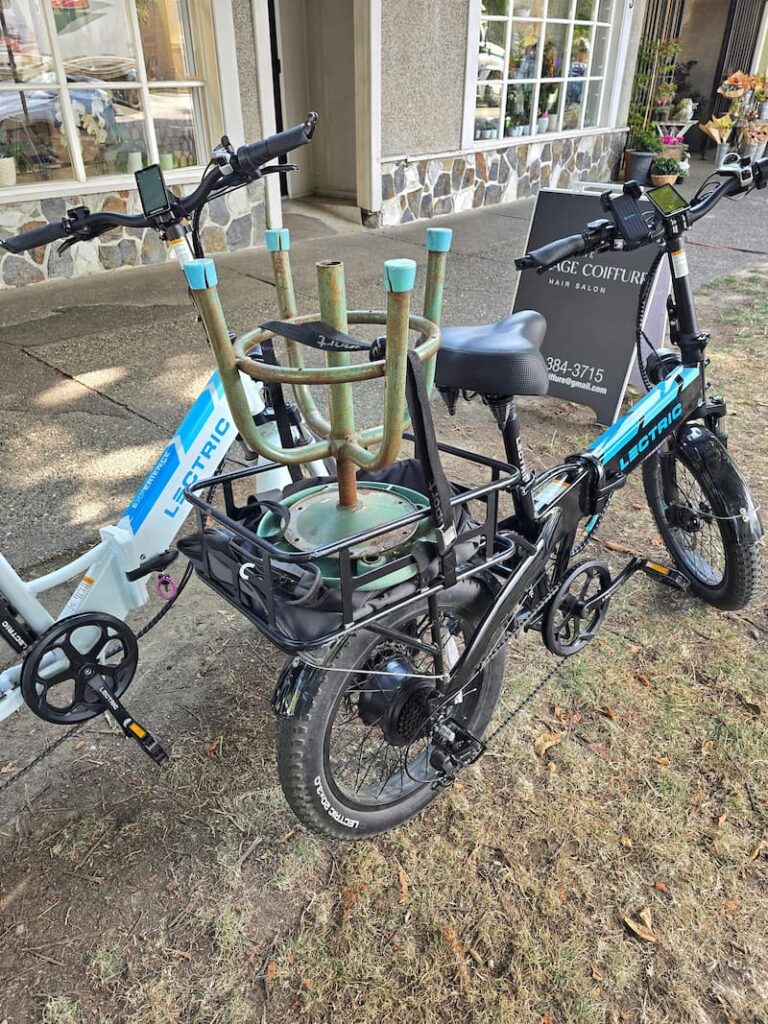
If I’m taking the boat somewhere new and want to do some vintage shopping along the way, I’ll look up what’s in the area before we leave the marina. It saves a lot of time and a lot of dead ends.
Inspect Everything Carefully
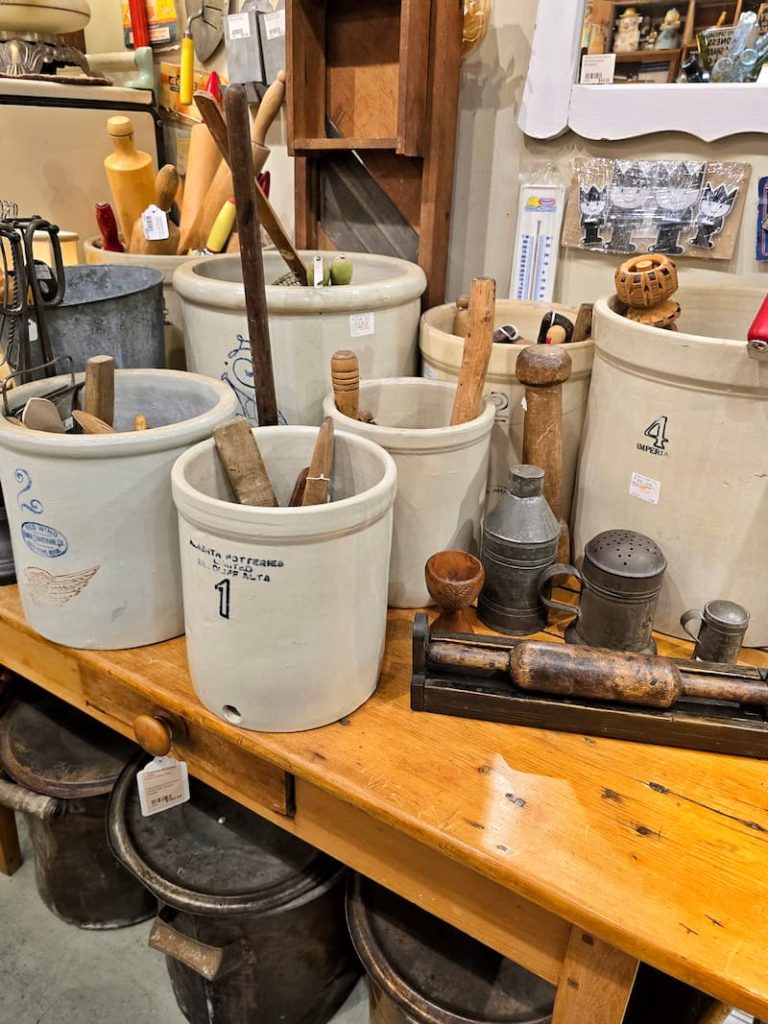
Vintage pieces have history, and history shows. Some wear is expected is expected, and actually desirable. But there’s a difference between a piece that has a beautiful age on it and one that has structural problems you’ll be dealing with for years.
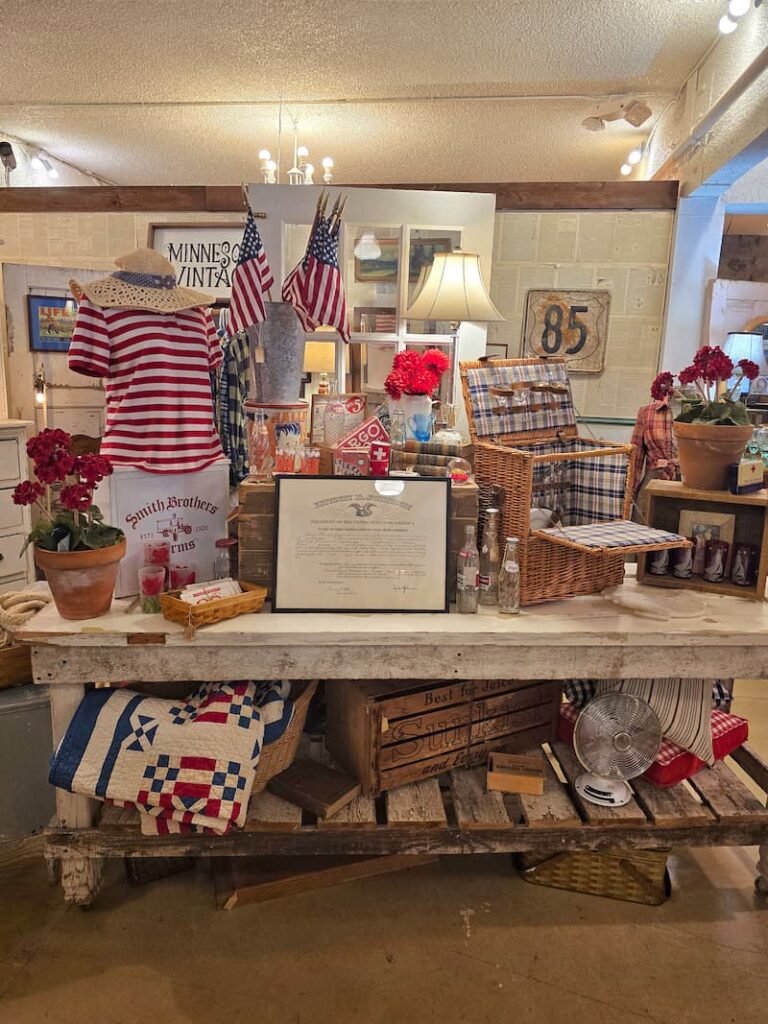
Before committing to anything, check for:
Run your hands over the piece. Open the drawers. Check the back and underside. Turn it upside down if you can. Sellers expect this, and a good one will encourage it.
Know the Difference Between Authentic and Reproduction
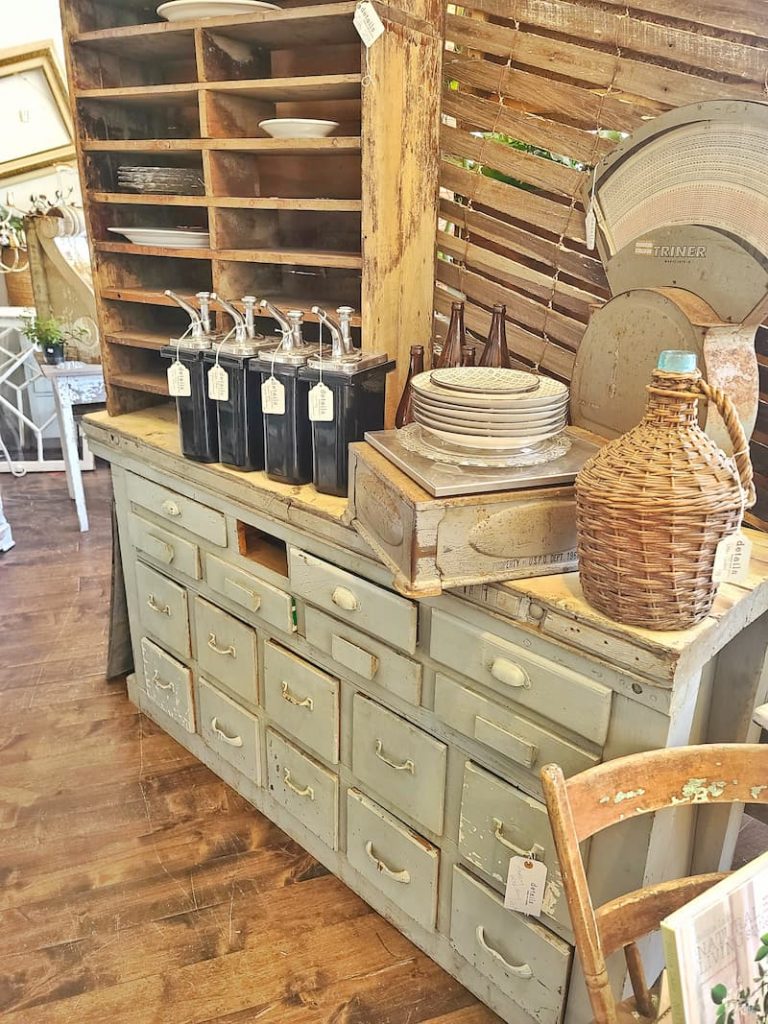
Vintage markets have reproductions, and there are more now than ever. Some are clearly labeled as vintage-inspired and priced accordingly. Others have passed off as genuine, sometimes deliberately, sometimes because the seller doesn’t actually know.
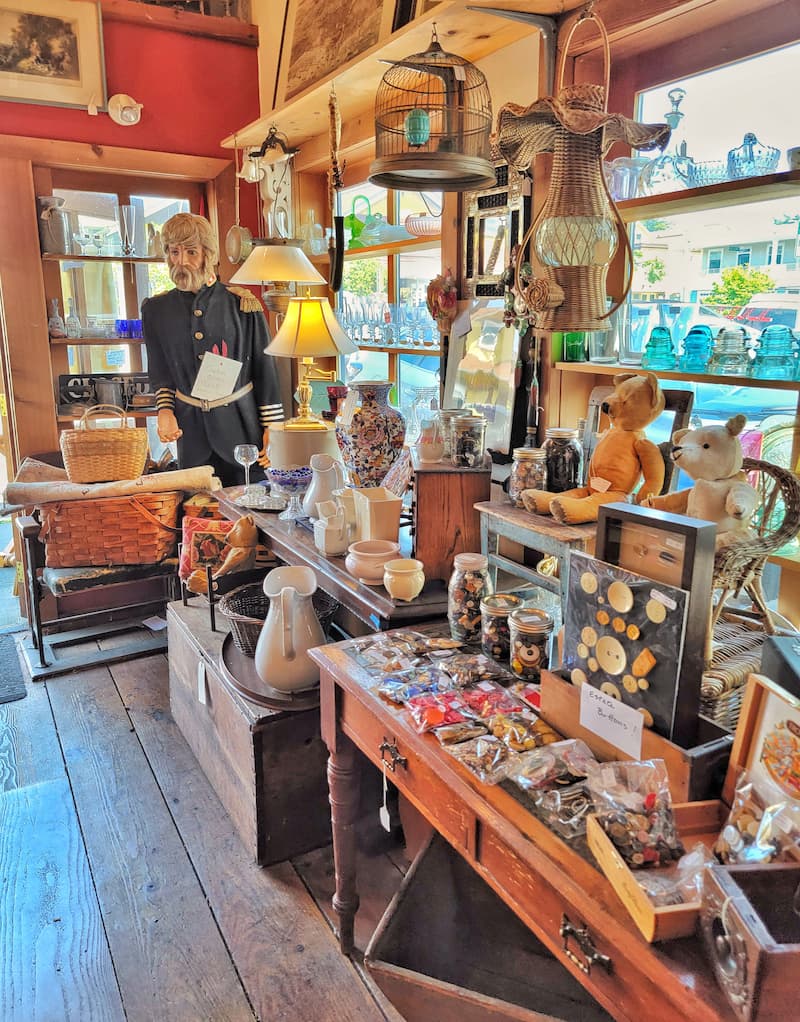
A few things to look for when assessing authenticity:
Ask the seller what they know about the piece’s history. A good dealer will share what they have. Honest uncertainty is fine. Vague answers to specific questions are worth noticing.
Frequently Asked Questions About Vintage and Antique Shopping
Where Is the Best Place to Find Vintage and Antique Decor?
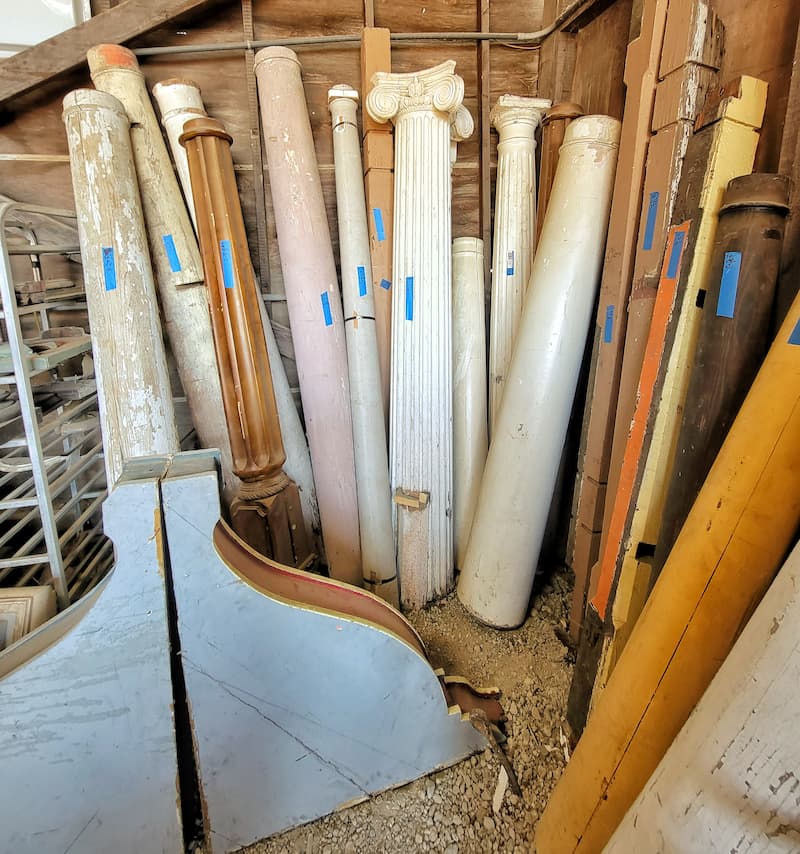
Antique malls tend to have the widest selection in one place. Estate sales often have the best prices, especially if you go on the last day. Thrift stores require more patience but occasionally produce remarkable finds for almost nothing.
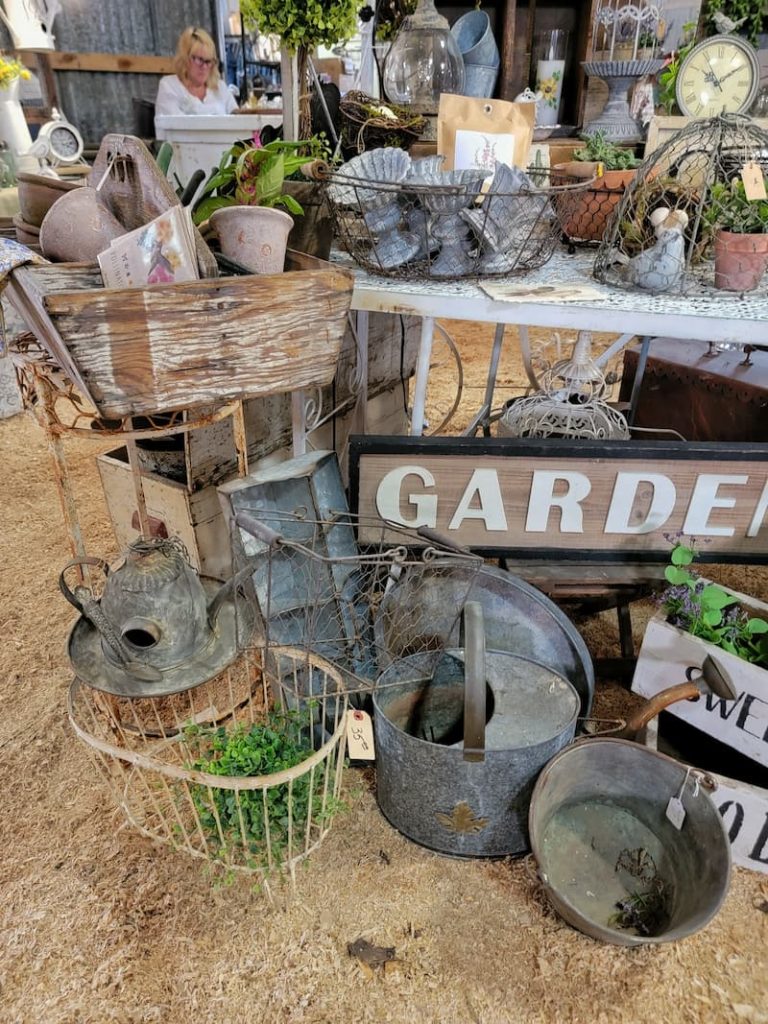
Facebook Marketplace and local online buy-sell groups are worth checking regularly for furniture and large pieces. And if you’re ever in a waterfront town and spot a vintage store near the marina, go in.
How Do I Know If Something is Worth the Price?
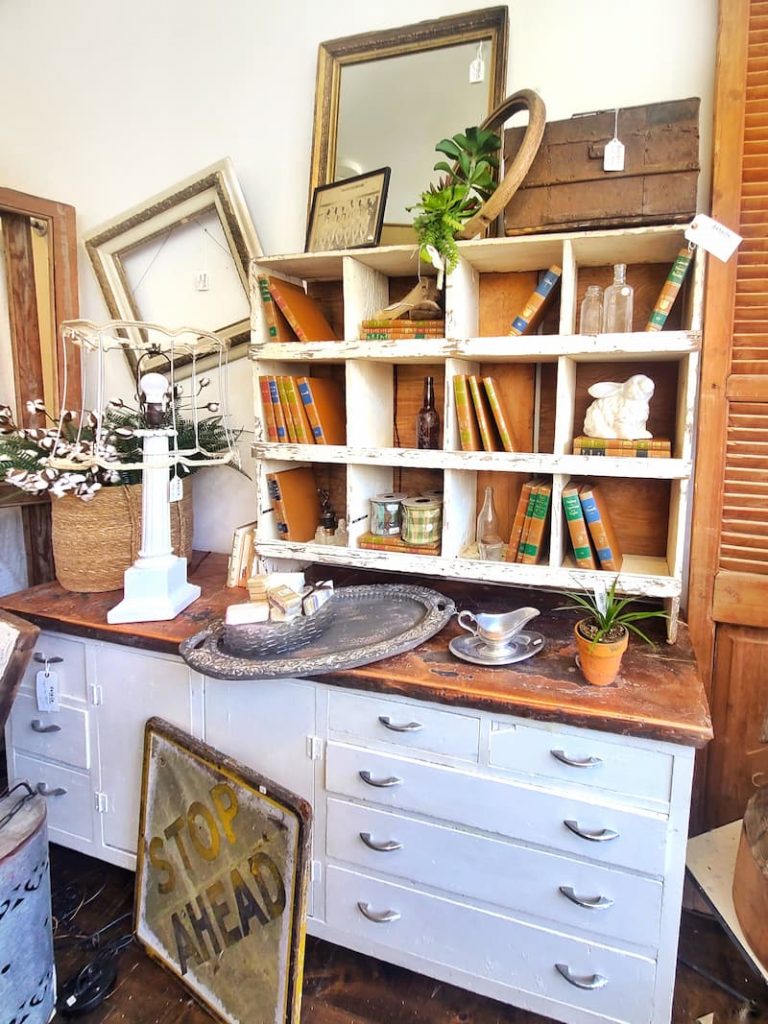
Research is the honest answer. Look up comparable pieces on Etsy, eBay, and Ruby Lane to see what similar items are selling for. If you’re considering something significant, it’s worth spending five minutes in the store doing that search. For smaller pieces, trust your gut: if you love it and the price feels fair for how much you’ll use and enjoy it, that’s usually enough.
What Are the Easiest Vintage Items to Find at Thrift Stores?
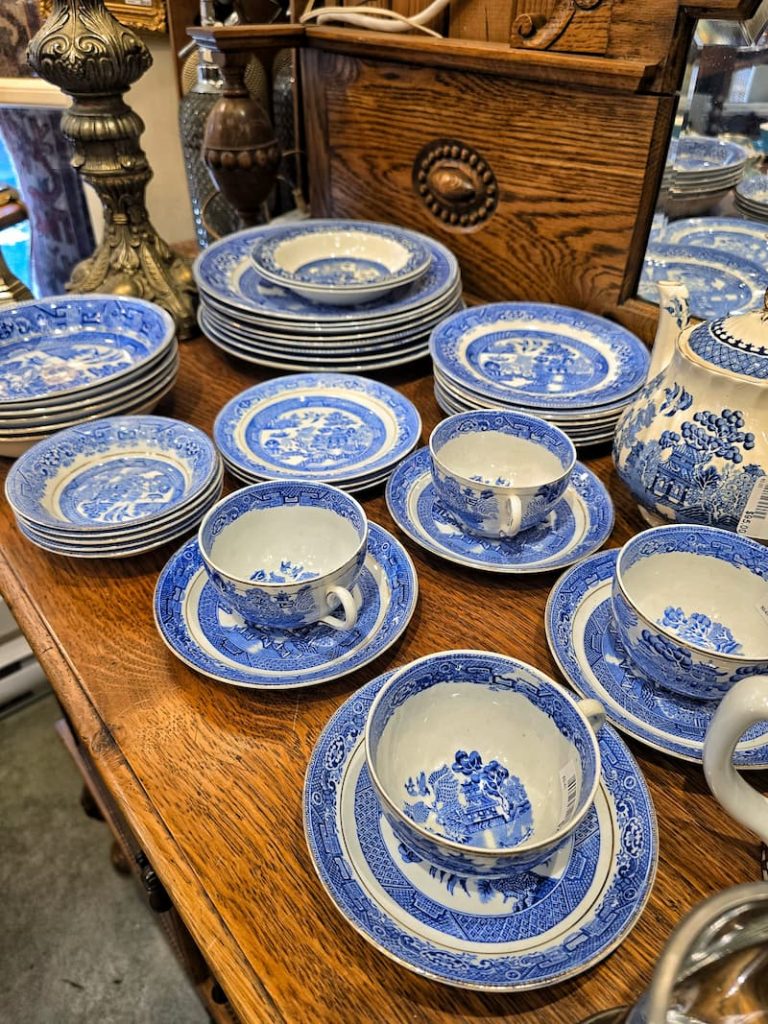
You can find ironstone, transferware, galvanized pieces, old linens, vintage frames, and basic glassware in most thrift stores. Furniture is harder because it depends heavily on donations, but it’s worth checking the furniture section every visit. Flower frogs, vintage scales, and copper pieces require more patience but do surface.
How Do You Style Vintage Pieces Without Your Home Looking Cluttered?
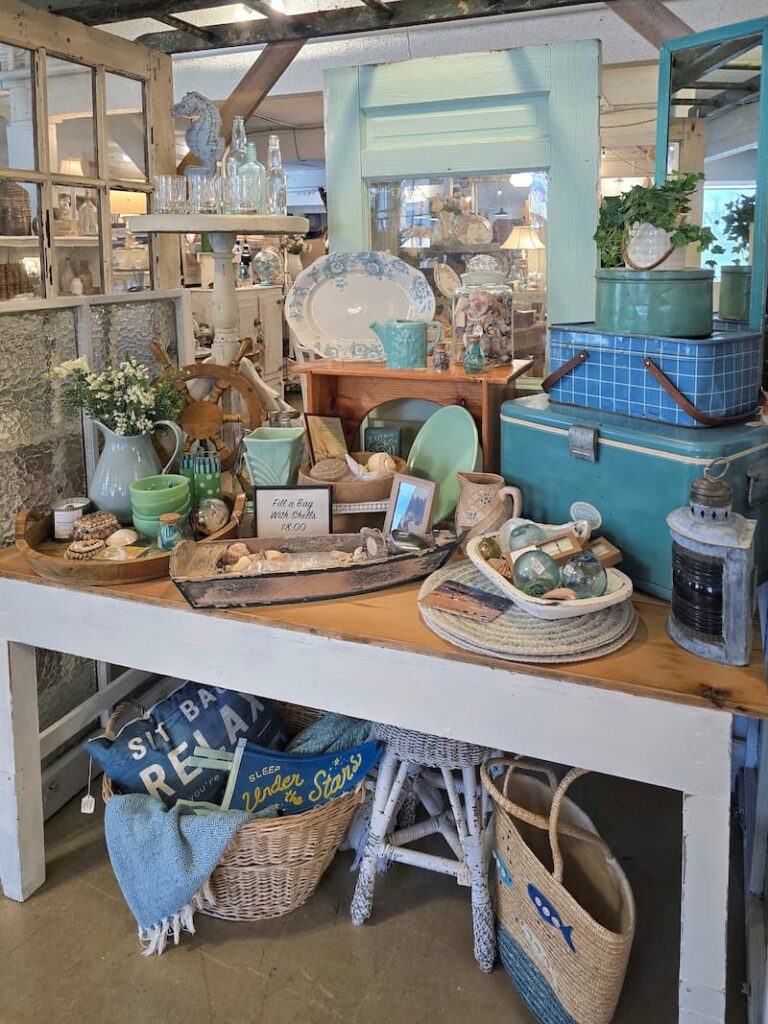
Edit. Not everything you love needs to be on display at once. Group pieces by material, color, or category rather than scattering them everywhere. Give each piece enough room to be seen. And mix your vintage vines with simpler, quieter pieces so the eye has somewhere to rest. The goal is curated, not crowded.
Is It Okay to Mix Antiques from Different Eras and Styles?
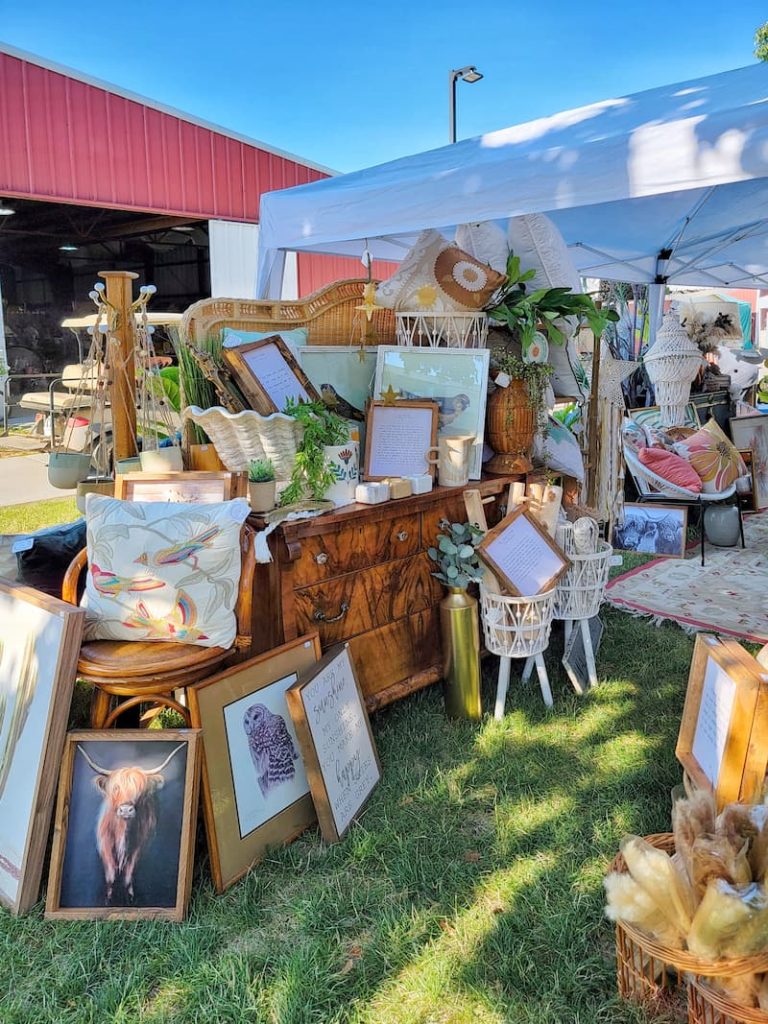
Absolutely. A home that mixes periods and styles usually has more warmth and personality than one that tries to match everything. The thread that holds it together is era or style; it’s the collector’s eye. If each piece is something you genuinely love, they tend to work together even if they shouldn’t on paper.
One Last Thought
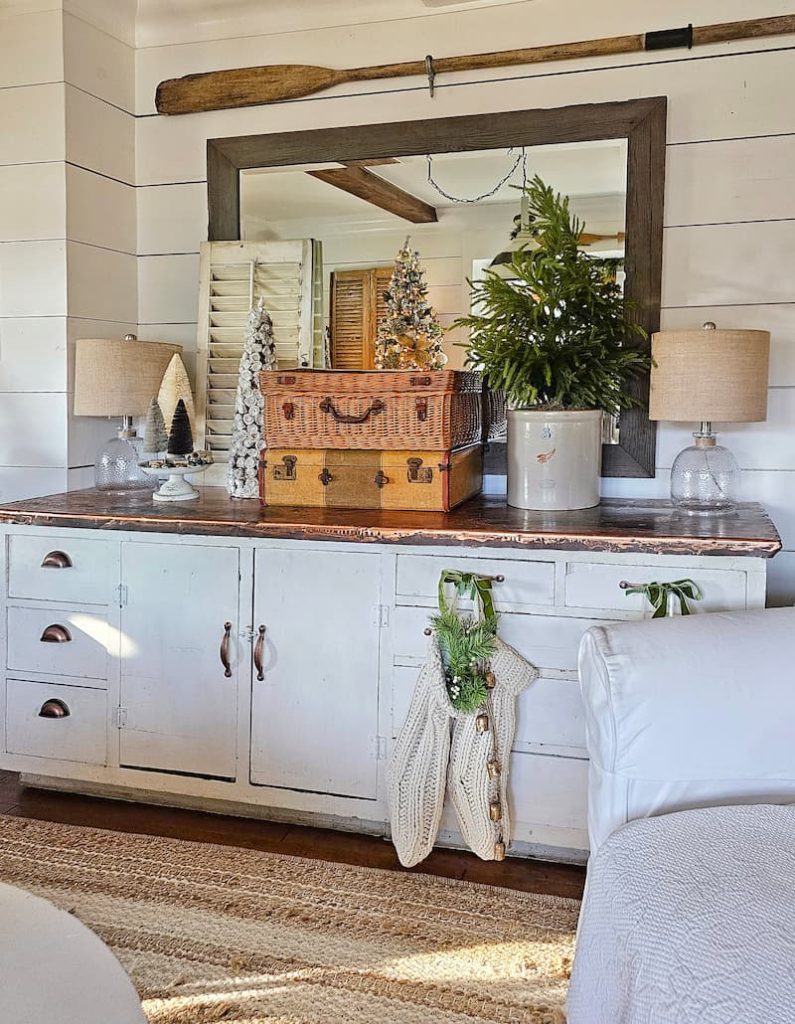
The copper top buffet I mentioned at the start is sitting in the living room right now. It cost more than I usually spend. I stood in front of it for a long time before I decided. And every time I walk past it, I’m glad I did.
That’s the thing about vintage shopping. The pieces you deliberate over the longest are usually the ones you love the most. Take your time, trust what pulls you in, and don’t be afraid to walk away if something doesn’t feel right. The right find has a way of showing up eventually.
Until next time,
Happy Hunting!

MORE POSTS
For You To Enjoy
Follow Me for More Inspiration

I too live in the PNW…Victoria. I’m always on the look out for vintage that will suit my French Farmhouse look in my codo. I most often find a great piece when I have no list and I’m not looking for anything in particular. There is always a spot for that special something. Happy Hunting!
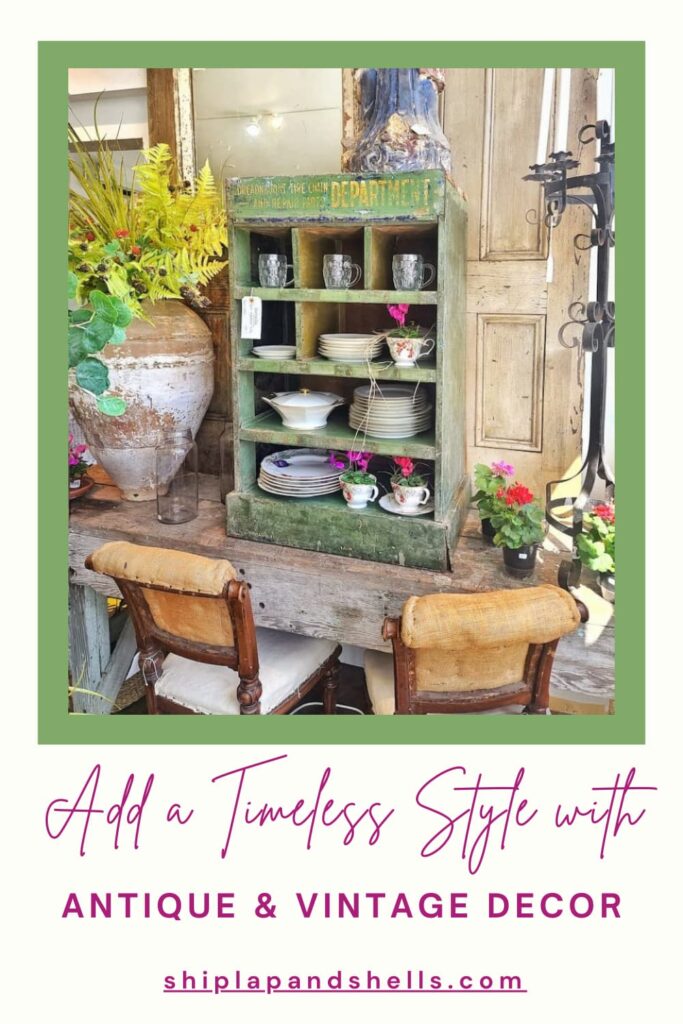
That big vase in the first picture is giving me heart palpitations!!!! You have some great spots over there in the PNW!!
I know Jennifer! I would have picked that up so quickly except it was insanely expensive!
Love all of your finds and tips Kim! You have the prettiest shops near you!
Thanks, Stacy! Finding the great stuff isn’t the hard part. It’s finding things at a good price that seems so tough around here.