How to Grow and Care for Zinnias in Your Garden
Few cut flowers bring as much cheerful color to a summer garden as zinnias. Once they settle into warm soil and sunshine, these easy annuals grow quickly and begin producing bright blooms that last until the first fall frost.
Learning how to grow zinnias is surprisingly simple. With plenty of sunlight, well-draining soil, and a little space to grow, these classic cottage garden flowers will reward you with months of continuous blooms.
Zinnias are also one of the most loved and easiest flowers to grow for cutting gardens. The more you harvest them for bouquets, the more blooms the plants will produce. If you’re starting from seed, you can read my full guide on How to Start Zinnias Indoors from Seed.
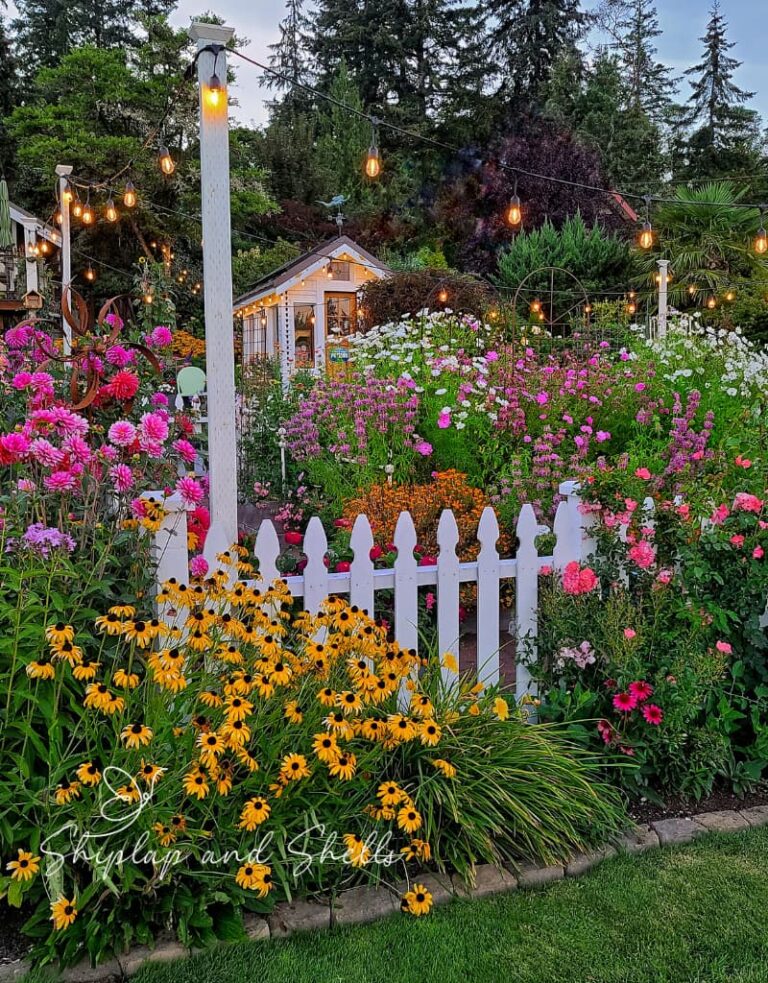
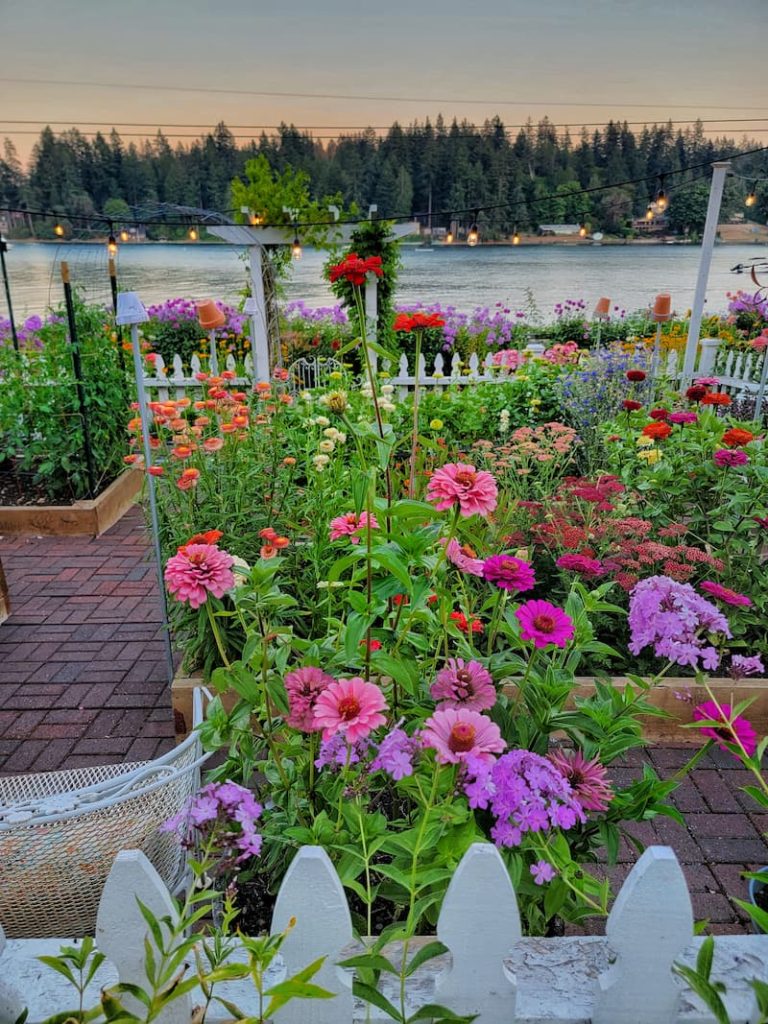
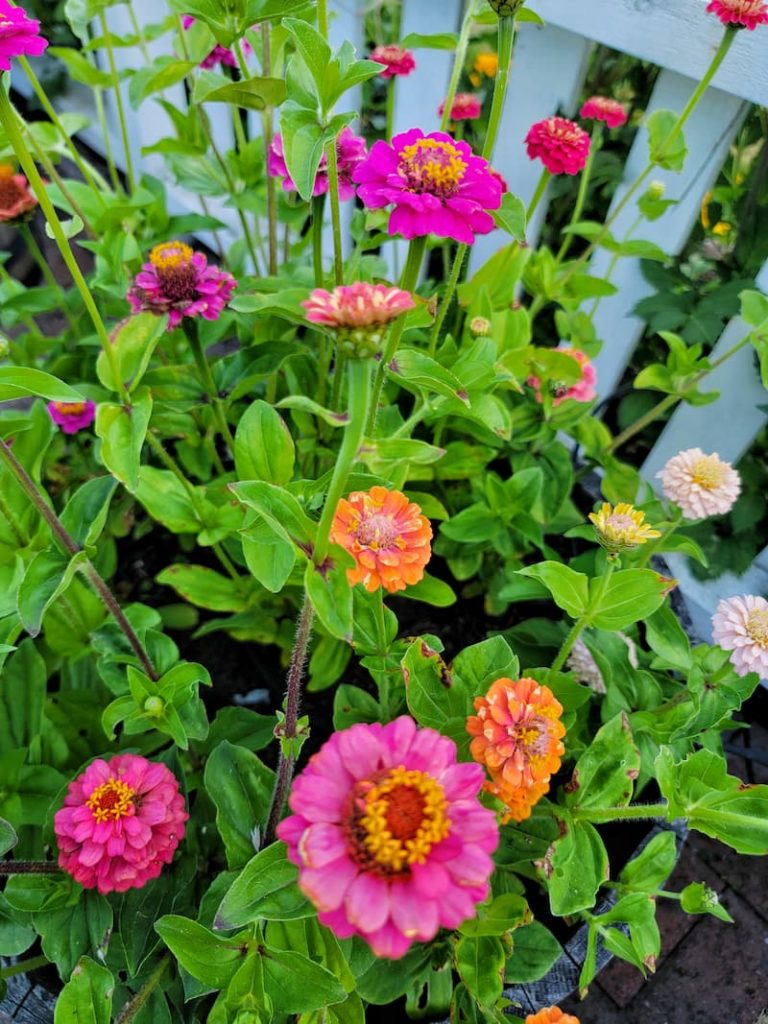
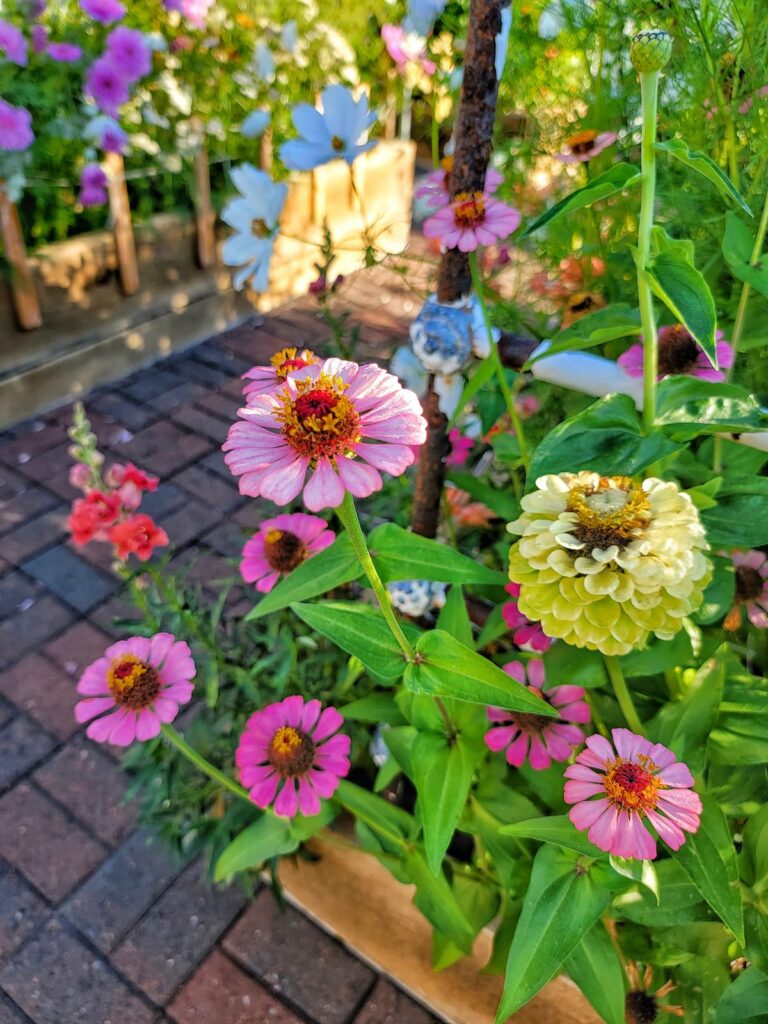
In my garden, zinnias quietly take over the beds by midsummer, filling the space with color while bees and butterflies visit throughout the day. They’re one of those flowers that make the garden feel full and alive.
As an Amazon affiliate, I earn a commission from qualifying purchases at no additional cost to you. My blog also features other affiliate links for your convenience. Click here to read my privacy policy.
Best Growing Conditions for Zinnias
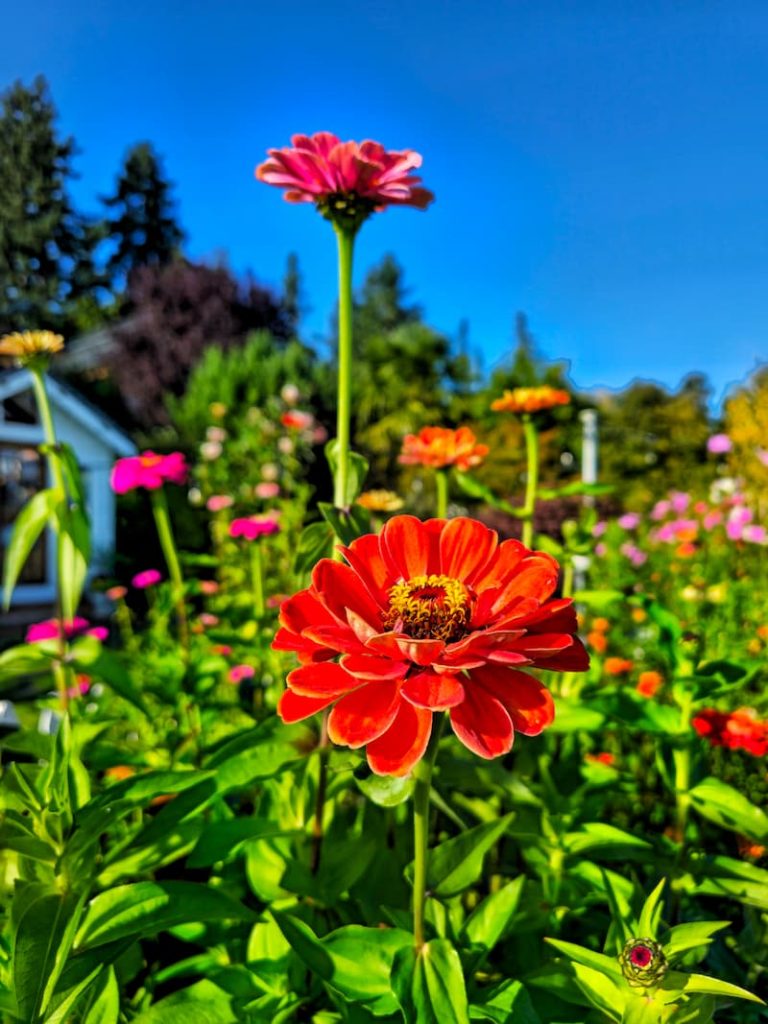
Zinnias thrive in warm, sunny garden beds with plenty of space to grow. Once planted in the right spot, they tend to take care of themselves and reward gardeners with months of colorful blooms.
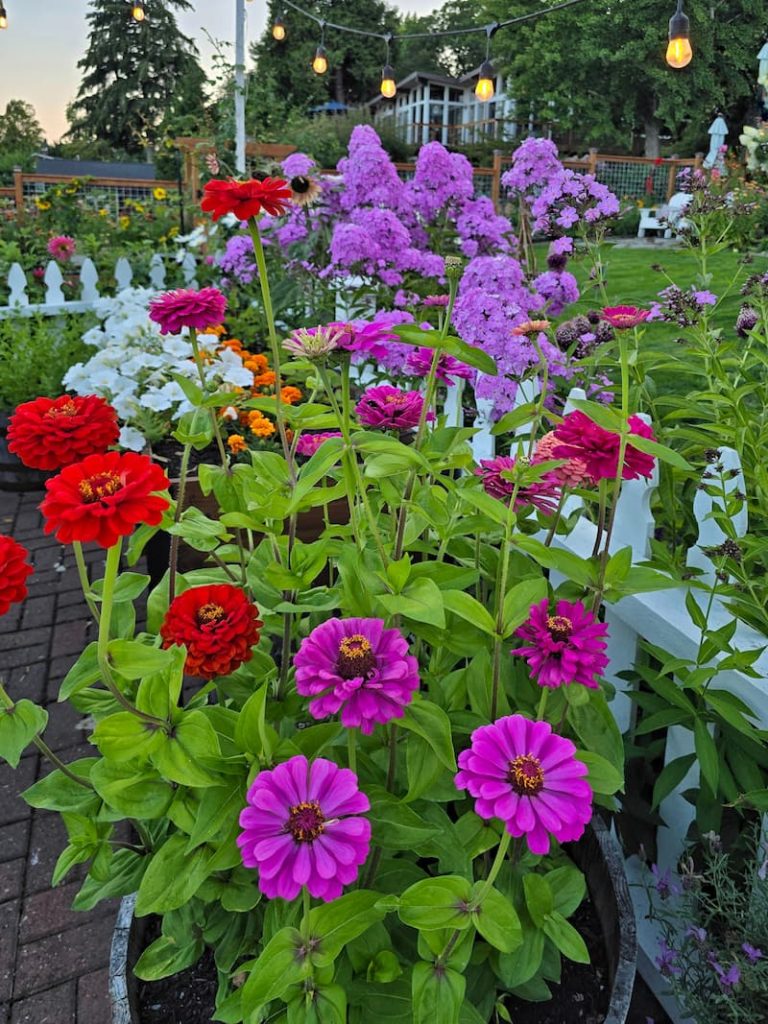
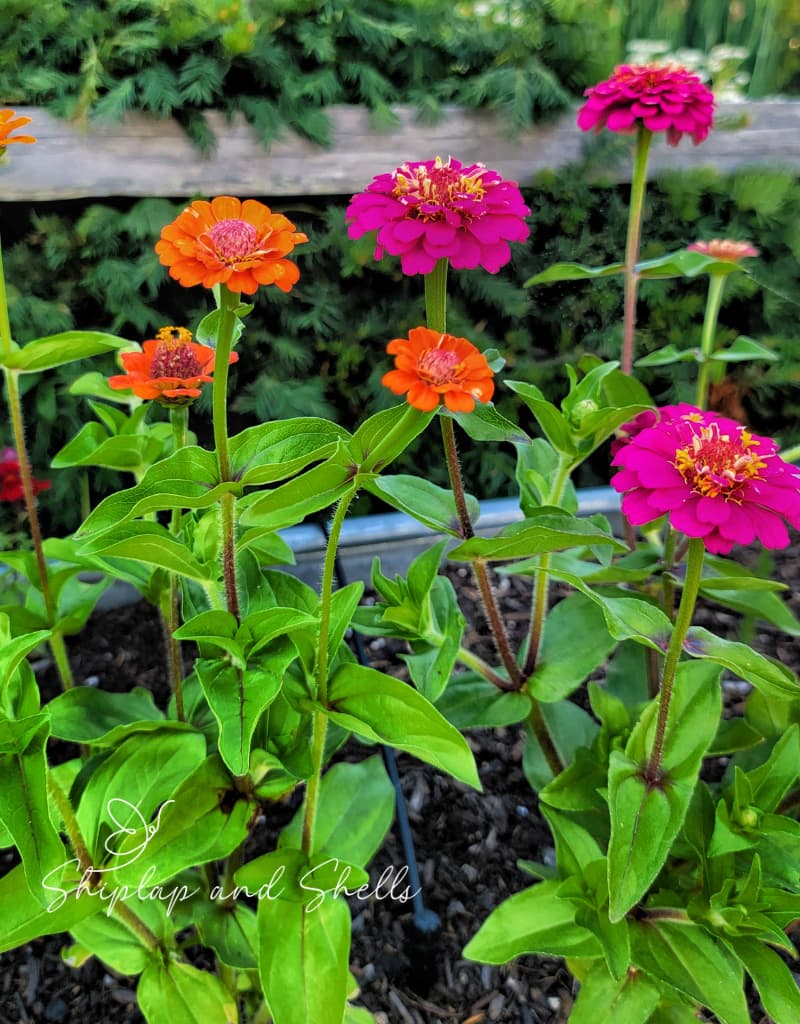
With the right growing conditions in place, caring for zinnias throughout the season becomes simple.
A Quick note about my garden
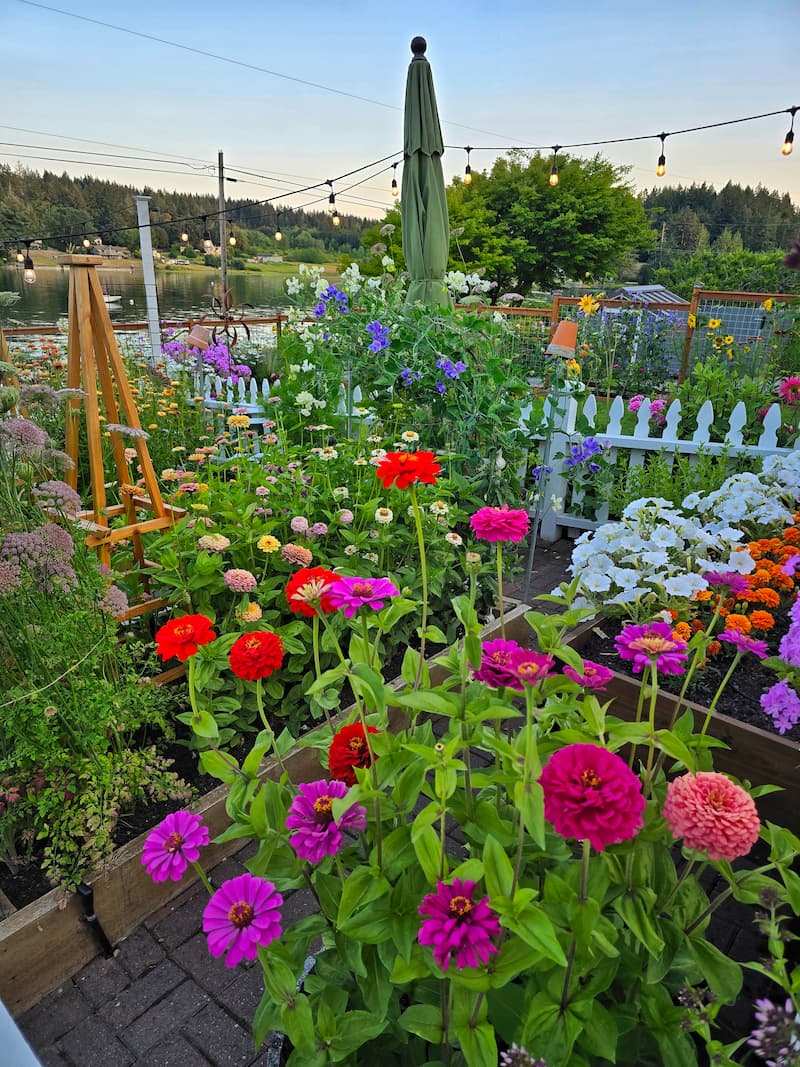
Most of the flowers I share here are grown from seed in our greenhouse and planted in raised beds and containers throughout our cottage garden.
How Often Zinnias Need Water
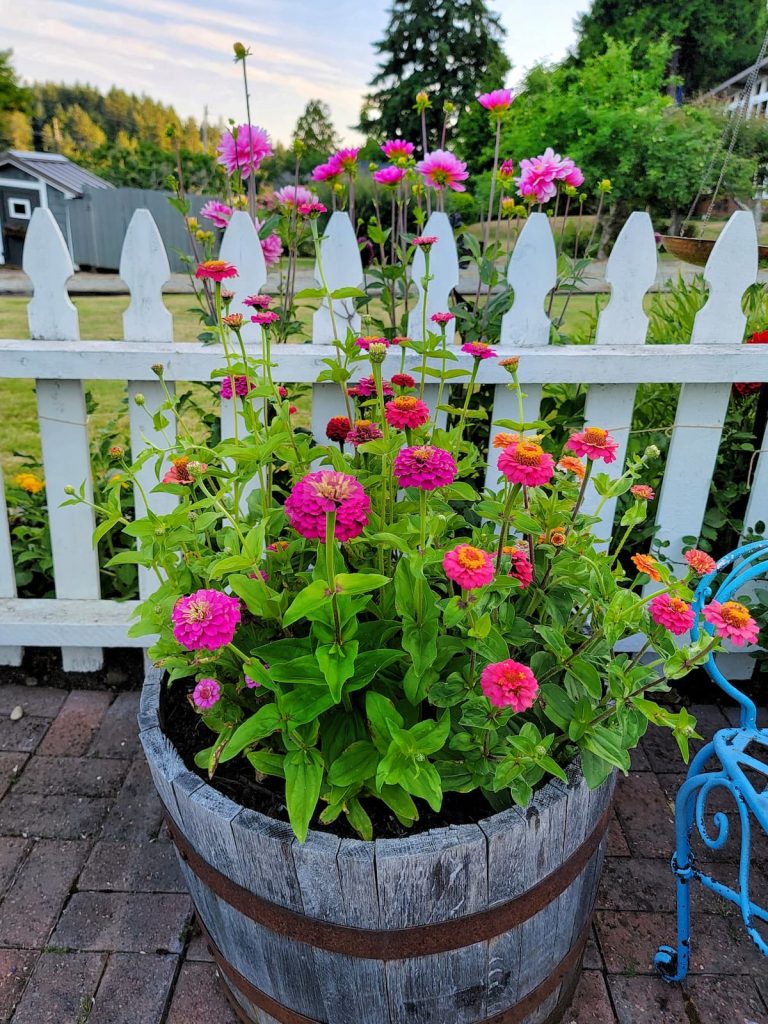
Zinnias are fairly drought-tolerant once established in the garden, but they grow and bloom best when consistently watered throughout the growing season.
A good general rule is to give zinnias about one inch of water per week, either from rainfall or supplemental watering. During hot summer weather stretches, give the plants a little extra moisture so they don’t stress.
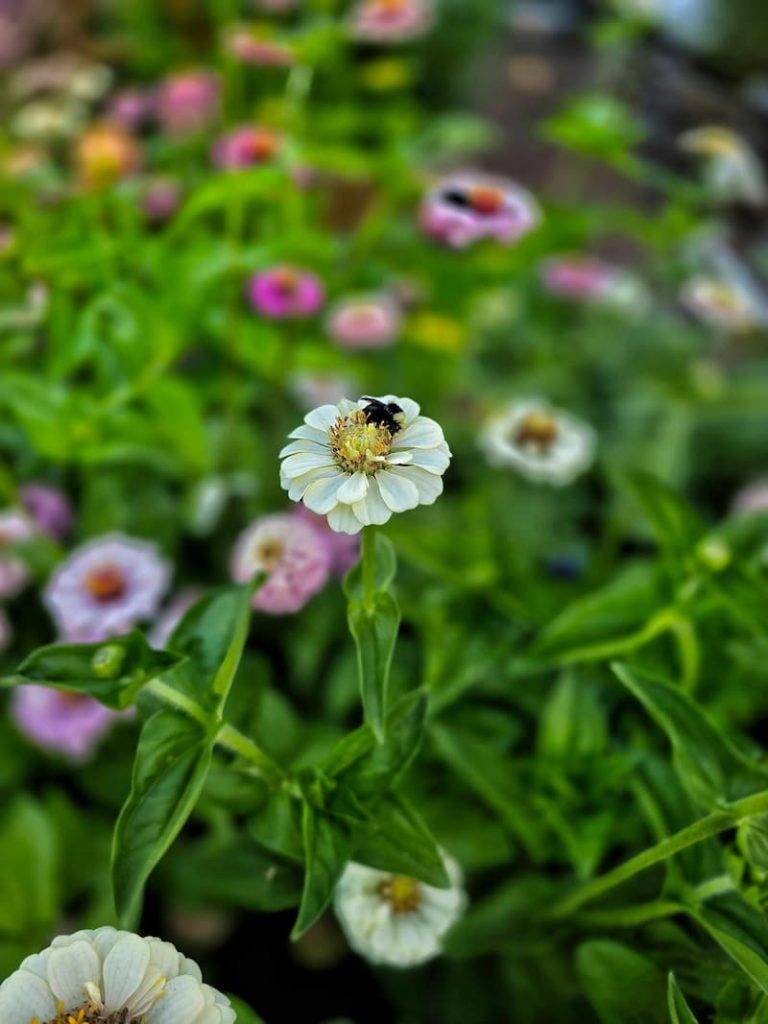
Water deeply at the base of the plants rather than lightly sprinkling the soil’s surface. Deep watering encourages stronger root systems and helps the plant stay healthier during warm weather.
Try to avoid watering from above whenever possible. Wet foliage can cause fungal issues like powdery mildew, especially when plants are growing close together.
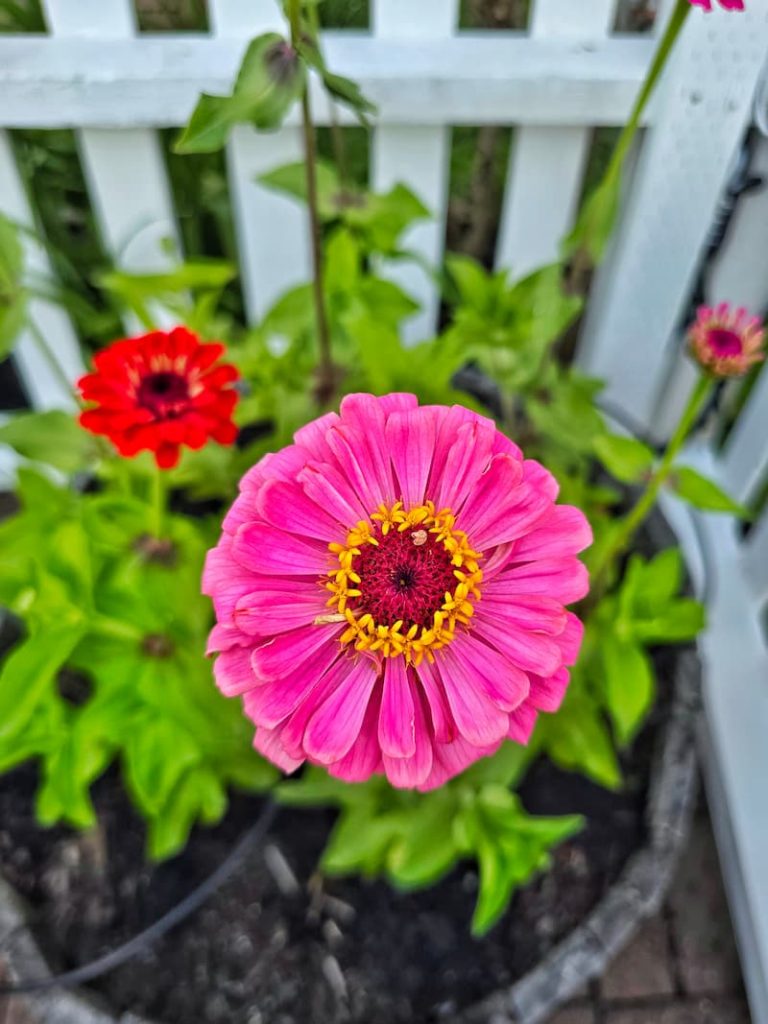
In my garden beds, I rely on soaker hoses and drip irrigation, which slowly deliver water directly to the soil. It’s a simple system that keeps my plants consistently hydrated without soaking the leaves.
Container-grown zinnias may need more frequent watering, especially during hot weather, since pots tend to dry out faster than garden beds.
SHOP SOAKER HOSES
SHOP DRIP IRRIGATION
Let’s Plan Your Dream Garden With Our
Gardening Planner
Unlock Your Garden’s Potential.
Our 35-page Ultimate Garden Planner is designed to help you organize, track, and flourish in your gardening endeavors.
Get yours for $4.99
Do Zinnias Need Fertilizer?
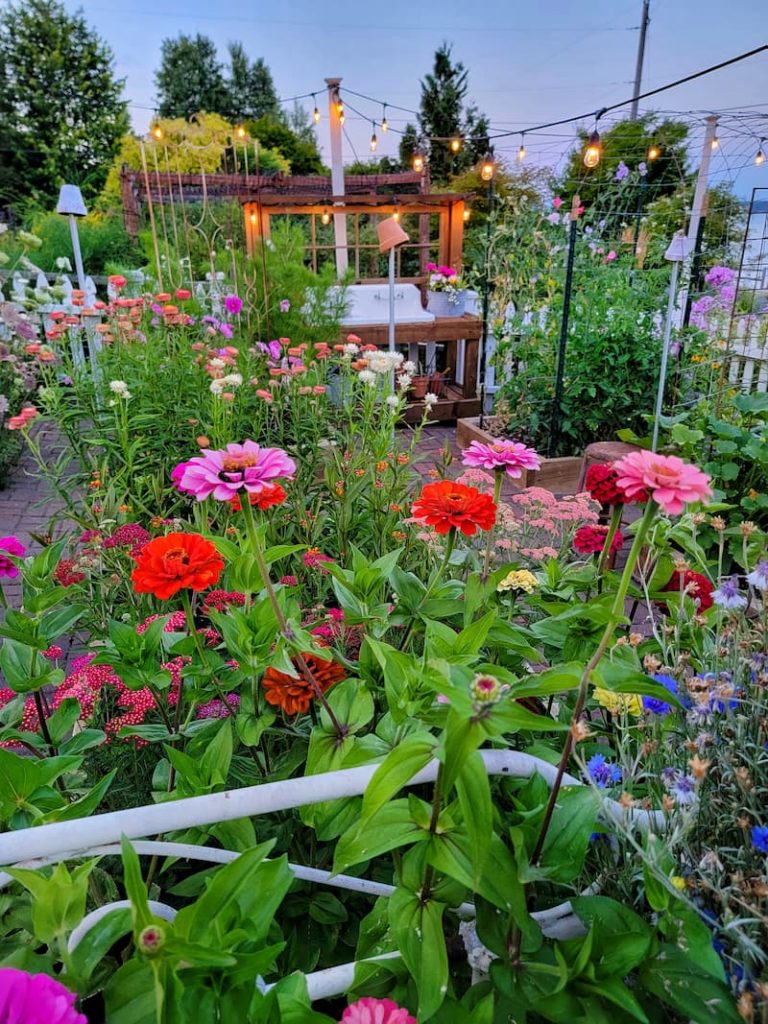
Zinnias are not heavy feeders, which makes them wonderfully low-maintenance flowers for summer gardens.
If your garden soil already contains organic matter or compost, your plants may not need much additional fertilizer. Healthy soil often provides enough nutrients for zinnias to grow strong and produce plenty of blooms.
If you’d like to give your plants a little extra boost, you can apply a balanced all-purpose fertilizer about once a month during the growing season. Gentle feeding helps encourage steady growth in continued flowering.
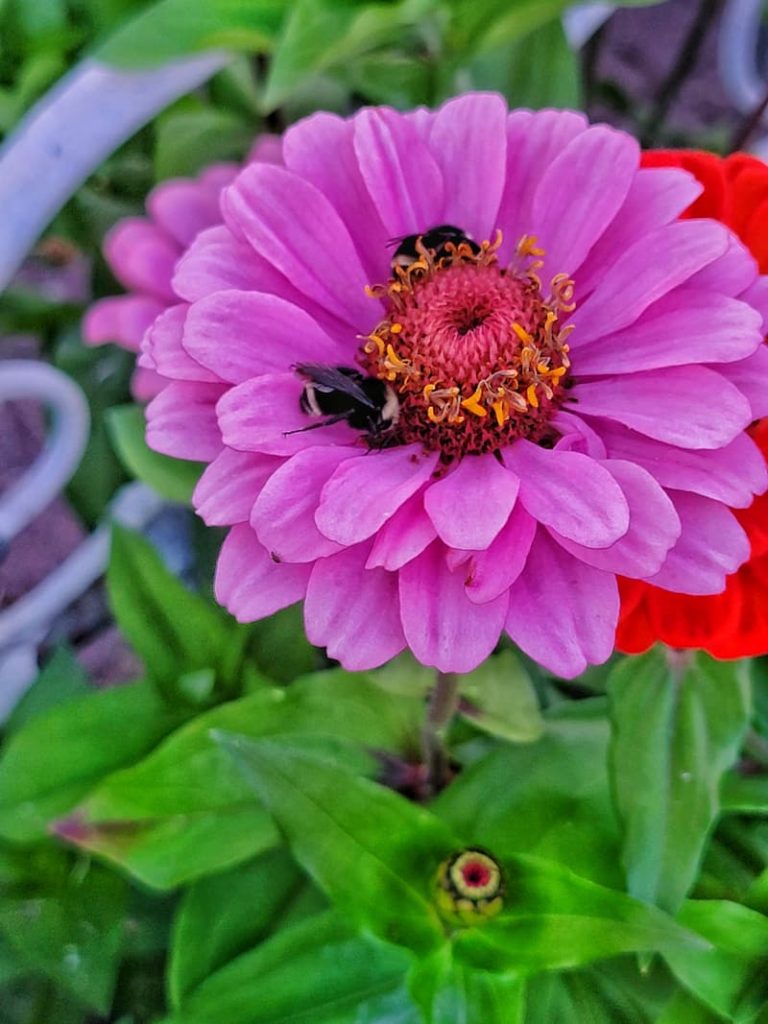
Organic options such as compost, fish emulsion, or liquid seaweed can also work well for gardeners who prefer natural fertilizers.
Just be careful not to overdo it. Too much nitrogen can lead to lush leafy growth but fewer flowers, and with zinnias, it’s really the blooms we’re after.
How to Pinch Zinnias for Bushier Plants
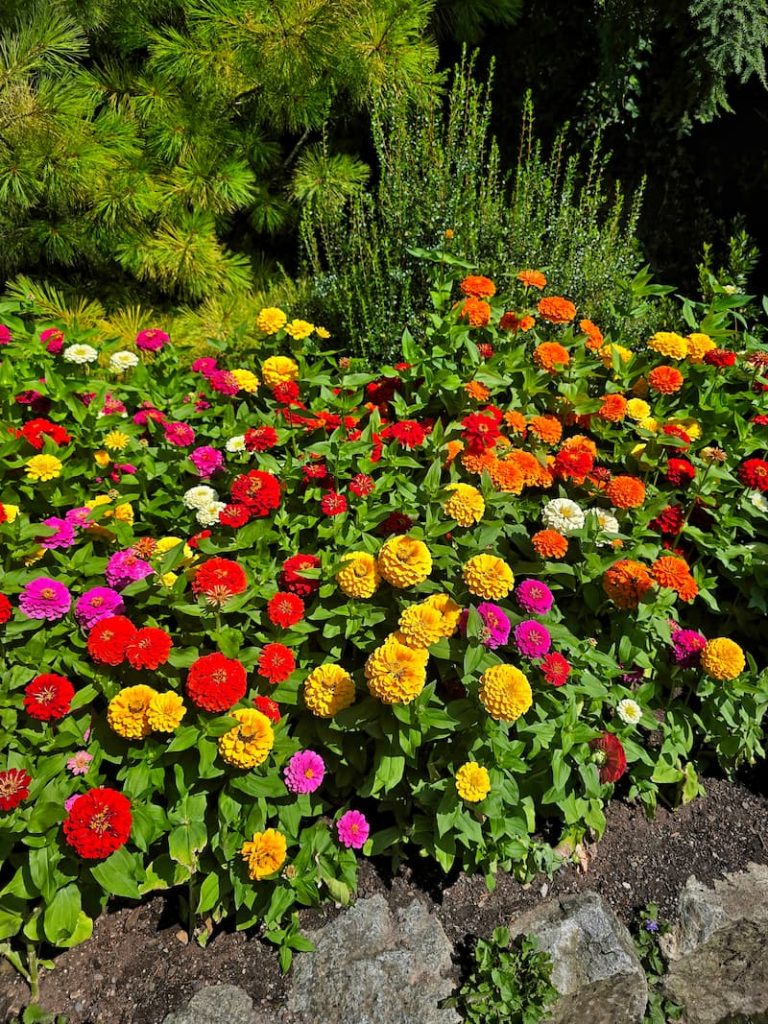
If you want fuller plants and more flowers, pinching zinnias is one of the easiest things you can do.
When young zinnia plants reach about 6-12 inches tall and have several sets of leaves, pinch or snip off the top of the main stem just above the leaf node.
This small cut signals the plant to branch out and produce multiple stems instead of growing as a single tall stalk. The result is a bushier plant that will produce more blooms throughout the season.
For gardeners growing zinnias as cut flowers, pinching will increase the number of stems each plant produces.
In my garden, pinching always feels a little nerve-wracking the first time, but zinnias respond quickly and begin sending out new branches before long.
Garden Supplies and Tools
Check out my favorite garden supplies and tools for the growing season. Whether you’re looking for potting soil or deer repellent, you’ll find what I use in my own garden.
How to Support Tall Zinnias
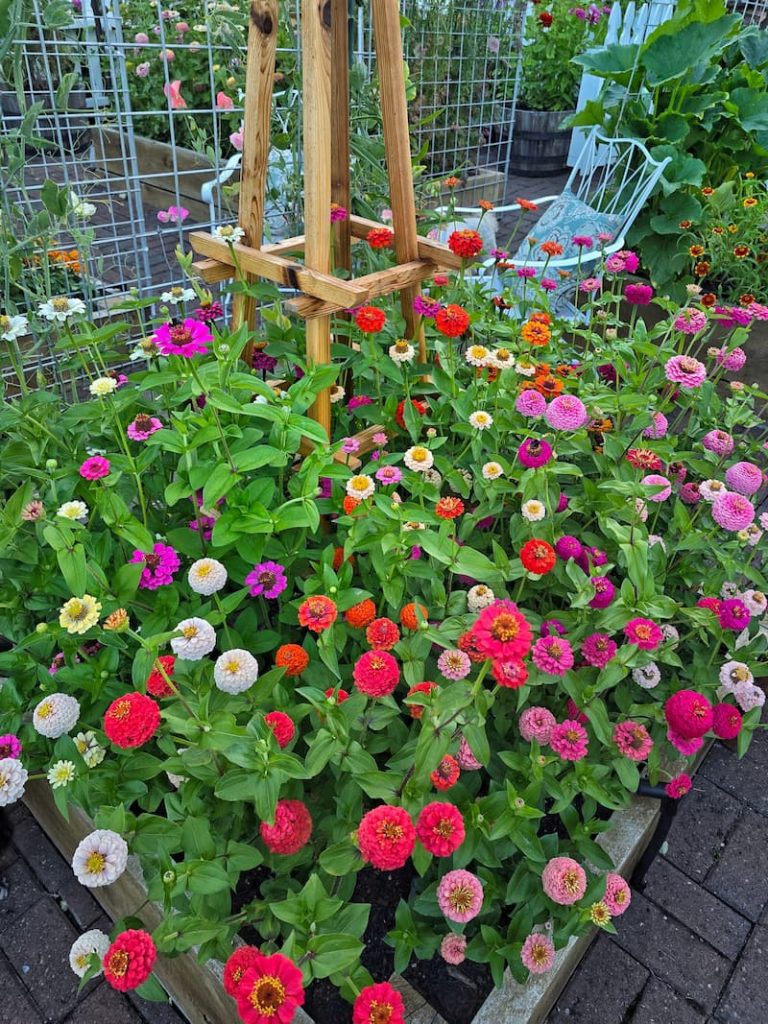
Many taller zinnia varieties grow quickly once summer arrives, and their long stems can sometimes bend or flop during windy weather or heavy rain. Providing support early helps keep the plants upright and the stems straight.
Some gardeners use plant stakes or cages, but in larger garden beds, flower netting or a simple support system often works best.
In my garden, I typically use a corral method or flower netting to support my zinnias. Setting up the support while the plants are still young allows the stems to grow naturally through the netting as they get taller.
As the plants continue growing, you can add another layer of twine or raise the netting slightly to keep everything supported.
How to Harvest Zinnias for Cut Flowers
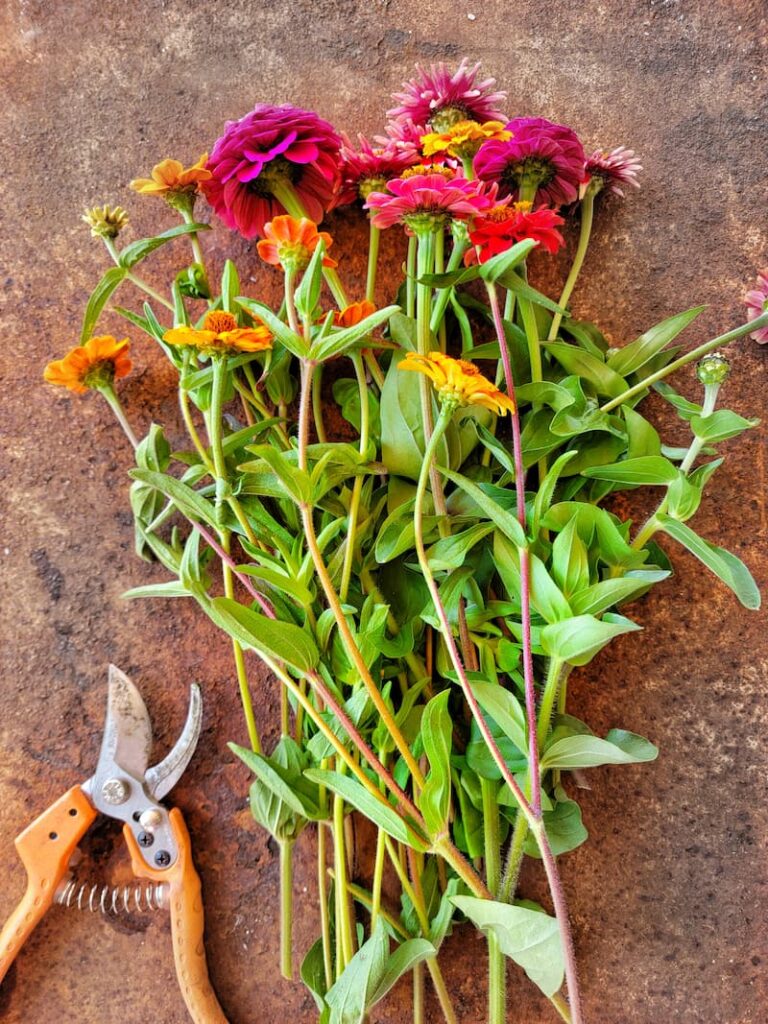
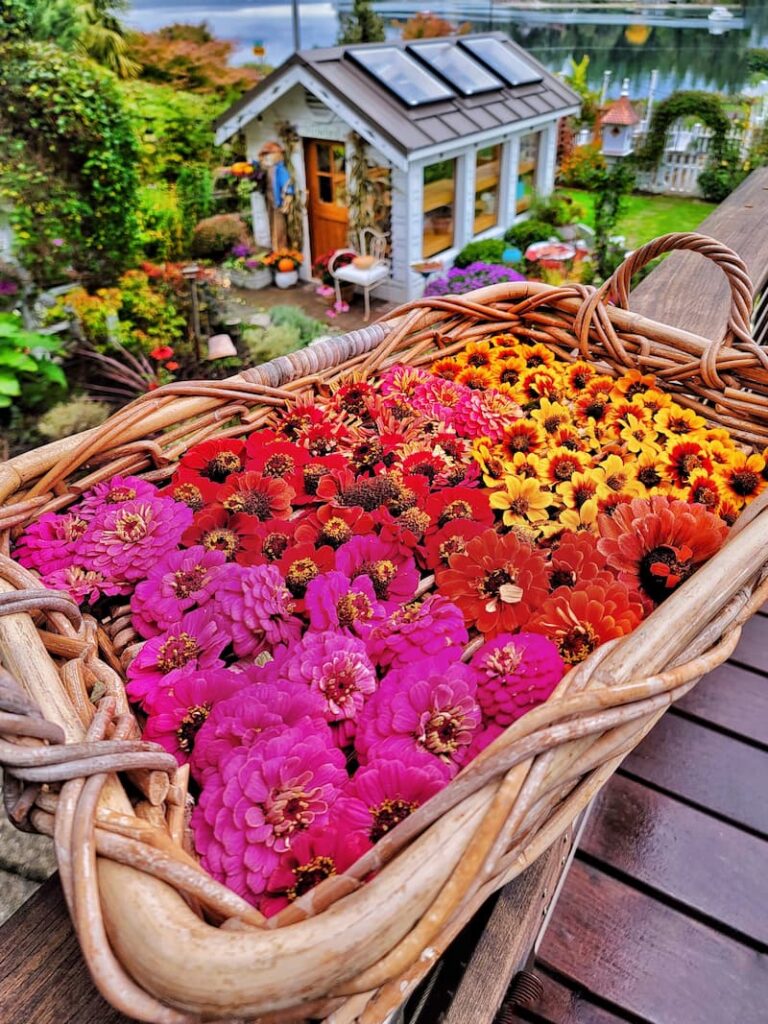
Zinnias are one of my favorite cut-and-come-again flowers to grow in the cut flower garden. The more you harvest them for bouquets, the more stems the plant will produce throughout the season.
For the longest vase life, it’s important to cut zinnias when the stems are strong and mature. A simple way to test this is the “wiggle test”. Gently hold the stem just below the bloom and give it a small wiggle. If the stem feels firm and stays upright, it’s ready to harvest. If it bends or feels soft, give it a little more time to mature on the plant.
Use clean, sharp garden snips or scissors to cut the stem at a 45-degree angle, taking a long stem whenever possible. Leaving at least one or two sets of leaves on the plant encourages new branches and more blooms.
Harvest flowers in the early morning when the stems are well hydrated and the temperatures are still cool.
With regular harvesting, zinnias will continue producing fresh flowers for bouquets from early summer until the first fall frost.
Deadheading vs. Harvesting Zinnias
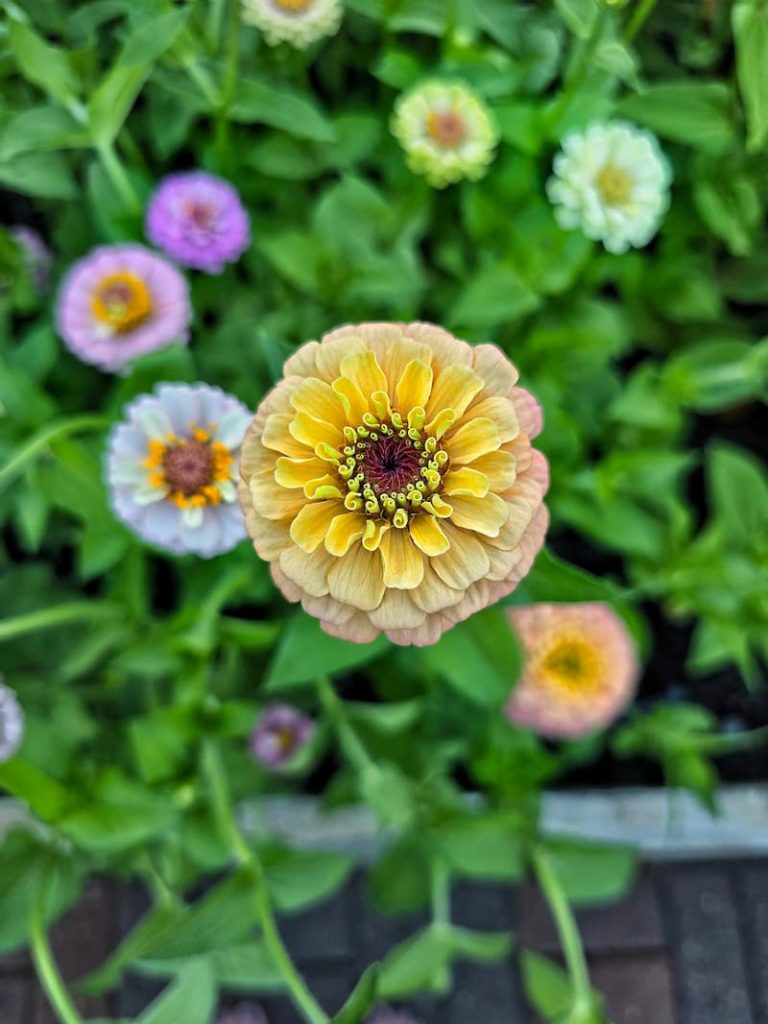
Both harvesting and deadheading help keep zinnias blooming throughout the season, but they serve slightly different purposes.
Harvesting means cutting fresh blooms from the plant to bring indoors for bouquets. Regular harvesting encourages the plants to branch and produce even more flowers.
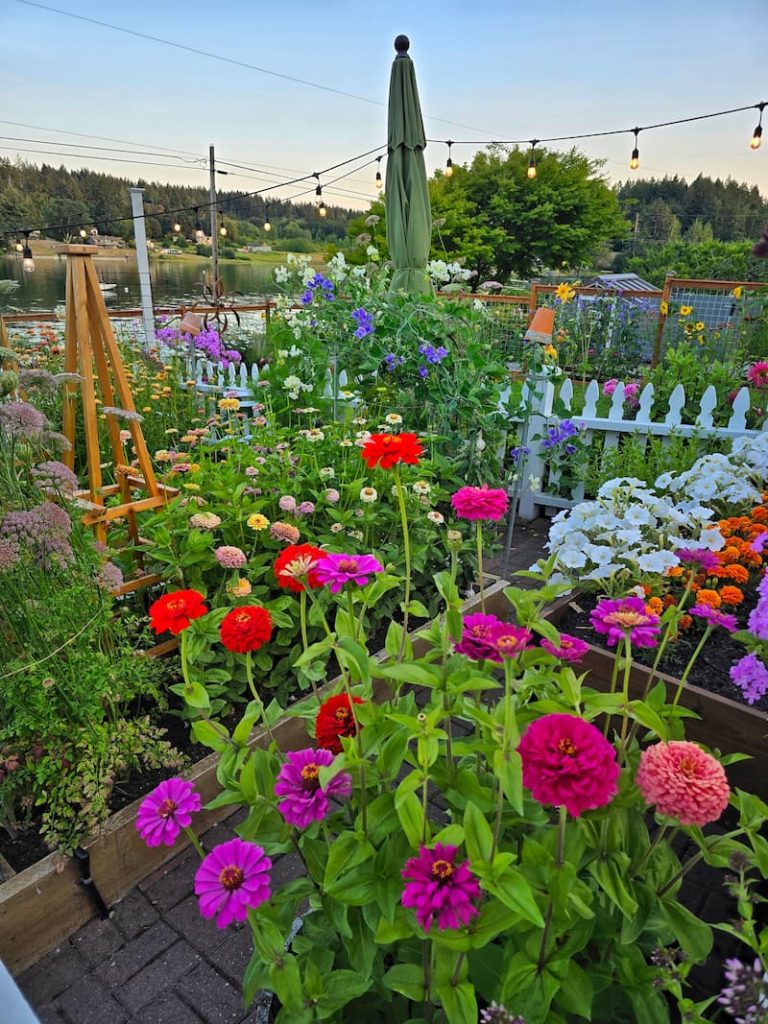
Deadheading, on the other hand, involves removing blooms that have already faded or dried on the plant. Snipping off these spent flowers prevents the plant from putting energy into seed production and encourages it to produce new buds.
To deadhead, cut the stem just above a healthy set of leaves or a new developing bud.
Checking your plants every few days and removing faded flowers is usually enough to keep zinnias blooming steadily all summer.
Starting Zinnias Indoors From Seed: A Simple Guide
Starting seeds indoors is easier than you think and has so many benefits!
Common Problems When Growing Zinnias
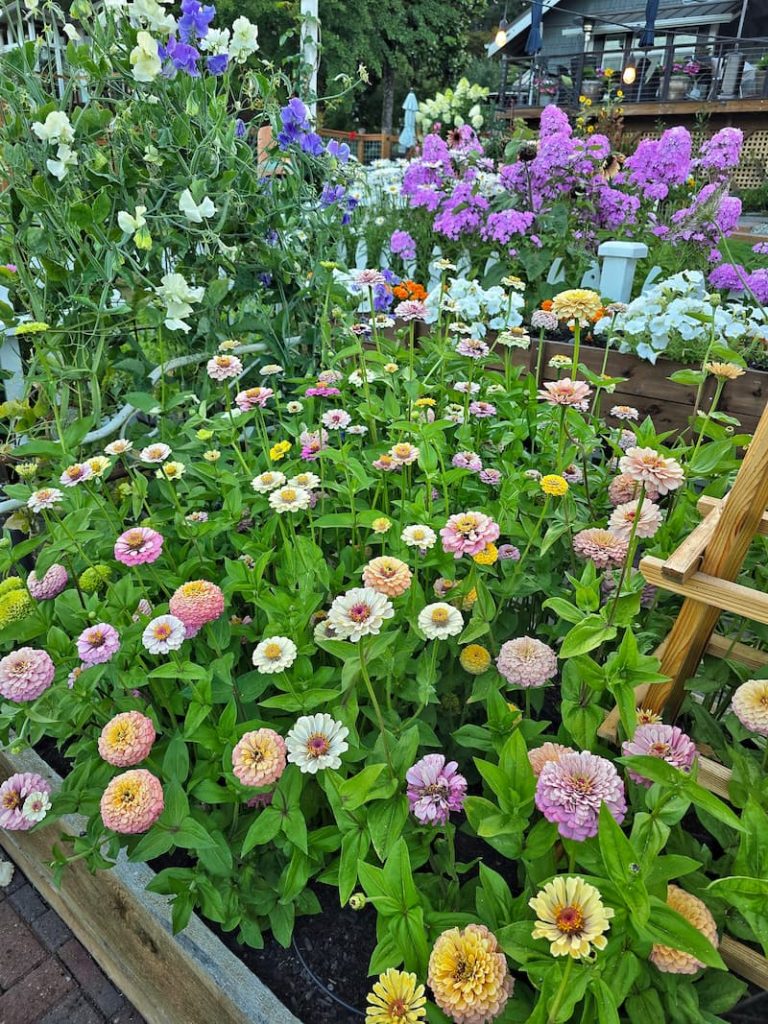
Zinnias are generally easy flowers to grow, but like most garden plants, they can occasionally have a few common issues during the growing season.
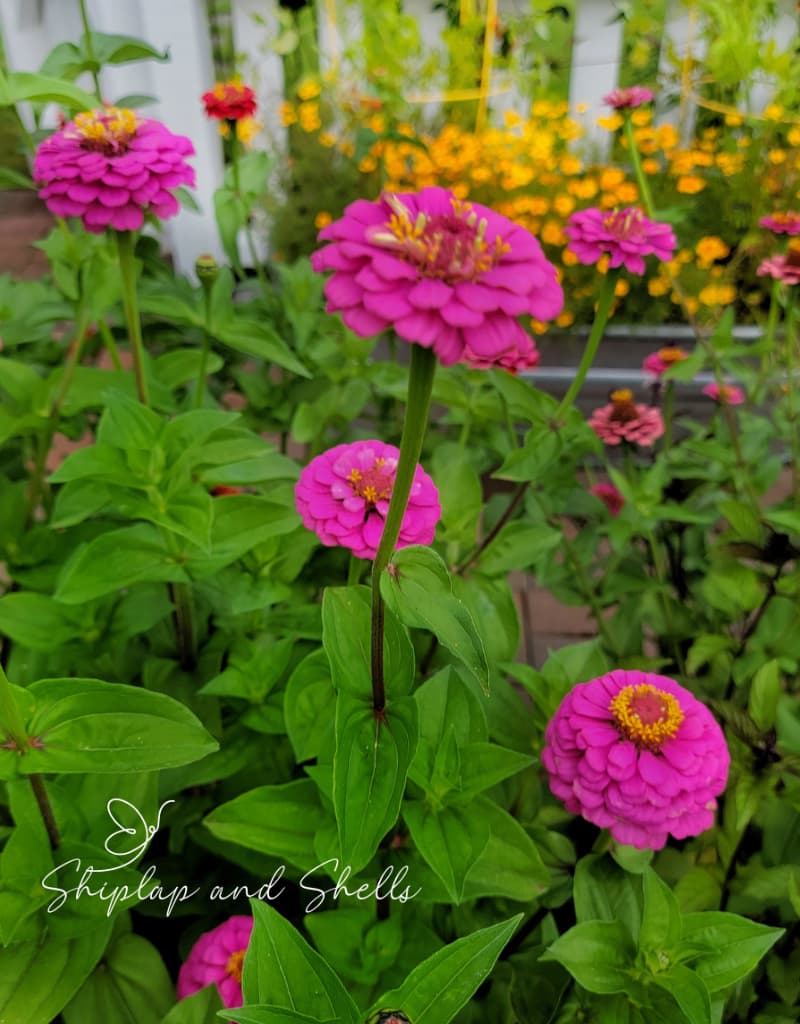
Powdery Mildew on Zinnias
One of the most frequent concerns gardeners notice is powdery mildew, a white, powdery coating that can appear on the leaves. This usually happens when plants are crowded or when airflow is limited.
Spacing plants properly and watering at the base of the plant rather than overhead can help reduce the chances of mildew developing.
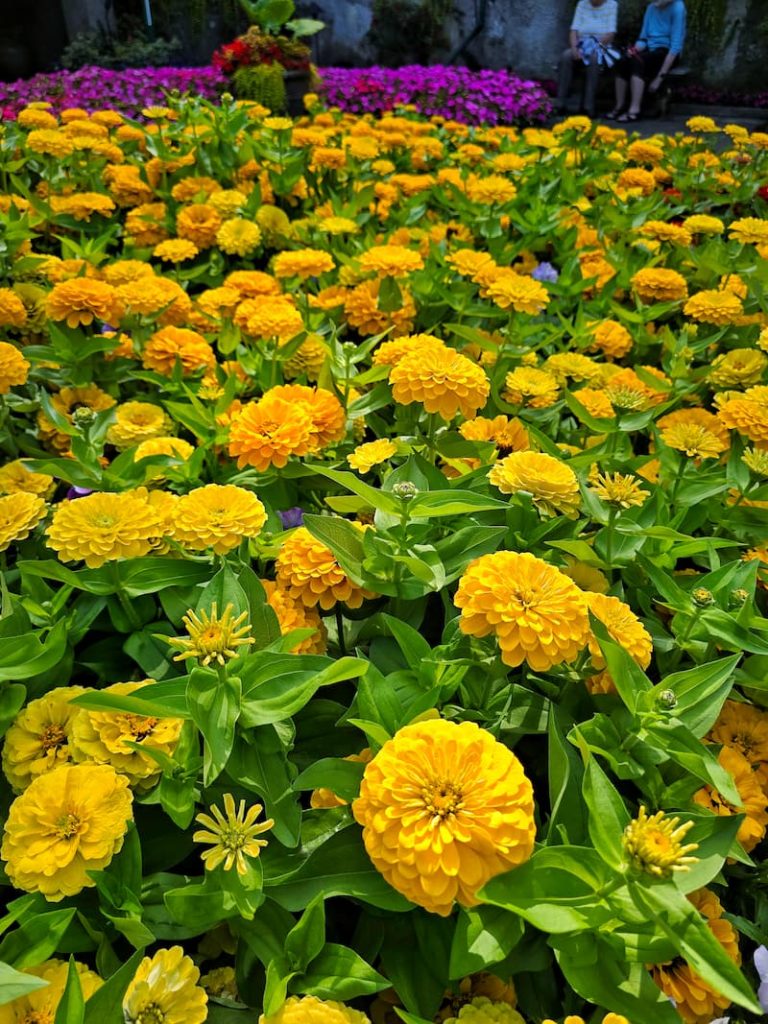
Common Zinnia Pests
You may also occasionally notice small garden pests such as aphids and beetles. In most cases, these can be rinsed off with a spray of water or removed by hand if necessary.
In my experience, once zinnias are planted in full sun and good air flow, they tend to grow vigorously and produce blooms with very little trouble.
Frequently Asked Questions About Growing Zinnias
Final Thoughts for Growing and Caring for Zinnias
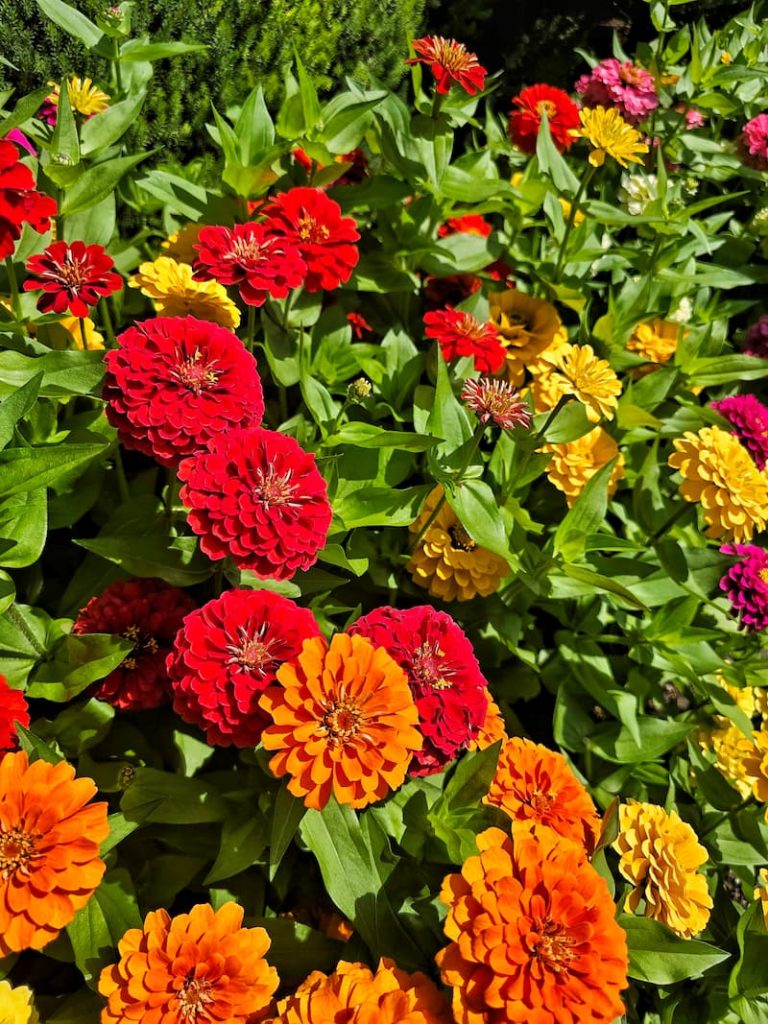
Zinnias are one of those flowers that make summer gardening feel easy. Once planted in a sunny spot with a little space to grow, they quickly begin filling the garden with cheerful color.
With a bit of sunshine, regular watering, and the occasional harvest for bouquets, zinnias will continue producing blooms for months. They’re the kind of flowers that bring both beauty to the garden and simple joy to everyday moments.
If you found this guide helpful, feel free to share it with a fellow gardener who loves filling their garden with summer flowers.
Until next time,
Happy Gardening!

I’m a self-taught hobby gardener. Everything I share on my blog is my opinion and what has worked for me.
MORE POSTS
For You To Enjoy
Follow Me for More Inspiration