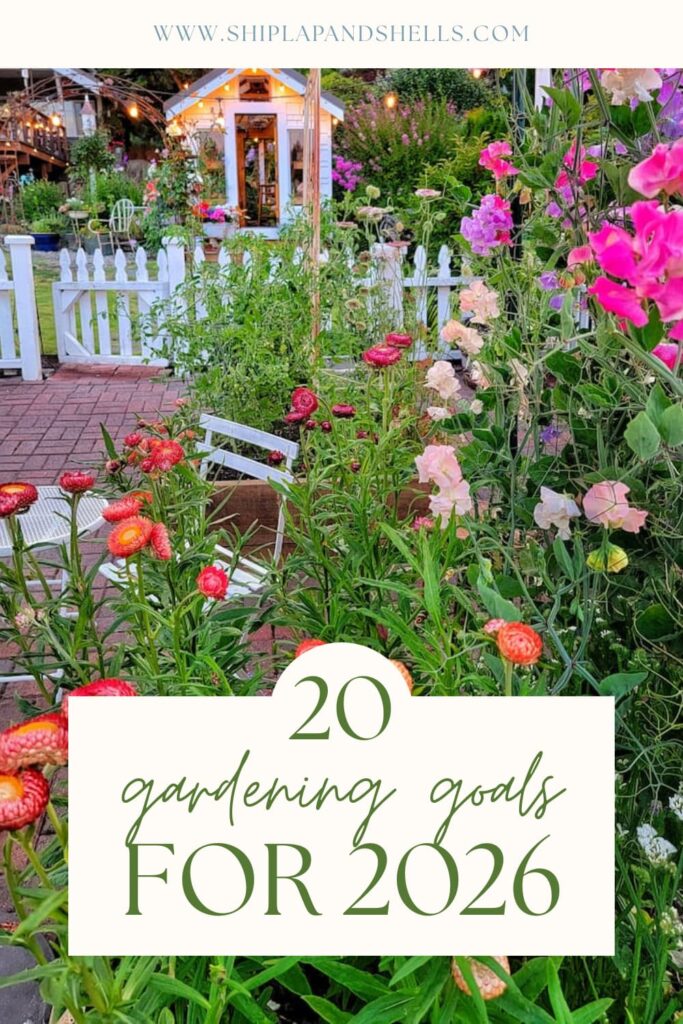
20 Gardening Goals: Garden Resolutions for 2026
The beginning of a new year always feels like a fresh start in the garden — even when everything outside is soggy, quiet, and fast asleep.
This time of year, I like to walk through my garden and reflect on what worked, what didn’t, and all those little “oops moments” from the past season. And honestly? I’ve learned to see those mistakes as gifts. Every misstep teaches something, and each year we grow — not just better plants, but as better gardeners.
After looking back on last year’s wins and challenges, I’ve put together a list of 20 gardening goals and resolutions for 2026 — ideas meant to inspire, encourage, and help you plan a garden that feels joyful, manageable, and uniquely yours.
So, grab your garden journal, flip through those seed catalogs, and let’s dream a little. Whether you’re hoping for more blooms, fewer weeds, or simply more time to enjoy your garden, I hope this post helps you feel confident, motivated, and excited to grow something beautiful this year.
As an Amazon affiliate, I earn a commission from qualifying purchases at no additional cost to you. My blog also contains other affiliate links for your convenience. Click here to read my privacy policy.
Fresh Ideas for a Fresh Start
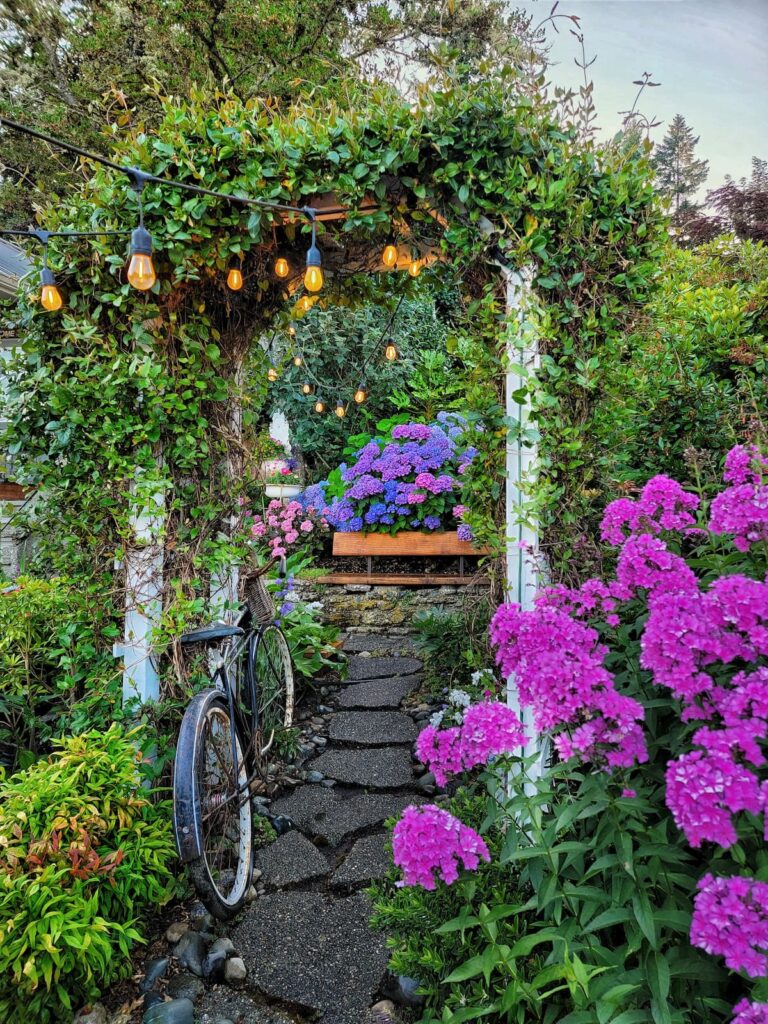
What if this is the year you try something new?
Maybe you’ll experiment with a few cheerful perennials, grow fragrant herbs right outside the kitchen door, or finally give raised beds or container gardening a try. The start of a new year is the perfect time to explore new ideas and rethink what you want your garden to be.
Do you dream of a…
There’s no wrong answer — and that’s the beauty of gardening. Each season is a clean slate, just waiting for you to make it your own.
What are the Goals of a Gardener?
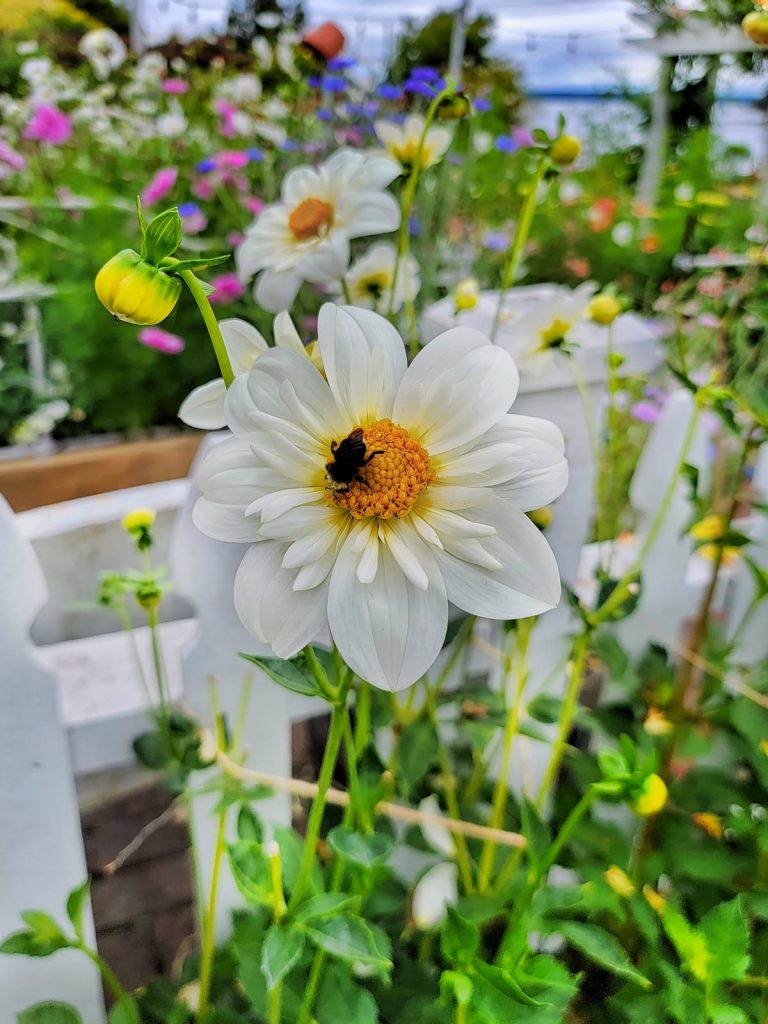
Gardening goals are deeply personal. For some, it’s above harvesting fresh vegetables for the dinner table. For others, it’s creating a backyard retreat filled with flowers, birds, and pollinators.
Setting goals helps you focus on what matters to you — not what you think your garden should look like.
A good place to start is by reflecting on last year:
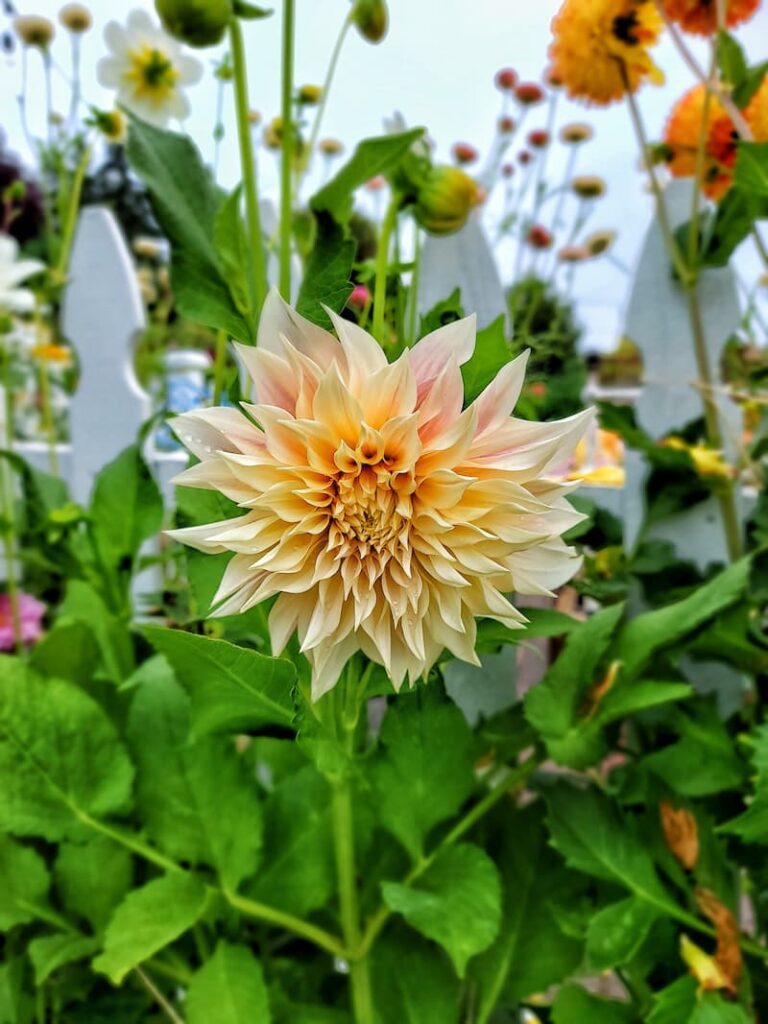
Looking back at 2025, I’m especially proud of the new garden beds we added along the pathway we built in 2024. But I also learned I need to stagger planting times better if I want longer-lasting blooms.
This year, I’m also focusing on planting more evergreen shrubs and incorporating more native plants for a lower-maintenance, more resilient garden.
What are your gardening goals for 2026?
20 Gardening Goals to Consider for 2026
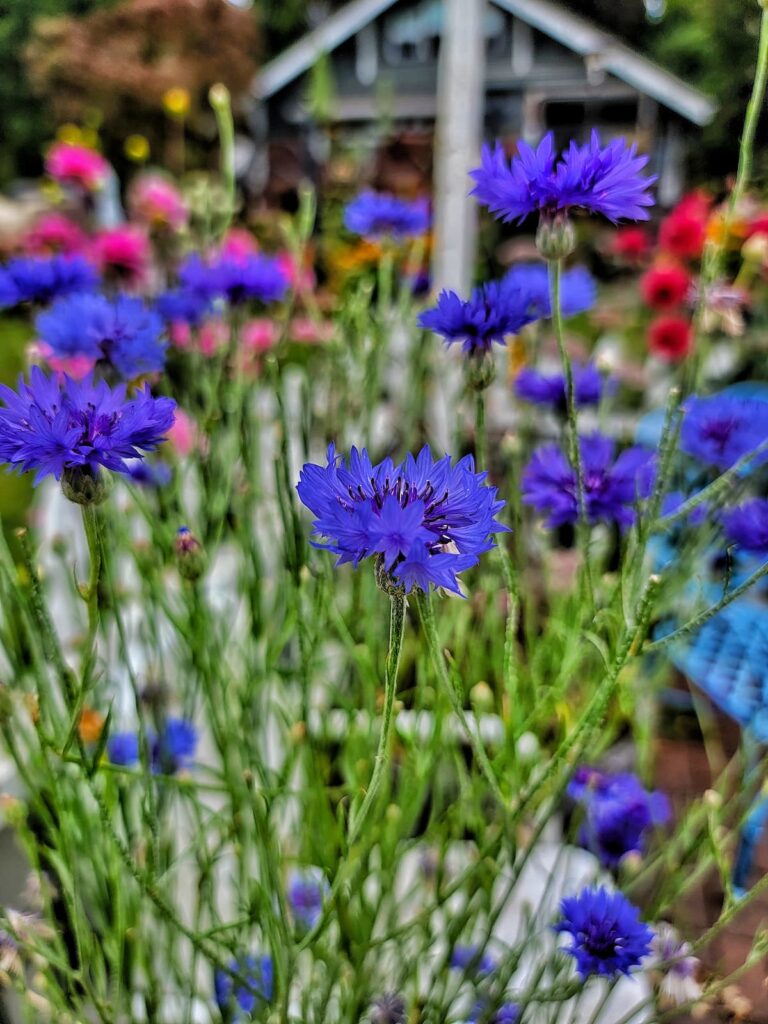
Rather than overwhelming you with one long checklist, I’ve grouped these goals into simple, realistic themes. Pick a few that resonate with you — you don’t have to do them all.
1. Reflect on Last Year and Learn from Mistakes
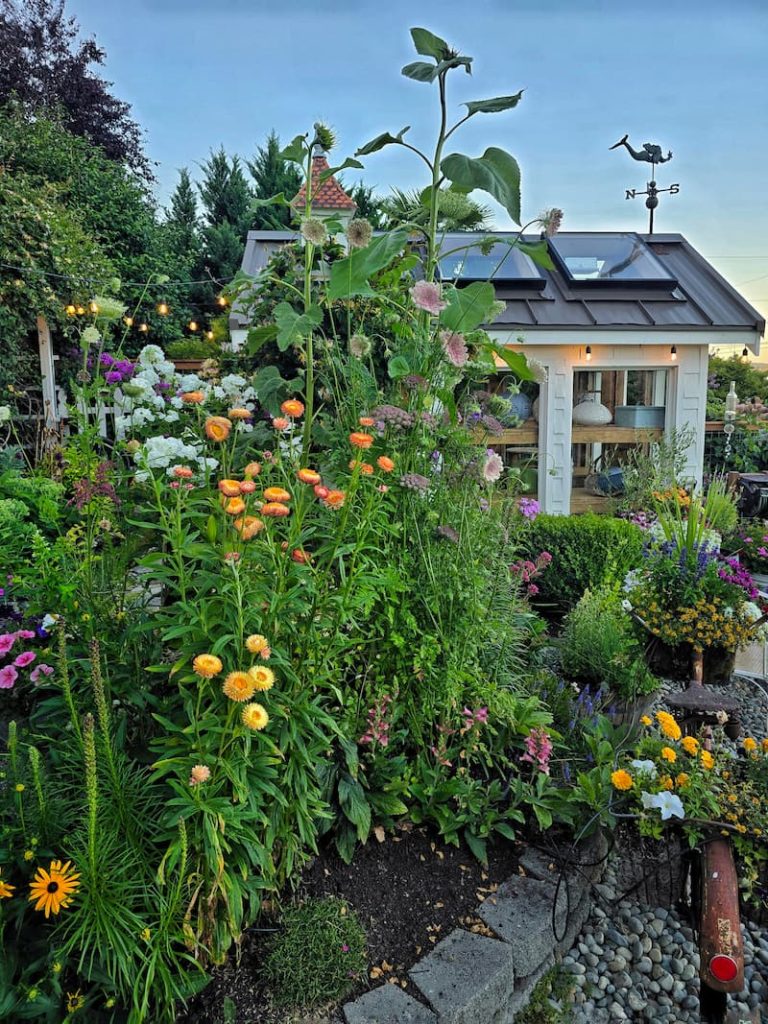
Every garden has challenges. The key is to learn from them and adjust.
Gardening is trial and error — and that’s part of the fun.
2. Set Realistic, Doable Goals
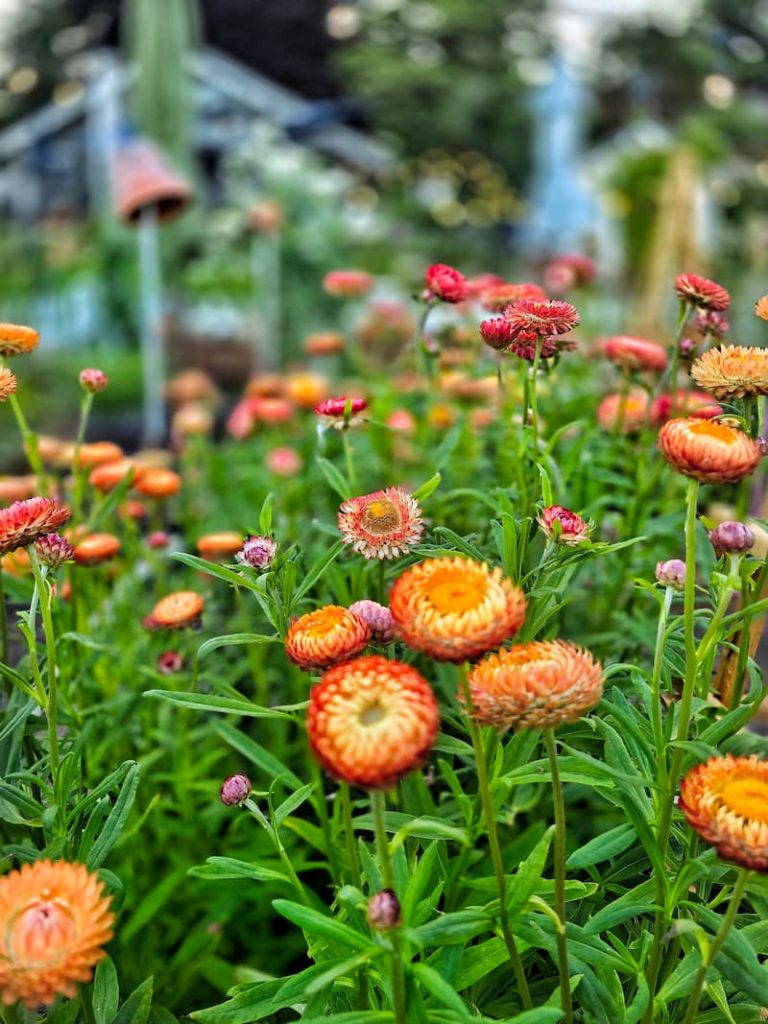
It’s easy to get carried away with seed catalogs and dreamy garden photos.
Instead of “I want a perfect garden,” try: “I want to grow three new flower varieties successfully this year.” Start small. Build confidence. Add more later.
3. Assess Your Space Before You Plant
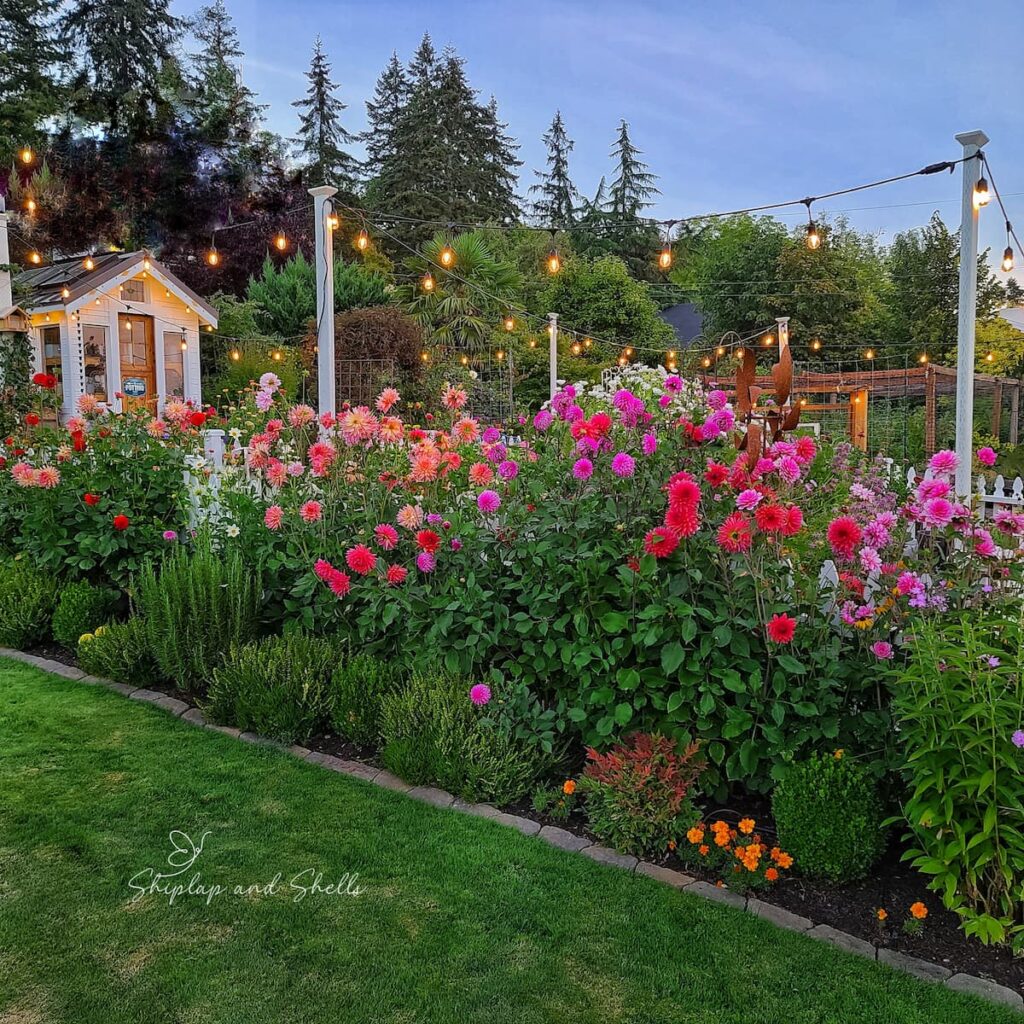
Before diving into your gardening plans, it’s important to step back and assess your yard or gardening space. Understanding your environment can help you make smarter decisions, choose the right plants, and create a thriving garden.
Whether you have a sprawling backyard, a compact patio, or a small balcony, evaluate your space for gardening success.
This step alone can save you so much frustration later.
4. Plan Your Garden (But Leave Room to Adjust)
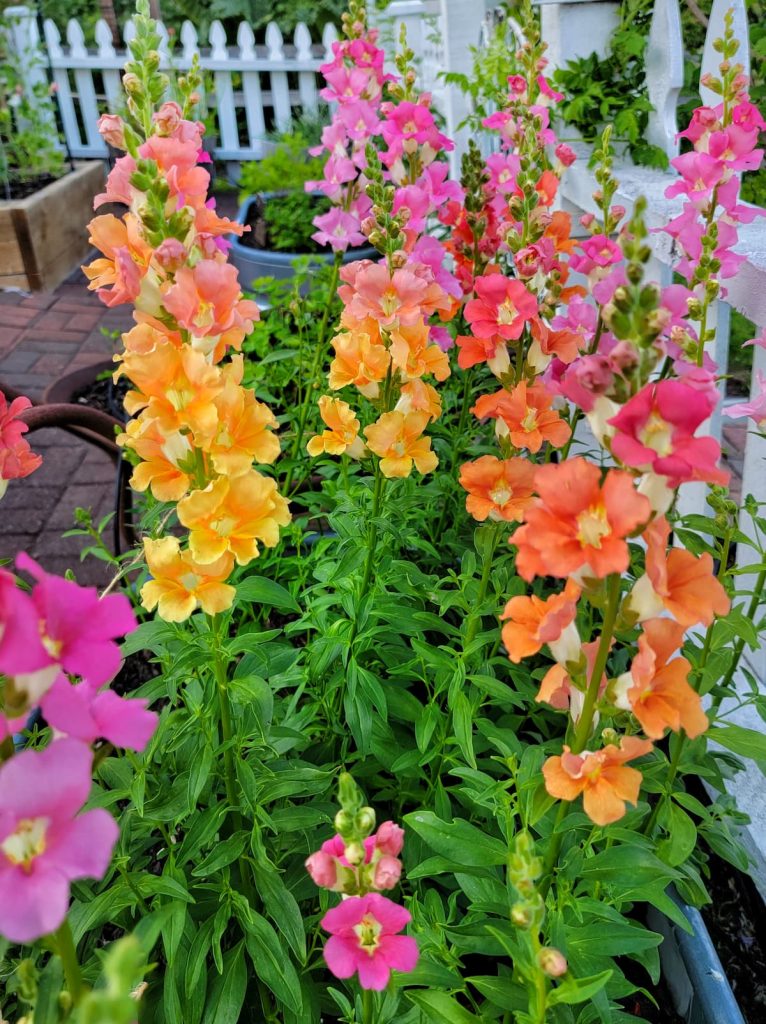
Every great garden starts with a solid plan. Getting swept up in the excitement of a fresh start is easy, but a little time to map things out can make all the difference.
Start by looking at your space. How much sunlight does it get? How much room do you have to play with? Maybe your soil needs a little boost, or you’ve considered adding an irrigation system. Now’s the perfect time to figure all that out.
But don’t forget the big picture. Gardening is so much more than just planting and weeding — it’s about creating a space that feels like you. Whatever your vision, a little planning now will help you bring it to life.
Garden Supplies and Tools
Check out my favorite garden supplies and tools for the growing season. Whether you’re looking for potting soil or deer repellent, you’ll find what I use in my own garden.
5. Improve Soil Health
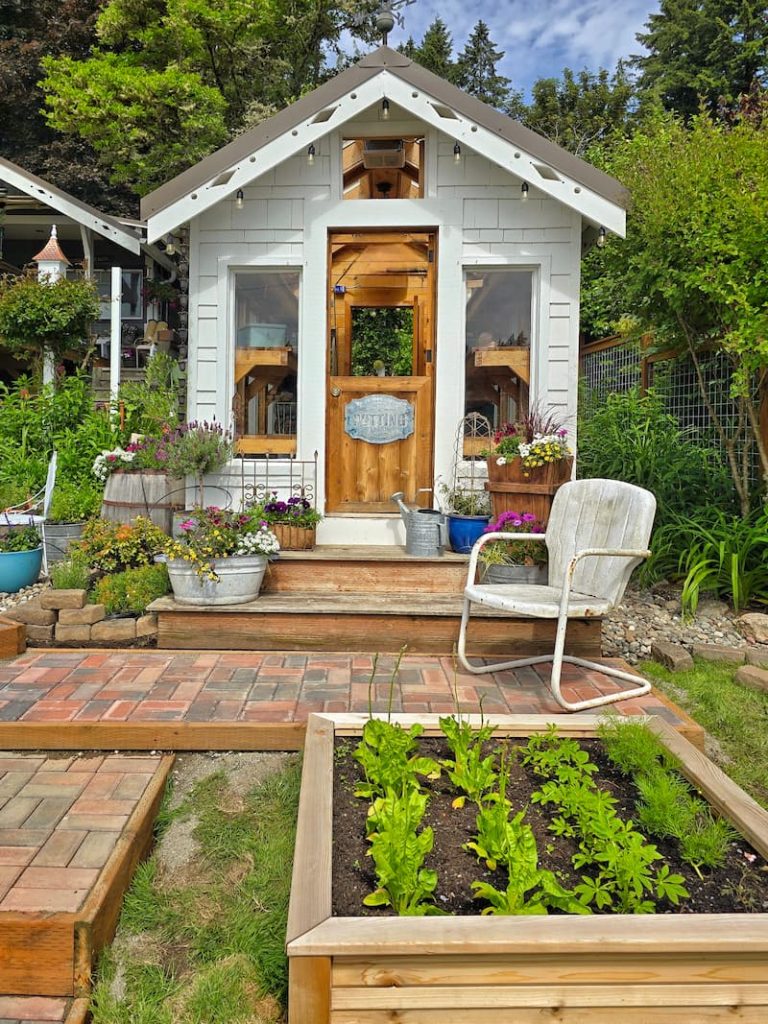
Healthy soil is the foundation of any successful garden, and the good news is there’s plenty you can do over the winter and early spring to improve it before planting season begins. Giving your soil some TLC during the off-season will set the stage for stronger, healthier plants that are more resilient to pests and disease.
Here are a few ways to build healthier soil during the winter and spring:
6. Start Seeds Indoors
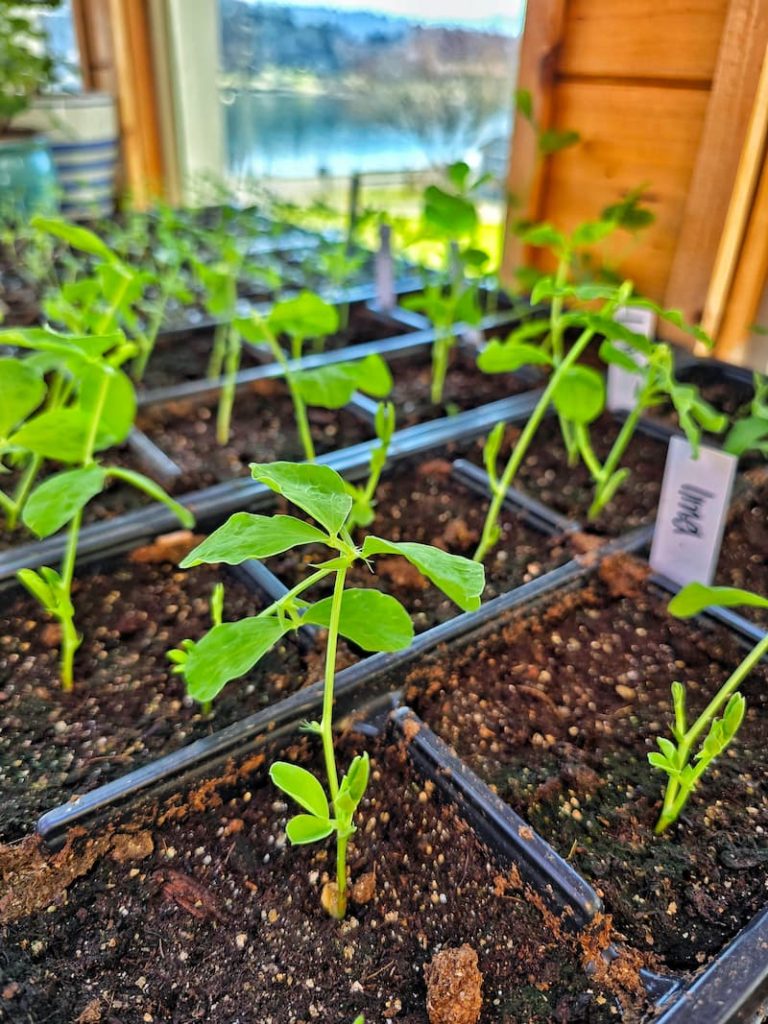
Starting seeds indoors is a great way to kick off the gardening season, especially if you live in an area with a short growing season. It lets you grow a wider variety of plants than what’s usually available at garden centers, giving you more control over your garden.
By starting seeds indoors, you’re giving your plants a head start in a controlled environment, protecting them from unpredictable spring weather, pests, and other challenges. It’s also a cost-effective way to fill your garden with everything from flowers and herbs to vegetables and native plants.
Don’t worry if you’re new to seed starting — it’s easier than you think! With the right tools, timing, and patience, you’ll be on your way to growing healthy, strong plants ready to thrive once it’s time to move them outdoors.
7. Clean Up the Garden Gently in Spring
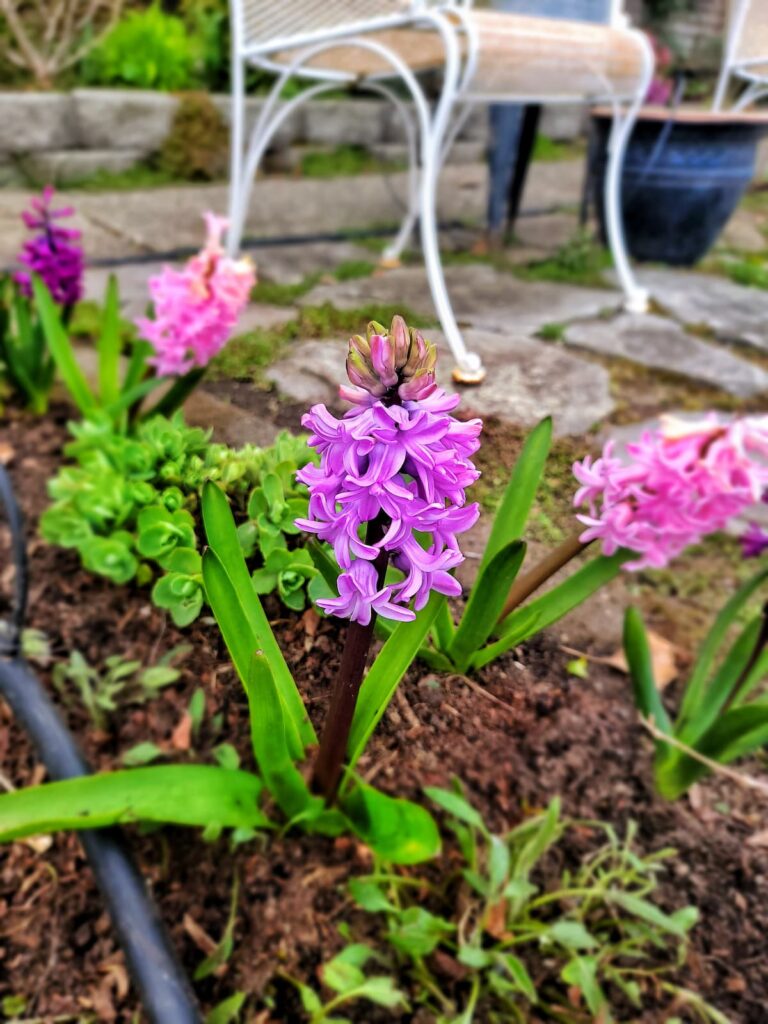
Early spring cleanup sets the stage for success — but go easy. Wait for warmer temperatures before removing debris so beneficial insects can emerge safely.
8. Try New Plants
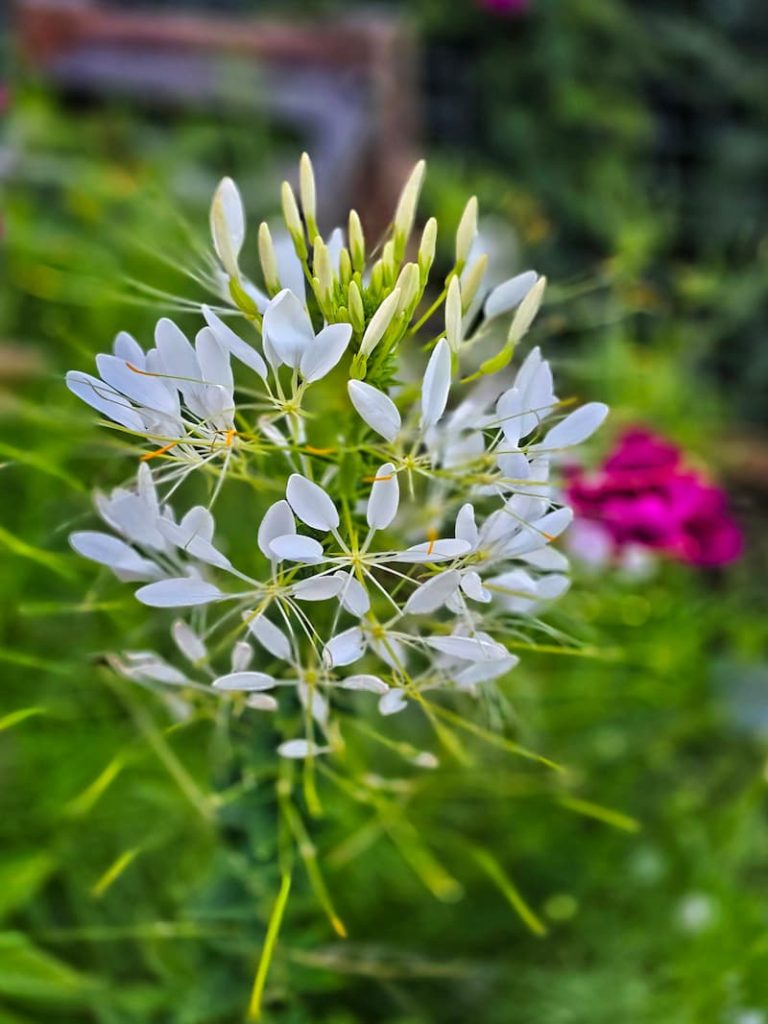
One of my favorite things about gardening is experimenting with new plants each year. Whether it’s a new flower variety or a native species you’ve never grown before, trying something fresh keeps gardening fun and full of surprises. Plus, it’s a great way to expand your skills and diversify your garden.
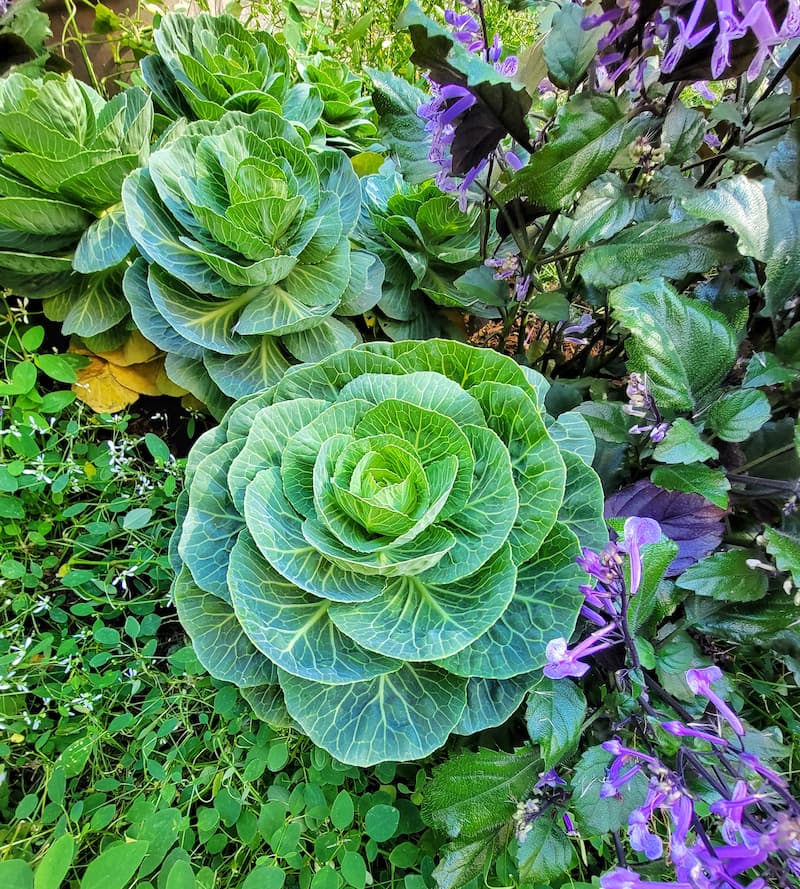
New varieties keep gardening exciting.
Every new plant teaches you something.
9. Learn a New Gardening Skill
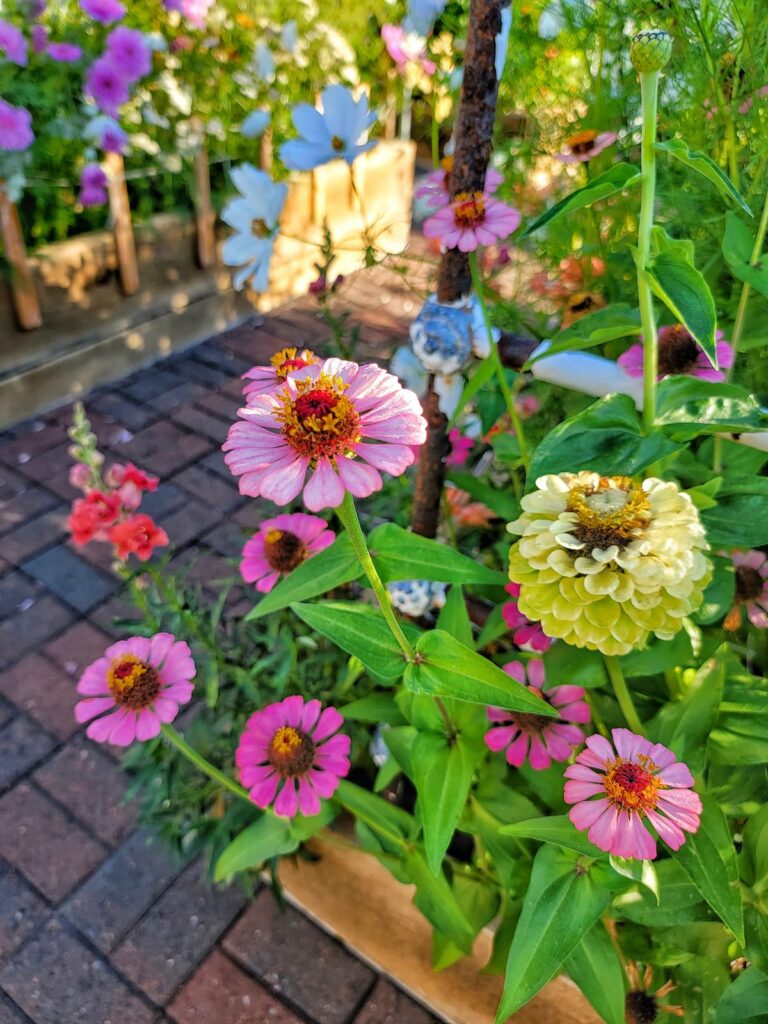
Gardening is a journey, and there’s always something new to learn, no matter how experienced you are! Picking up a new gardening skill helps you grow as a gardener and opens up exciting opportunities to enhance your garden in ways you may not have thought possible.
Whether you’re tackling a technique you’ve always been curious about or diving into a completely new area, learning keeps gardening fresh and fun.
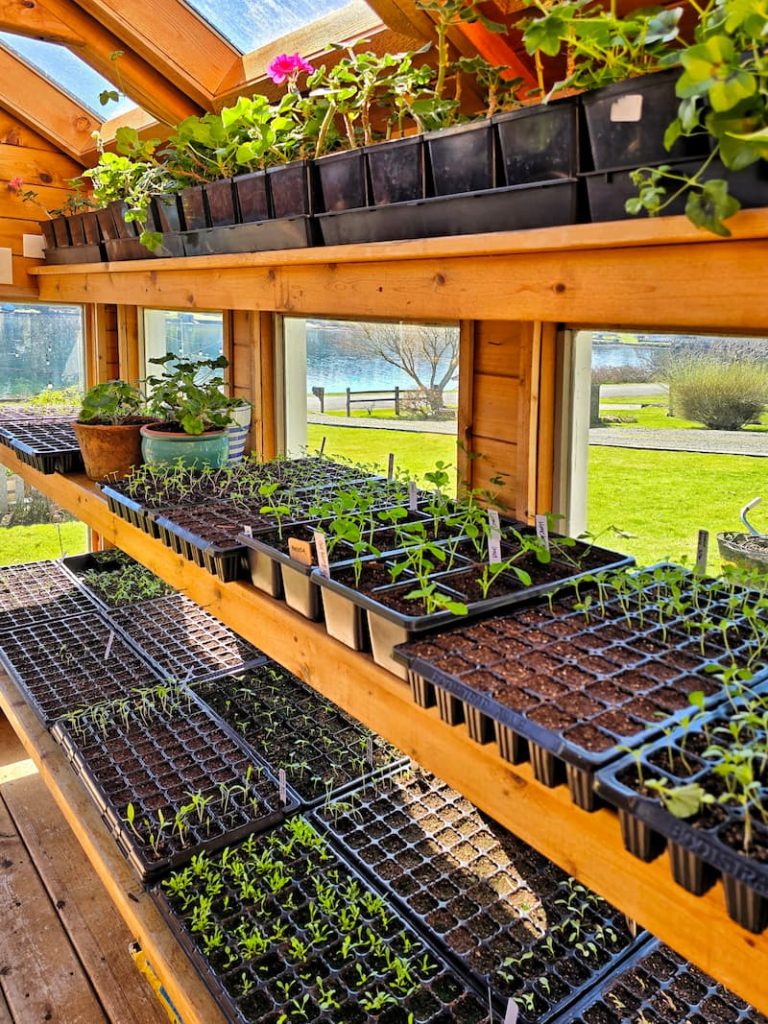
This could be:
10. Use Companion Planting
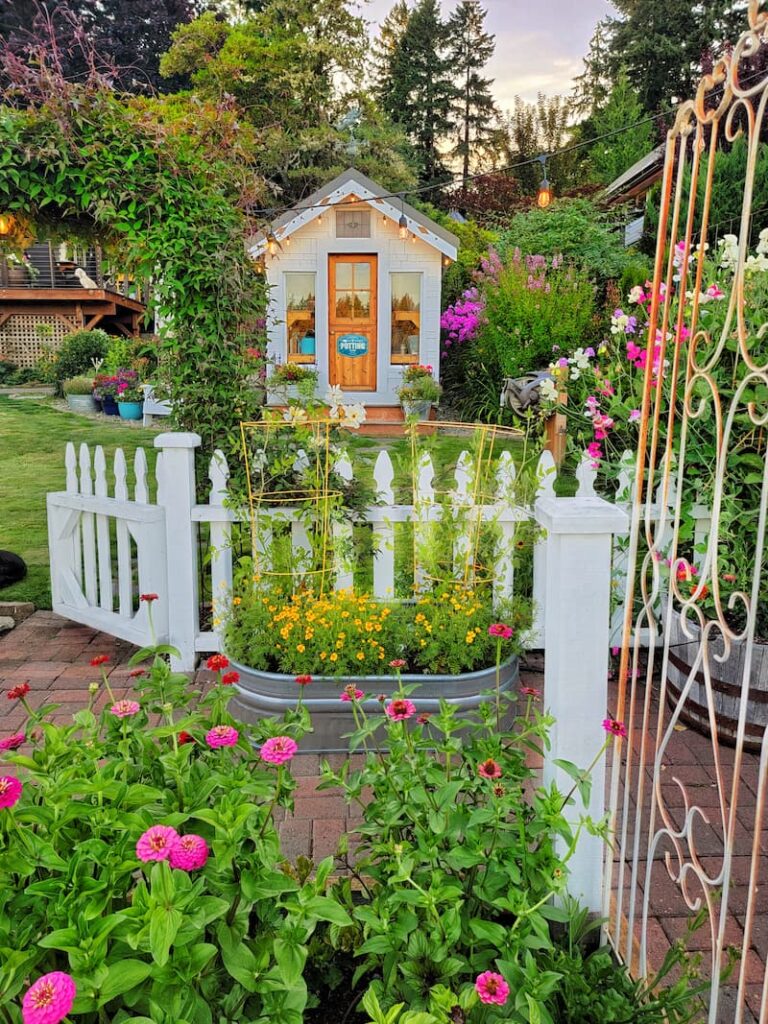
Companion planting is one of the easiest and most effective ways to boost your garden’s health and productivity. Certain plants thrive when grown together because they help each other by repelling pests, improving soil health, or encouraging stronger growth.
For example, planting marigolds near tomatoes can help deter nematodes and other pests that love to munch on your crops. Pairing basil with your tomatoes can enhance their flavor and ward off aphids.
And let’s not forget the classic trio of the “Three Sisters”—corn, beans, and squash. The corn supports the beans to climb, the beans fix nitrogen in the soil, and the squash spreads out to suppress weeds.
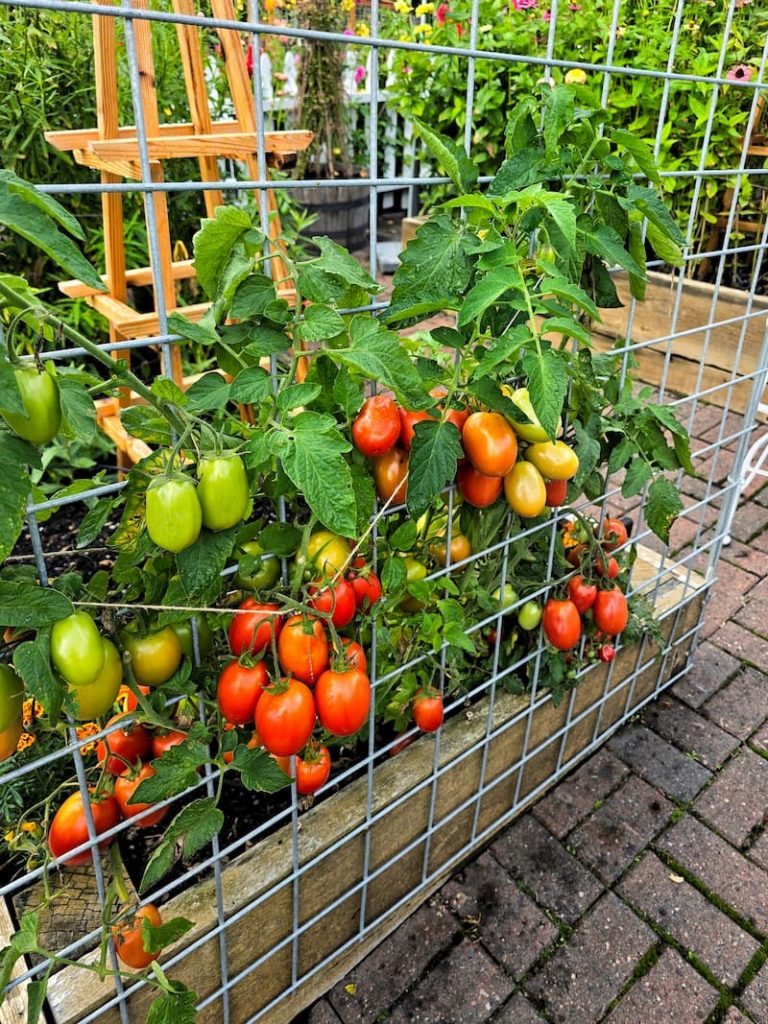
Companion planting isn’t just for veggies, either! In flower beds, pairing plants with complementary needs and growth habits can maximize space and improve the health of your blooms.
For instance, growing lavender alongside roses can help repel aphids while adding a fabulous fragrance to your garden.
11. Grow in Containers
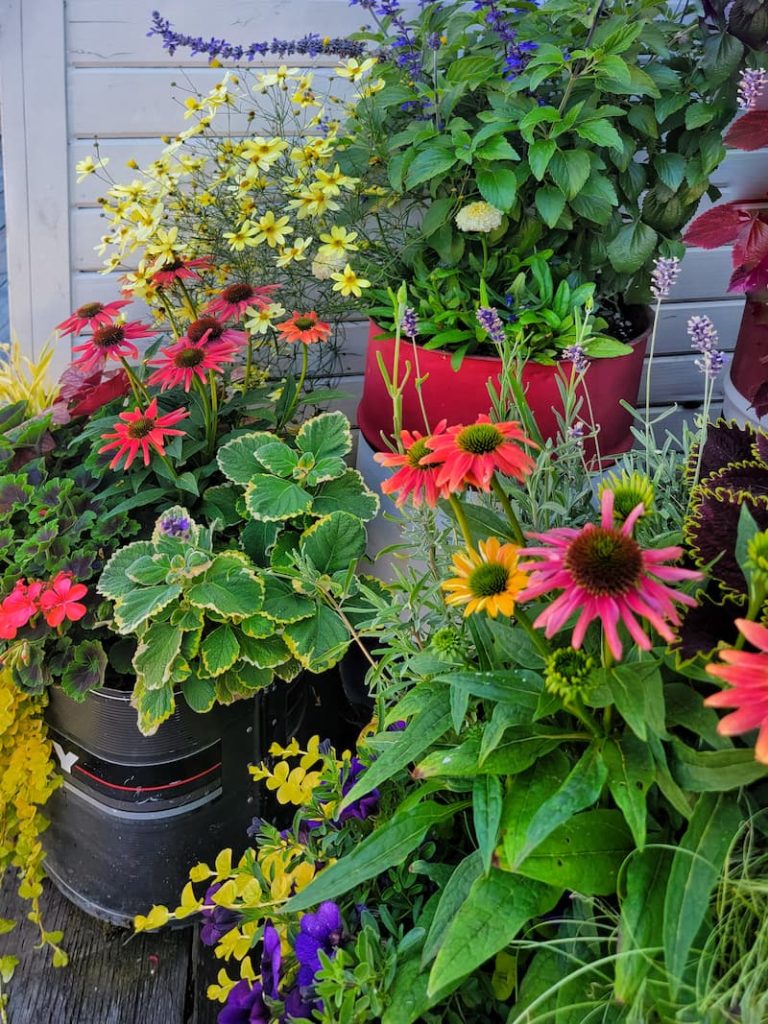
Container gardening is a great option for gardeners of all experience levels, especially if you’re working with limited space or want to add some flexibility to your garden layout.
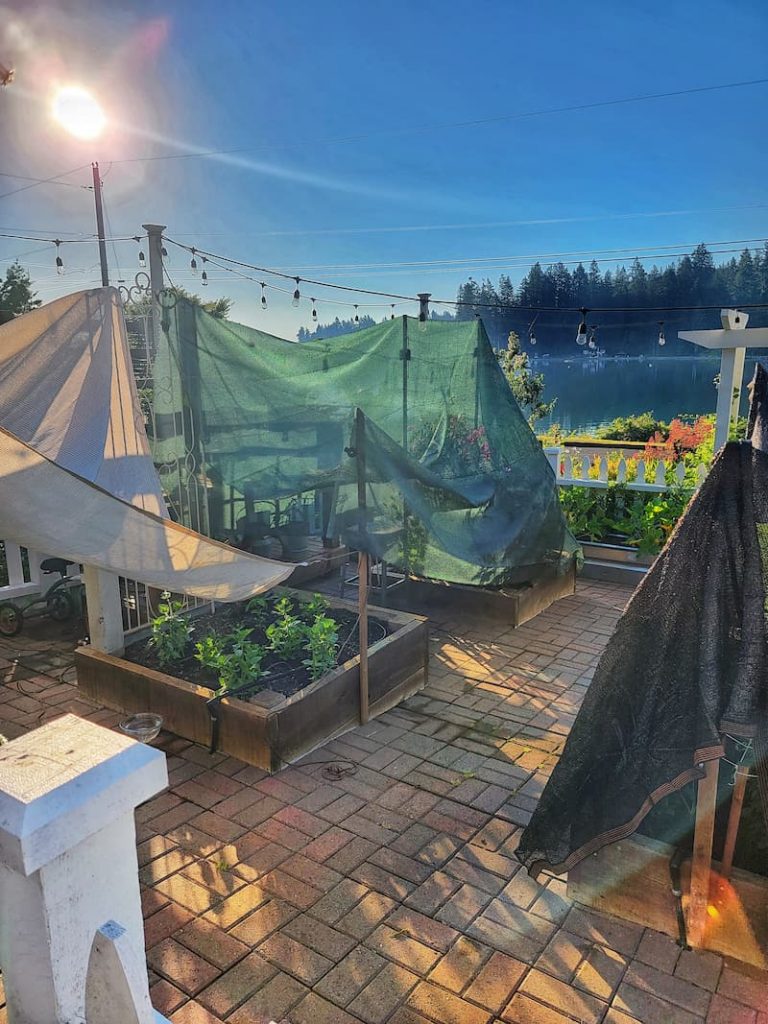
Whether growing vibrant flowers, fresh herbs, or even a small crop of vegetables, container gardening makes it possible to create a lush, productive garden just about anywhere — on patios, balconies, or even windowsills.
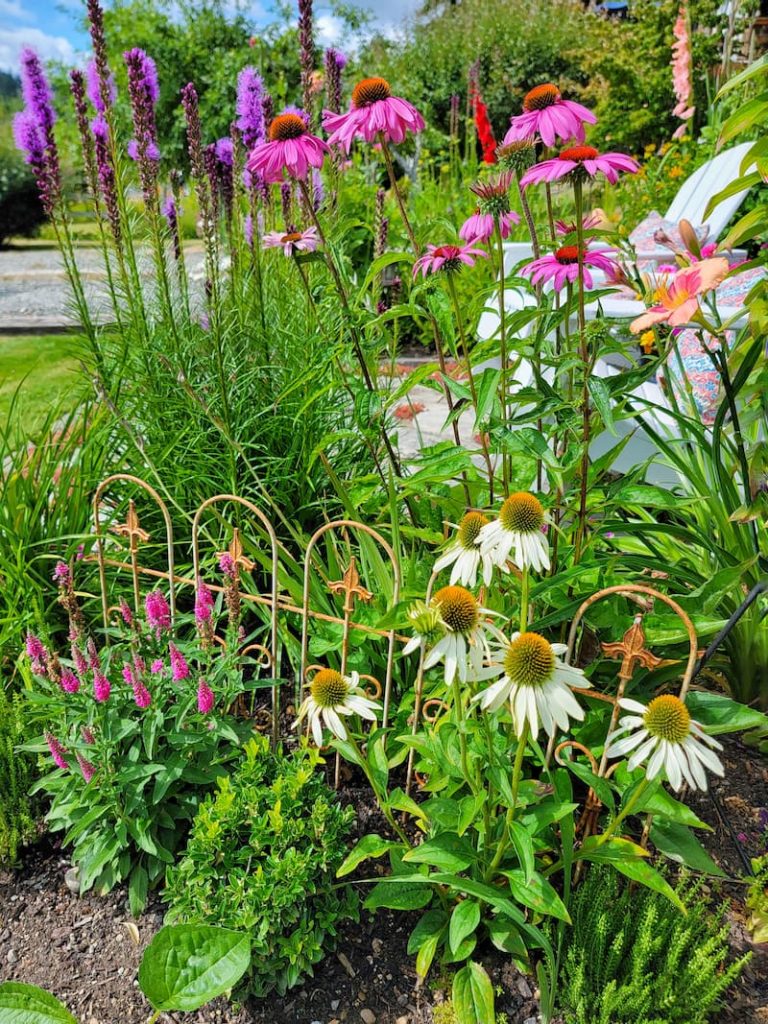
12. Plant for Pollinators
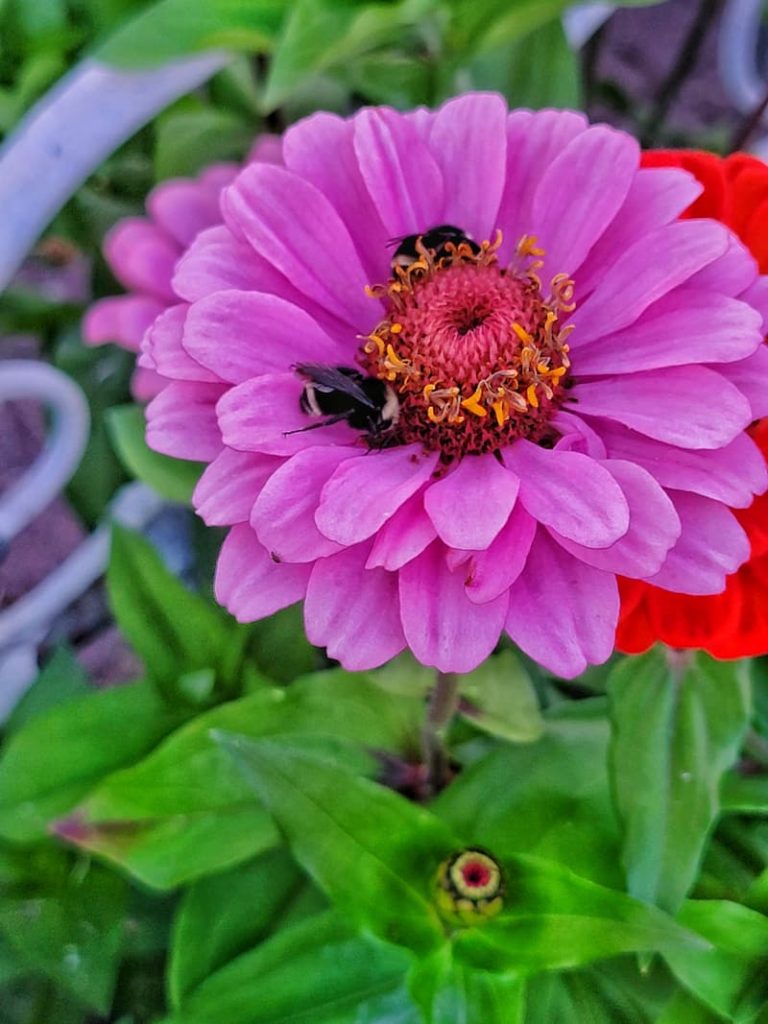
Planting for pollinators is one of the best things you can do to make your garden healthier and more vibrant.
Bees, butterflies, and other pollinators rely on flowers for nectar and pollen, and help your plants flourish. It’s a win-win for everyone!
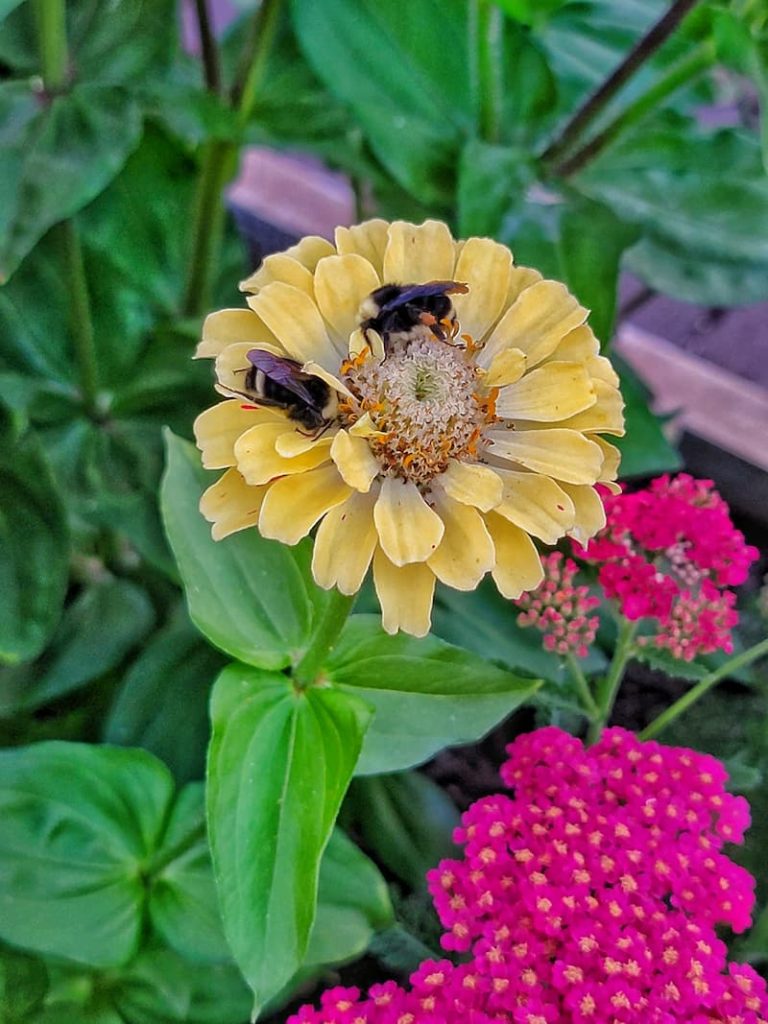
Flowers like zinnias, sunflowers, cosmos, milkweed, and bee balm are both beautiful and beneficial.
13. Water More Strategically

Watering is one of the most important (and sometimes trickiest) parts of gardening, especially for beginners.
Too much water can drown your plants, while too little can leave them struggling to survive. Learning to water your garden strategically is a great goal for 2026, and it can make a huge difference in your garden’s health and productivity.
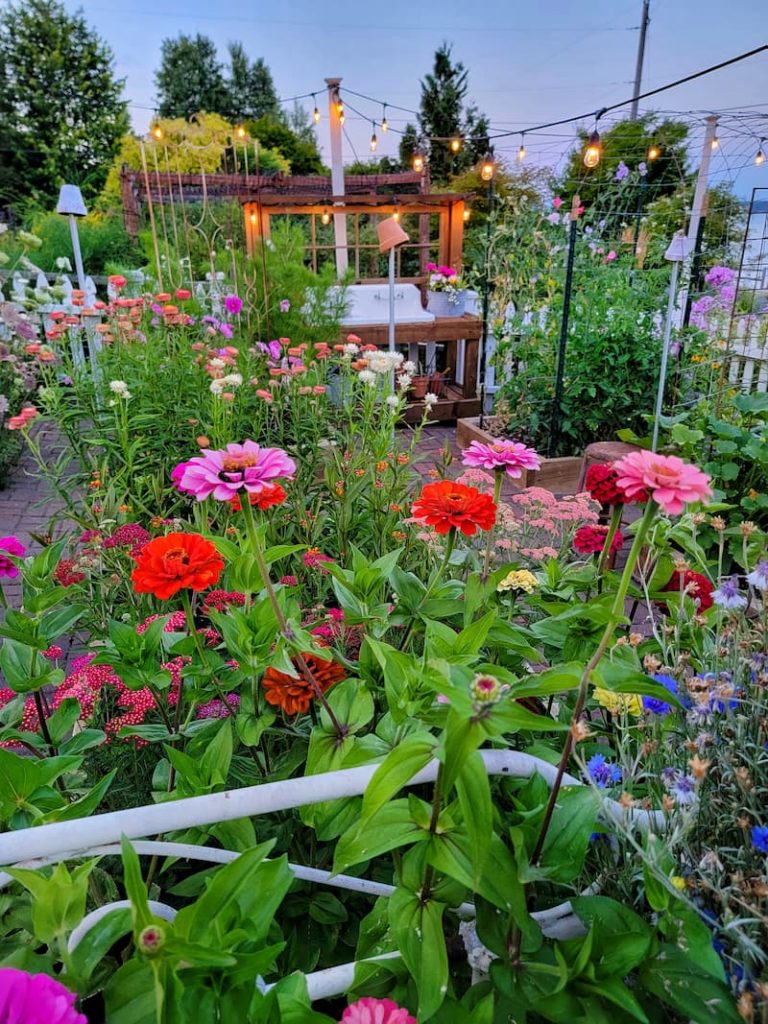
When I started gardening, I overwatered more than I should have. Over time, I realized that observing my plants and using tools like a moisture meter helped me to understand their true needs.
Here are some strategies I’ve found to be helpful:
14. Spend More Time Simply Being in the Garden
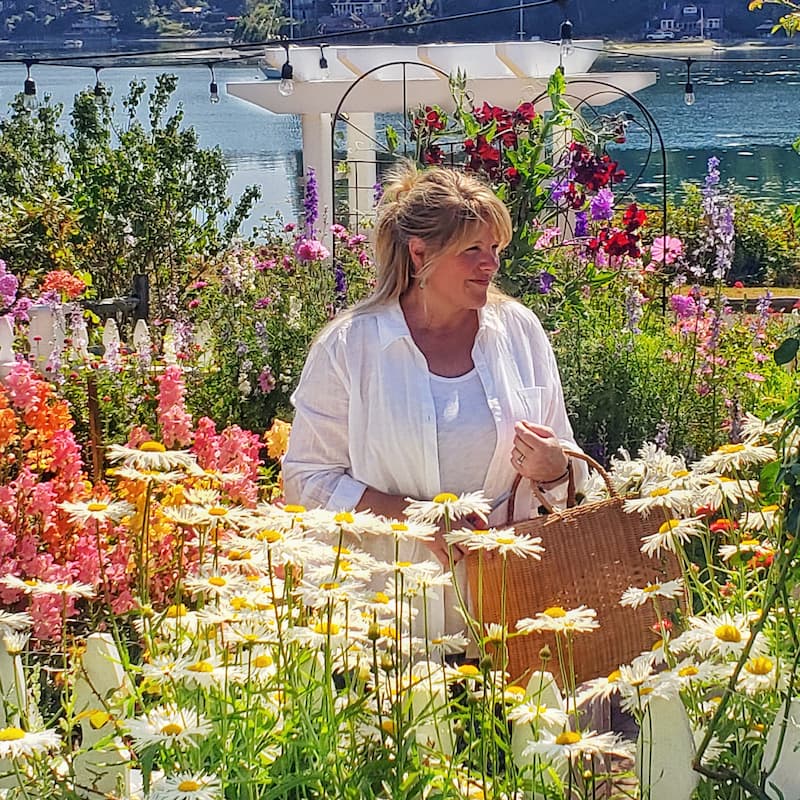
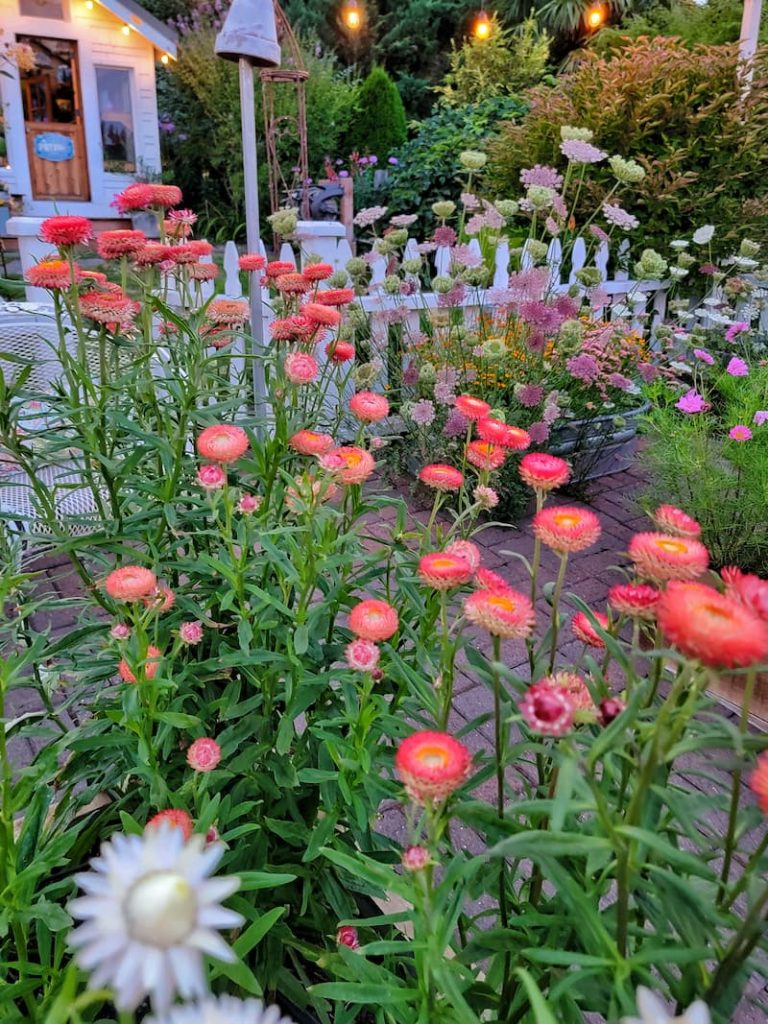
Some of my best gardening ideas have come from simply walking around with no agenda — just noticing what’s working and what isn’t.
I’ve caught pests early, seen where my soil needed improvement, and found spots to add new plants, all because I took the time to observe. The quiet moments in the garden are some of my happiest and a reminder that gardening isn’t just a to-do list.
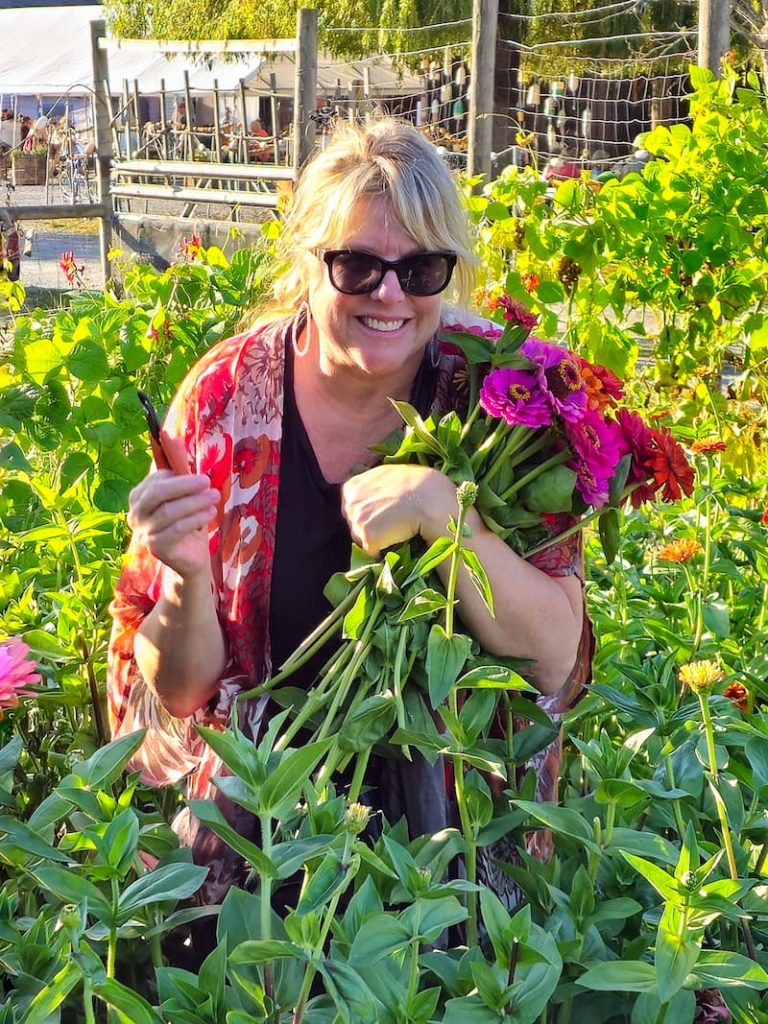
These peaceful pauses will help you fall in love with your garden all over again and remind you why you started in the first place…
15. Keep a Gardening Journal
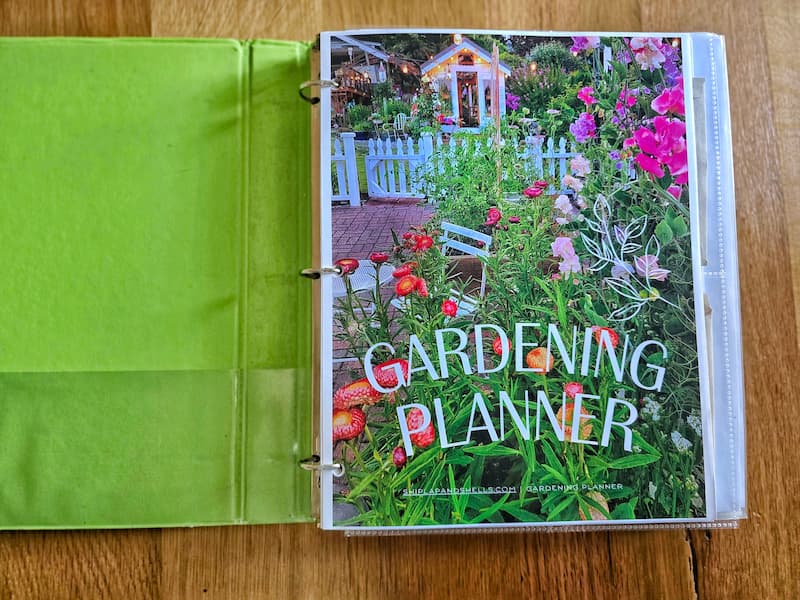
Keeping a gardening journal is one of the most valuable tools you can have as a gardener. It’s like having your own personal guidebook to your garden — one that grows with you year after year.
I started keeping a gardening journal a few years ago, and it’s been a game-changer. I’ve identified which plants thrive in certain areas, tracked when pests are most active, and even noticed small details like how weather patterns affect my blooms.
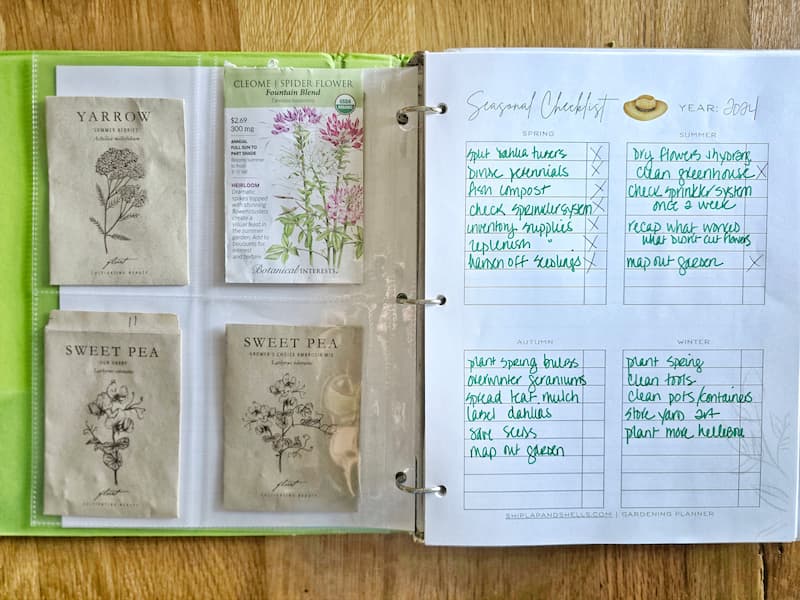
But beyond the practical benefits, it’s been a great way to savor the experience of gardening and reliving those “aha!” moments and tiny victories whenever I flip through the pages.
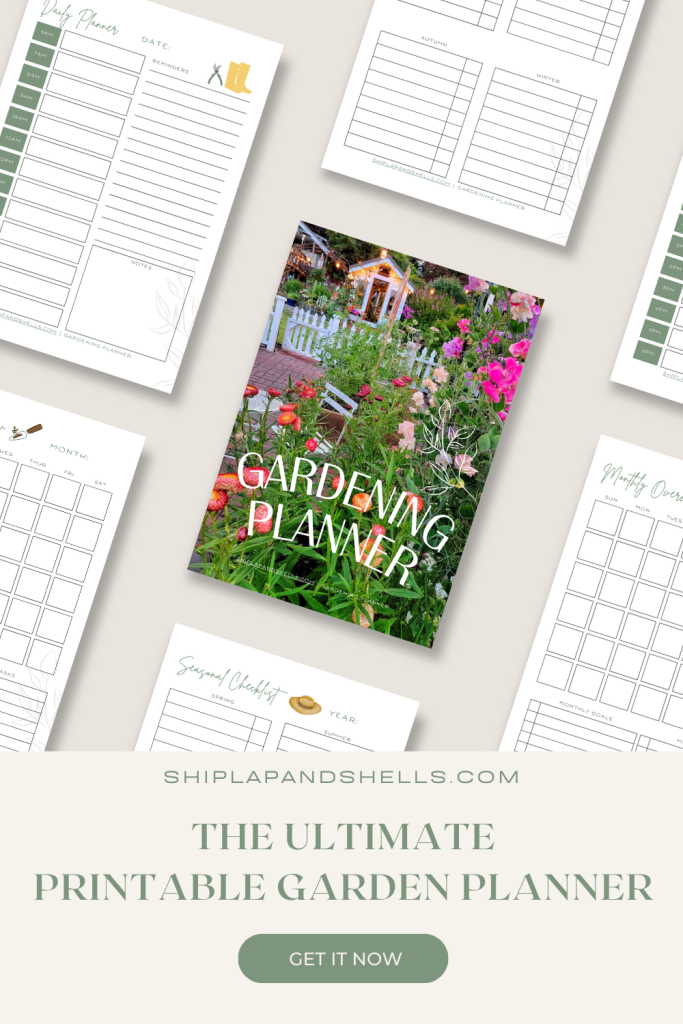
Let’s Plan Your Dream Garden With Our
Gardening Planner
Unlock Your Garden’s Potential.
Our 35-page Ultimate Garden Planner is designed to help you organize, track, and flourish in your gardening endeavors.
Get yours for $4.99
16. Take More Pictures
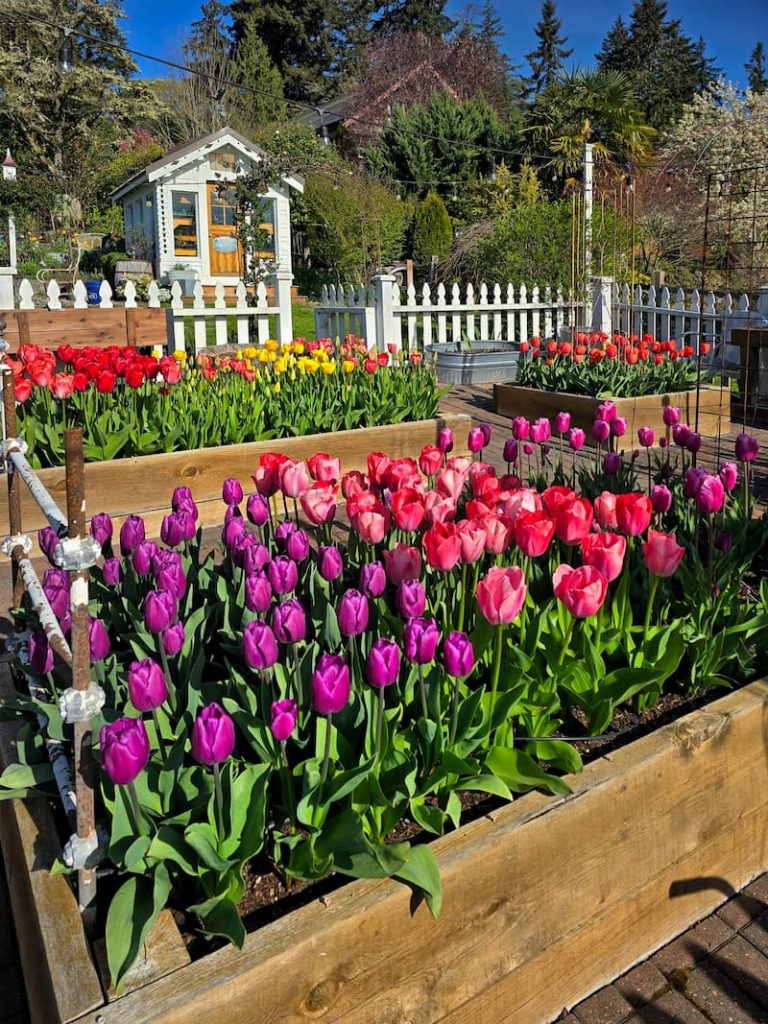
Capturing your garden’s beauty through photos is a fun way to celebrate all the hard work you put into it.
Whether you’re showcasing a gorgeous bloom, documenting a transformation, or preserving the memory of your favorite garden moment, taking pictures helps you see your garden in a new light.
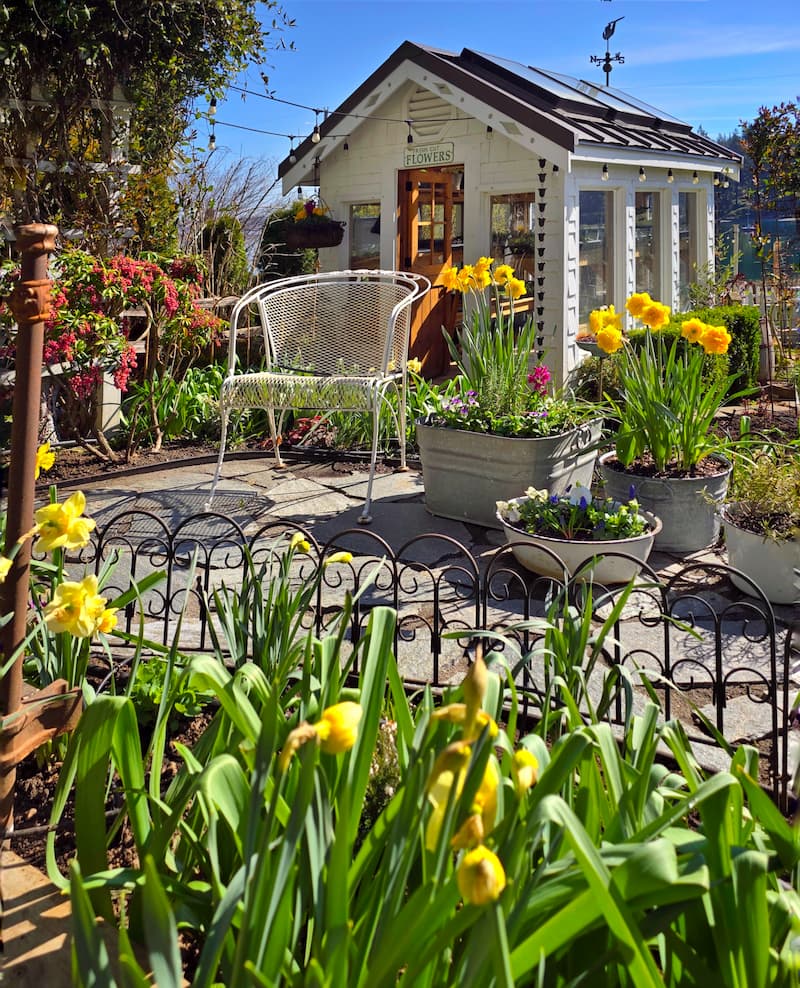
Photos help you:
17. Bring Flowers Indoors
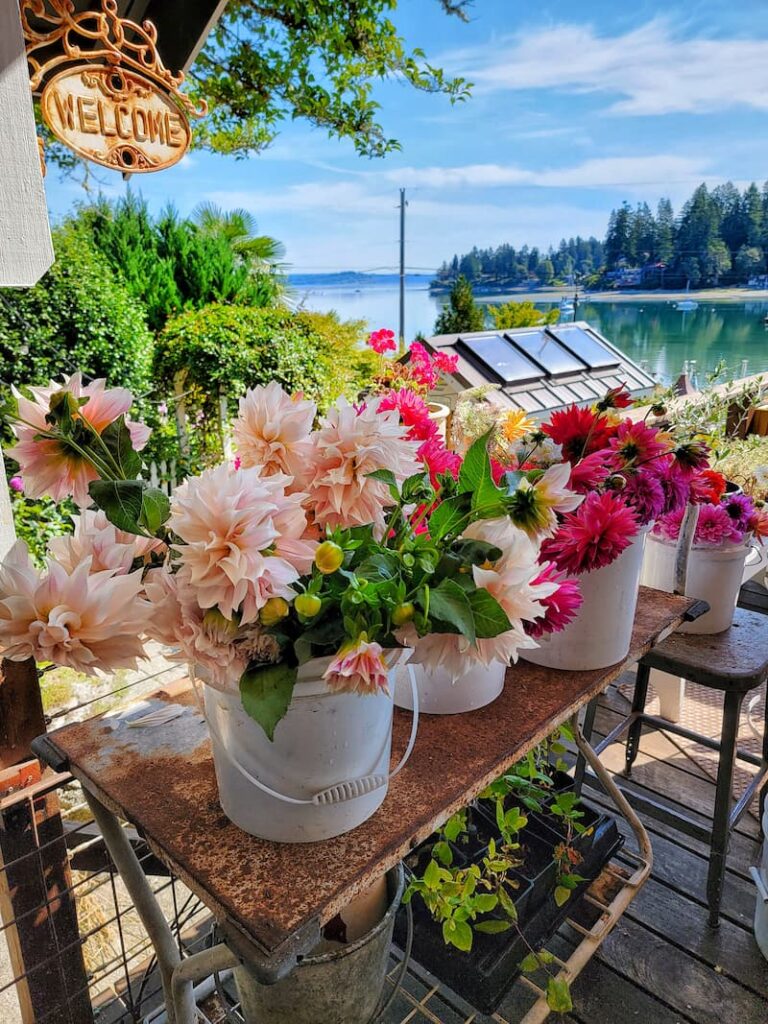
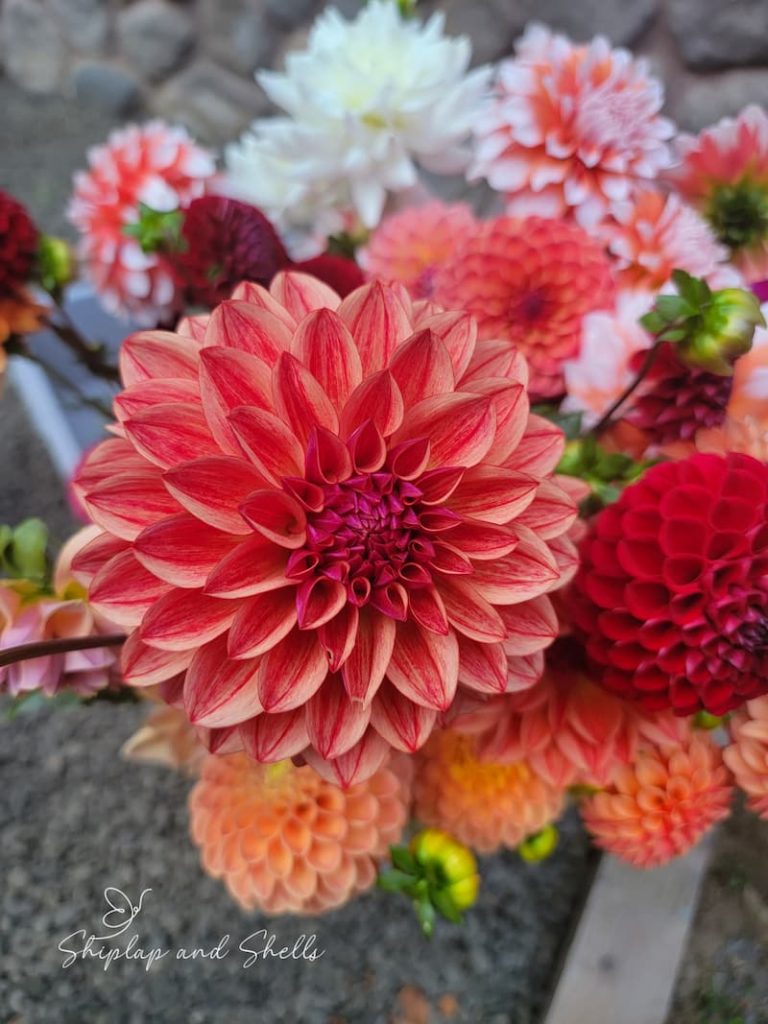
One of the best ways to enjoy your garden is by bringing its beauty indoors. Growing cut flowers isn’t just about adding charm to your home; it’s also a wonderful way to make the most of your garden and celebrate the fruits of your labor.
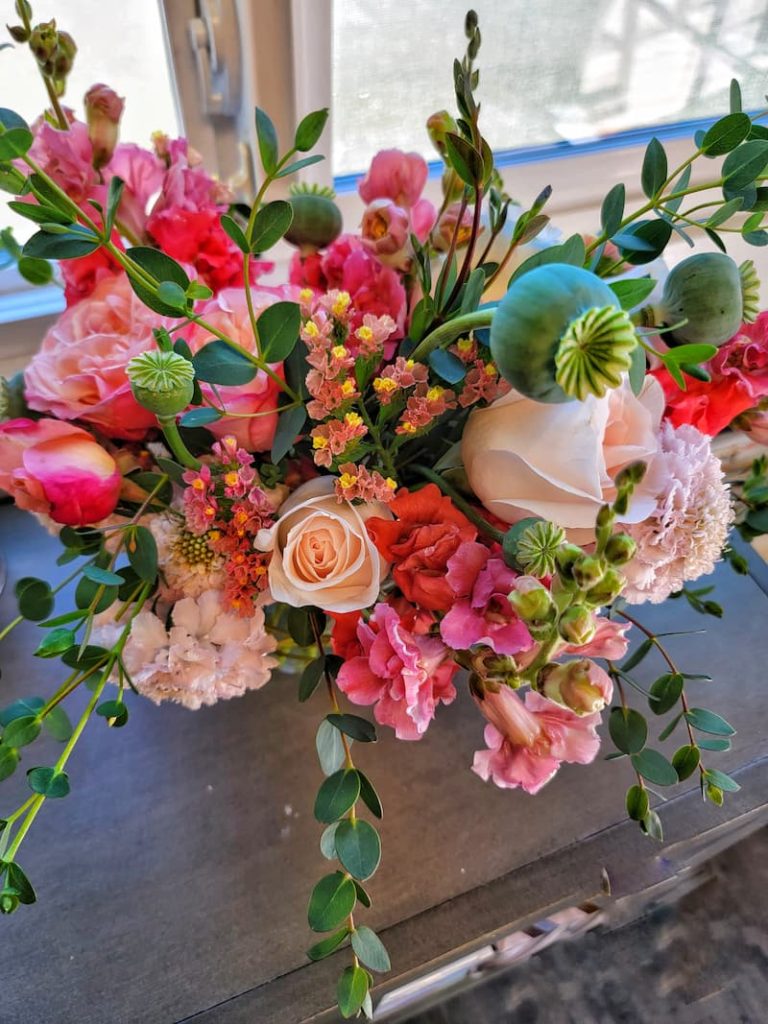
Here are some of my favorite flowers to cut and take inside:
18. Stagger Planting for Longest Blooms
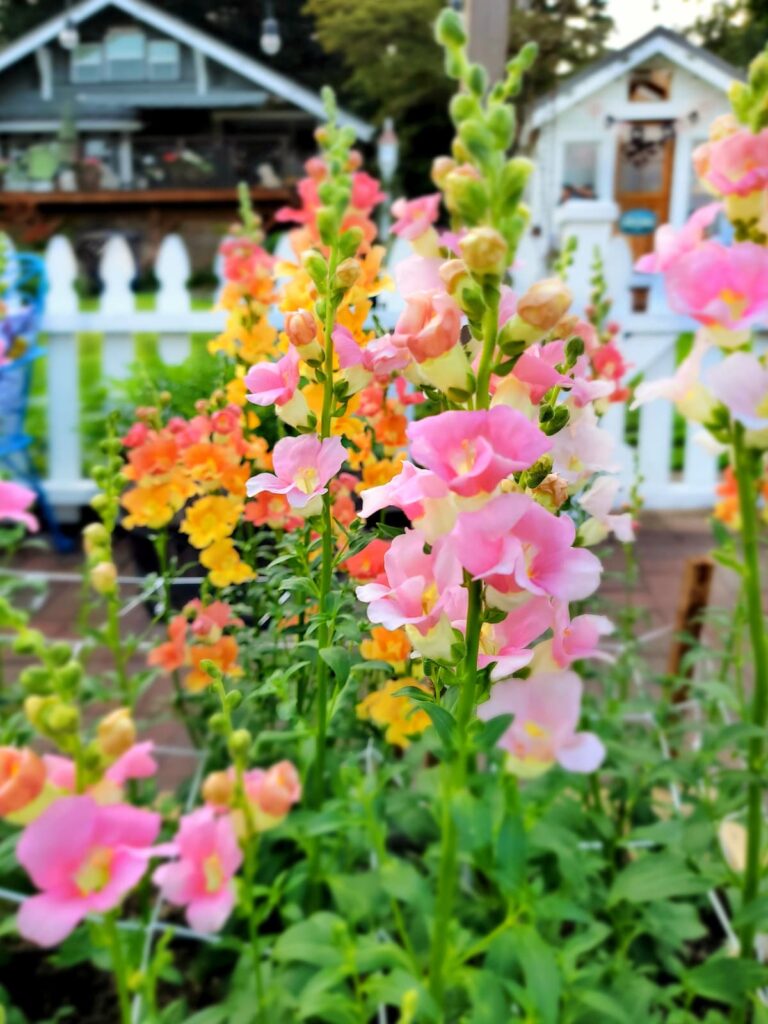
Plant in waves to extend your harvest and bloom season.
One of the biggest lessons I’ve learned over the years is that when you plant can be just as important as what you plant. Staggering your planting times is a simple way to enjoy flowers and harvests over a much longer season, rather than everything blooming or producing all at once.
Rather than sowing all your seeds on the same day, try planting in small batches every one to three weeks. This works especially well for cut flowers and vegetables that grow quickly.
Succession planting also gives you a bit of insurance. If one round of seedlings struggles due to weather, pests, or timing, you already have another batch on the way. It’s a low-stress way to build resilience into your garden, and one I plan to be much more intentional about in 2026.
19. Make Space for Relaxation
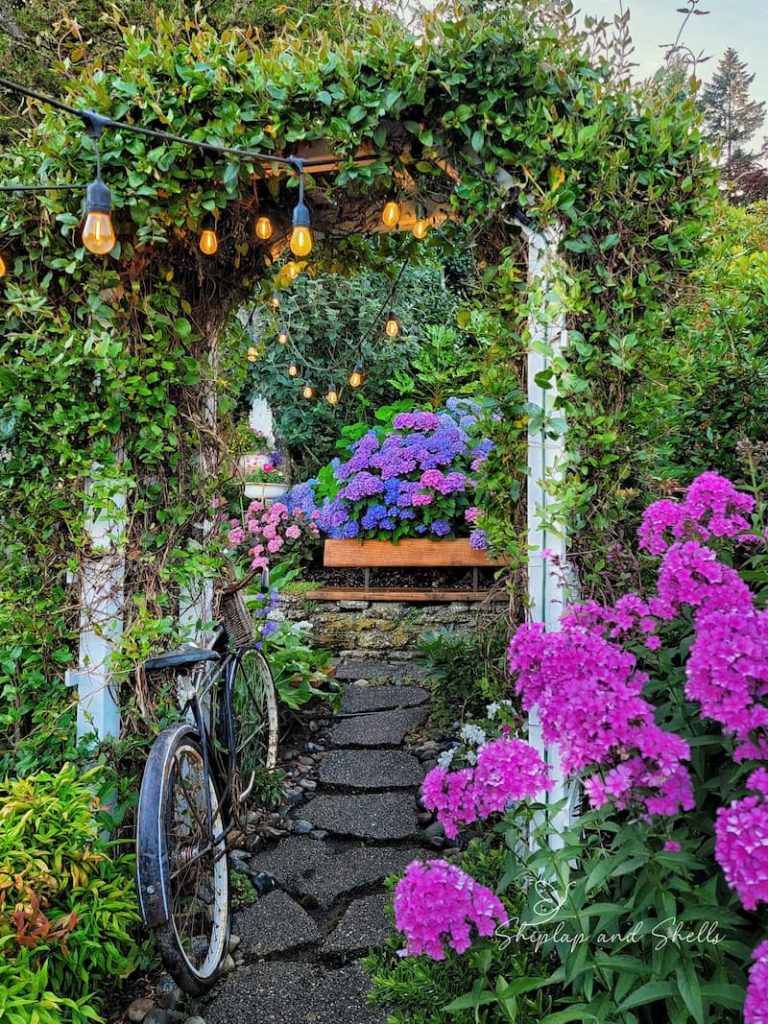
It’s easy to get caught up in the work of gardening — the weeding, watering, pruning, and constant to-do lists. But one of my goals every year is to remind myself that the garden isn’t just something to maintain; it’s something to enjoy.
Making space for relaxation doesn’t have to mean a big overhaul. It can be as simple as:
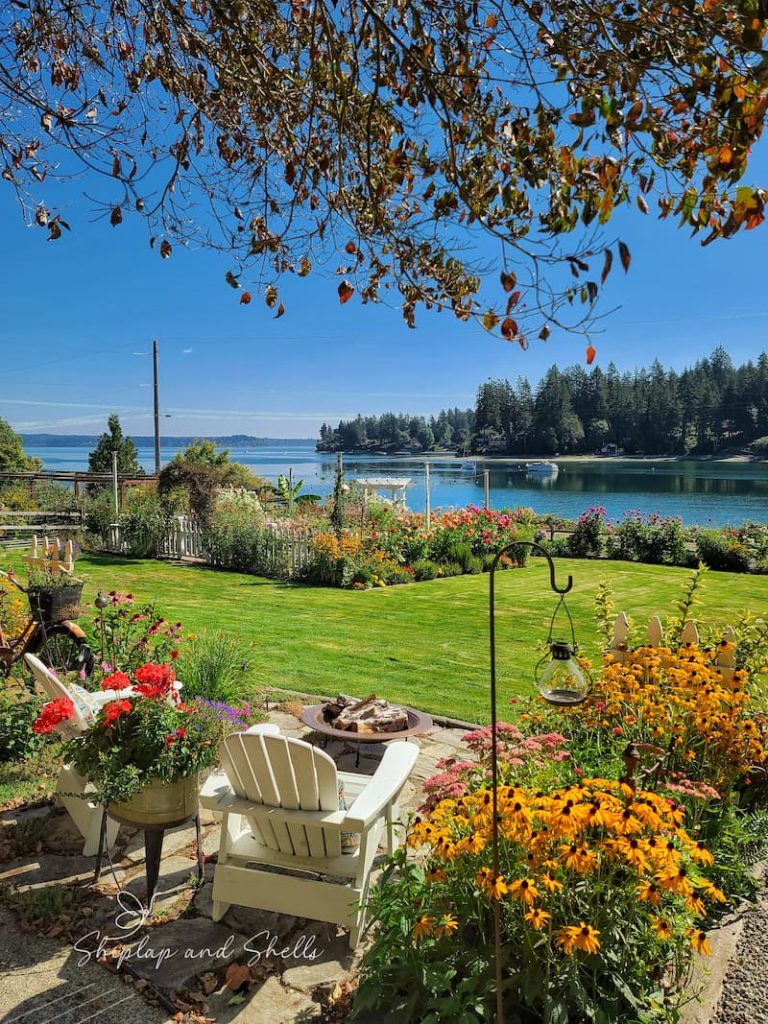
Having a designated place to sit encourages you to slow down and actually be in your garden. Some of my favorite moments come from bringing out a cup of coffee, sitting quietly, and watching what’s happening around me — bees buzzing, flowers opening, or dogs wandering through the beds.
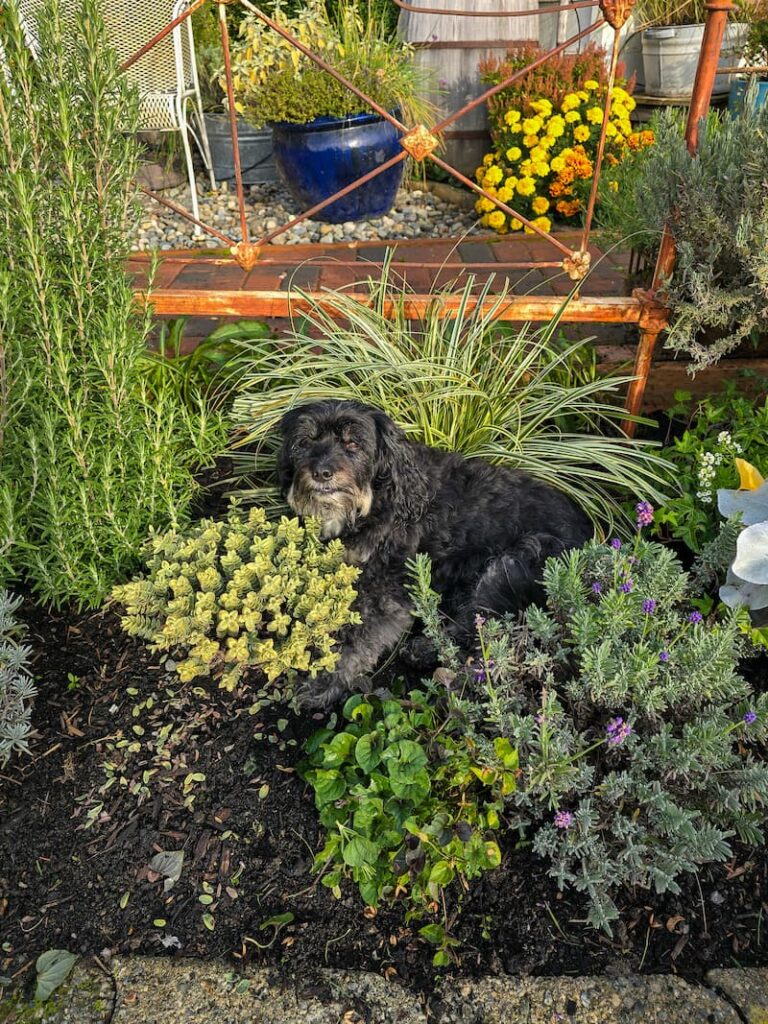
Those peaceful pauses are often when inspiration strikes, and observations happen naturally. They also remind us why we garden in the first place — not just for productivity, but for joy, rest, and connection with nature.
20. Celebrate Progress, Not Perfection
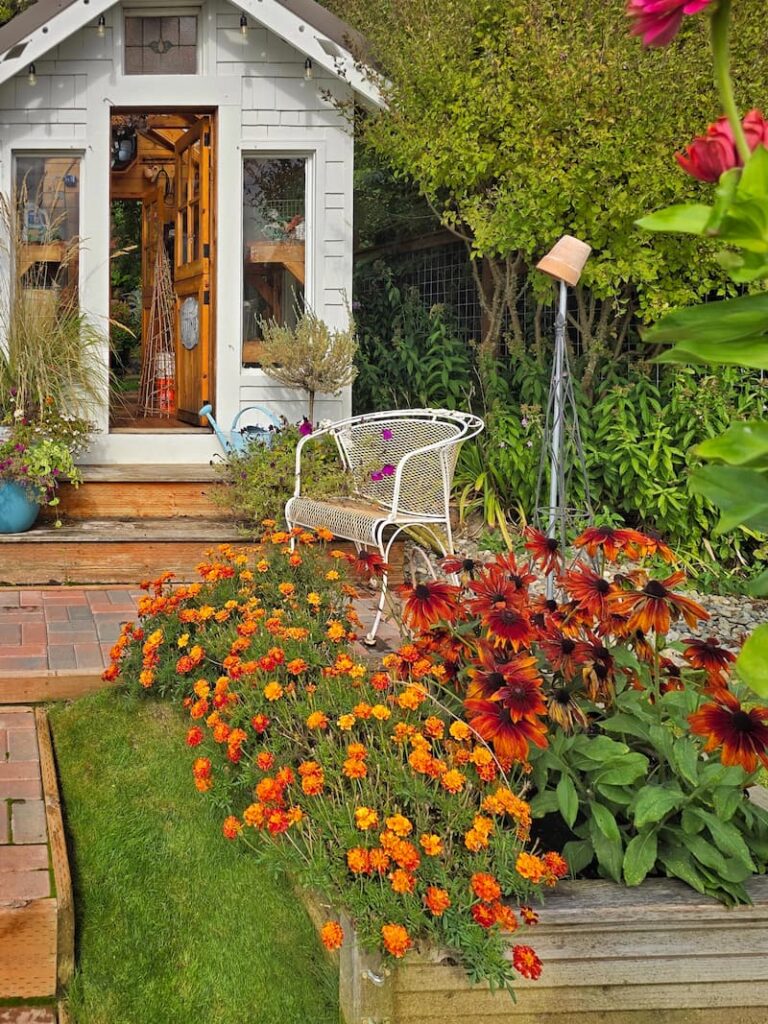
If there’s one gardening resolution I try to carry with me every year, it’s that progress matters more than perfection.
Gardens are living, evolving spaces. Not every seed will sprout. Not every plant will thrive. And that’s okay. Flawless beds or magazine-perfect blooms don’t measure a successful garden. It’s measured by what you learn, what you enjoy, and how much you grow along the way.
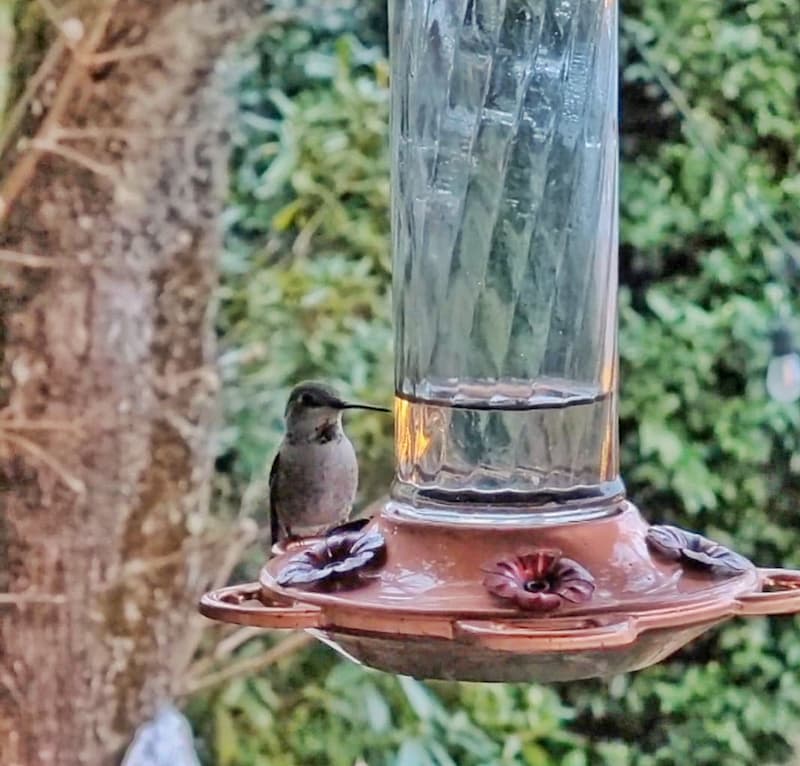
Celebrate the small wins:
There will always be things you’d do differently next time — and that’s part of the gardening rhythm. Each season builds on the last, shaping your garden into something more personal and resilient over time.
As you head into 2026, give yourself permission to experiment, make mistakes, and enjoy the process. A garden grown with patience and grace is far more rewarding than one chasing perfection.
My Gardening Resolutions for 2026
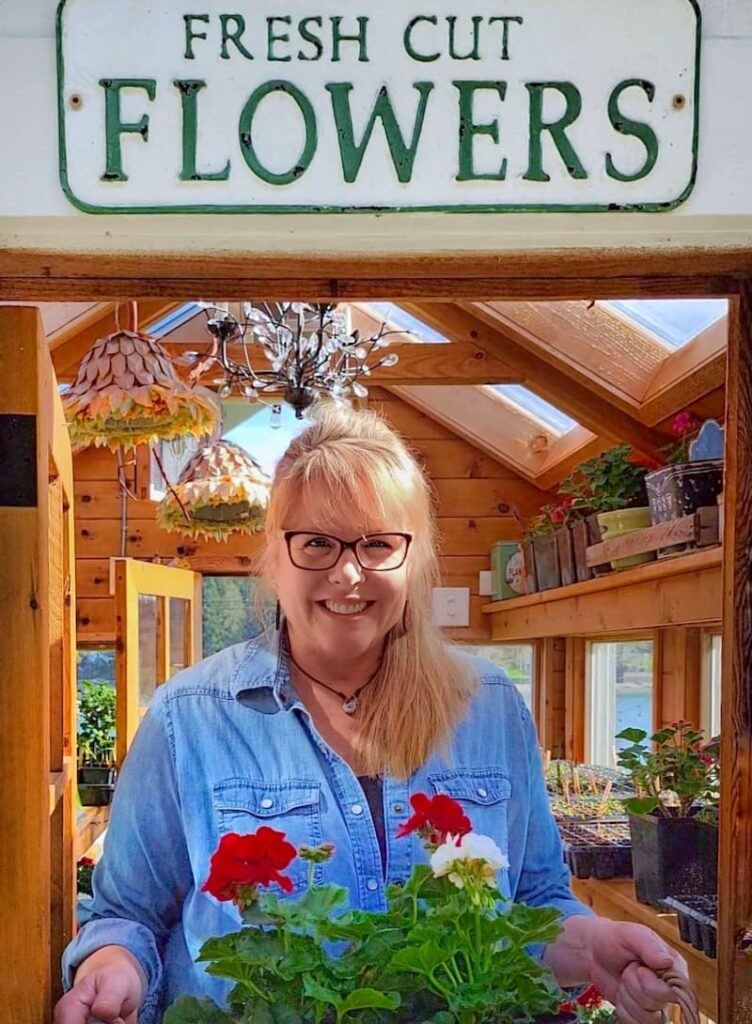
A new year means new possibilities, and your garden is no exception! Take a little time to dream big and map out what’s ahead.
Whether you plan to grow something new, experiment with a fresh gardening technique, or make your outdoor space more enjoyable, this is your chance to create the garden you’ve always imagined.
As you set your intentions for 2026, remember that gardening isn’t just about the flowers, vegetables, or greenery we grow — it’s about the joy we find in the process. Every step, from planting seeds to watching them bloom, celebrates growth and possibility.
If you found this post helpful, be sure to share it with a fellow gardener who’s also dreaming about the year ahead.
Until next time,
Happy Gardening!

I’m a self-taught hobby gardener. Everything I share on my blog is my opinion and what has worked for me.
MORE POSTS
For You To Enjoy
Follow Me for More Inspiration