
39 Favorite Cottage Garden Plants for a Beautiful, Blooming Garden
If you’ve ever stood in front of a cottage garden overflowing with roses, foxgloves, and sweet peas and thought I want a garden like that… this post is for you.
Choosing the right cottage garden plant is where it all begins. Not just beautiful plants, but the right ones for your space, your climate, and the kind of garden you actually want to spend time in. The kind where something is always blooming, pollinators are always busy, and the whole thing feels like it grew that way on its own.
I’ve been growing most of the plants on this list for years at our 1920 beach cottage on Puget Sound. Our mild Pacific Northwest climate is genuinely kind to cottage garden flowers, and I learned which ones thrive here, which ones need a little extra attention, and which ones are happiest when started from seed in the greenhouse each spring.
A few of them… zinnias, cosmos, sweet peas, and sunflowers, have their own dedicated posts, so I’ll link to those where it makes sense.
Here are 39 of my favorites, from the classics you’d expect to a few that come back every year and just keep getting better.
As an Amazon affiliate, I earn a commission from qualifying purchases at no additional cost to you. My blog also features other affiliate links for your convenience. Click here to read my privacy policy.
39 Best Cottage Garden Flowers and Plants
1. Roses
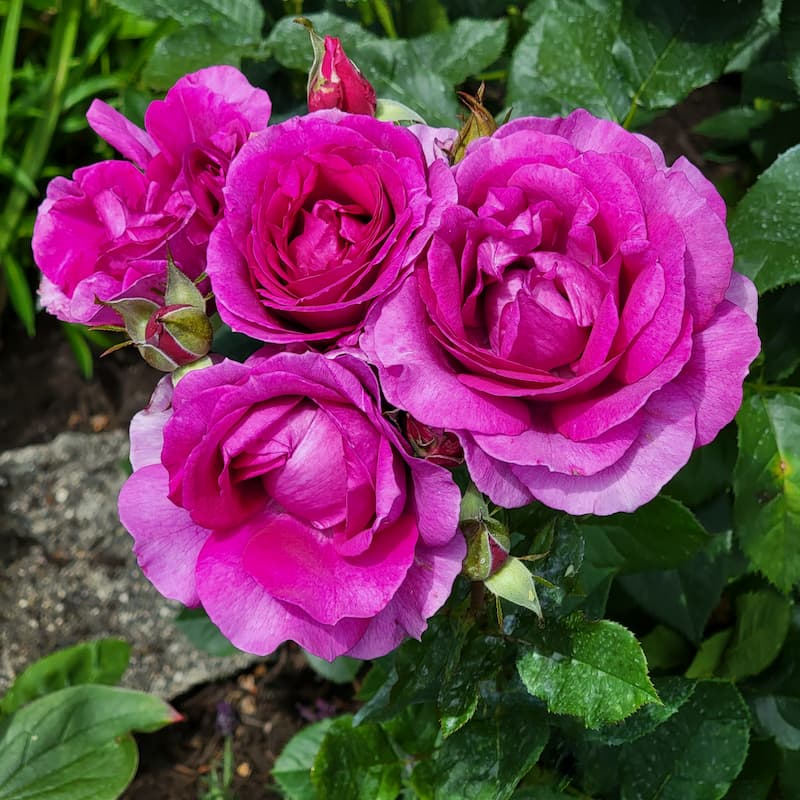
Old-fashioned roses are always at the top of the list. Their soft fragrance, romantic blooms, and timeless beauty make them one of the most classic cottage garden plants you can grow. And with so many varieties available, there’s one for almost every garden situation.
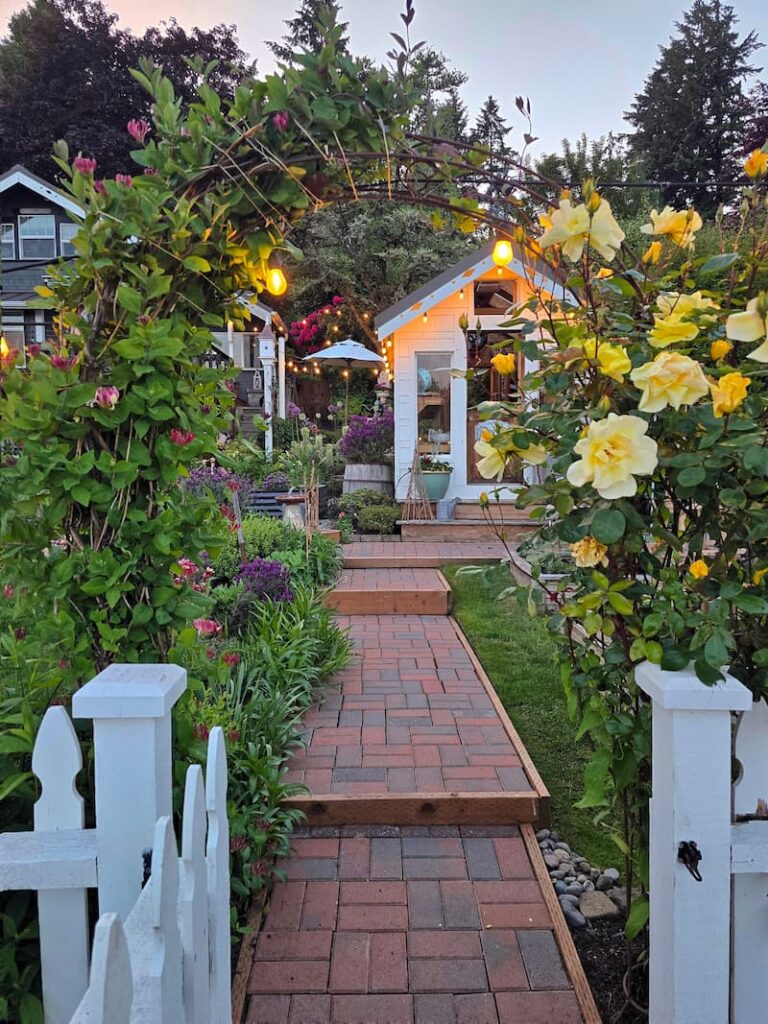
Climbing roses add height and charm when trained over arbors and fences. Shrub roses fill beds with layered color. English roses, with their full petals and old-world feel, are especially right for that relaxed cottage garden look. They pair beautifully with lavender, foxgloves, and delphiniums in a way that feels completely natural.
A Quick note about my garden
Most of the flowers I share here are grown from seed in our greenhouse and planted in raised beds and containers throughout our cottage garden.
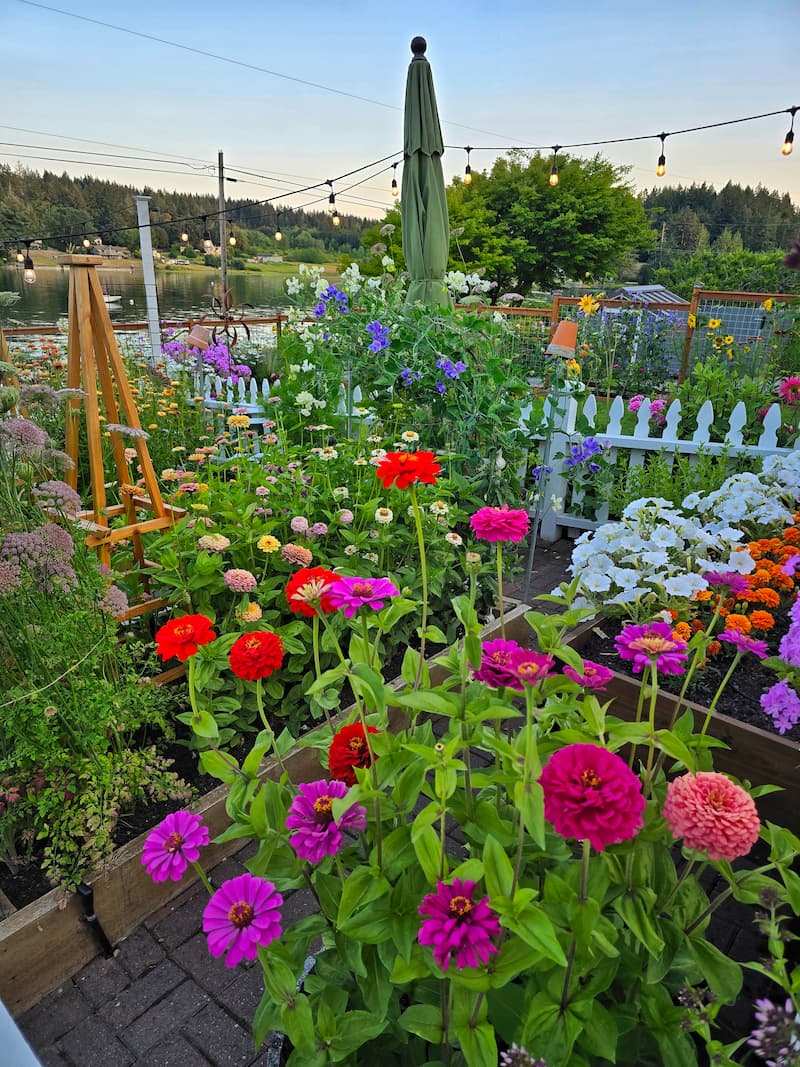
2. Foxglove (Digitalis)
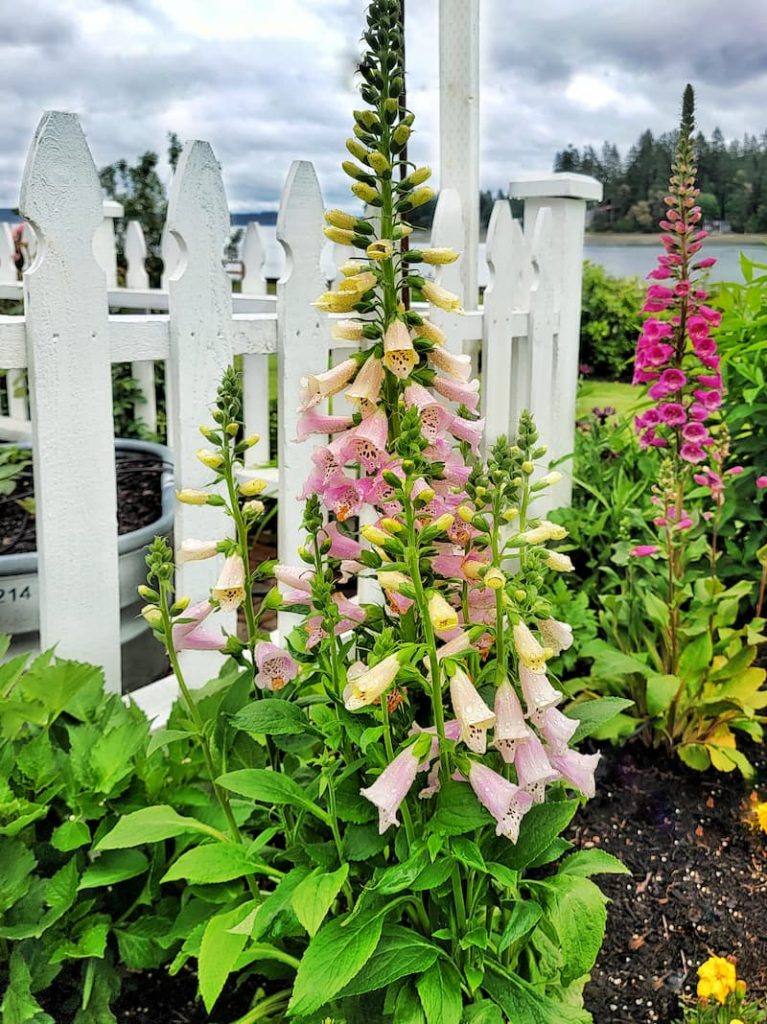
Foxgloves are one of the easiest ways to add instant charm and vertical interest to a cottage garden. Their tall flower spires and bell-shaped blooms bring that classic storybook garden feeling.
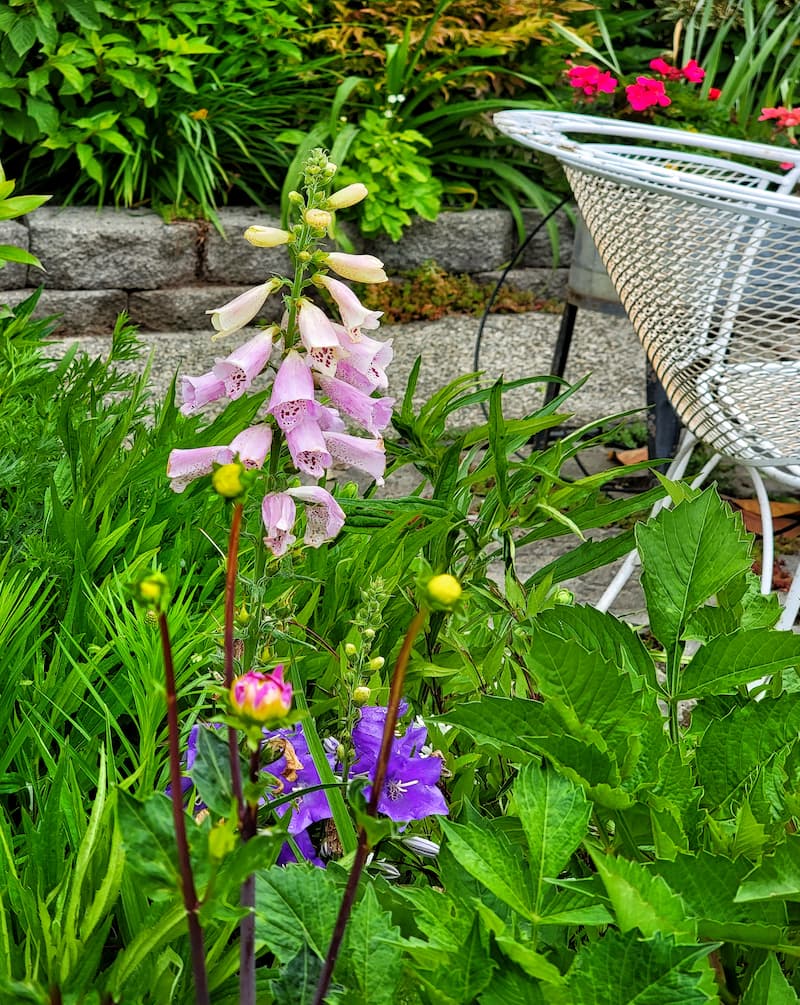
They come in beautiful shades of pink, purple, white, and soft bi-colors, and rise high above the surrounding foliage, creating real depth at the back of a border. Pollinators love them.
I have foxglove growing in one of my main beds, and every year, those tall blooms swaying in the breeze make the whole space feel a little more like something out of a cottage-garden dream.
3. Black-Eyed Susans (Rudbeckia hirta)
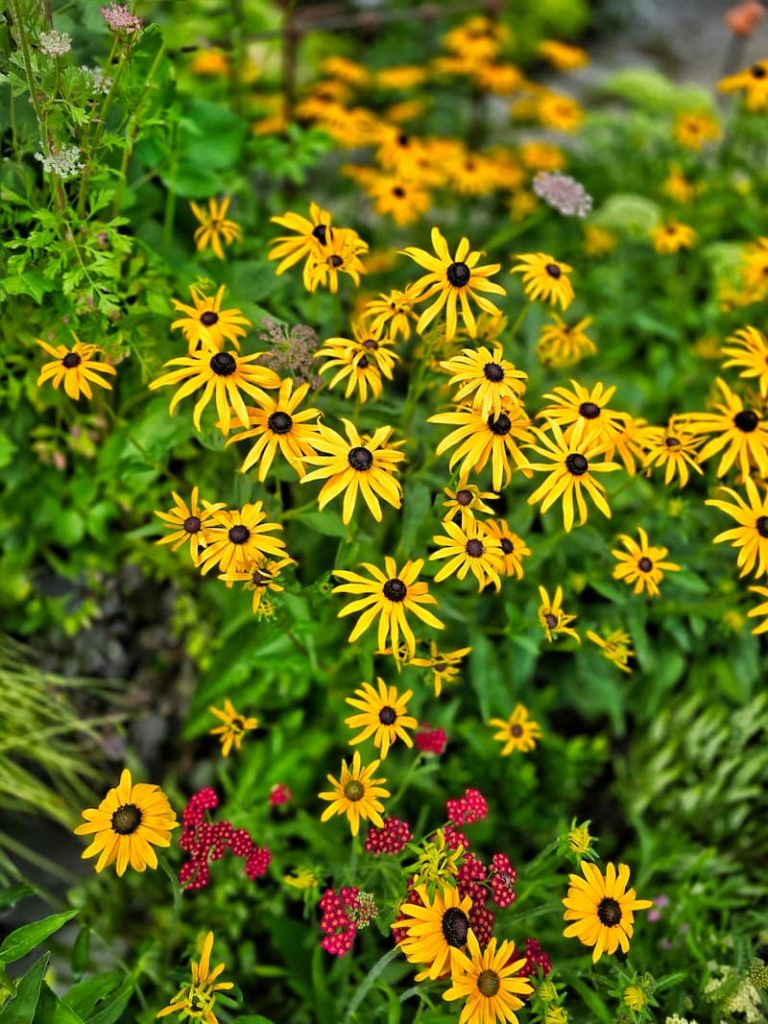
Black-eyed Susans bring cheerful, easy-going color to the garden with their bright golden petals and dark centers. They’re low-maintenance, reliable, and bloom generously through summer and into early fall, right when many flowers are starting to slow down.
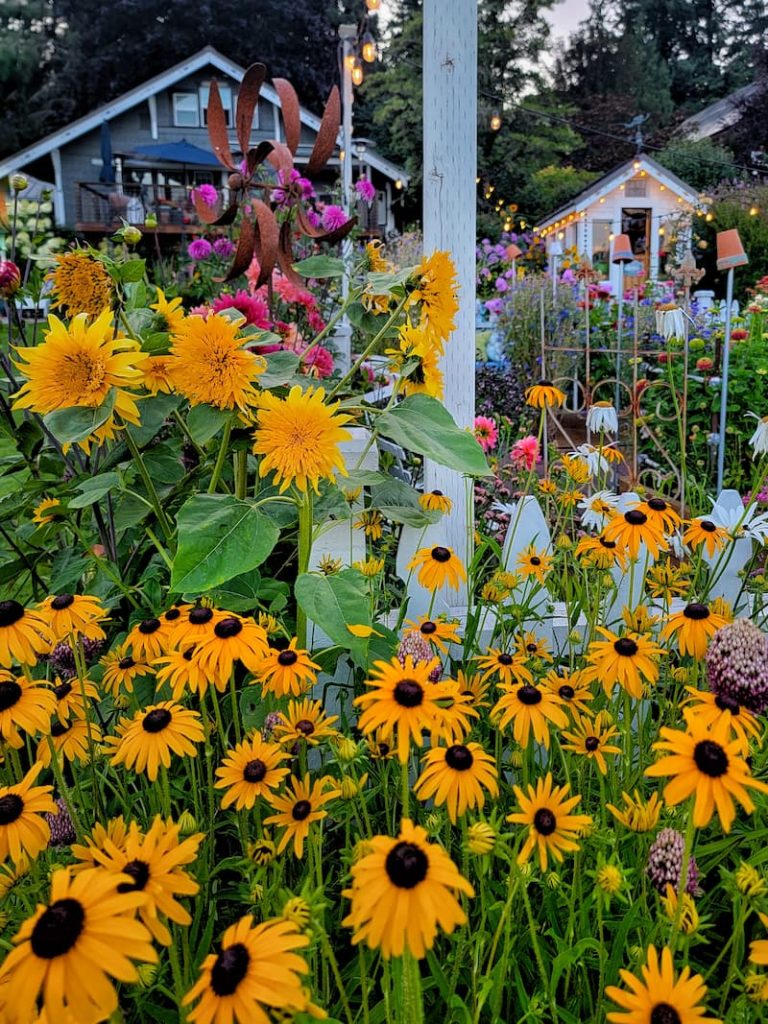
I especially love using them near pathways where those bright blooms can catch your eye. They mix beautifully with zinnias and coneflowers, and bees and butterflies find them just as appealing as we do.
4. Lavender (Lavandula)
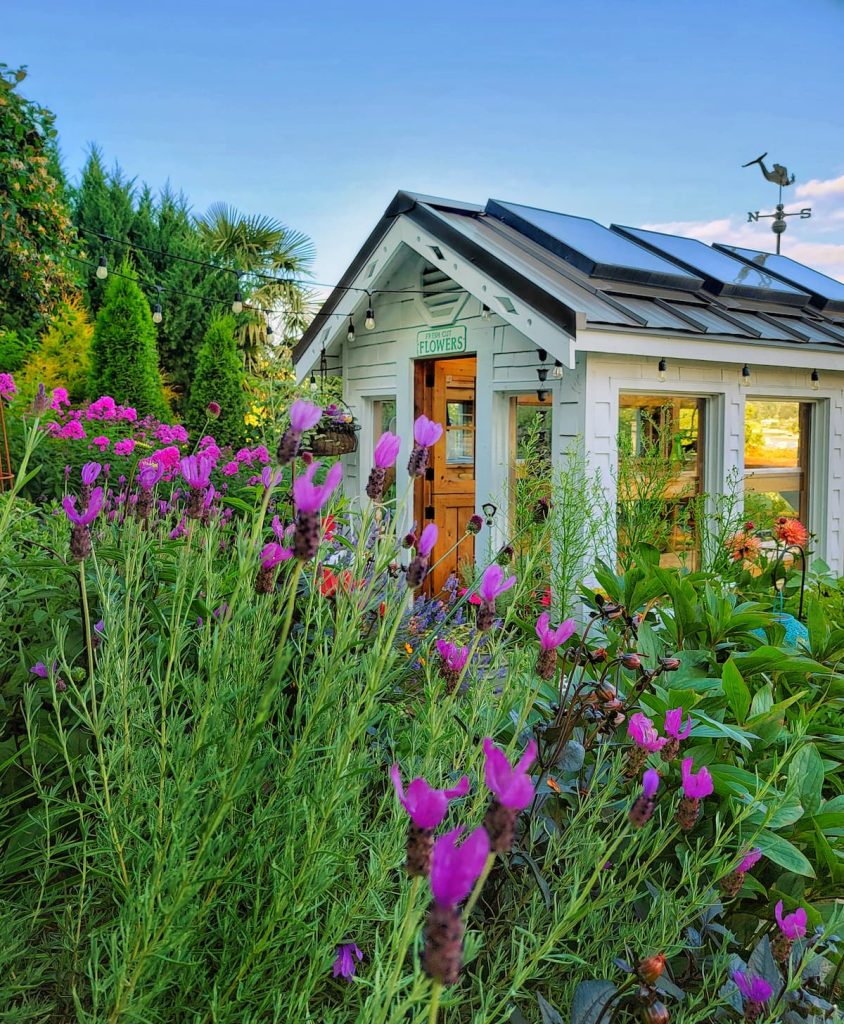
Lavender is one of those cottage garden plants that does everything right. Beautiful foliage, soft purple blooms, a fragrance that makes you stop mid-step, and the practical bonus of attracting pollinators while helping repel pests.
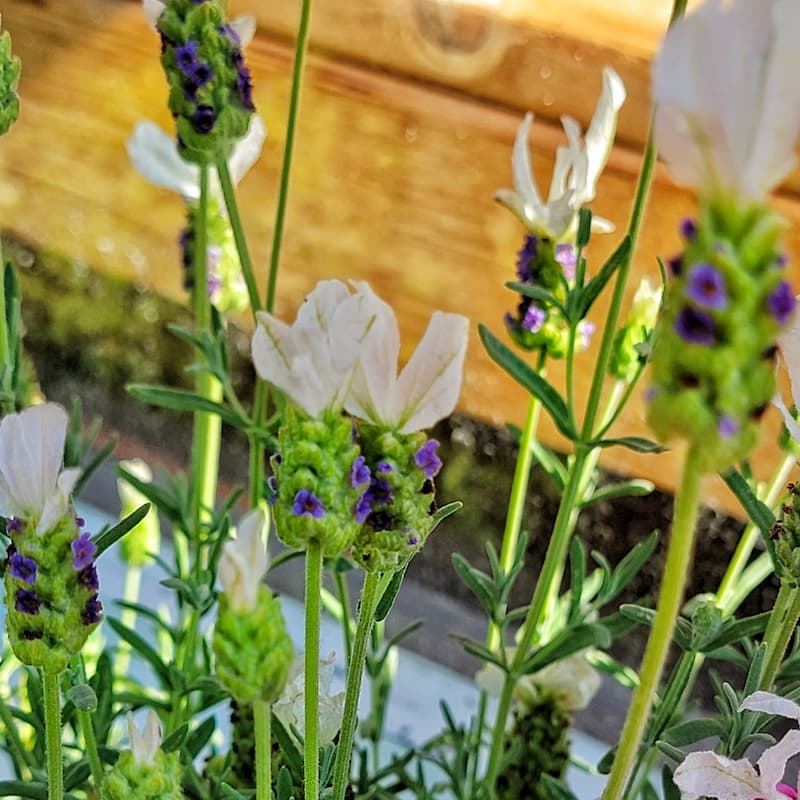
I love planting lavender where I’ll brush past it, along a pathway or near the porch, because that fresh, calming scent makes the whole garden feel more peaceful. It pairs beautifully with roses and hydrangeas, and it thrives in our Pacific Northwest climate as long as the drainage is good.
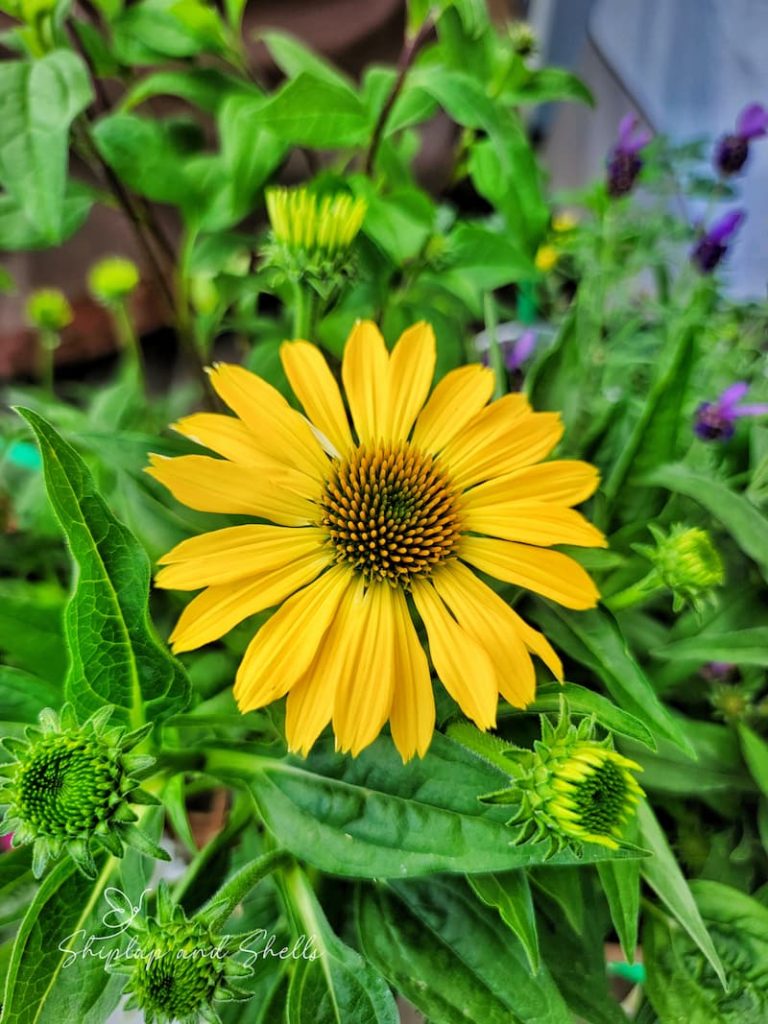
5. Coneflower (Echinacea)
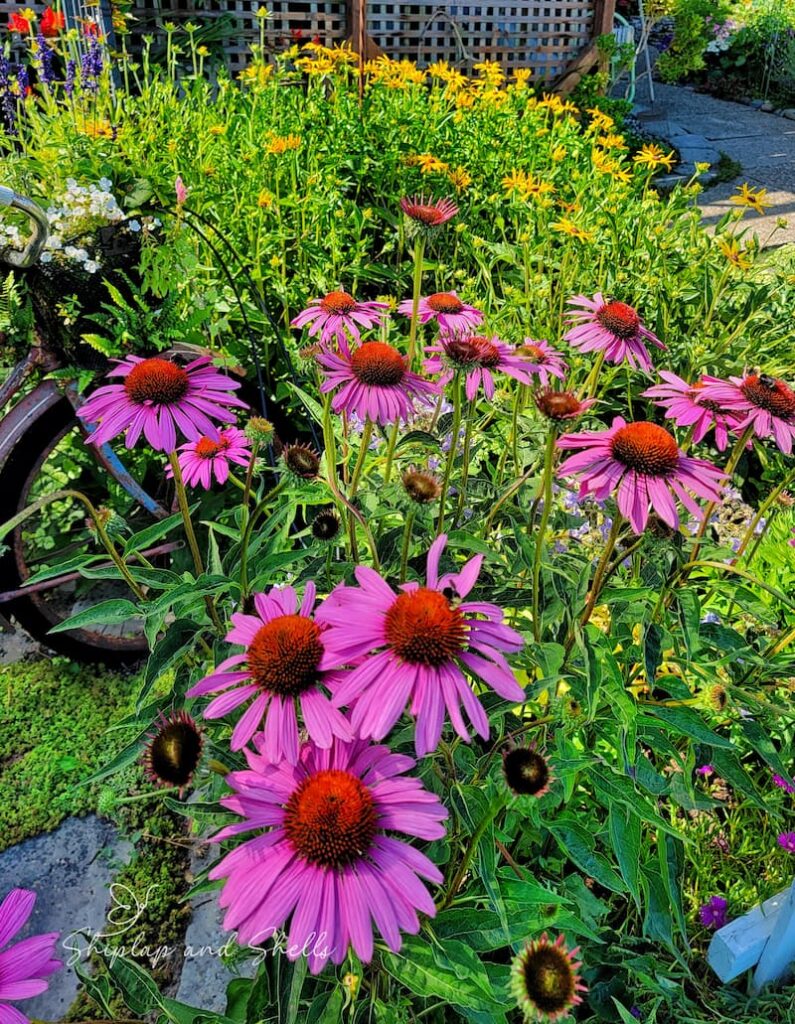
Coneflowers are a workhorse in the cottage garden: colorful, pollinator-friendly, and wonderfully low-maintenance. Their daisy-like blooms with raised centers come in shades of pink, purple, white, orange, and soft yellow, and they blend easily with black-eyed Susans and phlox.
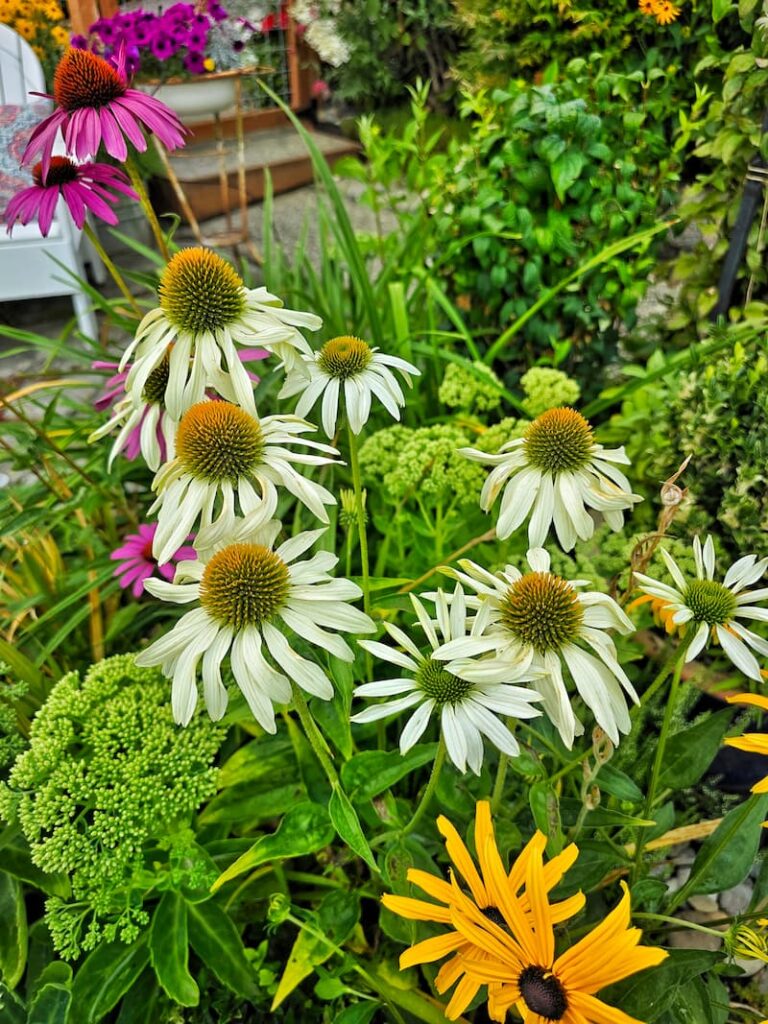
Bees and butterflies absolutely love them, and even after the blooms fade, the seed heads add texture to the winter garden. They’re the kind of plant that quietly does its job all season long.
6. Hollyhocks (Alcea)
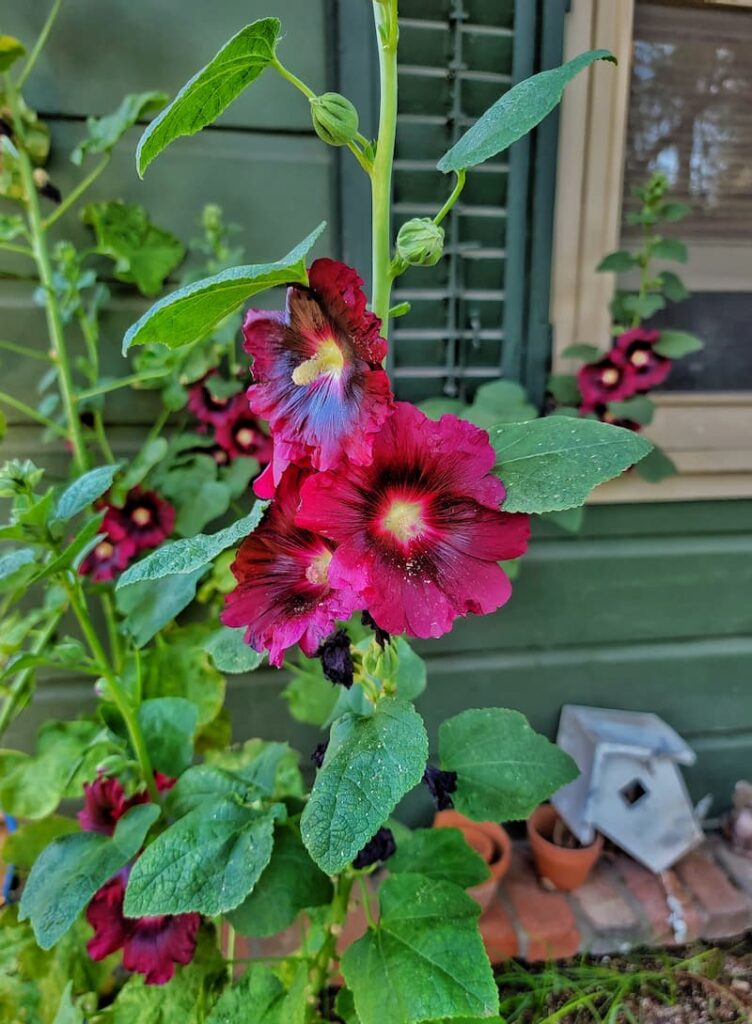
Hollyhocks are one of the most iconic cottage garden flowers. Their large saucer-shaped blooms in shades of pink, red, white, yellow, and deep burgundy make a stunning backdrop for lower-growing plants.
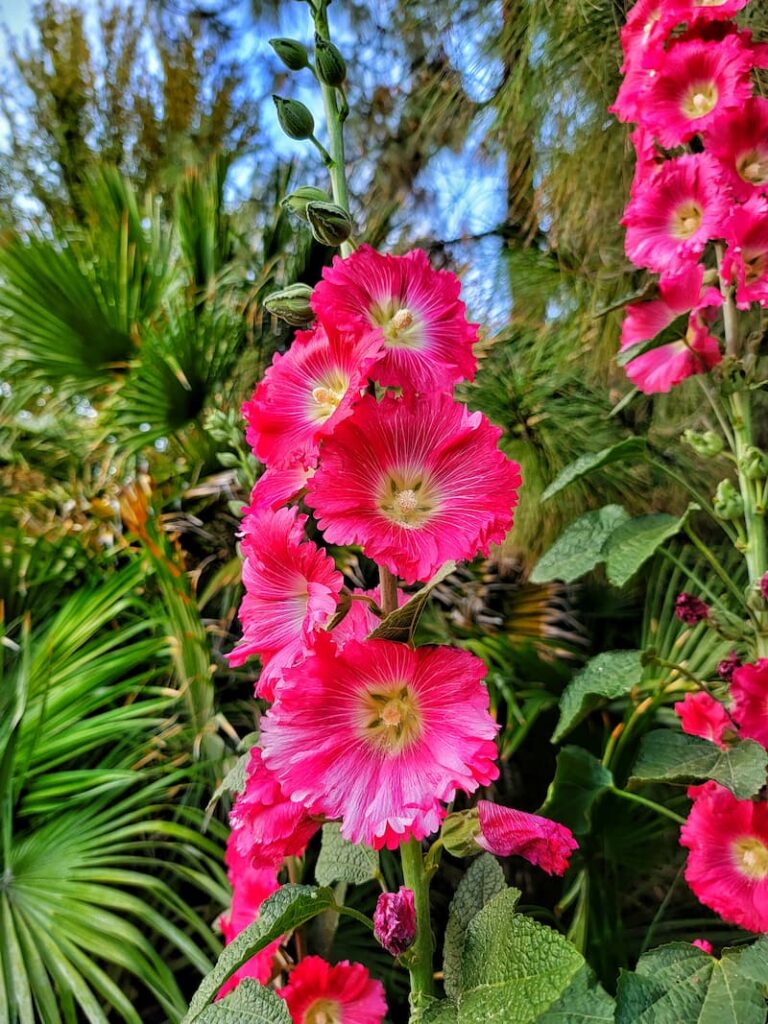
They look especially beautiful planted along fences and walls, where they can rise naturally and create that soft, romantic backdrop that defines a cottage garden. They attract bees, butterflies, and hummingbirds, and they bring a sense of height and nostalgia hard to replicate with anything else.
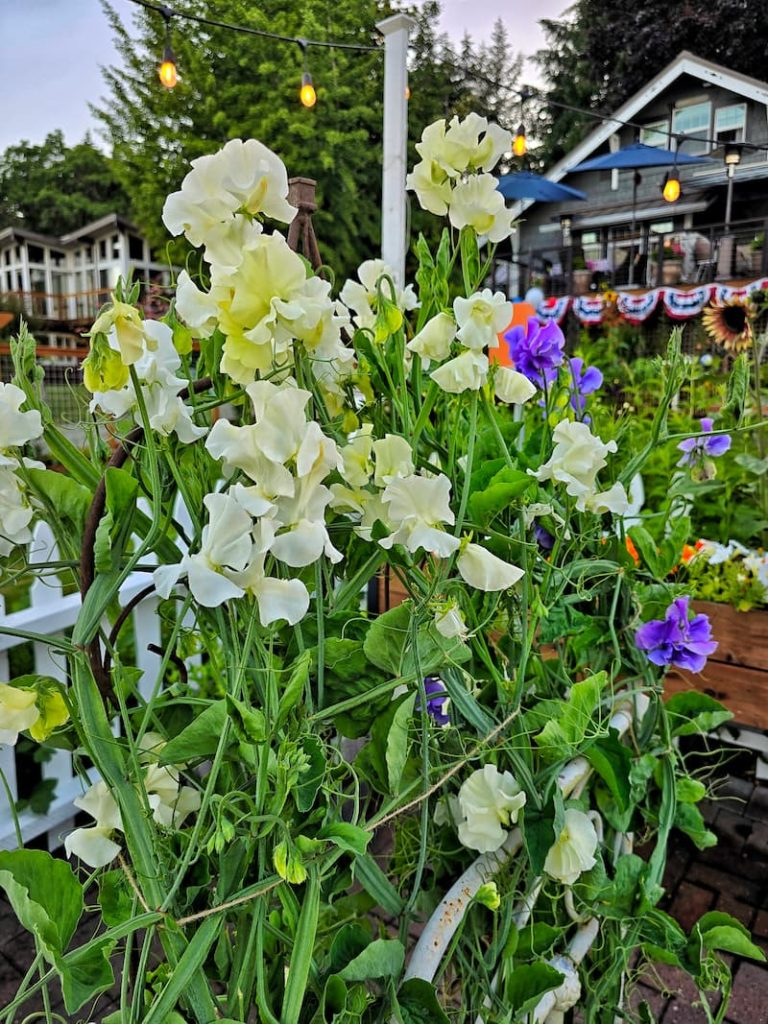
7. Sweet Peas (Lathyrus odoratus)
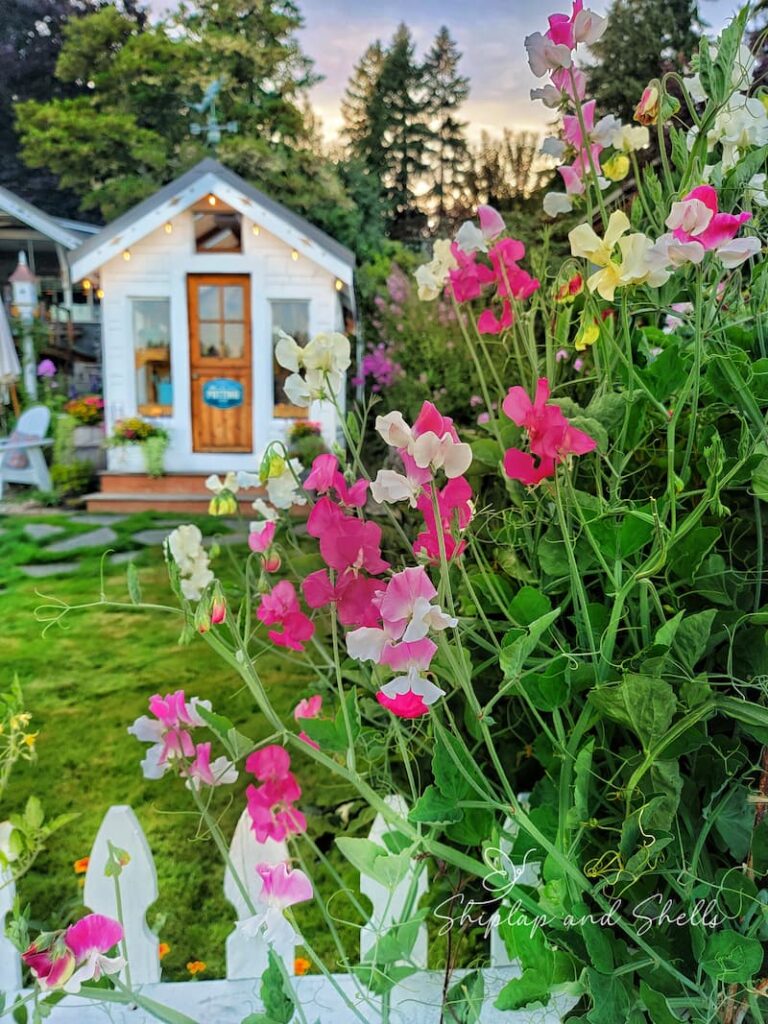
Sweet peas are one of my absolute favorites, and I start them from seed in the greenhouse each winter. Their soft, fragrant blooms and shades of blush, cream, pink, and purple are as beautiful as any flower in the garden. And the scent is something else entirely.
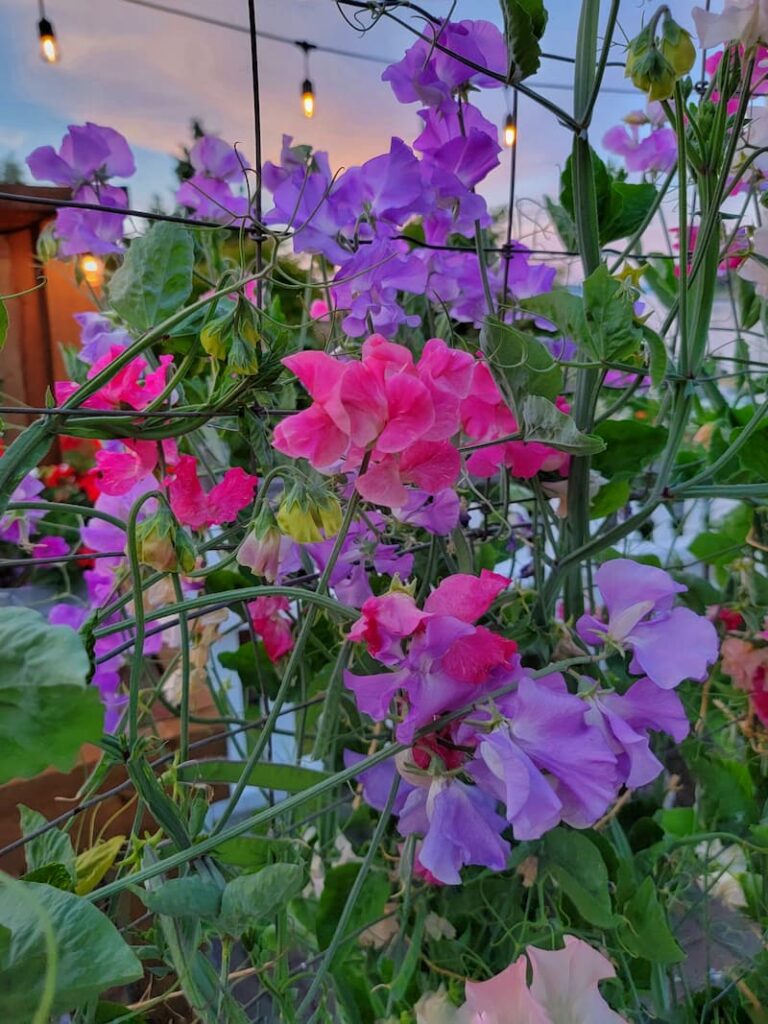
Walking past them on a warm summer morning never gets old. I grow them as much for the fragrance as the blooms. They climb beautifully up trellises and fences, and they make some of the best cut flowers of the season.
8. Phlox
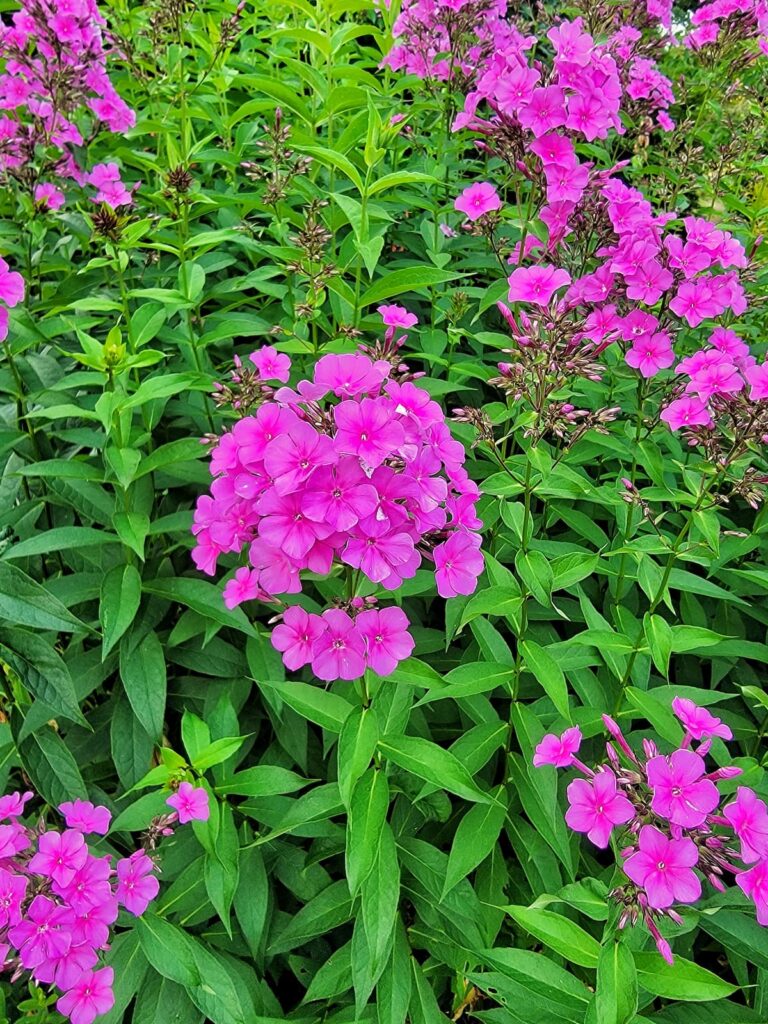
Garden phlox is one of those classic cottage garden flowers that easily brings everything together. Its large clusters of fragrant blooms and long summer bloom time help carry color through the season, filling those in-between spaces in the border, making everything feel more connected.
It comes in shades of pink, purple, white, and blue, and it blends easily with roses, coneflowers, and daisies. I especially love how phlox softens the edges of a garden bed and makes the whole planting feel more relaxed.
9. Hydrangeas
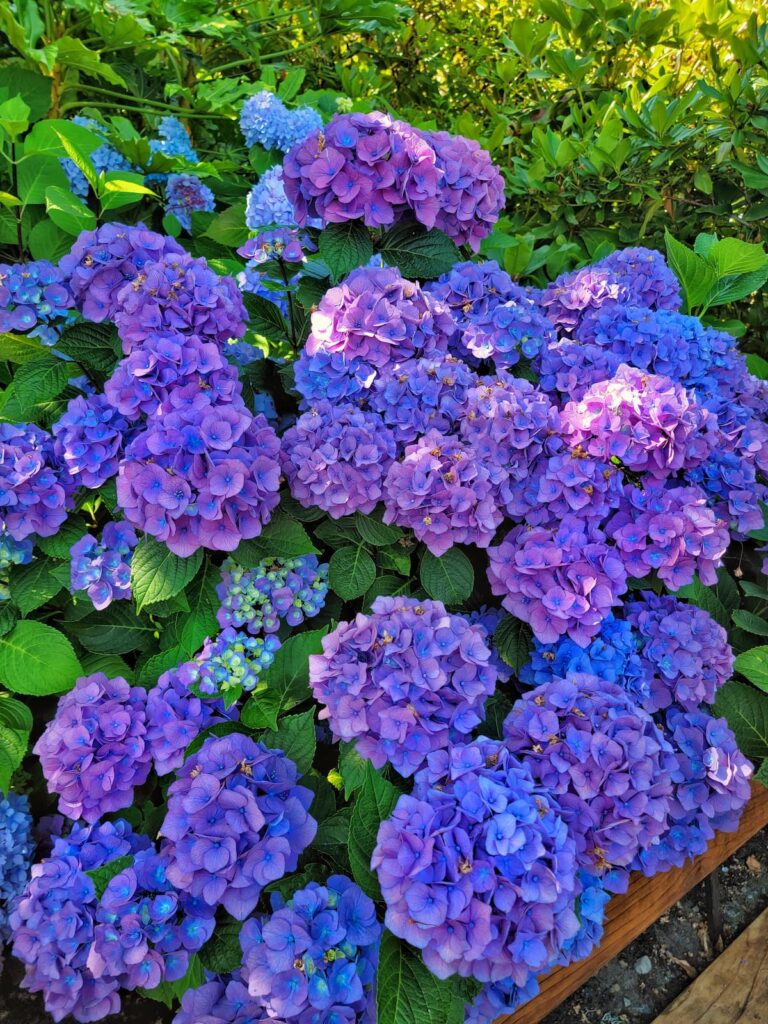
Hydrangeas are one of my all-time favorites. Their large, lush blooms bring softness and structure to the cottage garden. They’re generous plants with long-lasting flowers, beautifully cut stems, and enough presence to anchor a whole garden bed.
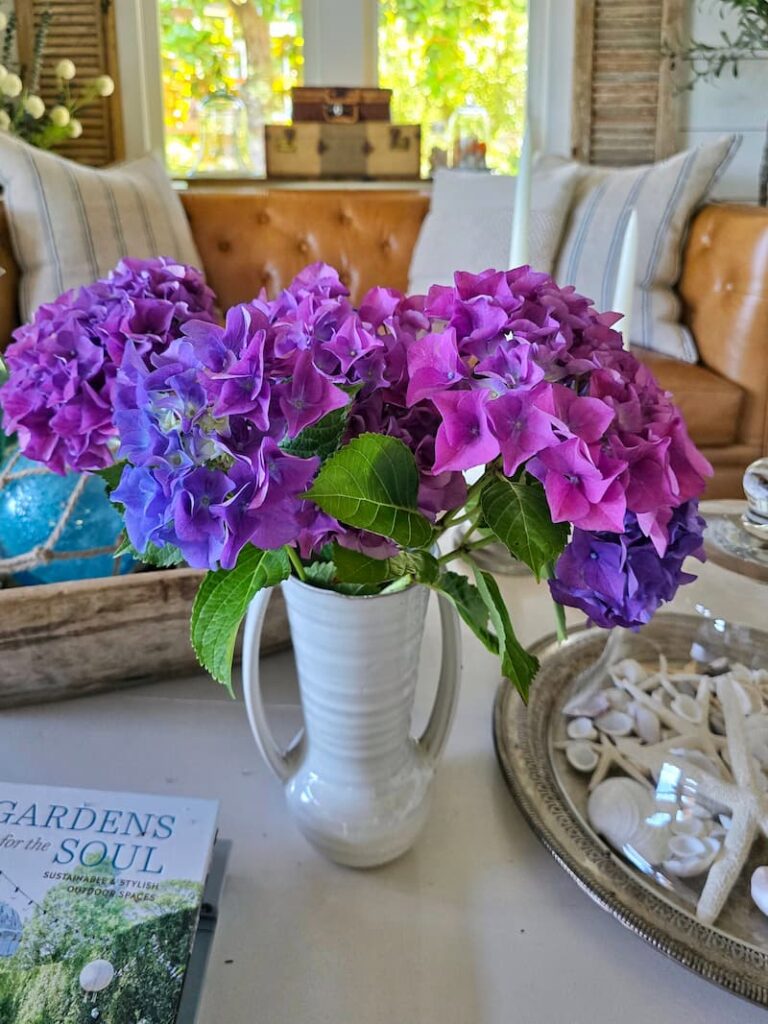
They thrive in partial shade, which makes them perfect for spots that don’t get full sun all day. I always bring a few stems inside during the summer. There’s something about them in a vintage picture on the kitchen table that feels like pure cottage.
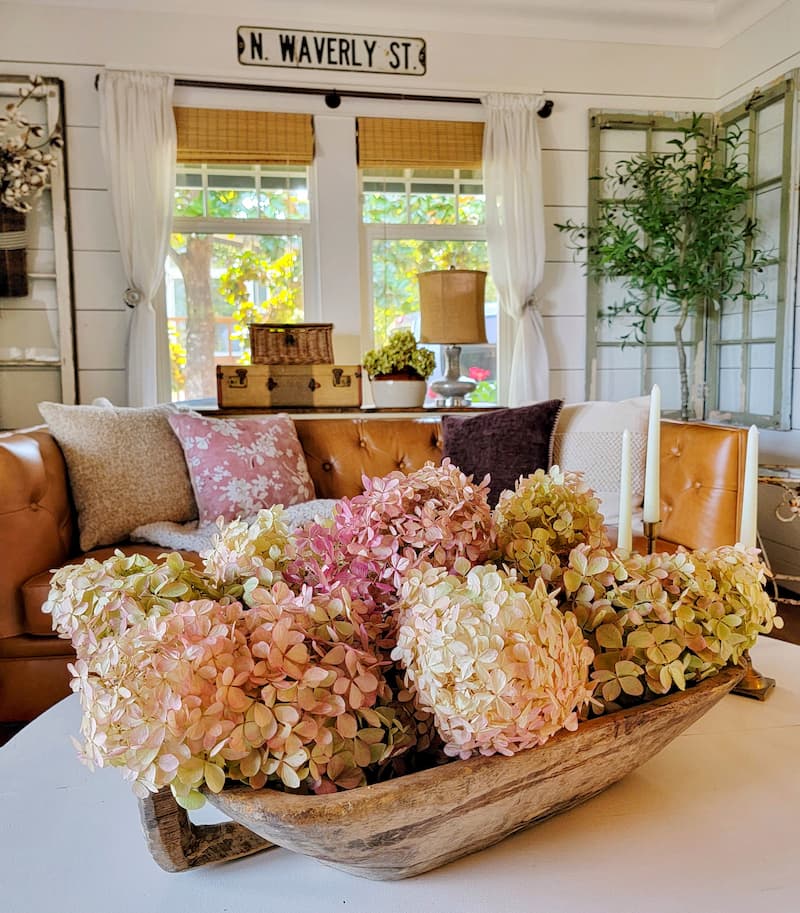
They also dry beautifully and are wonderful in fall home decor.
10. Daylilies (Hemerocallis)
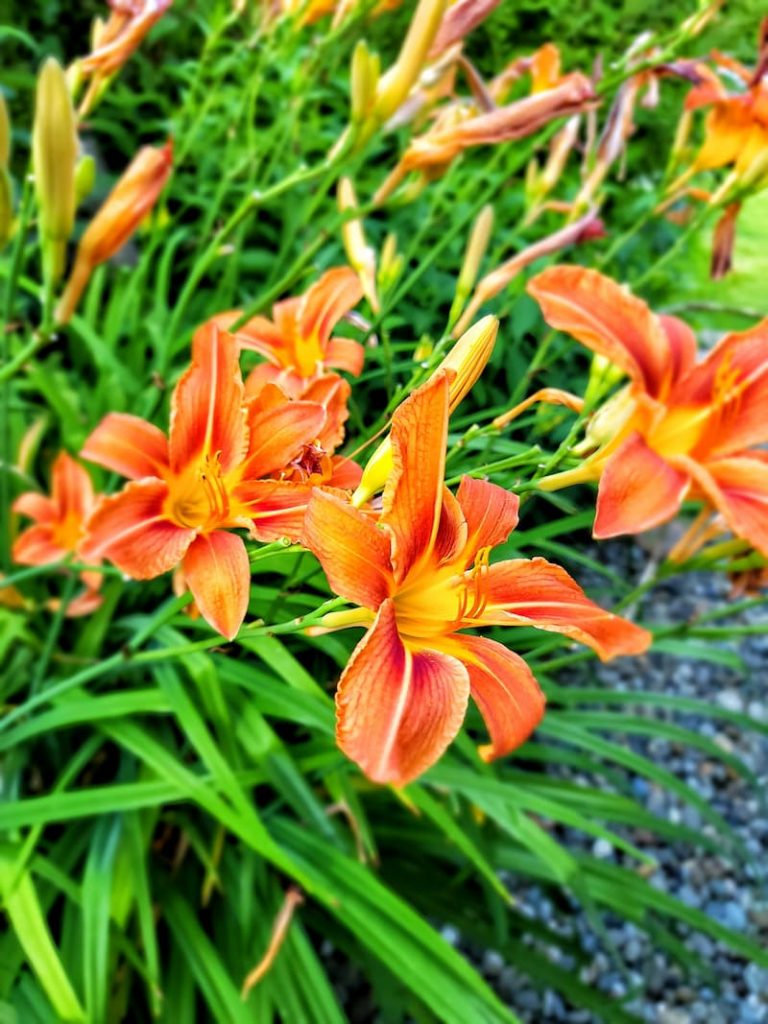
Daylilies are the definition of dependable. Their bright trumpet-shaped blooms come in an incredible range of colors: sunny yellows, vibrant oranges, soft pinks, and deep purples. Even though each flower only lasts a day, they produce so many buds that the display continues for weeks.
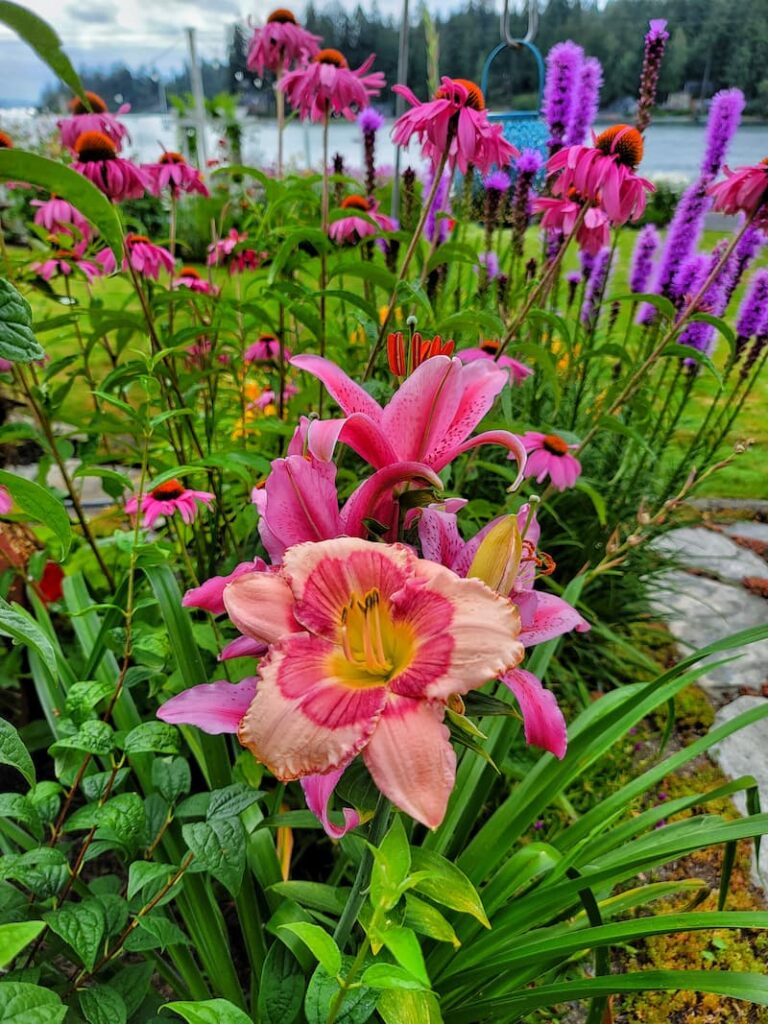
I love using them in spots where I want reliable color without a lot of fuss. Once established, they’re the kind of plant that just quietly does its job and still looks beautiful year after year.
Let’s Plan Your Dream Garden With Our
Gardening Planner
Unlock Your Garden’s Potential.
Our 35-page Ultimate Garden Planner is designed to help you organize, track, and flourish in your gardening endeavors.
Get yours for $4.99
11. Daisies (Bellis perennis)
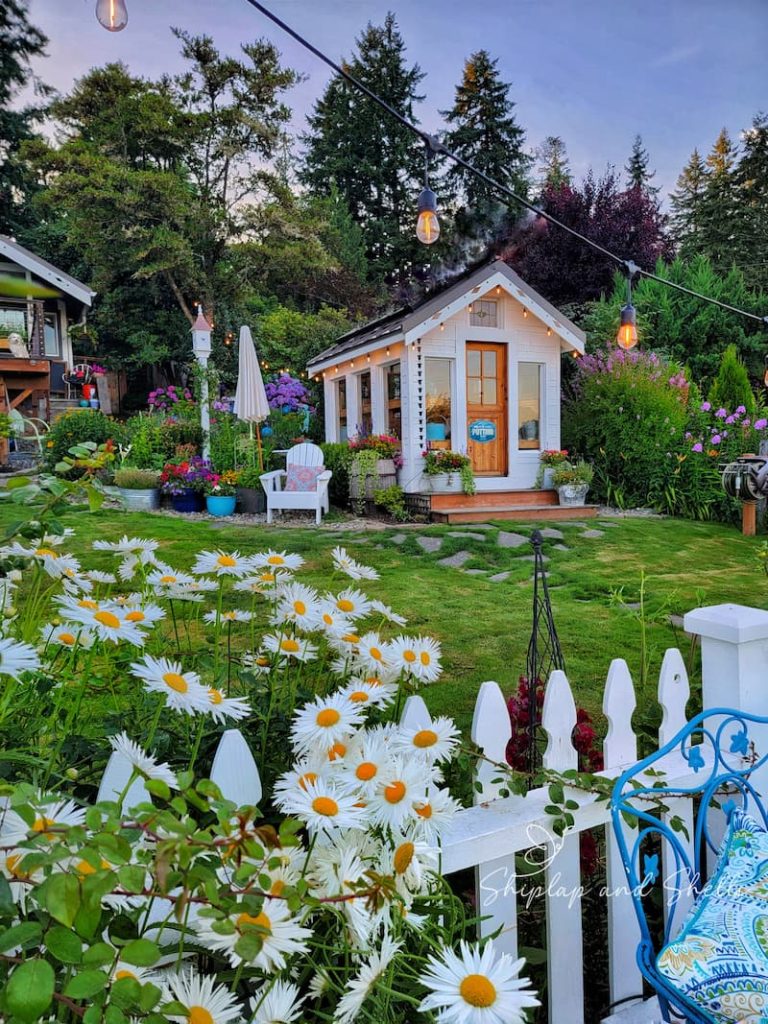
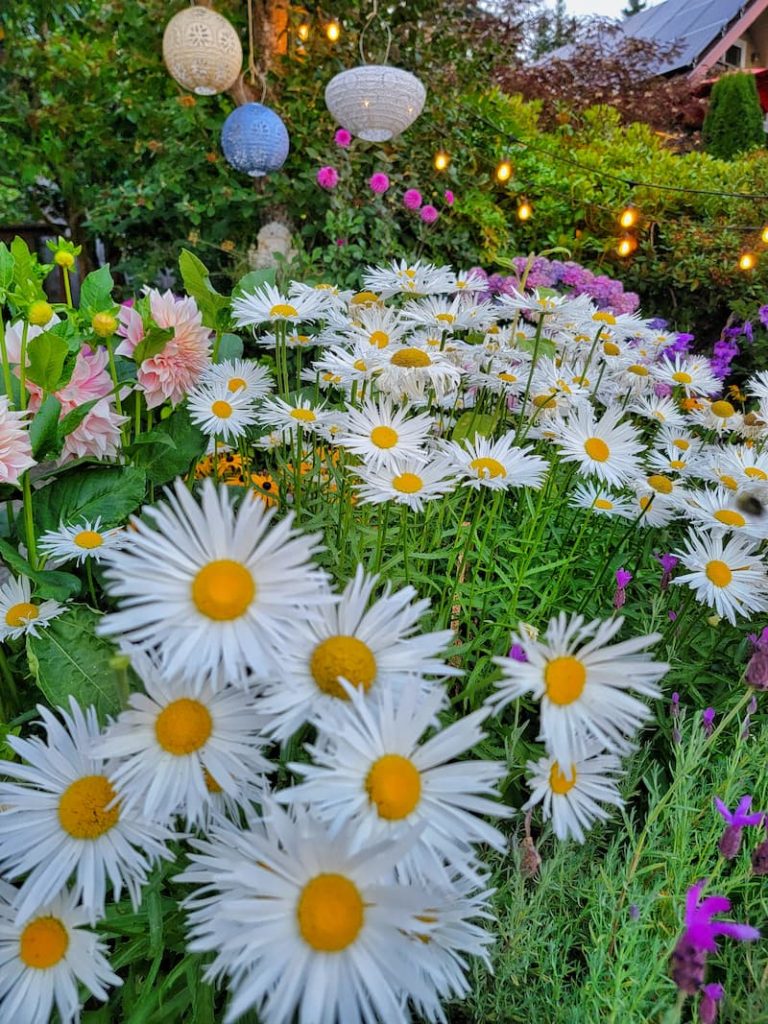
Daisies make a garden feel lighter. The bright white petals and sunny yellow centers bring that fresh, happy look that softens everything around them. And they never feel fussy or formal, which is exactly right for a cottage garden.
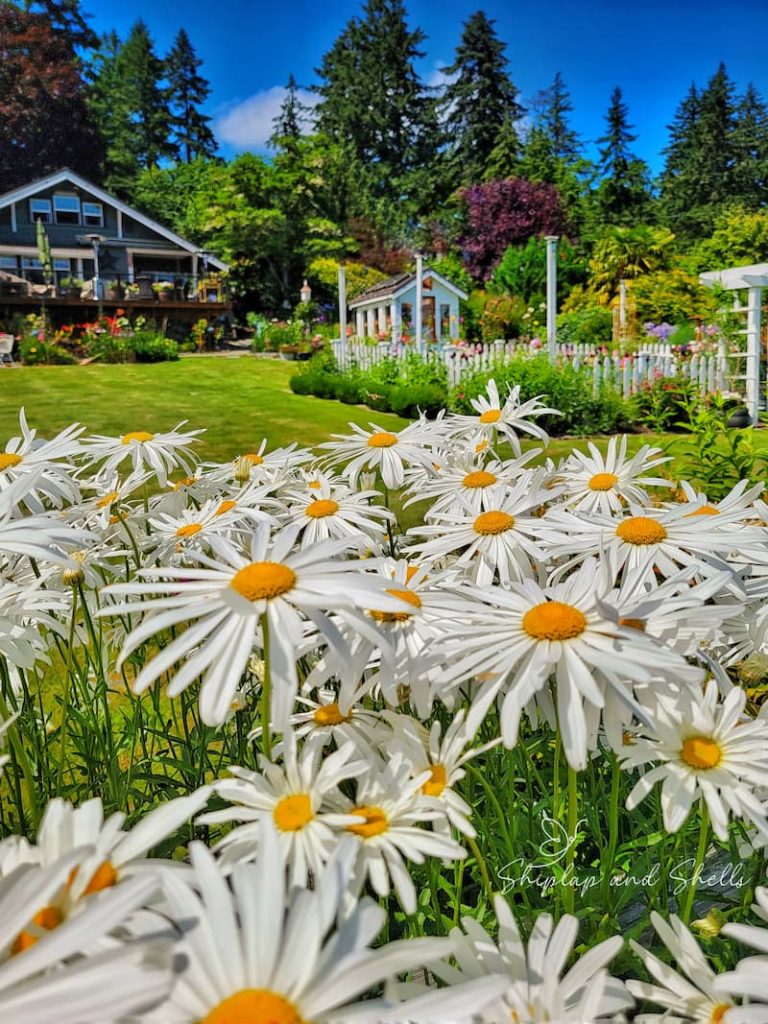
They mix well with almost everything, work beautifully along pathways and garden edges, and have a long season that can stretch from late spring well into summer. Daisies are simple, reliable, and always welcoming.
12. Irises
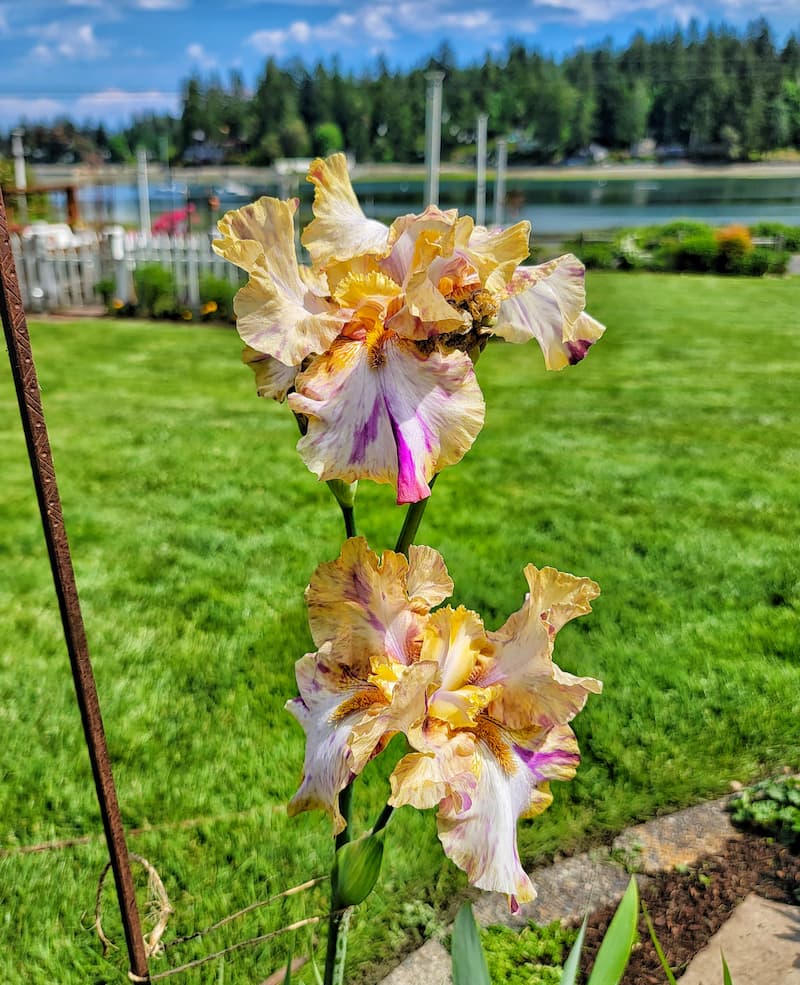
Irises are striking in a way that most flowers aren’t. Their elegant blooms and sword-like foliage create a bold contrast against softer cottage garden plants, and they come in an incredible range of colors: deep purples, rich blues, soft pinks, creamy whites, and warm yellows.
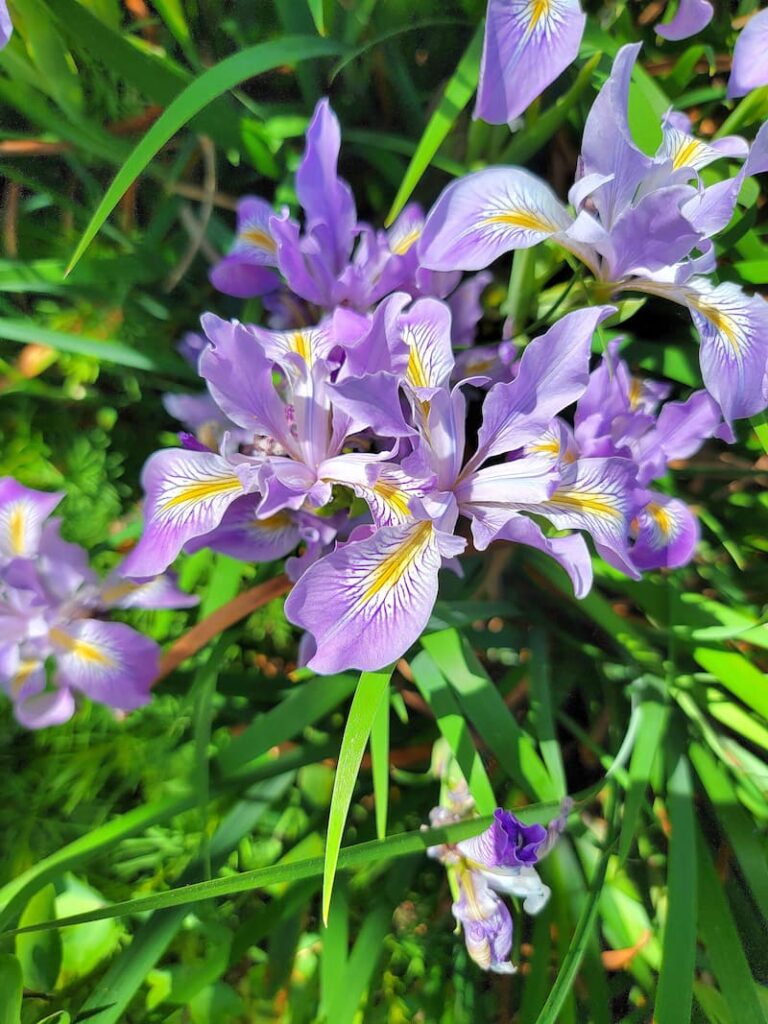
Different varieties bloom at different points in the season, which helps extend color from spring into early summer. I always look forward to when the irises bloom. They have a quality of making you stop and actually admire them.
13. Cosmos

Cosmos are one of those flowers that make everything feel softer. Their airy blooms, delicate petals, and feathery foliage bring a light, whimsical feeling that’s hard to achieve with anything more structured. And they do it all without any fuss.
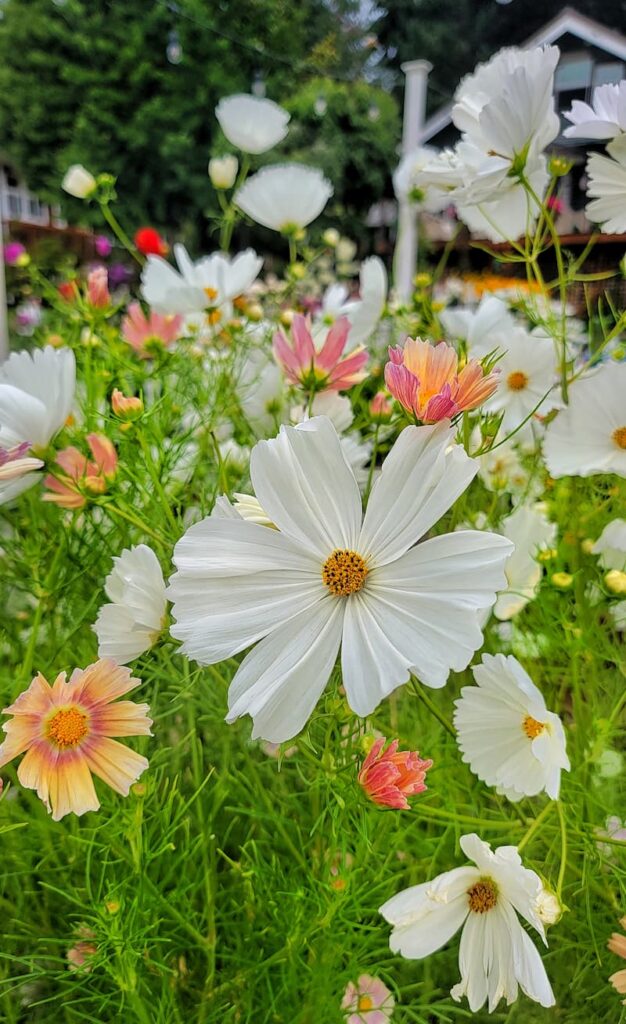
I start cosmos from seed in the greenhouse each spring, and once they’re going, they don’t need much from me. They bloom all season and mix beautifully with zinnias and dahlias. That effortless, ‘just happened to bloom there’, kind of beauty.
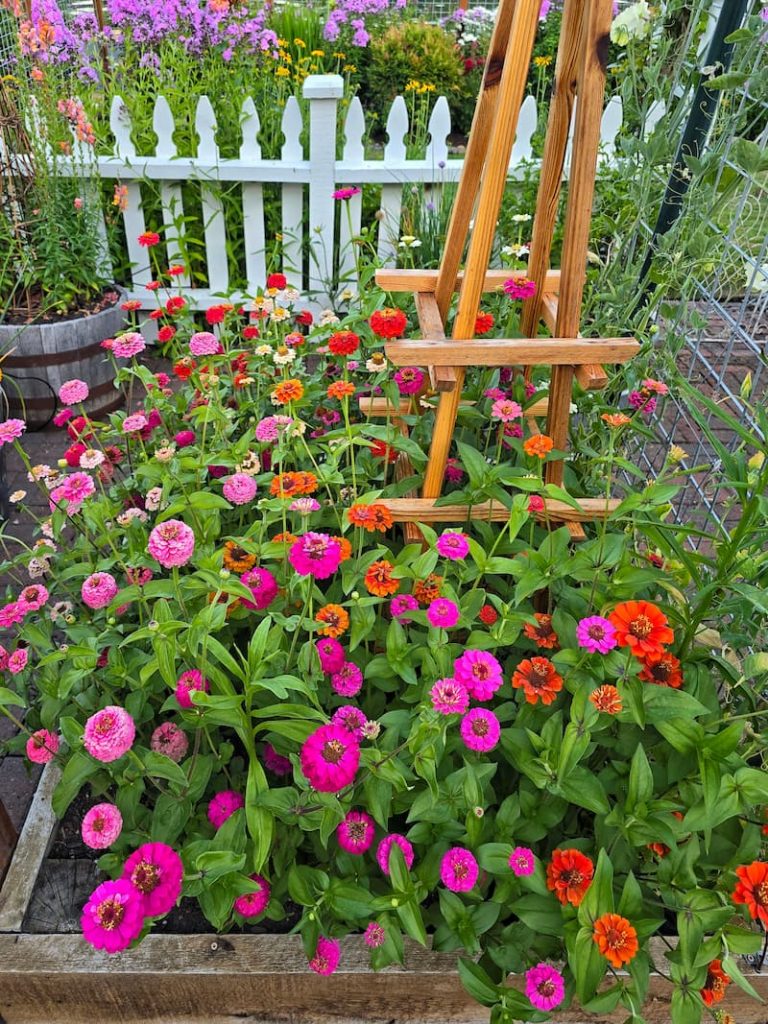
14. Zinnias
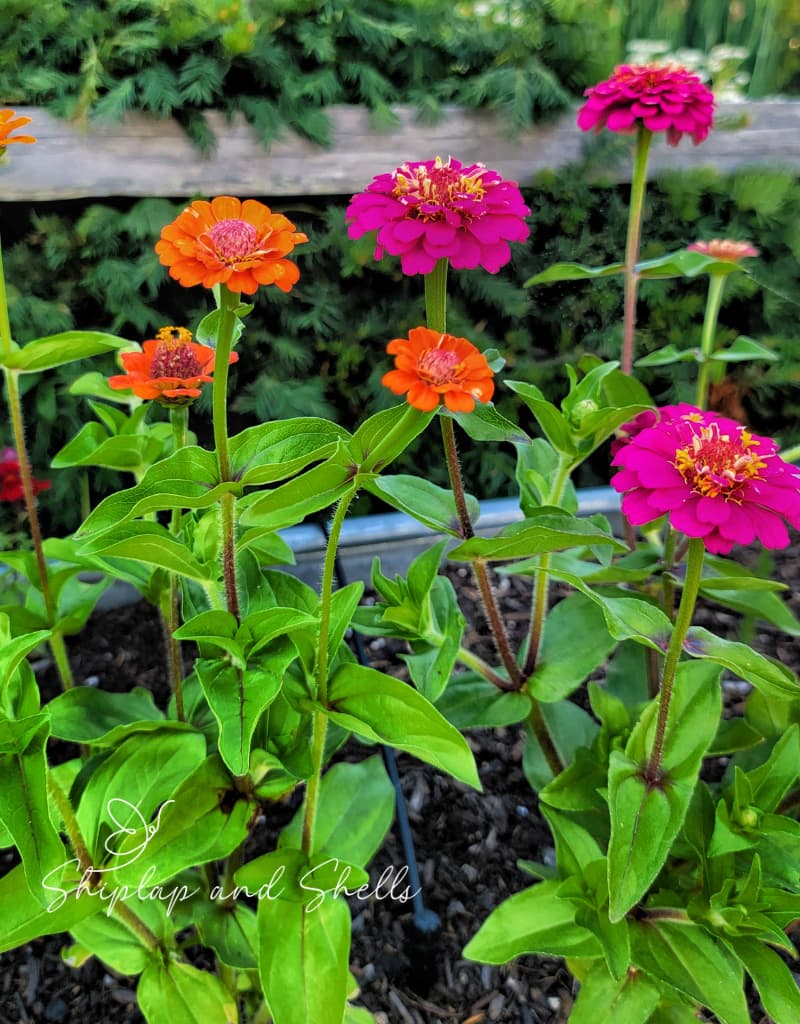
Zinnias are the flower I look forward to the most every summer, with their non-stop color, happy pollinator activity, and some of the best cut flowers of the season. I start mine from seed in the greenhouse, and once they’re established, they reward you for every stem you cut.
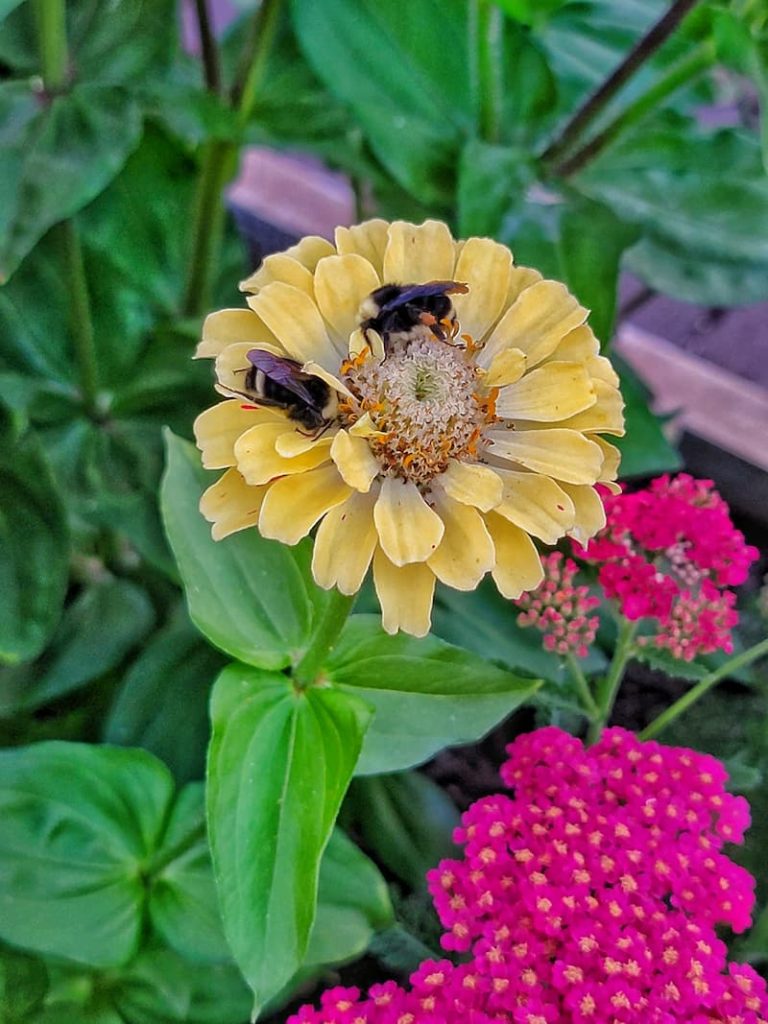
My favorite thing is walking outside in the evening and finding bees tucked into nearly every bloom for the night. The more you cut zinnias, the more they bloom. It’s one of the most satisfying things in the garden.
15. Clematis
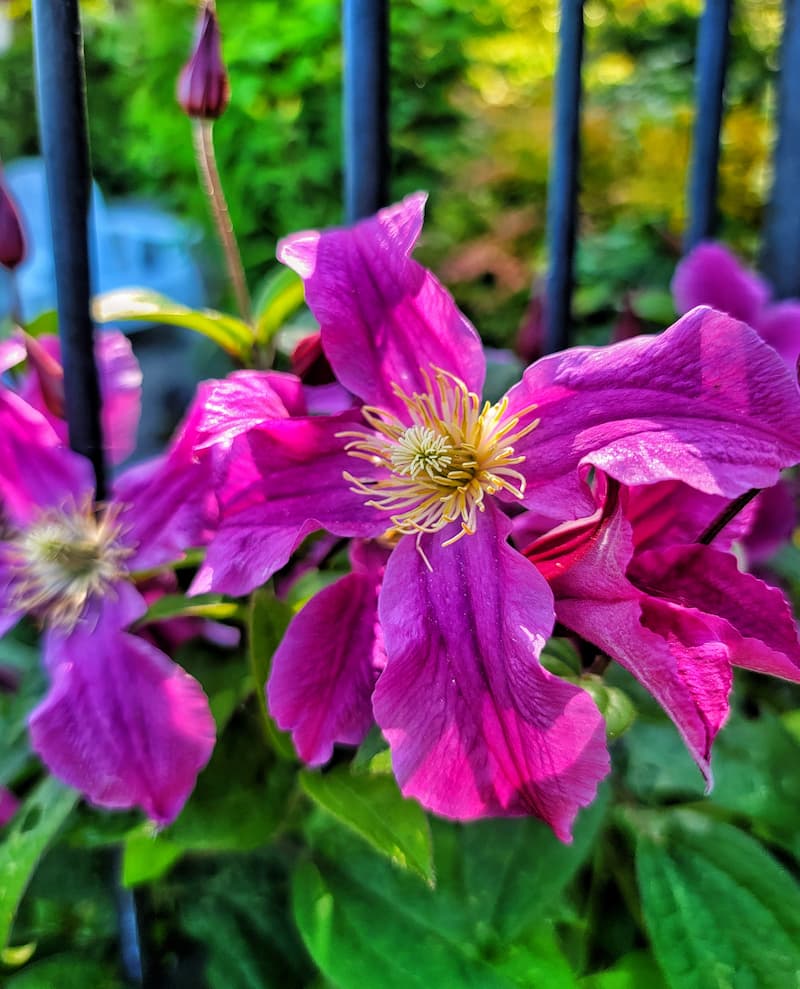
Clematis is one of the most beautiful ways to add vertical interest to a cottage garden. Its climbing vines and show-stopping blooms wind through arbors, trellises, and garden fences with a soft charm that’s especially useful in smaller spaces.
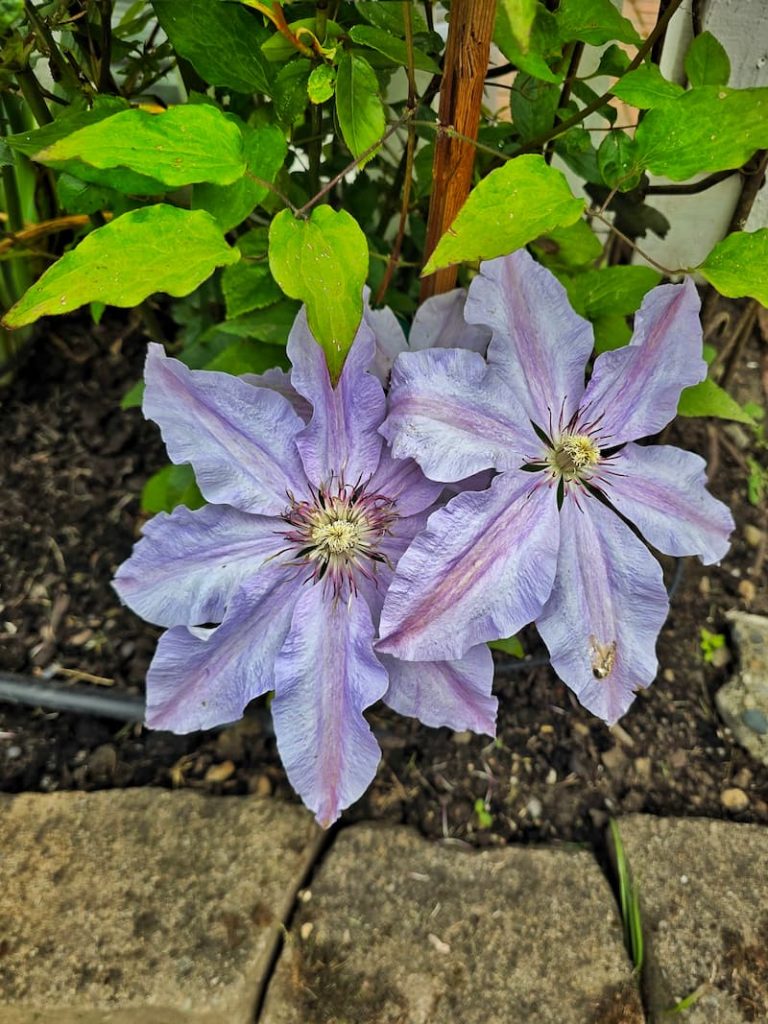
The flowers come in pale and deep purples, rich blues, soft pinks, fuchsia, and crisp whites. I love how clematis makes even the simplest garden structure feel special. It turns an ordinary trellis into something that feels like part of a garden story.
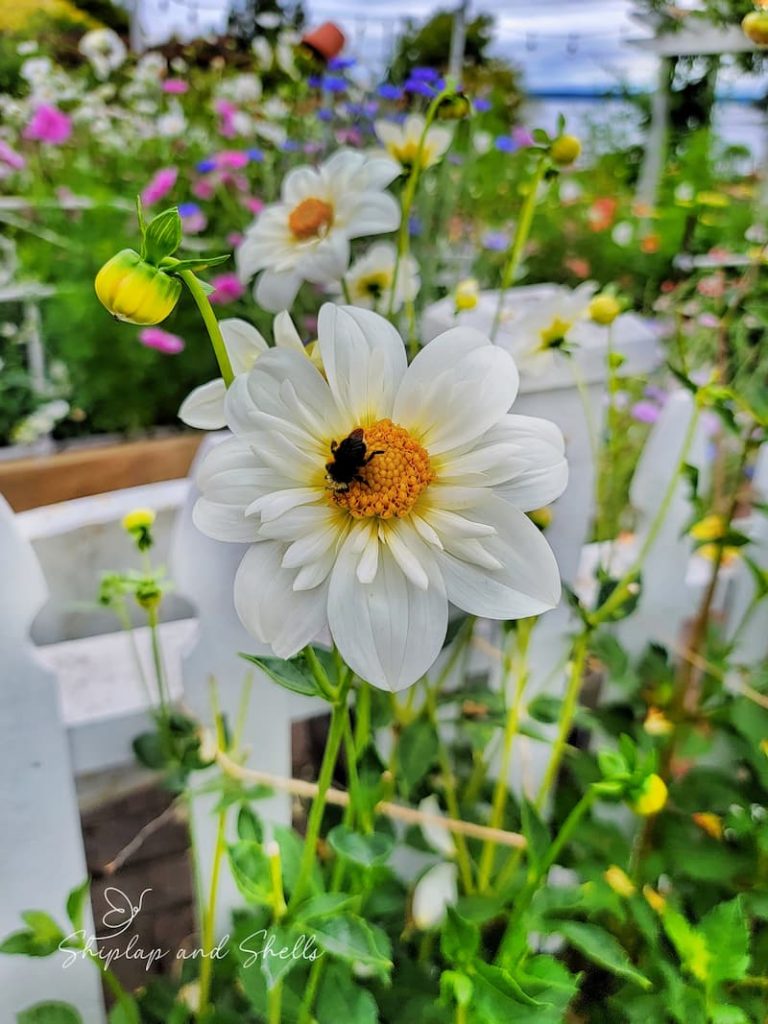
16. Dahlias
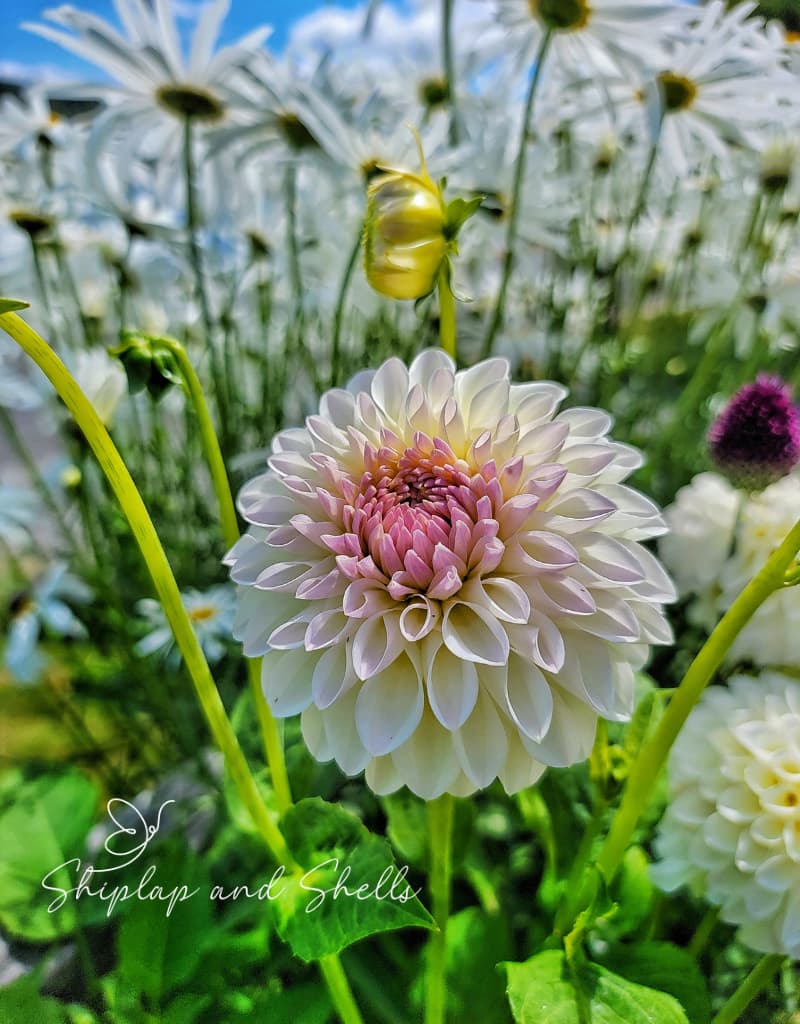
Dahlias are the grand finale of summer. Just when some plants are slowing down, dahlias step in and completely steal the show. From giant dinnerplate varieties to smaller pom-pom and cactus types, there’s something for every garden style, and the color range is extraordinary.
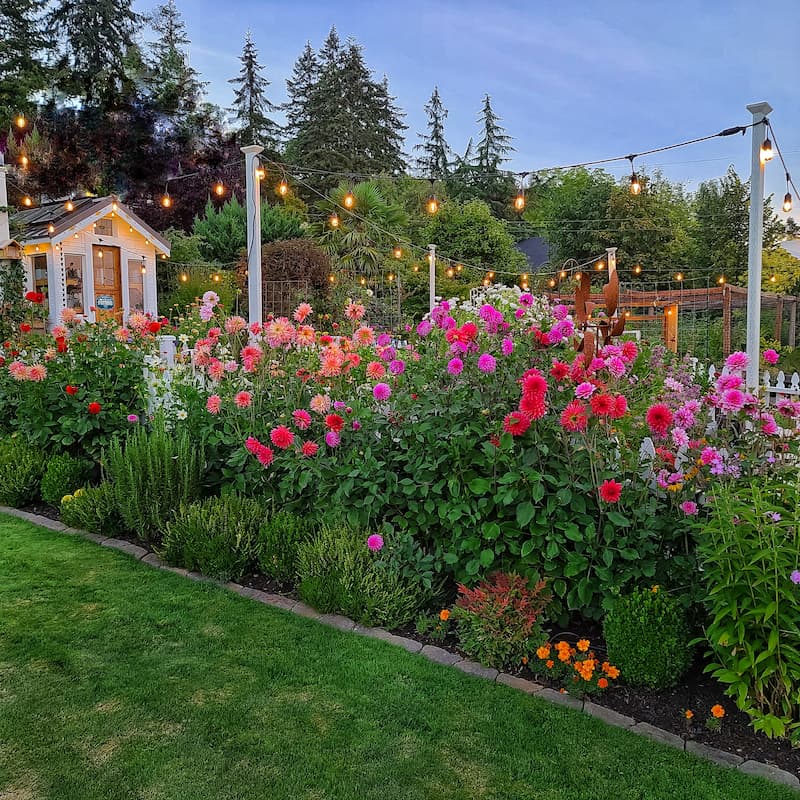
They’re some of the best cut flowers in the garden, and the more you cut them, the more they keep giving. Bees and butterflies love them just as much as we do, and they make the late summer garden feel incredibly full and alive.
17. Heliotrope (Heliotropium)
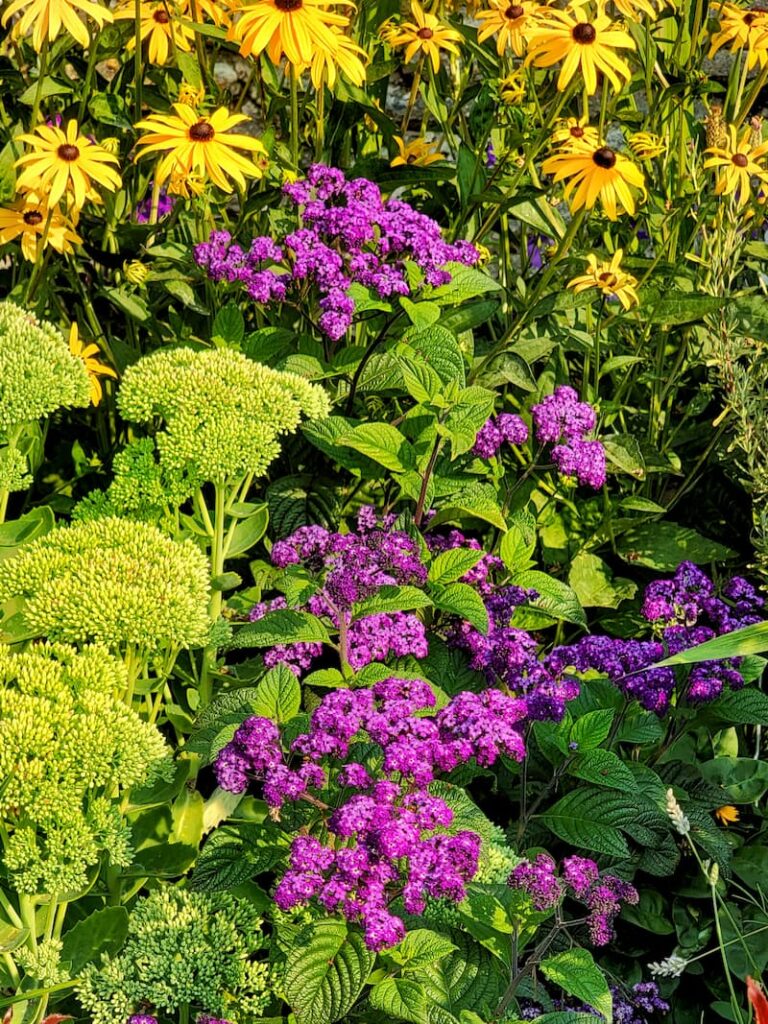
Heliotrope is one of those flowers people initially fall in love with because of the fragrance. Its rich vanilla-like scent and clusters of tiny star-shaped blooms in deep purple, lavender, and soft white make it a beautiful and unexpected addition near patios, pathways, and porch containers.
It’s the kind of plant people lean toward before they even realize they’re doing it. I love flowers that make you stop for a second, and heliotrope definitely does that.
18. Larkspur
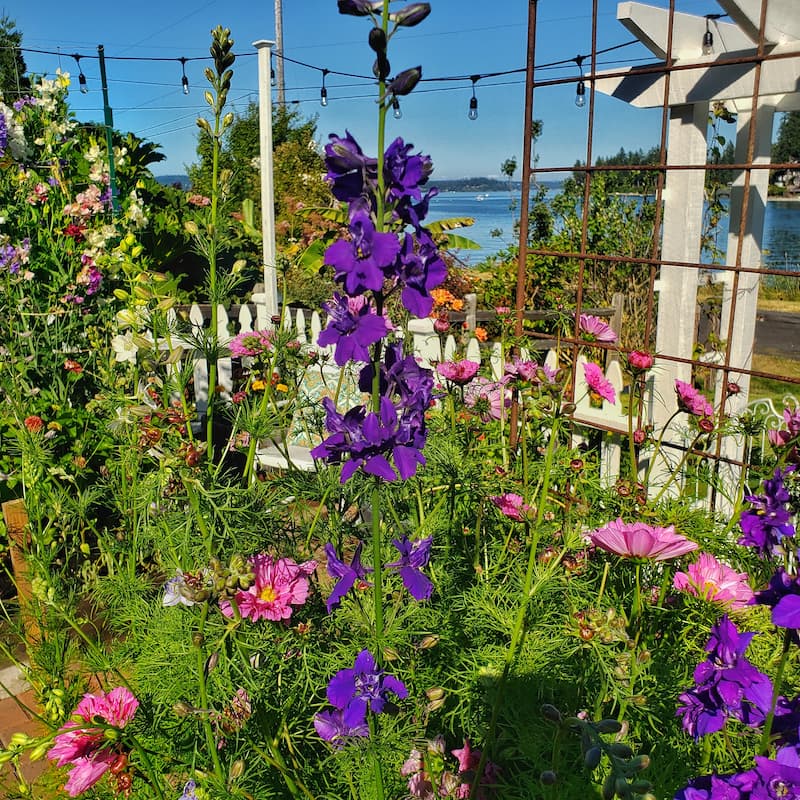
Larkspur adds height, soft color, and a slightly wild cottage garden look that makes everything feel more natural. Its tall flower spikes in shades of blue, purple, pink, and white blend beautifully with roses and foxgloves. It has that accidentally beautiful quality, almost like it simply decided to bloom exactly where it belonged.
It grows easily from seed and performs especially well in cooler climates, which makes it a lovely choice for spring and early summer color here in the Pacific Northwest.
19. Pansies (Violas)
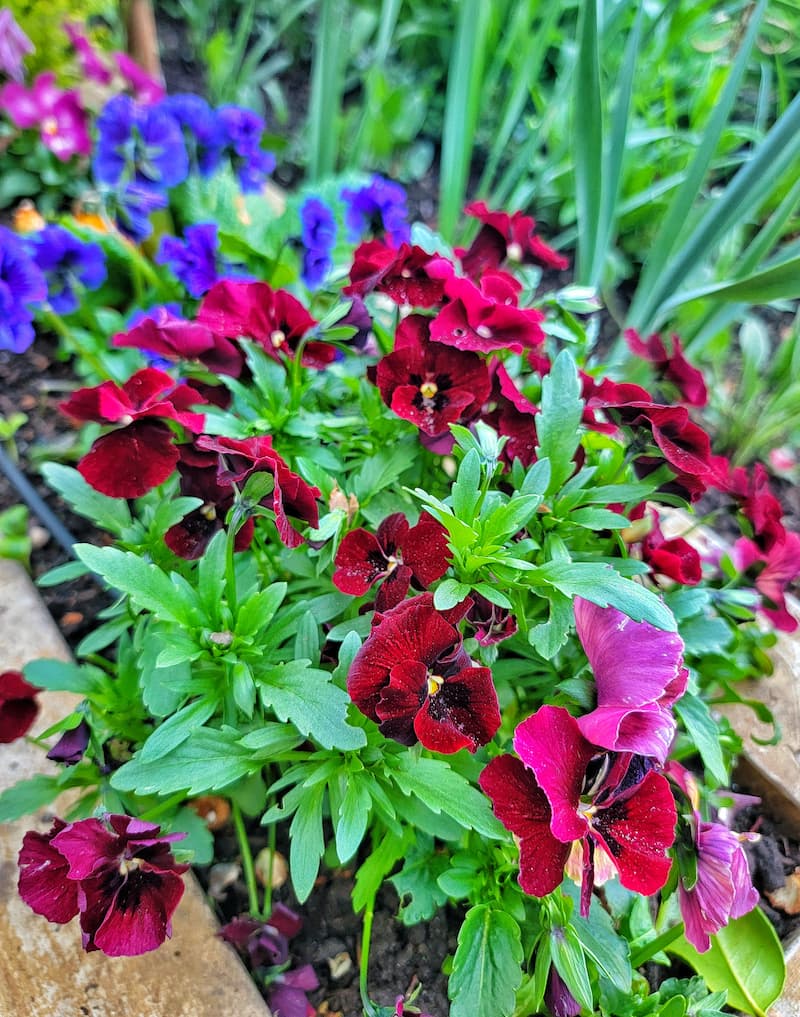
Pansies make a garden feel instantly happier. Their cheerful little faces and wide range of colors, such as yellow, purple, blue, orange, white, and deep burgundy, brighten up early-spring containers and fall beds when most summer flowers have already finished.
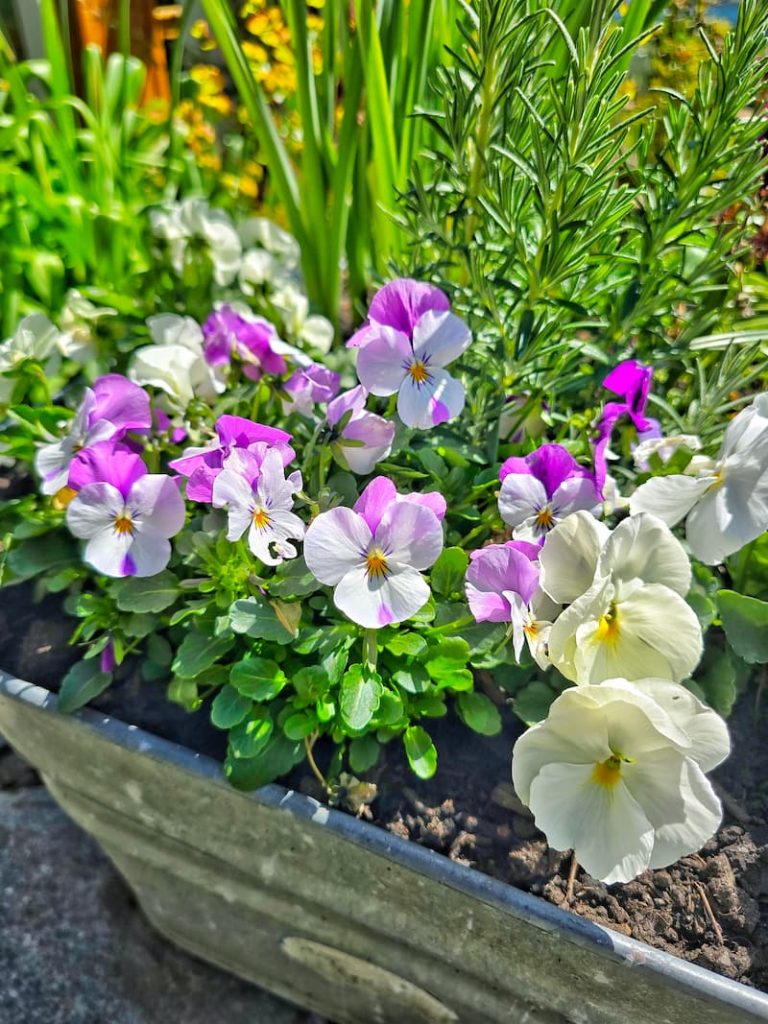
Because they stay low, they work perfectly as edging along pathways and garden borders. Small, but somehow they bring so much personality wherever you plant them.
20. Sweet Alyssum (Lobularia)
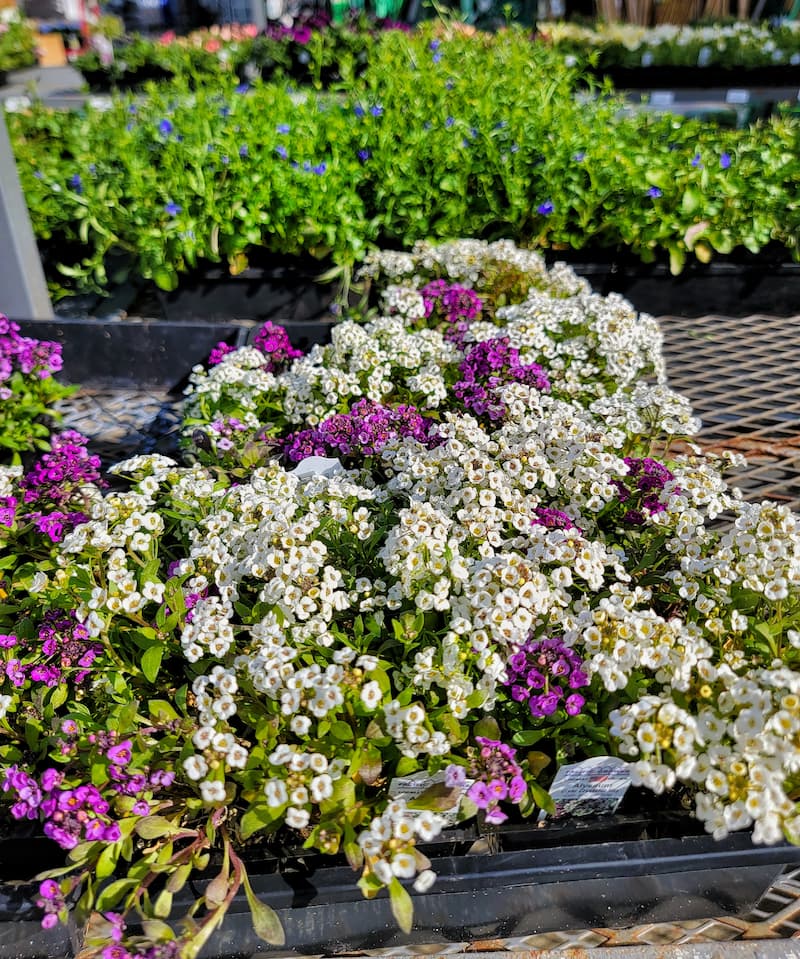
Sweet alyssum is one of those small plants that make everything look better. Its tiny clusters of delicate blooms and soft honey-like fragrance create a beautiful carpet of color that softens edges, fills gaps, and helps pull the whole planting together.
It blooms from spring until frost, thrives in sun to partial shade, and does the unglamorous work of suppressing weeds and retaining moisture in busy garden beds. I love how it gives the garden that soft, finished look without ever feeling too planned.
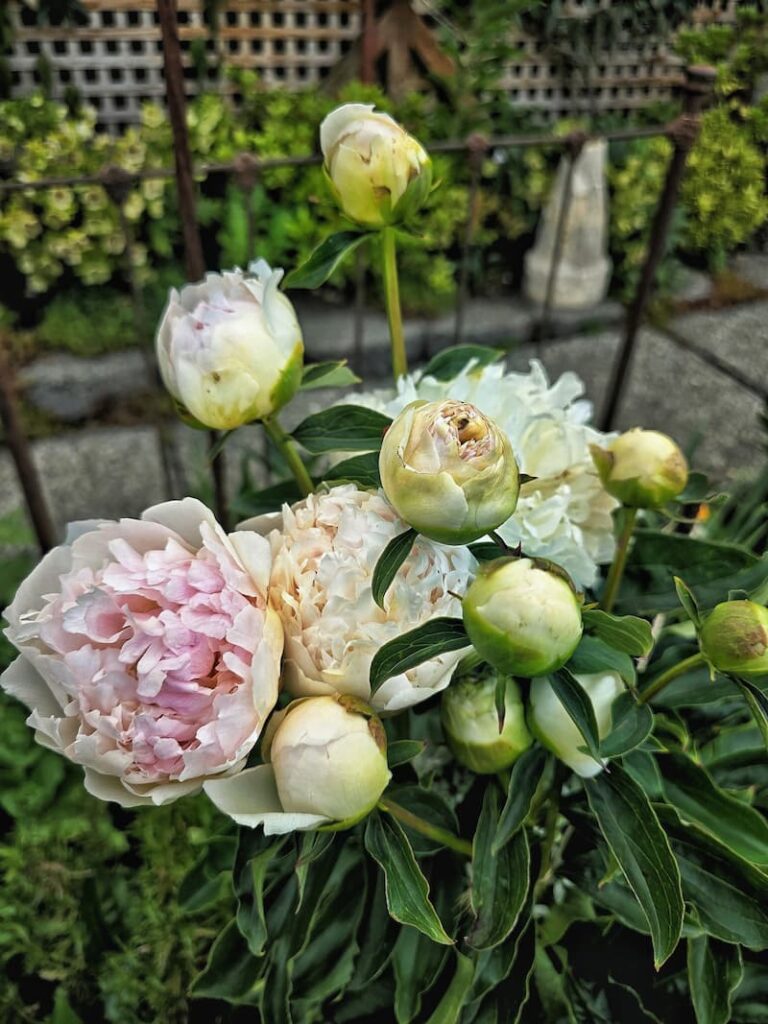
21. Peonies (Paeonia)
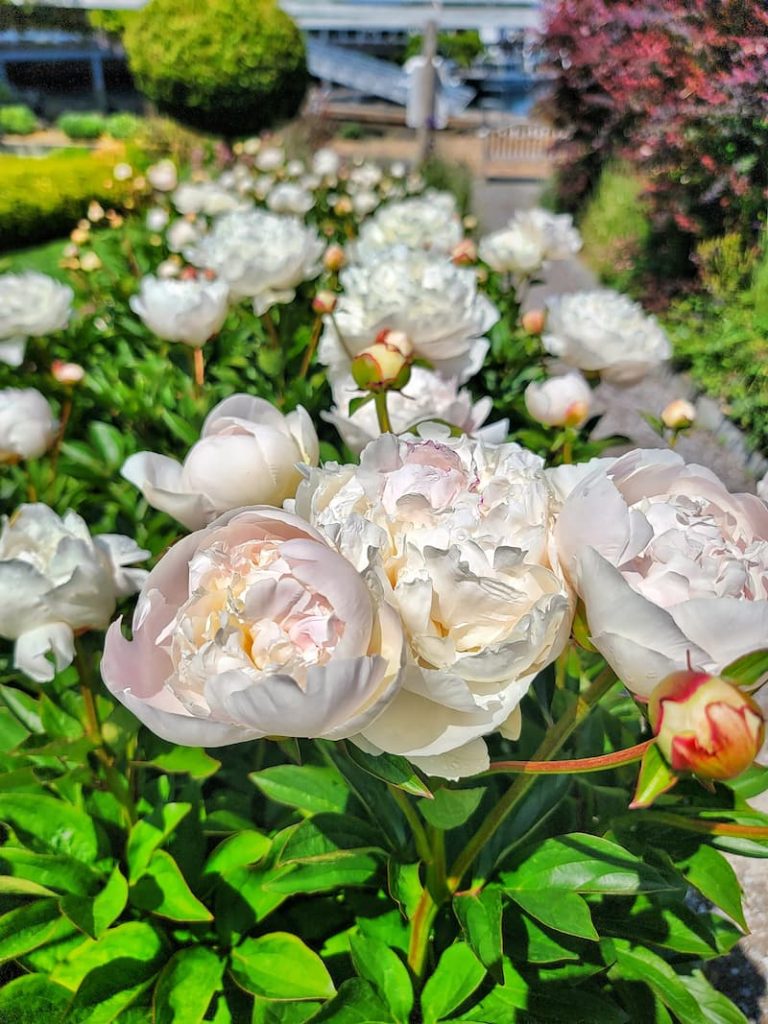
Peony season always feels too short, which is probably why we all love them so much. When they bloom, it feels like the whole garden pauses for a moment.
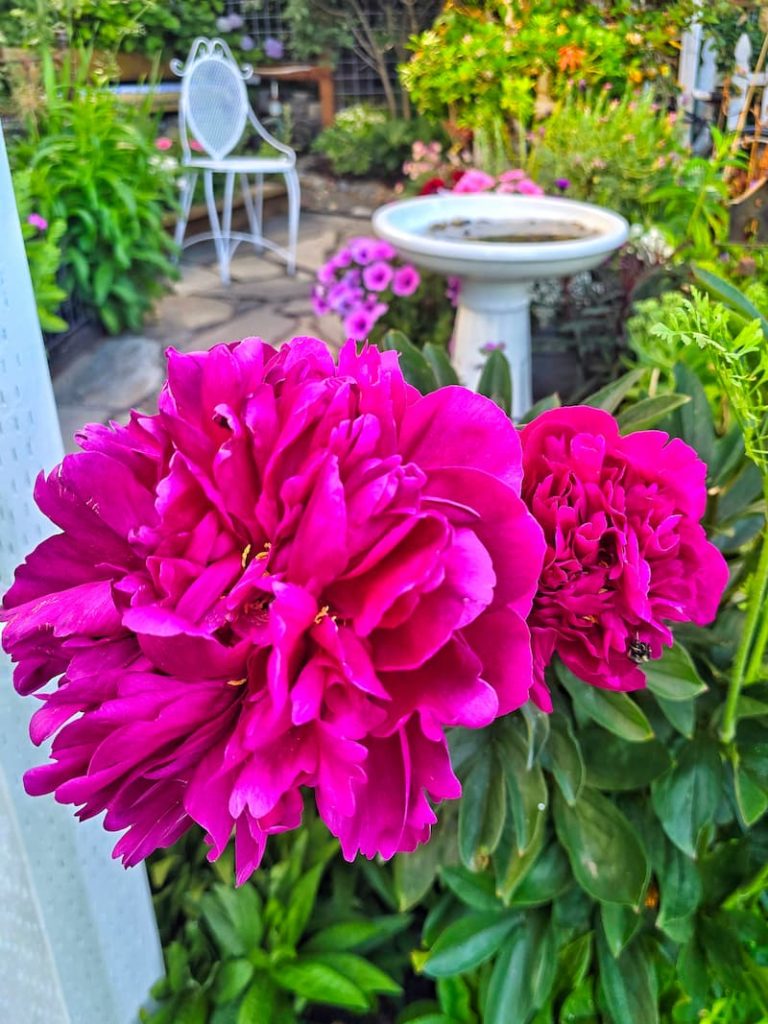
Their large, ruffled blooms in white, blush pink, coral, deep red, and burgundy bring an unmistakable sense of beauty and old-fashioned charm to the late spring garden. Once established, peonies can thrive in the same spot for decades with very little care. These beauties are drought-tolerant, deer and rabbit-resistant, and become more beautiful with time.
22. Delphinium
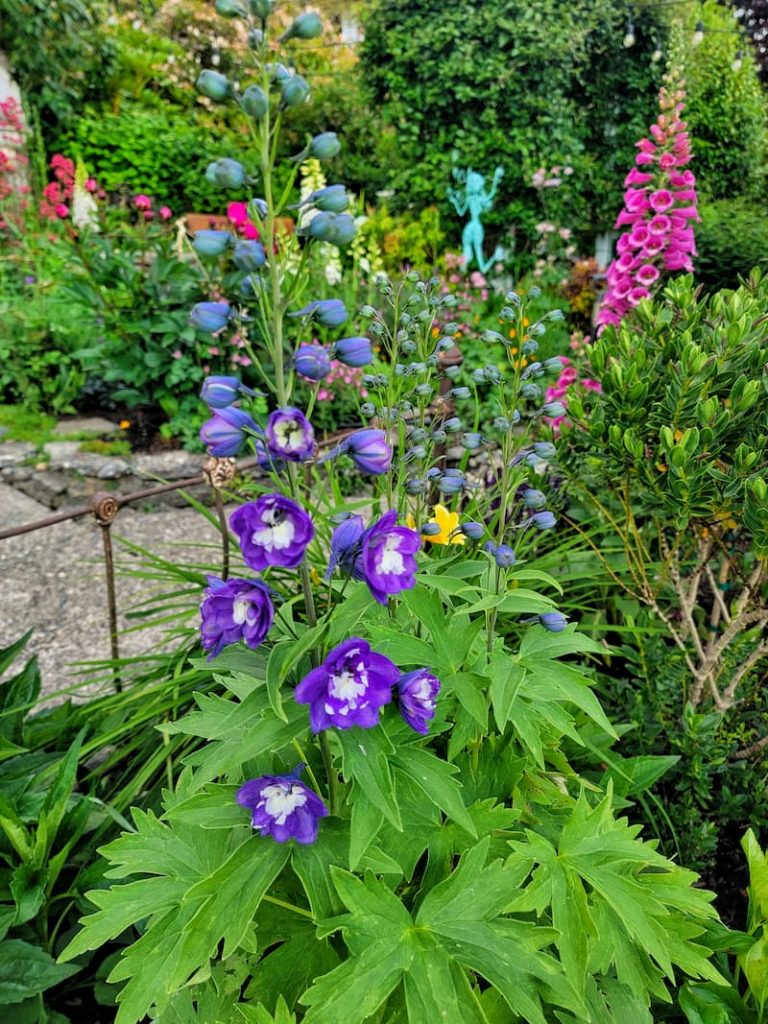
Delphiniums are one of the most dramatic flowers you can grow in the cottage garden. Their tall flower spikes in shades of blue, purple, pink, and white create bold vertical interest in beds and borders. They make gorgeous cut flowers to bring the garden beauty indoors.
Delphinium thrives in cooler climates with well-drained soil, a wonderful fit for the Pacific Northwest. Even one plant can completely change the look of a flower bed. I’ve always loved how delphiniums make a garden feel instantly taller and more established.
23. Love in a Mist (Nigella)
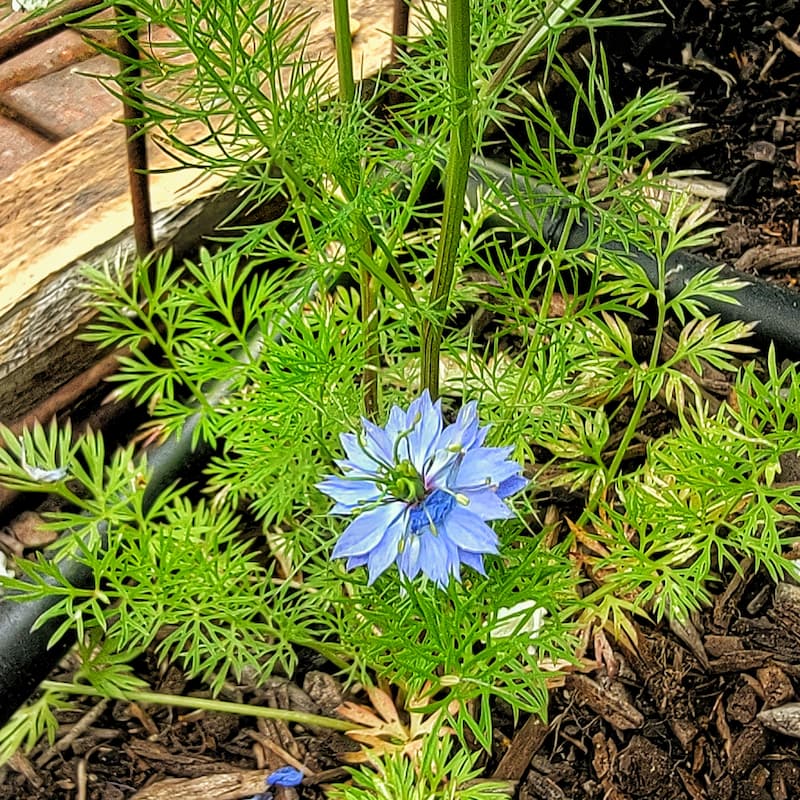
Love in a mist is a little whimsical from the moment it blooms. Its delicate flowers in shades of blue, white, pink, and soft purple are surrounded by lacy, thread-like foliage that gives the whole plant its signature misty look. It blends beautifully with larkspur, cosmos, and sweet peas.
It grows and self-seeds easily, often returning year after year with very little effort. Even after the flowers fade, the seed pods are beautiful in their own right. They’re little garden treasures hidden among the blooms.
Garden Supplies and Tools
Check out my favorite garden supplies and tools for the growing season. Whether you’re looking for potting soil or deer repellent, you’ll find what I use in my own garden.
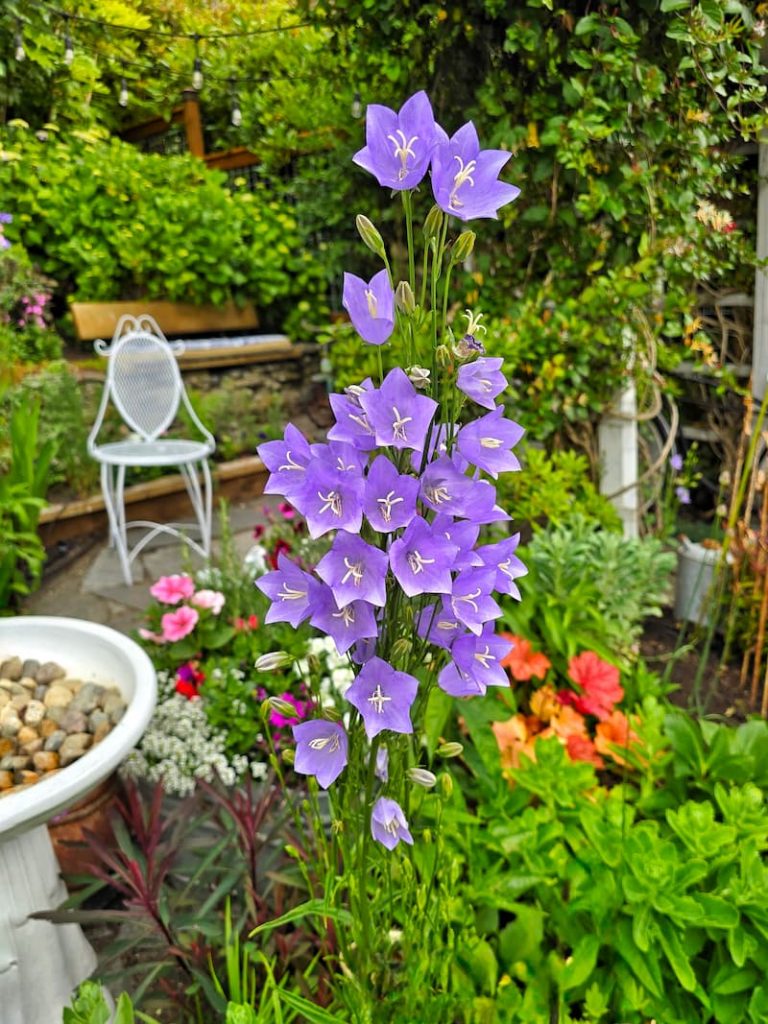
24. Campanula (Bellflower)
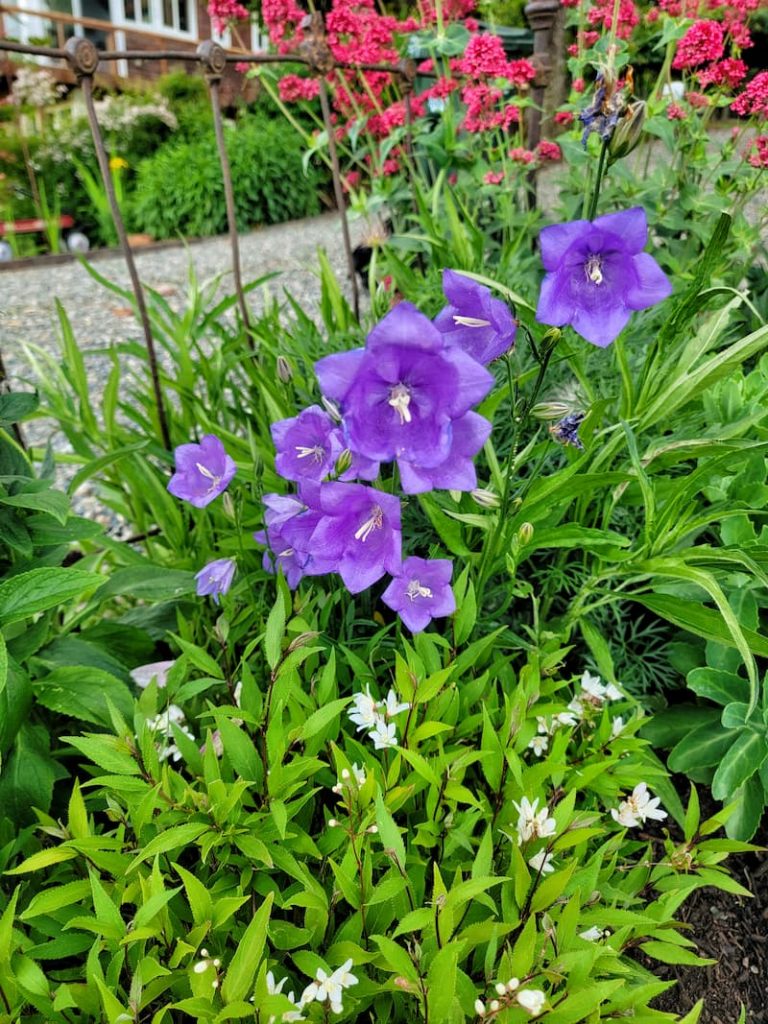
Campanula is a steady beauty. Its bell-shaped blooms in shades of blue, purple, pink, and white bring soft color and a relaxed, romantic feel to beds and borders. Some varieties stay low and create beautiful ground cover, while others grow taller and add height to mixed plantings.
Bees and butterflies love it, and its long flowering season helps keep the garden colorful for months. The kind of beauty you notice more each time you walk by.
25. Lilacs (Syringa)
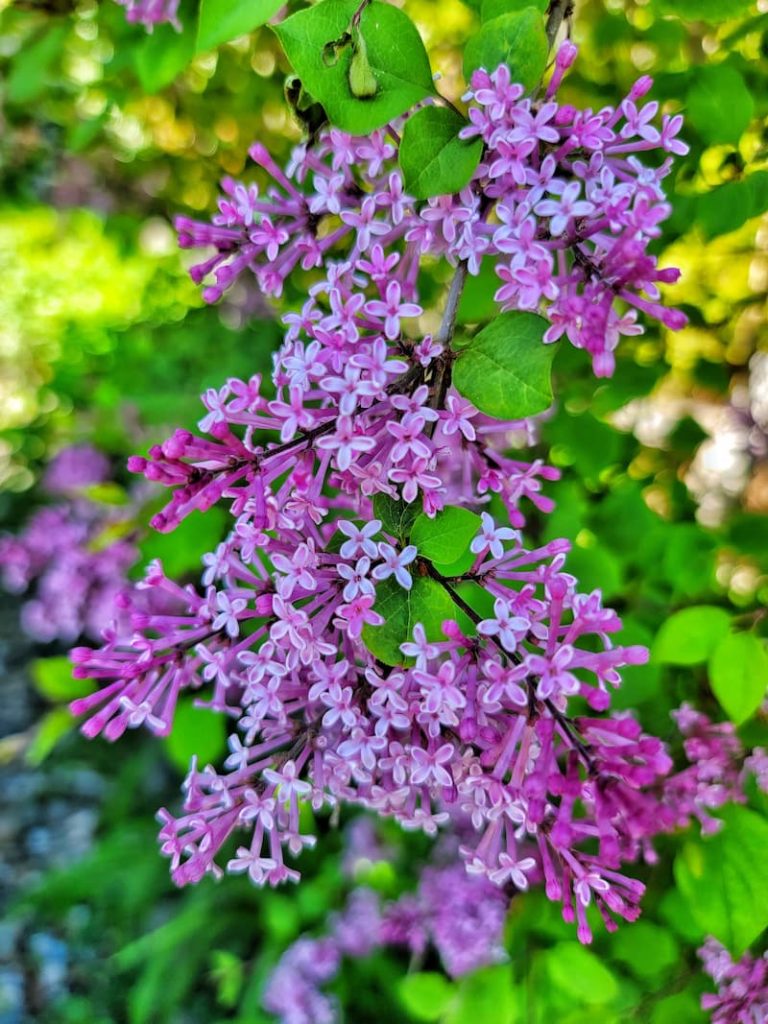
Lilac season is one of my favorite times in the garden. I always end up cutting armfuls and filling vintage galvanized buckets with blooms because the scent is just too good to leave outside.
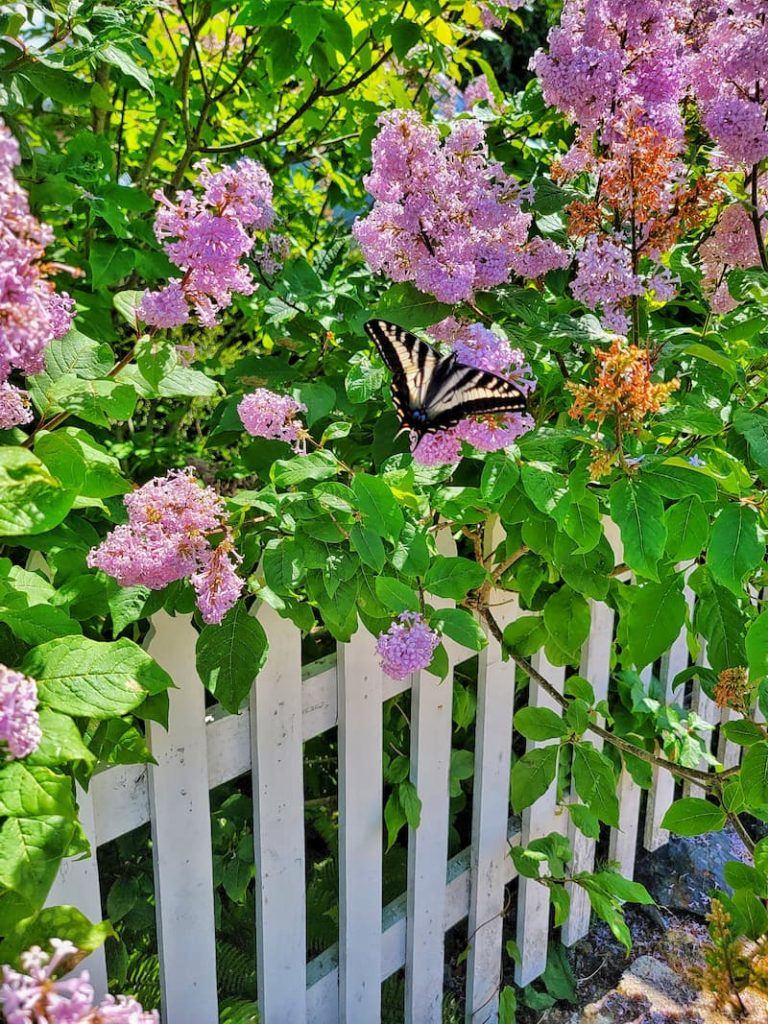
Their large flower clusters and shades of lavender, violet, white, and pink fill the air with one of the most recognizable garden fragrances there is. They add wonderful structure and privacy as anchor shrubs along fences and property lines. Once established, they’re easy to care for and keep getting better.
26. Snapdragons (Antirrhinum)
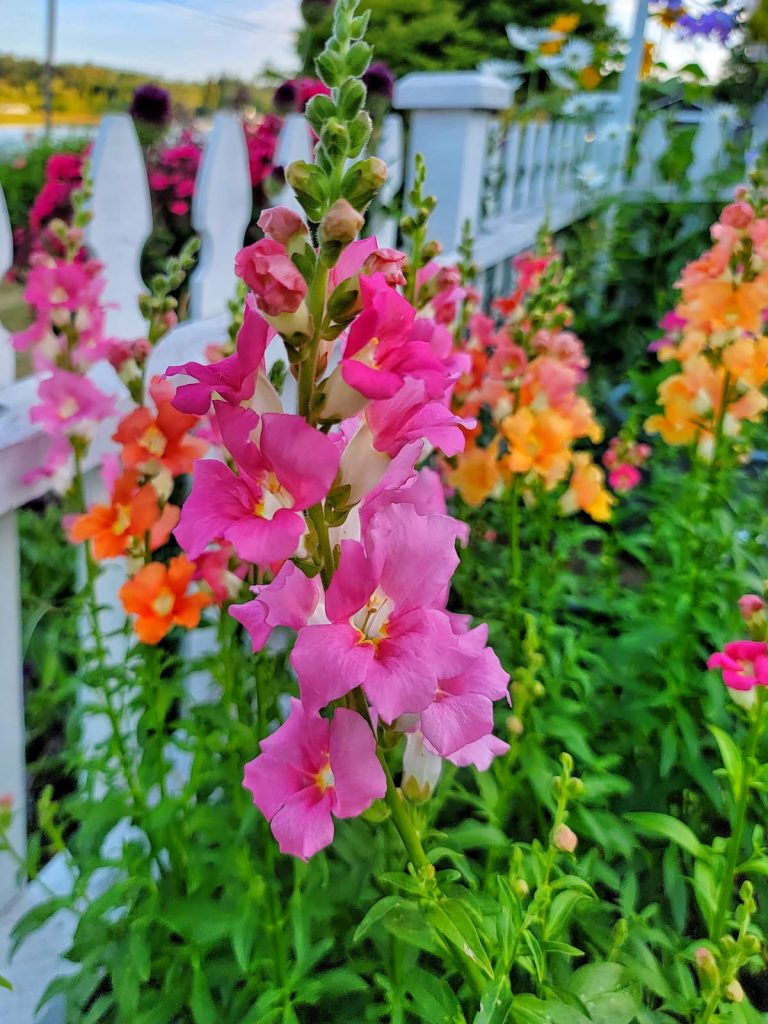
Snapdragons make a garden feel a little more cheerful. There’s something about those playful blooms, in shades of blush pink, creamy white, bright yellow, rich red, and deep burgundy. They never feel too serious, even in the prettiest formal beds.
They’re wonderful cut flowers, and the more you harvest them, the more they keep producing. They thrive in cooler weather, which makes them perfect for extending color in spring and again in early fall when other flowers begin to slow down.
27. Bachelor’s Button (Centaurea cyanus)
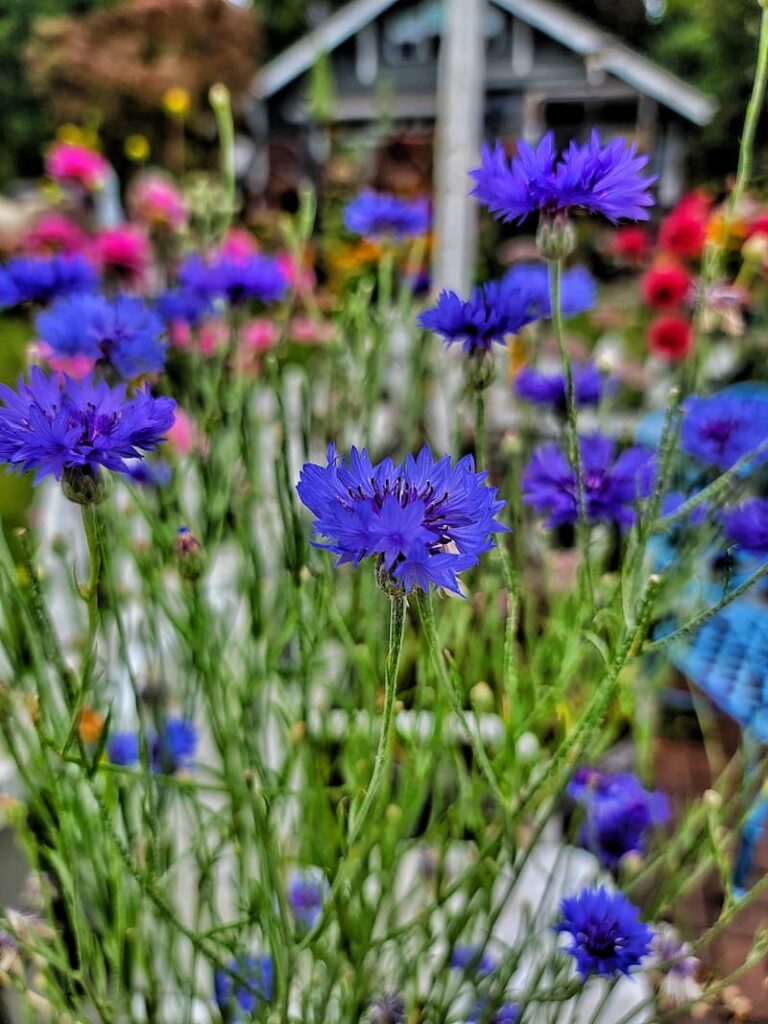
Bachelor’s buttons, also known as cornflowers, add effortless charm with very little fuss. Their bright blooms in classic blue, pink, white, purple, and burgundy bring a soft wildflower feel that fits perfectly into an informal cottage garden.
They’re incredibly easy to grow, handle dry conditions better than most flowers, and often self-seed so they return year after year. They always seem to make a garden feel a little more relaxed, like they belong there, whether you planned for them or not.
28. Sunflowers (Helianthus annuus)
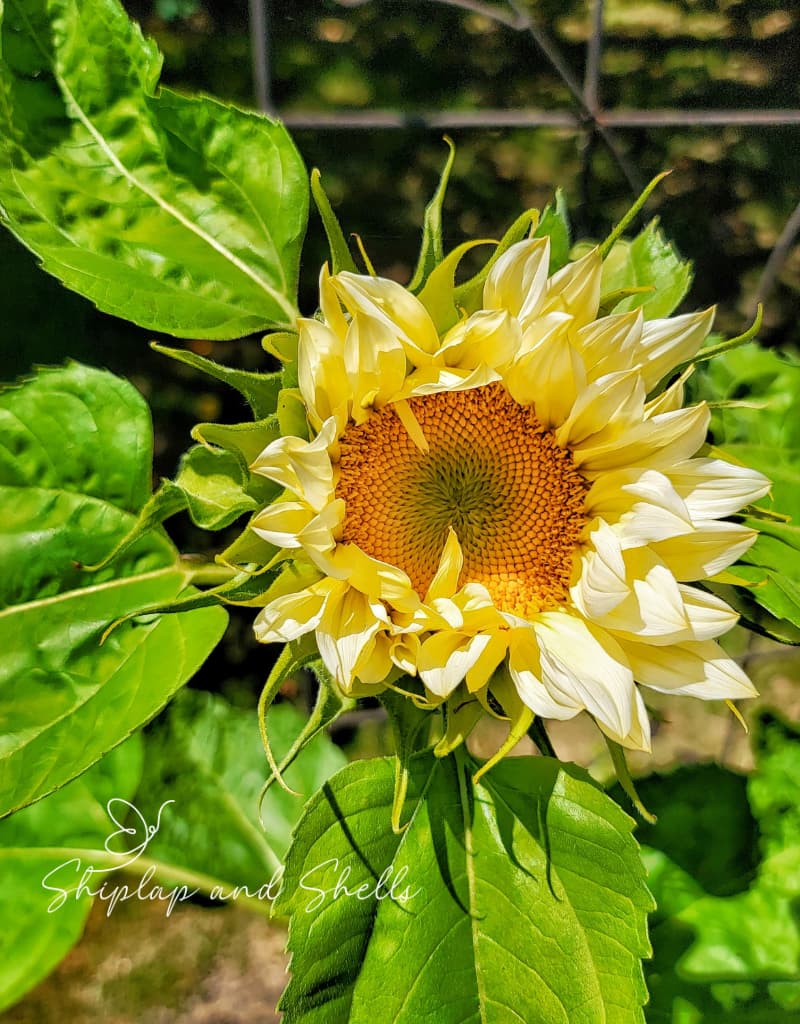
I start sunflowers from seed in the greenhouse every spring because if I direct sow them outside, the birds treat those freshly planted seeds like an all-you-can-eat buffet. Once they’re established in the garden, they’re unstoppable.
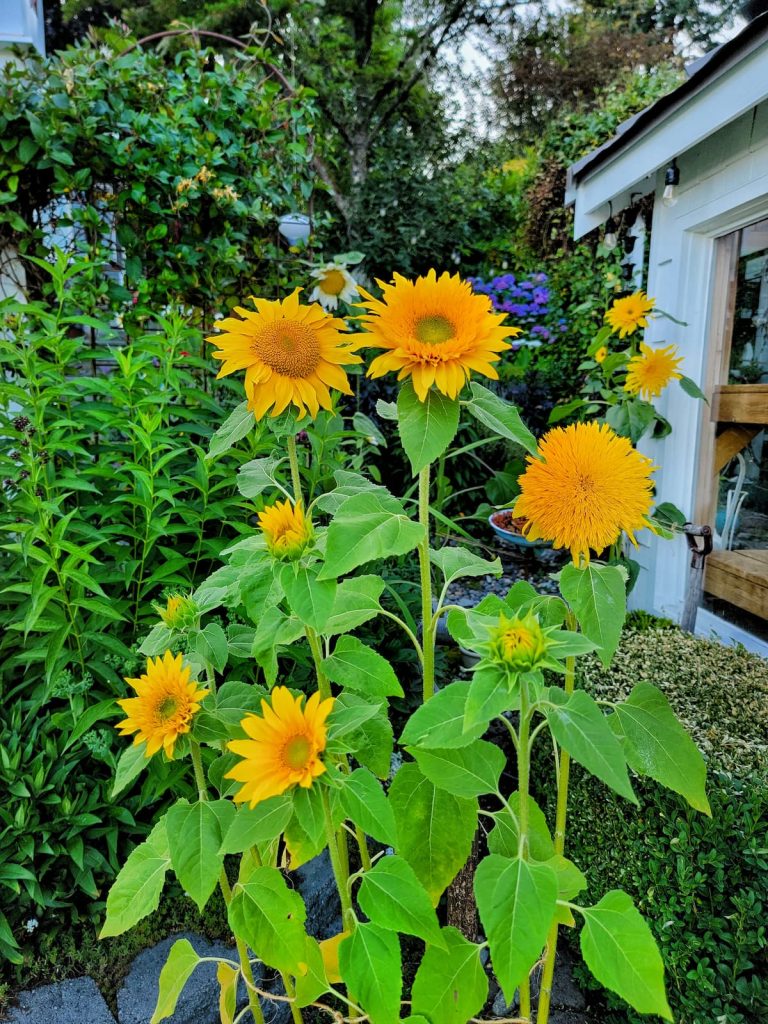
Their height creates beautiful vertical interest behind lower-growing flowers, pollinators love the blooms, and later in the season, the birds return for the seed heads. Sunflowers keep getting long after the petals fade.
29. Gladiolus
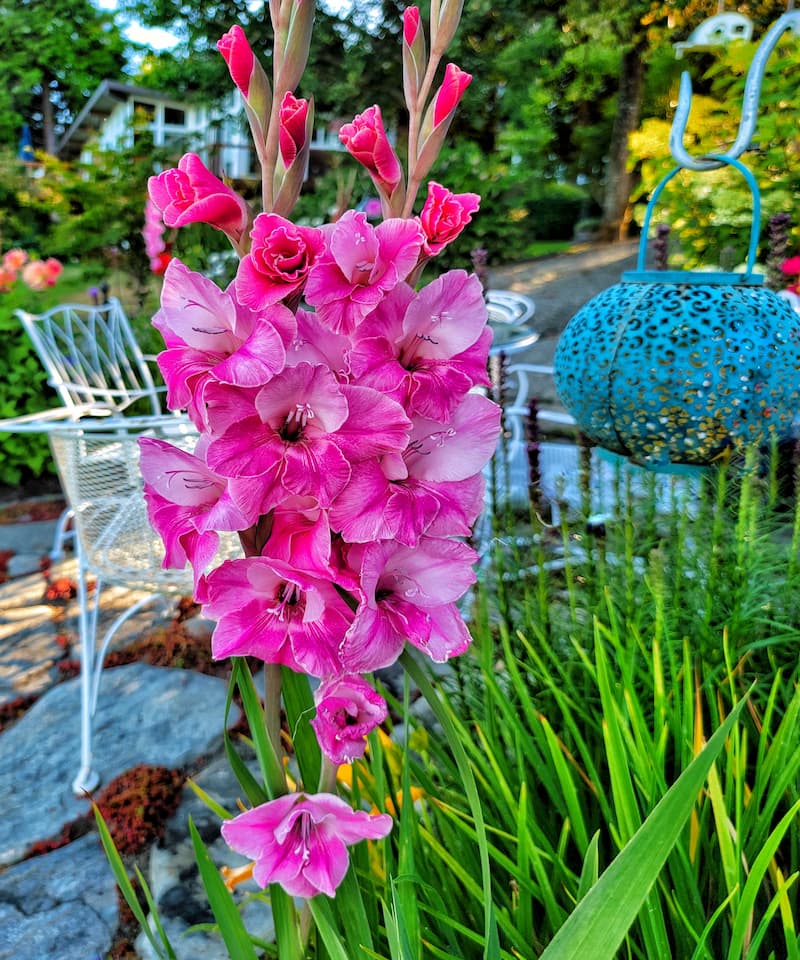
Gladiolus brings bold color and dramatic height to the cottage garden in a way that few other flowers can. Their tall spikes of trumpet-shaped blooms open gradually from the bottom up, providing an extended display of color from mid-summer into early fall.
Their strong, upright stems make them one of the best cut flowers in the garden. A few stems can completely change the feel of a room. Planting the corms in stages is the easiest way to keep continuous blooms coming throughout the season.
30. Daffodils (Narcissus)
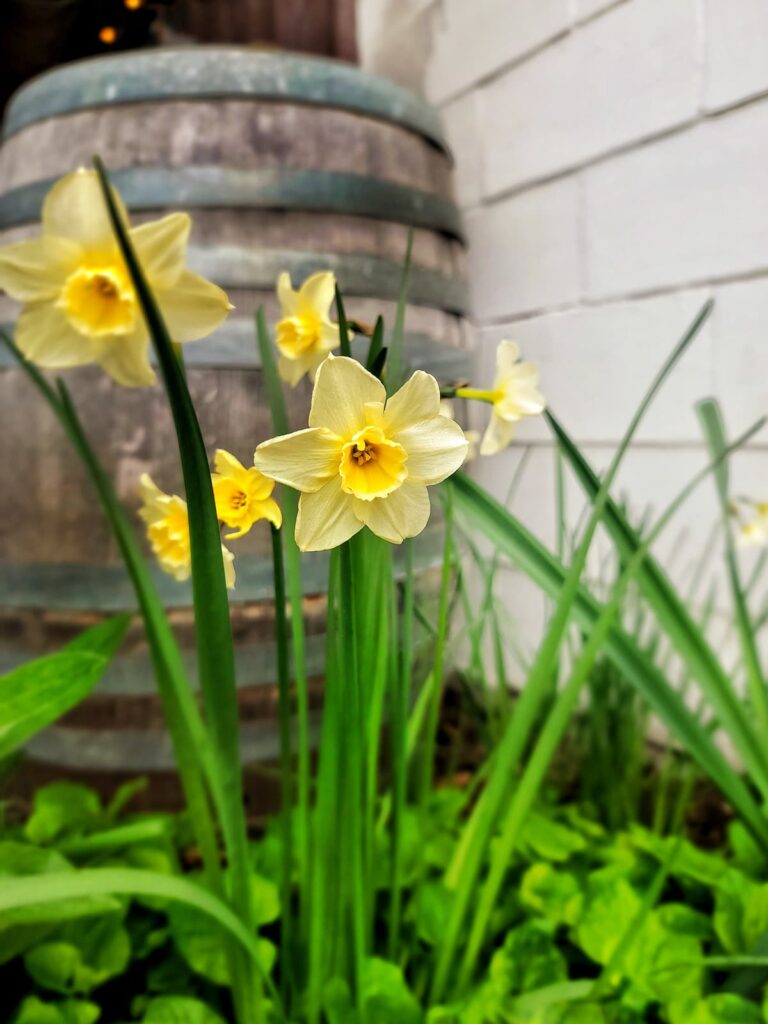
Daffodils bring that first little sigh of relief after winter. The moment they bloom, it finally feels like the garden season is beginning again.
These hardy spring bulbs naturalize beautifully, returning year after year and slowly multiplying over time. They’re deer and pest-resistant, easy to grow, and the sight of those cheerful yellow-and-white blooms in early spring is so gorgeous. Daffodils are a true cottage garden classic.
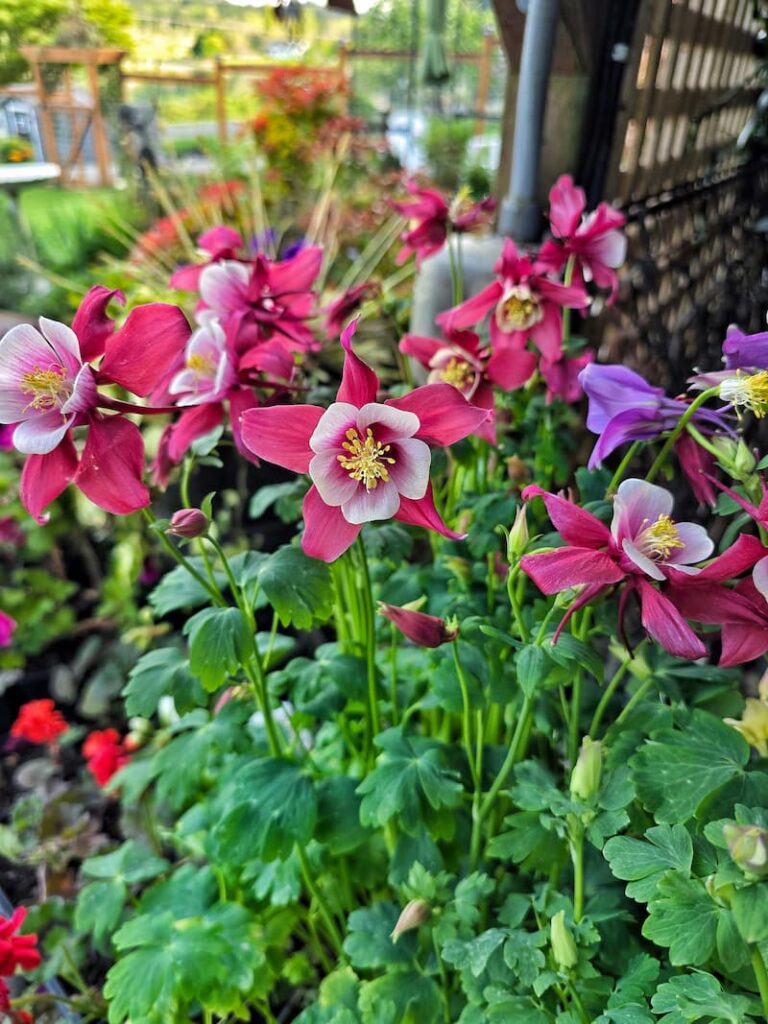
31. Columbine (Aquilegia)
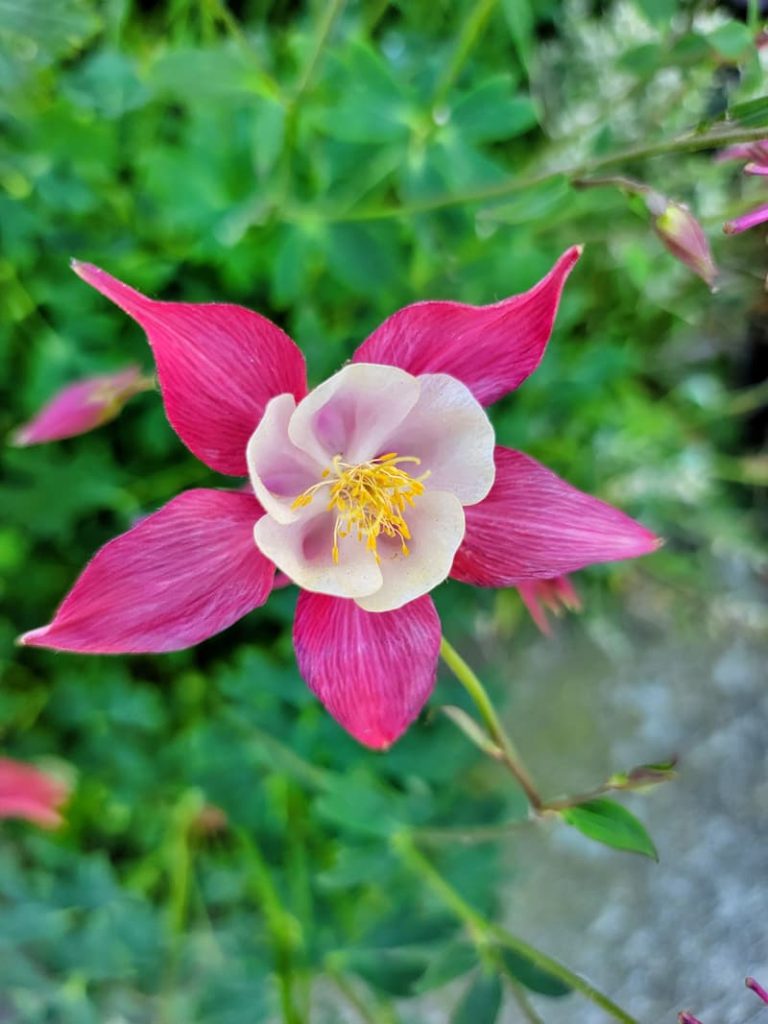
Columbine has a delicate, unexpected quality that I love. Its graceful blooms with uniquely shaped spurred petals bring softness and a touch of whimsy to the garden in spring and early summer. They have a way of popping up where you weren’t expecting them and look completely right.
They thrive in partial shade but also grow well in full sun in cooler climates, and their tendency to self-seed adds to that natural, slightly wild cottage garden look. Hummingbirds and butterflies love them.
32. Tulips
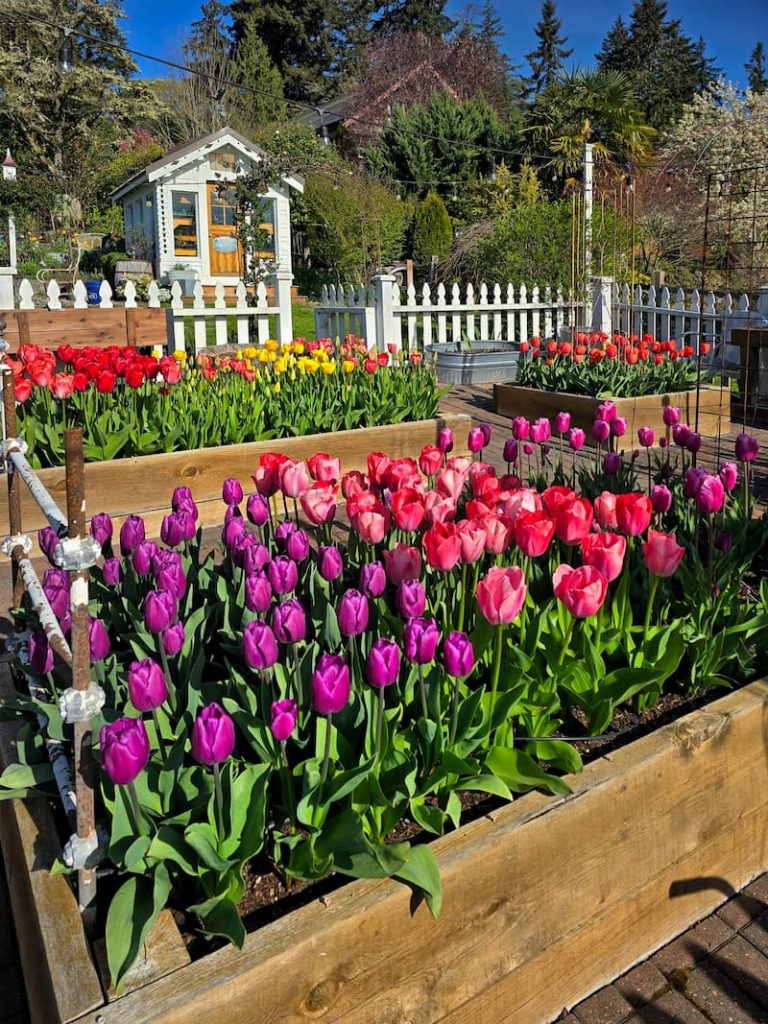
Tulips always feel hopeful. After months of winter, those first bright blooms feel like the garden is finally waking up again.
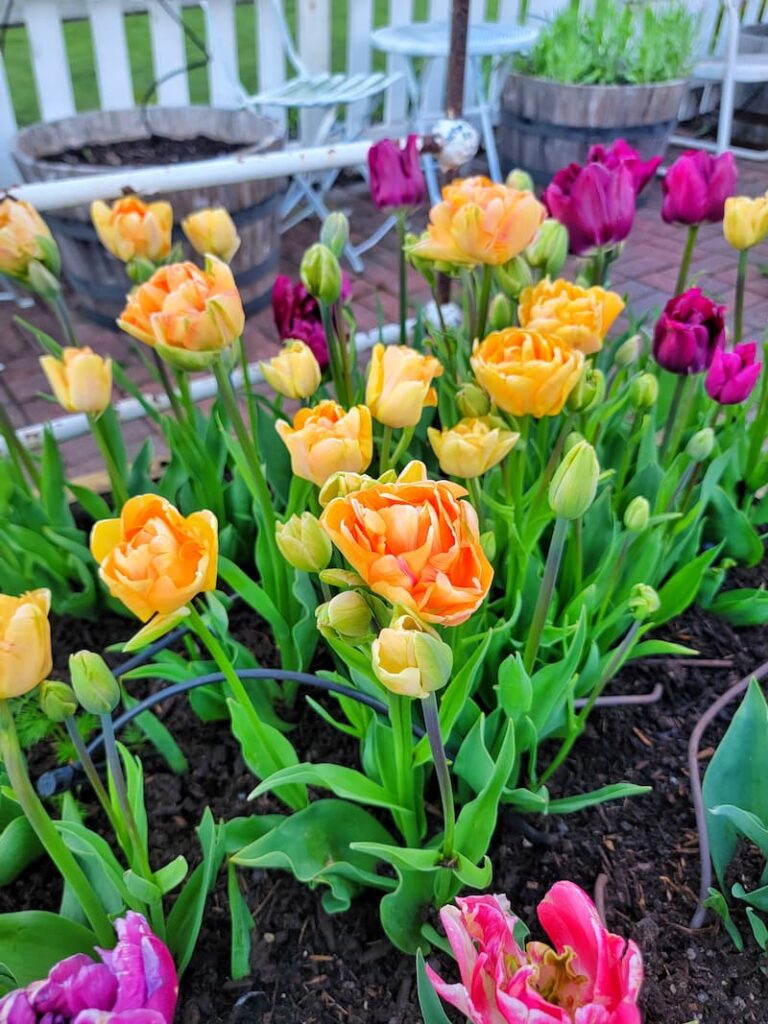
Their elegant cup-shaped blooms come in endless shades: soft pastels, creamy whites, bold reds, bright yellows, and dramatic multi-colored varieties. They’re especially beautiful planted in large groups where their colors can really make an impact.
They pair with daffodils and alliums, and help bridge the garden from early spring into a fuller bloom season ahead.
33. Allium
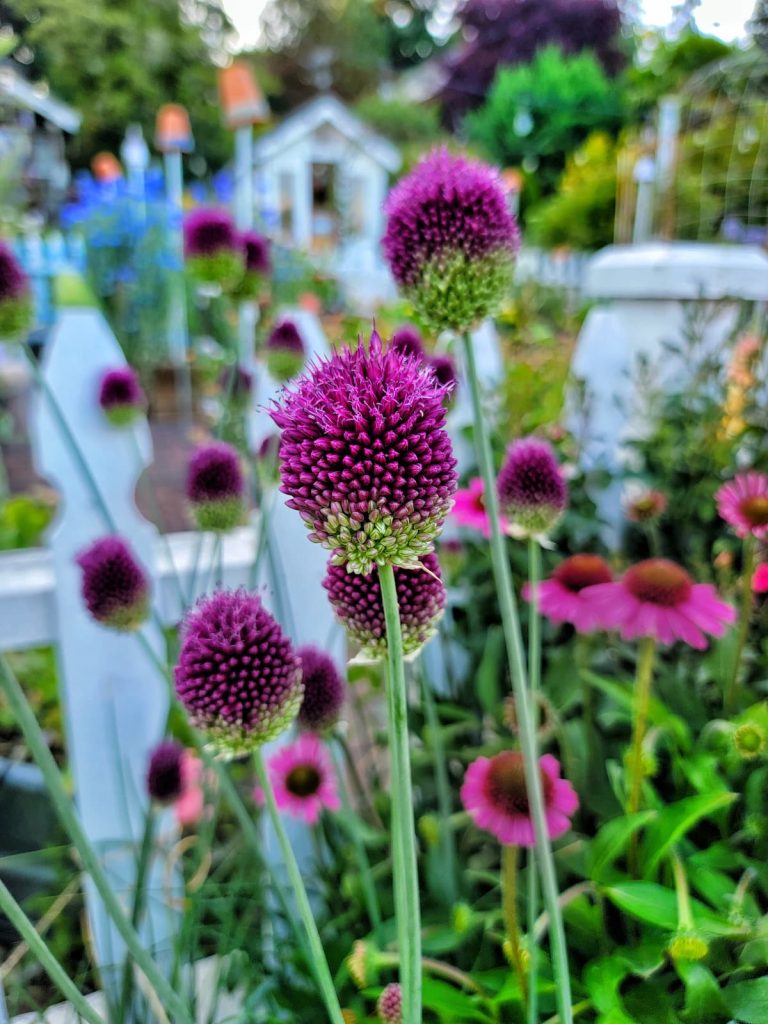
Alliums are like little garden sculptures. Their tall stems topped with perfectly round globe-shaped blooms create a striking contrast against softer flowers, both elegant and playful, which fit perfectly into the relaxed style of a cottage garden.
They bridge the gap between spring bulbs and summer perennials. Wonderfully drought-tolerant, deer tend to leave them alone, and bees absolutely love the blooms. Even after the flowers fade, the dried seed heads continue adding texture and interest to the garden.
34. Hellebore
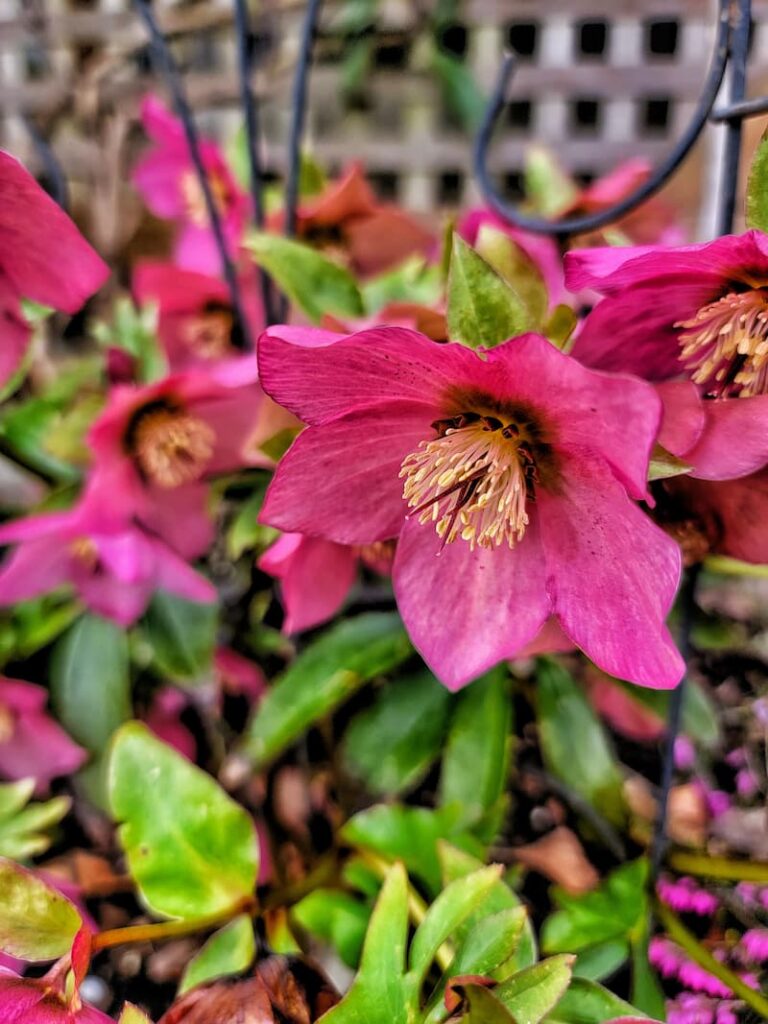
Hellebores show up when the garden still feels like winter. That’s what I love most about them. Those first blooms in late winter or very early spring feel like a little promise that things are coming.
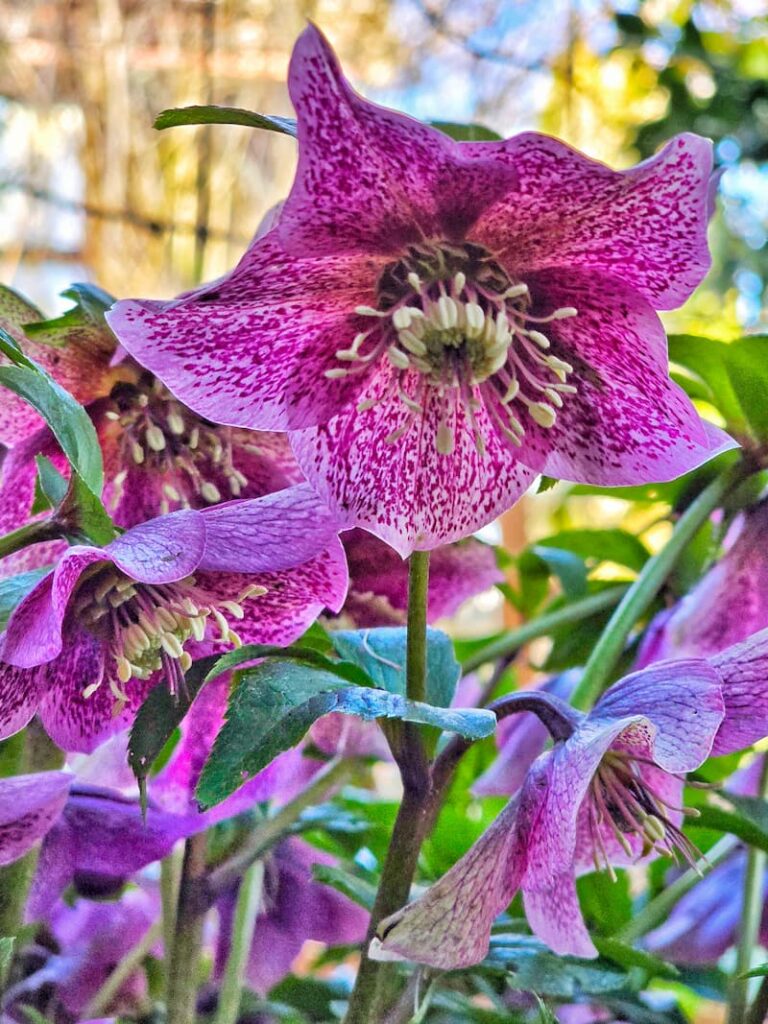
Their flowers in shades of white, blush pink, deep burgundy, soft green, and nearly black have a moody, old-fashioned beauty that feels completely at home in a cottage garden. They thrive in partial shade, they’re resistant to deer and most pests, and their evergreen foliage adds year-round interest even after the blooms have faded.
35. Astilbe
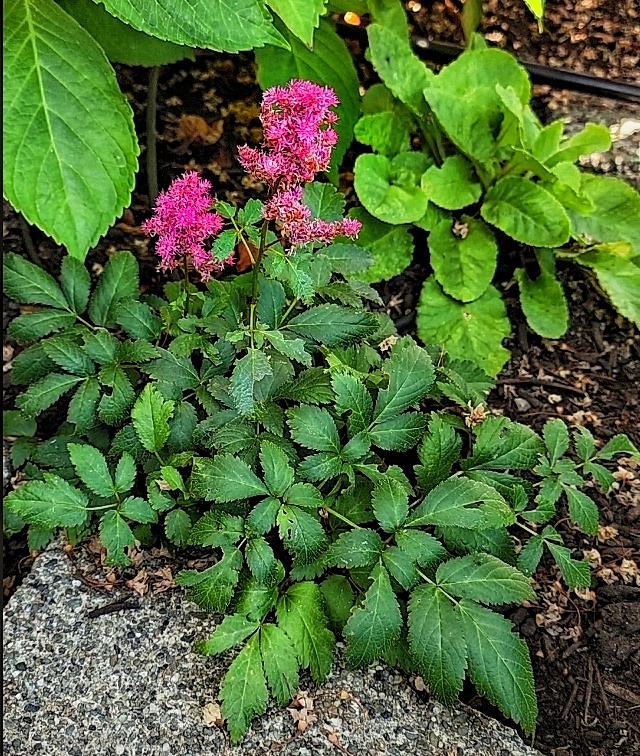
Astilbe is one of the best things you can grow in a shady corner. And in the Pacific Northwest, shady corners are something most of us have plenty of. Its feathery plumes in shades of white, soft pink, deep rose, lavender, and red rise above ferny, deeply cut foliage and bring a lightness to spots where many other flowers won’t perform.
It blooms in early to midsummer and holds its color well even as the plumes dry on the plant, which means you get weeks of interest without lifting a finger. It pairs beautifully with hostas and hellebores and shadier beds, and it’s genuinely one of those plants that makes a difficult spot look intentional.
36. Bleeding Heart (Dicentra)
Bleeding heart is one of the most charming plants in the spring cottage garden. Those arching stems hung with small, heart-shaped flowers in deep rose, pink, or white have a delicate, old-fashioned quality that feels completely at home alongside columbine, hellebores, and ferns.
It’s a natural for partial shade and the kind of plant that stops people mid-step. Here in the Pacific Northwest, it thrives in the cool, moist conditions of early spring and often goes dormant by midsummer, which is easy enough to plan around, filling in with later-blooming companions. Bleeding heart is worth every inch of space it takes up.
37. Geraniums (Pelargonium)
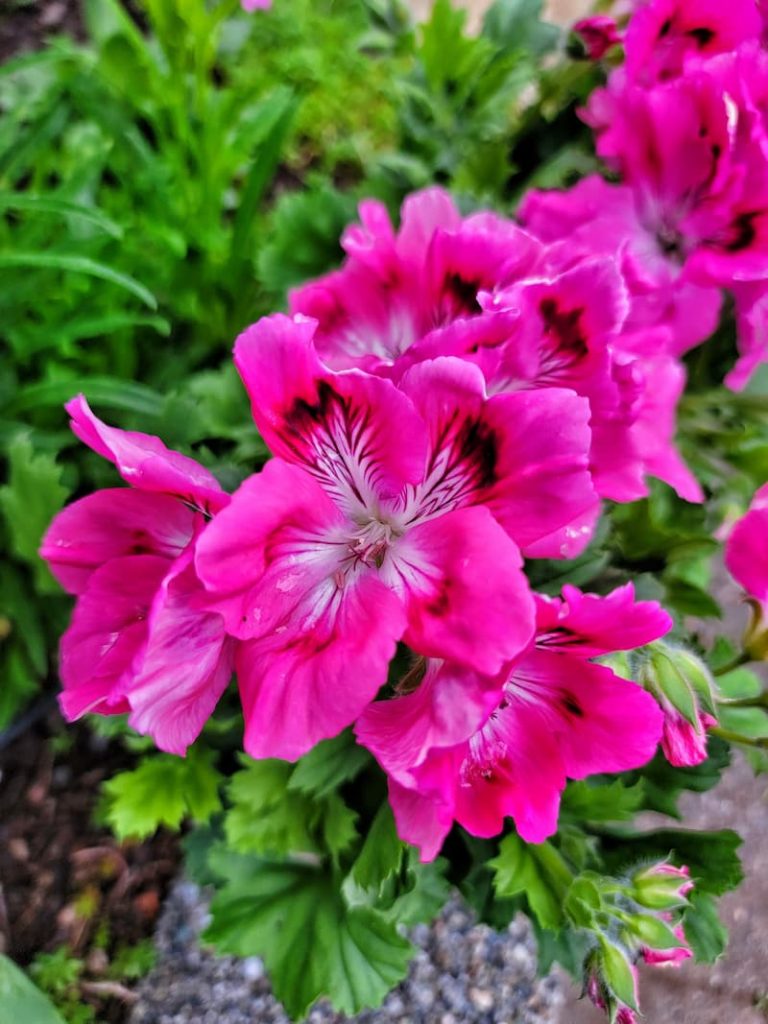
Geraniums are one of the most reliably cheerful plants in the cottage garden, and I’ve been growing them for years. Their bright, rounded blooms and shades of red, pink, coral, salmon, and white work well in containers, boxes, and as edging in garden beds. And they just keep going all season.
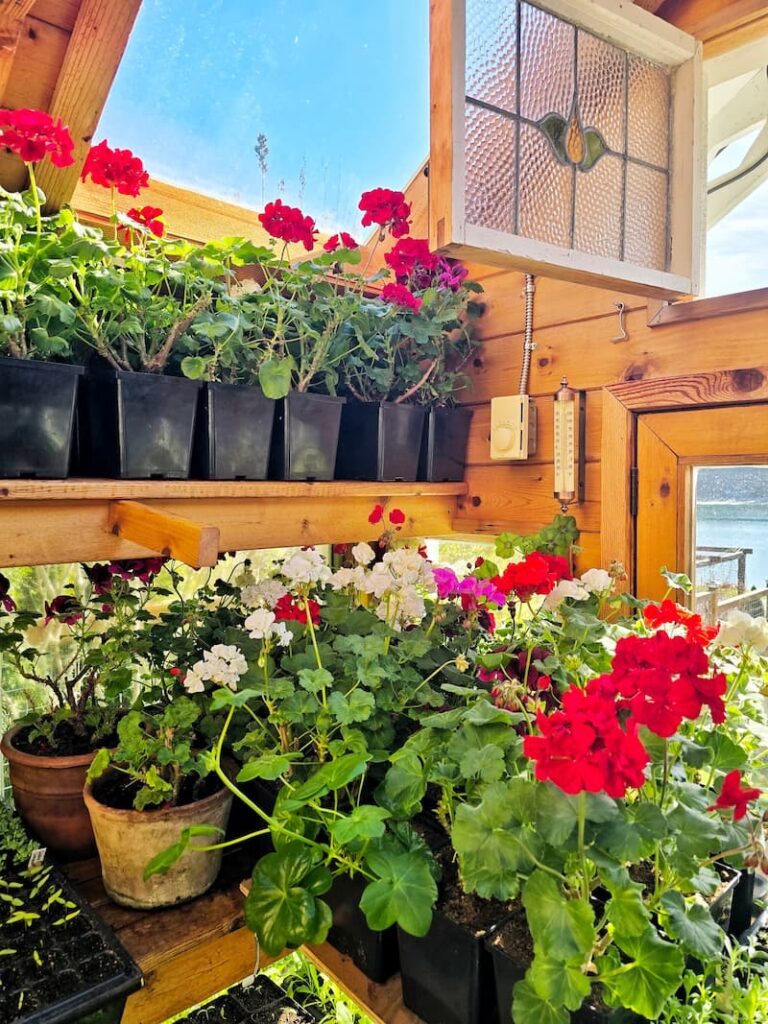
What I love most is how easy they are to carry over from year to year. I bring mine in before the first frost, overwinter them in the greenhouse, and start cuttings each spring. It feels like a little gardening ritual at this point, and the cuttings root so reliably that I always end up with more than I need.
38. Salvia
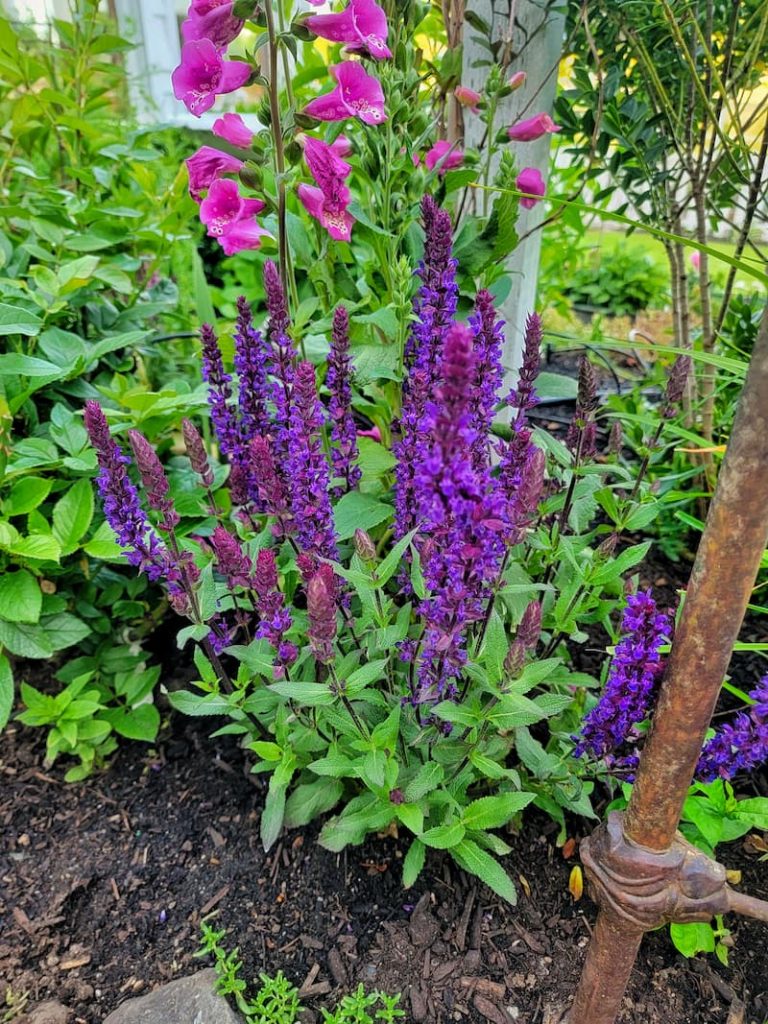
Salvia never lets you down in the cottage garden. Its tall spikes of small tubular flowers in blues, purples, soft pinks, and deep reds bloom for an incredibly long season, often from early summer well into fall. And pollinators, especially bumblebees and hummingbirds, absolutely can’t leave it alone.
There are so many varieties that it’s easy to find one for almost any spot in the garden: taller types for the back of the border, more compact varieties for the front. In our Zone 8b climate, many salvias are reliably perennial, which makes them an even better value. They’re low fuss, have a long growing season, and are beautiful from almost any angle.
39. Veronica (Speedwell)
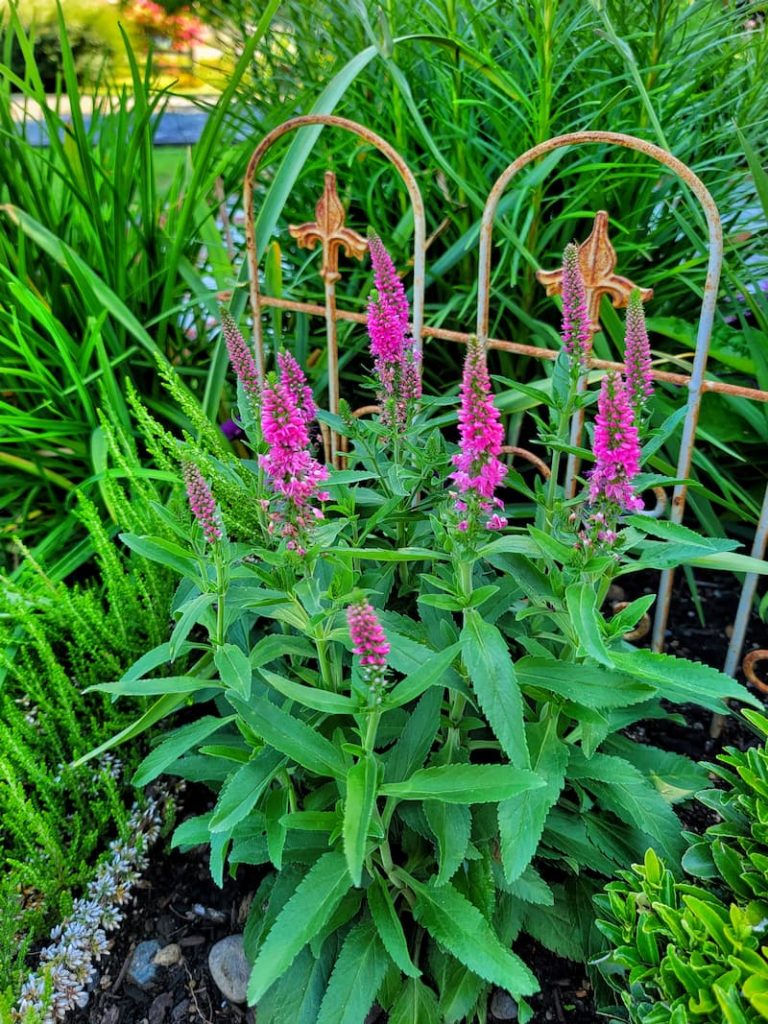
Veronica is one of those plants that might not stop you in your tracks the way a dalia or a peony does, but take it out of the garden and you’d notice immediately. It’s tall, slender spikes of tiny blue, purple, pink, or white flowers add vertical rhythm to the border in a way that feels softer and more relaxed than delphiniums or foxgloves.
It blooms for a long stretch in early or midsummer, is incredibly easy to grow, and bees work it constantly. Veronica mixes beautifully with roses, phlox, and coneflowers, and it has that quality of making a mixed planting look more considered without an extra effort on your part.
Where to Place Cottage Garden Plants for the Most Impact
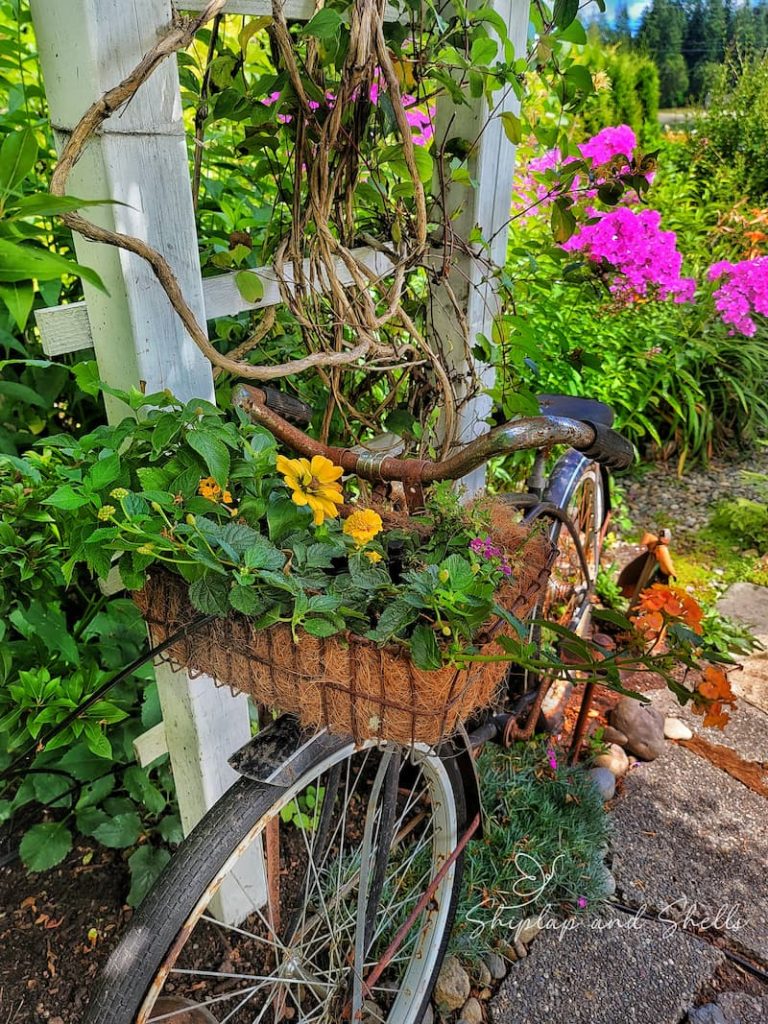
A beautiful cottage garden isn’t just about choosing pretty flowers. It’s about creating layers, texture, and interest by putting the right plants in the right places.
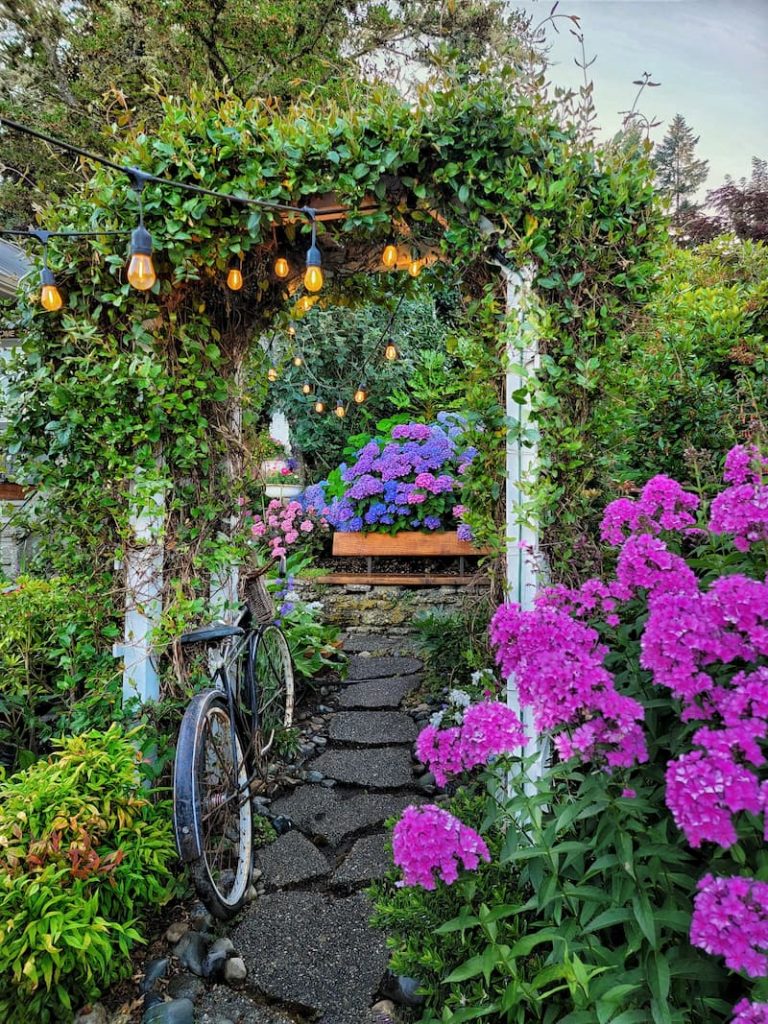
For borders: Look for plants with long bloom times, varied heights, and soft layers of color. Lavender, roses, phlox, coneflowers, and hydrangeas work beautifully together. Taller plants toward the back, lower-growing flowers spilling toward the front, and a few things blooming at different times, so something is always going on.
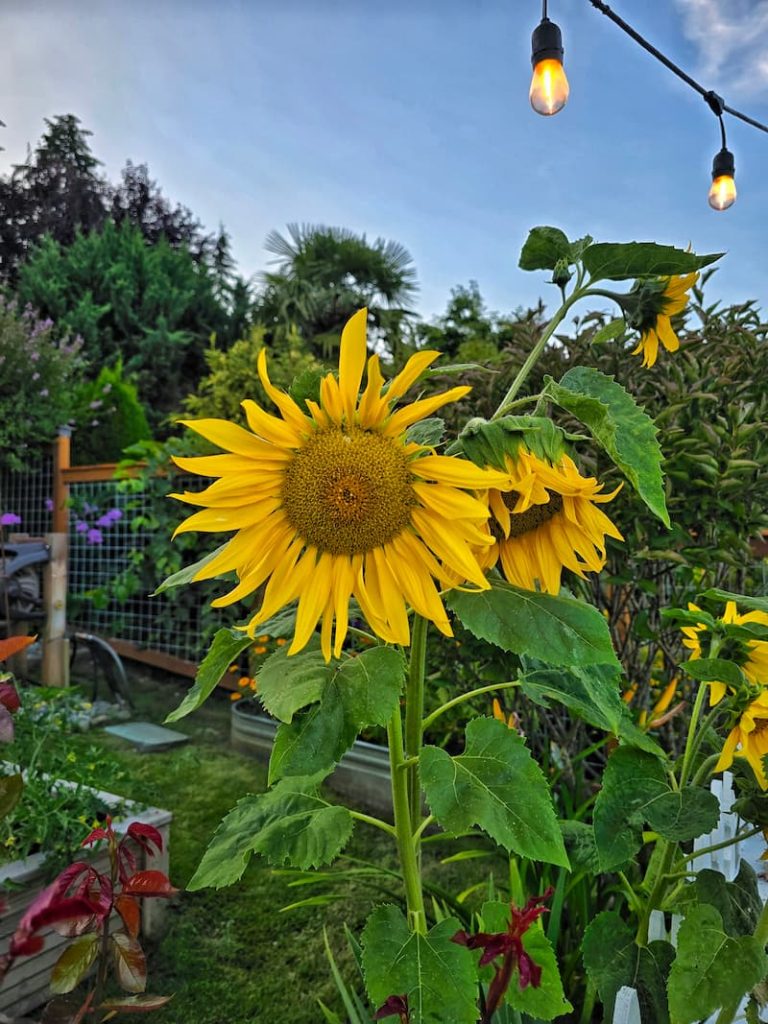
For height and structure: Foxgloves, delphiniums, hollyhocks, sunflowers, and gladiolus create that layered, overflowing look along fences, back borders, and anywhere you need vertical interest.
For shady spots: Don’t see shade as a problem. Some of the most beautiful cottage garden plants prefer it. Hellebores, columbine, astilbe, bleeding heart, and ferns bring color, texture, and a quieter kind of beauty beneath trees and along north-facing walls.
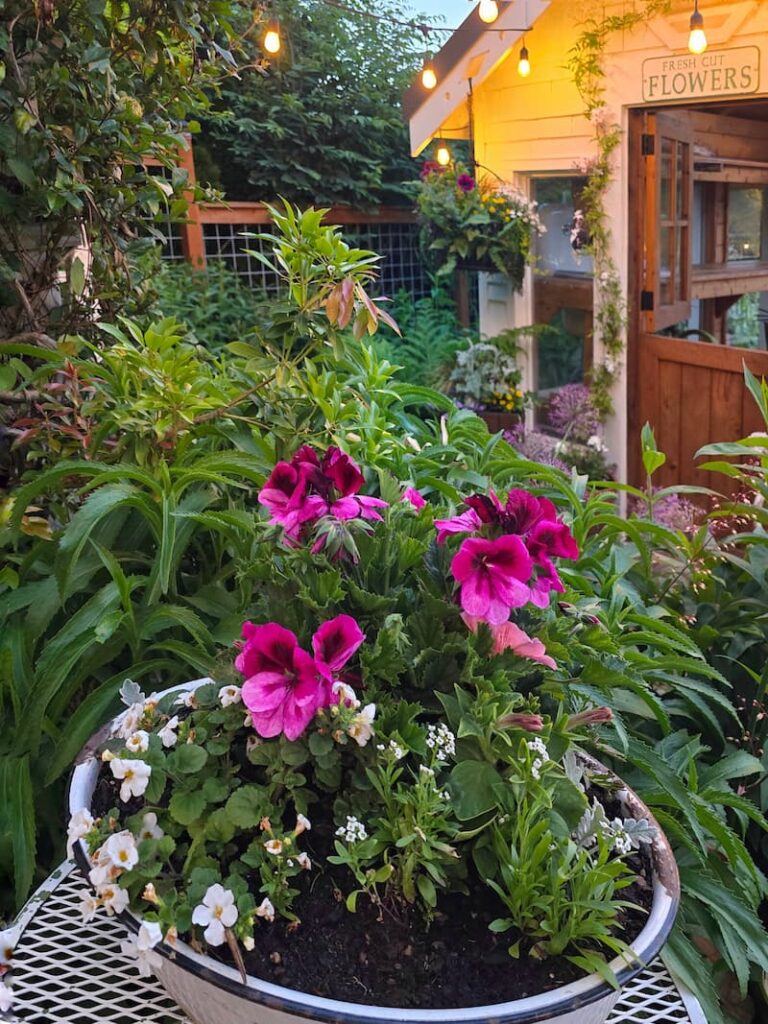
For containers: Sweet alyssum, lavender, pansies, geraniums, and herbs bring cottage-garden charm to porches, patios, and decks. Mix different heights and textures for that lush, collected look in even a small pot.
As anchor plants: Hydrangeas, peonies, lilacs, and rose bushes give the garden its backbone: strong shape, generous blooms, and enough presence to support everything else planted around them.
Common Questions About Cottage Garden Plants
What Are the Best Cottage Garden Plants for the Pacific Northwest?
Most cottage garden flowers thrive in the Pacific Northwest because of our mild, maritime climate and cooler summers. Roses, foxgloves, delphiniums, sweet peas, lavender, and hydrangeas all do particularly well here.
Tender annuals like zinnias, cosmos, and sunflowers benefit from being started from seed indoors before the last frost, then hardened off before planting out.
What Are the Best Low-Maintenance Cottage Garden Plants?
Black-eyed Susans, daylilies, coneflowers, lavender, and daffodils are excellent choices if you want reliable beauty without a lot of fuss. Once established, they bloom generously and ask very little in return. Peonies also belong on this list. They’re practically indestructible once they’ve settled in.
What Cottage Garden Plants Work Best in Small Spaces?
You don’t need a large yard to create a charming cottage garden. Sweet peas, clematis, lavender, pansies, and container plants like geraniums and sweet alyssum add beautiful color and texture without taking over. Vertical growers like clematis and sweet peas are especially useful when ground space is limited. They climb rather than spread.
What Cottage Garden Plants Bloom the Longest?
Zinnias, cosmos, sweet alyssum, coneflowers, and black-eyed Susans tend to have the longest bloom seasons. Zinnias and cosmos bloom continuously from midsummer until frost, especially when you keep cutting them. Phlox and pansies also have impressively long bloom windows, depending on the season.
Are Cottage Garden Plants Good for Pollinators?
Cottage gardens are some of the best pollinator habitats you can create. Lavender, coneflowers, black-Eyed Susans, foxgloves, cosmos, and zinnias are especially loved by bees and butterflies. Alliums and daylilies are also reliable pollinator magnets, and sunflowers feed birds as well as pollinators once the seeds mature.
What Are the Best Cottage Garden Plants for Shade?
Hellebores, astilbe, bleeding heart, columbine, and campanula are all beautiful choices for shadier spots. Hydrangeas also do well in partial shade and bring real presence to spots that don’t get full sun. In the Pacific Northwest, most of us are working with more shade than we’d like, so it’s worth getting comfortable with these plants. They’re genuinely beautiful, not just second choices.
Final Thoughts
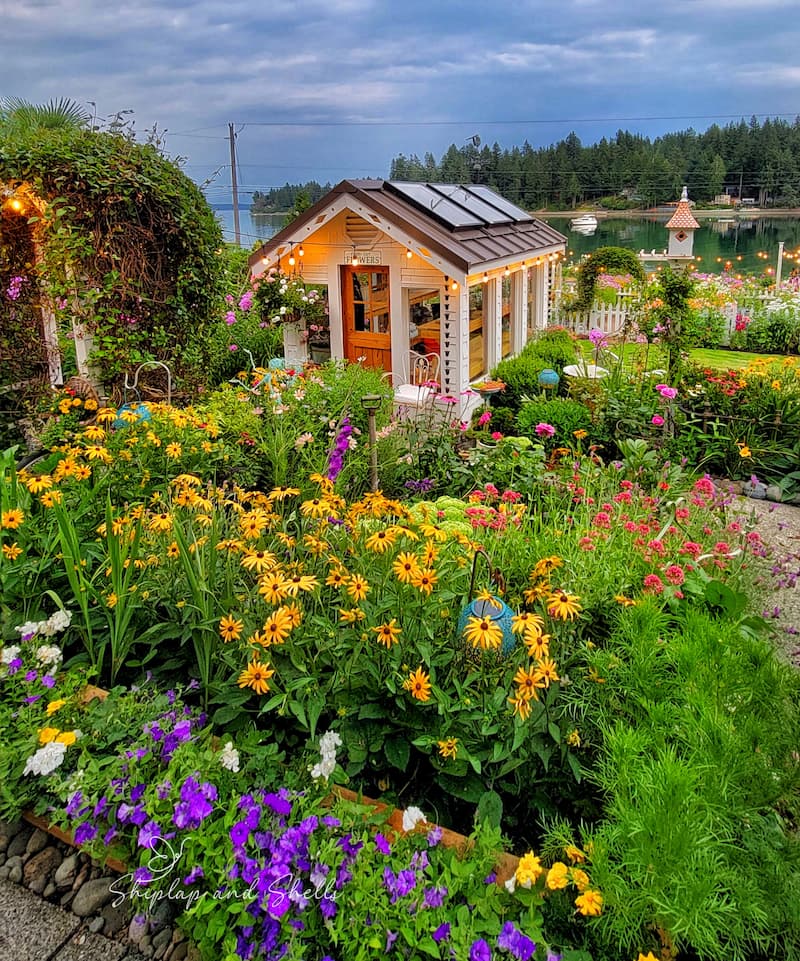
The best cottage gardens are the ones that feel personal, not perfect: a mix of old favorites and new discoveries, plants that self-seed in unexpected places, and a few you’ve watched come up from seed in the greenhouse and finally bloom in the garden. That’s what makes your space feel truly yours.
Whether you’re starting from scratch or slowly adding to what you already have, a cottage garden grows with you. It changes with the seasons, fills in over time, and becomes part of your story.
I hope this list gives you a starting point, or maybe just a few new plants to try this season.
Until next time,
Happy Gardening!

I’m a self-taught hobby gardener. Everything I share on my blog is my opinion and what has worked for me.
MORE POSTS
For You To Enjoy
Follow Me for More Inspiration


So beautiful Kim! Thanks for the inspiration!
I too love your home and garden and shed. Question or advice, I currently have hard rock dirt in my flower beds (new old home), previous owners left me a bit of mess. Can’t remove all dirt but what can I do? My lavender & calla Lillie’s grow well but want other flowers.
Appreciate any feedback. I’m in Snohomish so also deal with sugar ants! Lol
Thank you
Your home is so beautiful you are a very talented person. I really enjoy and look forward to your articles on Sundays.
Hi Amy!
Thank you for the most wonderful compliment. I’m so happy to have you following along. Hope you’re having a great week!
Kim