Must-Have Blooms: Favorite Flowers to Grow in Your Early Summer Garden
Early summer is the payoff. All those seeds started under grow lights in February, all the hardening off and transplanting in April, and by late June, it’s finally right in front of you. The garden is alive.
I grow both a cottage-style perennial garden and a cut flower garden here on the shores of Puget Sound, and the two couldn’t look more different in early summer.
The perennials are hitting their stride with coneflowers, hydrangeas, lilies, and lavender, while the cut flower beds are still filling in: zinnias and snapdragons are getting started, sweet peas are climbing the trellis, and strawflowers are beginning to open. By August, it’ll be peak abundance. But right now, in late June or early July? It’s one of my favorite stages.
Here’s a look at what’s blooming and growing, with notes on what I’ve learned, and what I’d do differently.
As an Amazon affiliate, I earn a commission from qualifying purchases at no additional cost to you. My blog also features other affiliate links for your convenience. Click here to read my privacy policy.
The Early Summer Cottage Garden Perennials
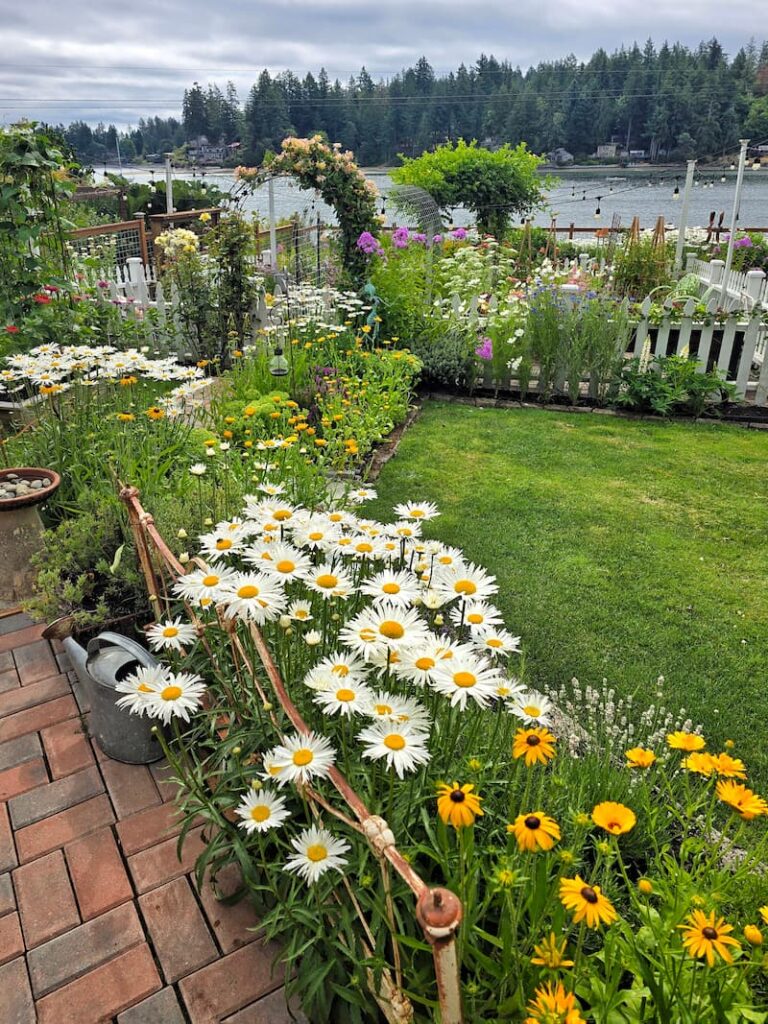
One thing I love about a cottage-style garden is how the view changes month to month. The flowers blooming in late June look completely different from what’s coming in August: black-eyed Susans, sedum ‘Autumn Joy’, and asters haven’t even thought about opening yet.
Why a Diverse Mix of Flowers Matters
I’ve learned this the hard way… a monoculture is fragile. A diverse garden is more resilient, more interesting, and genuinely more useful.
Different bloom times mean continuous color from spring through fall. Different flower shapes attract a wider range of pollinators, bees, butterflies, and hummingbirds, which does wonders for everything growing nearby, including the tomatoes and zucchini in my raised beds. And different root structures improve soil health over time, adding organic matter and breaking up compaction in ways you don’t notice until you start digging.
A Quick note about my garden
Most of the flowers I share here are grown from seed in our greenhouse and planted in raised beds and containers throughout our cottage garden.
Coneflower (Echinacea)
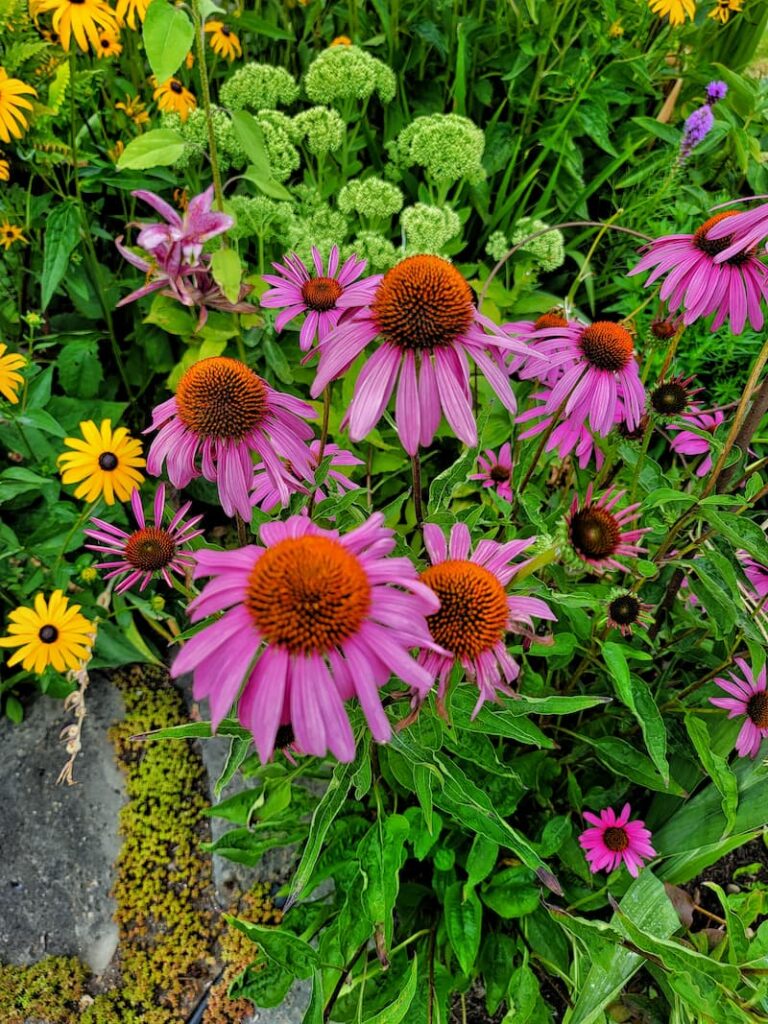
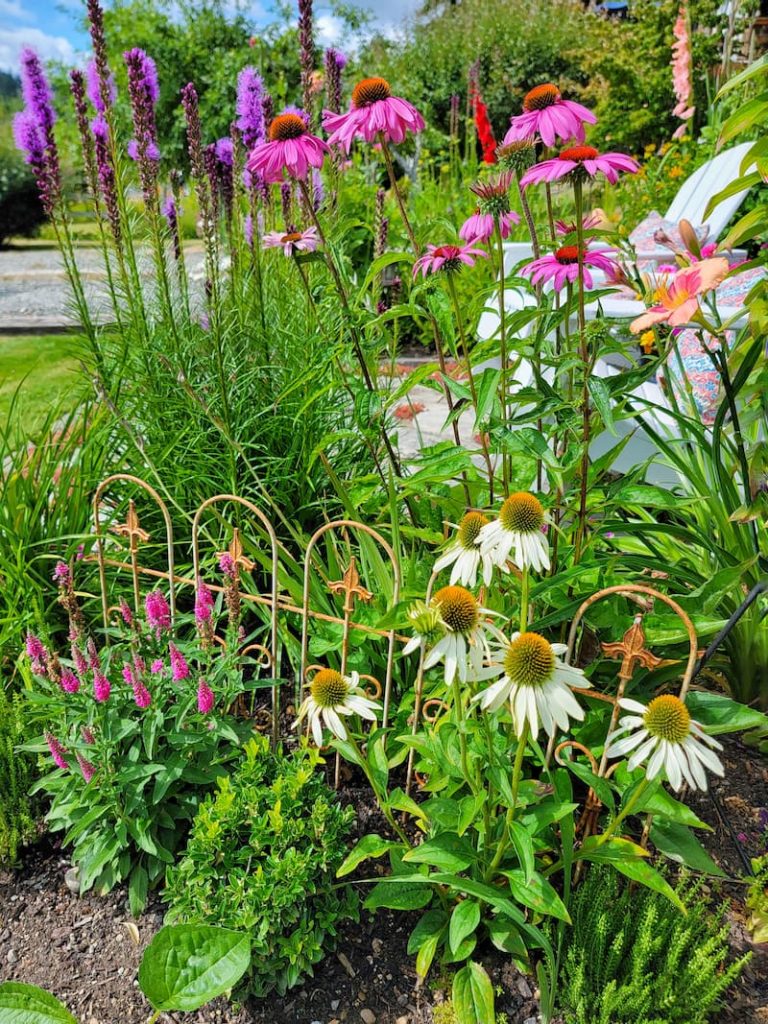
Coneflowers are one of my absolute favorites, and not just because they’re beautiful. They’re tough. They handle drought, they thrive in all kinds of soil, and they bloom from early summer straight through fall, which is longer than almost any other perennial I grow.
The daisy-like flowers with their distinctive raised centers are magnets for bees and butterflies all season long. Come winter, I leave the seed heads up. The birds appreciate them.
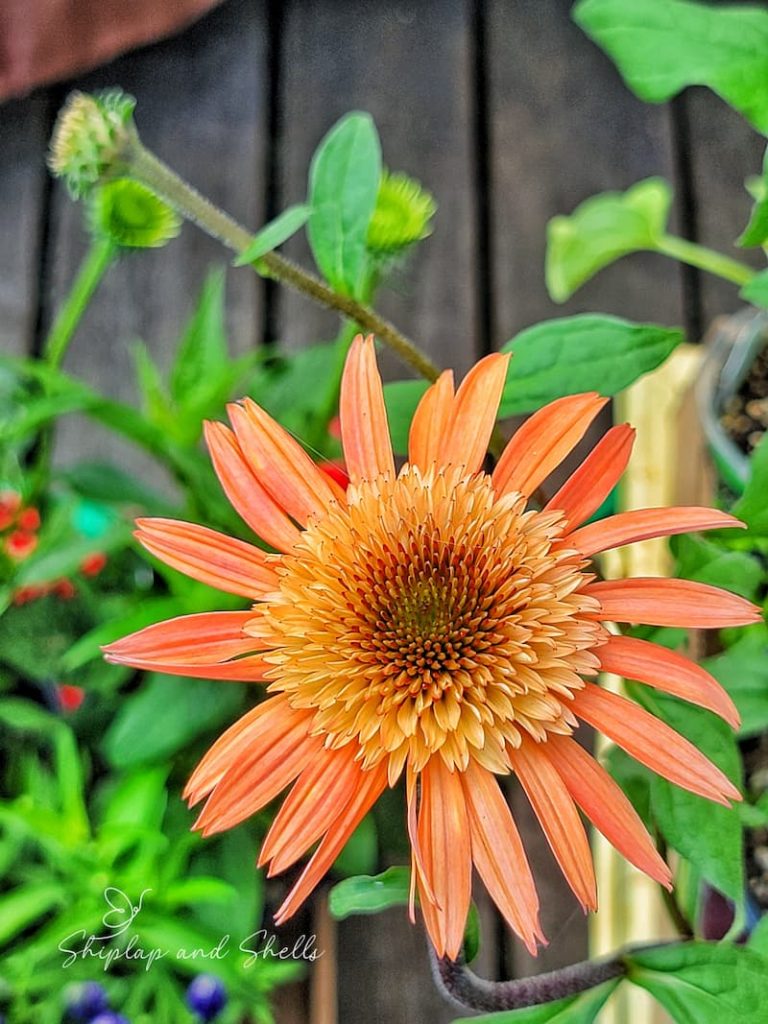
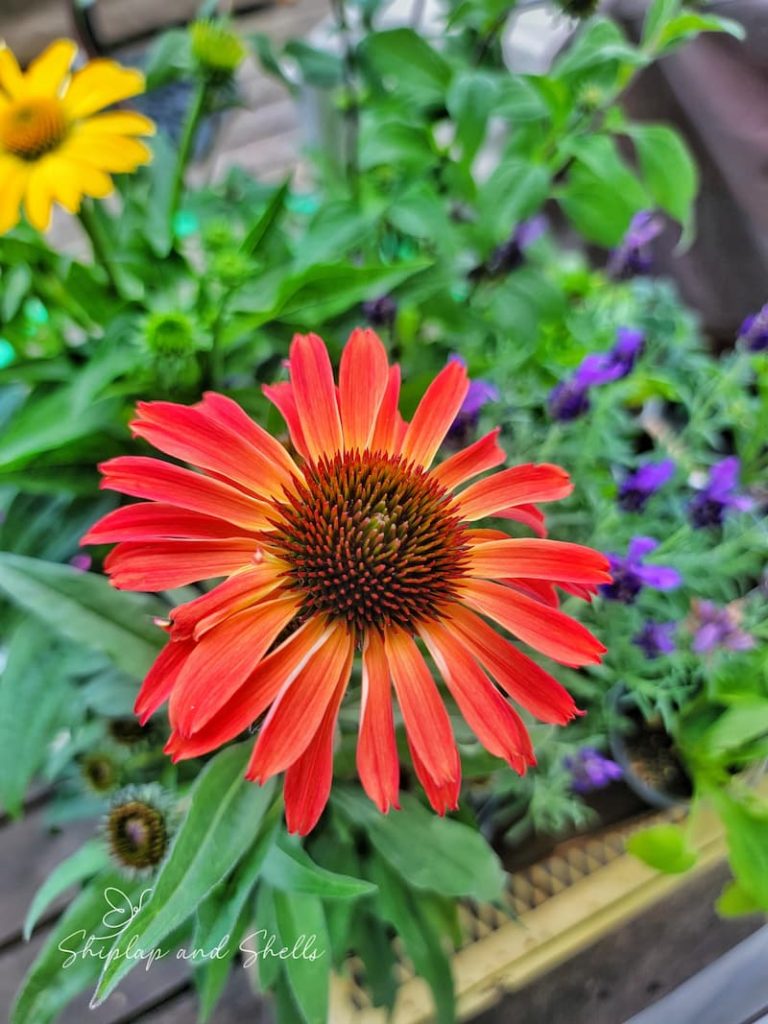
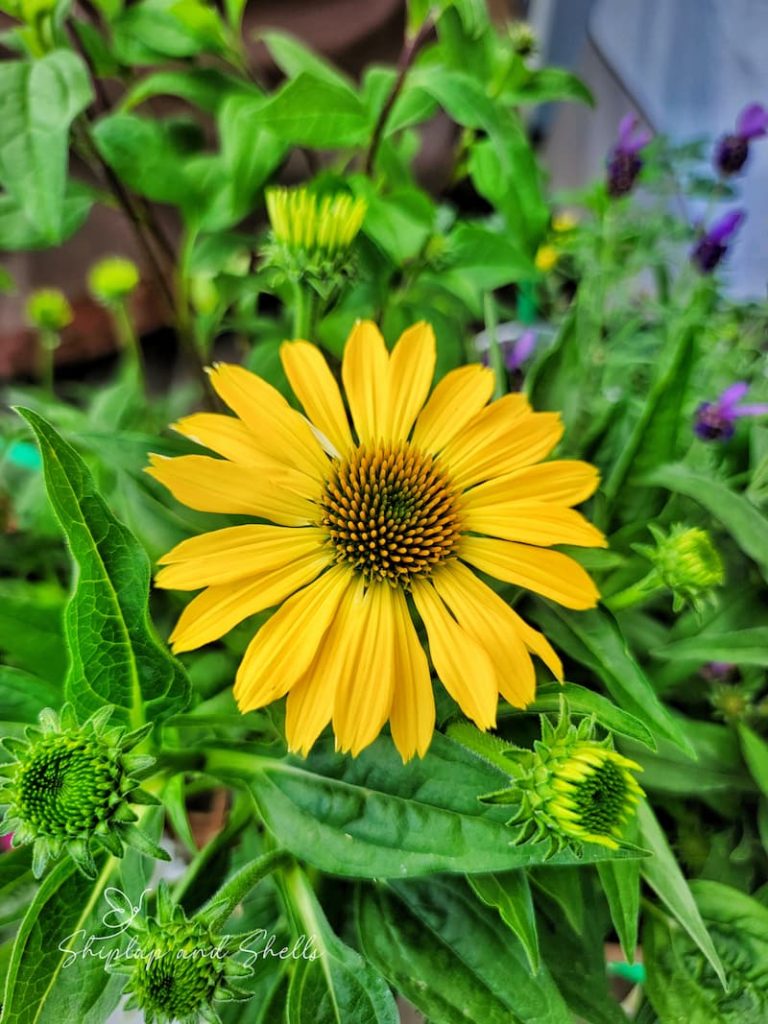
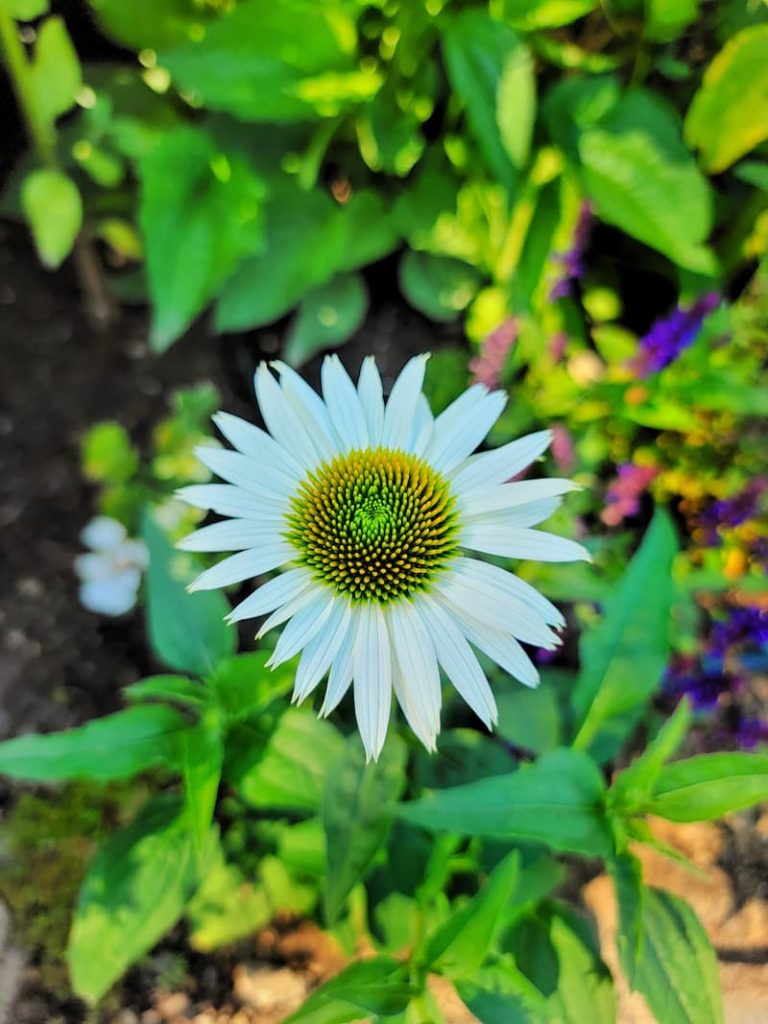
I now grow five different colors: the classic purple, plus red, orange, yellow, and white.
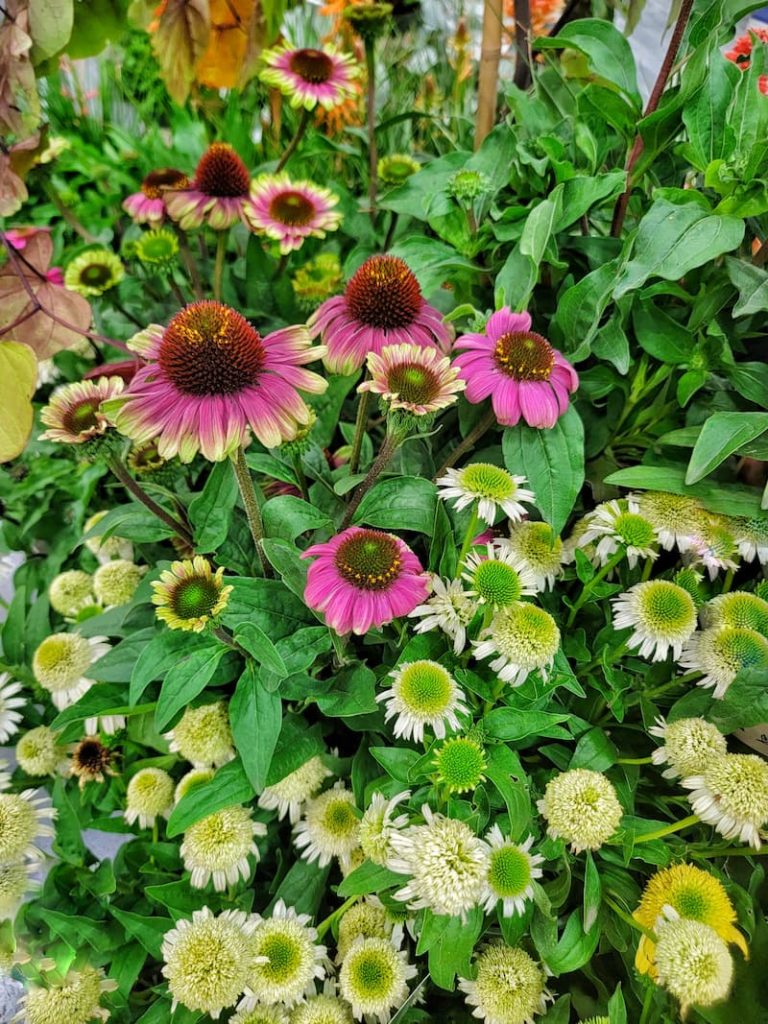
A few years ago, at a garden show, I spotted a new fuchsia-and-green variety called Sweet Sandia, and immediately went looking for it at my local nursery. Found it. Worth every penny.
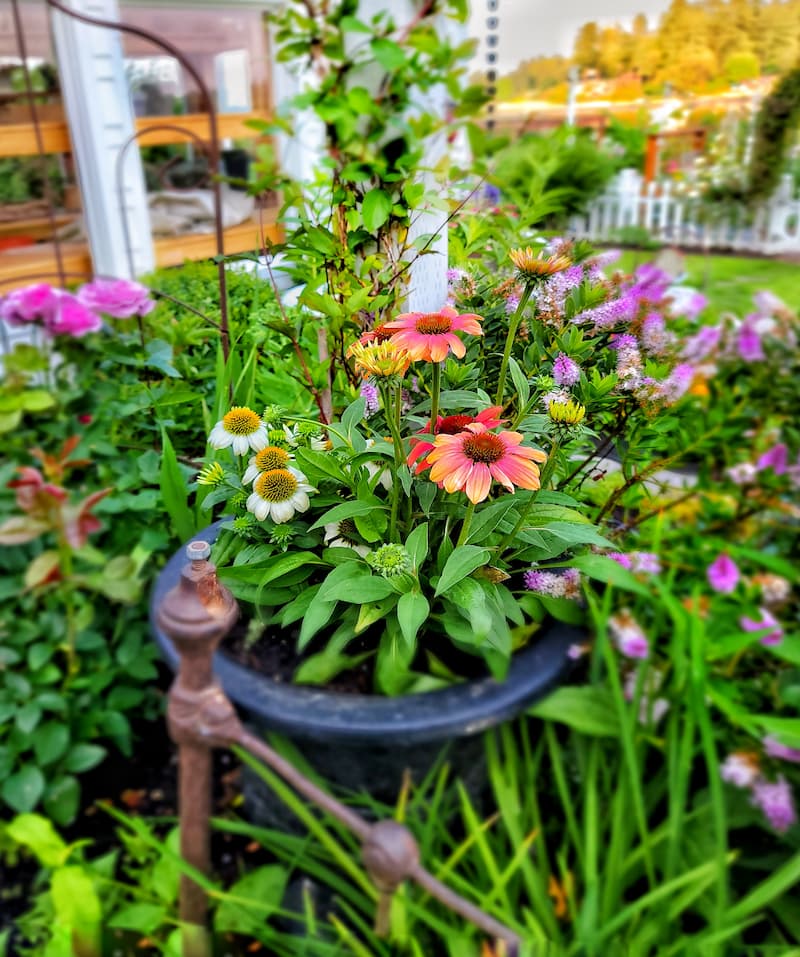
Coneflowers look great in containers, too, and you don’t have ground space. They’re low-maintenance and happy in a pot.
Hydrangeas
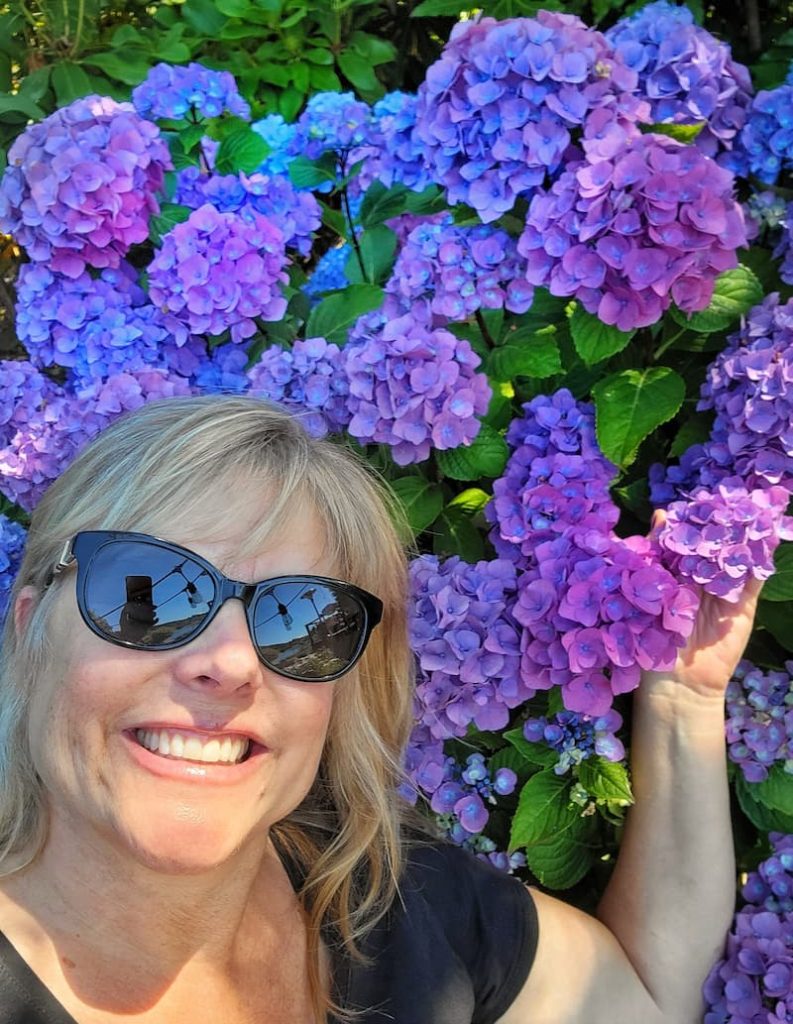
Hydrangeas are a cottage garden staple for good reason. Those big, lush flower clusters are stunning in the garden and even better in a vase.
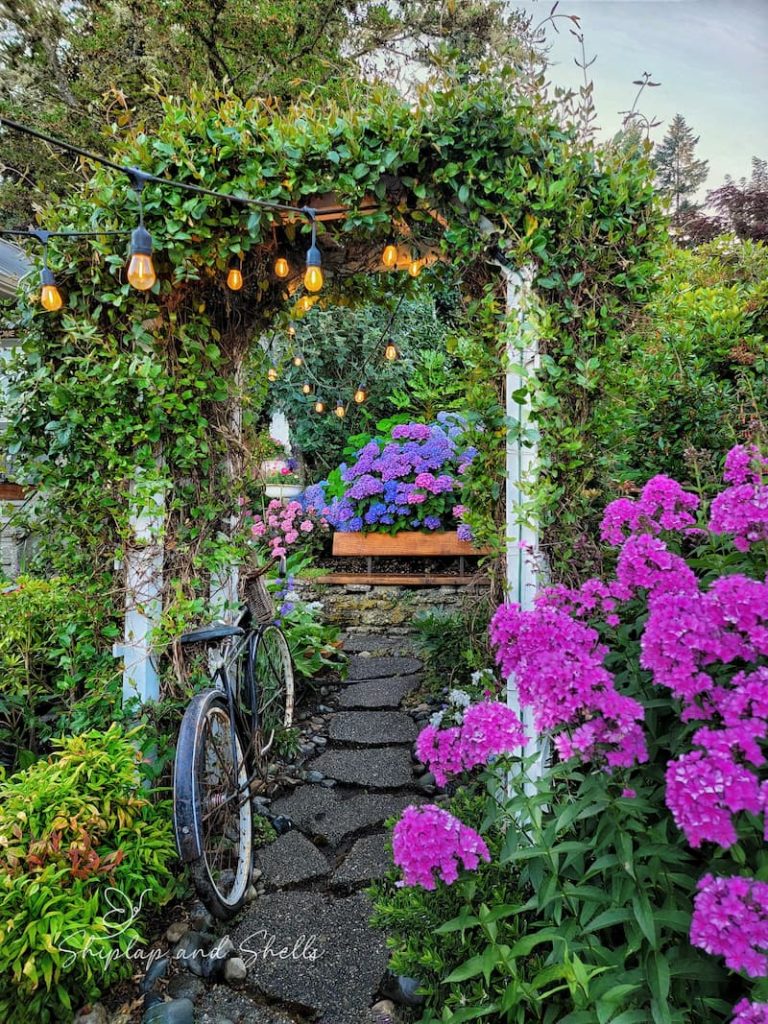
Mine bloom in shades of blue, pink, purple, and white, and the show lasts from early summer well into fall.
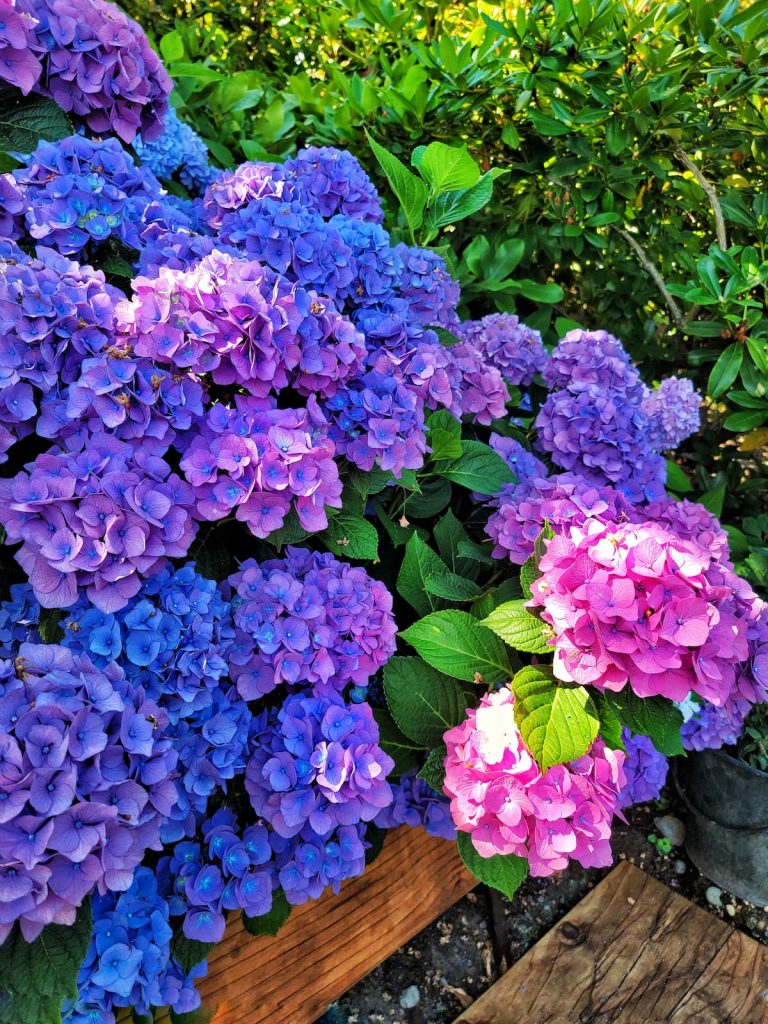
A few things I’ve noticed over the years: hydrangeas prefer partial shade and well-drained soil. The flower color on some varieties actually shifts with soil pH.
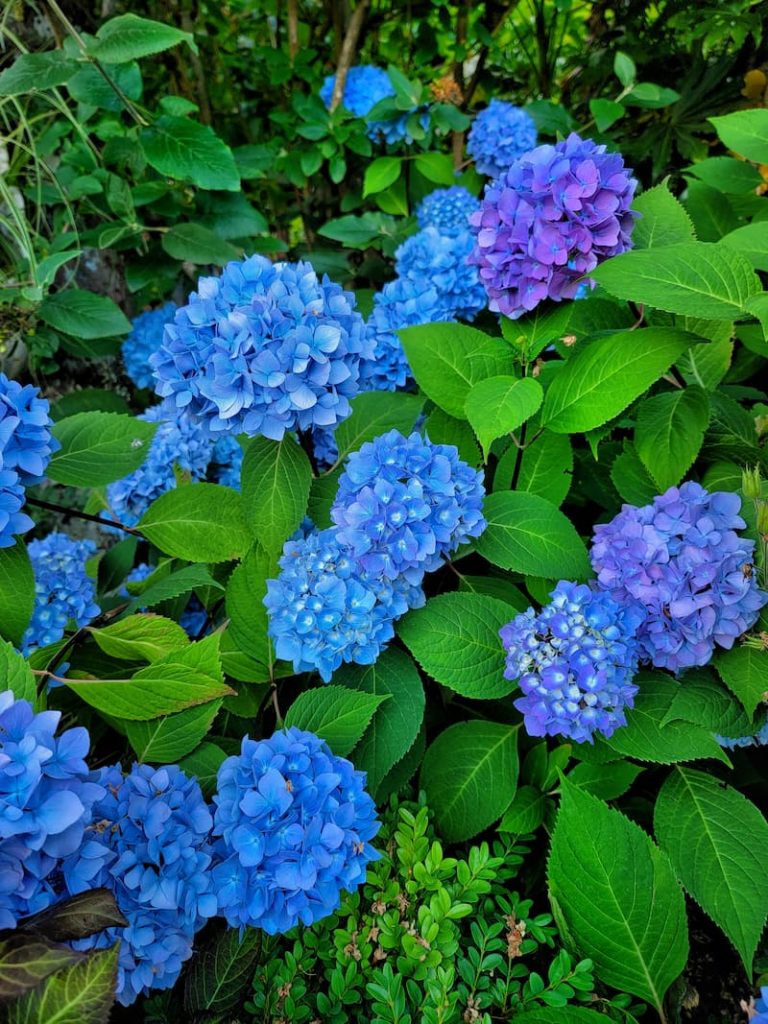
More acidic soil pushes toward blue, more alkaline towards pink.
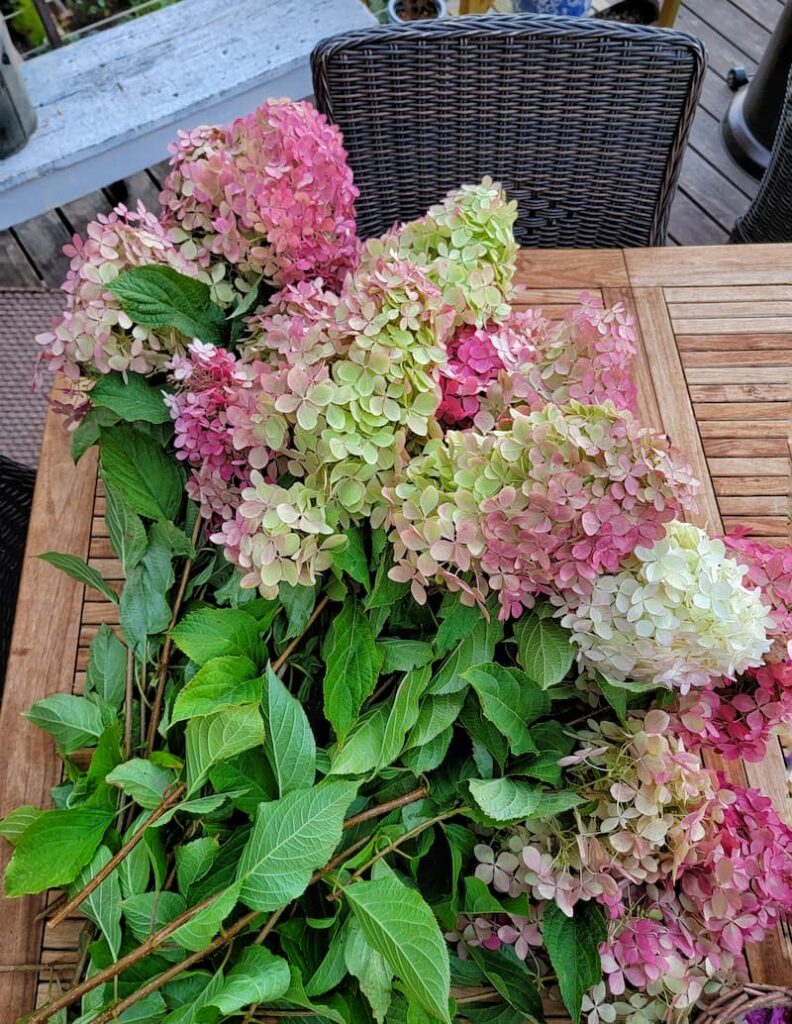
And they dry beautifully. I cut mine late last summer, putting them in vases with a bit of water to dry. We then had dried hydrangea blooms indoors all fall and winter.
They’re also versatile. I have them in borders, along the path, and in containers near the cottage. Wherever I put them, they look right at home.
Roses
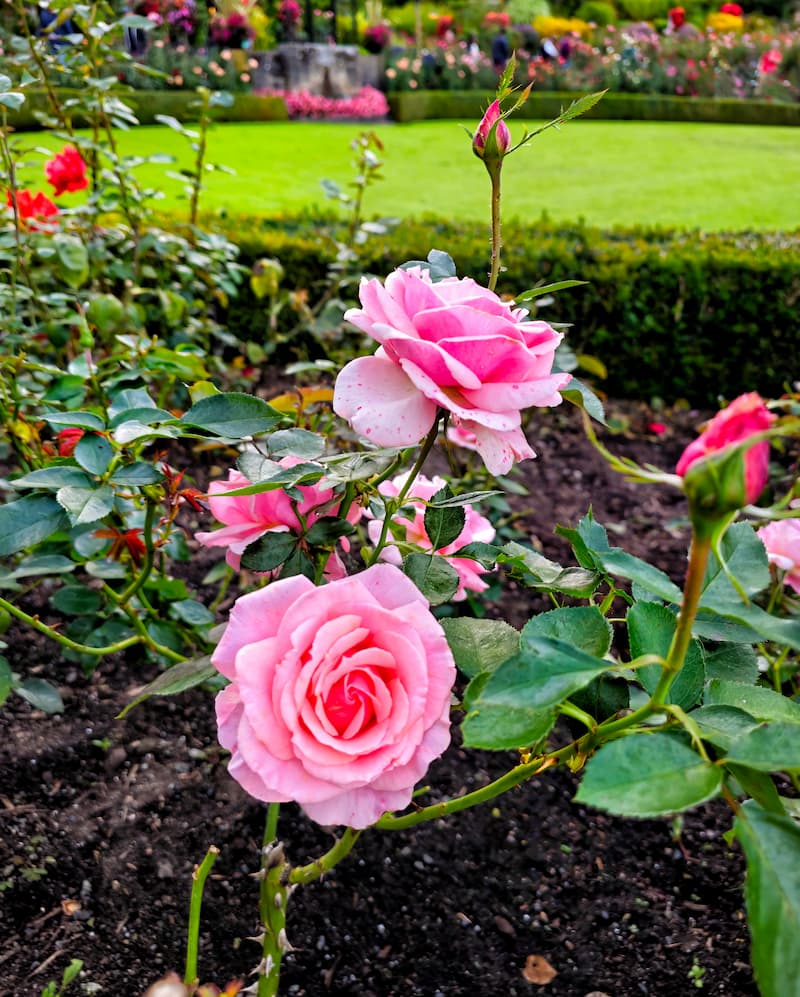
I know roses have a reputation for being high maintenance, but I’ve found the key is choosing varieties that suit your climate and not overthinking it.
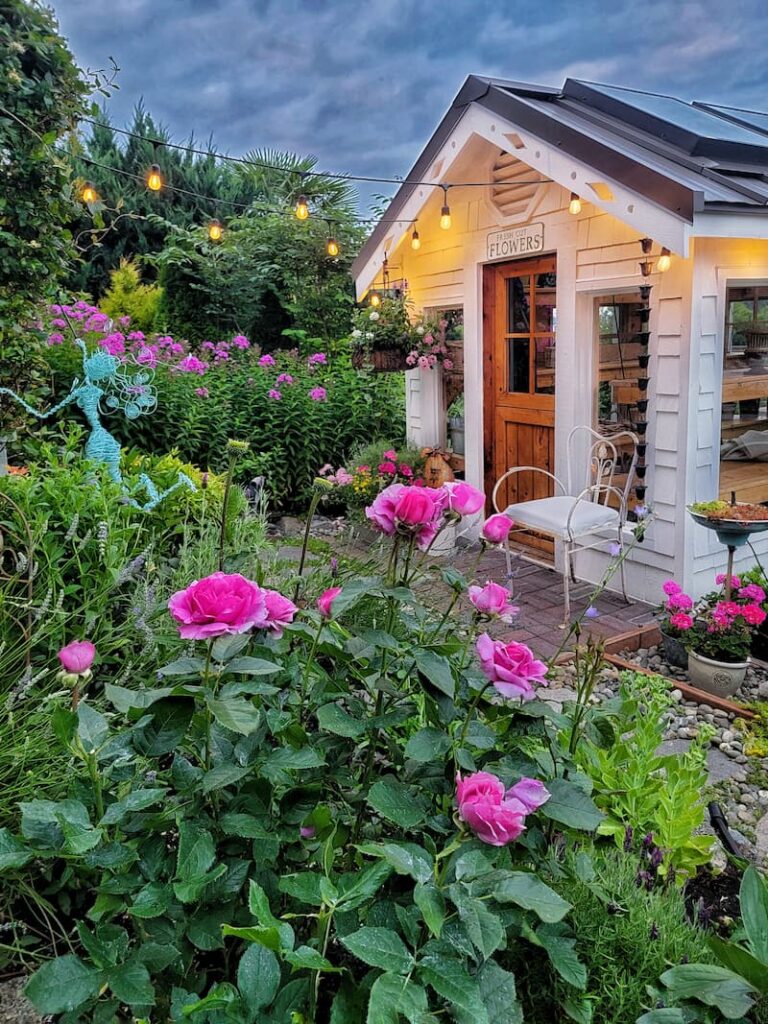
Here in zone 8b, roses bloom from late spring through fall with regular pruning and feeding. Mine grow in beds, long borders, climbing over the arbor near the greenhouse, and as standalone shrubs.
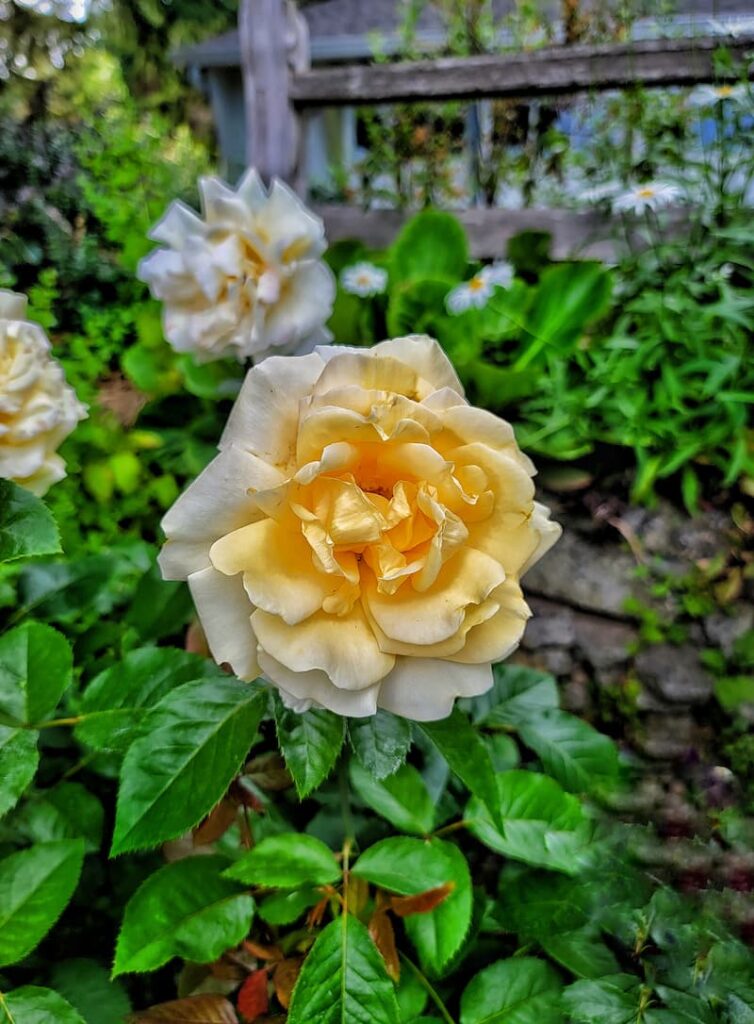
The fragrance is the thing I can’t replicate with anything else. On a warm evening, walking past a rose in full bloom is its own small reward. The bees agree, they’re in there constantly.
Let’s Plan Your Dream Garden With Our
Gardening Planner
Unlock Your Garden’s Potential.
Our 35-page Ultimate Garden Planner is designed to help you organize, track, and flourish in your gardening endeavors.
Get yours for $4.99
Lilies
Lilies cover a lot of ground: Asiatic, Oriental, and trumpet each has its own personality and bloom window, which means with a little planning, you can have lilies from early summer into fall. They all prefer well-drained soil and full sun to partial shade, and they bring pollinators in droves.
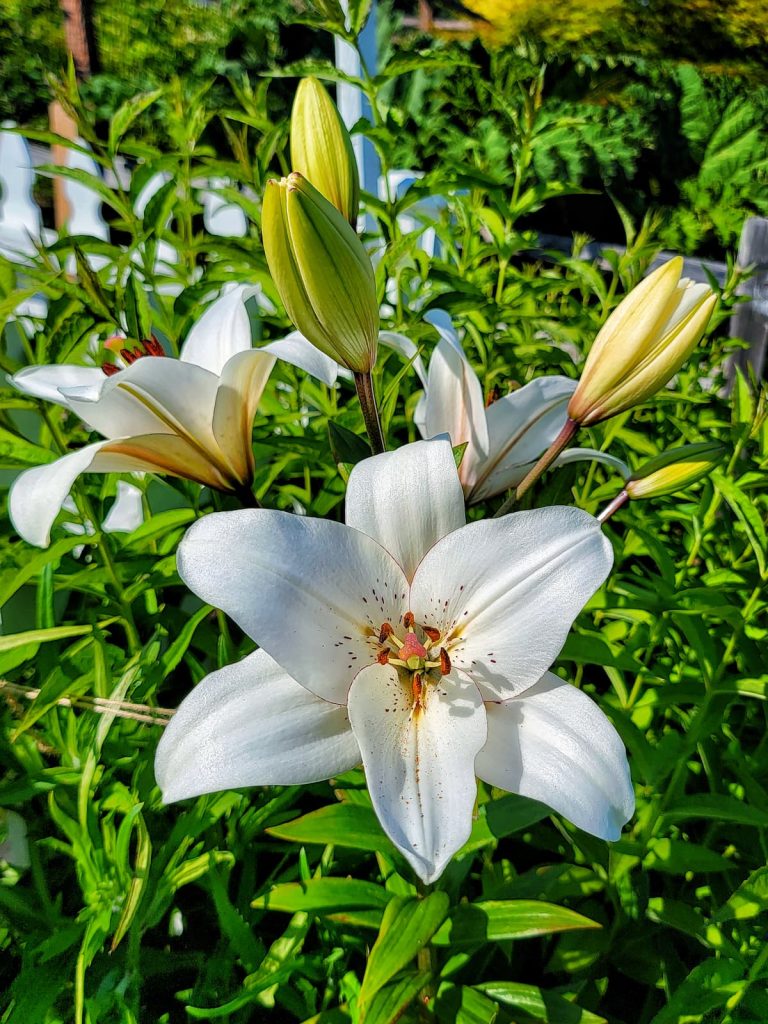
Eyeliner Lily
This Asiatic variety stopped me in my tracks when I first saw it. Pure white petals edged with a fine dark line, as if someone had drawn on it. Hence the name. They’re relatively pest-resistant and easy to grow, which makes them even more appealing.
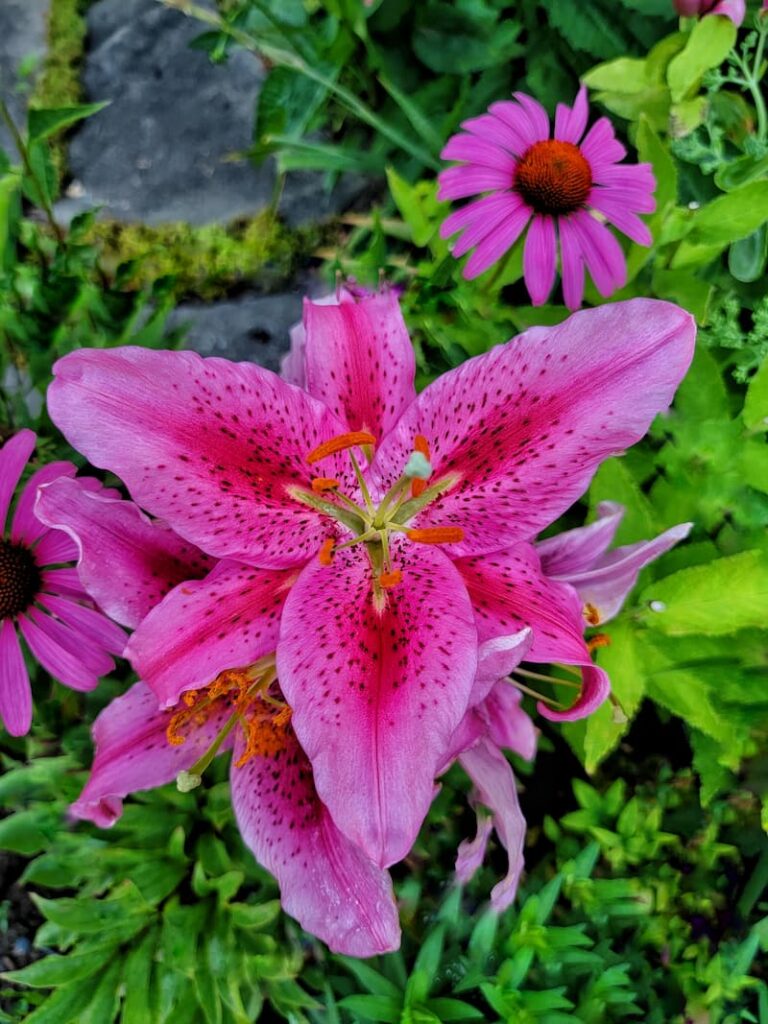
Stargazer Lily
The Stargazer is an Oriental lily, and it’s dramatic in the best way. Large, upward-facing blooms in vibrant pink, speckled with red, and edged in white. The fragrance is sweet and spicy at the same time. It blooms from mid to late summer, so it bridges the gap well. The stems are tall and sturdy, which makes them excellent for cutting.
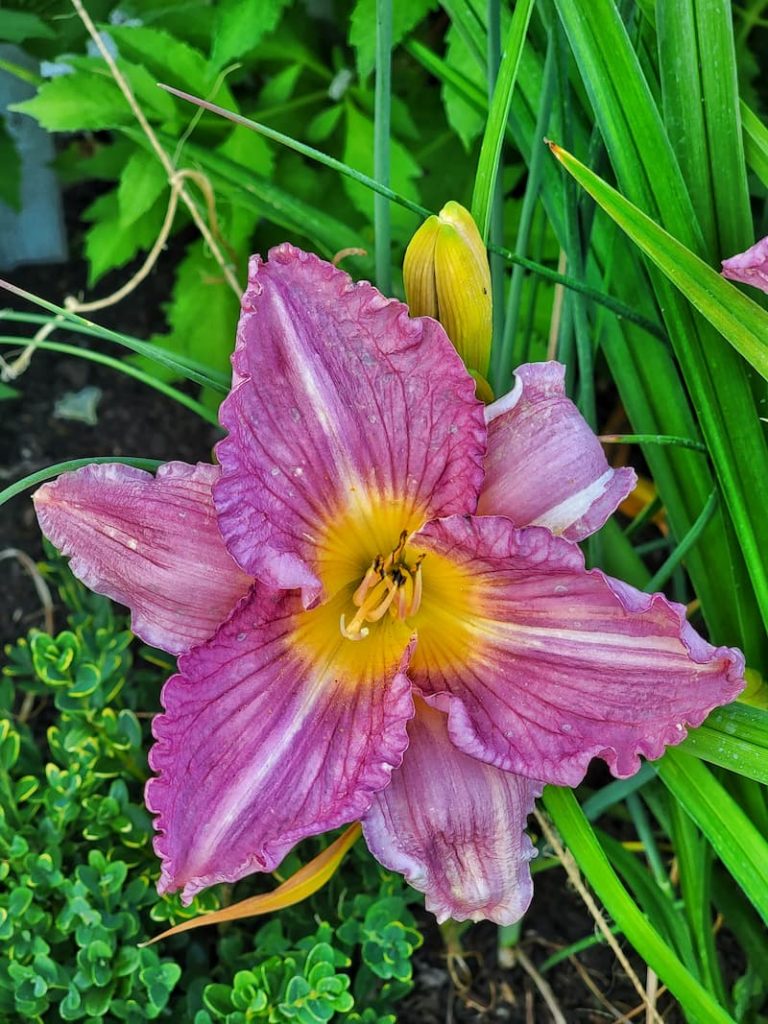
Garden Show Reblooming Daylily
What makes this one stand out is its name: reblooming. While most daylilies have a single flush of flowers, this variety keeps producing from early summer into fall. The blooms are large and showy in yellow, orange, deep red, and purple, many with contrasting eye zones or edges.
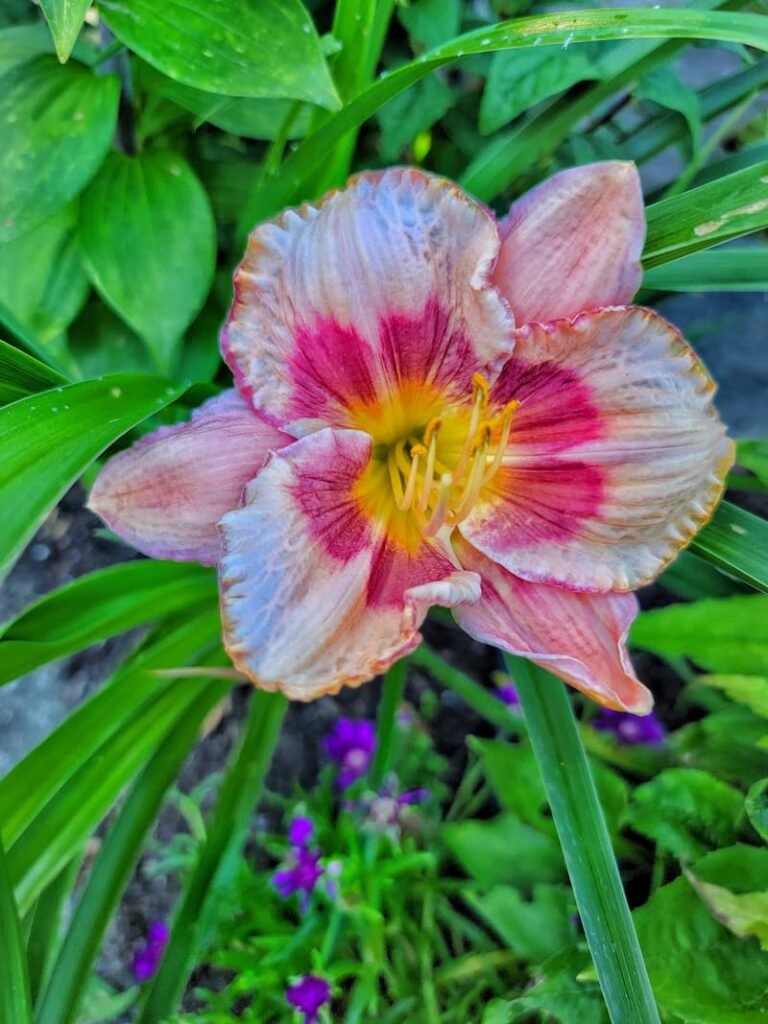
Daylily ‘Ageless Beauty’
Soft, creamy pastel blooms with ruffled petals and a subtle fragrance. It’s understated compared to some of the showier daylilies, but that’s exactly what I love about it. The ‘Ageless Beauty’ daylily plays well with everything else in the border.
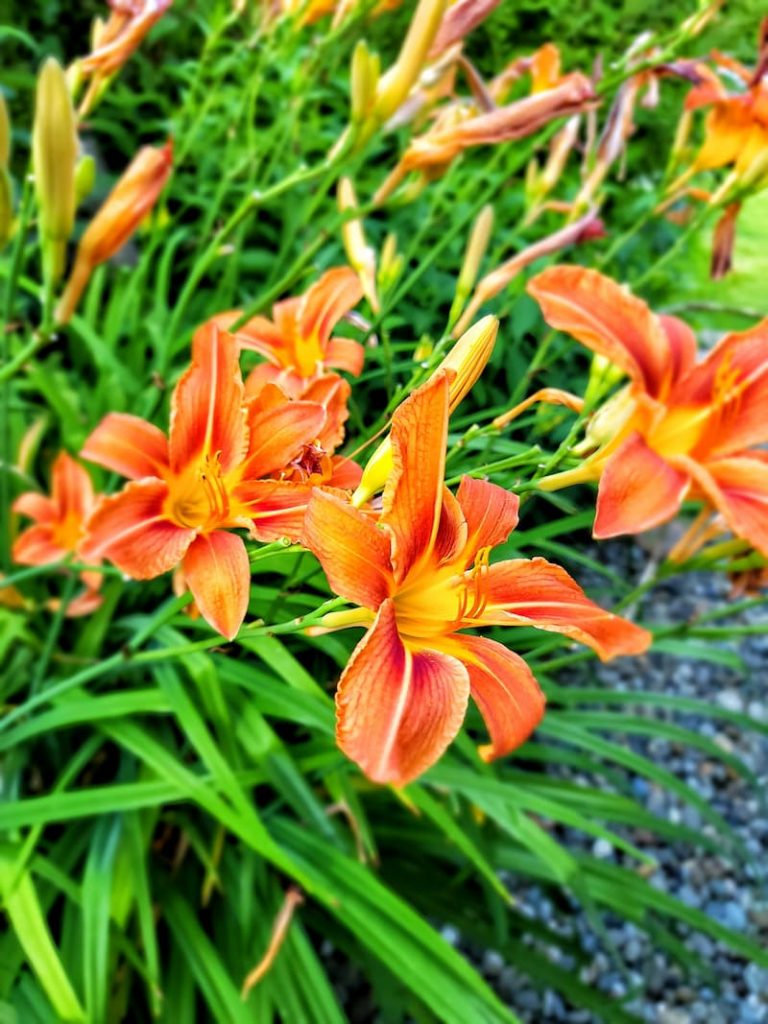
Prmial Scream Daylily
This one is the opposite of understated. Fiery orange, spider-like blooms up to eight inches across. It blooms in early to midsummer and makes a statement every single time. I’ve had people stop on the path to enjoy it.
A Quick Note on Daylilies
Each flower opens in the morning and closes by evening. That’s where the name comes from (Greek for “day lily”). But each stem carries multiple buds, and a single plant has several stems, so the blooming period stretches over weeks or months. The individual blooms are short-lived, but the plant’s performance is not.
Clematis
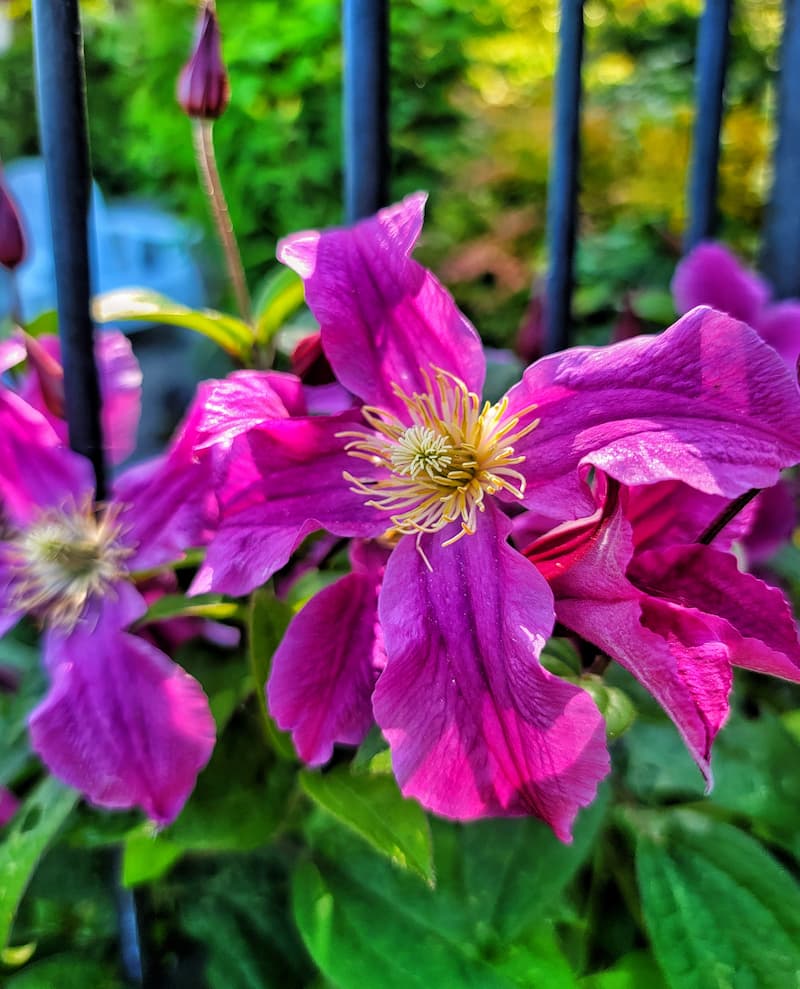
Clematis is one of the great vertical plants for a cottage garden. It climbs trellises, fences, and arbors, adding height and lushness wherever you need it. Some varieties bloom in early spring, others in summer, and some well into fall, so it’s worth thinking about bloom time when you choose.
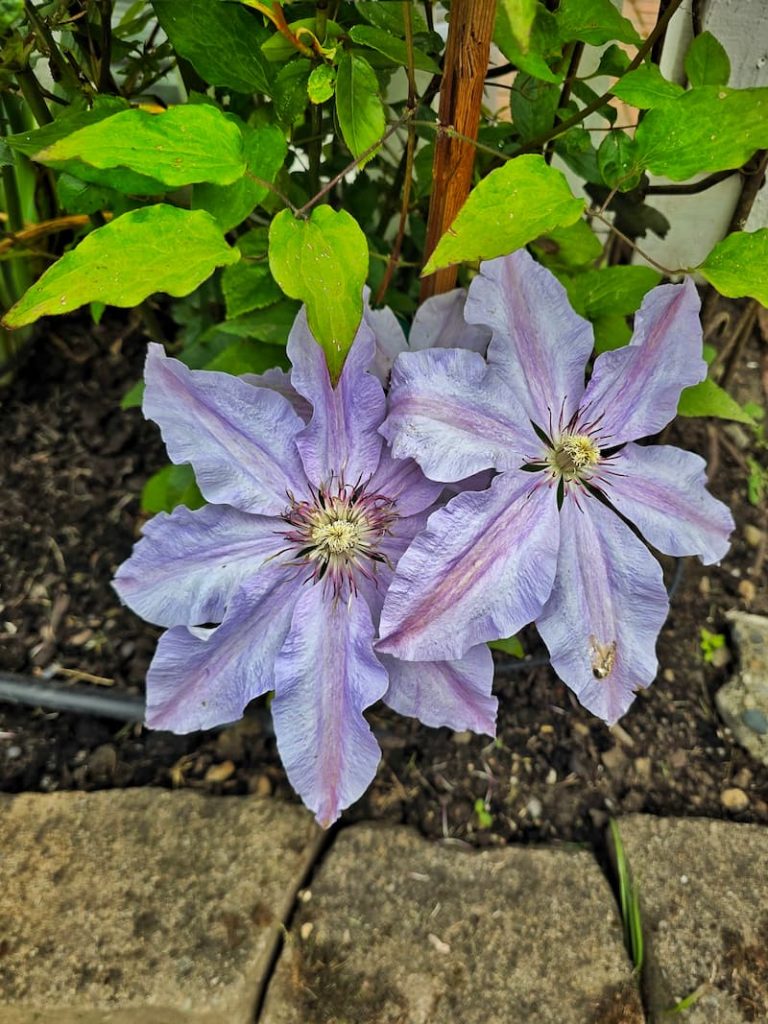
Mine come in deep and pale purple, fuchsia, and soft pink. The flowers range from large, single blooms to smaller, clustered varieties.
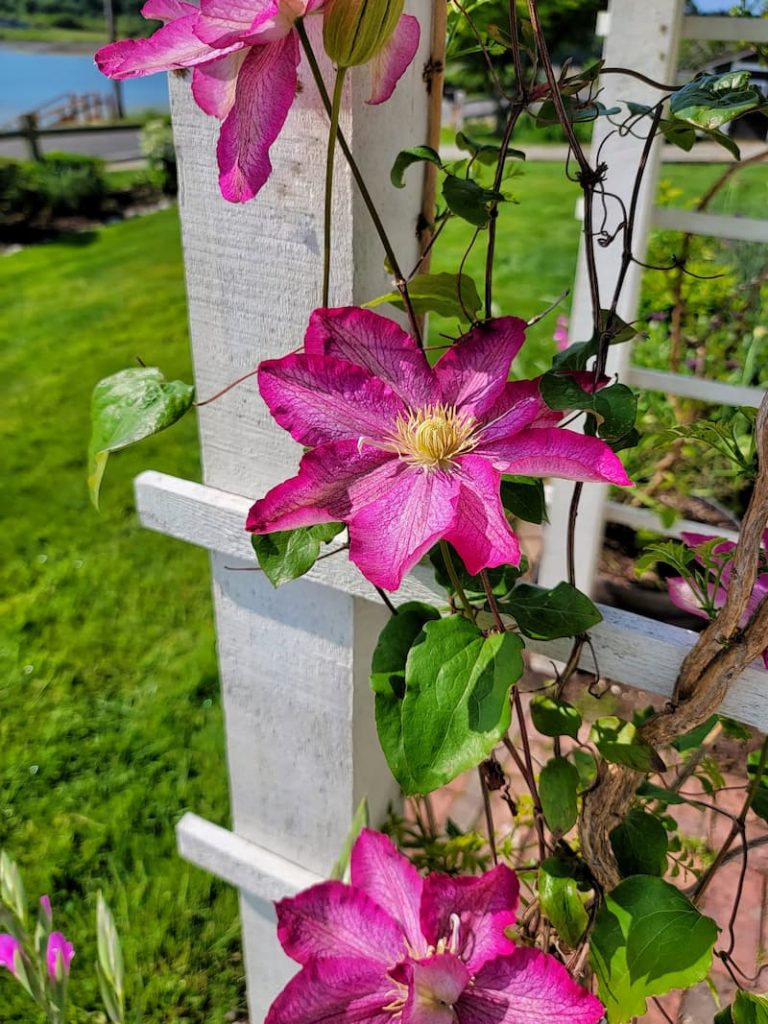
Clematis likes its roots cool and shaded, and its foliage in the sun. A good layer of mulch at the base goes a long way. Once established, it’s relatively low-maintenance and holds up well against pests and diseases.
Gladiolus
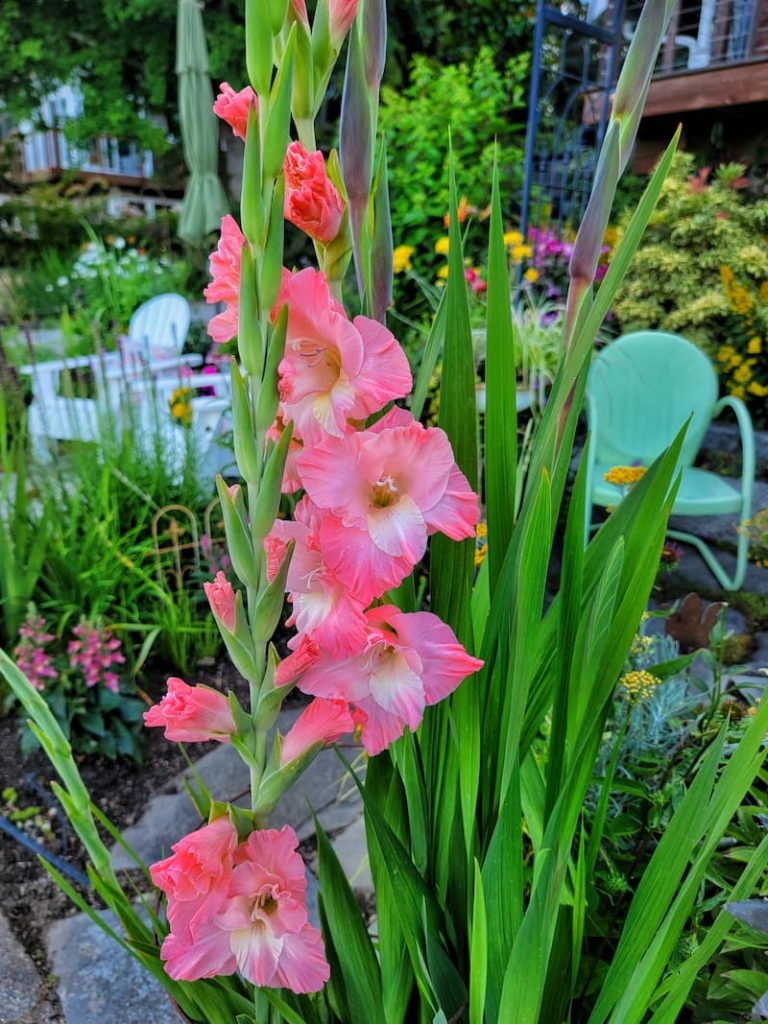
Gladiolus makes a dramatic entrance. Tall, sword-like spikes, loaded with large blooms in every color imaginable: red, pink, yellow, white, purple, and orange. They’re one of the best cut flowers I grow, long-lasting in a vase and striking in an arrangement.
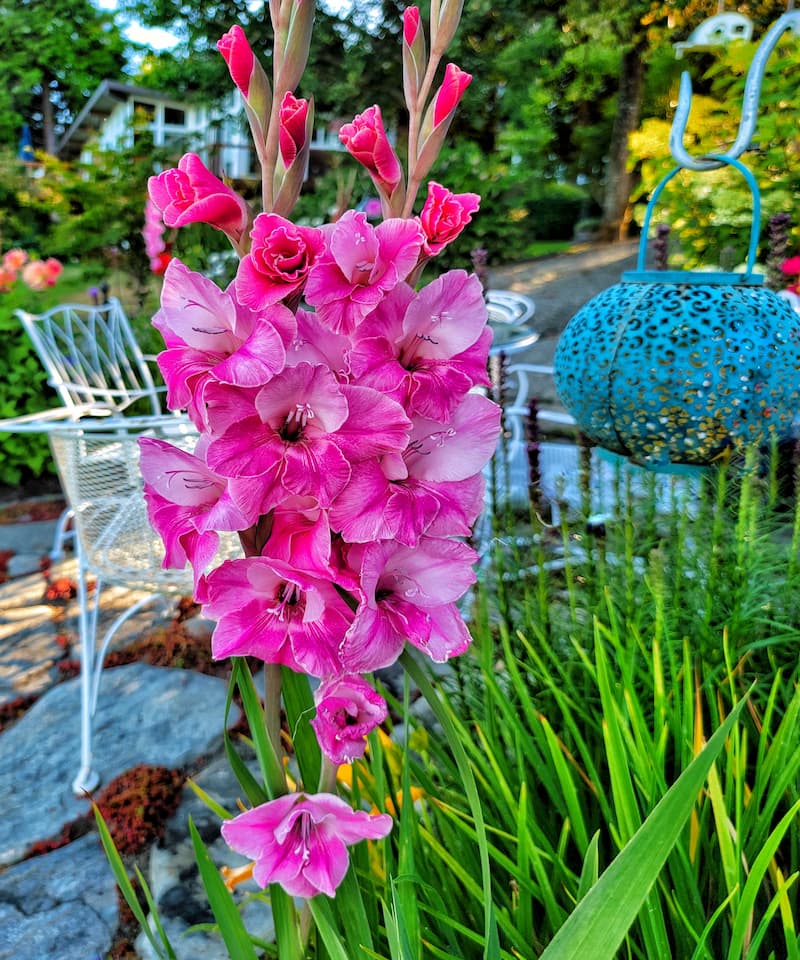
One important note: stake them. Without support, they will fall over. I’ve learned this the hard way after a late-summer windstorm took out an entire row. A simple stake and garden twine is all it takes.
Allium (Ornamental Onion)
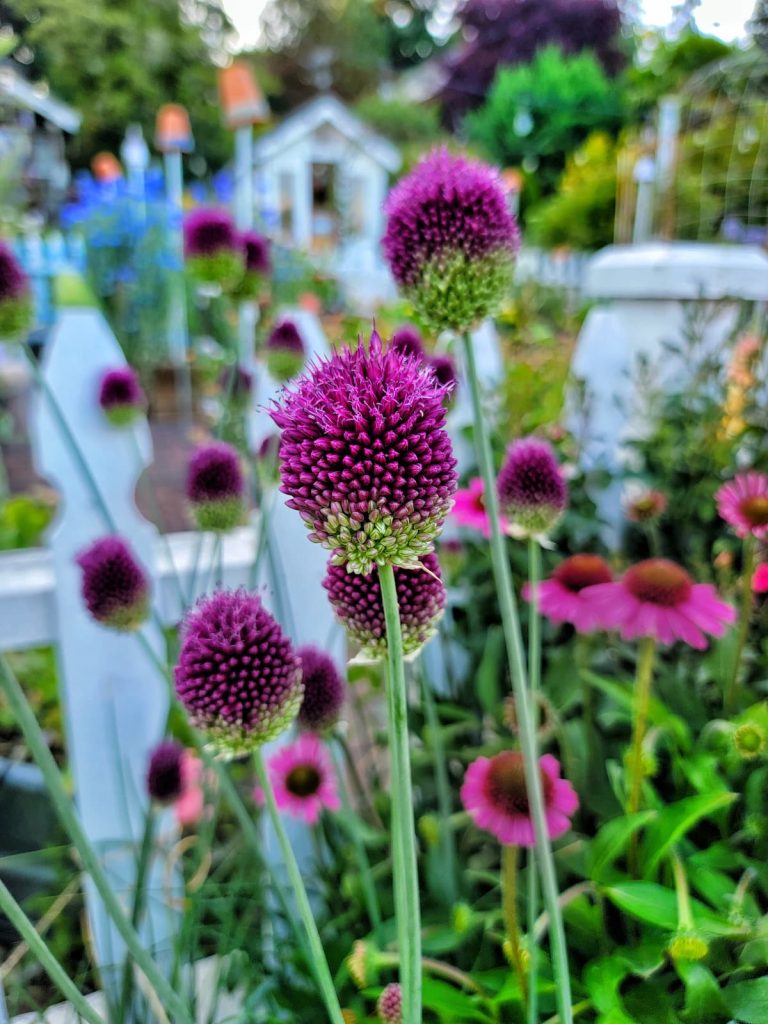
Alliums have a sculptural quality that I don’t get from any other plant. Those globe-shaped clusters of tiny star-shaped flowers on tall, slender stems are just interesting to look at, from a few inches across to nearly a foot in diameter, depending on the variety.
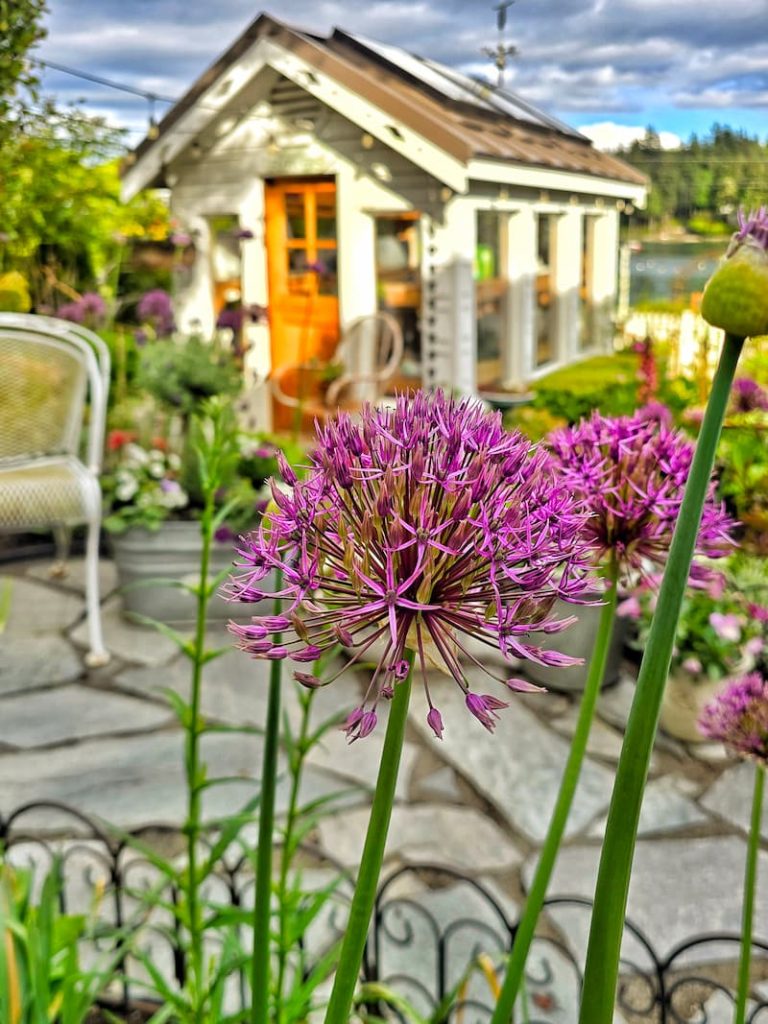
They bloom in late spring to early summer, thrive in well-drained soil and full sun, and once established, need almost nothing from me. They’re also deer- and rodent-resistant, which matters here.
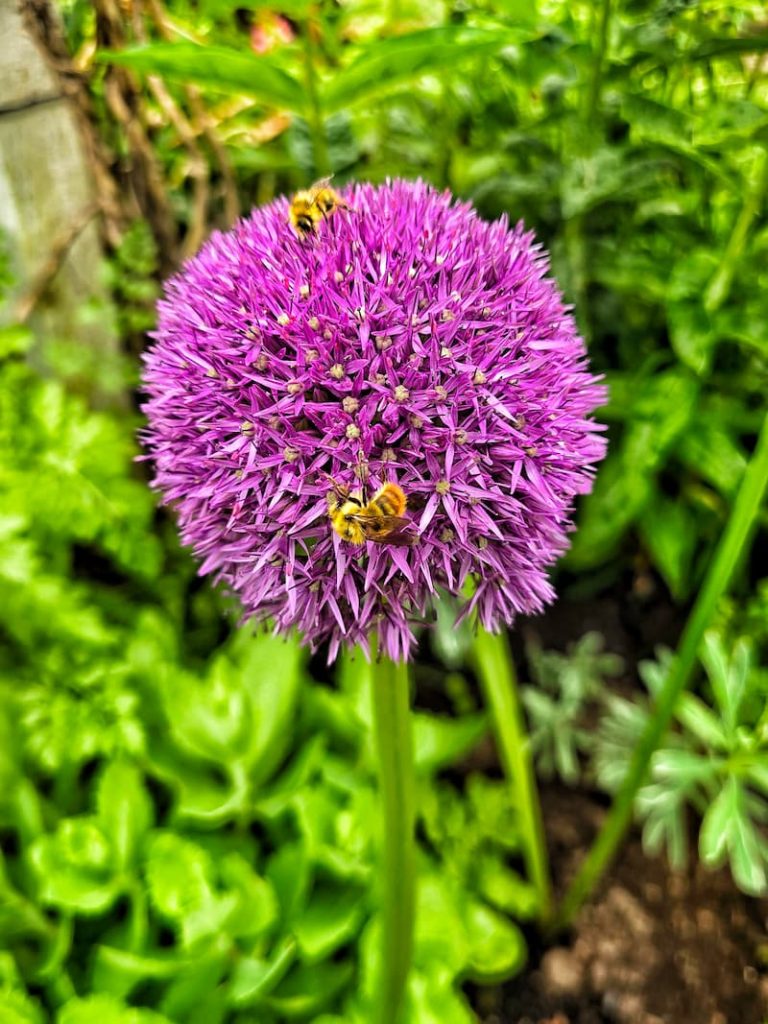
And the bees are absolutely obsessed with them. The flower heads are covered all day long.
Daisies
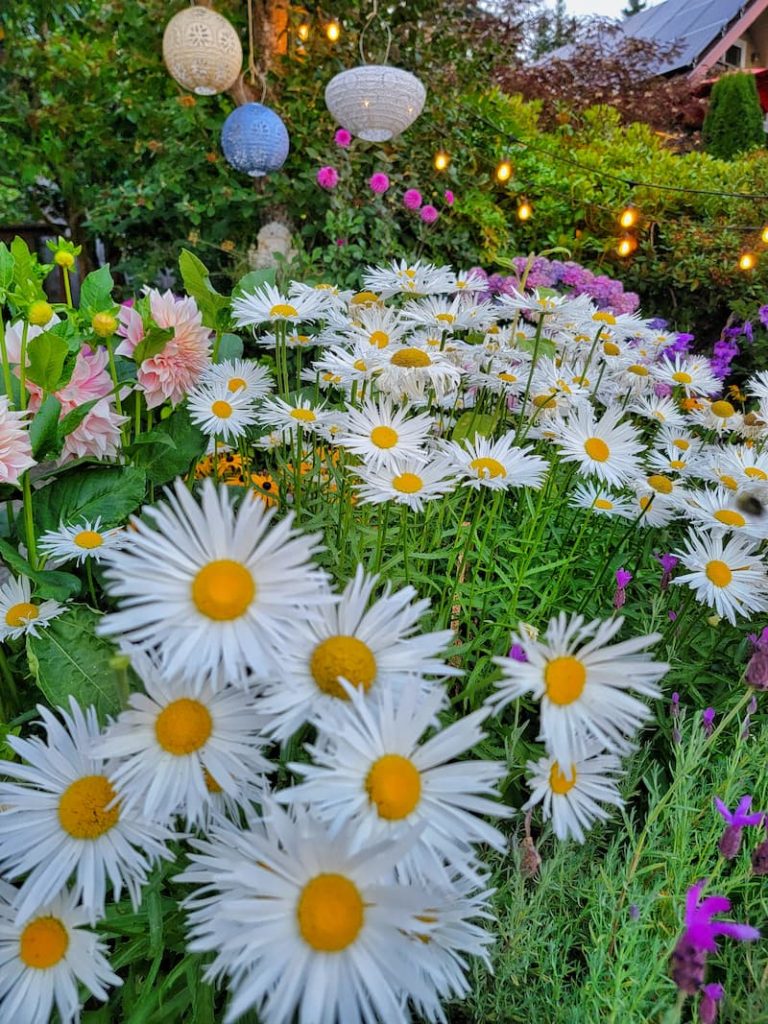
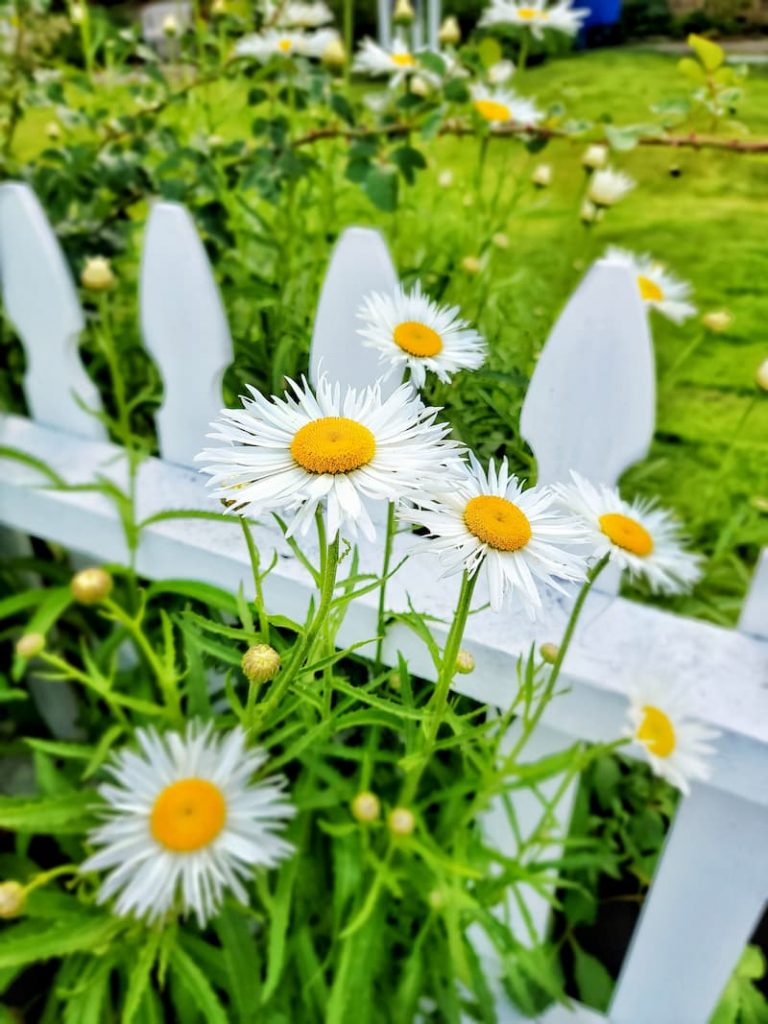
There’s something timeless about a daisy, with its white petals, bright yellow center, and cheerful appearance in any setting. Shastas are workhorses in the early-summer cottage garden.
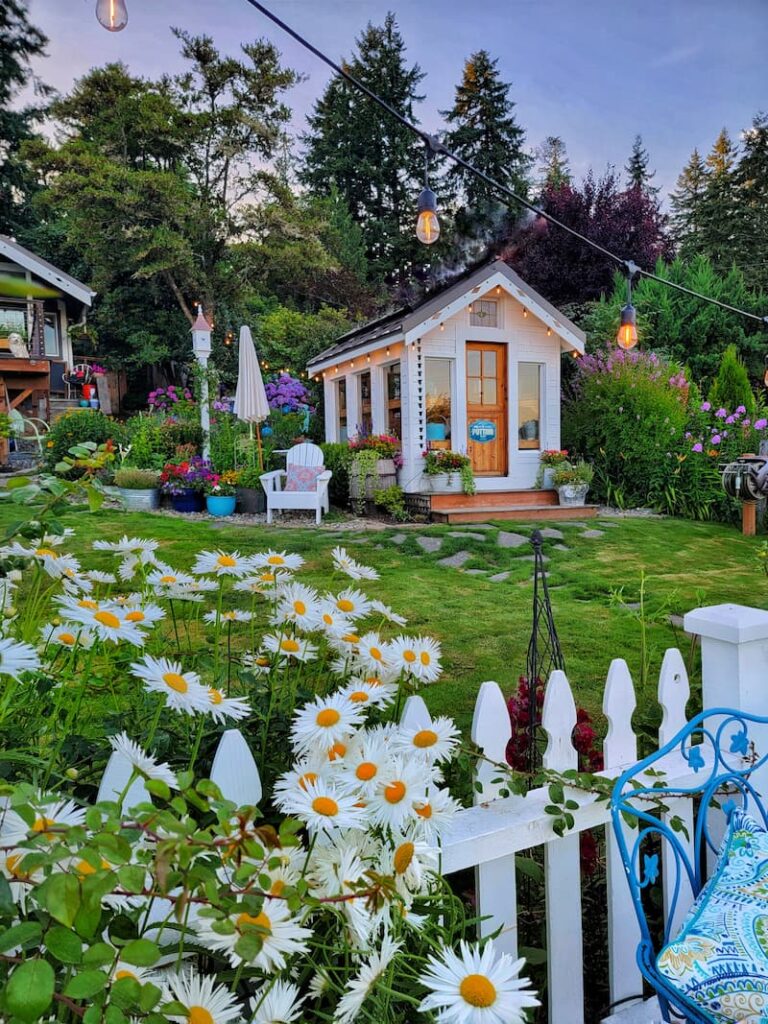
They’re easy to grow, happy in the full sun or partial shade, and a draw for pollinators all season long.
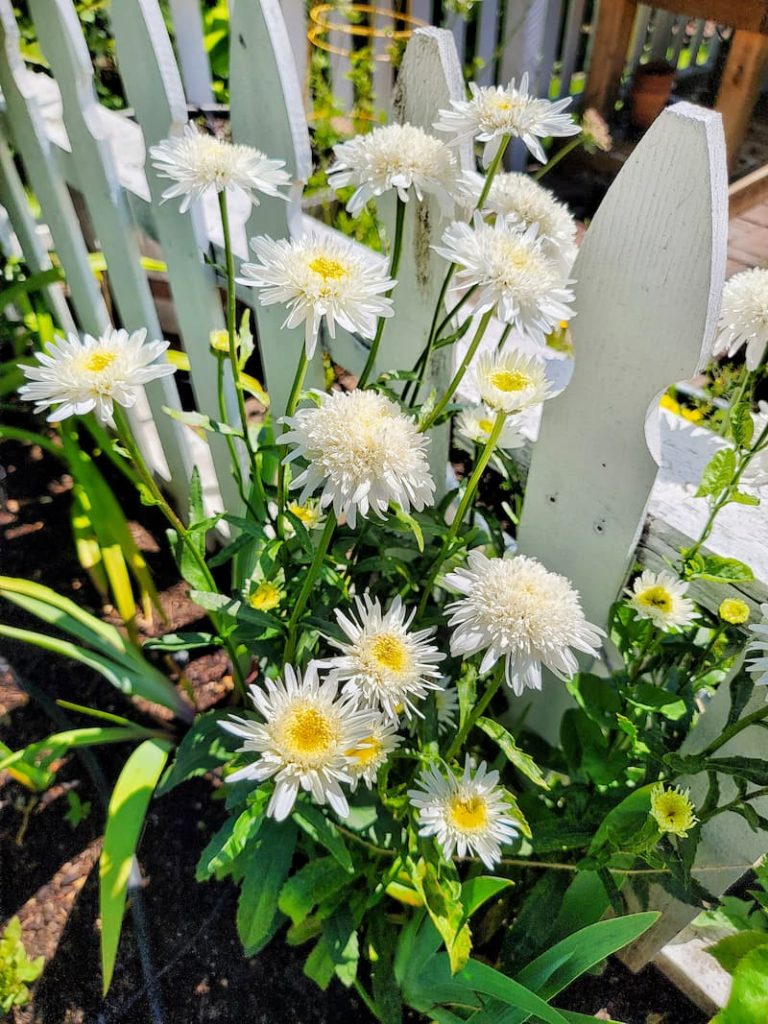
Two things to keep in mind: they need support, or they’ll flop (a peony ring or simple stake works well), and when the clump gets large, divide it. I divide mine every few years, and it keeps them vigorous and blooming well.
Lavender
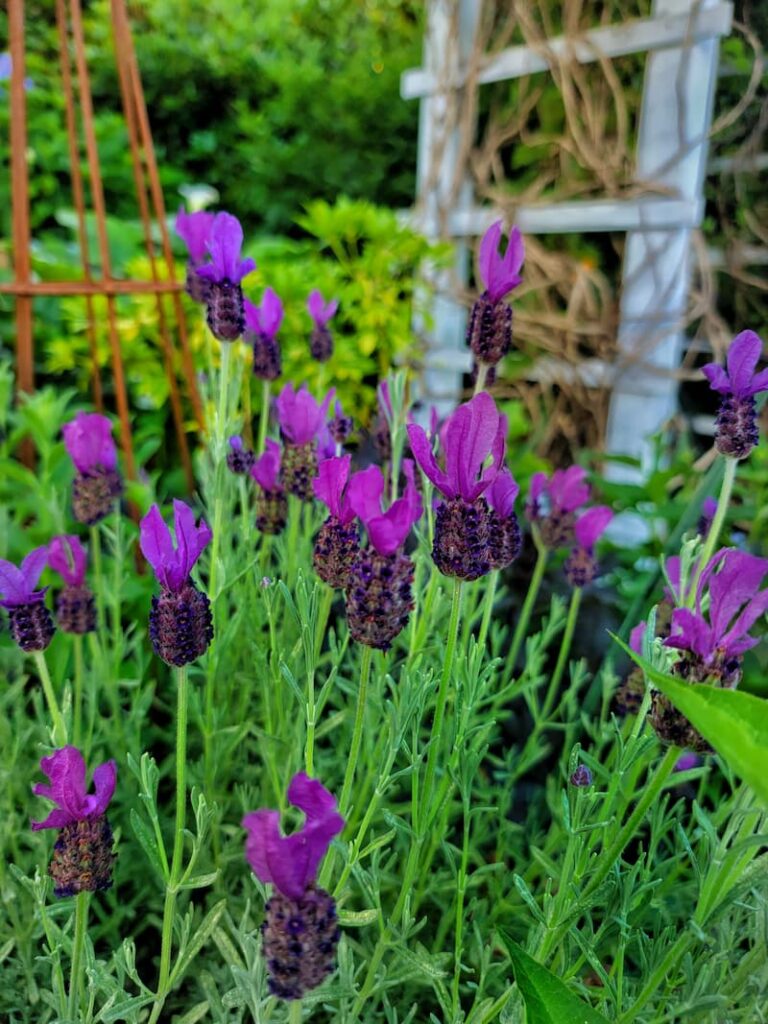
Lavender is one of those plants that earns its place in the garden in every possible way. The purple flower spikes are beautiful, the fragrance is incomparable, and it blooms reliably from late spring into early summer. It’s also drought-tolerant once established, low-maintenance, and loved by bees and butterflies.
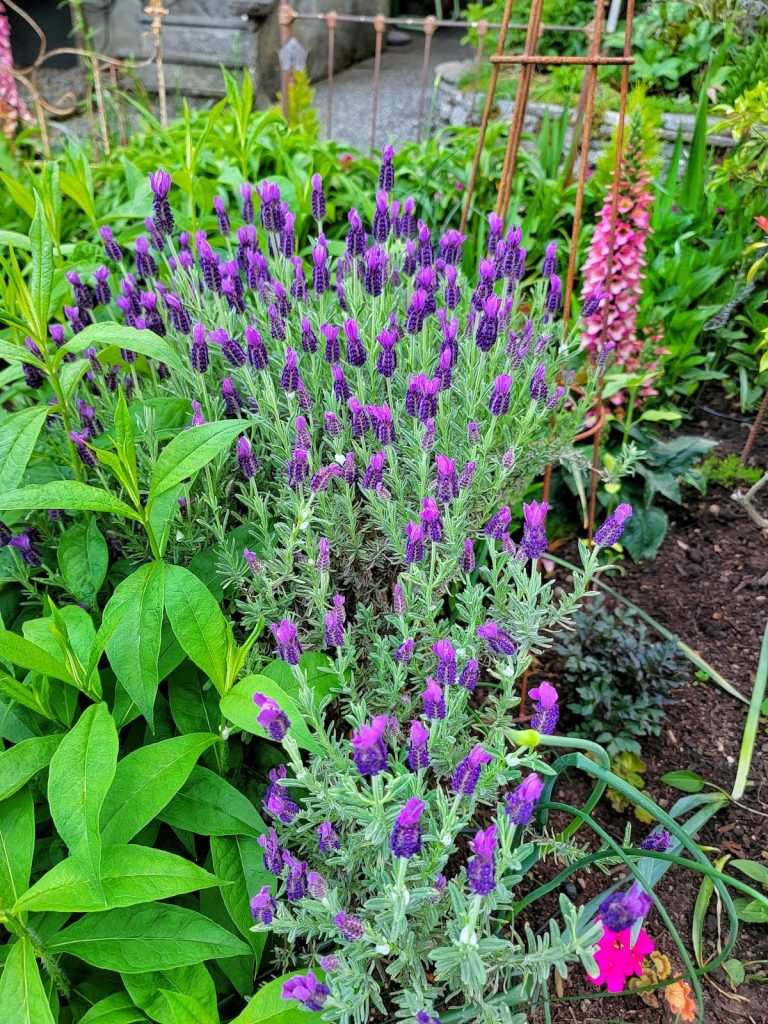
Beyond the garden, I use lavender for culinary purposes, herbal sachets, and dried arrangements and wreaths. It’s just useful in a way that few ornamental plants are. I have several varieties planted along the sunny edge of the cottage garden, and by late June, the whole area smells incredible.
Alstroemeria (Peruvian Lily)
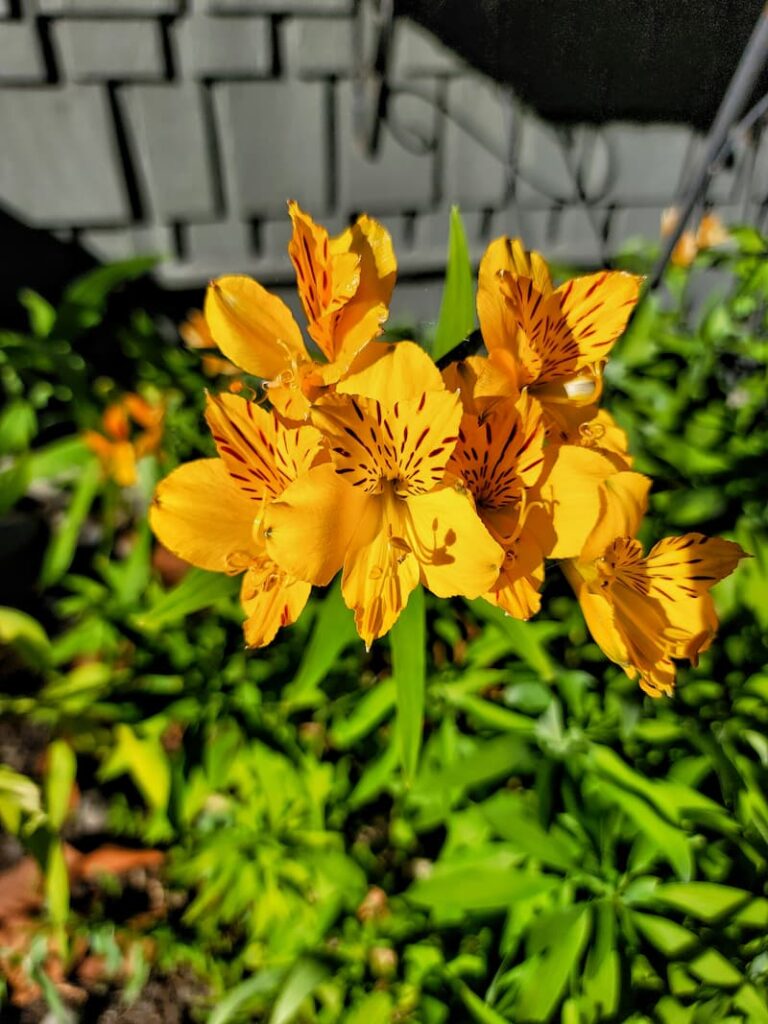
I have a love-hate relationship with alstroemeria. The flowers are genuinely beautiful with distinctive streaked trumpet-shaped blooms in pink, purple, red, orange, yellow, and white, and a vase life of up to two weeks. They bloom from late spring through summer and keep producing.
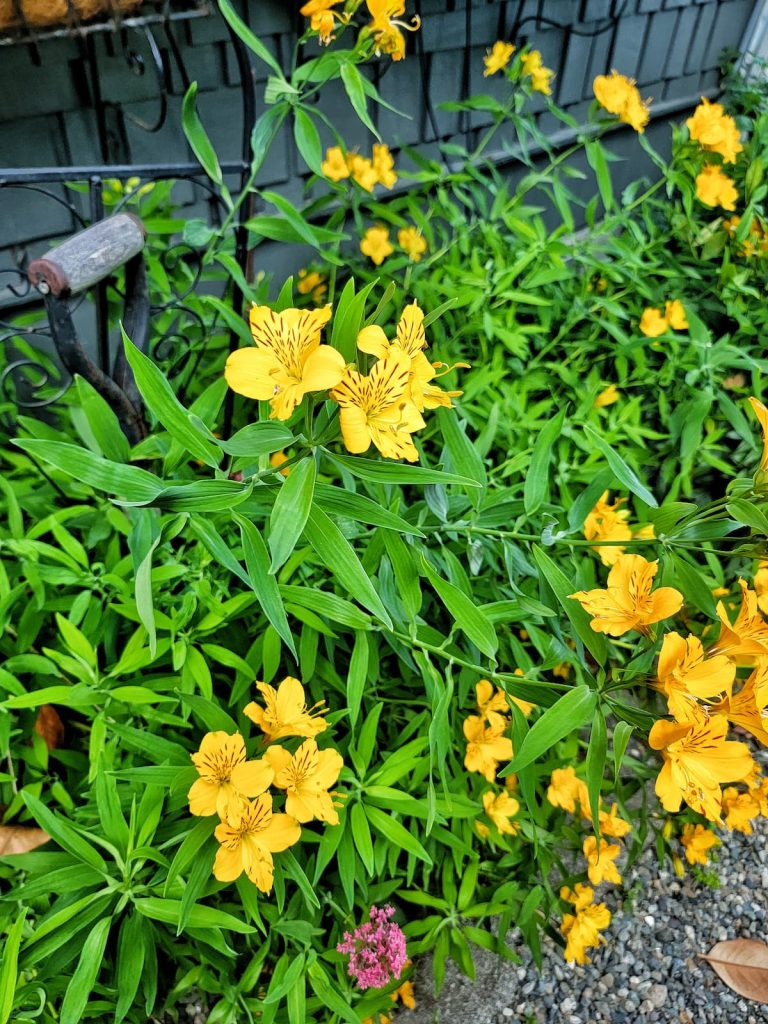
Here’s the honest part: they can be extremely invasive. Mind spread aggressively, and I’ve spent real time trying to contain them. If you want to grow alstroemeria, plant them somewhere they can spread freely, or put them in a container where the roots can’t escape. Don’t say I didn’t warn you.
Veronica (Speedwell)
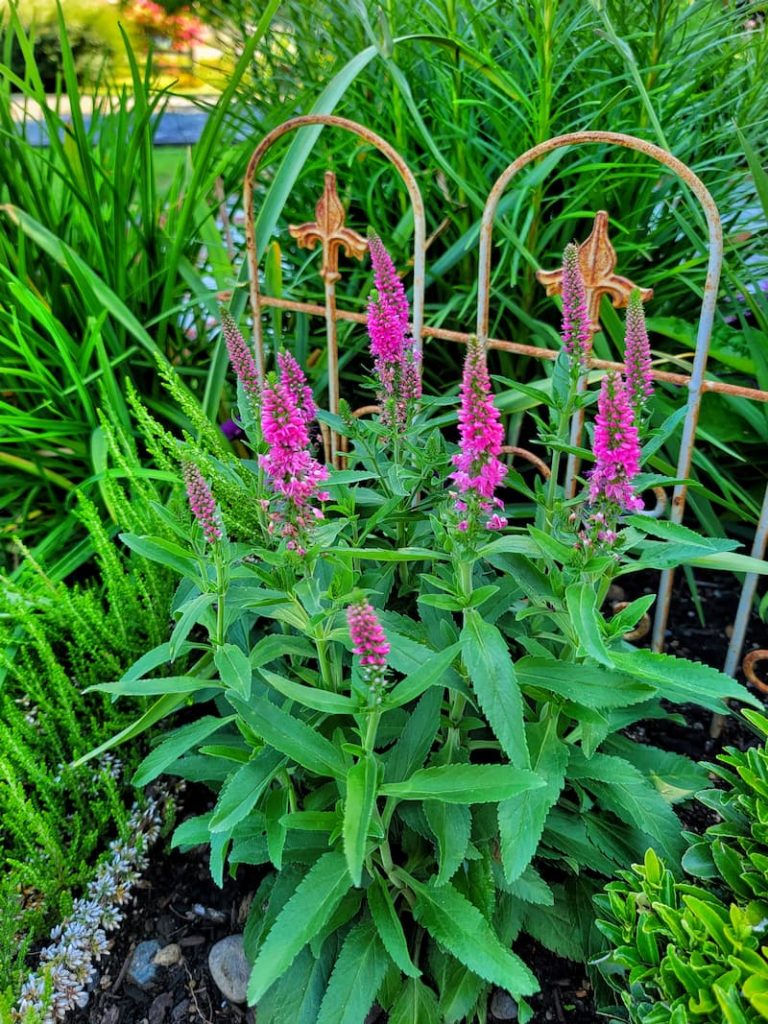
Veronica is one of those perennials that doesn’t get enough attention. The upright, spiky flower clusters in blue, purple, pink, and white add real vertical interest and texture to the cottage garden. It blooms from late spring through summer, plays well with everything around it, and the pollinators love it.
It’s also resilient and low-maintenance, happy in well-drained soil, and full sun to partial shade. I have it tucked in among the coneflowers and daisies, and it fills in beautifully.
Garden Supplies and Tools
Check out my favorite garden supplies and tools for the growing season. Whether you’re looking for potting soil or deer repellent, you’ll find what I use in my own garden.
The Early Summer Cut Flower Garden
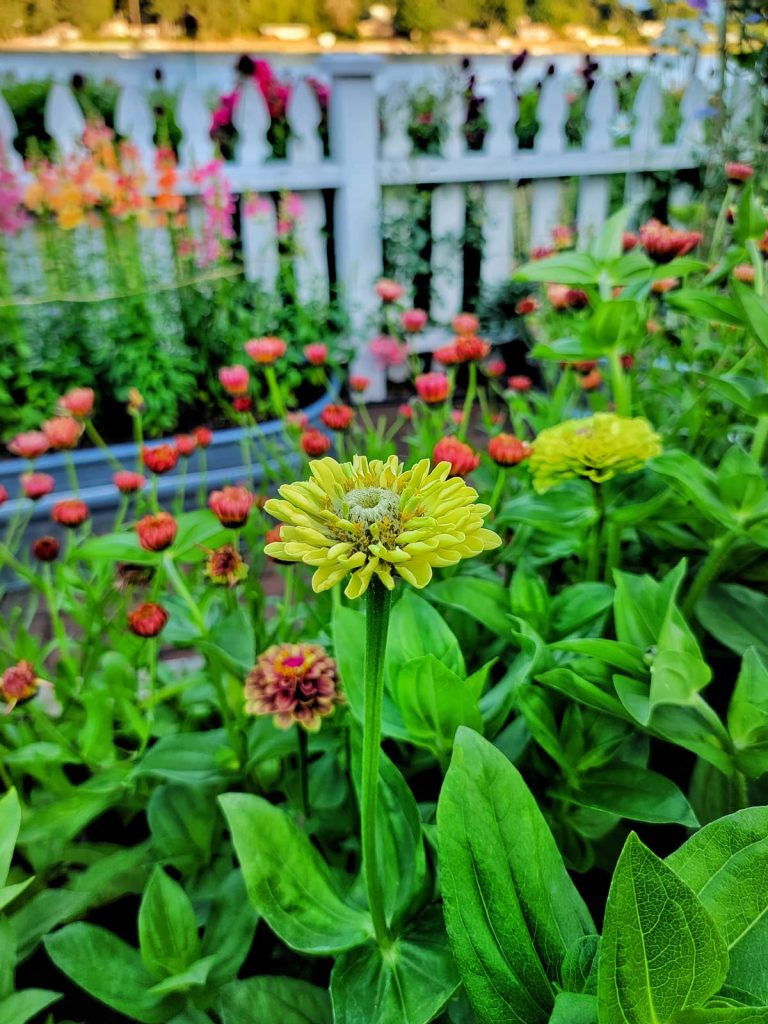
The cut flower garden starts in the greenhouse. I sow seeds in the late winter, grow them under lights, and transplant seedlings to the raised beds after the last frost in late April.
By late June, the beds are filling in. Not peak abundance yet…that happens in August. But the first zinnias are open, snapdragons are coming in, sweet peas are climbing the trellis, and a few strawflowers have started to color up.
About the Cutting Garden Setup
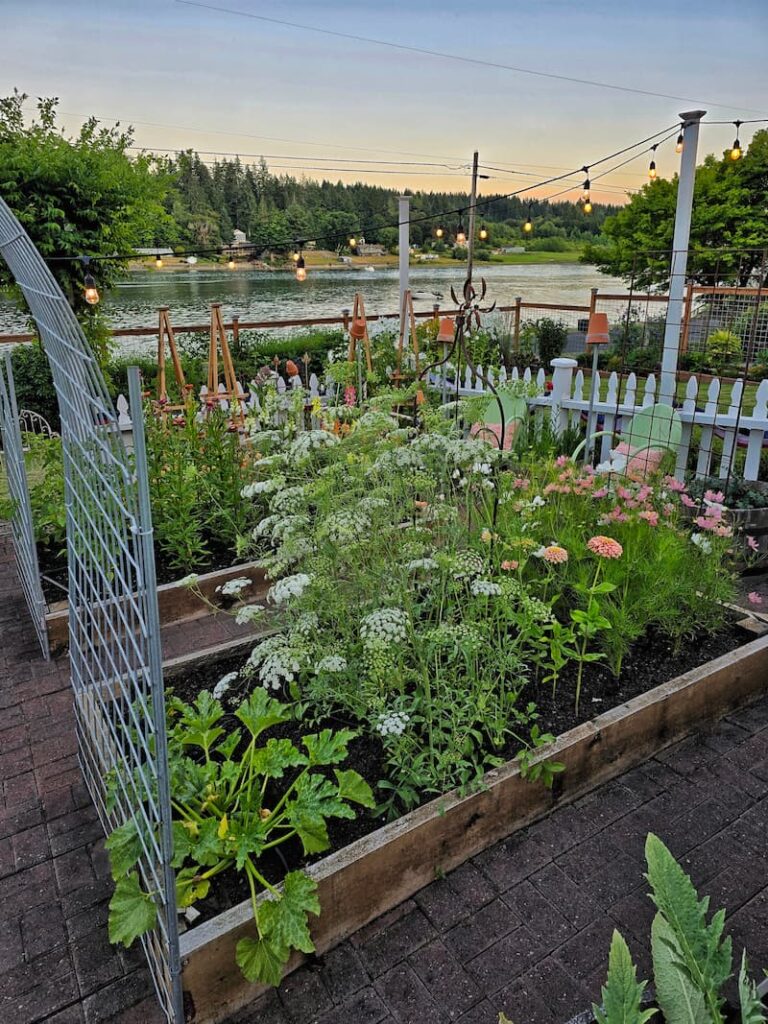
I’ve been growing cut flowers for about five years and still learn something every season. The setup: four raised beds (two 4’x4′ and two 4’x8′), plus containers, all in full sun.
Everything runs on a drip and sprinkler system, which is on a timer. The timer has changed my gardening life, not exaggerating.
I also grow vegetables such as tomatoes, zucchini, eggplant, pole beans, onions, and snap peas in raised beds alongside the flowers. They do well together. The vegetables benefit from the excellent pollination from the cut-flower beds all season long.
Zinnias
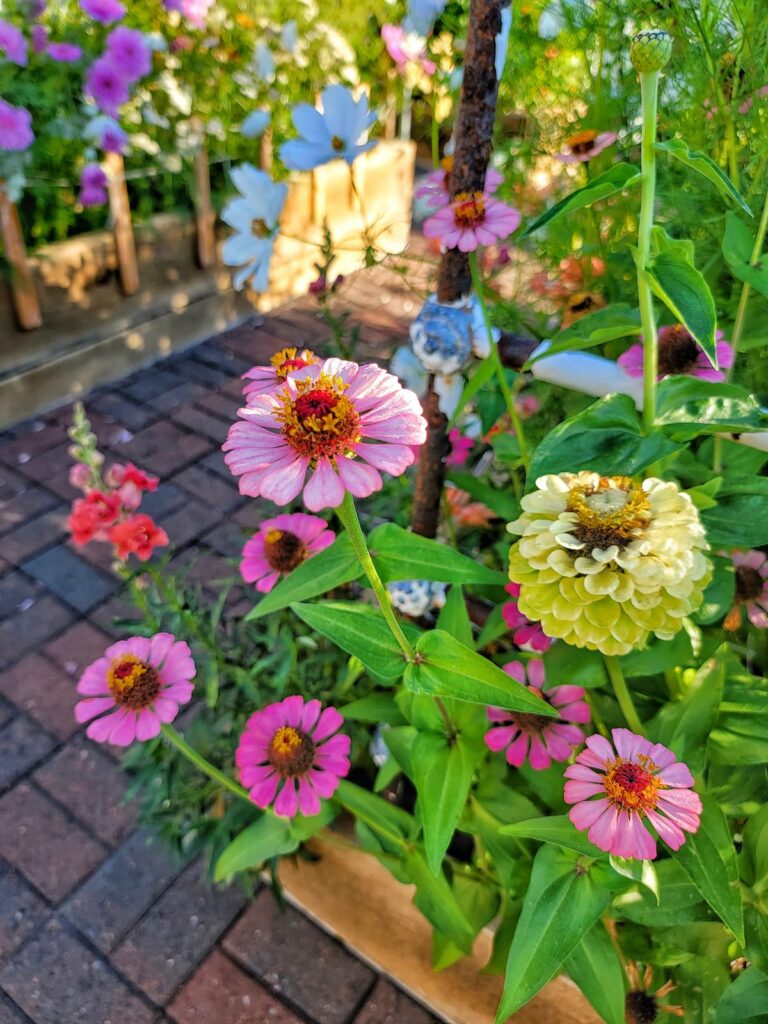
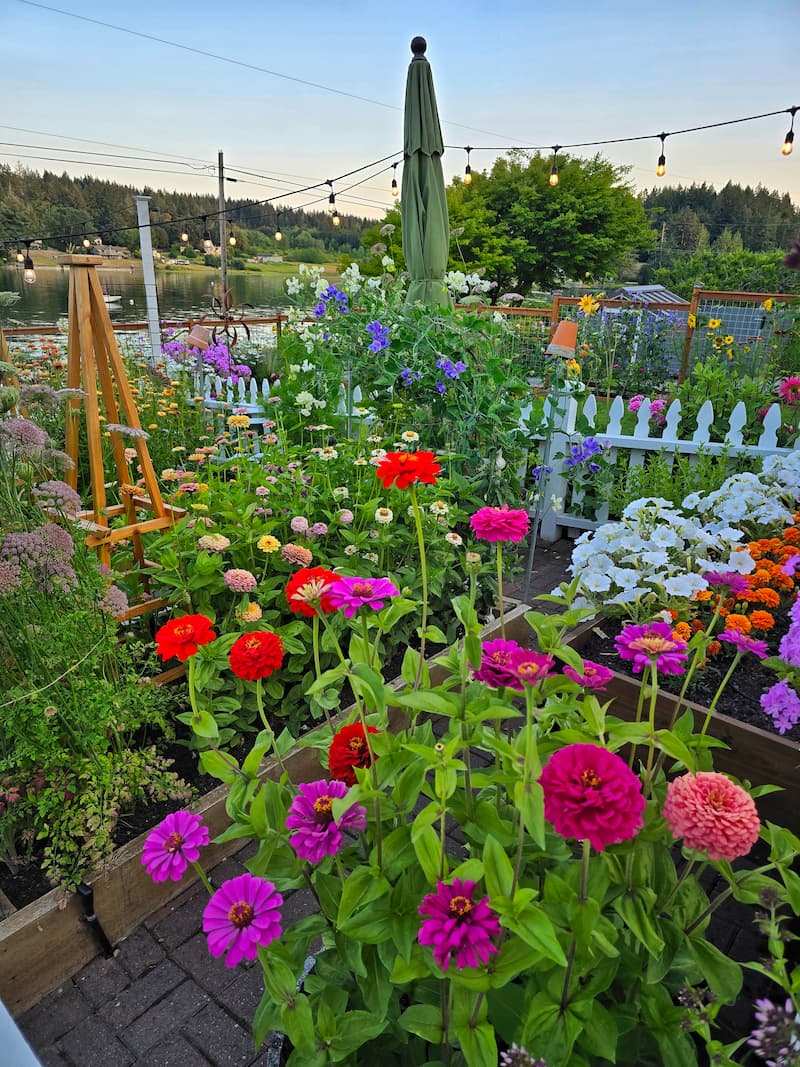
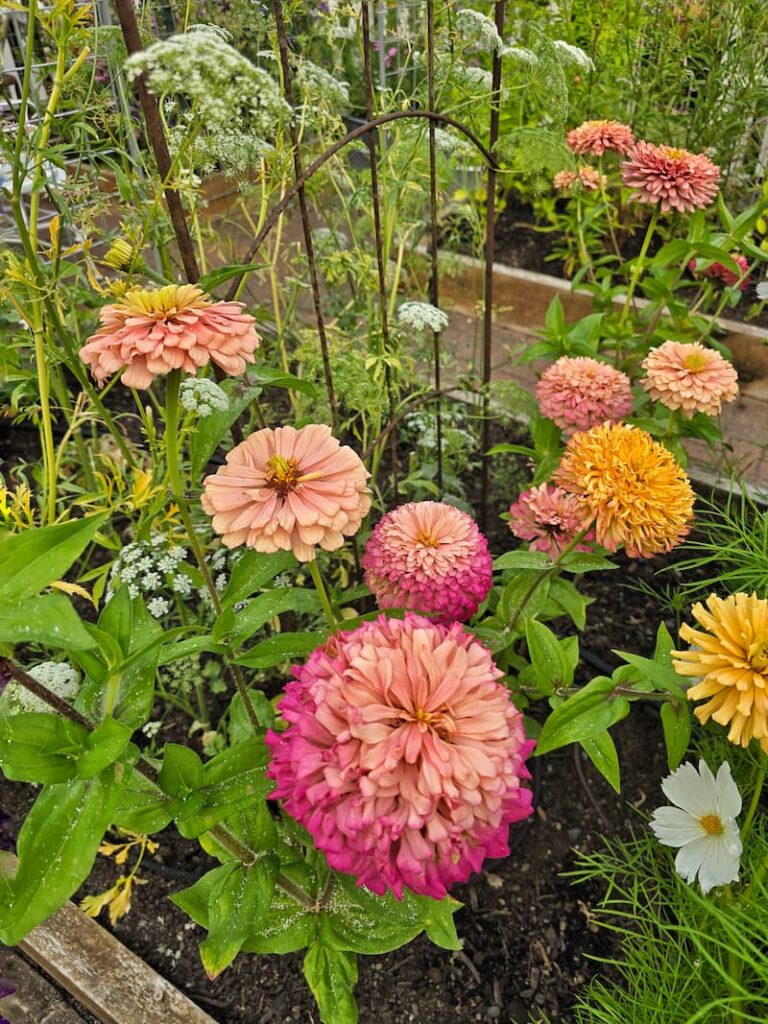
Zinnias are the backbone of my cut flower garden. They come in nearly every color: red, pink, yellow, orange, purple, white, and bi-color varieties, and they bloom from early summer through frost.
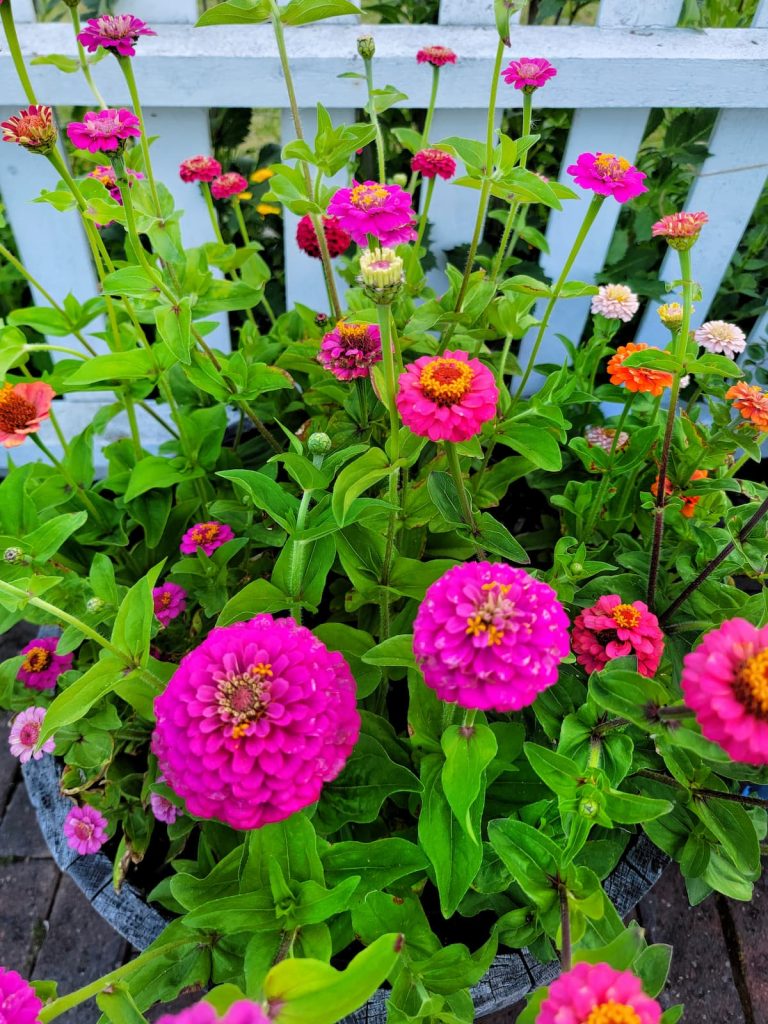
The germination is almost instant. I’ve seen sprouts in just a few days. The stems are sturdy and straight, the flowers last up to two weeks in a vase, and they keep producing the more you cut them.
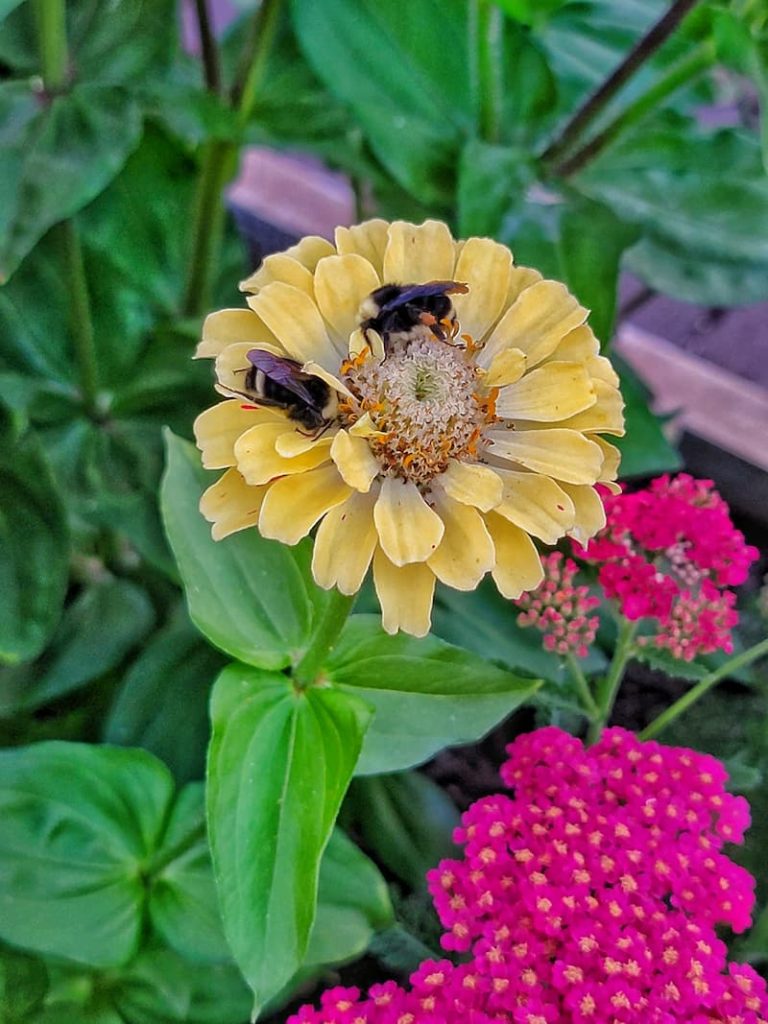
I grow a variety of different zinnias, including Benary’s Giant, Lilliput, Envy, State Fair, Victorian Wedding, Precious Metals, and Persian Carpet. These are all perfect for mixed arrangements.
You can never have too many zinnias in the garden…at least that’s my philosophy.
Sunflowers
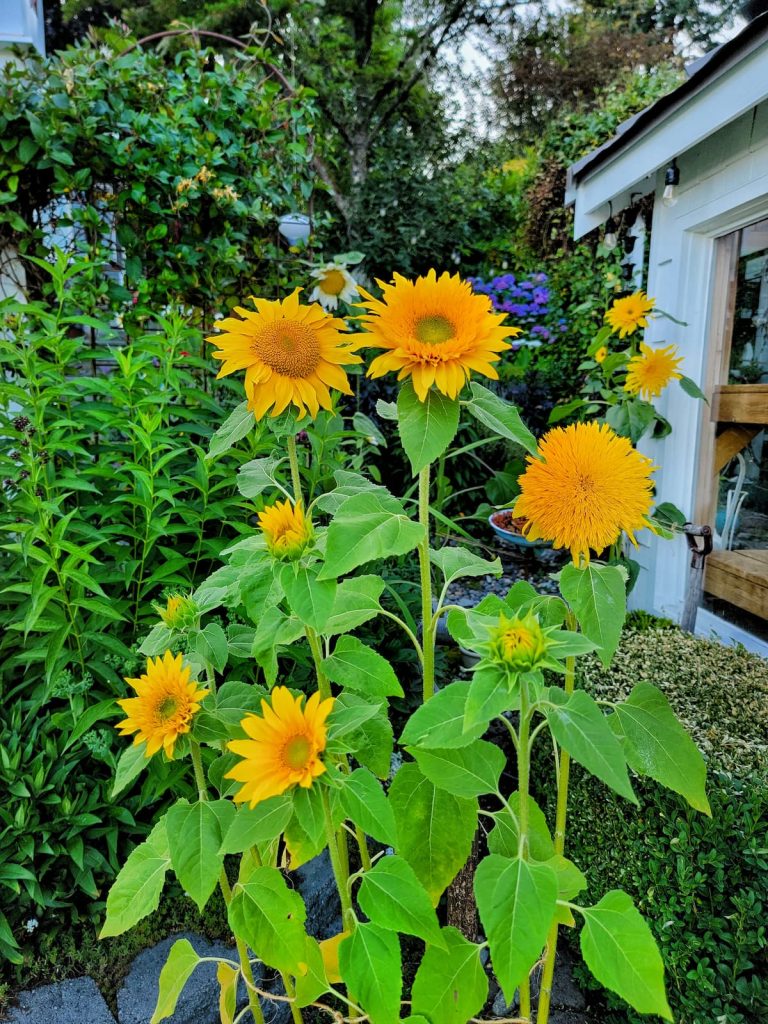
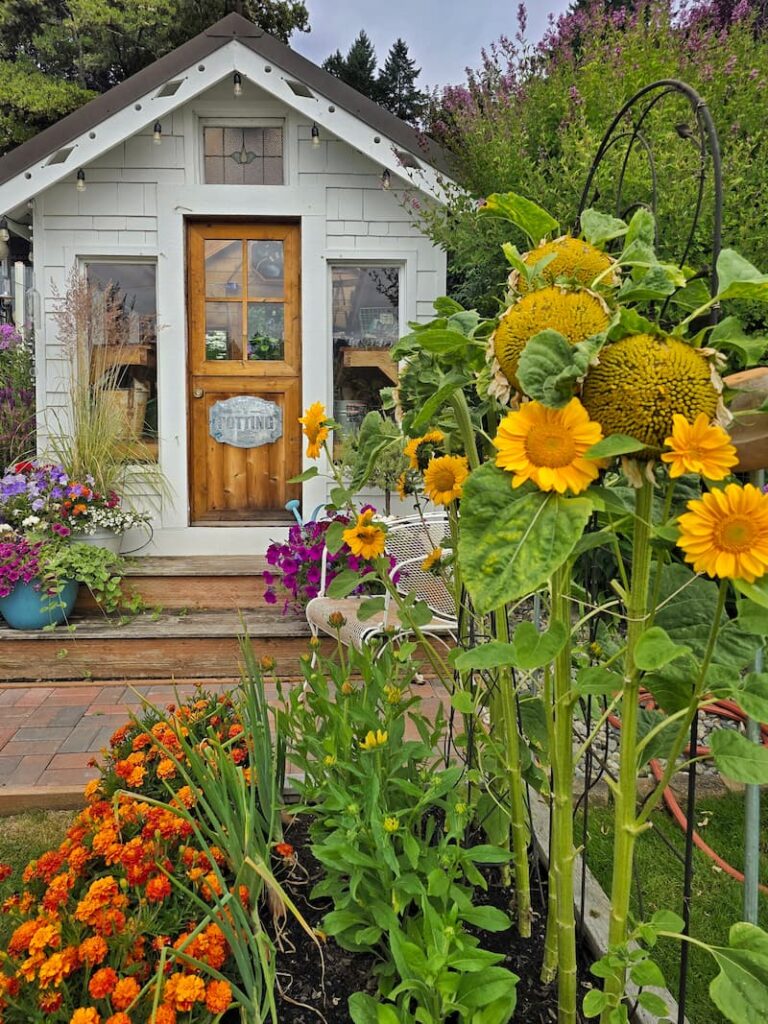
I grow several sunflower varieties, from the classic large yellow blooms to smaller frilly types and the Greenburst, which has a green-tipped center that’s unlike anything else in the garden.
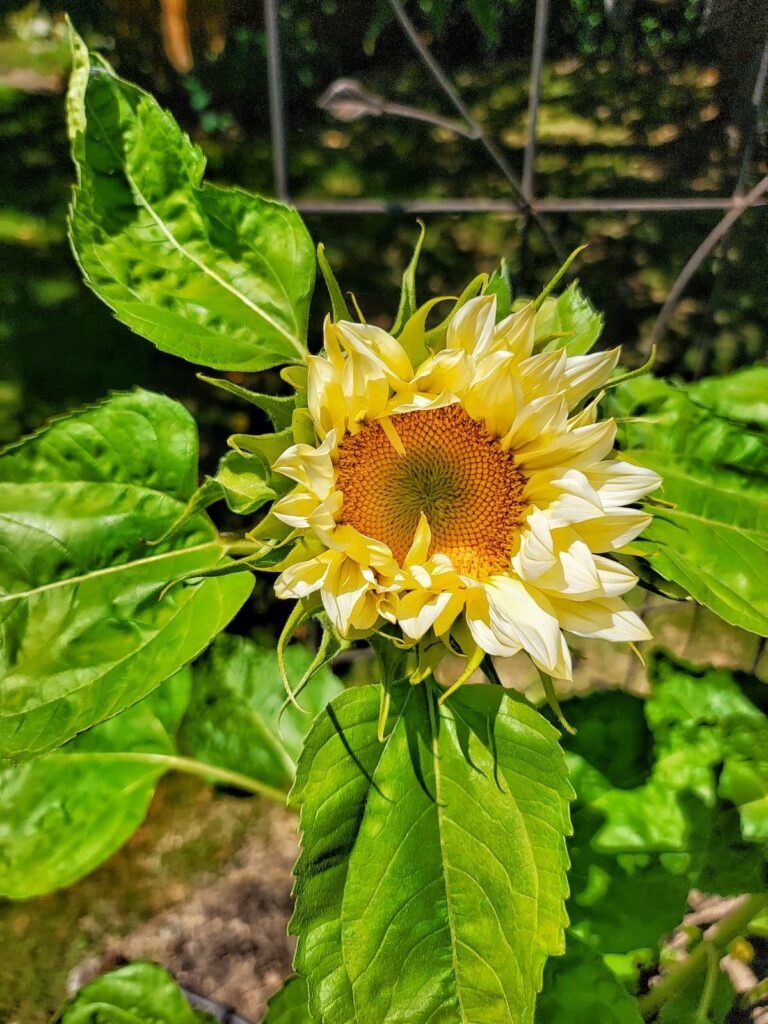
The Pro Cut varieties are another favorite.
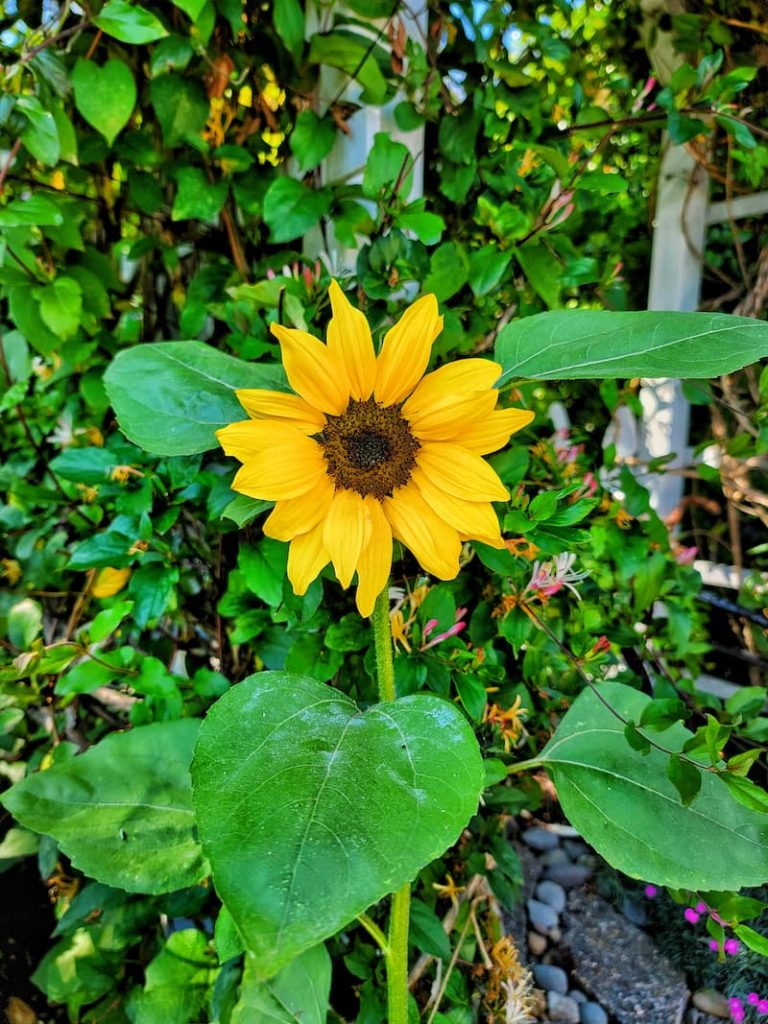
Sunflowers are easy. They need full sun, well-drained soil, and they’re largely self-sufficient. When properly cut and conditioned, they last up to two weeks in a vase. Bees and butterflies can’t resist them.
Snapdragons
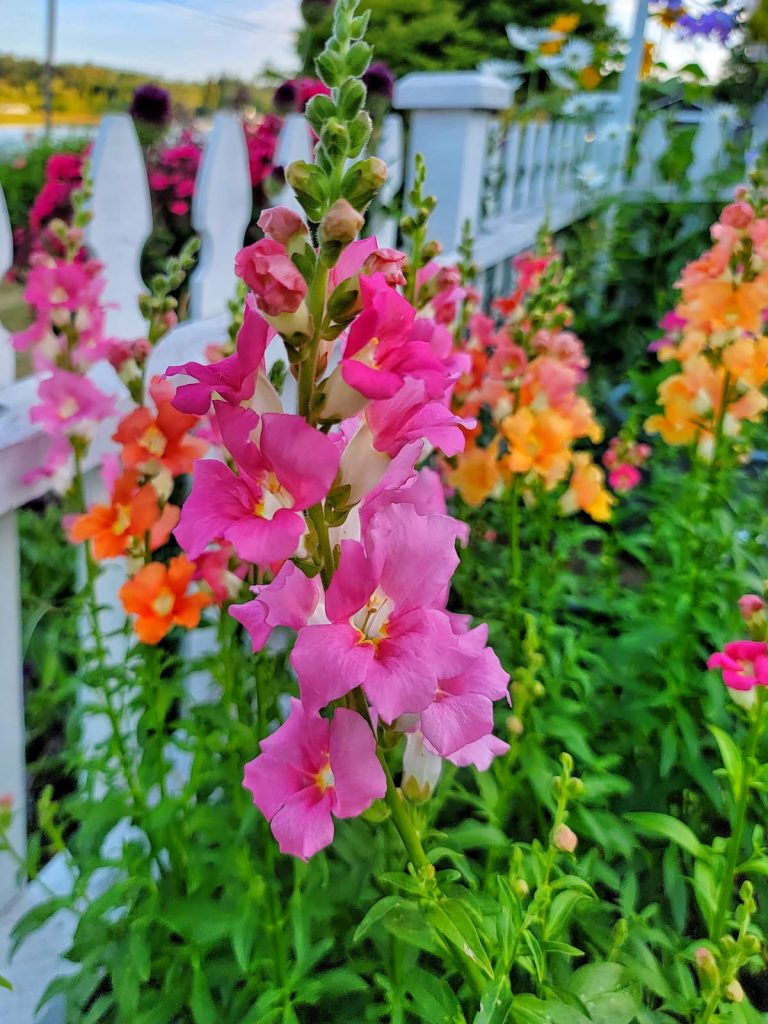
Snapdragons are early and long-lasting. I start them indoors at the end of January. They need a cold stratification period to germinate well, and they’re one of the first flowers to bloom in the cut-flower beds.
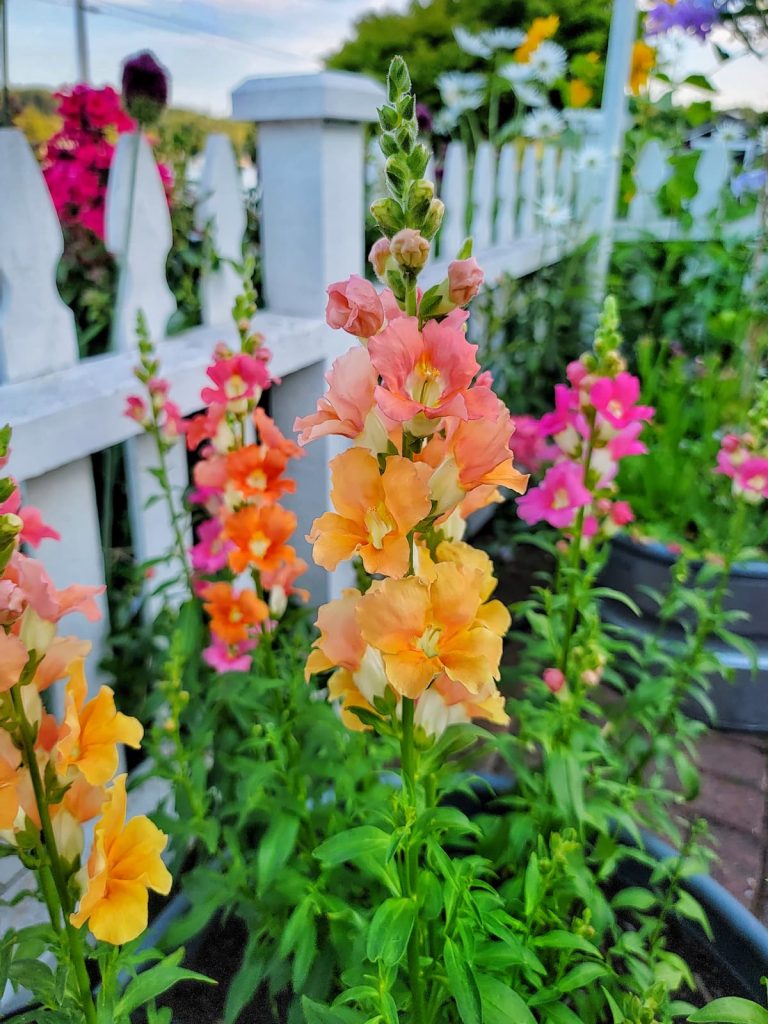
The Chantilly mix is my go-to: open-faced blooms (unlike the classic “snapping” type in soft pinks, creams, and peach tones that work in almost any arrangement.
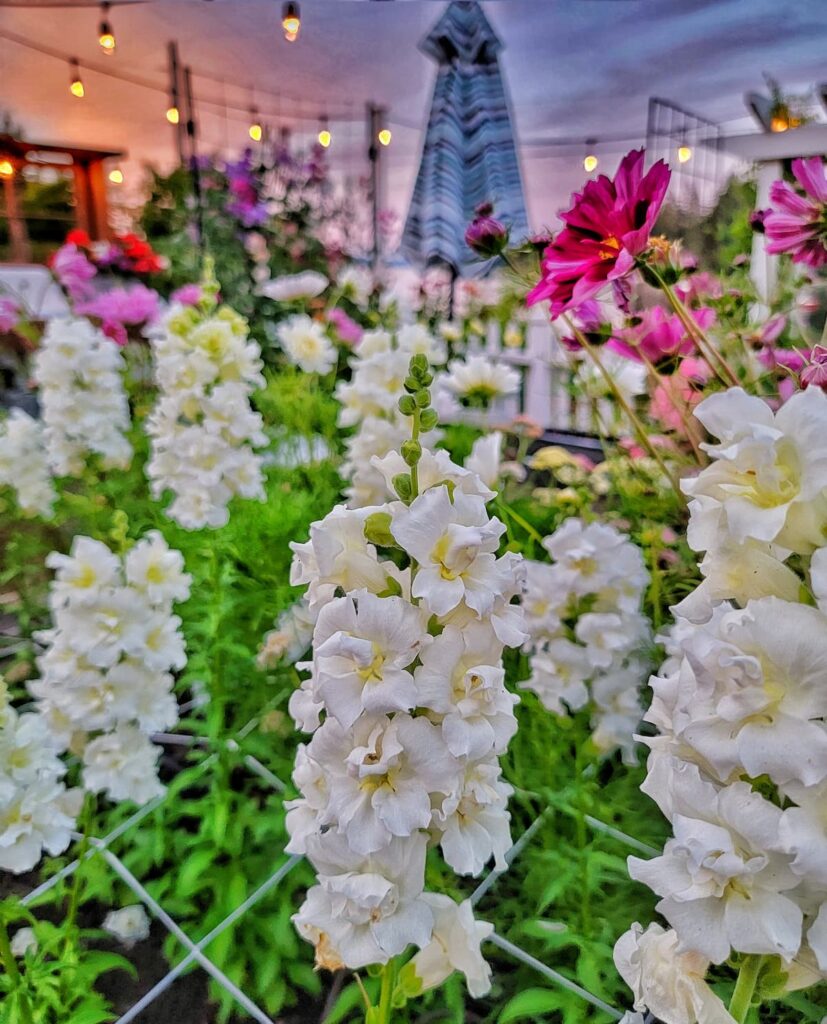
The tall, sturdy stems hold up well in vases, and the blooms last around ten days. They taper off in the summer heat, then often rebound in fall when temperatures cool. They’re worth starting early for the longest possible season.
Cosmos
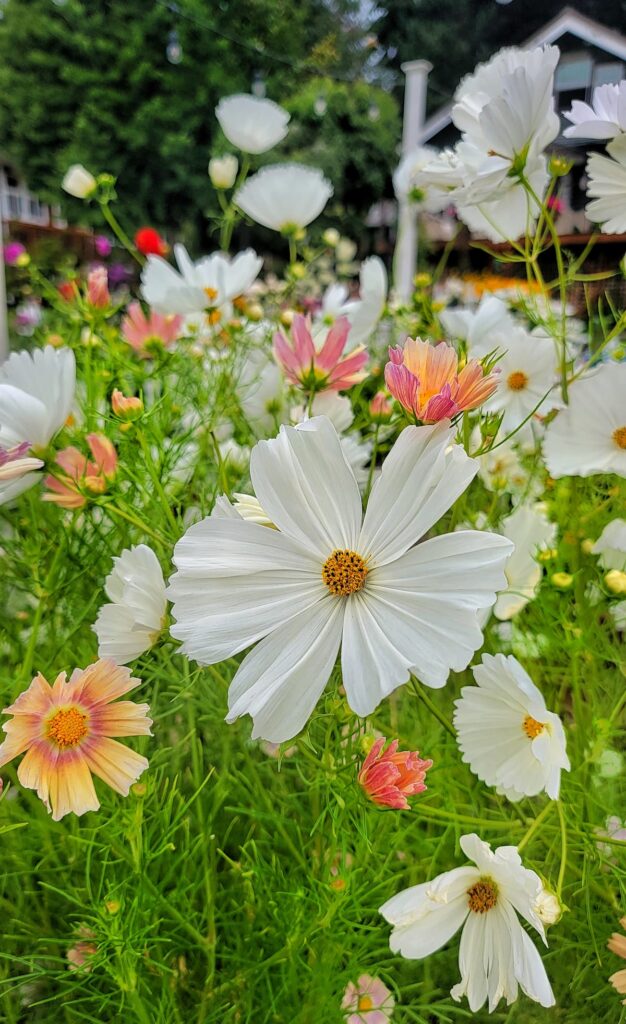
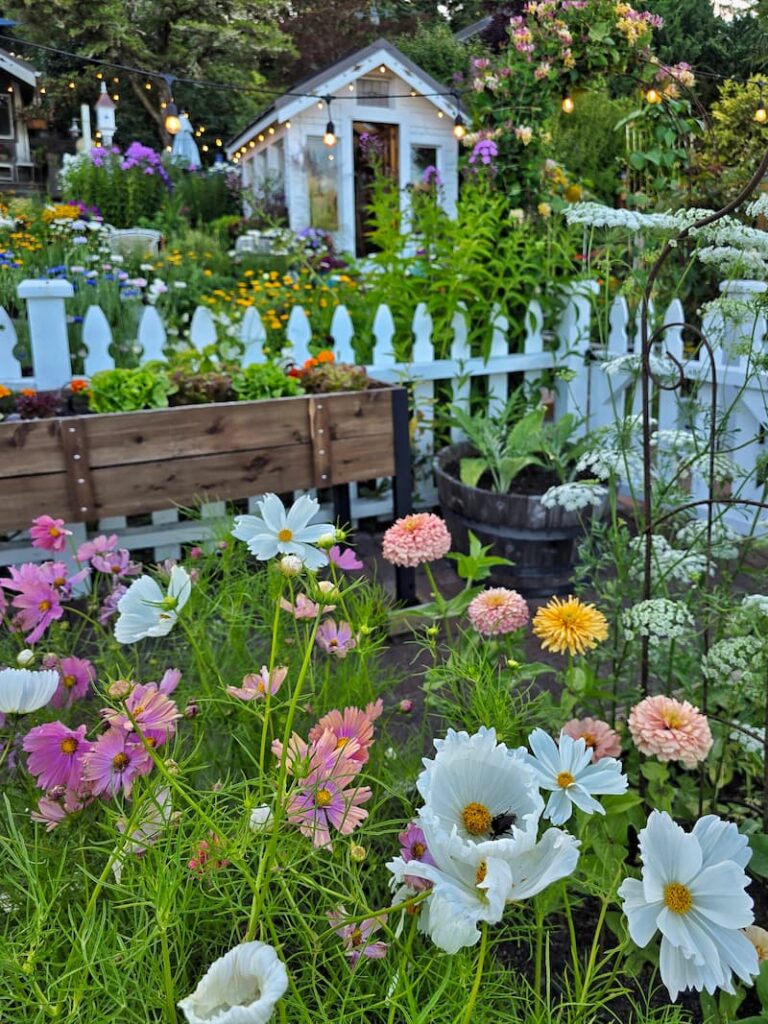
Cosmos have a carefree, wildflower quality that I love in a mixed arrangement. The delicate, daisy-like blooms on long, slender stems add movement and airiness to a bouquet.
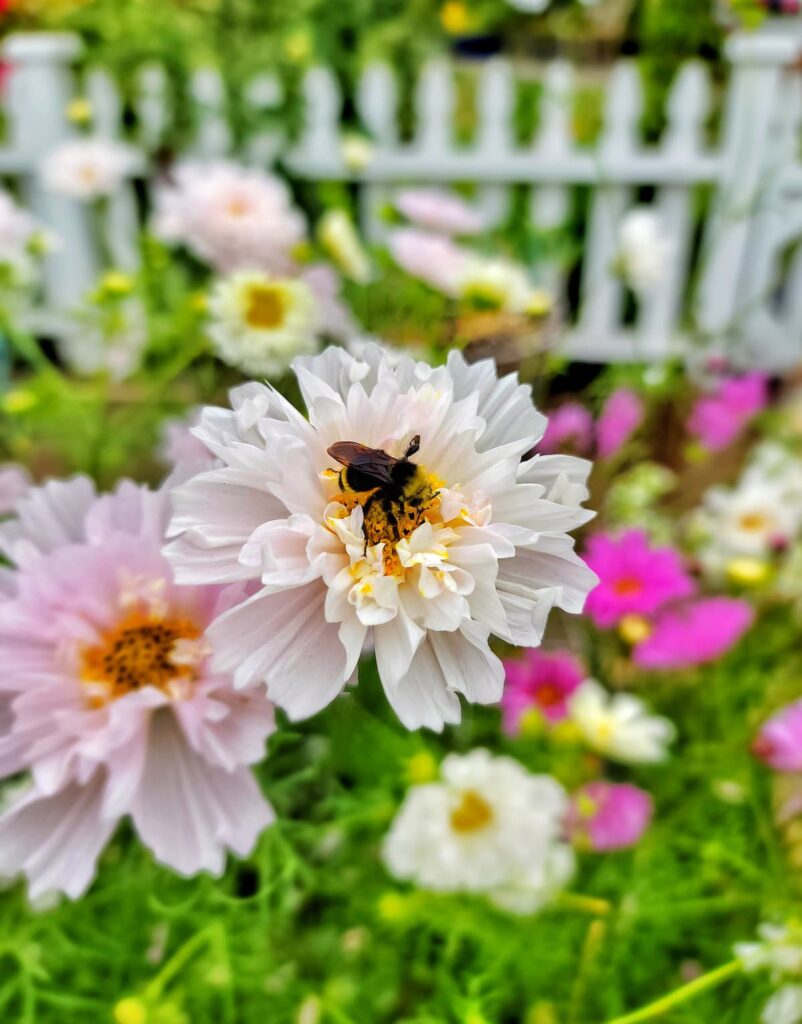
They come in soft pinks, white, reds, and purples, and the airy, fern-like foliage is beautiful on its own.
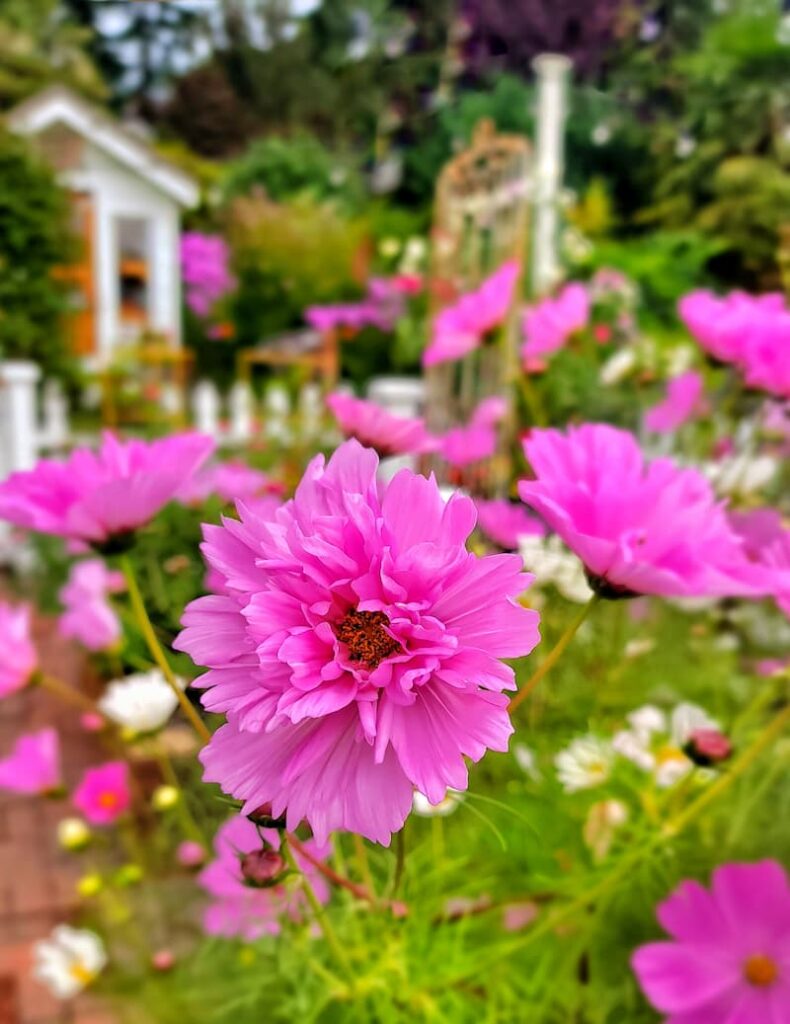
They’re among the easiest flowers I grow, needing full sun, well-drained soil, and almost no fussing required. They attract many pollinators, especially butterflies. Cut flowers last about a week in the vase. I grow Double Click Mix for fuller, more ruffled blooms.
Strawflowers
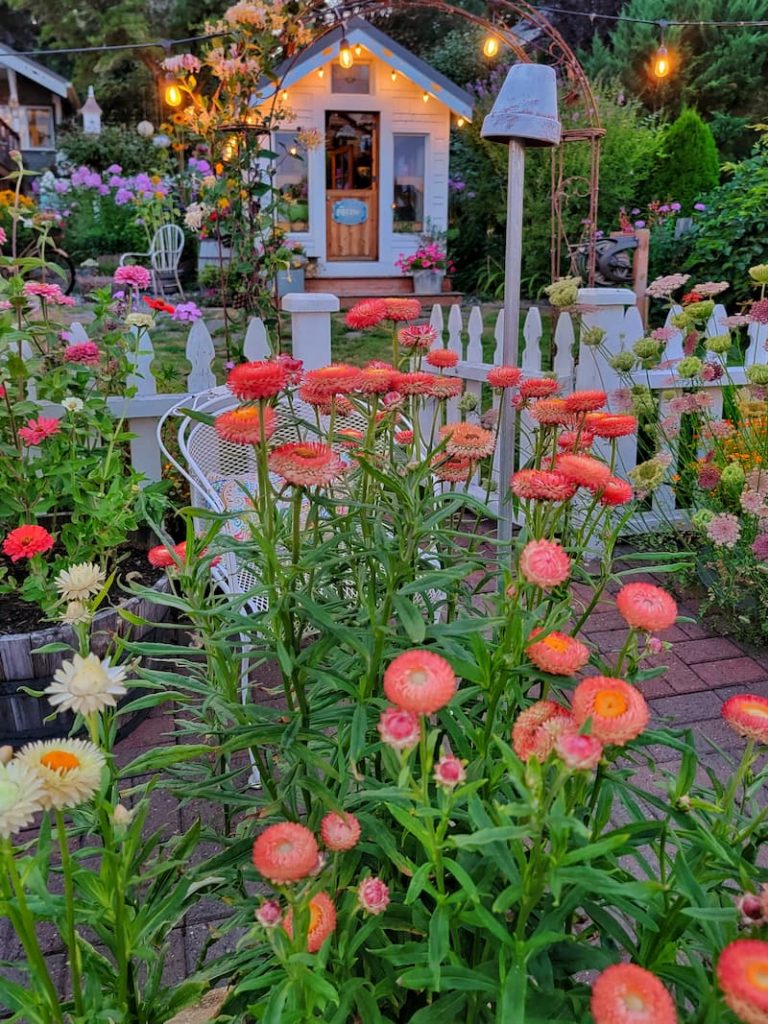
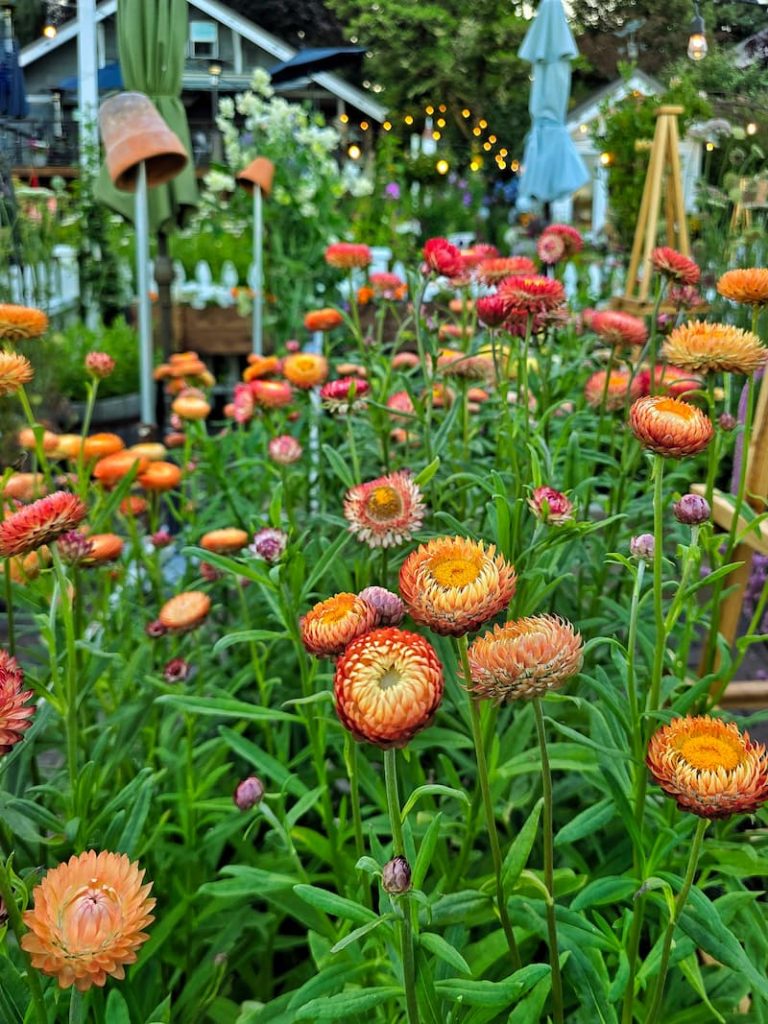
Strawflowers are one of the most useful flowers in the cutting garden. The papery-petaled blooms come in yellow, orange, red, pink, and white with contrasting centers, and they are genuinely long-lasting… both fresh and dried.
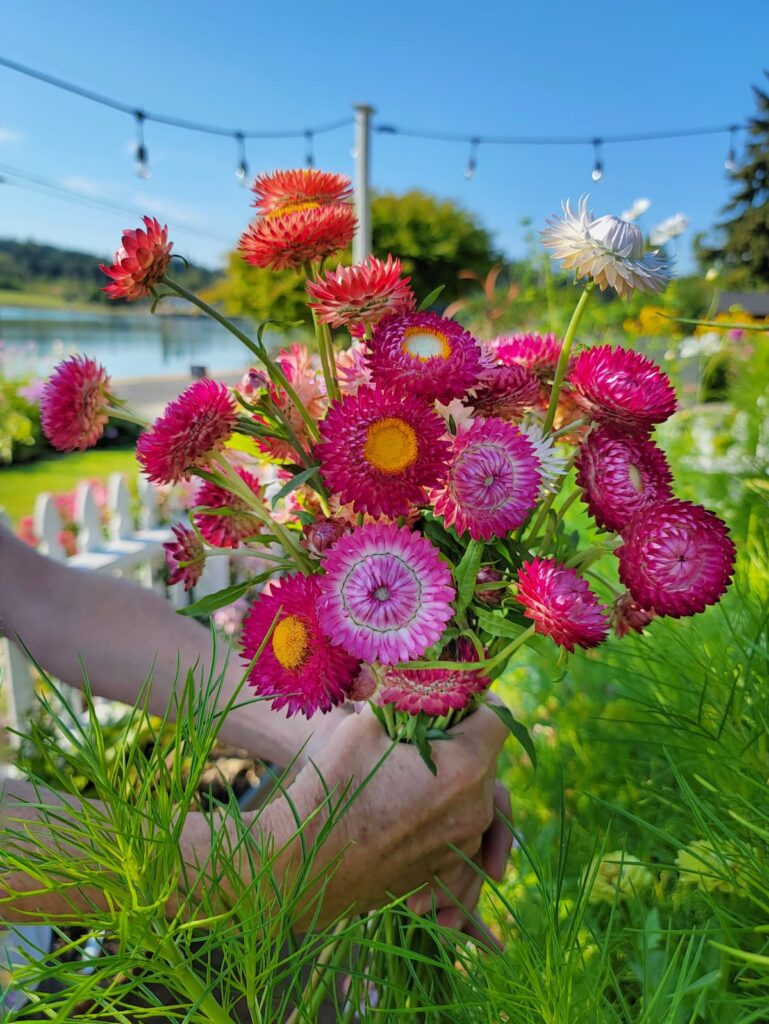
Fresh flowers can last weeks in the vase. Dried blooms hold their color and shape almost indefinitely.
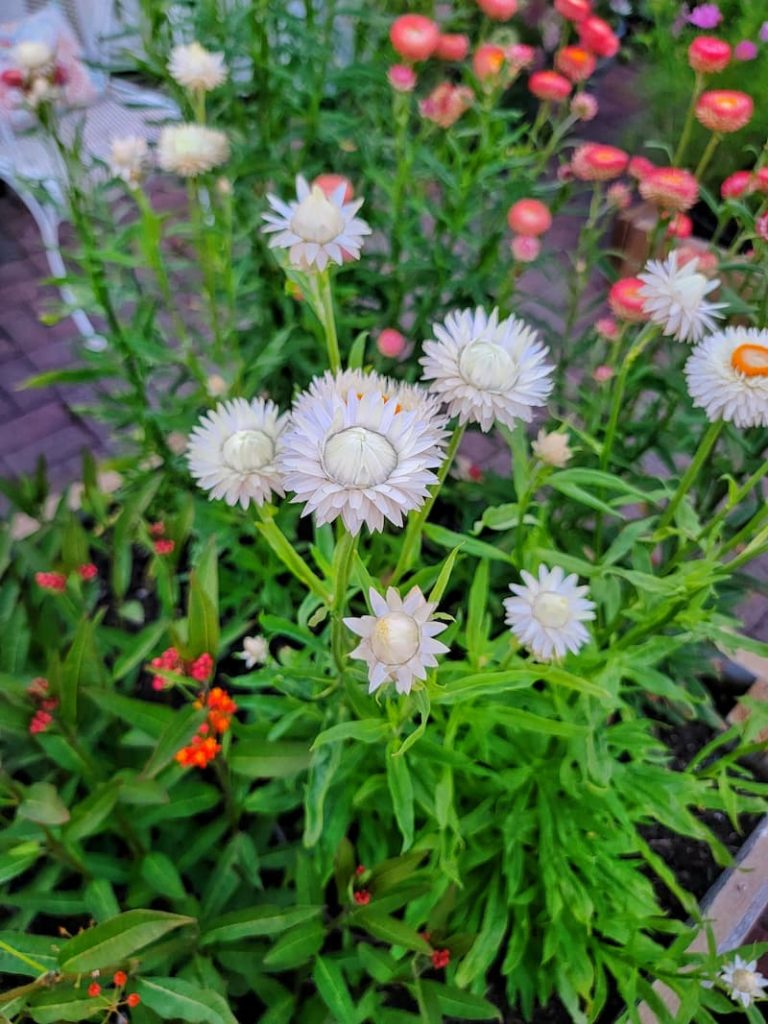
I have grown shades of pomegranate, white, and apricot, as well as a mix of bright colors. They’re indispensable for adding texture to late summer and fall arrangements. They bloom from late spring through frost and need very little from me beyond sun and decent drainage.
Sweet Peas
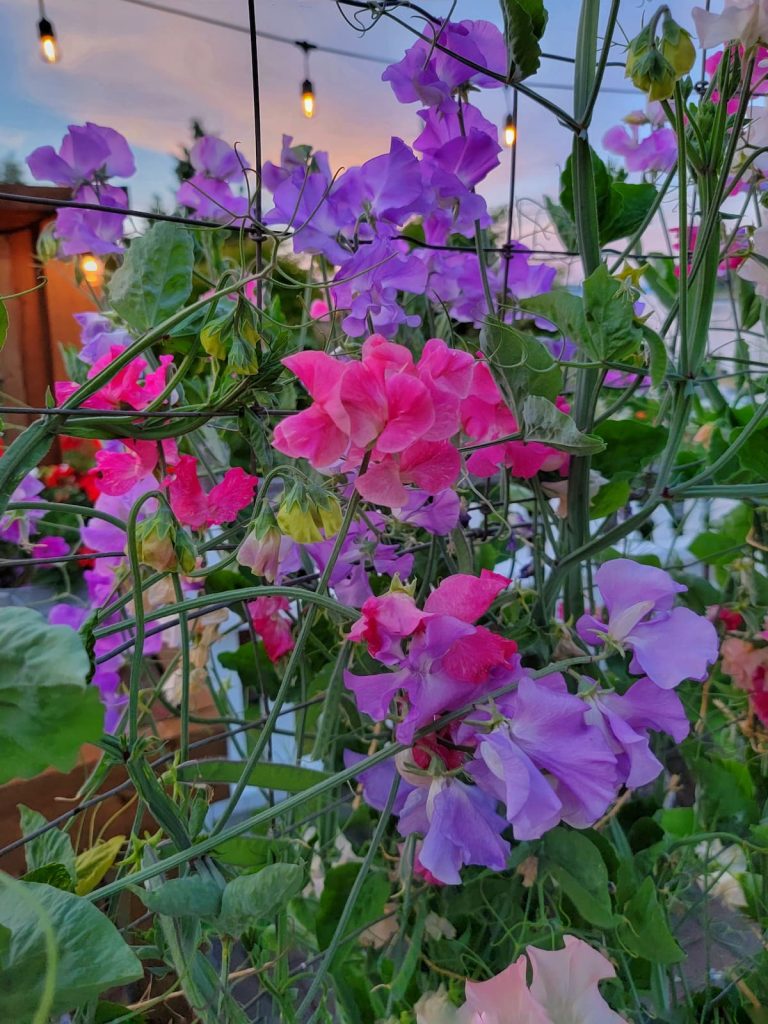
Sweet peas are a short-season flower, and I look forward to them every year. They have ruffled, delicate blooms in soft pastels and vibrant pinks, purples, whites, and reds.
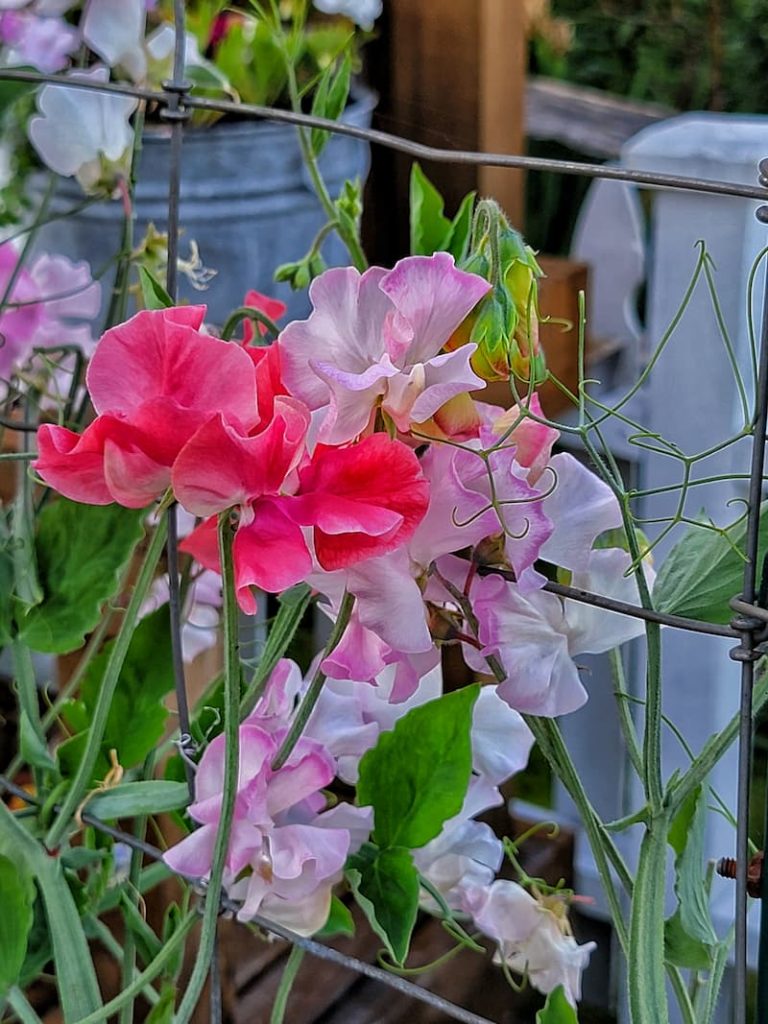
The fragrance is in a category of its own. A few stems in a small vase will fill a room.
They climb, so I grow them up a trellis in the cut flower bed. They prefer cooler conditions, which works in our favor here in the Pacific Northwest.
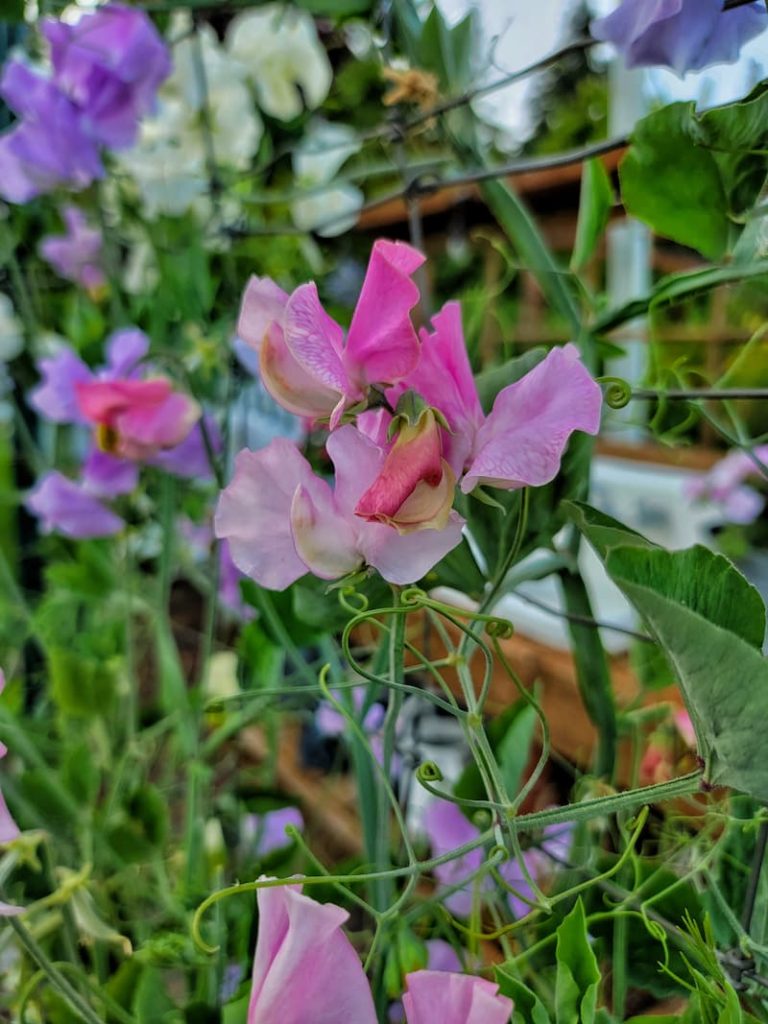
Our mild springs give them a longer window than gardeners in hotter climates get. Once summer heat arrives, they’re done. But while they last, they’re worth every bit of the early start I give them.
Statice
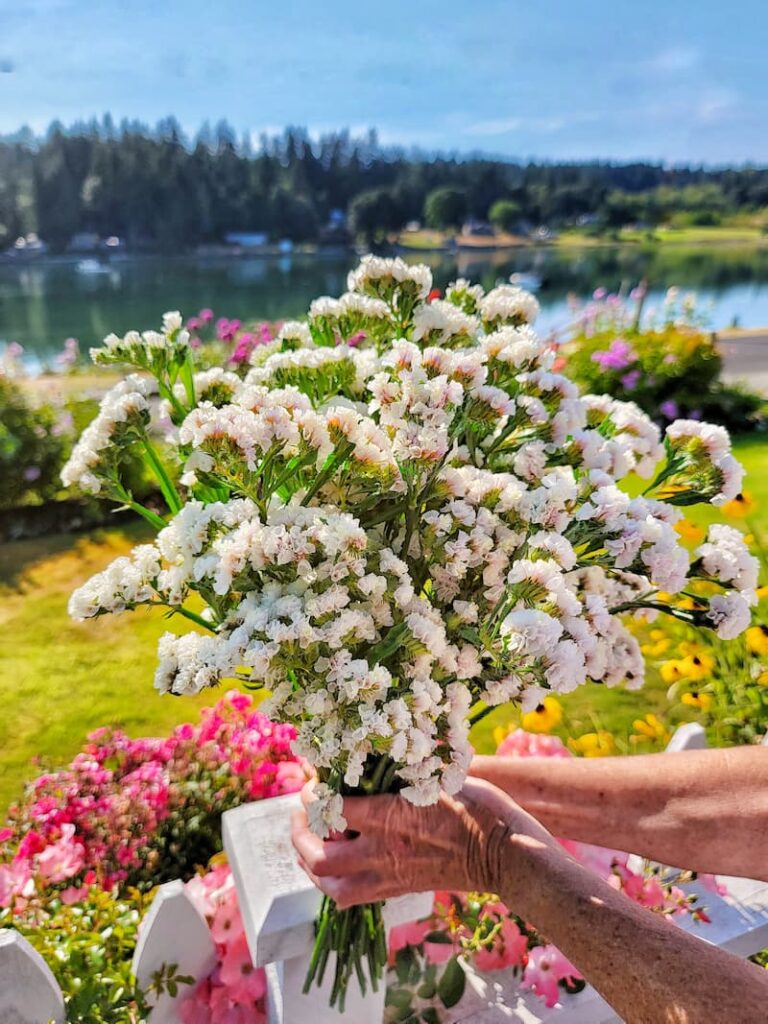
Statice is one of those filler flowers that quietly does a lot of work. Small, papery clusters of blooms in purple, pink, white, yellow, and blue add texture and color to any arrangement.
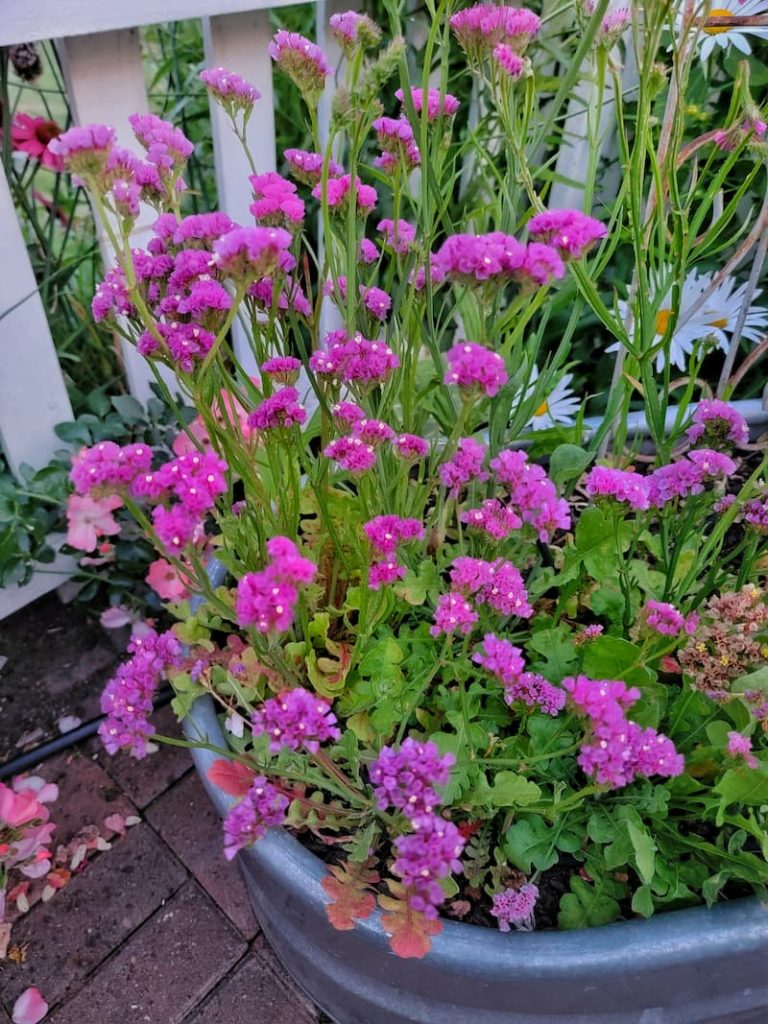
The stems are sturdy and easy to work with, and the flowers retain their color when dried. They’re perfect for wreaths and everlasting arrangements.
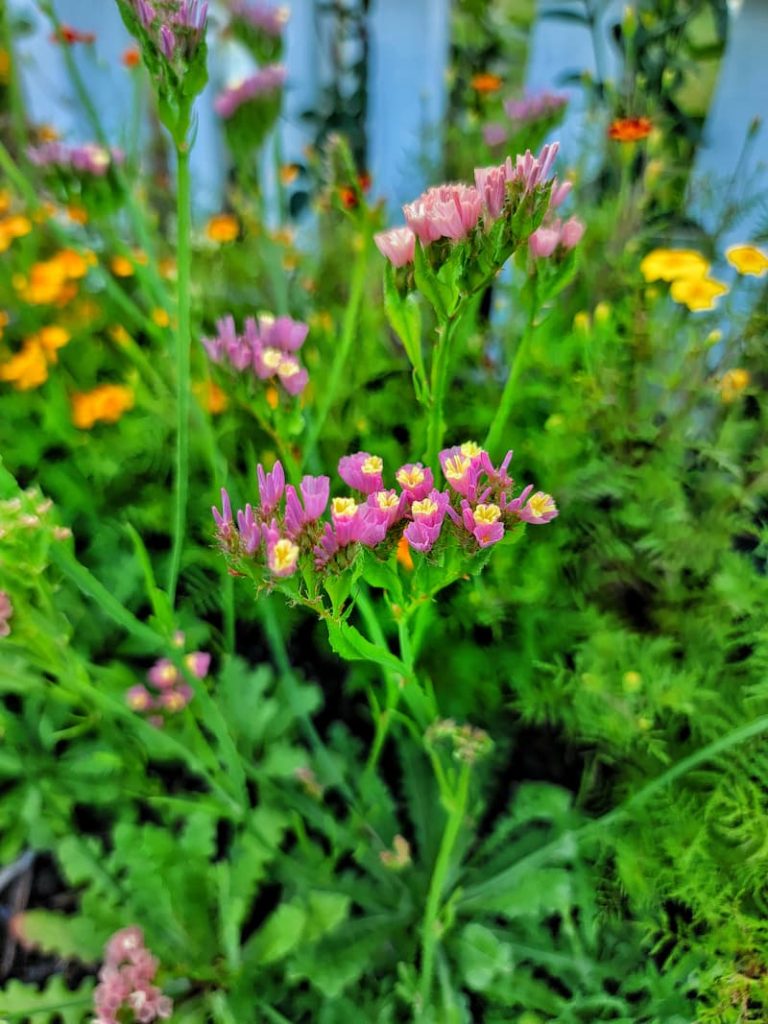
Statice produces from midsummer through fall, and is remarkably self-sufficient once established. I don’t do much to them beyond watering, and they deliver every time.
Volunteer Flowers: The Garden’s Surprises
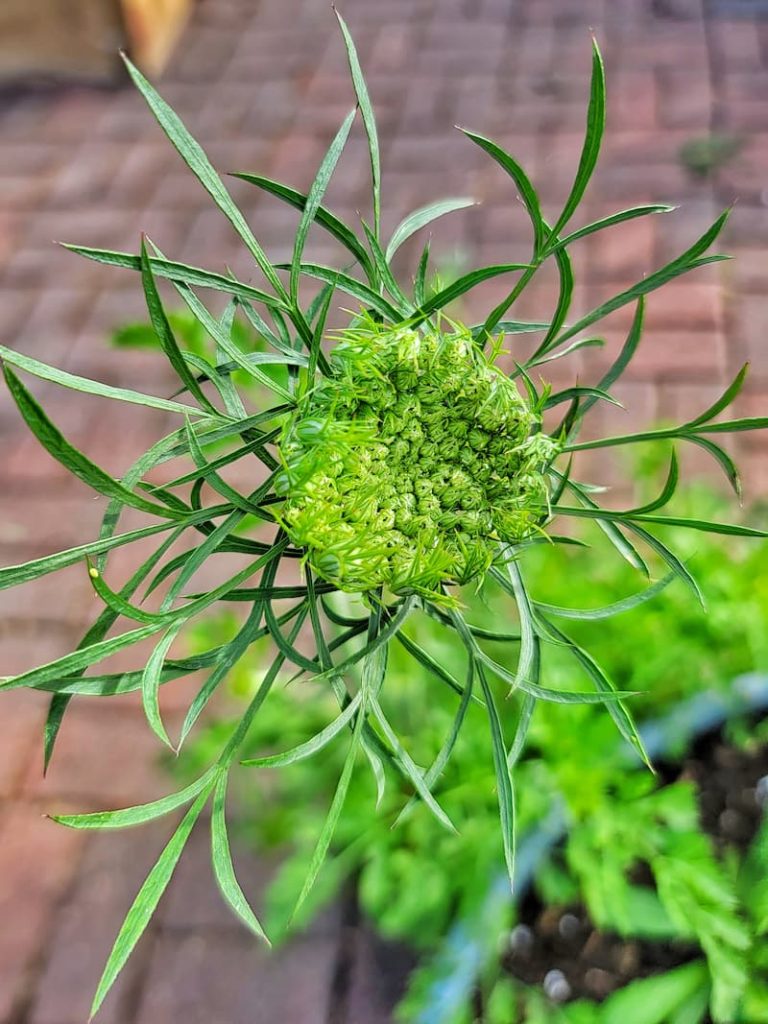
A volunteer is a plant that shows up on its own, from seeds dropped by last year’s plants, carried by the wind, or delivered by a bird. I never thin them out until I know what they are.
Some of the best discoveries in my garden started with volunteers.
Chocolate Lace Flower (Dara)
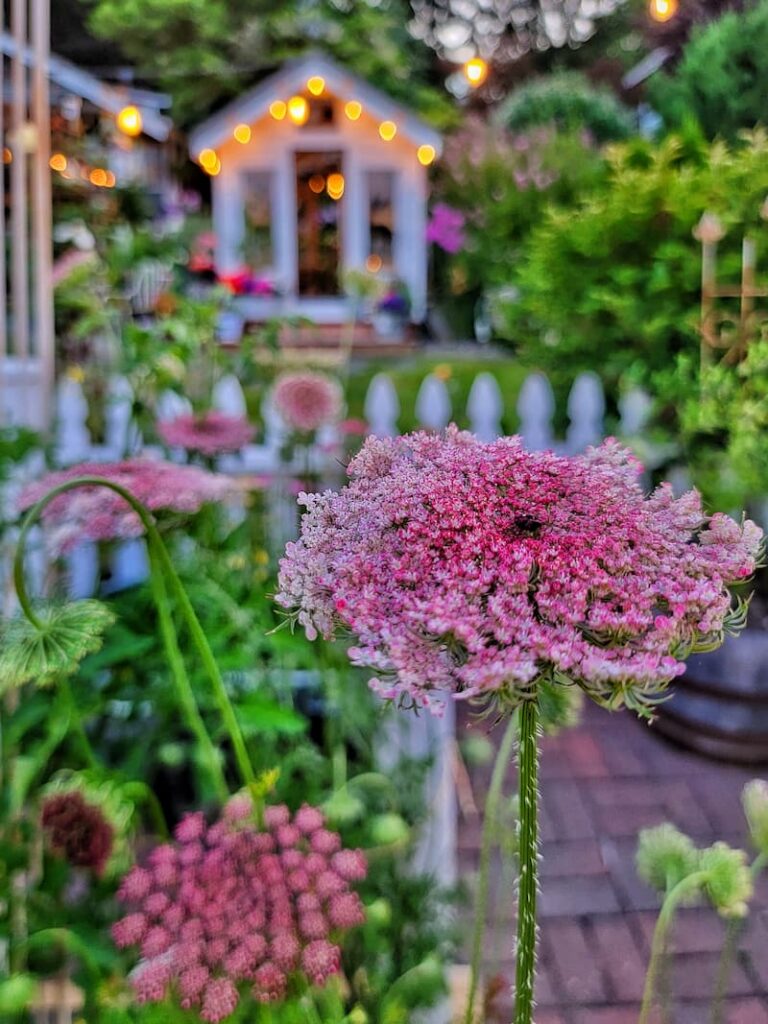
This is Queen Anne’s Lace’s showier cousin, Daucus carota ‘Dara’. The lacy, complex blooms range from deep burgundy and chocolate to soft pink and creamy white. They add an elegant, vintage quality to arrangements that nothing else quite replicates, and they have excellent vase life, lasting up to a week.
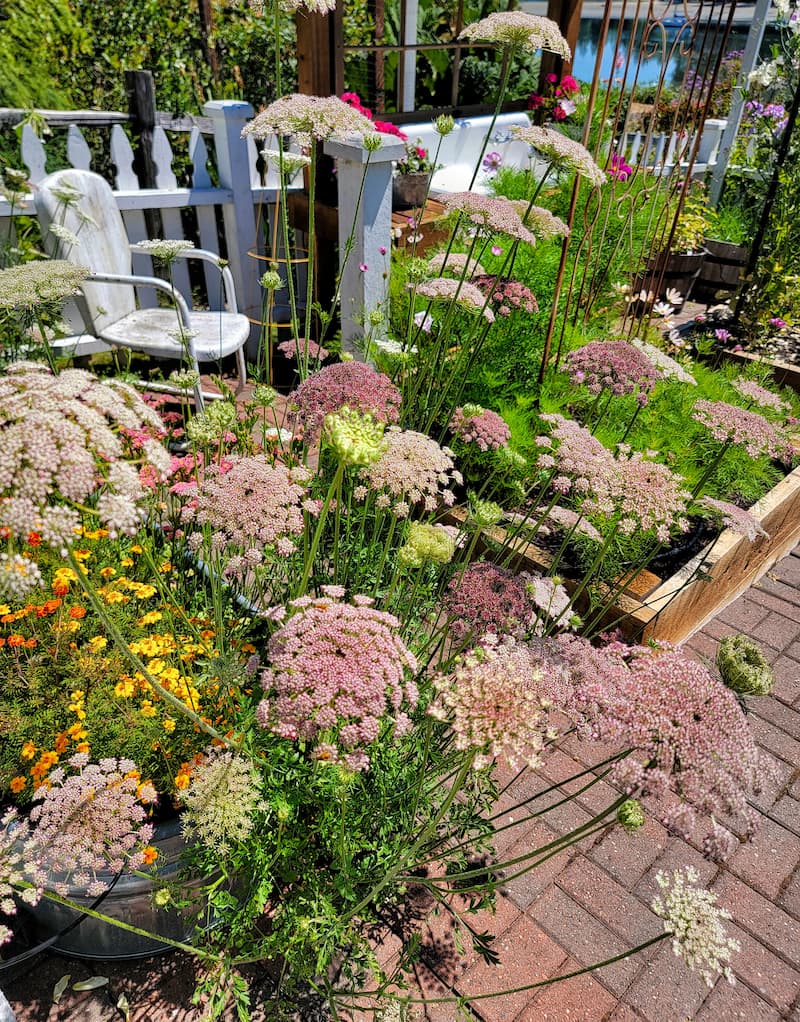
Once you have Dara growing in your garden, you tend to keep it. It self-seeds reliably year after year. I let it come back when it wants to, and I’m always happy I did.
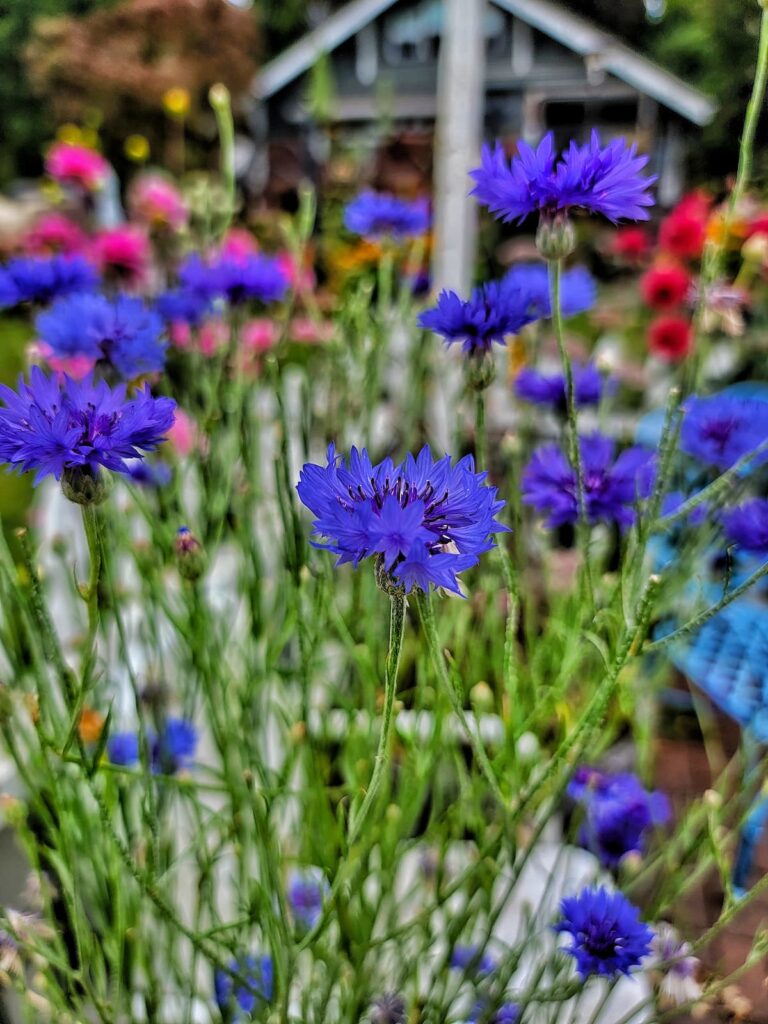
Bachelor’s Button (Cornflower)
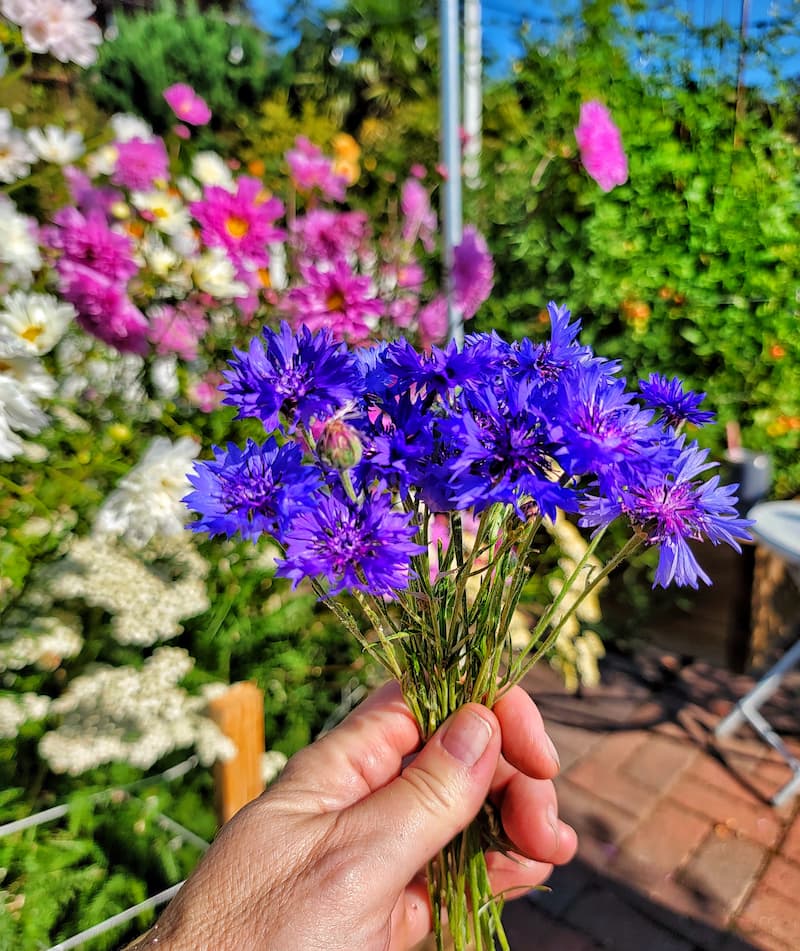
Bachelor’s buttons started as a volunteer in my cutting garden, and I never bothered to stop it. The true-blue flowers are unusual. That particular shade of cornflower blue is hard to find in any other cut flower. They also come in pink, white, and purple. Slender, sturdy stems and frilled petals work beautifully both fresh and dried.
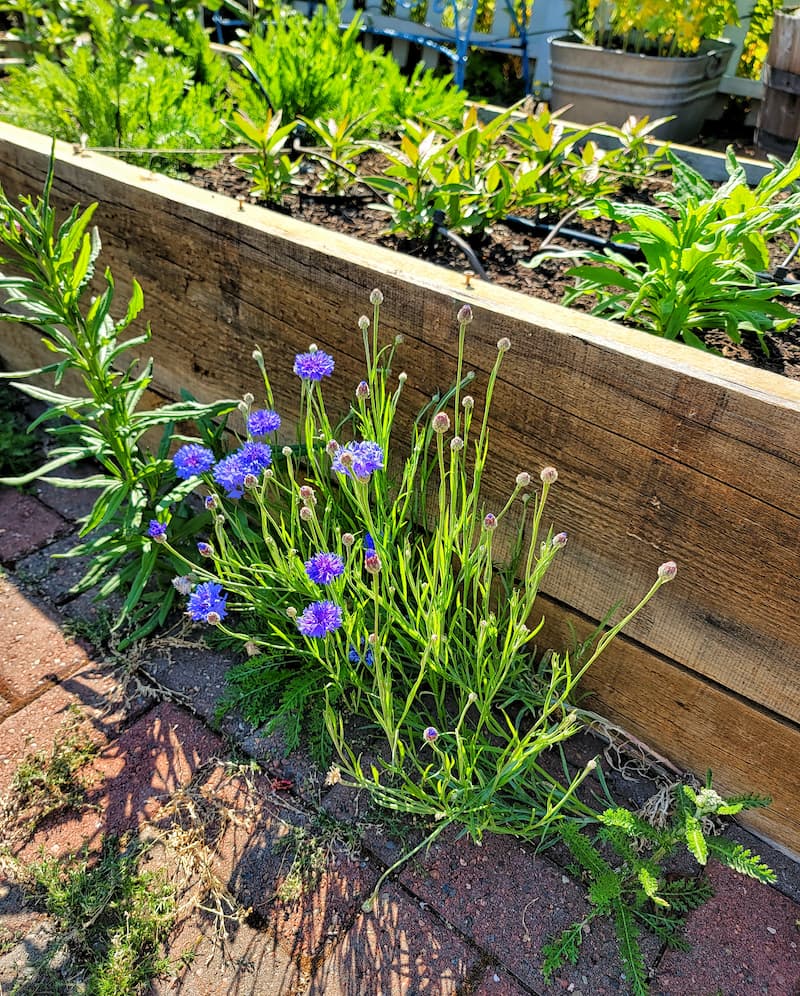
Like Dara, they self-seed prolifically. I find them growing through the pavers, along the edges of beds, and in places I never would have planted them. I always leave them where they are.
Frequently Asked Questions
What Flowers Bloom in Early Summer?
In the cottage garden, early summer is the season for coneflower, hydrangea, Asiatic lilies, clematis, allium, Shasta daisy, lavender, alstroemeria, and veronica. In the cut flower garden, zinnias, snapdragons, sweet peas, cosmos, strawflowers, and the first sunflowers are starting to open by late June.
What are the Best Perennials for an Early-Summer Cottage Garden?
Coneflower, hydrangea, lavender, allium, and Shasta daisies are among the most reliable early summer perennials for a cottage garden. They bloom consistently year after year, require relatively little maintenance, and attract pollinators throughout the season.
Which Cut Flowers are Ready to Harvest in Early Summer?
In late June and early July, expect to be cutting zinnias, snapdragons, sweet peas, and the first cosmos and strawflowers. Sunflowers usually start to open by early July. Bachelor’s buttons and chocolate lace flowers are also blooming if you have them.
Do Early Summer Flowers Attract Pollinators?
Yes, early summer is one of the best times to support pollinators in the garden. Coneflowers, alliums, lavender, zinnias, and cosmos are especially attractive to bees and butterflies. A diverse mix of flower shapes and bloom times ensures something is always available for pollinators from spring through fall.
When Should I Plant Early Summer Flowers in the Pacific Northwest?
In Zone 8b (Puget Sound area), transplants go in the ground after the last frost, typically late April. Perennials are best planted in spring or fall.
Seeds for annuals like zinnias, cosmos, and sunflowers can be started indoors in February or March for a late-June head start, or direct-sown after frost risk has passed.
Final Thoughts on the Early Summer Garden
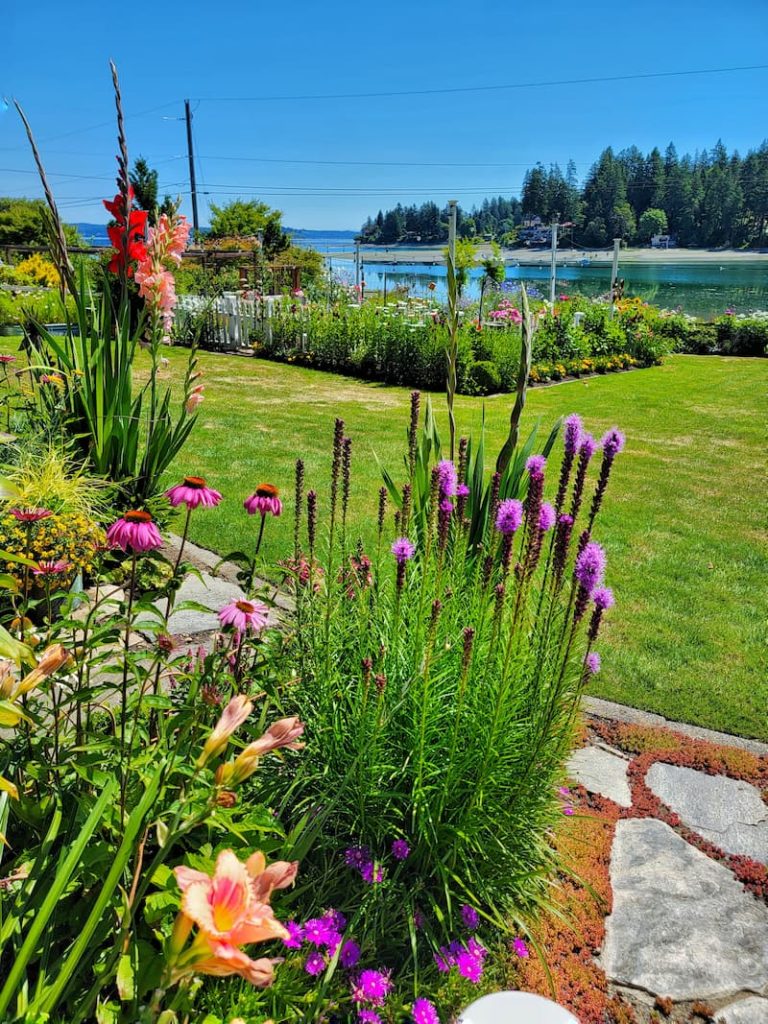
Early summer in the garden is a study of patience paying off. The perennials that have been quietly building root systems since last year are finally putting on a show. The annuals I started from seed in the greenhouse are beginning to bloom. And every morning there’s something new to notice.
If you’re just starting a garden, don’t overthink it. Pick a few flowers on this list that appeal to you and see how they do in your garden. Some of my favorites, like the Sweet Sandia coneflower, the Chocolate Lace, and the Primal Scream daylily, I discovered by accident, either at the garden show or as a volunteer in the beds.
If you blink, you miss something.
Until next time,
Happy Gardening!

I’m a self-taught hobby gardener. Everything I share on my blog is my opinion and what has worked for me.
MORE POSTS
For You To Enjoy
Follow Me for More Inspiration

Your gardens are incredibly gorgeous! Do you dry your strawflowers for arrangements? I loved that nursery you visited . I got a lot of inspiration for yard decor and flowers I already have, thank you for sharing😊
Hi Sharon,
I am incredibly sorry for being so late to respond to your comment. And thank you so much for the compliments, I really appreciate it. I do dry my strawflower and statice and bring them in as just bundles on their own or as a dried flower arrangement. That’s why I grow three to four colors of strawflower each year so I can get a variety in the bouquets. Yes! I love that nursery too. I do wish it was closer and not a ferry ride or boat ride away but I’ll visit on special occasions. Thanks so much for reaching out!
I have to live vicariously through you and Stacy this year! What a bust of a garden season we are having in NH! In my bed of zinnias, I have 1 flower blooming that is only 4 inches tall and the rest of the hundreds of stems are maybe 5 inches tall. I have to laugh or I would cry!! That lily is just the prettiest color. So much inspiration!!